When Children Are Treated as Adults: How One Alabama Teen Inspired My Fight for Justice

Girl behind bars.
Girl behind bars. By Nejron Photo; Adobe Stock. File #: 32689299

I did not enter the world of juvenile justice reform through textbooks, research questions, or curiosity about public policy. I entered it through a child. A girl I first met when she was just fourteen years old, wide-eyed, quiet, and already carrying a lifetime of burdens on her small frame. I was assigned as her CASA (Court Appointed Special Advocate) at a time when her life was marked by instability, poverty, and trauma. She was living in conditions most adults would find impossible, yet she still greeted me each week with a hesitant smile, a mix of hope and uncertainty in her eyes. Her resilience was unmistakable, even if she didn’t yet recognize it in herself.

Over the years, I watched her survive circumstances that would flatten most adults. She moved between unsafe living situations, often unsure where she would sleep or whether she would eat. She navigated school while juggling the chaos around her. She experienced loss, betrayal, and instability. And yet she showed up. She tried. She hoped. She fought to stay afloat.

Nothing in those early years prepared me for what would come next.

At sixteen, through a series of events, she was just present when a crime occurred. One she did not commit, did not plan, and did not anticipate. But in Alabama, presence is enough to catapult a child into the adult criminal system. Under Alabama’s automatic transfer statute, Ala. Code § 12-15-203, youth charged with certain offenses are moved to adult court entirely by default, without judicial evaluation and without any meaningful consideration of developmental maturity, trauma history, or the child’s actual involvement.

The law did not acknowledge her age, her vulnerability, her role in the event, or her long history of surviving poverty, abuse, and instability. It simply swept her into the adult system as if she were fully responsible for the incident and for her own survival. Overnight, she went from being a child in need of care to being treated as an adult offender. She was taken to an adult county jail, where her new reality consisted of four concrete walls, metal doors, and the unrelenting loneliness that comes from being a minor in a facility designed for grown men.


Child behind bars.
Child behind bars. By Tinnakorn; Adobe Stock. File #: 691836996

Because the Prison Rape Elimination Act (PREA) requires strict “sight and sound separation” between minors and adults, and because most Alabama jails have no youth-specific housing units, she was placed into what the facility calls “protective custody.” In reality, this translated into solitary confinement. She spends nearly every hour of every day alone. No peers. No programming. No classroom. No sunlight. No meaningful human contact.

Not for days. Not for weeks. But for over an entire year.

Even now, writing those words feels unreal. A child, my former CASA child, has spent more than a year in near total isolation because Alabama does not have the infrastructure to house minors safely in adult jails. And it was this experience – witnessing her slow unraveling under the weight of isolation – that pushed me into research and now advocacy.

But the research came after the heartbreak.
She was the beginning, and she remains the reason.

Understanding the System That Failed Her

When I began researching how a child like her could be locked in an adult jail for over a year, the data was overwhelming. In 2023 alone, an estimated 2,513 youth under age eighteen were held in adult jails and prisons in the United States, according to The Sentencing Project. Alabama is not an outlier — it is fully participating in this national trend of treating children as adults based on the offense they are charged with, rather than who they are developmentally.

The more I learned about solitary confinement, the more horrified I became.
And yet none of it surprised me, not after watching what it is doing to her.

A young woman in handcuffs.
A young woman in handcuffs. By Nutlegal; Adobe Stock. File #: 259270712

Human Rights Watch reports that youth held in solitary confinement are 19 times more likely to attempt suicide than their peers in general populations. The United Nations Mandela Rules explicitly prohibit solitary confinement for anyone under eighteen, identifying it as a form of torture. The ACLU has documented the widespread use of isolation for youth in jails due to Prison Rape Elimination Act compliance limitations. And reports from the Prison Policy Initiative and the Equal Justice Initiative show that children in adult facilities face elevated risks of physical assault, sexual violence, psychological decline, and self-harm.

Developmental science aligns with these findings. Decades of work by scholars such as Laurence Steinberg show that adolescent brains are not fully developed — especially the regions governing impulse control, long-term planning, and risk assessment — but are exceptionally responsive to rehabilitation and growth.

Yet Alabama’s transfer laws ignore this entire body of scientific knowledge.

Even more troubling, youth transferred to adult court are 34% more likely to reoffend than youth who remain in the juvenile system. Adult criminal processing actively harms public safety.

Meanwhile, evidence-based juvenile programs, such as family therapy, restorative justice practices, and community-centered interventions, can reduce recidivism by up to 40%.

Everything we know about youth development suggests that rehabilitation, not punishment, protects communities.

Everything we know about juvenile justice suggests that children should never be housed in adult jails.

Everything we know about solitary confinement suggests that no human, let alone a child, should endure it.

And yet here she was, enduring it.

What Isolation Does to a Child

It is one thing to read the research. It is another to watch a child absorb its consequences.

When I visit her, she tries to be brave. She sees me on the video monitor and forces herself to smile, though the strain shows in her eyes. She tells me about the silence in the jail at night, the way it wraps around her like a heavy blanket. She talks about missing school — math class, of all things — and how she used to dream about graduating. She describes the fear, the uncertainty, the way days blend into each other until she loses track of time entirely.

She has asked me more than once if anyone remembers she is only seventeen.
She wonders whether her life outside those walls still exists.
She apologizes for crying — apologizes for being scared, as if fear is a defect rather than a reasonable response to months of isolation.

Watching her navigate the psychological toll of solitary confinement is one of the most difficult experiences I have had as an advocate. The changes have been slow, subtle, and painful: her posture tenser, her voice quieter, her expressions more guarded, her hope more fragile.

Children are resilient, but resilience has limits.
Solitary confinement breaks adults.
What it does to children is indescribable.

A woman in despair.
A woman in despair. By yupachingping; Adobe Stock. File #: 246747604

Why Alabama Must Reform Its Juvenile Transfer Laws

The more I researched, the more I understood that her story is not an exception; it is a predictable outcome of Alabama’s laws.

Ending this harm requires several critical reforms:

  1. Eliminate automatic transfer.

A child’s fate should not be decided by statute alone. Judges must be empowered to consider the full context — trauma history, level of involvement, mental health, maturity, and the circumstances of the offense.

  1. Ban housing minors in adult jails.

Other states have already taken this step. Alabama must follow.

  1. End juvenile solitary confinement.

Solitary confinement is not a protective measure; it is a human rights violation.

  1. Expand access to juvenile rehabilitation programs.

The science is clear: youth rehabilitation supports public safety far more effectively than punishment.

  1. Increase statewide transparency.

Alabama must track how many minors are transferred, how they are housed, and how long they remain in adult facilities. Without data, there can be no accountability.

She Deserves Justice

I am writing a policy brief because of her.
I studied this policy landscape because of her.
I advocate for systemic change because of her.

Her story is woven into every sentence of my research, every recommendation I’ve made, every argument I’ve formed. She is the reason I cannot walk away from this fight, not when I’ve witnessed what the system does to the children most in need of protection.

She deserves safety.
She deserves support.
She deserves a justice system that recognizes her humanity.

And she is not alone. There are countless children in Alabama — many living in poverty, many from marginalized communities, many without stable adult support — who are forced into adult systems that were never designed for them.

Their stories matter.
Their lives matter.
And the system must change.

Light falling over a girl's eyes.
Light falling over a girl’s eyes. By stivog; Adobe Stock. File #: 422569932

What You Can Do

If you believe that children deserve dignity, fairness, and protection, here are ways to support change:

  • Support organizations working to reform youth justice in Alabama:
    Equal Justice Initiative, Alabama Appleseed, ACLU of Alabama, or me — I can use all the help I can get.
  • Share this story to help build awareness.
  • Contact state legislators and demand an end to automatic transfer and juvenile solitary confinement.
  • Become a CASA and advocate for children whose voices are often ignored.
  • Vote in local elections, especially for district attorneys, sheriffs, and judges — leaders whose decisions directly impact youth.

Conclusion: Children Are Not Adults—Alabama’s Laws Must Reflect This Truth

The science is clear, the research is clear, and the human impact is undeniable.
Children are developmentally different. Children are vulnerable. And, in my opinion, children deserve grace, understanding, and second chances.

When we place children in adult jails, when we isolate them for months, when we treat them as if they are beyond repair, we do more than violate their rights—we violate our own values as a society.

The 17-year-old girl I have advocated for over the past three years is a reminder of what is at stake. She is not a statistic. She is not a file number. She is a child — a child whose life, dignity, and future must matter as much as any adult’s.

She is the beginning of my story in this work, and she remains at its heart.
Her experience makes it impossible to ignore the urgency of reform.
And her resilience makes it impossible to lose hope.

Alabama can do better.
Alabama must do better.
And children like her are counting on us to make sure it happens.

Woman behind bars
Woman behind bars; By primipil; Adobe Stock. File #: 524235023

Alabama’s “Invisible Disabilities” ID Proposal

Human Rights Perspective on the Proposal to Put “Invisible Disabilities” on Alabama IDs 

Box for ballot papers on desk and young African American man with disability sitting in wheelchair and making his choice.
Box for ballot papers on desk and young African American man with disability sitting in wheelchair and making his choice. By: pressmaster. Source: Adobe Stock. Asset ID#: 580784797

There is buzz around Alabama’s proposal to designate “invisible disabilities” on state ID cards by the end of this fiscal year. This legislative initiative has sparked significant debate and attention. In November 2025, a bill was introduced in Alabama that would allow individuals to add an “invisible disability” designation to their driver’s licenses or state ID cards. Ontario Tillman, the state representative who is introducing this measure, argues that this “protective” measure could help law enforcement and first responders understand and quickly identify persons who may have non-apparent disabilities such as autism, PTSD, or traumatic brain injury. Tillman argues that this would be helpful for law enforcement and other officials to know because people with these and other invisible disabilities may respond to officers in unexpected ways that could cause situations to spiral dangerously. By equipping law enforcement and first responders with the information that the person they are engaging with has an invisible disability, Tillman hopes that there would be more patience and understanding built between responders and the person with the disability.

Invisible Disability ID Markers Elsewhere

States like Alaska, Maryland, and Colorado have started adding invisible disability indicators to driver’s licenses and ID cards, but they are taking different routes and raising similar debates. Alaska lets residents voluntarily add an invisible disability designation to licenses or IDs through its DMV, framing it as a tool to signal needs in situations like traffic stops or emergencies without revealing a specific diagnosis. Colorado offers a small icon on state IDs for people with invisible disabilities and, in the first year and a half of its implementation, 1,096 people signed up for the marker. In Maryland, “Eric’s Law” created an optional invisible disability notation after disability activist Eric Blessed Carpenter Grantham pushed for the state to offer this accommodation; the Maryland Department of Transportation now treats the marker as one more tool for safety and understanding. Across these states, the basic idea is similar: make it easier for disabled people to get accommodations or de-escalation in high-stress situations by building a quiet signal into ID systems.​

People’s reactions, though, show how complicated it feels to put disability information on something as central as an ID. Supporters, including some disability advocates and families, say these markers can reduce misunderstandings with law enforcement, explain why someone might not respond typically in a crisis, and help folks access assistance in travel, medical, or security settings. Critics worry about privacy, data misuse, and the risk that a symbol meant to protect could expose disabled people to profiling or discrimination, especially if officers or agencies lack proper training. The same design that could make interactions safer may also force people to disclose something deeply personal just to move through public life, which is why most of these programs stress that the markers are voluntary and part of a broader conversation about rights, safety, and trust.​

The Sunflower Movement

The Sunflower Movement takes a different, more global approach by using a simple visual symbol—a yellow sunflower on a green background—to quietly say, “I have a non-visible disability; I may need a little extra time or support.” The Hidden Disabilities Sunflower program started in UK airports and has spread across airlines, transit systems, and public venues in the U.S. and worldwide, with lanyards, pins, or badges that travelers can choose to wear. For people who travel, the appeal is that you don’t have to verbally explain a diagnosis every time you go through security or check in; instead, staff trained on the symbol are supposed to slow down, offer clearer instructions, or provide small accommodations like extra time, seating, or help navigating noisy, crowded spaces.​

Airports from Albany to Boise and Nashville have adopted the sunflower lanyard program as part of disability awareness and inclusion initiatives, often pairing it with staff training and signage so people know what the symbol means. Travelers with autism, chronic pain, anxiety, or other invisible conditions have described feeling more seen and less judged when wearing the lanyard, especially in stressful spaces like TSA lines or boarding gates. At the same time, the sunflower is not legally binding—unlike ADA accommodations—and depends heavily on staff attitudes; if workers aren’t trained or take it as “just a nice idea,” the symbol can lose its power and even feel performative. For many in our generation, the Sunflower Movement sits at the intersection of design and dignity: it’s a low-tech, opt-in signal that can make travel more humane, but it also reminds us that real inclusion still requires policy, training, and accountability behind the symbol.

CRPD and Human Dignity

While there are clearly benefits to implementing such IDs, there are also human rights concerns that we need to be aware of when placing identifying markers on government documents. The Convention on the Rights of Persons with Disabilities emphasizes respect for inherent dignity, autonomy, and privacy, which implicitly warns against measures that increase stigma or surveillance. An ID marker might help in some emergencies, but it can also conflict with the right to privacy and non-discrimination if used coercively or without strong safeguards.On one hand, the designation could protect life and security (civil and political rights) in police encounters; on the other, it could undermine equal treatment in employment, housing, or education if IDs are widely requested or copied, thereby harming economic, social, and cultural rights. From a human rights perspective, it is important to consider this bill’s implications for privacy, potential misuse of data, and the risk of profiling. There is the potential for harmful labeling labeling and hidden discrimination practices through this policy, particularly for marginalized communities already facing over-policing.​

Conclusion

For Alabamians with “invisible” disabilities, this new ID proposal raises immediate questions: Who controls disability disclosure? How do policies intended to “help” sometimes deepen exclusion? And how can we push for alternatives—like better training, crisis-response reform, and universal design—rather than relying on labels that follow disabled people everywhere they go? Creating a human-rights-oriented world requires creativity and innovation, and ID markers and sunflowers are just two methods among many that we could implement to advance this cause. In pursuit of human rights, let’s be sure to consider the pros and cons of every step we take.

Human Rights at a Crossroads: Balancing Intervention and Sovereignty

Introduction: Conflicts as Human Rights Challenges

hand as a symbol of stopping dictatorship, resistance for democracy in Venezuela, violation of human rights
By: rjankovsky
Source: Adobe Stock
Asset ID#: 919721402

Conflicts in Ukraine and Libya highlight the complexities of upholding human rights under international law. These crises test principles enshrined in the Universal Declaration of Human Rights (UDHR) (1948), the International Covenant on Civil and Political Rights (ICCPR) (1966), and the International Covenant on Economic, Social and Cultural Rights (ICESCR) (1966). This blog examines humanitarian intervention’s promises and pitfalls, drawing on Alan Kuperman’s 2023 analysis in Michael Goodhart’s Human Rights textbook, to inspire young readers to engage critically with global issues.

Human Rights in Conflict: Ukraine’s Test

The war in Ukraine challenges fundamental human rights, including the right to life and security (UDHR, 1948, Article 3) and health (ICESCR, 1966, Article 12). Threats to nuclear facilities exacerbate risks to civilians, while propaganda from state media undermines the right to information (ICCPR, 1966, Article 19). Economic sanctions, intended to curb aggression, often restrict access to food and medicine, violating economic, social, and cultural rights (ICESCR, 1966, Articles 11-12). This creates a dilemma: balancing accountability with humanitarian impacts requires careful policy design. The interplay of civil, political, and economic rights demands holistic strategies to protect vulnerable populations.

Interconnected Harms: Libya and Intervention’s Legacy

The 2011 NATO intervention in Libya, initially launched to protect civilians, shifted to regime change, prolonging the conflict and destabilizing the region (Kuperman, 2013). Exaggerated reports of atrocities fueled this escalation, contributing to unrest in Mali and Somalia (Kuperman, 2013). This aid also created a situation of “moral hazard” that encouraged rebels to escalate violence– essentially, they expected foreign support that would ameliorate the costs of that escalation, and so they escalated in a way they otherwise might not have done. This escalation, in turn, undermined humanitarian goals. Libya’s instability eroded both civil and political rights (e.g., security) and economic, social, and cultural rights (e.g., livelihoods), highlighting the need for evidence-based, limited interventions overseen by international bodies like the UN.

The link between misinformation and intervention connects to broader human rights challenges. In both Ukraine and Libya, distorted narratives violate the right to reliable information (ICCPR, 1966, Article 19), amplifying harm and complicating accountability (Kuperman 2023).

Digital Amplification: Misinformation’s Role

Misinformation often exacerbates human rights violations in conflict zones. In Ukraine, state-driven propaganda distorts public understanding, while in Libya, overstated atrocity reports fueled intervention (Kuperman, 2013). These violations of the right to information (ICCPR, 1966, Article 19) highlight the digital age’s challenges. Institutional delays, such as late Universal Periodic Review (UPR) submissions by states like the U.S., further erode trust in global systems. Digital platforms that deliberately or accidentally spread misinformation and disinformation amplify these issues, necessitating media literacy and advocacy to protect access to truth.

Sovereignty vs. R2P: A Delicate Balance

The tension between state sovereignty and human rights protection remains central to international law. The Responsibility to Protect (R2P) doctrine, which says that states should intervene in each other’s affairs when human rights are being egregiously violated, was endorsed by the UN in 2005. This doctrine aims to prevent atrocities, but its inconsistent application in cases like Rwanda and Syria reveals challenges. Intervention in another country violates state sovereignty, while nonintervention can mean that a genocide will continue. Clearer rules, as Ikenberry suggests, are needed to ensure interventions respect sovereignty while protecting civilians (Kuperman, 2023). Reforming R2P to prioritize evidence-based action is critical for effective global governance.

Youth Advocacy: Shaping Human Rights

Young people are vital to advancing human rights. Conflicts like Ukraine and Libya affect peers through disrupted education (ICESCR, 1966, Article 13) and suppressed speech (ICCPR, 1966, Article 19), while future careers in policy or law offer opportunities to drive change. Students can join Amnesty International’s youth networks, participate in Model UN, or amplify UPR findings on platforms like X with hashtags like #HumanRights or #R2P. By questioning narratives and advocating for accountability, youth can shape a future where human rights are upheld.

Conclusion

Conflicts in Ukraine and Libya reveal the complexities of balancing sovereignty, intervention, and human rights. Evidence-based policies, protection of information rights, and reformed R2P frameworks are essential for progress. Young advocates, equipped with critical thinking and informed by history, can drive this change through grassroots efforts and digital campaigns, ensuring human dignity prevails.

References

  • Ikenberry, G. J. (2016). Sovereignty vs. Human Rights. YouTube, University of Pennsylvania. https://www.youtube.com/watch?v=S534ZqxjPgg.

  • Kuperman, A. J. (2013). A model humanitarian intervention? Reassessing NATO’s Libya campaign. International Security, 38(1), 105-136. https://www.tandfonline.com/doi/abs/10.1080/13600826.2013.824513.

  • Kuperman, A. J. (2023) “Humanitarian Intervention,” in Human Rights: Theory and Practice, edited by M. Goodhart. Oxford University Press: 178-200. https://www.oxfordpoliticstrove.com/display/10.1093/hepl/9780190085469.001.0001/isbn-9780190085469-book-part-12
  • United Nations. (1948). Universal Declaration of Human Rights. https://www.un.org/en/about-us/universal-declaration-of-human-rights.

  • United Nations. (1966). International Covenant on Civil and Political Rights (ICCPR). https://www.ohchr.org/en/instruments-mechanisms/instruments/international-covenant-civil-and-political-rights.

  • United Nations. (1966). International Covenant on Economic, Social and Cultural Rights (ICESCR). https://www.ohchr.org/en/instruments-mechanisms/instruments/international-covenant-economic-social-and-cultural-rights.

  • United Nations General Assembly. (2005). World Summit Outcome Document (R2P Framework). https://documents.un.org/doc/undoc/gen/n05/487/60/pdf/n0548760.pdf?OpenElement&_gl=1*fnd0ef*_ga*MTk4NjU4Mzg0MC4xNzU5NDI4ODQx*_ga_TK9BQL5X7Z*czE3NjEyNDc5MTYkbzMkZzAkdDE3NjEyNDc5MTYkajYwJGwwJGgw.

Aid Interrupted: Gaza’s Famine and the Global Sumud Flotilla

Delivery of humanitarian aid by military helicopter. Source: Adobe Stock. By: photos_adil. Asset ID#: 322148549.
Image 1: Delivery of humanitarian aid by military helicopter. Source: Adobe Stock. By: photos_adil. Asset ID#: 322148549.

The Universal Declaration of Human Rights (UDHR)’s Article 25 and Article 22 state that every human has the right to live with dignity, have healthcare, and enjoy adequate living standards. Specifically, Article 25 affirms that all humans have the right to ample health, food, medical care, clothing, housing, etc. Similarly, Article 22 discusses how there are economic, social, and cultural rights for all people. 

In addition to the UDHR, International Humanitarian Law covers the protection of civilians, religious military personnel, medical personnel, injured soldiers, and prisoners of war. These people under the protection are to be treated humanely, even in combat. Along with that, hospitals, ambulances, and medical supplies are supposed to be protected. It is in violation of international humanitarian law to target civilian infrastructure. These laws apply to both sides, regardless of who started the conflict. 

All humans have the right to medical care, food, and water. These rights are explicitly discussed in the UDHR and protected under International Humanitarian Law. This blog will be examining the famine in Gaza and the restriction of humanitarian aid. The contents of this blog were researched and written prior to the ceasefire deal between Israel and Hamas in the early part of October 2025. As such, this blog will only discuss the famine in Gaza, the Global Sumud Flotilla, and Israel’s block on humanitarian aid. 

The Famine in Gaza:

Palestinians gather to receive food from charity organization. Source: Adobe Stock. By: Tayiba Photography. Asset ID#: 1489429287.
Image 2: Palestinians gather to receive food from charity organization. Source: Adobe Stock. By: Tayiba Photography. Asset ID#: 1489429287.

The Integrated Food Security Phase Classification (IPC) completed a famine review on the Gaza strip in August 2025. The levels of famine are measured on a scale of 1-5, with each level increasing in severity. In the case of Gaza, three phases are relevant: phase 3, phase 4, and phase 5.  Phase 3 is considered a crisis, meaning households experience gaps in food consumption and high levels of malnutrition. Phase 4 is classified as an emergency; this means that households have significant gaps in food consumption, which causes high acute malnutrition and death. Phase 5 is considered a famine. This means that families lack basic needs and food, which have caused starvation, destitution, death, and devastating levels of acute malnutrition. 

In late August of 2025, the World Health Organization (WHO) officially declared a Famine in Gaza, and the IPC predicted that this famine would increase exponentially within two months. Furthermore, they anticipated that around 640,000 people would experience IPC Phase 5 starvation, 1.14 million people would experience IPC Phase 4, and close to 396,000 people would experience IPC Phase 3 of starvation. These figures not only reflect a humanitarian emergency, but a systemic denial of basic rights.

In order to be classified as a famine, three requirements have to be met: acute malnutrition, extreme food deprivation, and starvation related deaths. All three of these conditions have been met in Gaza. Severe acute malnutrition, as stated by the National Library of Medicine, includes the presence of both severe wasting and oedema on both feet. 

Severe wasting means that the weight to height ratio shows extreme weight loss and/or failure to gain weight. Oedema is a condition with hyperpigmentation and swelling within the feet, indicating an extreme lack of dietary protein. When applying pressure to feet that have oedema, a dent will remain after the pressure is lifted.

In July 2025, 39% of households in Gaza reported that they go multiple days without food, and 12,000 children were reported to be acutely malnourished. Additionally, drinking water in Gaza is extremely limited and sanitation services have decreased significantly. In response to the famine, the United Nation (UN) continues to call for a ceasefire with the release of hostages in order for much needed aid to enter Gaza. 

The Global Sumud Flotilla:

Palestinian flags on the flotillas from Barcelona. Source: Adobe Stock. By Roman. Asset ID#: 1739738944.
Image 3: Palestinian flags on the flotillas from Barcelona. Source: Adobe Stock. By: Roman. Asset ID#: 1739738944.

According to the Maritime Injury Center, nearly two-thirds of the ocean waters are international, with the areas surrounding nations split into different jurisdictions and territories. Each Nation with a coast has approximately 12 nautical miles of territory from its coast. Anything beyond the 12 nautical miles is considered international waters or the high seas. The respective nations’ laws are enforceable within and only within its 12 nautical miles

The Global Sumud Flotilla set sail from Barcelona on August 31, 2025. The flotilla consisted of around 50 ships, traveling with the intent to deliver critical humanitarian aid to the people of the Gaza strip. The ships carried food, medicine, baby formula, and other essential humanitarian supplies. Along with the aid, various activists from different countries were on board the ships. 

After weeks of journeying, the Global Sumud Flotilla was ultimately intercepted by Israel in the beginning of October 2025. It is estimated that the first ships were stopped around 70 nautical miles from the coastline of Gaza, further than the previously established 12-mile standard. The flotilla was halted in international waters, and the activists on board were taken into Israeli custody. Under International Humanitarian Law, humanitarian aid workers are protected, in which case the detainment and mistreatment of such people is a legal violation.

Amnesty International released statements on October 7, 2025, regarding the safety of the doctors, activists, human rights defenders, and journalists that were detained during the interception. They also reported that the detainment of members of the flotilla and the blocking of humanitarian aid was an international humanitarian law violation. Israel’s interception raises questions under both maritime and humanitarian law. 

Humanitarian Aid Blockade on Gaza:

Palestinian flag in front of buildings with black smoke and fire. Source: Adobe Stock. By: diy13. Asset ID#: 662345673.
Image 4: Palestinian flag in front of buildings with black smoke and fire. Source: Adobe Stock. By: diy13. Asset ID#: 662345673.

According to Human Rights Watch, Israel’s block on humanitarian aid from entering Gaza is in violation of International Humanitarian Law. Despite the fact that Israel is a warring party in opposition to Gaza, the nation is still required to allow humanitarian aid

Years earlier, in 2007, Israel implemented a naval blockade on the Gaza strip after they determined the area to be under Hamas’s control. Since then, they have placed sanctions and restrictions on what is and is not allowed in Gaza, which have varied throughout the years. After Hamas’s attack on October 7, 2023, which resulted in around 1,200 Israelis dead and 240 taken hostage, restrictions were strengthened. 

With the ongoing famine in the Gaza strip, humanitarian aid is essential to the survival of Gazan people, though the UN has reported an increase in restrictions and blocks on aid entering and moving within Gaza. While humanitarians have been able to distribute food to some people, it is not enough to sufficiently combat the famine. Aid movements within Gaza are being blocked, and the lack of consistency for inspection rules have created delays. 

Inconsistent inspections and outright blocks have only worsened the famine’s impact on the people of Gaza. As stated in International Humanitarian Law, a state has a legal obligation to allow the influx of humanitarian aid and blocking such aid is in violation of the law

Conclusion:

As of Monday, October 13, 2025, the ceasefire deal has resulted in the release of 20 Israeli hostages that were taken by Hamas in October 2023. Along with that, Palestinian detainees were released. Though the current ceasefire is fragile, there is hope that with the deal, critical humanitarian aid can enter Gaza

Without sufficient aid, medical care, food, water, and sanitation, the famine will continue to grow and more civilians will suffer. However, there is a small hope that with the ceasefire, Gazans will have more aid. Allowing humanitarian aid is a legal obligation. To deny and deprive people of such aid would be against the UDHR and in violation of International Humanitarian Law

UN Conference on Rohingya: Spotlight on a Forgotten People

The Rohingya, a stateless Muslim ethnic minority, have been the victims of a decades-long ethnic cleansing campaign. Their native country, Myanmar, does not recognize them as citizens; because of this, they are denied basic rights. In 2017, over 742,000 Rohingya were forcibly displaced to refugee camps in neighboring Cox’s Bazar, Bangladesh, following mass killings and attacks on their villages. More have been displaced after a 2021 military coup and subsequent civil war. 

The image depicts two women looking towards a shack in a Bangladesh refugee camp.
Image 1: Women in a refugee camp. Source: Adobe Stock.

UN’s High-Level Conference on Rohingya Muslims and Other Minorities in Myanmar 

On September 30, 2025, the UN held a conference on the Rohingya population, which hosted speakers including Rohingya leader Lucky Karim, the Bangladesh interim leader Muhammad Yunus, and Wai Wai Nu, the executive director of the Women’s Peace Network-Myanmar. Speakers urged the international community to take immediate action for the protection of the Rohingya people. The impacts of aid cuts, the necessity of sanctions on Myanmar, and the importance of immediate repatriation of Rohingya to their homeland were discussed. 

Background: A Long History, 2017 mass expulsion, and Ongoing Civil War 

Ethnic tensions between the Rohingya minority and the Buddhist majority ethnic groups existed long before the 2017 mass exodus of Rohingya to Bangladesh. In 1982, Myanmar’s government denied the Rohingyas’ status as an ethnic group, making them stateless. In 2017, following Rohingya militant attacks on police outposts, Myanmar’s troops and local mobs attacked and burned Rohingya villages, killing 6,700 Rohingya and perpetrating sexual violence on women and girls.  

Following these atrocities, cases were filed in the International Criminal Court (ICC) and the International Court of Justice (ICJ) on behalf of the Rohingya, which are still pending. Most Rohingya fled to Bangladesh as refugees, where over a million remain in refugee camps. 

In 2021, civil war broke out following a military coup in Myanmar. After years of an unsteady power-sharing agreement between the military and democratically elected leaders, the military declared the 2020 election, won by the National League for Democracy (NLD), illegitimate. Myriad forces opposed the military junta, forming pro-democracy coalitions and ethnic rebel militant groups, like the Arakan Army. 

The Arakan Army currently controls most of the Rakhine State and the Myanmar-Bangladesh border. Rohingya are caught in the middle of the civil war. Rohingya have reported massive restrictions on freedoms under the Arakan Army control, and other human rights abuses like extrajudicial killings and forced labor.  

The image depicts a run-down refugee camp in Bangladesh
Image 2: Rohingya refugee camp in Cox’s Bazaar, Bangladesh. Source: Adobe Stock.

Displacement in Bangladesh 

Over one million Rohingya now live in dire conditions in refugee camps in Bangladesh. They rely almost entirely on international humanitarian aid and are largely unable to find work. Bangladesh’s interim leader, Yunus, told the UN during the Conference that Bangladesh is “forced to bear huge financial, social and environmental costs” due to the refugee crisis. Following aid cuts, particularly those made by the Trump administration to USAID, non-emergency medical care and food resources provided by the World Food Program were drastically reduced, exacerbating an already grim situation. At the Conference, the US pledged $60 million to support Rohingya refugees while urging other governments and organizations to step up.  

Repatriation 

While the Bangladeshi government and the Rohingya themselves hope for repatriation back to Myanmar, the conditions are still too hostile for immediate return. Both the military junta and Arakan Army are accused of grave human rights abuses against Rohingya, and if the Rohingya returned, their situation might be even more dangerous than in the poorly funded Bangladeshi camps. A Human Rights Watch investigation revealed that the Arakan Army has committed widespread arson on Rohingya villages and stoked ethnic tensions by unlawfully recruiting Rohingya men and boys.  

Rohingya representatives at the UN Conference stated their need for international protection to make progress toward the Rohingyas’ return to Myanmar. Rofik Husson, Founder of the Arakan Youth Peace Network, reiterated the wish of Rohingyas to live in their “ancestral homeland with safety and security.” He added that the issue of Rohingya repatriation and safety is a “test for this Assembly and a test for humanity itself.” 

While the chances of repatriation to Myanmar remain slim, other actions must be taken to improve the situation of Rohingya refugees. Funding shortfalls, limited mobility, and a lack of formal education have cost the Rohingya their freedom and livelihoods.  

Conference Shortfalls, Outside Solutions 

UN Representative Statements: UN delegates from across the world offered different perspectives on the Rohingya situation, as outlined by the United Nations’ press release regarding the Conference. Myanmar’s delegate to the UN urged the international community to reject the military junta’s planned December election as illegitimate, stating that the military is the root of Myanmar’s crisis. The representative of Poland condemned the employment of advanced military technologies on civilians, while Türkiye’s representative urged Myanmar to comply with the International Court of Justice. China’s delegate warned against politicizing human rights and called for dialogue between Bangladesh and Myanmar. 

Few concrete commitments were made at the Conference for improving the Rohingyas’ situation, other than international aid offered by the US and UK, which still does not bridge the funding gap required to create decent and stable conditions within the Cox’s Bazar camps. The Robert F. Kennedy Human Rights organization suggested some solutions to the international community following the conference. These include: 

  • Reduce mobility restrictions to allow for development and reduce aid dependency within Cox’s Bazar camps 
  • Regional states recognize Rohingya as refugees and ensure refugees do not return to Myanmar under detrimental conditions (also called non-refoulement) 
  • Refer the Myanmar situation to the ICC while U.N. member states prosecute individual perpetrators under the principle of universal jurisdiction 
  • Impose an embargo on military supplies to Myanmar and reject the military junta as illegitimate 

Rohingya Perspectives on Their History and Future 

Perhaps the most powerful and illuminating moments from the Conference came from the Rohingya representatives themselves, however. The first Rohingya to attend New York University, Maung Sawyeddollah, emphasized the international community’s role in empowering the Rohingya community, particularly through higher education. He urged universities to give lifelines to Rohingya students, who lack access to formal education in refugee camps. “It’s not a big burden for a university to offer one or two scholarships to Rohingya students in an academic year,” Sawyeddollah stated. 

Lucky Karim recounted fleeing Myanmar in 2017 to Cox’s Bazar, Bangladesh, and then her return to the camp years later. She stressed that the genocide of the Rohingya is not an isolated event. It did not begin or end with the 2017 mass expulsion to Bangladesh, stating, “Rohingya have been refugees to Bangladesh numerous times, even before 2017, and we keep going back and forth to Myanmar, and it’s never been sustainable.”  

Karim spoke of the conditions she returned to earlier this year in Cox’s Bazar, where aid cuts shut down healthcare facilities, and new arrivals were forced to share already overcrowded shelters. Her hope is for a stable and permanent repatriation of Rohingya refugees to the Rakhine state.  

Despite the powerful statements from Rohingya leaders, some noted that no Rohingya who currently reside in the Cox’s Bazar camps were present at the Conference. Some officials cited logistical obstacles, but the Rohingya lamented that the voices of those within the camps were not heard. 

The image depicts a child playing on the fence of the Bangladesh refugee camp.
Image 3: Child climbs fence at refugee camp. Source: Adobe Stock.

Unanswered Questions and the International Community’s Role 

There is much to be done for Rohingya refugees and those still living in Myanmar. Converging crises prevent effective solutions, and the wider conflict within the region overshadows the Rohingyas’ plight. The UN Conference put an international spotlight on the situation of forgotten people; however, few tangible commitments were made at the Conference. To relieve the suffering of the Rohingya, substantial action should be taken to prevent widespread atrocities by the Myanmar military, and the international community should materially invest in Rohingya development, education, and opportunities.

Gendered Vulnerability in Afghanistan’s Earthquake Crisis


Earthquakes destruction in Afghanistan.
Image 1: Afghanistan earthquake’s destruction. Source: Yahoo Images.

Recently, two large-scale earthquakes hit Afghanistan, furthering the dire humanitarian crisis. Earthquakes with magnitudes of 6.0 to 6.2 are likely to cause significant damage in largely populated areas. The first, which was a magnitude of 6.0, occurred on August 31. This resulted in around 2,000 deaths, caused thousands to sustain injuries, and damaged health facilities and homes. Unfortunately, four days later, the second earthquake hit, this one being a 6.2 magnitude earthquake. 

In the aftereffects of natural disasters, the people most affected are women and children. In Afghanistan, where women’s rights are being heavily restricted, their ability to access humanitarian aid is limited. Previously, in October 2023, two 6.3 magnitude earthquakes hit Afghanistan. This event and its effects on the women and children was written about in a blog by Delisha. If you would like to read about that, check out her blog, Deadly Earthquake in Afghanistan Magnifies Gender Apartheid Under Taliban Control. For an overview of women’s rights violations in Afghanistan, read my previous blog, A Woman’s World in Afghanistan: An Update on Women’s Rights Violations in Afghanistan. 

For this blog, we will be looking at the most recent earthquake, its effects on women and children, and the humanitarian aid response. Throughout this blog, keep in mind a couple of articles from the Universal Declaration of Human Rights (UDHR). Article 18 relates to women’s freedom of movement and Article 25, right to food, clothing, housing, and medical care. Throughout the Taliban’s recent reign, these rights have continuously been violated. Frequent earthquakes have furthered the humanitarian crisis and highlighted women’s rights issues. 

The Devastating Effects of Earthquakes in Afghanistan 

Traditional Afghan Homes
Image 2: Traditional Afghan Homes. Source: Yahoo Images.

On average, earthquakes kill around 560 people every year in Afghanistan, making it a common natural disaster. The country sits between the Eurasian tectonic plate and the Indian plate, hence why earthquakes are so frequent. The common house in rural Afghanistan is made out of mudbrick, wood, and stone. With frequent earthquakes each year, this causes significant damage and destruction to many homes. 

The Kunar region has been especially affected by the recent earthquakes. Located in the northeastern area of Afghanistan, bordering Pakistan, this remote area had many of their homes destroyed. In response to the destruction, the International Committee of the Red Cross (ICRC) has provided medical aid to areas like Kunar. Although they are providing support and medical aid, many people still struggle with food security due to the loss of livestock (goats and cows) during the earthquakes. 

Along with the ICRC, the International Rescue Committee (IRC) has been offering food, shelter, and medical aid. After the initial earthquakes, around 85% of those interviewed by IRC had no shelter to sleep in. All of their homes had been destroyed. On average, $80 million in damage occurs every year in Afghanistan due to earthquakes. Because of the recent cutback on humanitarian aid from foreign entities and the rising restrictions on women and girls, the crisis continues to grow.

Women’s Struggles Amidst the Aftermath of Earthquakes

Humanitarian aid distribution in Afghanistan.
Image 3: Humanitarian aid distribution in Afghanistan. Source: Yahoo Images.

The Kunar region has experienced high levels of destruction. As the weather gets colder, the need for more aid becomes increasingly imperative. Around 50% of Afghanistan’s population relies on food aid, but the restriction of movement within Afghanistan makes it difficult for people to gain access to humanitarian aid, including food and medical supplies. These restrictions have made it almost impossible for women and girls to receive this aid, a problem compounded by the fact that 422 health facilities have either closed or have been suspended.

The majority of people injured or killed during the earthquakes were women and girls. Women and girls are not allowed to be in public without a male escort. However, with homes destroyed and sometimes the men and/or sons being killed in the earthquakes, women are left with little means to survive. This makes it difficult to find services or to receive medical aid. 

UN Women is currently appealing for $2.5 million to increase the number of women-led response teams helping in Afghanistan, boost access to services, and create a 6-to-12 month emergency response. This would allow for more critical materials, such as blankets, clothing, and cooking utensils, to be distributed amongst families that remain in temporary shelters. It would also create spaces that women and girls can meet and receive aid. 

The Taliban’s Gender-based Persecution

Afghan women standing in line with Burkas on.
Image 4: Afghan women standing in a line. Source: Yahoo Images.

Since the Taliban took over control of Afghanistan in 2021, the rights of women and girls have been stripped away. Journalists have been detained, and anyone who would oppose the regime has been silenced. 

Donor governments, such as the United States of America, have made significant cuts to aid. Neighboring countries, like Iran and Pakistan, have returned millions of refugees, causing the number of displaced people in Afghanistan to grow. 

As stated in a recent post of mine, women and girls are not allowed to be educated past the sixth grade. Women are also not allowed to attend university, have jobs, leave the house without a male relative, or visit public spaces. 

De facto security has prevented Afghan women workers from entering into the UN Compound in Kabul, Afghanistan. Recently, security had been placed in front of multiple UN entrances to monitor people entering. The Taliban has also restricted women national staff from traveling into the country. Interfering with UN missions is a violation of international law

As such, the International Criminal Court (ICC) issued a warrant on July 8, 2025 for the arrests of Haibatullah Akhundeadal (the Taliban’s leader) and Abdul Hakim Haqqani (the Taliban’s chief justice). The charge of the crime is gender-based persecution, which is a crime against humanity. Crimes against humanity are large-scale crimes against civilians. This includes torture, sexual violence, apartheid, and in this case, gender-based persecution

This issue of gender-based persecution in Afghanistan has long limited women from receiving aid when disaster hits. It is important that Afghan women’s rights issues continue to get international attention. This way their struggles and fights do not go unnoticed. 

What You Can Do

Entire villages have been destroyed, thousands of people have died, and even more have been injured and displaced. Women and girls’ access to humanitarian aid is limited and hinges on whether or not they have a male relative to escort them or if there are female humanitarian aid workers. Organizations like the International Refugee Committee (IRC), UN Women, and the International Committee of the Red Cross (ICRC) have been working to provide aid to the areas most affected by the earthquakes. If you want to help and are able, you can look into donating to any of these organizations. 

International Day of Science and Peace

by Wajiha Mekki 

November 10 is the International Day of Science and Peace (IDSP), also known as the World Science Day for Peace and Development. The United Nations host this international event.

History of IDSP

Established in 1986, this historical day was initially developed to commemorate the birth of Marie Curie, a notable physicist and humanitarian. Curie was known for her innovative work within radioactivity, contributing to the discovery of radium and polonium. By 1999, its purpose changed to reflect the global needs of the scientific and humanitarian community, utilizing the day to affirm the global commitment to attaining the goals of the Declaration on Science and the Use of Scientific Knowledge. The day and annual summit unite governmental, intervention mental, and non-governmental organizations meaningfully to promote international solidarity for shared sciences between countries and renew the global commitment to use science to benefit communities that need it most. 

The overall goal of IDSP is to help achieve the UN 2030 Agenda and the 17 Sustainable Development Goals, creating a plan for prosperity for people and the planet. 


ISDP 2023

The 2023 theme for IDSP will be “Bridging the Gap: Science, Peace, and Human Rights.” This emphasizes the interconnectedness between science and peace, having a role in advancing human rights. Science is a valuable tool for making technological advancements, but it is also helpful in helping address social issues, reducing conflicts, and sustainably promoting human rights.


Photo of space shuttle near body of water.
Source: Flickr

Science and Human Rights

Science is frequently associated with helping improve medical interventions, solving coding bugs, and completing mathematical equations. However, contrary to popular belief, science is essential to human rights. Firstly, science has a valuable role in promoting sustainable development. Utilizing scientific methods, data can be collected to quantify the progress toward fulfilling the 17 UN Sustainable Development Goals. Ranging from climate change to poverty to infant mortality, scientific data collection and analysis methods are needed to efficiently and effectively respond to global issues. Research and innovation also contribute to the mobilization of resources to historically underserved communities, allowing them to gain access to necessities. 

Within innovation, shared desires and interests help unite countries with singular goals. Scientific diplomacy is valuable in bringing countries to the table of collaboration. This deepens connections between countries as it relates to trade and commercial interests and helps foster peaceful relationships, prioritizing human rights.

With the appropriate distribution of resources, scientific advancements help improve the quality of life for communities internationally. Applying what is traditionally “scientific” to communities gives them a chance to live a better quality of life in a cleaner environment.

It is available to educate the public about the vital role of science and encourage innovation to solve global challenges.

How Countries Can Get Involved

Beyond participating in IDSP, countries can have a role in unifying science and human rights through many different avenues. One route is to protect and invest in scientific diplomacy. By allocating funding to scientific innovation and multilateral collaborations, governments can ensure that they can focus on shared goals with their international counterparts, working collaboratively to promote peace and cooperation. Another route is developing policies that protect innovation while developing guardrails for its usage, ensuring it is mobilized to those who need it most. States have a responsibility to be an advocate and protectors of their citizens, and by working to ensure that scientific diplomacy is used for the betterment of people abroad, they can elicit change in a meaningful way.


INTL and MAST Students Visit US Department of State Source: GU Blog

How Citizens Can Get Involved

Citizens have a responsibility to promote peace with science, as well. The role of a community member is to primarily use one’s voice to advocate for innovation and peace; by doing so and mobilizing one’s own story, organizations are held accountable for their actions. From governmental entities, non-profit organizations, and grassroots movements, stakeholders are supported by the citizenry. It is also important to have open conversations  to explore further the nuanced introspection of science, peace, and human rights, continuing to promote awareness and understanding.


Commemorating the International Day of Peace on September 21, 2023


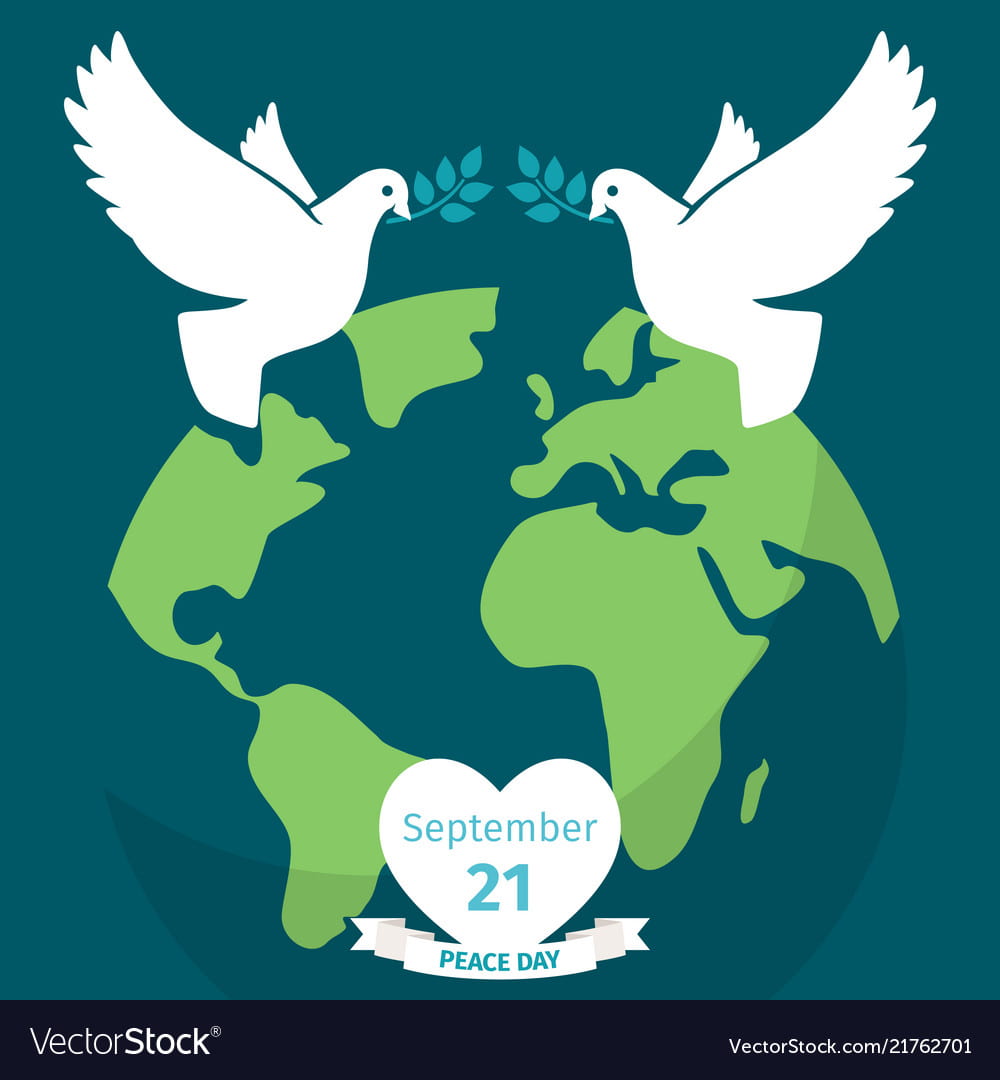
International Peace Day vector poster background with pigeons and planet. (Source: Alamy Stock Vector)


Human Suffering  at the World Trade Center Bombing -September 11, 2021

https://www.gettysburgflag.com/blog/iconic-911-flag/
World Trade Bombing September 11, 200. A fireman stands amid rubble with a 911 flag on his helmet. (Source: Gettysburg Flag Works Blog )

On September 11th, the world acknowledged the 22nd Commemoration to honor the loss of life of thousands of humans after the terrorist attack on the World Trade Center in New York and also at the Pentagon in Washington, D.C. on September 11, 2001. At all of these sites of tragedy, memorials, and monuments have been erected to honor the lives of the deceased, as a site of memory for the families left to mourn, and for the world to remember the human cost of the tragic violence and the urgent need for peace.

Human Suffering in September – Birmingham, Alabama-  September 15, 1963

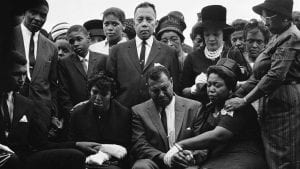
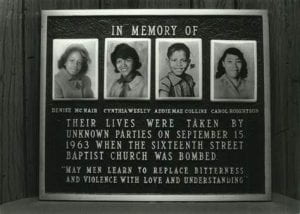
On September 15th, the city of Birmingham, the 16th Street Baptist Church acknowledged the 60th year since a racially motivated terrorist attack by the Klu Klux Klan who bombed their church and left “four little girls” to die in the rubble.

Provided by CNN The family of Carole Robertson, a 14-year-old African American girl killed in a church bombing, attend graveside services for her, Sept. 17, 1963, Birmingham, Ala. Seated left to right: Carol Robertsons sister Dianne and parents, Mr. Alvin Robertson Sr. and Mrs. Alpha Robertson. The others are unidentified. (AP Photo/Horace Cort) - Horace Cort/AP
The family of Carole Robertson, a 14-year-old African American girl killed in a church bombing, attend graveside services for her, on Sept. 17, 1963, in Birmingham, Ala. Seated left to right: Carol Robertsons’ sister Dianne and parents, Mr. Alvin Robertson Sr. and Mrs. Alpha Robertson. The others are unidentified. (Source: CNN; AP Photo/Horace Cort)


https://www.al.com/news/birmingham/2014/09/scholarship_fund_in_honor_of_4.html
These four innocent girl children, pictured below, Denise McNair, Cynthia Wesley, Addie Mae Collins, and Carole Robertson, were killed in the bombing. (Source: Al.com)

Why do We Need an International Day of Peace?

“United Nations Secretary-General António Guterres said, “Peace is needed today more than ever. War and conflict are unleashing devastation, poverty, and hunger, and driving tens of millions of people from their homes. Climate chaos is all around. And even peaceful countries are gripped by gaping inequalities and political polarization.”

Looking at our current political climate, there is unrest around the world from the war in Ukraine, the anti-gay laws of Uganda, to the racially motivated murder of three African Americans in Jacksonville, Florida.  As humanity, our individual, collective and national peace humans are under threat.

Many humans are suffering under the umbrella of structural violence and actively fighting against oppressive, racist, homophobic, sexist, misogynist, classist, and religiously intolerant systems and regimes. Human rights are being violated and for many, peace feels like as author Langston Hughes would call it a “dream deferred.” Many would agree with Secretary Guterres that “…Peace is needed today…” and many more would argue that looking back through the historical record, peace has been needed for quite some time now.


Violence in Numbers

Beyond the devastation of the loss of life, according to National Today, since 2015 there has been $13.6 trillion dollars spent related to violence in 2015, 9,800 terrorism websites containing violent material, 11% of ceasefire agreements between 2015 and 2019, which included gender provisions, 15.9 million – the estimated number of people in Yemen’s population hit by the world’s worst food crisis, 135 million – the number of people in 2019 living with acute hunger, 60% of people struck with acute hunger living in conflict countries, 88 countries that had national action plans on women, peace, and security by October 2020, 417 policy measures enacted by national governments in response to the COVID-19 crisis and 408 million youth living in areas of armed conflict in 2016.

If we are to address the myriad of ways violence affects humanity, we must look at peace as a process, according to Peter Verbeek, Ph.D., associate professor and Graduate Program Director of the Master’s Program in the Anthropology of Peace and Human Rights in the UAB College of Arts and Sciences.  Verbeek and co-editor Benjamin A. Peters state, “Peace is not a passive state but an active behavioral process that can and must be studied in science like any other behavior.”

September 21st is International Day of Peace or World Peace Day

So today, on September 21st, we acknowledge the need for peace through the commemoration of the International Day of Peace, also referred to as World Peace Day. Sanctioned by the United Nations in 1981 and observed annually on September 21st, this day is dedicated to world peace and the absence of war and violence and “might be occasioned by a temporary ceasefire in a combat zone for humanitarian aid access. It is commemorated by many nations, political groups, military groups, and people around the world.” Established through a resolution passed by the United Nations General Assembly, this resolution was sponsored by Costa Rica and the United Kingdom.

The Peace Bell

The Peace Bell was donated by the United Nations Association of Japan in 1954. It has become tradition to ring the bell twice a year: on the first day of spring, at the Vernal Equinox, and on 21 September to celebrate the International Day for Peace.PHOTO:UN Photo/Manuel Elías
The Peace Bell was donated by the United Nations Association of Japan in 1954. It has become a tradition to ring the bell twice a year: on the first day of spring at the Vernal Equinox and on 21 September to celebrate the International Day for Peace. (Source: UN Photo/Manuel Elías)

To inaugurate the day, the United Nations Peace Bell is rung at UN Headquarters in New York City. The bell was “…was a gift from the United Nations Association of Japan, as “a reminder of the human cost of war”; the inscription on its side reads, “Long live absolute world peace”.

2023 Theme-“Actions for Peace: Our Ambition for the #GlobalGoals”

This year’s theme highlights our individual and collective responsibility to ensure that peace is maintained. This call to action works to achieve Sustainable Development Goals (SDGs) and through attaining these goals, it is believed that peace will be acquired by all. To learn more about the SDG’s, watch this video: Do you know all 17 SDGs? – YouTube

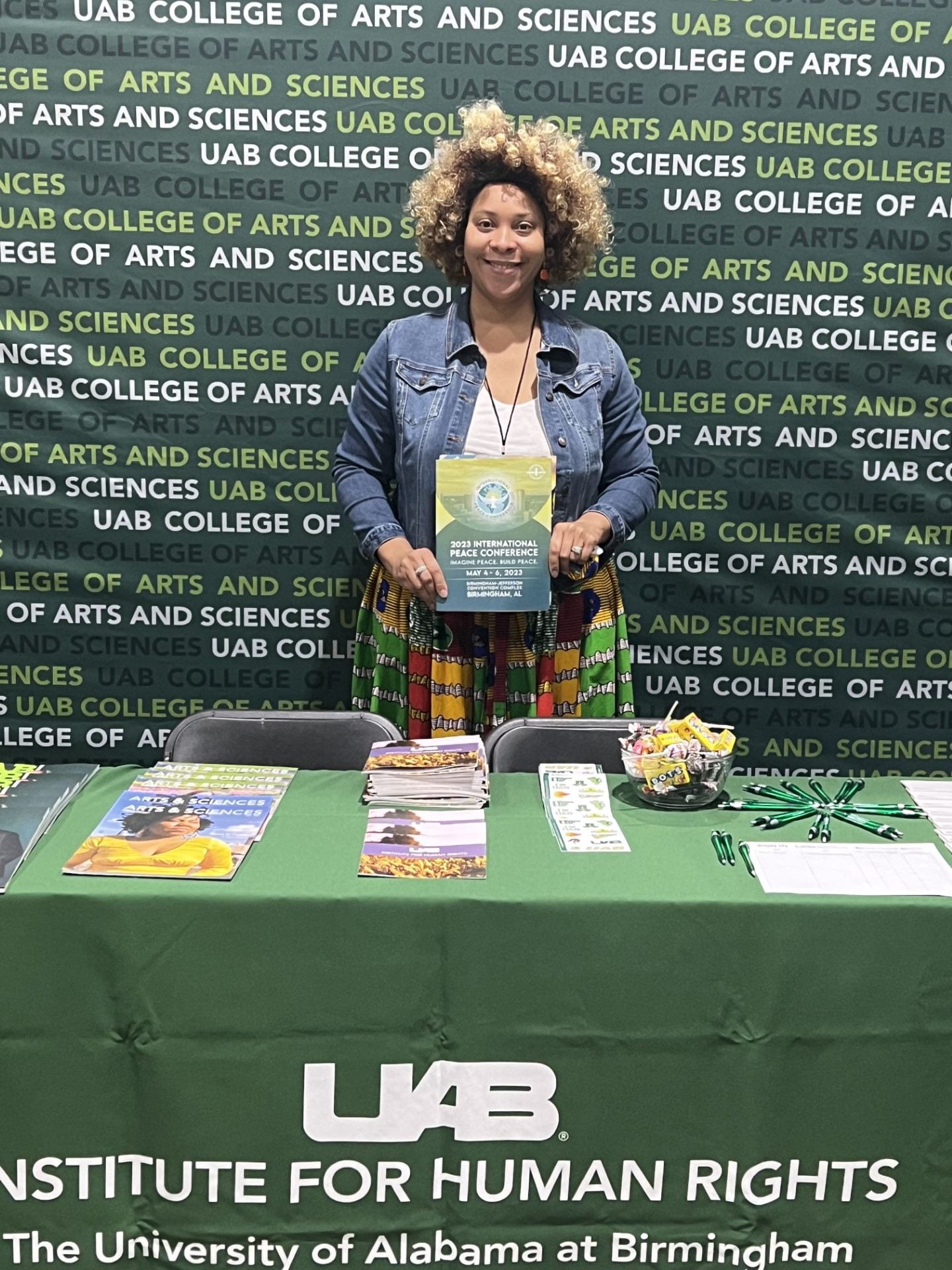
IHR in Actions for Peace – May 2023

Mrs. Waltina Josephat, IHR
Mrs. Waltina Josephat, IHR Admin Assistant (Source: Photo by Chadra Pittman)

This past summer, May 4-6th 2023, UAB’s Institute for Human Rights partnered with the Rotary International and the Birmingham Civil Rights Institute for the International Peace Conference. Leaders from around the world came to Birmingham to present, share ideas, and learn effective ways to achieve peace. Tina Kempin-Reuter, Ph.D. Director of the IHR and Social Science and Justice Research (SJSR) spearheaded the way for UAB in this collaboration which brought together diverse communities working for human rights and peace efforts.

IHR Pictured with IPC Founders, Will and Carolyn Ratcliff, Rotary Club Members, Past and current UAB Anthropology of Peace and Human Rights with Graduate Director, Dr. Peter Verbeek, IHR staff and interns, and Dr. Rev. Bernice King. To learn more about IPC 2023, click here.


International Peace Conference 2023
International Peace Conference 2023 Birmingham, Alabama. (Source: Photo by Chadra Pittman)

75th Year of The Universal Declaration of Human Rights & the Convention on the Prevention and Punishment of Genocide

As we work towards peace and reconciling with our past, the year 2023 marks the 75th anniversaries of the Universal Declaration of Human Rights and the Convention on the Prevention and Punishment of Genocide. We must work together to build paths to peace, eradicating systems of oppression and centering our shared humanity. With all the disturbances to our peace throughout human history, we must remember those who were slain, those who sacrificed, and honor those who fought a noble battle in the pursuit of freedom and justice.

In the words of Congressman John Lewis, “Not one of us can rest, be happy, be at home, be at peace with ourselves until we end hatred and division.” Let us work to end the division and hatred, work towards peace and pave a new way forward together.

For more information about the International Day of Peace, you can visit here.

UN Secretary General, Antonio Guterres, delivers his 100-day countdown to the International Day of Peace message. https://www.un.org/en/events/peaceday/100days.shtml

“With Us Not for Us” World Down Syndrome Day

March 21st marks World Down Syndrome Day (WDSD). On this day, events take place worldwide to raise awareness, promote inclusivity, encourage advocacy, and support people with Down syndrome. This day carries a lot of importance for individuals with Down syndrome as it creates a platform for their voice, which is often unheard of. This year’s WDSD focuses on campaigning for the right to legal capacity, with the slogan “With Us Not for Us.” Every year the United Nations holds a conference for WDSD, which will be hosted in New York this year. The goal for each meeting is to identify and speak on key issues that affect people with Down syndrome, call for action, and inclusive policymaking. Since 2011, the UN General Assembly (UNGA) has designated this day to raise awareness about the struggles and successes of individuals with Down syndrome.

World Down Syndrome day banner
Yahoo Images

History of WDSD

At every WDSD conference, individuals with Down syndrome and other disabilities, activists, and UN and government officials consider different ways to help the Down syndrome community. WDSD gives power and a voice to people with Down syndrome, enabling them to speak on the changes they want and providing guidance to how we collectively, as a global community, can help. Past themes of WDSD have supported inclusion, acceptance, and freedom for all individuals with disabilities. All too often, individuals with any form of disability are deemed unfit or incapable of being independent due to a lack of awareness and understanding, which is why this day is immensely important. Down Syndrome affects 3,000-5,000 newborns every year, which is caused when newborns have an extra copy of chromosome 21. Their struggles begin from the moment they are born. People with Down syndrome are not always accepted, particularly in societies that have strong stigmas against medical problems.

Legal capacity

Every year, the WDSD conferences promote different aspects that individuals with Down Syndrome face, this year’s WDSD conference focused on the right to legal capacity and decision-making. People with Down syndrome are often not given the right to make their own life decisions. The United Nations Convention on the Rights of Persons with Disabilities (UNCRPD) protects this right, but the sad reality is that it is often ignored. Legal capacity is critical for people with Down syndrome, as without it, they have no authority to make decisions on:

This is a prevalent issue. Rather than having protection from governments or their families, people with Down syndrome are often considered mentally incompetent and incapable of making their own decisions. Governments and judicial areas within countries are responsible for ensuring that people with Down syndrome have the right to legal capacity and the proper protection and support.

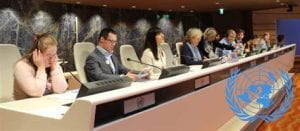
People with Down syndrome at the UN meeting.
Yahoo Images

Struggles

All over the world, people with Down Syndrome are treated unjustly. They are denied proper education, healthcare, and employment opportunities and are often ignored, unable to make decisions about their lives. These struggles are pervasive, affecting developing countries and modern, progressive westernized countries. In 2019, Bassel Dib, a man with Down syndrome, was dismissed from an internationally recognized gym chain, Golds Gym, in Amman, Jordan. He was kicked because the owner did not want someone with a visible disability to ruin the gym’s prestige. The owner is a well-known member of the Jordanian parliament who has been able to get away with discrimination on multiple occasions by leveraging his status and powerful connections within the Jordanian government. Common stigmas and stereotypes surrounding people with Down syndrome prevent them from accessing specific opportunities, places, and decision-making power.

Successes

Despite these injustices, there are many inspiring success stories of people with Down syndrome. For instance, Bassel has been able to go to college, compete in the Special Olympics on the Jordanian national team, and now aspires to become a bodybuilder. Sofia Jirau made history as Victoria’s Secret’s first model with Down syndrome. Chelsea Werner, a special Olympic gymnast that has now become a successful model, was a four-time U.S. national championship winner in gymnastics and has modeled on the cover of Vogue and New York Fashion Week. John Tucker, also a man with Down syndrome, starred in the Emmy-winning series “Born This Way.” This series features seven young people with Down syndrome and follows their lives as they look for employment and housing while overcoming societal obstacles. These are just a few success stories of people with Down syndrome. Numerous other achievements exist, from small unknown advancements to big, publicized ones. The important thing is that every single one of them has been able to break societal barriers and achieve their dreams.

Down Syndrome Gymnast at the special olympics
Yahoo Images

What can you do

The most significant problem for people with Down syndrome is the lack of equal opportunities. We can work towards addressing this issue by educating ourselves, our peers, friends, and families. It is crucial to constantly be aware of issues preventing people with Down syndrome from accessing their full independence and power. Together, we can collectively create positive change and ensure that people with Down syndrome are given the same attention, opportunities, and power as everyone else.

Additional information

Sign up here for news and World Down Syndrome Day Team information.

Down Syndrome International has created a downloadable guide explaining what Down syndrome is and key topics surrounding people with Down syndrome.

Part Three: The Different Approaches to Disabilities and the Future of Disability Rights

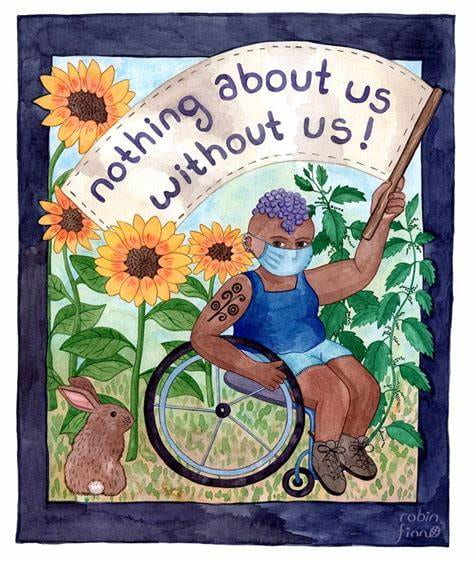
An image of a woman with disability in a sunflower field with a banner that reads, "nothing about us without us!"

This blog is part three of the conversation around disability rights, especially as it applies to children within the American school system. If you have not read the first two blogs in this series, I suggest you do so. The first blog focused on the historical view of disability and the American school system’s approach to children with disabilities. The second part mainly focused on the struggles that children with disabilities face within the school system, and how these struggles have been exacerbated due to the recent pandemic. This final part will focus on some of the approaches that have been taken in the past to address people with disabilities, and how they differ from a human rights approach. We will also examine how we can help on various levels, whether we want to focus on our personal abilities or advocate for a larger movement.

The Rights of Children with Disabilities

What rights are protected?

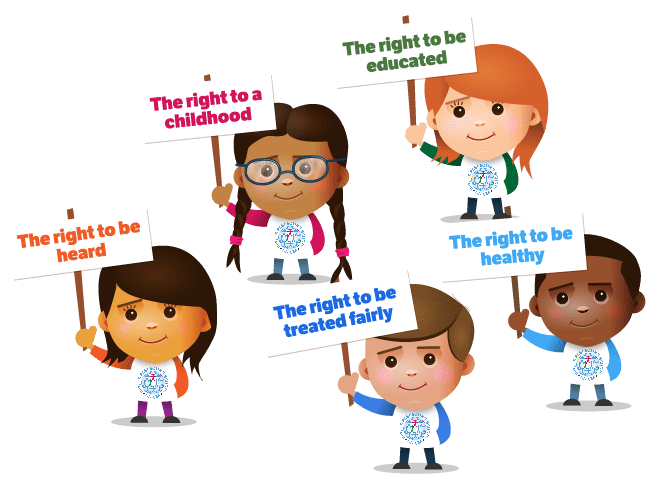
An image depicting five children holding signs that read, "the right to be heard", "the right to a childhood," "the right to be educated," "the right to be healthy," and "the right to be treated fairly."
Source: Yahoo Images

Much of what we have established in modern society in terms of children’s rights comes from decades of struggles, from implementing child labor laws to fighting for the right to an education. Similarly, the fight to pass the Americans with Disabilities Act (ADA) was one sure way to protect individuals with disabilities from discrimination. These rights and more are protected under the United Nations, both in terms of people with disabilities, (Convention on the Rights of Persons with Disabilities, CRPD), and with children’s rights (Convention on the Rights of the Child, CRC). Yet, these developments have only occurred in recent years; the ADA and the CRC were passed in America and the UN respectively, in 1990, and the CRPD was not adopted internationally until 2006.

The ADA, passed in the United States, protected the rights of people with disabilities from being discriminated against in all aspects of society. This was the first major legislation that protected people with disabilities from being denied employment, discriminated against in places of business, or even denied housing. In addition to these protections, the ADA required industries to be inclusive of those with disabilities through (among other things) taking measures such as building ramps and elevators for easy access to upper-level floors and building housing units with people with disabilities in mind. While America had passed the Individuals with Disabilities Education Act or IDEA (originally passed in 1975, and renamed in 1990) by this time, the initial form of this legislation allowed schools to place certain students with disabilities in special programs for no more than 45 days at a time. It was not until its improved form was passed in 2004 that provided the necessary financial and social infrastructure for its successful implementation.

The passage of the CRC, which applies to all individuals under the age of 18, focuses on non-discrimination, the right to life, survival and development, the State’s responsibility to ensure that the child’s best interests are being pursued, including ensuring that the child has adequate parental guidance. Additionally, it focuses on the child’s right to free expression, free thought, freedom to preserve their identity, protection from being abused or neglected, adequate healthcare and education, and includes certain protections the State is required to offer the children, including protection from trafficking, child labor, and torture. Article 23 of this Convention specifically focuses on the rights of children with disabilities, adding that these children have the right to the care, education, and training they need to lead a life of fulfillment and dignity. It also stresses the responsibility of the State to ensure that children with disabilities can live a life of independence and protect them from being socially isolated. Even though the UN passed this Convention in 2004, America is the only nation that has yet to ratify this treaty. This is why certain realities continue to exist, such as what is happening in Illinois.

Finally, we have the CRPD, which entered into force in 2008, only 15 years ago. Influenced by the ADA, the Convention on the Rights of Persons with Disabilities was passed to ensure that people with disabilities were fully protected under the law, including from discrimination, with the ability to function as fully pontificating citizens of their societies, with equal opportunities and the right to accessibility in order for them to lead a life with the dignity and respect afforded to their able-bodied counterparts. This convention had massive support and draws from both a human rights focus and an international development focus. What makes this convention unique is the implementation and monitoring abilities embedded within the treaty itself, and it includes non-traditional actors from communities (usually those with disabilities) with specific roles in charge of monitoring the implementation of this treaty. Unfortunately, the United States, while Obama signed the treaty and passed it to the Senate for their approval in 2009, has yet to fully ratify the CRPD treaty as well.

Some Approaches to Disability Rights

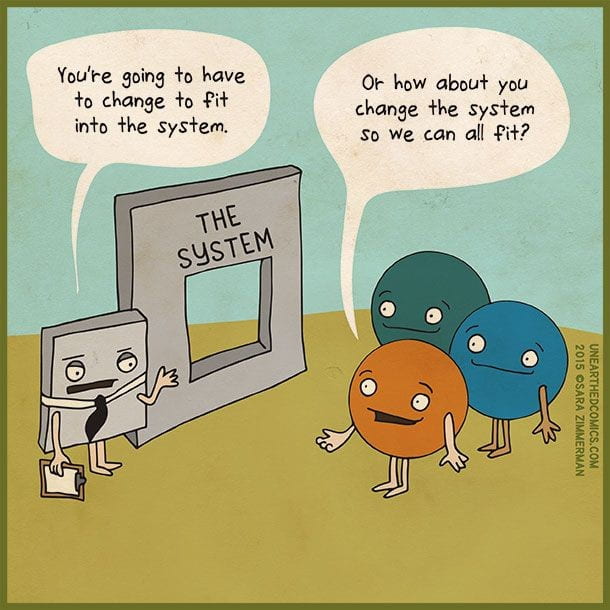
Upon understanding the various nuances of this conversation, we can now explore the three different approaches to defining disability in society. These approaches examine the issues that people with disabilities face and provide models influenced by differing fields of expertise. Many within society view disability as a medical issue and their solutions to the struggles faced by people with disabilities are medically focused. Similarly, others believe that disability is an issue of how society is structured, and their proposals for solving these issues lie within the realms of reshaping society to be more accessible to people with disabilities. Still, another approach built upon the foundations of human rights, focuses on the individual first, and the disability as an extension of their individuality. We will explore these three approaches and their pros and cons.

Approach 1: Medical Model of Disability

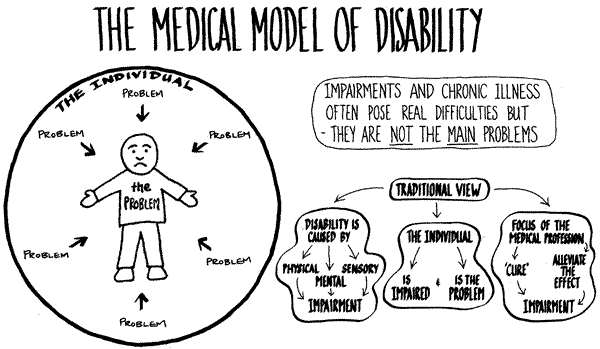
An infographic depicting what the medical model of disability stands for. At the center is an individual with arrows pointing to them to place the full responsibility of being disabled on the individual itself.
Source: Yahoo Images

            As mentioned above, some people view disability as a medical issue, and this approach can be categorized as the medical model of disability. This means that they believe that the “problem” of disability belongs to the individual experiencing it and that disability comes from the direct impairment of the person. The focus of this approach is to look for medical “cures” for disability, which can only be provided by medical “experts” based on the specific diagnosis. While it may be true that individuals with disabilities require medical help from time to time, their entire existence does not revolve around this notion of viewing disability as an illness. The focus here is to “fix” the person with disabilities, so they can become “normal” again. This approach also makes use of the “special needs” rhetoric, which can result in the isolation and marginalization of people with disabilities.  Media plays a big part in portraying people with disabilities as weak or ashamed of their disability, which can invoke fear or pity for people with disabilities within the larger society.

Approach 2: Social Model of Disability

A cartoon image to represent the social model of disability. In the image, there are many circular characters attempting to enter a square entrance, and cannot fit in. The gatekeeper informs them to change in order to fit into the system, and they reply back that the system could be changed instead to accommodate them.
Source: Yahoo Images

            Another approach that has been proposed is what is known as the Social Model of Disability. In this approach, the “problem” of disability is seen as a result of the physical and social barriers within society that exclude people with disabilities from fully participating in their society. Disability is seen as a political and social issue, and the goal of this model is to be more inclusive and recognize the prevalence of disability within our societies. This means looking closely at the ableist social institutions and infrastructures present within society and attempting to address these manmade challenges posed by people with disabilities. This model recognizes the social stigma around disabilities and recognizes people with disabilities as differently abled rather than viewing them as incapable of living an independent lifestyle. This approach places individuals with disabilities on a spectrum rather than the two categories of disabled and able-bodied. The goal of this approach is to be socially inclusive of all individuals, regardless of their disabilities.

Approach 3: The Human Rights Model of Disability

An image depicting various individuals with the saying, "Nothing about us, without us, is for us" around them.
Source: Yahoo Images

Finally, there is the Human Rights Model of Disability, which builds upon the foundations laid out by the Social Model of Disability and the Universal Declaration of Human Rights (UDHR). In this approach, the focus is on viewing the individual with a disability as a human first, recognizing that disability is a natural part of humanity that has existed as long as humans have been around. While it shares a lot of similarities with the social model, the human rights approach emphasizes not only the right of every individual to be treated equally before the law but also stresses that a person’s impairment should not be used as an excuse for denying them rights. This is essentially what the CRPD centers around, and the main goal of this approach is to ensure that people with disabilities have equal opportunities and protect their right to fully participate in society, politically, civilly, socially, culturally, and economically.

How Can We Help?

A cartoon image with EQUAL on the top, and many characters lined up with shirts that have individual letters on them that spell out "RIGHTS" below it. Below them is the phrase, "human beings are born free and equal - Universal Declaration of Human Rights 1947" on the bottom of the image.
Source: Yahoo Images

On the Internation Level

While the United Nations has a convention that focuses on protecting children’s rights, it is highly debated whether these treaties are being enforced around the world. Child labor is still common in various places around the world, including right here in Alabama. While it can be argued that the US has not ratified the treaty and that is why the UN cannot do anything about this issue, there are other places that have ratified the treaty that still places children in dangerous working conditions and face no real repercussions from these decisions from the UN. In 2019, many tech companies were sued for their use of child labor in other countries to mine the precious minerals they require to produce their devices. Many textile companies within the fashion industry use child labor in nations that have ratified the children’s rights treaty. While the United Nations is trying its best to protect and promote the rights of vulnerable communities, it has not been able to enforce these treaties and regulations, and as a result, atrocities against those vulnerable communities, (including children), continue to occur. How can we as human beings, ensure that all children are protected from harm, not just those able-bodied, living in wealthier nations? This is something that needs to be addressed, and it requires the cooperation of many different nations willing to put their differences aside and work together to find a solution.

On the Domestic Level

As we explored in the human rights model of disability rights, it is the responsibility of society to provide equal access to all its citizens. This includes its citizens who have disabilities, and not doing so would discriminate against those who have disabilities and violate the Americans with Disabilities Act. This means that both on a national and local level, our infrastructure needs to be updated with an inclusive mindset that makes the roads safer and more accessible to all the citizens using them. As a state, Alabama could not only fix the infrastructure, but also pass bills to ensure that people with disabilities receive the care they need, including employment opportunities, medical assistance, food assistance, and any financial help they may require. Furthermore, on a national level, the police (or another department focused on social work) can be better trained to recognize the various disabilities, both visible and invisible, so people with disabilities are not wrongfully imprisoned for “behavioral” issues. This training would help erode the school-to-prison pipeline that has replaced disciplinary standards in American schools and make way for a brighter future for children with disabilities. Finally, the United States can, at the bare minimum, ratify the Convention on the Rights of the Child, signed into existence in 1990 by member states of the United Nation. As we mentioned earlier, the United States is the only nation in the world that has yet to ratify this treaty.

On the Individual Level

We can all be more mindful of our actions and our ableist mindsets. Next time you walk down the street, pay attention to the roads and sidewalks. Are there any sidewalks for people with disabilities to use safely? Are there curb cuts, and are those curb cuts freely accessible or are they blocked? How accessible are public buildings such as restaurants, storefronts, or even the DMV? Are there enough parking spots allotted to people with disabilities, and are those spots easily accessible, or blocked off by other vehicles? Thinking outside of an ableist mind frame is the first step toward being more inclusive of people with disabilities. It might seem like a powerless and pointless step to take, but the more you start to notice the ableist structures within society, the more you will want to speak up about these issues the next time you have the opportunity. You will also be more mindful of your own ableist actions and how they may have unintended consequences. If you are a parent, you have the ability to question your school’s practices concerning children with disabilities and offer support to the children and their parents. As an individual, you can also contact your representatives to pass legislation that would empower people with disabilities to live independently. As a society, we need to get past the stigmatization of this group and normalize disability being an innate part of being human.