Women are Disadvantaged in Female-Dominated Fields

Women and man standing on unequal sized stacks of coins
Gender Pay Gap. Source: The People Speak!, Creative Commons.

What do nursing, teaching, social work, and librarianship all have in common? Those working in these fields are underpaid, under respected, and mostly female. Pink-collar professions, or female-dominated fields, are considered less-respectable than other fields, and history points to the fact that mainly females work in them to be the cause.

Most of these jobs were once dominated by men, and when they were, they were highly respected. For example, before the late 1800s, teaching was a profession for men only; it was highly respected and well paid, but as females began to take these jobs, that quickly changed. This trend is similar for the other pink-collar professions mentioned—with the exception of social work because it is relatively new as a profession—and similar to trends in other pink-collar professions.

To understand why pink-collar professions are underpaid and undervalued we must first understand hegemonic masculinity. This is the idea that society has an ideal form of masculinity that is valued by many but attainable to very few. In fact, the main people who are able to meet this standard are fictional characters: Captain America, Wolverine, etc. In Still a Man’s World: Men Who Do “Women’s Work,” Christine Williams explains that this ideal puts pressure on the men who ascribe to it to push anything feminine away, including the jobs dominated by females. Hegemonic masculinity’s standard changes based on the dominant culture, but one aspect that remains is the need for dominance over femininity.

When women enter male-dominated professions, they experience discrimination and sexual harassment, which could deter them from staying in the field and negatively impact their mental health. However, when men enter female-dominated fields, they experience almost no discrimination. Tokenism is the idea that a minority group in a workplace or academic area will experience disadvantages and harassment. However, where other groups face discrimination, men benefit from being tokens. During higher education for male-dominated jobs, females experience many of the significant disadvantages of being tokens: women studying for these positions have heightened visibility, which can make them feel like they have to succeed because they feel responsible for the advancement of their gender in that profession. Additionally, the dominant group—in this case men—may be threatened by their presence, causing the dominant group to isolate tokens and pressure them to conform to the prevalent culture.

However, when men begin schooling for female-dominated professions, they generally don’t experience these challenges. Male professors tend to take male students under their wing, which gives them a boost in their classes and professionally—an advantage that most token groups wouldn’t regularly receive. Having a mentor is a great advantage to anyone training professionally, so the advantage these men receive over the women in these female-dominated fields is exponential. Additionally, while most tokens experience sexual harassment, men don’t experience sexual harassment in female-dominated fields. In fact, the group that typically experiences harassment in female-dominated professions is females; even though it’s at lower levels in high-wage female dominated fields, sexual harassment is still a big problem in female-dominated professions. Most tokens are the group discriminated against, but in the case of female-dominated professions, females still experience disadvantages starting in professional school.

Women continue to experience disadvantages after professional training as well. Most people have heard of the glass ceiling: the invisible force keeping women from reaching executive and other higher-up positions. While there is a higher proportion of women in executive positions in female-dominated professions, women still face a barrier: the glass escalator. The glass escalator is the invisible force pushing men—sometimes despite their wishes—to executive and administrative positions. This, in turn, leaves women with more experience in lower paying and lower ranking positions. Some men would rather stay in positions considered low-ranking, like children’s librarian, geriatric nursing, or lower elementary school teaching, but feel pressure to move up because of stereotypes of the work men should be doing. Others realize they will move up quickly and enter these fields with the goal of quickly becoming a reference librarian, ER nurse, principal, or other high-ranking positions. Regardless of the male employee’s intention, they are pushed past women into higher-ranking positions or specialties.

While there are more women in these professions, there is still a significant wage gap. This is not necessarily directly due to implicit sexism: because men often occupy the higher status—and therefore higher paying—jobs, men in female-dominated professions earn more than women. This is compounded by the problem that these jobs are underpaid to begin with. Regardless of the pay when men dominated these professions, when women began to dominate these fields, they immediately had lower wages. When professions like teaching and librarianship first became feminized, single women were those that flooded the fields. It was rarely the intention of these women to stay in the field after they were married, and women typically had someone else to rely on for financial support, so employers paid them less because they could. However, even when the attitude towards working women changed, the pay didn’t. Women in female-dominated professions are underpaid, while men are pushed to the positions that have higher pay.

The problem is not men; it is society’s view on women and “women’s work”. As a society, we underappreciate emotional labor and care-work, and many of the jobs involving this are female-dominated. There is the perception that anyone can do these types of jobs, even though most require education beyond high school. Because our culture values aspects of masculinity over femininity, men are pushed into more highly respected, masculine areas of female-dominated fields, which keeps equally qualified women out of those positions. As a society, we must work to value female-dominated professions based on their impact and importance rather than the perceived value of the person doing the work.

Arab Spring 2.0

The Second Arab Spring has risen, but this time it is much more peaceful, democratic, and youth-centered than the first. Why is this important?

2011 was quite the year for everyone except me. I still attended elementary school, could not ride a bike or swim, and had no idea what I was going to do with my life. Although nothing great happened to me, the world had changed drastically for those in the Middle East, especially the youth. That event, which changed the way many Arabs and Middle Easterners viewed their governments, was called the Arab Spring. Fast forward to 2019, I’m a freshman at The University of Alabama at Birmingham and Middle Easterners are fighting for equality and a democratic style of government. Then and now, human rights violations such as inequality and representation serve as focal points for protest and revolution, allowing for them to stand up for what they believe in and fundamentally change their government.

So, what exactly was the Arab Spring?

Basically, the Arab Spring consisted of many pro-democracy protests that took place in many majority-Muslim countries like Tunisia, Morocco, Syria, Libya, Egypt, and Bahrain. Like many other social movements, the Arab Spring started with a “single act of defiance.”

In December of 2010, a street vendor, Mohammad Bouazizi, from Tunisia set himself on fire to protest the seizing of his vegetable stand by the police due to him not getting a permit. Bouazizi’s sacrifice set aflame the Jasmine Revolution in Tunisia, where the many protestors fighting for more social freedoms caused Tunisia’s authoritarian president for 20+ years, Zine El Abidine Ben Ali, to renounce his position and flee the country. This revolution in Tunisia had caused the country to become more socially democratic and involve the people in its political process due to Tunisia’s first elections occurring in 2011.

Such a great change in government by a country in the Middle East had caused others in the region to also protest, with protests occurring in Egypt, Libya, Syria, and Yemen, although many succeeded and others failed.

Although Bouazizi’s death served as a catalyst for the spreading of pro-democracy fervor, the death of Egypt’s Khaled Said by police officers became another martyr in the fight for democracy. Through his death, an Egyptian Google Executive from Dubai by the name of Wael Ghoneim became a prominent activist, creating a Facebook group called “We Are All Khaled Said,” bringing in thousands of members.

Egypt’s Arab Spring, springing from Said’s death, called for the resignation of Hosni Mubarak, then President of Egypt. After resigning, he was “charged with ordering the deaths of protesters,” of which “more than 800 people were killed.” Once Mubarak stepped down, a former political prisoner by the name of Mohamed Morsy came into power democratically. Although he was chosen by the people, Morsy made it so that no court could overturn his decisions, solidifying him as an autocrat. After many protests and conflicts with the Egyptian military, Morsy “was ousted in a military coup,” leading to the establishment of Abdel Fattah el-Sisi, Egypt’s former military chief, as President through 96% of the vote.

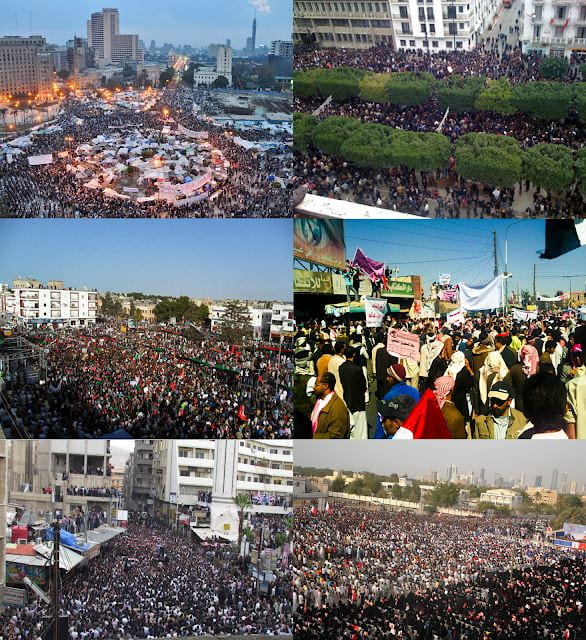
Images of Protests in Cairo, Egypt; Tunis, Tunisia; El Beïda, Libye; Sana'a, Yémen; Damas, Syrie; and Karrana, Bahreïn
SCREENVILLE: Iranian Dissidence in Real Life Peril. Source: screenville.blogspot.com, Creative Commons

Was the Arab Spring ultimately successful across the Middle East?

Unfortunately, no.

Although there were some democratic successes in both Tunisia and Egypt through electing leaders democratically, other countries in the Middle East, such as Libya and Yemen resulted in continued conflict and war many years after the Arab Spring.

Libya, though ousting Muammar Gaddafi from his reign, remains in conflict. Libya has essentially been divided through the many militias and political factions that exist today, fighting endlessly to grab power. The situation has been so rampant that many “migrants from sub-Saharan Africa are forced” to dangerously travel to Europe through the Mediterranean, all in an effort to flee human trafficking and violence.

At first, Yemen successfully removed its President of 30 years, Ali Abdullah Saleh. However, instead of a democratic response, an “armed uprising and foreign military intervention” caused Yemen to undergo a brutal civil war. It is through this war that Yemen experienced the worst cholera outbreak, large-scale famines across the country, and the killing of many civilians through bombs and landmines. These issues continue to be present, with no end in sight as to when it will end.

So, the Arab Spring, although deadly, resulted in some Middle Eastern countries to move towards democracy and others toward chaos and autocracy. It’s not like there’s going to be any other event like this soon, right?

Again, no.

In recent news, there have cumulative instances where protesters are fighting for the same issues. However, they “have learned from their mistakes, and are seeking new goals and using new means to achieve real, lasting, regional changes.”

According to the Carnegie Endowment for International Peace, there are three distinct characteristics for this new Arab Spring, otherwise called Arab Spring 2.0:

  1. The protesters do not trust any political leader. They believe that current leaders have not kept to their economic promises and reforms. And as such, many want to start over and introduce new politicians and parties.
  2. The protests are peaceful. Unlike protests from before, many current protests lean pacifist, even through brutal responses from the military. It is through these protests that widespread support is achieved and that countries are willing to listen.
  3. The protesters are rejecting sectarian divisions. In Lebanon, for example, religion and ethnic identity form a crucial part of how the government is formed and how people are treated. These protesters have essentially decided to do away with these divisive tactics and move towards equalizing all in government.
An image of the Peace sign
Peace Logo Wallpapers – Wallpaper Cave. Source: wallpapercave.com, Creative Commons

These characteristics directly coincide with many Algerian protests that began on February of 2019. During a panel discussion hosted by the Brookings Doha Center in partnership with Al Jazeera Centre for Studies, Haoues Taguia, a researcher for the Al Jazeera Centre for Studies, described how Algerians are distancing themselves from being a parallel to the Arab Spring. He noted that these protests are relatively peaceful, combined with the fact that a large portion of the population from “all walks of life” came to participate, legitimizing the movement. Due to a lack of leadership within the movement, these protests will be initially successful, but chaos would ensue in the years to come without a solid and stable leadership structure. During the same event, Shafeeq Garba, a professor of Political Science at Kuwait University, also advised that other civilians of MENA countries should follow Algeria’s example in order to create dialogue for change. He noted that “in the violent alternatives to this, civil wars, everyone loses, and that if these revolutions don’t succeed, they will ultimately lead to failed states.”

Lebanon is another interesting case where protests are fundamentally changing the way that a legitimate government should operate. These protests came to fruition on October 17 due to new taxes on WhatsApp calls, which caused protesters to light “fires on main roads and [block] highways, while banks, schools, and universities closed.” This new tax became the tipping point for those agitated with the Lebanese government and how their politicians are manipulating the wealth and resources that Lebanon contains. Protesters have gone so far as to create a human chain across the country as a form of protest while also involving more and more students into the fray. According to Fatima al-Sheikh, a freshman student protester, many students thought that the sectarian leaders “looked out for [their] interests, even though [the students] knew they were corrupt and oppressive. But now [the students] feel that with our hearts, and we can’t go back from that.” These protests have raged on for more than a month. With elections soon, only time will tell whether or not these protests will ultimately succeed or rather be only one of many protests in the MENA region that result in chaos and a fractured country.

Arab Spring 2.0 may only seem like a relatively new phenomenon for the MENA region now, due to the rippling effects the first Arab Spring had and still has to this day in countries like Yemen and Libya. However, rising protests against a corrupt and unfair government have spawned all over the world, from Latin America (my recent post concerning Chile’s protests) to the Middle East. Since many of these protests have been led by students it just really comes to show how concerned many college-aged people are about whether or not their respective government will be able to fairly implement policies that benefit the entire nation rather than just the ruling class. In terms of Lebanon and Algeria, both countries are fighting to revamp their respective governments. By fighting to create fair elections that emphasize the importance of the people and not just the ruling elitist class, protesters in the MENA region symbolize the importance of human rights values such as equality in a government through democratic and fair elections.

What Will It Take to End Child Marriage in Your Country?

by Grace Ndanu (student guest blogger)

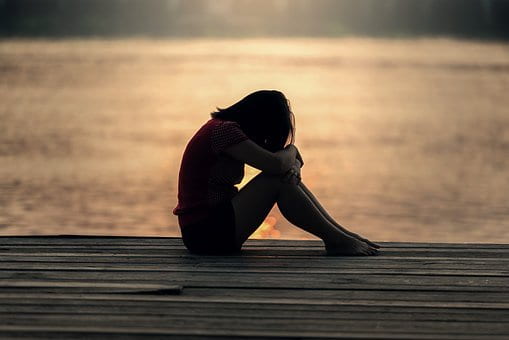
The silhouette of a young girl with her head hanging low in her lap
Source: Pixabay

Justice is coming! As I continue growing old I keep asking myself, why child marriage? Is it really necessary? And if not, what do I or we have to do about it? I understand that child marriage is a result of male dominance at large. I think it’s best if we bring men on board first. Working with men can be very effective in reducing child marriage if not ending it. It will help to change ideas and behaviors, especially dealing with patriarchal attitudes. Once men are on board, they can use their influence to pave the way for positive change.

Adults have groups where they get to share what they are going through. Children also need safe spaces in schools. This will help them build their confidence and trust amongst themselves and also with their teachers. I’m sure there are girls who wouldn’t have gone through early marriage if they had a chance to escape. But they didn’t. Simply they didn’t have anyone to tell regarding what their parents were planning for them. This is why they need that space, it’s the window to their success.

Corruption has deep roots in my country, Kenya. For example, I would like to know where funds meant for educating less fortunate girls go. Culture is not the only reason for early marriage, but also poverty. There are girls who sacrifice themselves to go get married in an effort to reduce a burden on their parents. It has come to my notice that the leaders or people responsible for the education funds tend to accuse these girls of bad behaviour, but they are trying their level best to do what is right. Can’t the funds holders use the funds to educate the girls instead of them using the funds for their own benefits?

Not all problems are solved through fighting. Why shouldn’t we mingle? As they explain why early marriage we have a chance to convince them how early marriage is harmful and the advantages of not doing it. At some point there will be some girls listening, them knowing the advantages of not being married off, they will always want to go for their success and thus they will always report whatever harmful plan is made for them.

I don’t know who is with me! I consider myself as the second doubting Thomas. If am not sure of what am told I will ask for a success story if not stories. The girls who escaped the scandal of early marriage should be advised to go back to their communities and villages. The parents will be so proud until they will shout for the whole community to hear and come and see. Other parents would want their daughters to come home successful and hence they may change their attitudes towards early marriage. On the other hand there will be role models for little girls and the whole society.

Juvenile Justice Reform Helps Kids Be Kids

by Pamela Zuber (student guest blogger)

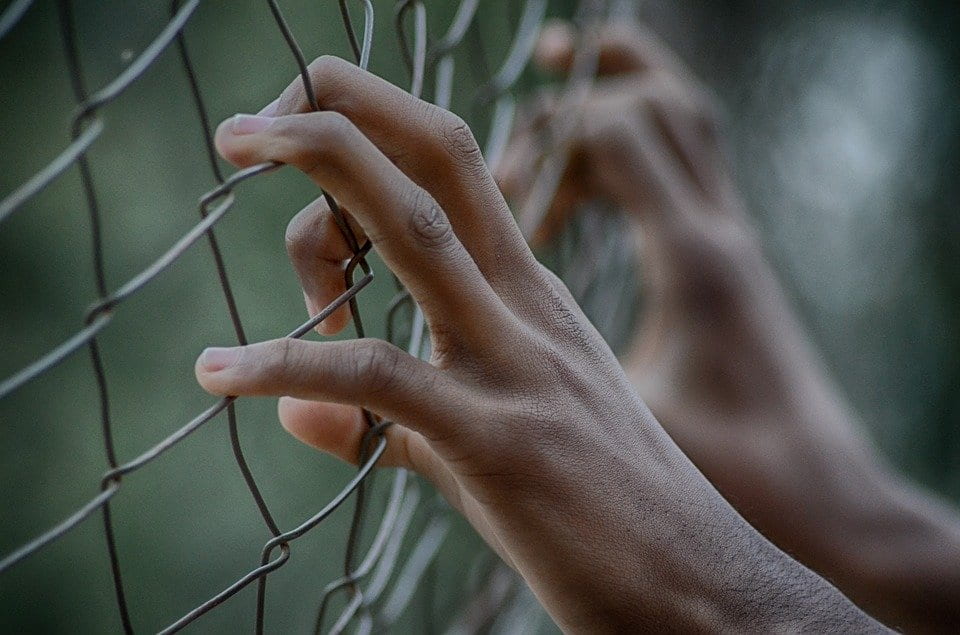
A pair of young hands gripping a prison fence
Source: Pixabay

While people in many places in the United States and around the world are experiencing human rights violations, the news is not entirely bleak. There are also positive developments. One is in juvenile justice.

How has juvenile justice progressed?

On October 1, 2019, four U.S. states allowed people seventeen years old and under to be tried automatically as adults: Georgia, Michigan, Texas, and Wisconsin.

Members of Michigan’s state House of Representatives and state Senate took steps to change that statistic. They passed legislation in October 2019 that would:

  • Define adults as people eighteen years old and older.
  • Place seventeen-year-olds in family court, not adult criminal court.
  • Assign alternatives such as counseling and monitoring instead of incarceration or help accused youth avoid traditional court procedures entirely.
  • Give prosecutors the option to try people under the age of seventeen as adults if they are accused of violent crimes such as murder or rape if they have court approval.
  • Prevent seventeen-year-olds from being incarcerated in the same facilities as adults.
  • Not apply to seventeen-year-olds who have been previously sentenced as adults.

Legislators previously had trouble reaching agreement on the Michigan bill because of a dispute over funding for juveniles in the state’s justice system. The state of Michigan and the state’s counties currently share such funding responsibilities, but under the 2019 bill, the state would fund the first few years of the new program. The funding arrangement could help ease financial burdens for counties struggling to fund programs relating to health and wellness, law enforcement, and other services.

Known as a raise the age bill, Michigan governor Gretchen Whitmer signed this bill, Senate Bill 84, into law on October 31, 2019. The provisions in the bill will take effect in 2021.

What are the advantages of charging people as juveniles?

A young man skating along a road on a skateboard
Source: Pixabay

Charging people who are seventeen years old or younger as juveniles instead of adults may produce many benefits. On a short-term basis, it may be safer if accused young people are housed with other young people instead of adults. Young people treated as adults may be incarcerated with people accused of or convicted of violent crimes. The safety of juveniles could be at stake.

Designating people as juveniles also may produce more long-term benefits. For one, it could save money. A 2011 report published by the Vera Institute of Justice stated that raising the age of adult prosecution from sixteen to eighteen could provide millions of dollars in benefits for youth, victims, and taxpayers in the state of North Carolina. Such changes could initially cost money because they would require changes to the youth justice system, but in the long run, they could save money by not engaging the adult justice system.

Proponents of prosecuting children as adults have said that this prosecution could scare youths straight. They claim it could prevent young people from committing serious crimes because they are frightened of the consequences. But studies have shown that such harsh penalties do not deter young people from committing serious crimes.

Judicial system changes may help reconcile what we’re learning about the biology of young people. “Researchers focused on brain development have found that 18- to 24-year-olds—also referred to as young adults — stand out as a distinct developmental group with heightened impulsive behavior, risk taking, and poor decision making,” wrote scholars at the Council of State Governments (CSG) Justice Center in 2015.

Teens’ impulsiveness, judgment problems, and desire to experiment may thus make them liable to try alcohol and drugs and engage in other dangerous practices. They could be using such substances to rebel against their parents and other caretakers. After they use drugs or alcohol, the substances may alter their still-developing brains, creating life-altering consequences. Similarly, teens who engage in illegal behavior may face legal consequences. If they’re tried as adults, they may spend years behind bars or face other repercussions that could haunt them for their entire lives.

Who else advocates for juvenile justice reform?

Michigan legislators aren’t the only people and organizations advocating for changes to the justice system for juveniles. Organizations such as the Campaign for Youth Justice (CFYJ) are working to stop the prosecution of children under the age of eighteen as adults and end youths’ incarceration in adult facilities. The CFYJ says that this advocacy is necessary. It claims that 95,000 U.S. children are housed in adult prisons and jails every year and that several states and the District of Columbia allow children as young as seven years old to be prosecuted as adults.

Efforts from the Juvenile Law Center (JLC) are also trying to change the juvenile justice system. Like the Campaign for Youth Justice, it wants to end the prosecution of children as adults. The JLC is also working to end harsh conditions and solitary confinement at juvenile correctional facilities. It seeks to stop sentencing youth to serve their entire lives in prison without parole and end economic practices such as fines and fees that keep poor children confined more than more affluent ones. In addition, it also wants prisons and jails to provide educational opportunities for youth that can help them build better lives that prevent them from committing additional crimes and re-entering the correctional system.

On the websites for both organizations, there are sections that allow people to donate to their causes. Both sites also offer updates to keep people informed. The Campaign for Youth Justice (CFYJ) site also allows people to share their stories and give testimonials. It provides instructions on how people can contribute to the organization’s initiatives.

Prosecuting teenagers as youths allows people to face the consequences of their actions, but it doesn’t condemn them to serving lifetimes in prison for minor crimes that they committed when they were still growing physically and mentally. We all make mistakes, especially when we’re young. Sensible justice sentencing for juveniles acknowledges mistakes and gives people the time and opportunity to learn from them.


About the author: Pamela Zuber is a writer and editor interested in many topics, such as human rights, addiction and recovery, history, business, and science.


The Movement Fighting Against Street Harassment Around the World

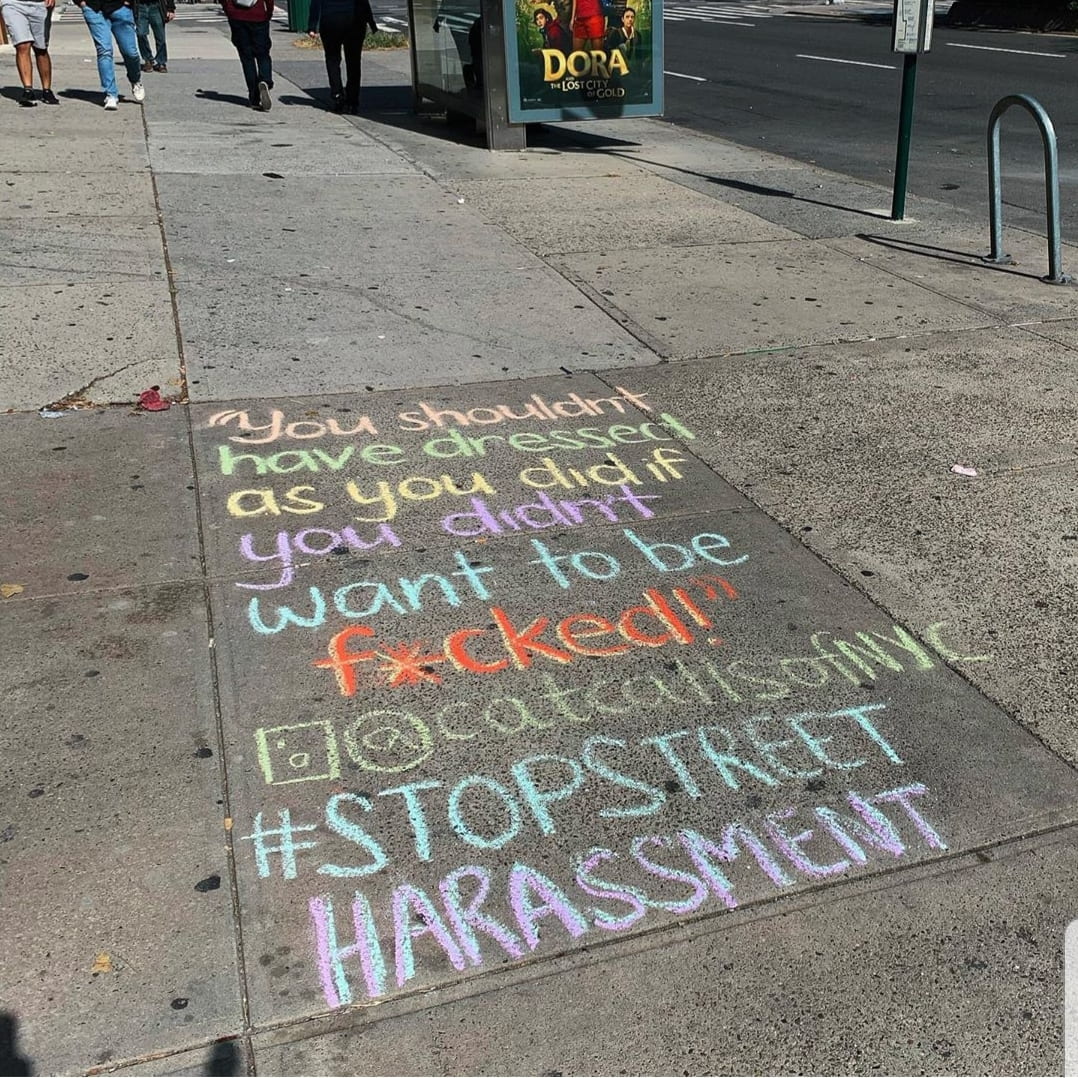
Source: @catcallsofnyc

I cannot pinpoint the exact time that I found out about @catcallsofnyc. Maybe their posts were recommended to me by an Instagram algorithm, maybe one of my friends liked their page, maybe a page I follow reposted one of their pictures.  I do remember my reaction to the content on @catcallsofnyc. The words written in bright, happy chalked colors contrasted with the vulgarity of the message. The Instagram account caught attention with their hashtag: #stopstreetharassment. For those who are unfamiliar, @catcallsofnyc is an Instagram page, now with over 174,000 followers. The activists behind the page receive direct messages from women who have experienced cat calling, a form of street harassment, and they document their stories on the streets of New York in chalk. Whether it be from New York’s seasonal drizzle or street cleaning, eventually the quotes are washed away but the impact the words leave on passerby is irrefutable. The movement has grown around the world and there are now @catcalls Instagram accounts around the world, from @catcallsofperu and @catcallsofparis to even a @catcallsofbhm. The entire movement stemmed from one woman: Sophie Sandberg of New York City.

In conversation with Sophie Sandberg, I got a first-hand account of what it is like to start and continue this movement. Sandberg, a New York native who graduated from NYU in May, describes her inspiration for the movement stemming from her own experiences with street harassment when she was 15 and manifesting from an assigned class project into what it is now. The class project, assigned to her during her freshman year at NYU, asked her to immerse herself in something and to document her experience on social media. From there, @catcallsofnyc was born. Sandberg took the opportunity to discuss the issues presented by catcalling and street harassment. She describes her personal experience with catcalling and street harassment when she was in high school as well as the response from adults in her life as her initial inspiration for the class project. “I was so confused because I didn’t think of my own body in that way, I guess in a sexual way, so it was super weird to start getting sexualized,” Sandberg says, “…I never felt like there was a good way to respond when I was harassed. I felt like the adults in my life didn’t think it was a big deal, you know, they told me to keep walking. My dad told me to dress differently at first, so I felt like there was no support that I was getting for this issue. And then it was continuing. I was getting older and it wasn’t going away. So, I decided to use this class project as an opportunity to address it in a creative way.”

Over the years, Sandberg’s @catcallsofnyc grew from a single Instagram account of maybe a hundred to multiple accounts representing different cities around the world, each with thousands of their own followers. In response to the spread of the movement, Sandberg reports, “In some senses, it grew really quickly. I was doing it for a few years before it spread at all. It got a lot of attention, it got picked up by the press, and that is how it spread around the world.” She attributes a big part of the spread of @catcallsof to how easy it is to act within her movement. “It is pretty easy to get chalk and to go write words, in some senses. You don’t need to be artistic necessarily and you don’t need a college degree… You need to be brave and you need to have the guts to do it, but I think a lot of people saw that it was something they were capable of.” She also attributes her movement’s success to young people and their enthusiasm for activism. “A lot of people who start [Instagram] accounts are really young. I think the fact that they can do this, run the Instagram account and write on the streets, is really empowering because maybe they feel like they don’t know how to join an organization, or they are not old enough. I think that the hands on, grassroots activism parts of it really appeals to a lot of people. They feel like they are able to do this.”


Source: @catcallsofnyc

In Sandberg’s words, the goal of the accounts and therefore the movement is to create a cultural change where anyone and everyone can walk down the street safely and comfortably, without worrying about being sexualized or objectified. The movement is condemning such behavior.  @catcallsofnyc is also a place where people can feel empowered simply by telling their stories and being validated. In Sandberg’s opinion, it is a human right to walk down the street safely. “Something like street harassment gets in the way of people having access to public space, going to work, and doing the most basic things to live a fulfilled life. Street harassment gets in the way of that. By fighting back and sharing our stories, we are fighting against that injustice.”

In addition to the Instagram accounts, Sandberg and her team have created Chalk Back events where they invite their followers in a city to come together and record many stories in one area. Sandberg wants to turn what is happening on Instagram into a real life experience, with people sharing their stories and supporting each other through interactions not contained to Instagram. There have been 3 chalk back events in New York, 2 in Ottawa, 2 in London, and 1 in Brighton. Sandberg has also expressed her involvement in 16 Days of Activism where she and her team with work with an organization to plan events in Cairo, Nairobi, and Kampala.

As the movement has grown across the world and gained momentum, Sandberg and her team have received considerable backlash, especially regarding the public nature of chalking on city streets. Sandberg herself is trying to be more public with her identity. She says that she initially wanted to remain anonymous. With time, as she has begun speaking at conferences and events, she has allowed her identity to become more public. Because of her increasing publicity, she has had to face personal harassment online and in person. One particular situation included a man cyberstalking her. The man created fake @catcallsof accounts, @catcallsofchicago and @catcallsofnottingham, while harassing Sandberg from his personal account. Soon, he began to harass her from the @catcallsofchicago account. Sandberg describes that, “It was difficult because he basically infiltrated the movement. I immediately trusted that anyone who wanted to create an account would be well intentioned.” As this situation was dealt with, Sandberg prefers to look at it as a learning experience. “It has been really hard to deal with,” she says, “but it has also made me set new boundaries. Now I ask anyone starting a new account to send in a quick video explaining why they want to start it. In general, it is a good thing for making the movement stronger.”

Writing the street harassment comments on the streets of New York is a very public action that yields both positive interactions and negative consequences. “I always tell people that I have been hit on while chalking,” Sandberg says, “I remember early on when I was chalking, I was writing out the comment, ‘hey beautiful,’ and then something else. A guy walks past me and is like, ‘oh yeah, damn beautiful.’ Yeah, so that was creepy. Some guy asked me for my number, another guy asked me out on a date. They see me doing this in a public space and they think of it as an opportunity to hit on me. It is telling about gender in public space.” As for more positive reactions, Sandberg says that she really appreciates the amount of support people have shown, especially in New York. The act of chalking on the street creates a space for productive conversations between Sandberg and passerby. Sometimes people stop to give her a hug or to give her a simple “thank you” for what she is doing.


Source: @catcallsofnyc

Sandberg is no longer the sole chalker for @catcallsofnyc. She has a team of twelve people backing her in New York and countless others around the world working for the myriad of other @catcallsof accounts. One of her team members was arrested outside of a New York City school because she was writing a comment that the school’s principal said to a student: “The bigger the hoop, the bigger the hoe.” The school’s safety officers called the police. The principal who said the comment has since left the school. Sandberg attributes the source of much of the outcry surrounding her movement to be that it would be possible for children to read the often crude and offensive words that are written. In response, Sandberg replies, “They are not thinking about all of the things children must overhear on the street. I think that people get really upset that we are actually writing these things without thinking about the background or the mission.”

In regard to the future, Sandberg views the movement as changing over time while staying true to the basic idea of letting people share their stories and then giving those stories power by putting them on the street.  She says, “In the long term, I hope that we get less submissions, because we get so many submissions right now. I could see changing it to fit what people need in the moment. To be honest, it sounds pessimistic, but I don’t see street harassment ending in the near future. I just see, hopefully, the way people react to it changing.”

For those interested in learning more about Sophie Sandberg’s fight against street harassment please visit the Chalk Back and Catcalls of New York websites. You can also find the original Instagram page @catcallsofnyc

Family Fire: A Gun Safety Issue

A child holding a gun
Source: Yahoo Images, Creative Commons

Last week, a 2-year old boy accidentally shot himself in his home in southwest Birmingham. Fortunately, he survived the gunshot wound and is being treated at the Children’s of Alabama hospital. The police are not sure how he obtained the gun yet, but the investigation is ongoing. Last month, a case of a two-year old boy in Indiana was reported who lost his life after finding his mother’s unsecured gun in their home and accidentally shot himself. A few months ago, a 12-year boy in Mississippi accidentally shot and killed his sister of the same age while playing with a gun. There are numerous other cases like these when children get access to unsecured firearms and end up in such horrific circumstances. These accidental shootings are defined by the term “family fire.”

Family fire is a shooting that involves improperly stored or misused gun(s) found in the home, resulting in injury or death, including unintentional shooting, suicide, and other gun-related tragedies. Family fire is a constant threat for all members of the household where firearms are not properly stored. The Harvard Injury Control Research Center found that the prevalence of guns AND unsafe storage practices are associated with higher rates of unintentional firearm deaths. It was also found that youth killed in these gun accidents are shot by other youth in most cases, usually someone of their own age and typically a family member or friend.

Every day, family fire injures or kills eight children in America. According to a report from the New York Academy of Medicine, children under the age of 18 suffer the most from in-home gun-related incidents. For suicides and unintentional deaths, the gun used almost always comes from the child’s home, resulting directly from improperly stored firearms and the lack of proper precautions. Over 4.6 million children in the United States live with unlocked or loaded guns in their homes.

A large body of evidence has shown that the presence of guns in a child’s home substantially increases the risk of suicide and unintentional firearm death, though recent data suggests that not a lot of gun owners appreciate this risk. Parents and other adults who own guns tend to greatly underestimate the possibility of children being able to access those arms. It has been found that 75 percent of kids know where that gun is stored in their home. A report on “Parental Misperceptions About Children and Firearms” revealed another shocking fact that one in five kids had handled a gun in the absence of their parents. Not only that, children’s exposure to unsafely stored firearms can also have consequences beyond the home. It has been found that 75 percent of school shootings are facilitated by kids having access to unsecured and/or unsupervised guns at home.

Considering the seriousness of these statistics and the deadly consequences of unsafe access to guns, Brady launched a “End Family Fire” campaign. Through this initiative, they strive to promote the use of the term “family fire” in order to raise awareness of this nationwide crisis and drive social change by educating and encouraging gun owners about safe gun storage. Their belief is that family fire can be ended with joint community action and public awareness and that lives can be saved through promoting safe storage practices.

Ad Council, America’s leading producer of public service communications, partnered with EndFamilyFire.org to bring attention to this pressing issue and to encourage people to learn more about proper gun safety and responsible ownership.

Research data from the New York Academy of Medicine shows that:

“The risk of unintentional and self-inflicted firearm injury is lower in homes that store firearms unloaded (compared with loaded) and locked (compared with unlocked). In keeping with this evidence, guidelines intended to reduce firearm injury to children, first issued by the American Academy of Pediatrics (AAP) in 1992, assert that whereas the safest home for a child is one without firearms, risk can be reduced substantially, although not eliminated, by storing all household firearms locked, unloaded, and separate from ammunition.”

There is a lot of conversation around gun violence and gun rights in America. Much of this debate is focused on the 2nd Amendment of the US Constitution, which states that “A well-regulated Militia, being necessary to the security of a free State, the right of the people to keep and bear Arms, shall not be infringed.” Yet, what we need to understand is that this is more than a conversation about gun rights, gun violence, and whether or not people should have the right to bear arms. I’m sure that we can all agree on the importance of preventing our kids from the risks and deadly consequences of having easy access to firearms. Those on all sides of the Second Amendment debate and gun owners and non-gun owners need to come together to promote safe practices and prevent unfortunate incidents like family fire from occurring.

The first and foremost step is to safely store the firearm(s). It has been found that keeping guns locked and unloaded reduces the risk of family fire by 73%. Additionally, storing ammunition separately from its gun reduces the risk of family fire up to 61%. Keep them out of the reach of others, especially children, who can use them to dangerous outcomes. The State of New Jersey has required sellers to provide trigger locks or locked gun cases with each gun purchase, among other laws this has contributed in a decline of unintentional gun death cases in the state. It is another way to promote safe gun storage and making sure that people have the necessary equipment to do so.

Another way is to encourage discussions around responsible gun ownership and safe storage practices within our social circle, family, friends, and colleagues. The most important thing to do is to have a conversation with your kids. Make sure that they understand their limits on accessing firearms, do not consider it a toy, and understand the severity of consequences that may arise as a result. Discussing gun safety and making it a part of the family’s safety conversation is important, especially for gun owners because they play a powerful role in educating others about safe storage practices. Additionally, we need to begin asking others about the presence of unsecured guns in the home for their own safety, before moving in with someone, and before sending your kids to anybody’s home.

Family fire is a pressing issue affecting many families everyday in the country. We as a society need to take up the responsibility of addressing this problem, encouraging the lawmakers and security agencies to take notice and action, and play our part by both promoting and practicing safe gun storage practices.

The Criminalization of Mental Illness

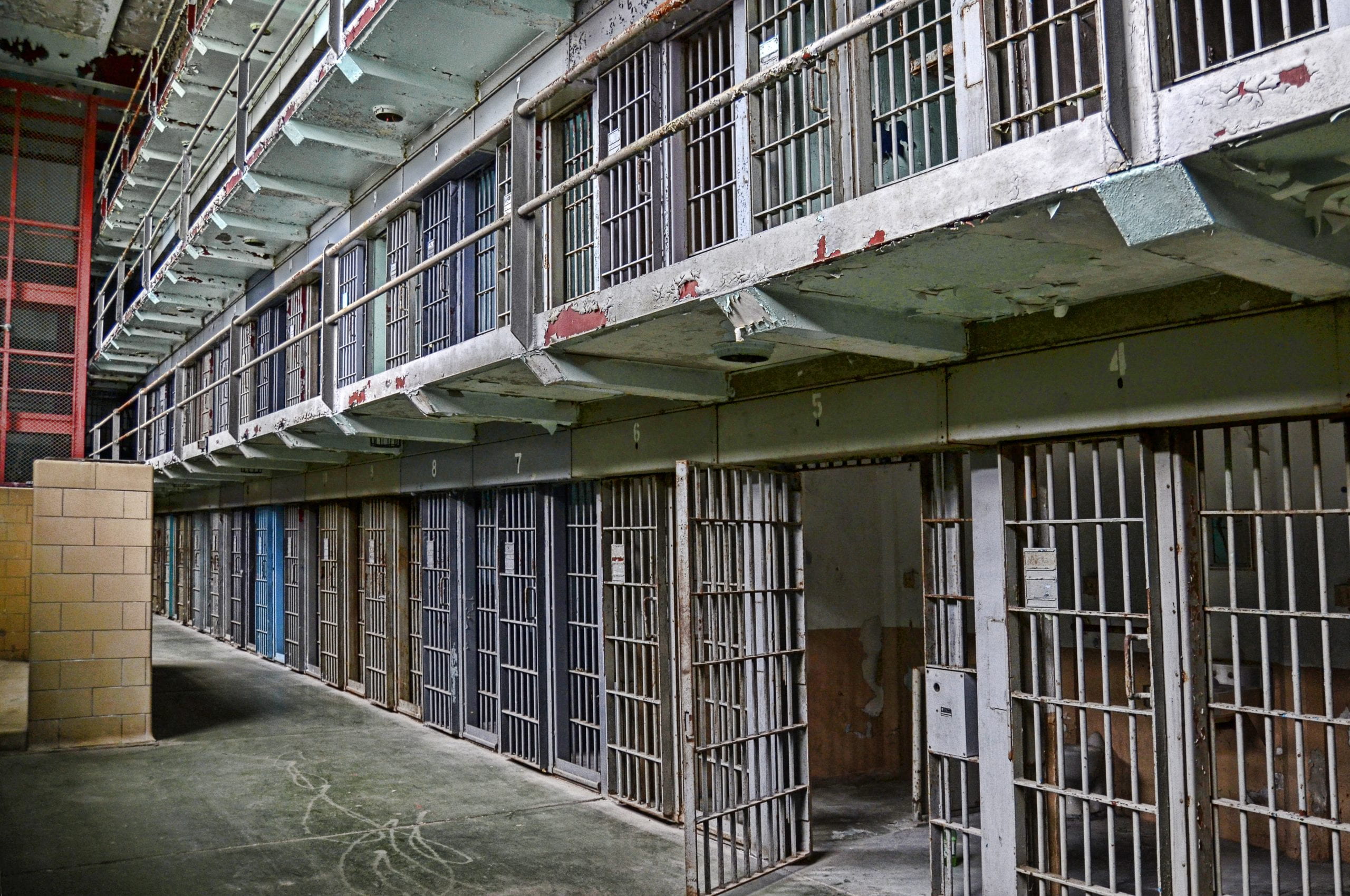
Prison cell block
Prison cell block. Source: Bob Jagendorf, Creative Commons.

It is no secret that the United States has an issue of overcrowding prisons, which can lead to many issues regarding quality of life in prisons. Overcrowding in prisons is not just a problem in the United States; over 100 other countries also have this issue. In many countries, the criminalization of mental health is a factor that is compounding the issue. Individuals with severe mental illnesses not only need treatment that prisons don’t provide, but also can be put in dangerous situations when they are in prison. Despite this, they are more likely to end up in prison than in treatment.

Up until the 1960s in the United States, when someone had a severe mental illness, they were typically placed in a mental institution or asylum. In an effort to provide patients in mental institutions better community-based care and reduce government spending, the process of deinstitutionalization began. However, that is not how it played out. While the movement gave those with mental illness more rights and turned society away from locking them up, it released some that would have benefitted from long-term care that community centers could not provide. However, with many patients moving out of long-term treatment facilities, many of these facilities were shutting down. This left community mental health centers to try to treat illnesses they were not originally intended to. Another issue arose when insufficient funding was allocated for the community mental health centers, further overwhelming the new system. Because the difficulty of the transition from institutionalization to community care was underestimated, many—then and today—have gone without treatment. The lack of treatment for serious mental illness, like Schizophrenia, has led to the incarceration of many people with mental illness who should instead be treated.

Not Guilty by Reason of Insanity

Another issue that has contributed to the criminalization of mental illness is the difference between the clinical definition of mental illness and the legal definition. The diagnosis of mental illness is dictated by the Diagnostic and Statistical Manual of Mental Disorders (DSM). The law, however, sees mental illness as symptoms that impair mental functioning. The main diagnoses that fits into the legal definition are psychotic disorders, such as Schizophrenia. Even if someone has been diagnosed with a psychotic disorder, when pleading not guilty by reasoning of insanity, their lawyer must show that they were having symptoms at the time of the crime that contributed to said crime. This can be a difficult task as some states require that the symptoms are so severe that the defendant didn’t know that the crime was illegal. Even in cases where the defendant has shown this to be true, some juries will give a verdict of guilty to ensure that someone is held accountable for the offense.

Some states have gotten rid of the insanity plea altogether, while others have changed it to “guilty because of mental illness” meaning after treatment, they must serve their sentence in prison. This can sometimes put the progress a patient has made in jeopardy, as prisons are not a suitable environment for maintaining a newly achieved healthy mental state. In states where not guilty by reason of insanity is still in effect, those found not guilty by reason of insanity are supposed to be released after sanity has been restored. Yet, this is rarely the case; due to fear they will go off their medicine and commit the same violent crimes, many are held in treatment facilities indefinitely. With the threat of this outcome overhead, many opt out of the not guilty by reason of insanity plea and are instead place into a prison where they will not receive the appropriate care.

Because of the law’s strict definition of mental illness, many are being placed in already crowded, underfunded prisons. Because of the lack of mental health professionals, prisoners in some states, including Nebraska, may not receive medications for mental illnesses or have access to talk to counselors. This can cause the reemergence of once-controlled symptoms, making the prisoner with a mental illness a danger not only to himself, but also to others. Additionally, many with severe mental illness are put in solitary confinement for long periods of time. Psychologists who have studied the effects of solitary confinement have seen a pattern of increased mental health problems in people who were originally neurotypical. If this is true, the effects on prisoners with mental illness could be devastating. Not only are people being sent to prison when they should receive treatment, they are also being put in situations that make their symptoms worse and make it harder to reenter into society if their sentence allows.

Substance Use Criminalization

In addition to violent crimes committed because of mental illness, many nonviolent acts associated with mental illness are criminalized; Substance Use Disorders are recognized by the DSM V and are therefore diagnosable and treatable, but the law instead criminalizes it. While at any given time there are more convictions for violent crimes, more people are sent to prison a year for drug-related crimes than violent crimes. Studies have shown that those imprisoned for drug-use are unlikely to receive treatment and often return to using drugs once released because they lack the resources that treatment would have given them. Sending people with Substance Abuse Disorders to jail does not improve their illness.

Not only those with Substance abuse disorder are affected by this criminalization; those diagnosed with another mental illness are five to eighteen times more likely to have a comorbid Substance Use Disorder. This can further prevent someone who needs treatment from receiving it. Most prisons don’t have adequate resources to treat prisoners with mental illness, so imprisoning people for crimes that are directly tied to mental illness can be detrimental to their treatment and future.

Current solutions

Some states are trying to combat the increasing proportion of prisoners with mental illness not receiving treatment. With our corrections system slowly catching up with our understanding of mental illness, states—like California—are beginning to consider replacing their old jails, not with new ones exactly like them, but instead with centers focused on rehabilitation. They are not calling for moving all criminals with mental illness out of prisons, but instead treating those with mental illness while they serve their sentence. Additionally, they do want to increase the diversion from jails, but that will be done on a case-by-case basis and only for those who have committed a crime because of mental illness.

Stigma

Ultimately, the criminalization of mental illness has a lot to do with the stigma surrounding it. The general population connects mental illness with violence, which leads to harsher punishments. As a society, we need to reduce stigma before any change can happen. If we continue to see those with mental health problems as inherently violent, they will continue to be prosecuted and sentenced unjustly.

If The Steel Walls Could Talk: The Abuse of Human Rights Through The Use Of Solitary Confinement

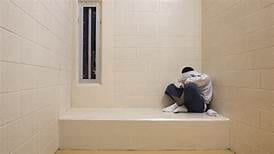
This prisoner held in solitary confinement is kept in isolation with little sunlight.
Source:Yahoo Images

One of the saddest stories that I ever listened to was the story of Kalief Broder. He was a young man from the Bronx who spent three years in jail because he could not pay for his bail after being arrested in 2010.  I heard about this story while watching 13th, the documentary that examines the connection of slavery to the mass incarceration of Black people in America. While I looked at Broder’s experience through the lens of racial injustice, there was another piece to this disheartening story. Broder also spent two years in solitary confinement without being convicted of a crime or having a trial. Broder was finally released from prison in 2013; two years later, he committed suicide by hanging himself in his parents home. 

Kalief Broder, a victim of the effects of solitary confinement.
Source: Yahoo Images

After making the connection between solitary confinement and mental illness, I started doing more research on this and thought about it in the context of human rights. The connection stems from the lack of connection between human rights and the rights of prisoners. In the context of solitary confinement and human rights, the overpractice of solitary confinement violates the human rights of prisoners. These violations include torture, mental abuse lack of resources such as sunlight and social interaction. To give a background on human rights in the scope of prisoners, their rights have been recognized by the United Nations to protect those rights. According to the Office of the High Commissioner in the United Nations Human Rights Office of the High Commissioner, the basic principles on the treatment and conditions inmates were adopted and proclaimed by the United Nations in December of 1990. One of the most profound statements stated that “All prisoners shall be treated with the respect due to their inherent dignity and value as human beings”.  Although their rights have been recognized by the human rights community, most of the rights of prisoners are often abused due to this underlying notion that perhaps prisoners are not even seen as humans and do not need their rights to be protected. If their rights and humanity were protected by the state, then their rights would not be abused.

To give a context to the global prison system, the United States plays a big role within it. According to the Prison Policy Initiative, the United States has the highest incarceration rate worldwide. The use of solitary confinement is also used widely within the United States. The definition of solitary confinement is the isolation of a prisoner in a confined cell as a form of punishment. According to the Human Rights Watch, prisoners are “Prisoners in solitary typically spend 22 to 24 hours a day locked in small, sometimes windowless, cells sealed with solid steel doors”. While confined they do not have any contact with other inmates besides a prison guard that serves them their meals through a small opening on the door.  The National Public Radio  did a special series on the practice of solitary confinement. In the series, the hosts explain that the first documented use of solitary confinement in 1829. It was used in the Eastern State Penitentiary in Philadelphia. Based in Quaker belief, it was seen as a place where criminals were locked in a stone cell with a Bible to pray and repent for the crimes. Although it was seen as a place for rehabilitation, many criminals went insane and committed suicide while being locked in the cells. After this, solitary confinement slowly stopped being practiced for many decades. 

The Eastern State Penitentiary in Philadelphia, one of the earliest places where solitary confinement was used in the 1800s.
Source: Yahoo Images

This practice was proven to be detrimental to the mental health of human beings over the course of decades. As the statement proves to be true, it is still used widely in the United States. The Human Rights Watch has offered research to the growing use of solitary confinement in prisons. The research states that solitary confinement in US prisons is imposed for different reasons, but most commonly it is used as punishment for breaches of discipline such as disciplinary segregation to manage prisoners considered to be particularly difficult or dangerous through administrative segregation. The increase in solitary confinement in the United States has occurred primarily through administrative segregation, and particularly the segregation of prisoners in special super-maximum security facilities, which are built solely for this purpose. Solitary confinement is not only used to punish prisoners physically but also mentally. 

According to the American Civil Liberties Union or ACLU, the U.N. Special Rapporteur on torture, Juan Mendez, has condemned the use of solitary confinement, finding that the imposition of this punishment can constitute torture, cruel, inhuman or degrading treatment or punishment. The effects of solitary confinement are so damaging that it has been deemed as torture for human beings. According to the Human Rights Campaign, prisoners that are held in solitary confinement, they do not have opportunities for meaningful social interaction with other prisoners. The contact that they do have with officers is very brief and interaction only occurs when prisoners are being handed food through a small door. Phone calls and any visits by family and loved ones are severely restricted or prohibited. During the week, prisoners are let out for showers and solitary exercise in a small, enclosed space, sometimes indoors on a few times a week. They often have very little or no access to educational and recreational activities or other sources of mental stimulation. Lastly, they are usually handcuffed, shackled, and escorted by correctional officers every time they leave their cells. This also goes into them not having any access to sunlight or adequate housing that it is fit for the shelter of any human being. The research from the American Civil Liberties Union shows that the practice of solitary confinement can also damage an inmate on the psychological level. There are quite a few destructive effects of solitary confinement that include perceptual distortions and hallucinations increased anxiety and nervousness, along with self mutilation, severe chronic depression, and lower levels of brain activity. 

Another issue with this is the use of solitary confinement for inmates who are mentally ill. Statistics from ACLU state that most experts would estimate that approximately 10 to 20 percent of all prisoners in United States prisons suffer from a mental illness.  One story noted from ACLU from a prisoner who was mentally ill who spent time in solitary confinement actually set himself on fire and succumbed from his burns while another prisoner hung himself with a washcloth. It was also noted that prisoners were found to have attempted or have committed suicide, ingested razors, or have  pummeled their heads against walls. The issue with solitary confinement is the damaging psychological effects that it can have on the individual. By limiting social interaction, the prison is depriving one of social interaction that  is crucial for psychological growth and when that is interrupted that could have a detrimental influence on the individual. For those that are released from prison, they still face psychological harm from their time spent in solitary confinement. Craig Haney, PhD is a member of the American Psychology Association and a professor of psychology at the University of California who evaluates the psychological effects of solitary confinement on a human being. He states that “one of the very serious psychological consequences of solitary confinement is that it renders many people incapable of living anywhere else.” Then, when prisoners are released into cells or back into society, they are often overwhelmed with anxiety.” They actually get to the point where they become frightened of other human beings,” he said. These long term effects from solitary confinement leave a damaging mark on the humanity of these people and mentally abuses their human rights to the worst degree.

The effects of solitary confinement has damaging effects on the mental psyche of prisoners shown by this prisoner who is being held in isolation.
Source: Yahoo Images

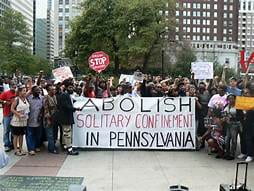
With all of these human rights abuses, there should be an effort to abolish solitary confinement in prisons all over the world. It has too many detrimental effects on human beings and abuses the rights of prisoners and as members of society. There have been efforts by the American Civil Liberties Union to abolish solitary confinement. Their statement reads: “Over the last two decades corrections systems have increasingly relied on solitary confinement as a prison management tool – even building entire institutions called “supermax prisons” where prisoners are held in conditions of extreme isolation, sometimes for years or decades. But solitary confinement jeopardizes our public safety, is fundamentally inhumane and wastes taxpayer dollars. We must insist on humane and more cost-effective methods of punishment and prison management”.  In order for this issue to be solved, there must be major reform within the prison system and more access to mental health resources and rehabilitation services for prisoners. It does not do any good to lock people into cages to the point where they do not even know that they are human anymore. Even though they have committed crimes, these people are still human beings and their rights deserve to be protected. 

a demonstration by the people of Pennsylvania to abolish the practice of solitary confinement
Source: Yahoo Images


Understanding Identity Politics in the MENA Region

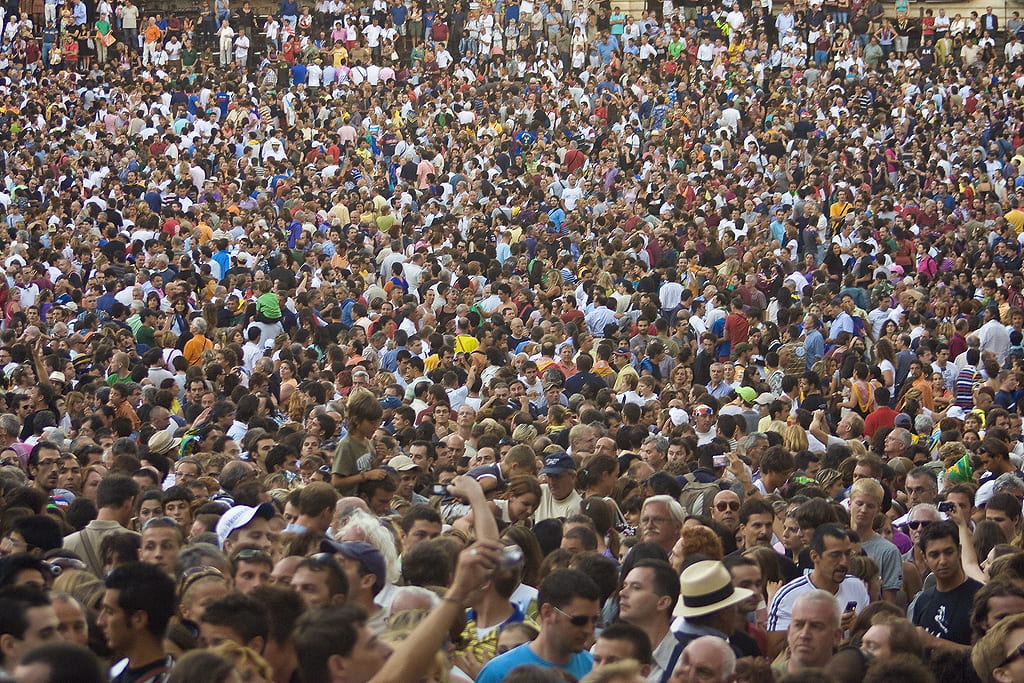
Large crowd of people
Multitud // Crowd. Guzmán Lozano. Source: Creative Commons for Flickr.

When some ask me where I’m from, and “here” does not suffice, I do not say that I am Arab; I say that I am from Jerusalem. “Arab” is sometimes a bad word or foreign enemy that comes between me and this person, whereas “Jerusalem” is something they can relate to or has not been claimed by the same narrative. They both mean the same to me, but “Arab” carries an antagonistic or uneasy connotation into new relationships- where I want others to be open to understand me as an individual first and then have that built into their perspective or definition of an Arab. Societies provide advantages to certain identities and disadvantages to others prompting me to pick and choose in my immediate surroundings and context.

Identity can be wielded as a powerful and dangerous tool. It can be used as a guide when you are lost by giving you something to grab on with a purpose or goal to strive for and increase your self-esteem, confidence, and certainty while reducing stress or anxiety. When an identity is represented in our immediate context, people use it to understand, relate and form alliances or organize (politically) to defend their interests as a group. Further, I may assume one identity in its defense declaring my right to speak about it and for it, even if I am not especially informed on the way it has formed in the international world.

Being an Arab-American in times where Arabs and Americans are so polarized here, I realize I do not fully identify with or understand either side. However, even though I’m trying to develop my own platform, as a link, I am expected to speak on behalf of the “other.” In this position, I feel like a mediator or spokesperson, responsible for debunking an Aggressive Arab nature or a hateful and ethnocentric American nature, while facing hostility, collective suspicion, and surveillance.  Sometimes I am claimed and others I am rejected by each of these groups.

Every day I face realities that disconnect me from each group. An intimate one is my relationship with my white family. Before I blocked them, I would log into Facebook to find explicitly anti-Muslim or extreme Zionist articles that family members posted on my timeline. Still, my family is so loving in person, not wanting to face actual truths that weaken their own identity. They claim me as family, but then connect me to this identity that is so ignorantly represented and antagonized- the same way I imagine sectarian conflict separating MENA identities such as the Shia and Sunni Ummah.

Recently, in my class which is focusing on terrorism, someone told a story of how she became friends with her Muslim employer and that “no, they’re not all terrorists,” but just like the rest of us. Through the entire story, she looked and gestured at me, seemingly sharing consolation or seeking approval. Even though I did appreciate her good intentions, in the moment I was separated from the rest of my classmates, marked as other, and given the permission to approve her response to so many. Oddly, we demand recognition for ostracized groups in the same ways it’s been denied. Through identity politics, we demand respect for oneself as other or different.

Eventually, I realize as much as this position is a burden, it is also a great privilege. In the MENA region, most identify as “Arab” or “Muslim.” They faced similar histories and events and believe in a common text, so no one’s claim is as unique, distinct, or loud as mine is in an American backdrop. As an Arab or Muslim overseas, voices are muffled in with the rest of the people sharing your identity. Here, as many people there are that hate or fear me because of my foreign identity, others want to hear from me. I get to add to their definition of what these identities entail like what it means to be a Muslim, imposing my own narrative on the group.

I am also privileged to live in a country where its democratic policy- whether it has been fully realized or not- holds citizens from different backgrounds to bring their perspectives and issues to build from; not a country where an authoritarian figure or identity imposes their own opinion of what policy should be. Depending on the context, sometimes an identity victimizes me and sometimes it empowers me.

Growing up, my identity was not represented on SAT, ACT, or many other censuses. I usually had to check the “white” box even though I have learned to be proud of different aspects, tribulations, or stories of my heritage. I want to represent my ethnicity in the American success story.

The argument for the inclusion of more races or the option to select multiple races represents what power minorities have to demand better recognition from the government.  MENA region forms a greater narrative about the act of reporting identity. Groups were put under the rule of another identity and their own was denied which led to cultural suppression and persecution. Eventually, these groups that have been historically ignored or harmed demand the right to be protected.

Taking on a group identity gives us a sense of belonging and affirmation from other members. We may feel that we are part of something bigger, not insignificant, alone, or unheard. Committing or dedicating yourself to other members’ rights and responsibilities they expect from you grants purpose or direction. Your problems are group problems and your voice is supported and amplified to fight the threat together. You can split responsibilities or blame and there is more guidance and reinforcement to relieve you. However, to switch from an individual focus to a group focus, you may have to take on and accept values or beliefs you do not particularly agree with, adopting self-stereotypes or assimilating to the dominant, and sometimes blinded, discourse.

People of the MENA region faced a long history of sectarian violence that disabled unity which could effectively challenge or transform governments. Instead, it broke them apart, silencing their voice and in some cases making them dependent on foreign voices or aid. When the united Ottoman Empire was dissolved, colonizers split the area and its people while autonomous religious and cultural groups were also divided to reduce their power or say, in governance. Pause to imagine if it was possible to make America and an Arab middle-eastern state one state. Justified by the need for organization or governance of these diverse and divided citizens, ruling powers, even foreign, muted civil activity and imposed their way of life or opinions of policy on others. So divided, lacking an integrative identity, leaders and powerful figures or politicians may grab or monopolize resources and rights for their smaller groups crating a zero-sum competition. Sectarian polity in these areas was inflamed and harsher scrutiny or repression excluded many even in the case of a revolution. Personal and factional needs overwhelmed the sense of a common identity and instead of standing together, people joined opposing organizations to represent them. When an identity splinters, others need to be reinforced. Because, on your own, you are more easily erased.

Identity politics can urge mobilization around one identity or one aspect of your makeup, and you are pressured to take that as your defining feature even though you cannot be represented so reductively. To become a more impenetrable united force, the individual is integrated by assimilating dominant norms. Sometimes your identity’s label separates you more than your issue position. We may have the same values as someone but will never know because we are unwilling to socialize with outsiders and challenge this group or ideology that we have devoted ourselves to. When identities meet politics that have greater or long-term consequences, these divisions weaken our ability to form policies based on expected outcomes or truth-seeking. It’s more triggered by the “us” vs “them” battle.

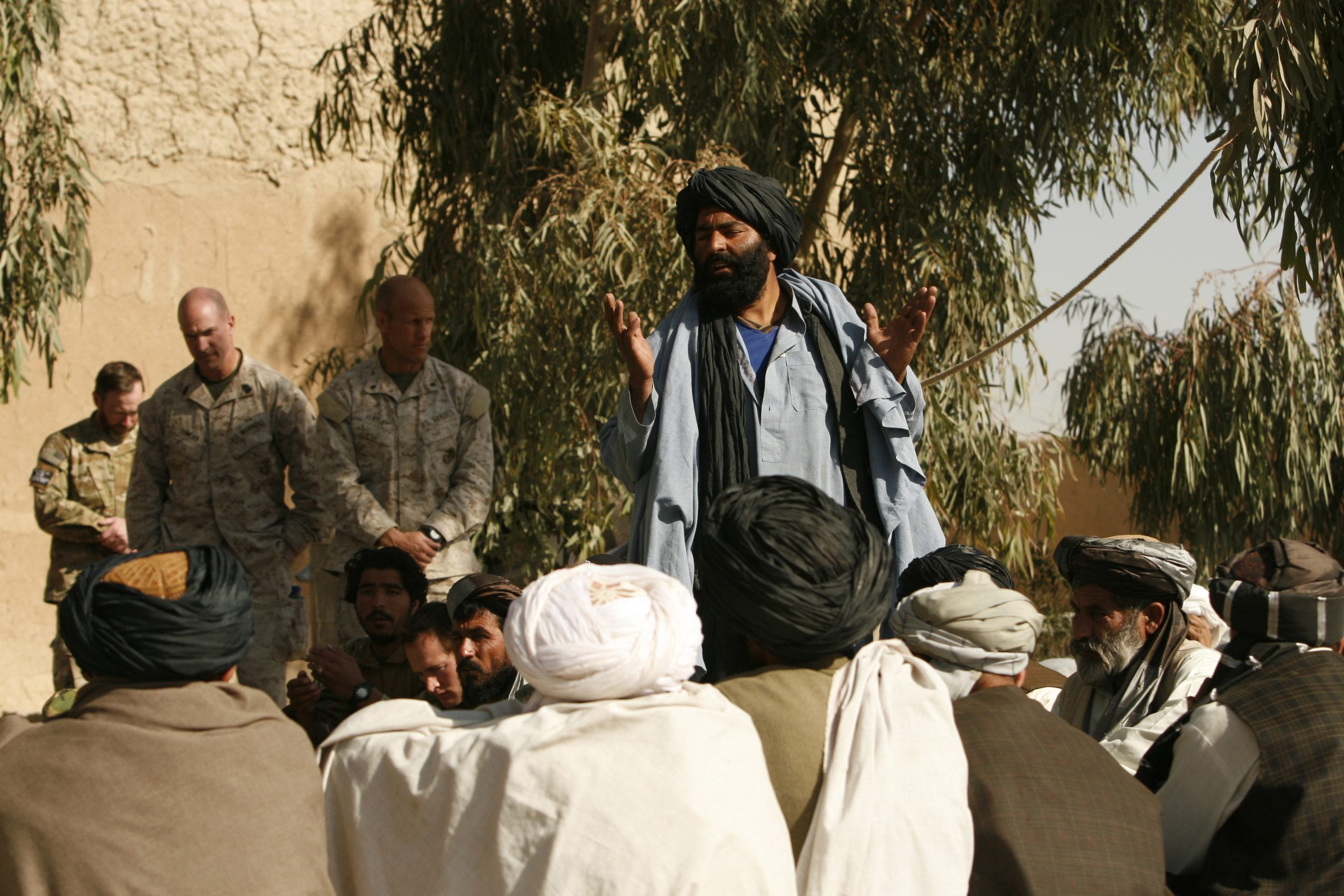
Military stands before crowd
Operation Enduring Freedom. ResoluteSupportMedia. Creative Commons for Flickr.

Politics exploit these feelings to rally funding, resources, or a larger audience to win different supports. Then others grab onto these resource-rich identities. For example, anyone under the claim of a religious organization may win the support of foreign clergies who supply them with food or protections. Then, the leaders of these organizations win the support of desperate or oppressed populations.

In MENA, a religious identity also provides guidance for apolitical peoples searching for an ideology within which to frame their suffering or experience. It promotes faith and offers solace for ones suffering or oppressed with a promise of a bigger purpose. Religious groups mourn a supposedly more ethical past and presume religious instructions to return to this society.  People’s fears, resentments, faith, and suffering can be exploited by power under religious identities. This becomes even more dangerous if people cling to these collective truths so desperately.

We are faced with very complex decisions and circumstances. It would be too hard to weigh all the options and make decisions without these prior ideas or instructions on what we should do. However, you can get too tied up in your responsibilities or devotion to these identities. While identities can connect us and give our insecurities a stronger voice or support, they can also polarize groups or exploited by power-hungry mobilizers. These labels may effectively imprison you or constrain what you in what you allow yourself to explore or believe. Something intended for inclusion may trap you in estranging conflict.

Misleading Media: Disabilities in Film and Television


Rows of seats in a movie theater.
Movie Theater Seats. Source: I G, Creative Commons

While one in four people in the United States live with a disability, it is unlikely that a person would give that estimate based on representation in popular media.   

Is this because of an overall misunderstanding about the parameters of disabilities among the general public?  Or do the producers of film and television realize they are failing to accurately represent society and just not caring? 

Even the media that currently feature characters with disabilities are often misleading and lean heavily into pre-existing, incorrect stereotypes.  Manifestation of this issue draws parallels with insensitive stereotypes about race, gender, and sexuality to the use of common (over-used) archetypes.   

Character Archetypes 

One way in which film and television often generalize people with disabilities is using character archetypes.  It worth noting that archetypes are not inherently bad, rather they become a problem when they are focused around a specific group of people. As a result, this creates/reaffirms the assumptions that people make about others.  When it comes to characters with disabilities, it is especially problematic, as these characters are rarely depicted outside of their archetypes while non-disabled groups may be more likely to have a nuanced portrayal.  

There are three main archetypes used in the creation of characters with disabilities: the helpless victim, the evil villain, and the inspirational hero. 

The Helpless Victim 

The helpless victim character is severely limited by their disability and is depicted as having little chance of happiness or normalcy in life unless their disability is removed.  This character is depicted as needing to be “saved” from their condition and are designed to evoke pity and sympathy from the audience rather than be viewed as a regular person.  These characters are often rescued from their disabilities through “miraculous” events whether it be an “unexplainable change” or directly stated as part of an intervention by a higher power.  Not only does this lead people to look at people with disabilities with the same pity they give fictional characters, but it also fosters an inaccurate depiction of many people’s experiences with their own disabilities.  Contrary to these depictions, people can have disabilities and live happy lives at the same time.  The helpless victim archetype is also sometimes used for comedic purposes. For example, a person with a disability does or experiences something related to their disability that mildly harms them or is considered inappropriate by societal norms.  This is shown in how Forest Gump is depicted in relation to his intellectual disability.  This allows people who do not have disabilities to feel comfortable with not taking people with disabilities seriously or giving them the same respect they give people who do not have disabilities.   

The Evil Villain 

The second main archetype is the evil villain, often designed as a dangerous and uncontrollable monster.  This character is often seen in horror films, such as the Unbreakable trilogy, Gerald’s Game, and many more.  The horror genre is notorious for using both physical and mental disabilities (often those that the general public is not well-educated on) to frighten audiences.  Since many of the disabilities that are targeted by this archetype are unfamiliar to most people, many audiences walk away having absorbed a great deal of misinformation and a fear of people with these disabilities.  These representations have led many people to believe that people with disabilities, particularly any mental disorders that are unfamiliar, are dangerous and should be avoided.  In reality, people have a tendency to largely overestimate the likelihood that a person with a mental health disorder will become violent.  Additionally, when people with these kinds of disabilities do become violent, is largely linked to other factors, such as substance abuse and family history. 

An example of the evil villain character is the Beast from M. Night Shyamalan’s Unbreakable trilogy.  The Beast is an alter in a system with Dissociative Identity Disorder (DID) that is depicted as having super-human abilities and a desire to get rid of all impure people in the world.  Throughout the series, he is depicted clearly as a violent monster.  For many people, these movies were their first exposure to DID, and, though it did not necessarily convince people that DID gives people supernatural capabilities, this has led to many people having a serious misunderstanding of DID and a fear of people who experience the disorder.  Even the “nice” alters in the system were depicted in a negative light, as they helped the Beast carry out his evil plans.  This representation of DID is also problematic because there are so many misleading or definitively incorrect ideas about DID propagated in these films.   

Shyamalan himself stated, “I wanted to take something scientific and psychologically proven and keep going with it.  The first two, three steps have been proven, then the next one was not proven, but it’s a question. Do you believe it, what I’m suggesting?  It is important to remember that real people have disorders like DID, not just fictional characters.  When you willingly spread misleading ideas about them, you are potentially causing serious harm to their present and future wellbeing which you can read more about in this blog. 

A parking spot reserved for people with disabilities.
Parking bay. Source: David Morris, Creative Commons

The Inspirational Hero 

The third main archetype is the hero/inspirational character with a disability is held up as an example of someone “overcoming the odds”.  These are the characters that lead people to say, “well if they can do that, then I can do anything!”  While it is considered a positive stereotype, it is nonetheless problematic for several reasons.  First, it suggests that the only way a person can be happy is if they are “cured” or if they overcome their disability.  It specifically frames disabilities as enemies to defeat rather than a part of daily life.  It can also lead people who do not have disabilities to believe that people who do have them will be fine if they only try hard enough.  As a result, this may make them believe they do not have to do anything to accommodate people with disabilities.  Depicting people with disabilities this way can also lead to people without disabilities looking to them for sources of inspiration and examples of courage rather than as regular people. 

Paul Hunt’s List of Stereotypes 

A 1991 study by disabled writer and activist Paul Hunt established a list of ten common stereotypes of people with disabilities.  This list includes depicting people with disabilities as: “pitiable/pathetic”, an “object of curiosity or violence”, sinister or evil, the “super cripple” (as if having a disability anoints them some sort of superpower), a way to establish atmosphere, laughable, their own worst enemy, a burden, “non-sexual”, or being unable to participate in daily life.    

The Connection to Human Rights 

Many people develop their understanding of different disabilities through the representations they see in film and television which impacts the way people are viewed by their local communities and, therefore, their ability to access their human rights.  The way students are treated by their classmates impacts how they benefit from their educational experience (Article 26 of the United Nations Universal Declaration of Human Rights).  The way people are treated by their employers (or potential employers) and co-workers impacts their access to a favorable work environment without discrimination (Article 23).  The way people are treated holistically by their community impacts their ability to actively participate in their communities (Article 27).  A community’s view of people with disabilities can also impact their willingness to make accommodations for them which further affects their ability to access the aforementioned rights.  

How Do We Identify Good Representation? 

One aspect of good disability representation is that a character’s purpose is not solely based on their disability.  If the character were replaced with a non-disabled character, without changing any other aspects of the story, would they have “a story, goals, relationships, and interests”?  In a good piece of representation, the answer would be “yes”.  While a disability might be a significant part of a person, it is not the only characteristic that shapes their experiences.   

The Entropy System, a system with DID who makes educational YouTube videos about DID, has come up with a list of four criteria to identify good representations of DID in media, three of which could be applied to other disabilities as well: 

  1. Does it “communicate proper diagnosis and treatment”? 
  2. Does it address the cause of the disability? 
  3. Is the character relatable?  Are they well-rounded and realistic? 

An Example of Good Representation: A Quiet Place 

John Krasinski’s film, A Quiet Place, is a wonderful example of quality representation.  In the film, the Abbot family is fighting to survive in a world where making a sound could be a death sentence.  Reagan, the daughter in the family, is deaf, which has led to the entire family’s ability to communicate silently through American Sign Language (ASL).  Reagan’s disability is not treated as a burden or as a superpower.  While their knowledge of ASL is a key tool in the family’s path towards survival, it does not change the way Reagan is treated as a character.  She is a normal kid.  She is a multi-dimensional character who has strong relationships with her family and faces personal struggles that are unrelated to her disability.  The character is also played by a deaf actress, which is an important part of good representation and surprisingly rare on television and in film. 

The existence of quality representation for people with disabilities is increasing in television and in films like A Quiet Place, but we still have a lot of work to do.  It will take time, but we can hopefully look forward to a day where people with disabilities are well represented in popular media.