The Evolution of How I Defined a Global Citizen

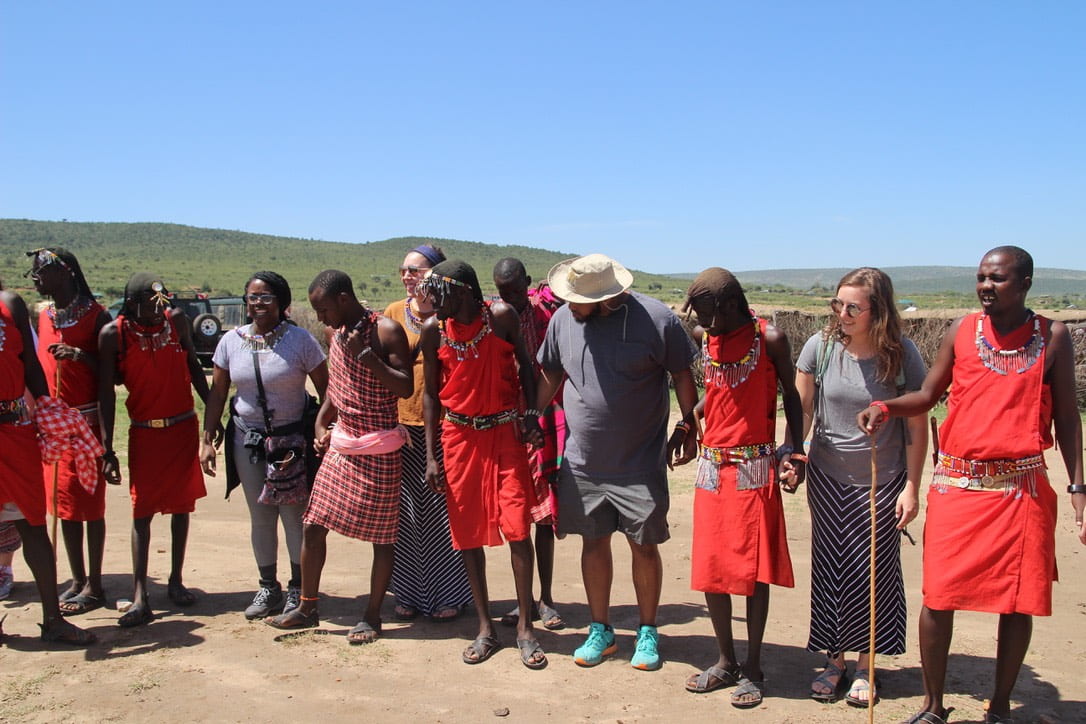
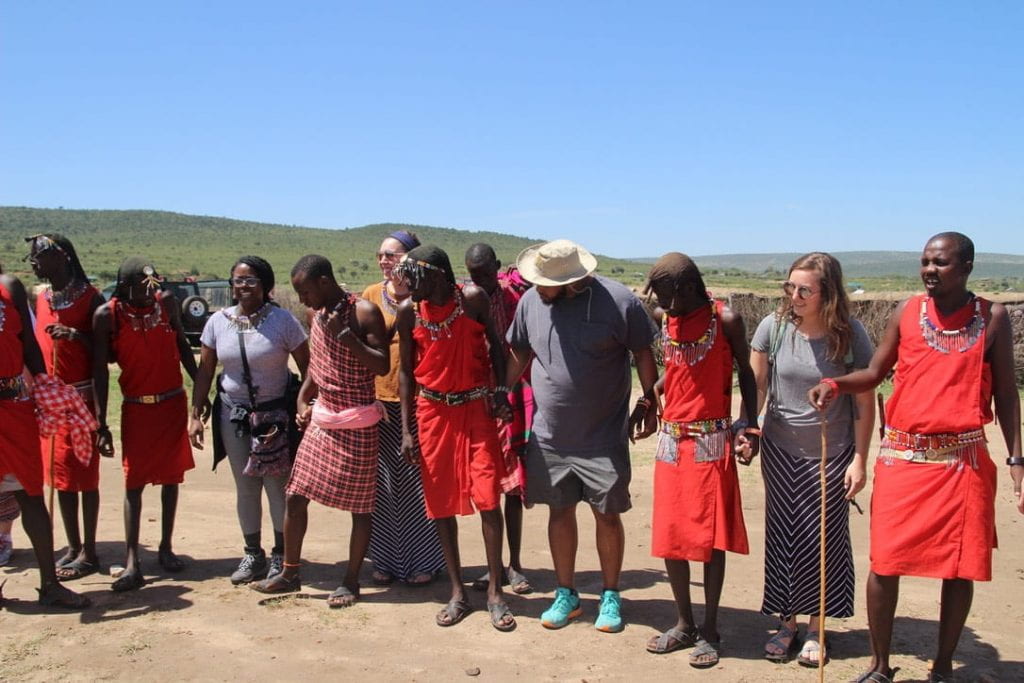
Maasai warriors
Maasai warriors. Photo by Emma Laurence.

As the world has grown smaller, and the global economy and policies have pushed their way to the focus of peoples concerns, many citizens have altered their attention from the nation to the globe, defining themselves to be a global citizen. Since the introduction of social media, I have seen how easy it is to know what is happening around the world. With easy access to international information, I have seen more of my own generation focus on what they can do to help people on the international stage. Specifically, when my friends and I began deciding what we wanted to study as undergraduates, we were not focused solely on what we wanted to do but also how we could use our major to help others around the world. We would consider ourselves to be global citizens. What does it mean to be a global citizen?

Over spring break 2019, I traveled with the UAB Social Work Department along with Dr. Stacy Moak and Dr. Tina Kempin Reuter to Kenya. While we were there to work on projects that centered around a multitude of social work topics, I learned what it means to be a global citizen and how my definition of that changed throughout the trip. Before leaving for Kenya, I considered myself a global citizen, but I was not certain about what it meant to be one. From my experience in traveling, I defined a global citizen to be someone who understood that there were cultures and communities outside their own community that should be appreciated.

Before the class began, my knowledge of African culture was limited to what I saw in movies like the Lion King and Black Panther. During the class we prepared for our trip by creating lessons on our projects, expanding our knowledge about Kenyan culture, and preparing supplies to take to the groups we were meeting in Kenya. This knowledge helped me establish a basis of understanding for the communities we would be visiting. As part of our class, we read My Maasai Life: From Suburbia to Savannah by Robin Wiszowaty which educated me on many Swahili and Maa words as well as specific cultural details within the Maasai Mara. We also had a lesson on human rights and what should be available to all humans. This lesson opened my eyes to a part of global citizenship that I had not thought of because of my little education on human rights. To help communities around the globe, I must know what’s going on in international and national legislation to know where those human rights are being violated or taken away. This knowledge grants the ability and responsibility to work towards a better world where everyone has their basic rights as a human.
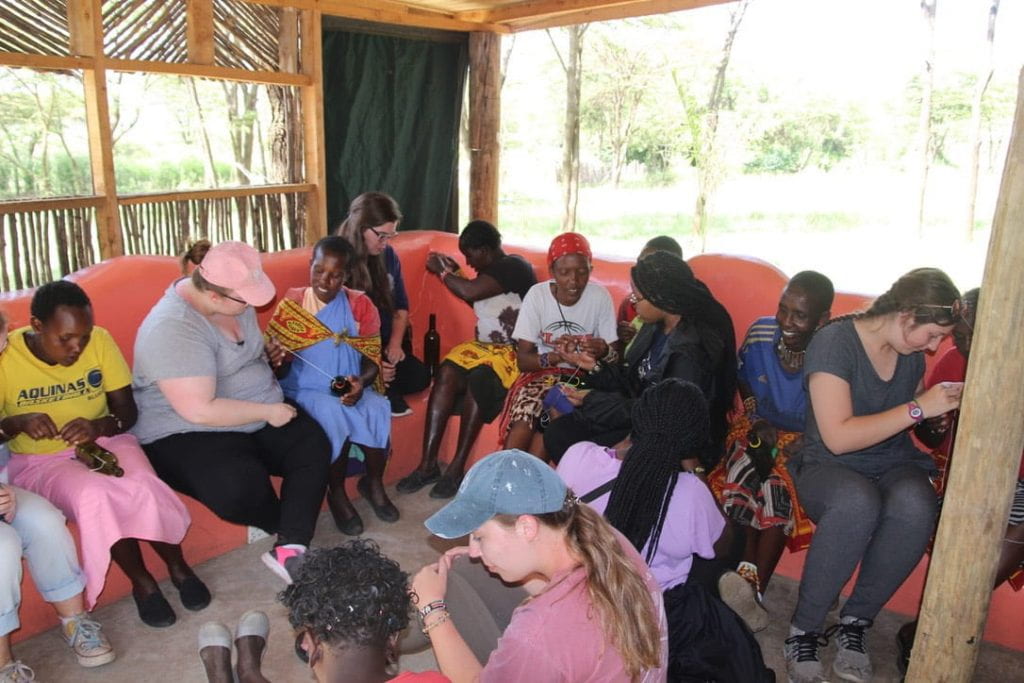
Emma and the Maasai women sitting in a circle having conversation
Photo by Emma Laurence

Before this trip, I had believed that this understanding would be enough to establish an appreciation for the community of the Maasai Mara. While I did appreciate the culture, I soon realized that fully experiencing a community is far more important than learning from documentaries and online sources. The experience that creates a deep connection towards communities of the world is one that is achievable when you focus on the people around you. Throughout our time in the Maasai Mara, my definition for a global citizen was redefined. From getting to go inside a Maasai community to doing beadwork with some of the hardworking Maasai mothers, I began to create relationships within the community, some even without a common language to speak.

One afternoon the students and professors sat down with the Maasai women to learn how to make soap and do beadwork, we had learned that these women used these skills to make money for their families. The woman who was tasked with trying to teach me how to do the beadwork was very patient and kind, and we didn’t even speak more than a few words to each other. I know little to no Swahili or Maa, and the woman knew no English. We were able to find a way to establish a friendship through unspoken communication, involving a lot of laughter at my inability to put beads on a string. It seemed impossible before I came to Kenya to establish a friendship with someone who came from a vastly different culture and background from mine especially if there is no common language spoken. I quickly from the trip that not only can you form relationships with people from all walks of life, but they are necessary to understand and fully appreciate the communities you visit when traveling.

While at Cara, a women’s rescue facility outside of Nairobi, I learned more about the role that I play in communities around the world. As we sat around a table where students were discussing social work practices with the counselors at Cara, I saw how the exchange between communities is important as well. We learned that the women at Cara, had the experience to help the young ladies in their facility but they needed supplies, as well as some specific lessons, plans that they hoped we could develop later for them as a future project. This exchange taught me that first, to help a community, you must be told what they need from the community itself, you cannot interpret this yourself. As an outsider in a community, I would never know what people need; therefore, by being told by the community, our group was able to help with the specific needs of the community. Second, as a global citizen, my role is not to go into communities and change them to look more like mine. My community is not always right. Therefore, you must communicate and exchange information to meet the community where they are at. Thus, I redefined a global citizen to be someone who sought out friendships so that they could enhance their love for a community and exchange knowledge to put in place future projects that would aid members of the community.
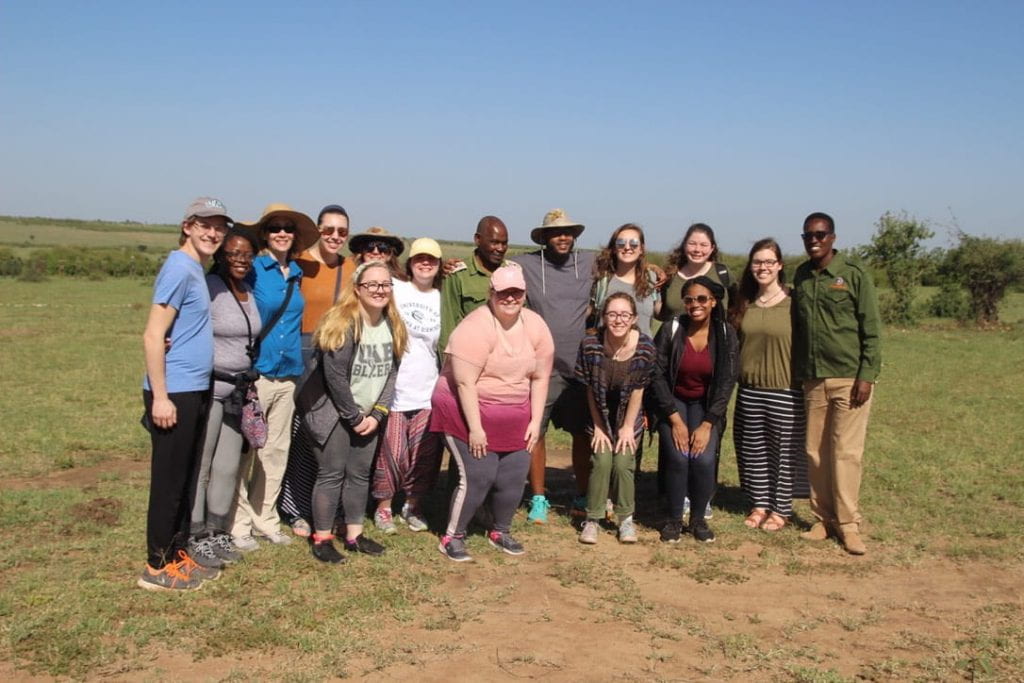
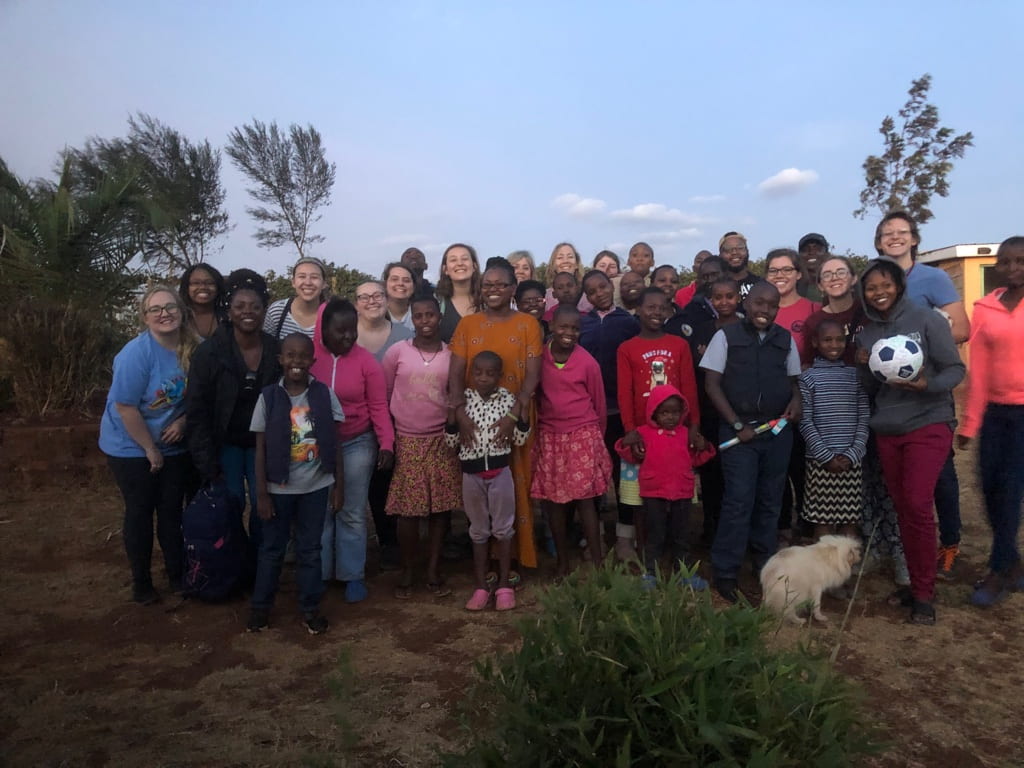
a group photo of the team from UAB
Photo by Emma Laurence

Once I returned from Kenya and quickly fell into my daily routine as a student, I found that a few more things about how I was defining a global citizen changed. The definition is not simple or short because to be a citizen of the globe involves a lot of thought and appreciate as well as work. As a global citizen, it is important to create relationships in a community to see the community as your own because as a global citizen your community is the globe. This leads to the service aspect of a global citizen. Because these communities are part of your community, you must work to help those communities where they need it, if that need is established from the community itself, while working to preserve the beauty of the culture within the area. It is your responsibility to make sure the people in your global community have the rights they deserve as a human. Therefore, you must say up to date on current events surrounding legislation around the globe especially when that legislation infringes on human rights.

While I was only able to spend a week working on the projects, my trip will be able to impact how I see myself in the world for years to come. I know now what my job is as a global citizen and how I can do that job to the best of my ability. I hope soon more people will see their role as a global citizen so we can move towards furthering knowledge for the different cultures around the globe, access to human rights for all, the exchange between communities, and international friendships.
Worldwide Famine and its Impact

by Nicole Allen and Pam Zuber

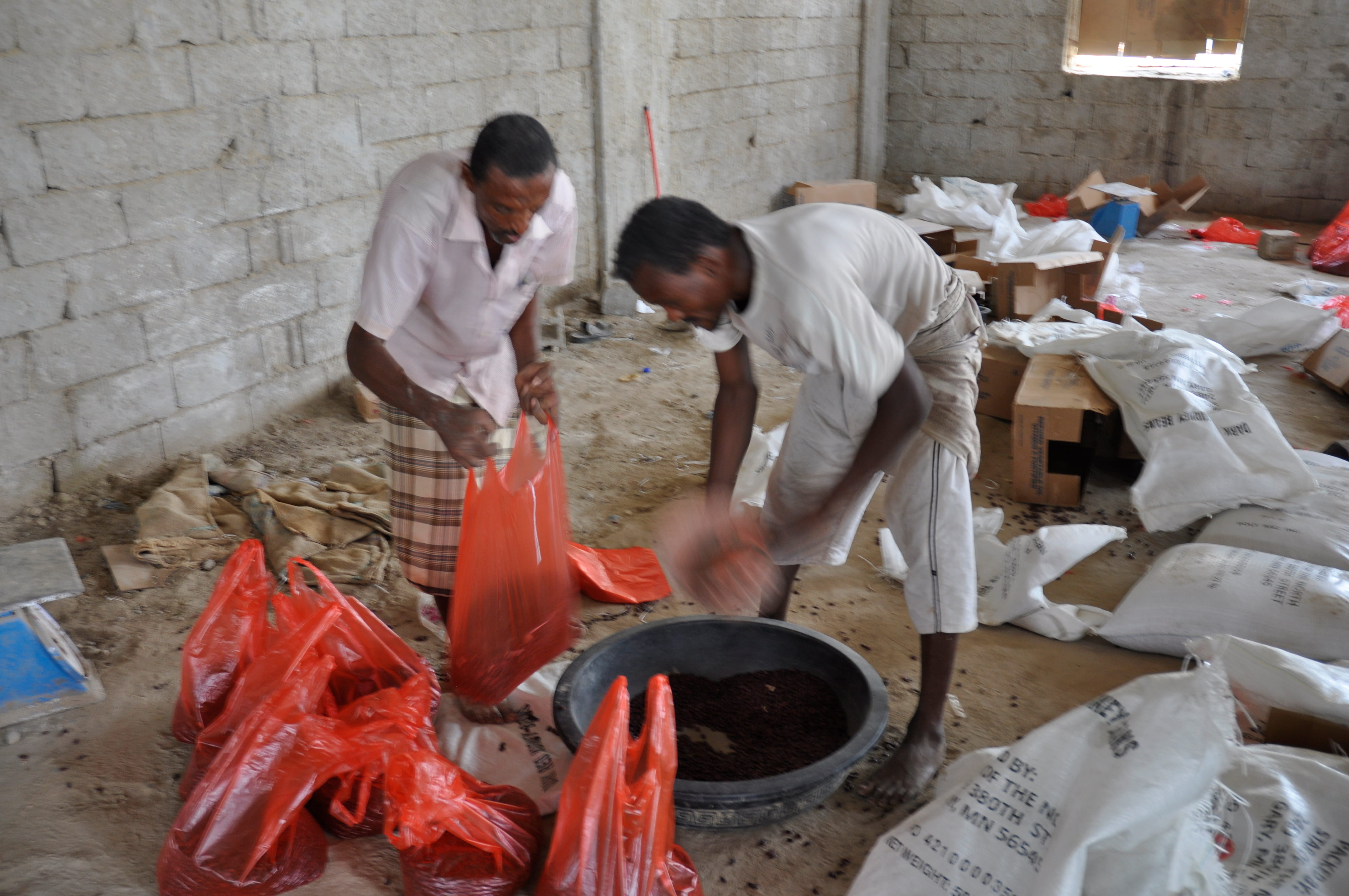
Sharing out the beans Yemen still has 350,000 dipslaced persons, although verifying this number is difficult. Most of these are from Sa’da and many of these are in Harad district on the border with Saudi Arabia. Conditions in Harad are not easy, hot and dusty and prone to flash flooding. Even before the arrival of the displaced it was an area of high malnutrition, diarrhea and malaria. UNICEF has, with the government and NGO partners worked to provide education, clean water and nutrition services. On this mission I accompanied the WFP representative and visited food distributions. After five years of displacement we need to look for longer term and sustainable solutions. One of the many beautiful features in this part of Yemen is how flowers are woven into everyday, flowers for sale at traffic lights, boys wearing them in the hair, given as gifts.
Sharing out the beans. Yemen still has 350,000 dipslaced persons, although verifying this number is difficult. Most of these are from Sa’da and many of these are in Harad district on the border with Saudi Arabia. Conditions in Harad are not easy, hot and dusty and prone to flash flooding. Even before the arrival of the displaced it was an area of high malnutrition, diarrhea and malaria. UNICEF has, with the government and NGO partners worked to provide education, clean water and nutrition services. On this mission I accompanied the WFP representative and visited food distributions. After five years of displacement we need to look for longer term and sustainable solutions. One of the many beautiful features in this part of Yemen is how flowers are woven into every day, flowers for sale at traffic lights, boys wearing them in the hair, given as gifts. Source: Julien Harneis, Creative Commons

Famine and other types of food insecurity are problems in several ways. A chronic and widespread lack of food is not only harmful to people’s health but can produce other repercussions.  Unfortunately, we are witnessing many of these short- and long-term repercussions of famine and food insecurity in several areas of the world.

Yemen

Yemen is a country in the throes of a vicious civil war. Like other countries experiencing such strife, it is experiencing food insecurity as well. People who experience food insecurity do not have consistent access to nutritious, affordable food. Yemenis truly do not have physical access. Experts estimate that Yemen imports 90 percent of its food, but the civil war has closed the country’s airports to civilian flights, blocked its seaports, and created dangerous conditions within the country. Even if food becomes available, many impoverished Yemenis cannot afford it. Saudi Arabia invested billions in Yemen in early 2018 to reinforce the latter nation’s economy and the riyal, its unit of currency, but the economic status of Yemen remains precarious.      

Malnutrition causes other problems. Malnourished people are susceptible to disease that requires medical intervention, and this has been the case in Yemen. The country has experienced cholera and meningitis outbreaks. These diseases can create even more malnutrition. Thus, Yemen is battling a vicious cycle of malnutrition and disease. There is another, less-discussed but still significant factor that also contributes to problems in the country: drug use. Many in the country use a drug called qat (also spelled khat). Users say the drug enhances strength and virility, which is why military leaders allegedly give it to child soldiers. Users also say it suppresses the appetite, which could make qat attractive in a country experiencing food instability. Given qat’s popularity, it is also big business for the people who grow and supply it. Qat is profitable, which could encourage people to grow and sell it instead of other crops that could feed Yemenis. But, as with any drug, struggles for control over the qat market could provide dangerous, especially in a country already experiencing political instability. The quest for profit might come before the health, physical safety, and other human rights of Yemenis.

Somalia

Long subject to periods of drought that devastate its food supply, Somalia’s food situation is bleak. According to the United Nations’ World Food Programme: “As of May 2018, 2.7 million people [in Somalia] cannot meet their daily food requirements today and require urgent humanitarian assistance, with more than half a million on the brink of famine. Another 2.7 million Somalis need livelihood support to keep from sliding into crisis. An estimated 300,000 children under age 5 are malnourished, including 48,000 who are severely malnourished and face a high risk of disease and death.” Such drought limits the crops Somalis can grow and shrinks the amount of pasture land they can use for their livestock. It also puts people out of work, preventing them from buying food and other necessities.

What little food and water there is available is a precious commodity in Somalia. People have attempted to control these scarce resources to build and consolidate power, which has sometimes led to violence and tension. People without such resources might be more willing to join violent movements because they feel as if they have no other optionsThus, famine and reduced job prospects might be breeding grounds for violent groups of people who feel as if they have nothing to lose. It could contribute to violence, unrest, and human rights violations, since people may feel that their situations are hopeless and that human life is worthless.

Nigeria

As with other countries on this list, political strife has created considerable food insecurity and other problems in Nigeria. The militant group Boko Haram has been active in northeast Nigeria since the early 2000s. Boko Haram’s name means “Western education is forbidden” in the Hausa language and the group calls for Islamic law (sharia). The group has protested secular Nigerian rule in various ways, most notably by kidnapping several women, girls, and children in a number of separate incidents and by bombing and attacking government and United Nations buildings. Boko Haram has also clashed with government representatives and multinational troops, which has killed several Nigerians, displaced others, and severely disrupted everyday life in the African nation: “[I]t is likely that significant populations remain in areas of the northeast that are currently inaccessible to humanitarian actors. Reports indicate that people fleeing from conflict-affected, inaccessible areas [in Nigeria] are often severely food insecure and exhibit signs of malnutrition,” according to a 2018 report from the Famine Early Warning Systems Network.

If Nigerians had their way, they would not only have access to food, but the means to grow it as well. Fanna Kachella is a farmer in Rann, a city in northeastern Nigeria. The ongoing political conflict has affected her livelihood, but she hopes that food assistance can help her and her family: “Not having anything much to do has been hard for us, we are used to planting our own food. I hope we will get a good harvest from the seed.” The ability to support oneself and one’s family should be a fundamental human right. Not being able to do so is denying this right. Not being able to do so can jeopardize a person’s health, dignity, ability to form and nurture a family, and interactions with others.

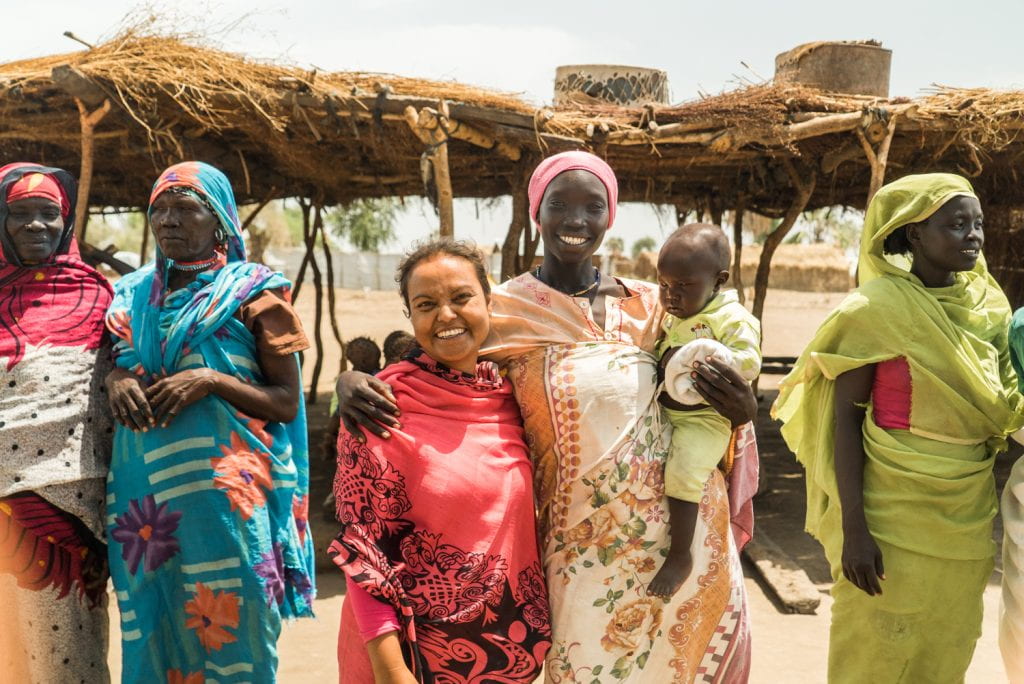
a group photo of the women of SIM South Sudan
SIM South Sudan Harvest Worker Project. Source: SIM East Africa, Creative Commons

South Sudan

Founded in 2011, South Sudan is the world’s youngest country. But, in its brief history, it has faced many problems that are as old as time. Unlike other countries on this list, it looks as conditions may be improving, however. On August 6, 2018, South Sudan’s president, Salva Kiir, signed a power-sharing cease-fire agreement with the leader of his political opposition, Riek Machar. As part of this agreement, Machar would serve as one of the five vice presidents of the country. Political conflicts between the two men plunged South Sudan into civil war in 2013. Machar once served as Kiir’s deputy but fled the country after a dispute between the men. The two men agreed to end their dispute in 2015, but it ended in 2016 when Machar return to the country’s capital, Juba.

These personal disputes erupted into a country-wide civil war that has killed thousands of residents of South Sudan and displaced almost two million more. The political conflict and its resultant disruptions, massive displacement, economic problems, flooding, dry spells, and pests all contributed to famine conditions in 2017. According to the international initiative the IPC (the Integrated Food Security Phase Classification), “5.3 million people required food assistance” in South Sudan in January 2018, “up 40 percent from the same time last year.” The initiative attributed these food-related problems to “widespread conflict [that] continues to displace communities, disrupt livelihood activities and impede humanitarian access to vulnerable populations.” But, if the truce between Kiir and Machar holds, it could spell an end to this calamitous conflict. Perhaps it will allow people to return to their homes and grow and obtain food, reversing the food insecurity and other problems that this new nation has faced.

North Korea

Food insecurity and malnutrition have been common occurrences for decades in North Korea, another country also experiencing political troubles. The oppressive and secretive nature of the country’s government has made it difficult to determine the extent of North Korea’s many problems. But, the estimates are devastating. For example, experts believe that a famine in the country in the 1990s killed up to three million people. North Korea’s mountainous terrain and cold climate have always made agriculture difficult, and the country no longer received agricultural aid from the Soviet Union after the latter country collapsed in the early 1990s, which made farming even more difficult.

The North Korean government claims that a lack of aid from other countries continues to hurt the country. Many countries have imposed sanctions on North Korea for developing a nuclear weapons program. The countries imposing the sanctions have claimed that they did not place sanctions on food but on other goods. But, even these sanctions threaten the livelihoods of many North Koreans. If the North Koreans cannot earn enough money, they cannot earn enough to feed themselves and their families. The results have been heart-wrenching. “[H]unger remains a way of life” in North Korea, wrote Dr. Kee B. Park in a December 2017 article in the New York Times. “Forty-one percent of North Koreans, about 10.5 million people, are undernourished, and 28 percent of children under 5 years old have stunted growth. When my 4-year-old daughter visited [North Korean capital] Pyongyang in 2013, she, all of three feet, towered over children twice her age.” Park vividly explains how hunger creates immediate problems and future ones. Not having food creates insecurity that can last a lifetime. It can create physical and emotional problems that persist long after people receive adequate food if they ever receive adequate food.

What Are People Doing About Hunger-Related Issues?

Different governments are pitching in to tackle famine. The government of United States president Donald Trump pledged to donate more than $1 billion since November 2017 alone. Still, relief workers say that the governments of other countries can do more. That is if the governments even know about such problems in the first place. Relief workers say that people do not know that famine exists in many places. They say that Trump’s administration has been helpful in its humanitarian efforts. But, on the other hand, they also say that publicity surrounding Trump and the activities of his administration has overshadowed people’s knowledge about other things, including famine and food insecurity in different parts of the world. Food insecurity is also tied to political insecurity. It is no coincidence that many of the countries on this list have experienced war or other forms of political instability in addition to food problems. Many experts believe hunger and war are often inextricably linked. According to Cormac Ó Gráda, “The hope for a famine-free world depends on improved governance and on peace. It is as simple – and as difficult – is that.”

Nicole Allen is a freelance writer and educator based in the United States. She believes that her writing is an extension of her career as a tutor since they both encourage learning and discussing new things. Her degrees in creative writing, education, and psychology help her understand her target audience and how to reach them in creative and educational ways. She has written about fitness and health, substance abuse and treatment, personal finance and economics, parenting, relationships, higher education, careers, travel, and many other topics, sometimes in the same piece. When she isn’t writing, you might find Nicole running, hiking, and swimming. She has participated in several 10K races and hopes to compete in a marathon one day. A longtime volunteer at animal shelters, Nicole is a passionate supporter of organizations that help animals. She also enjoys spending time with the dogs and cats in her life and spoiling them rotten.

Pamela Zuber is a writer and an editor who has written about human rights, health and wellness, business, and gender.

WILL MY STORY AND HOW AM PLANNING TO HELP THOSE WITH THE SAME PROBLEM EVER RULE THE WORLD?

by Grace Ndanu

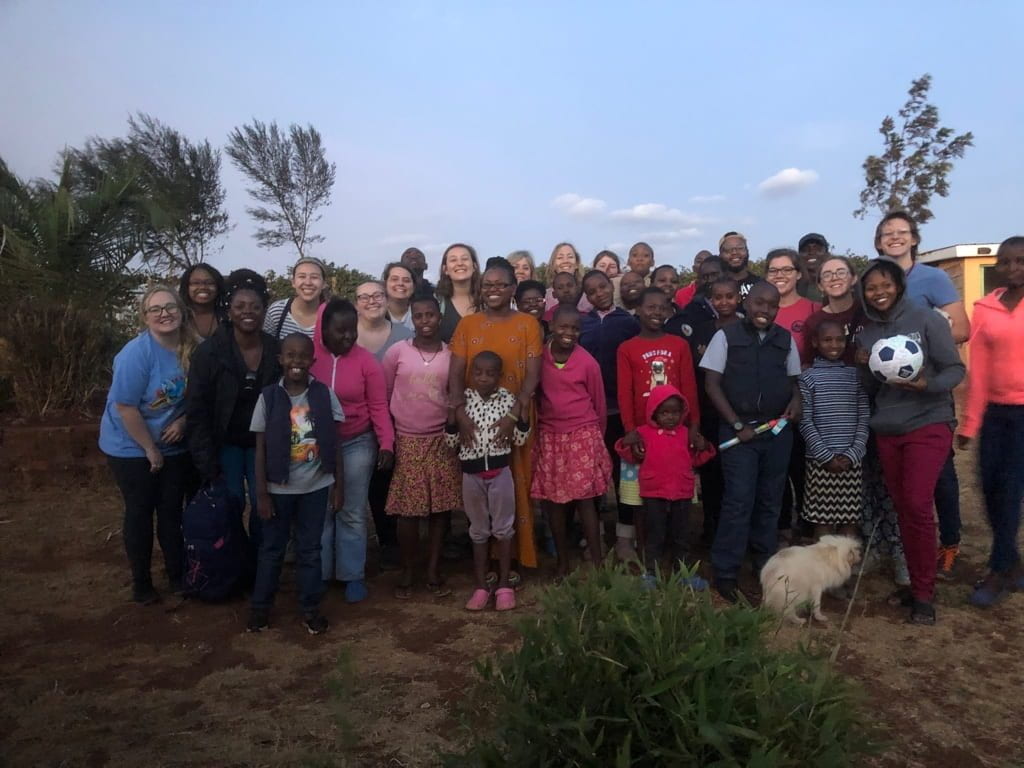
Over spring break 2019, UAB students traveled to Kenya with Dr. Stacy Moak, Professor of Social Work, and Dr. Tina Kempin Reuter, Director of the UAB Institute for Human Rights. They visited CARA Girls Rescue Center where they met Grace, a student and former resident at CARA [she is behind the lady in the orange dress]. Below is Grace’s narrative which includes sexual violence. 

Photo by Stacy Moak

As humans, we are born to expect much than to face reality. We come to learn that everything has a purpose.

I was born in 1998 and raised by a single mother till 28th November 2004, where I got a daddy who I thought was loving and caring. Instead, he became a monster. Before my sister who was born in 22nd November 2005, the man started beating me for no reason and not just a child beat, it was a criminal beat whereby he used an electric wire to beat me up. As a child, I expected my mom to get in between and talk to her husband about the matter. My expectations became a fantasy and the beating became a habit. In 2006 in grade 4, I was supposed to go for tuition on weekends, but instead, I was forced to stay with my little sister at home so that my mom can go for work or church meeting. When I refused I was given a thorough beat and asked why I didn’t love my baby sister.

Sometimes the man volunteered to stay with the baby but insisted I remain so that I will help him with the baby. His agenda was opposite and he started molesting me. He started touching my private parts and when he knew it was time for mom to come back, he beat me up so that I should not say. As this was going on, we had a male neighbor who was doing the same as what my dad was doing but didn’t beat me. Until one Sunday, I refused to go to church and now I was left with the neighbor in the compound where he got a chance to rape me and asked me to keep quiet. Later in the evening, I decided to open up to my mom and she said that I was lying. She talked with my dad about the issue and they decided to ask the neighbor. Definitely, he denied. From this point, my parents started calling me a liar. This made my dad more comfortable in continuing what he was doing to me that is threatening me and sexually harassing me. This was still going on and my little sister grew up knowing I was a bad girl. It came to a point where anything happened to her she would say it is me.

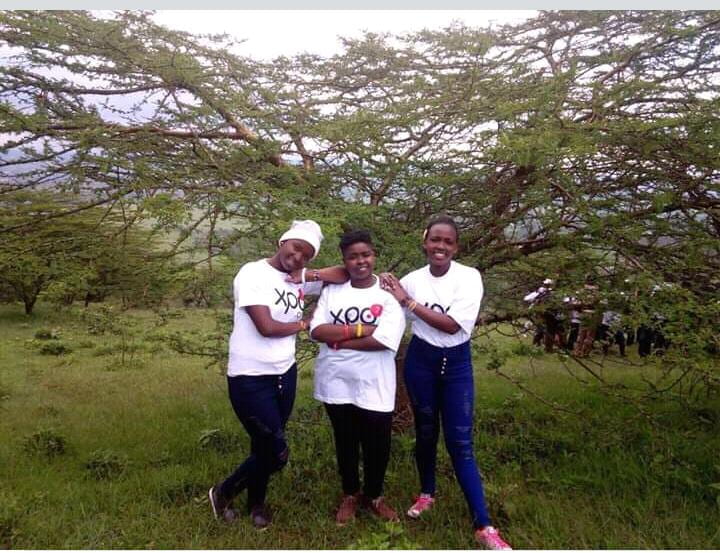
a group photo of Grace and two of her friends
Photo by Grace Ndanu

On 22 April 2008, I got a baby brother and now I felt my life was at the peak. I didn’t want to live anymore and attempted three suicides. God remained faithful and kept me alive. It was on the second term of my grade 6 and I was transferred from a private to a public school which was 8km away from home. I was forced to walk all the way and come back home remember no lunch for me. In 2009, it was time for my sister to join [to go to] school. She was brought to the school I was which made my life more and more difficult because I carried the girl at my back every morning to school. My going to school late and tired became a habit and whenever I raised the issue, I was beaten and threatened that I will not join high school. I faced rejection, hatred, insult, and isolation. My brother and sister were growing knowing am the baddest person on earth. I went to a different church from the family so that I can come back home and do the house chores at this time. I was not allowed to stay with my siblings become it was believed I had no good intentions towards them.

In 2010, a church friend of my mom noticed she hasn’t seen me for a while and decided to visit us at home. She asked me if am fine and my response was positive but she was not convinced. She decided to pay my school fees and she ordered that I go back to my previous school. My dad was not happy and started accusing me of witchcraft, asking ‘why it is only me and not any other person.’ At this point, I decided to run from home – hoping after five years of tears and pain, I will come to my rescue. I didn’t know where to go but I started my journey in February on a Tuesday. I boarded a bus to a place called Kiserian and another one to Nairobi. I had no money but I reached Nairobi. I stayed in Nairobi for three days without food, just loitering and later I decided to call my mom with a stranger’s phone and she came to my rescue. The following Monday I was taken to school. I tried being strong by working hard but my life was miserable until I was through with my primary school. I promised myself that I will not live any longer and attempted another two suicides; I found myself alive.

I was enrolled in high school in 2011 which made me happy but inside I was dying. I knew the battle isn’t over yet because, during the holidays, I would go home. [In Kenya, most high schools are boarding schools.] My first holiday that was in April, I went home and this gave my dad a chance to rape me. He threatened me with a knife that if I said he will kill me. After four weeks, I went back to school. While in school, I started developing ulcers and depression. I started falling sick each day and this forced me to go home. While my mother was nursing me, I opened up to her about what dad was doing. [I thought she would defend me but] It came out the opposite and she defended her husband. She told me that I was lying. Later that evening she told the man what I told her during the day. The man denied and told my mom that I am cursed and that she should let me get married because I was a grown up at 13 years. I got well and went back to school. I got more depressed and started fainting. One of the teachers realized that nothing was going well with me. She decided to call me and ask me [about] the problem. I opened up to her. She went ahead and explained the matter to the principal. The principal made an arrangement of visiting a counselor and a doctor at the Nairobi Women’s Hospital. I started the medication together with the counseling sessions which was of great help.

a photo of Grace
CARA. Photo by Grace Ndanu

The principal did not only helped me get well. She also [helped me] find a good home for me at the Cara Girls Rescue Center. The center took good care of me and they also counselled me. After some weeks, I had no one to pay my school fees there. I was transferred to AIC girls where I would get a sponsor and continue with my studies. After I got someone to support me, I went back to Cara Girls Rescue Center where I am till date. Being suffered for eight good years–my all childhood life has been a hell. There was no love, no care, and no mercy even from my own mother. I promised myself that I will never allow any child or anyone go through what I went through. Through this, I have always admired to be a Gender and Development CEO. I am working towards the goal. I am in my second year of studying in Gender, Women, and Development Studies. I have joined Egerton University Human Rights Club and an organization, Family Health Options Kenya, which deals with sexual health. It involves educating peers about sex and what they should do when their rights are violated. In the future, I am planning to do a Masters in Gender, Peace, and Security. I must ensure children especially the ones living with their stepparents to have full access of their mental peace, and the young girls and women who can’t raise their voices. I aspire to give people light and hope and reasons to enjoy their lives. I have realised I never enjoyed life. I just lived because it was a must but now it is time to live in reality. This is what am supposed to do: make people live the reality life, the life they deserve and deal with the ones that come in between their peace, joy, happiness and their rights.

I believe I am an agent for change. I must bring a change AND WE WILL RULE THE WORLD.

If you would like for girls like Grace to stay in school, please consider donating to our LadyPad project, during the UAB Giving Day Campaign, by using this link https://www.uab.edu/givingday/?cfpage=project&project_id=27174


A Value Shift Toward Fashion

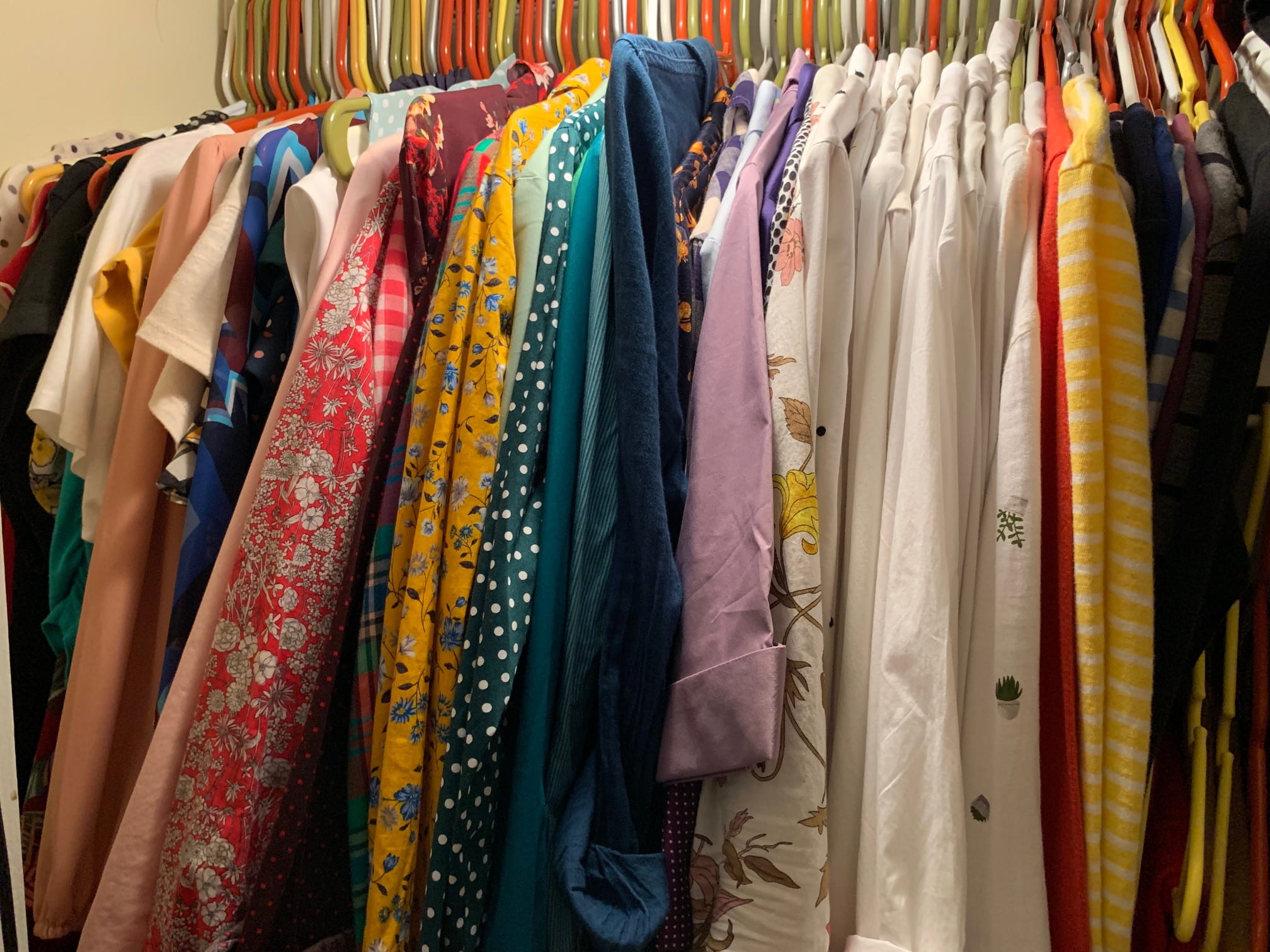
a picture of clothing in a closet
Photo by Ajanet Rountree

I have thought a lot about the phrase “speaking truth to power” over the last few days. Perhaps my musings have a lot to do with the free space I have in my mind now that my thesis is complete. Or it could be the anger I feel knowing that children of Hollywood actresses and the like scammed their ways into colleges and universities while I sacrificed, saved, budgeted and continually sought/seek to maintain my integrity on my significantly less flexible income. What did it mean for me to know that some people have no idea or care about the struggle of other people? What did mean to have someone blatantly disrespect the work ethic of millions of people? Nearly one year ago, my colleague Lindsey wrote a blog about The True Cost of fashion as highlighted in a Netflix documentary. For me, it was an eye-opening read as I found myself confronted by my disrespect for the work ethic of millions of people. After reading her blog, I was committed to shopping differently, but I honestly did not know how or where to begin. You see, I like clothes. I use the word like instead of love because love affirms a commitment whereas like can be fleeting and fickle; therefore, I like clothes and love colors, patterns, and fabrics. I agree with Orsola de Castro’s declaration that “clothes are the skin we choose.”

I cannot say that I have gone this year without purchasing new clothing, but I have not bought as much as I have in years past. I have also become mindful of my giving to charity stores because as the film points out, unsold clothing goes to other countries and overwhelms their local industry; thereby limiting the jobs and transferrable skills like sewing and tailoring. Watching the film, I realized that the core of this change was the shift in my paradigm which subsequently caused a shift in my values. De Castro asserts that our choice of clothing is the manifestation of our communication – fundamentally a part of what we seek to communicate about ourselves. So, I began to ask myself, “What did I want to communicate about myself? Did it matter to me that some of my clothes are years old if they still fit and have been well maintained?” No, but the change in my values was not merely about not caring about the durability of my clothing from years ago. It was about the lives of those on the other end of the stitches and sewing machines.

A downside of globalization is the increase of fast-fashion at the expense of the lives of garment factory workers. Globalization has allowed for the outsourcing of fashion to low-cost economies where the wages are low and kept low; therefore, those at the top of the value chain get to choose where the products are made based upon where they can compete and manipulate the cost of manufacturing. The only interest companies have in countries like Bangladesh is for the exploitation of the people, most of whom are women. The result of the Bangladeshi factory worker is that the “budget conscious shopper” can now purchase clothing that is “cheap enough to throw away without thinking about it” as proclaimed by Stephen Colbert. Last year I began questioning how my consumption of fast-fashion had continued to perpetuate the injustices of the gouging of low-wage countries experiencing the exploitation of their citizens while I claim to advocate for liberty and justice for all. Was I true to myself by ignoring the plight of millions of people making the $20 pair of jeans I brought with my e-coupon? I began to think about it.

a photo of clothes hanging in a closet
Photo by Ajanet Rountree

According to the film, Bangladesh is the second largest fashion producing market in the world after China. In 2013 the Rana Plaza took over 1,000 lives and had been noted as the worst garment disaster in history. In the year following the tragedy, the fashion industry had its most profitable year. Despite the trillions of dollars made globally by the industry, the lives of the workers are disposable. There is no standard wage or guarantee of work conditions. In Cambodia, garment workers protested and demanded a living wage of $160 US a month. The protesters met with aggressive government force that resulted in the deaths of five workers and several others injured. Companies in low-wage countries do not own the factories or hire the workers. Therefore, they are not officially responsible for the treatment of workers and the human rights violations they endure as a byproduct of their need to work. The research of Kevin Bales reveals the depths of the impact of the global economy on human lives in his books on disposable people.

As consumers in a capitalistic society, we distance ourselves from the devastation of poverty and inequality by comforting ourselves with the notion of ‘at least it’s a job’ and ‘sweatshops have the potential to bring about a better life for workers eventually.’ In a Fox News interview highlighted in the documentary, Benjamin Powell of the Free Market Institute defined sweatshops as “places with very poor working conditions as us, normal Americans would experience. Very low wages by our standard. Maybe children working; places that might not obey local labor laws. But there is a key characteristic of the ones I want to talk to you about tonight, Kennedy [the host of the show], and that’s they’re places where people choose to work. Admittedly from a bad set of other options.” There are several things worth noting about Powell’s statement. First, he acknowledges that the conditions are deplorable. Second, he knows that ordinary Americans have not experienced any situations like this. Third, he knows that there is a possibility that children are employed in these factories because there is no enforcement of local labor laws. Lastly, he soothes his conscious and those of the viewer by suggesting people choose to work there. In an article, Powell and Zwolinski argue that the anti-sweatshop movement fails in at least one of two ways: internally by failing to maintain their allegiance or externally but uncontroversial by yielding to objections that should be viewed as legitimate concerns. They insist that sweatshop workers voluntarily accept the conditions because it is a better alternative for them. Is it American pride that allows us to assume that a citizen of another country would willingly choose to work in a job to feed and clothe their children/family that Americans would not do? Have we become so full of ourselves that we willfully accept the sweatshop conditions for others but not ourselves for a $5 t-shirt or $15 dress?

The documentary states that fashion is the most labor dependent industry with nearly 1 in 6 working globally in some part of it. Most of the work is done by those with no voice in the supply chain. Many factory working parents must leave their children to be reared by other family members who live outside of the city or factory area due to the long hours and low-wages; eventually seeing them only once or twice a year. Shima, an Indian garment worker, tearfully states, “There is no limit to the struggle of Bangladeshi workers. People have no idea how difficult it is for us to make the clothing. They only buy it and wear it. I believe these clothes are produced by our blood. A lot of garment workers die in different accidents. [Regarding Rana Plaza] A lot of workers died there. It’s very painful for us. I don’t want anyone wearing anything, which is produced by our blood. We want better working conditions so that everyone becomes aware.” Livia Firth, creative director of Eco-Age, chides that we are profiting off their need to work. They are not different from us, but we treat them with disrespect and like slaves. Economist Richard Wolff concludes that American desire for profit at all cost is in direct competition to the values we claim to possess as Americans. In other words, as consumers of fast-fashion, we are perpetrators of injustice because we assist in the exploitation of workers through the violation of their human rights. Our capitalist economy thrives on our insatiable greed, our irrational fear, and our thirst for power all at the expense of someone else’s survival in poverty and inequality.

Am I anti-capitalism? Perhaps. I am anti-inequality and the continuation of needless injustice at the expense of those most vulnerable so if the divide between the haves and the have-nots continues to widen because of capitalism, then yes, wholeheartedly I am against it. Beyond whether I am anti-capitalist lies the question of whether I can remain unchanged when faced with the narrative of someone surviving in an unjust situation? Put another way: can someone with less social and economic power speak into my life and cause me to change? Yes.

If our economic system thrives on our individual and collective materialism, then any change in our behavior and values will change the system. Changes in our individual and collective action and values mean changes in the individual and collective lives of those on the other end of the thread and sewing needle. This year I have learned that challenging myself to live in a way that keeps the narratives of those who cannot speak up for themselves t the forefront of my mind is—I joined with them—our collective way of speaking truth to power.

You can join us!

Our Rights Under Fire

by Pam Zuber

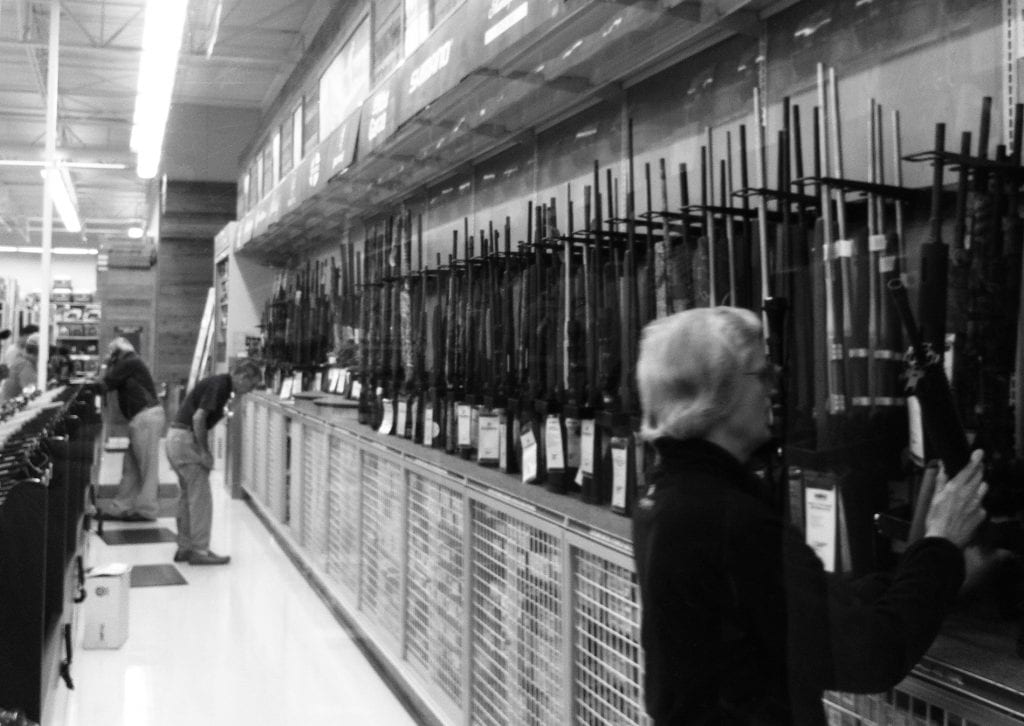
a photo of a gun store rack
and more guns. Source: Patrick Feller, Creative Commons.

The grim timeline:

  • On December 14, 2012, a gunman entered Sandy Hook Elementary School in Newtown, Connecticut. He killed twenty children, six adults, and then himself. The gunman also killed his mother earlier in the day.
  • On March 15, 2019, another gunman traveled to two mosques in Christchurch, New Zealand and opened fire. As of April 2019, he killed fifty people and wounded fifty more.
  • On March 21, 2019, New Zealand Prime Minister Jacinda Ardern announced that her country would ban sales of assault rifles beginning April 11, 2019, and reimburse people for returning rifles that they already owned. The country has also reclassified guns to make them more difficult to purchase.
  • On April 11, 2019, the United States still did not have substantial legislation against many types of weapons, even assault weapons that were once banned but were now legal.

Two countries, two tragic events, two very different approaches to gun ownership and legislation. What do the differences say about the two countries? What do the differences say about human rights? The shootings represent an egregious attack on human rights. Many victims in the Newtown attack were children. Many victims in the Christchurch attack were refugees and members of a religious minority. The attacks targeted some of the most vulnerable members of society. The shootings were also attacks on the greater society charged with protecting these vulnerable members.

Both shootings occurred in what should be safe spaces: schools and religious buildings. Advocates of gun ownership say that the Second Amendment of the U.S. Constitution supports their stance. It states: “A well-regulated militia, being necessary to the security of a free state, the right of the people to keep and bear arms, shall not be infringed.” One can argue, though, that the Christchurch and Newtown victims experienced violations of the First Amendment of the Constitution. The mosque worshippers in Christchurch were expressing their religion, a First Amendment right. The children and adults in Newtown were exercising the “right of the people peaceably to assemble,” according to the words of the First Amendment.

While the dead and wounded people in New Zealand were not obviously U.S. citizens, they definitely experienced a violation of their human rights, if not technically a Constitutional one. Could the banning of assault-type weapons in that country help protect the rights of future New Zealanders? If the United States government does not issue such bans, is it violating its own citizens’ rights? Maybe. After all, commentators often cite that the National Rifle Association (NRA) is one of the major reasons why U.S. legislators cannot or will not pass major legislation against guns. The NRA is a U.S. organization that finances the campaigns of many U.S. politicians who oppose gun control. The NRA also encourages voters to vote for such candidates, making it a well-organized effort that exerts consistent pressure in favor of gun rights.

Wouldn’t it be better to divert our resources elsewhere? Money and time that the NRA and other organizations spend on campaigns to support gun ownership would arguably be better spent on mental health screening, treatment for drug and alcohol abuse, and other forms of preventative health care. Time and money that could be better spent on law enforcement efforts that look for potential trouble instead of reacting to it after it occurs. This is not to say that all shooters struggle with their mental health and that governments should track our every move. But, “weaknesses and lapses in the educational and healthcare systems’ response and untreated mental illness” contributed to the “deterioration” of the shooter in the Newtown attack, according to the Connecticut Office of the Child Advocate. The shooter in the Christchurch attack live streamed the attacks and may have posted his intentions on social media before he carried out his plans.

a photo of a large gun
gun. Source: skyandsea876, Creative Commons

New Zealand’s new laws are in line with regulations in other countries. Well-known for not participating in armed international conflicts, Switzerland also has strict rules about gun ownership. The country requires its male citizens to serve in its military. Sometimes Swiss men keep their weapons after their service, but this number has been decliningSwiss laws do not allow people to own firearms if they are struggling with drug or alcohol abuse or have been convicted of a crime. The country has laws that require people to obtain gun permits and typically only grant concealed weapon permits for police or security officers. Authorities in Swiss regions known as cantons determine if people are fit to own guns. They may talk with psychiatrists or authorities in other cantons to make such decisions. They also keep records of who owns guns in their cantons, although some semiautomatic long guns and hunting rifles are exempt from such records.

Switzerland had a population of approximately 8.5 million people and twenty-six cantons in a country of about 16,000 square miles in March 2019. The United States had a population of approximately 329 million people and fifty states in a country of about 3.8 million square miles in March 2019. It also has a federal district and various territories. Gun laws already vary widely in the fifty U.S. states, territories, and the federal district. Given the large population and geographic size of the United States, delegating the states to create and implement new gun laws may not be possible. Federal legislation would be more feasible to regulate weapons in the United States.

Another country, New Zealand’s neighbor Australia, may be a good example of federal weapon legislation. After a gunman killed thirty-five people in the Australian island state of Tasmania in 1996, the federal and state governments of Australia implemented a number of weapons ban from 1996-98. Under the Australian laws

  • Licenses and registrations are required to own weapons.
  • Police must determine whether people have satisfactory reasons for owning weapons.
  • Private firearm sales are prohibited.
  • People may not own weapons for self-defense and very few may own handguns.
  • Semiautomatic weapons are banned. Like New Zealand, the Australian government bought such weapons from private owners.

Australia’s gun control laws have produced dramatic results. While there were thirteen mass shootings in Australia from 1979 to 1996, there were none from 1996 to 2006. In 1979 to 1996, Australia witnessed an average of 627.7 firearm deaths every year. From 1996 to about 2003, Australia witnessed 332.6 firearm deaths annually. The country also experienced declines in firearm suicides, firearm homicides, and unintentional firearm deaths after the passage of the laws.

Limiting semiautomatic and assault weapons and passing stricter gun control legislation may mean fewer deaths. Australia and Switzerland know this. New Zealand may learn this. Given the reluctance of U.S. authorities to take such measures, it doesn’t look like the United States will learn this any time soon. If it doesn’t, more senseless firearm tragedies like Newtown (and Parkland, Las Vegas, Orlando, Christchurch, and so many other places) may occur. Until the United States limits and legislates guns, its citizens’ rights to peace and safety are in peril.


About the author: Pamela Zuber is a writer and an editor who has written about human rights, health and wellness, business, and gender.

Dr. Robert Bullard: Health Equity through Environmental, Economic and Racial Justice

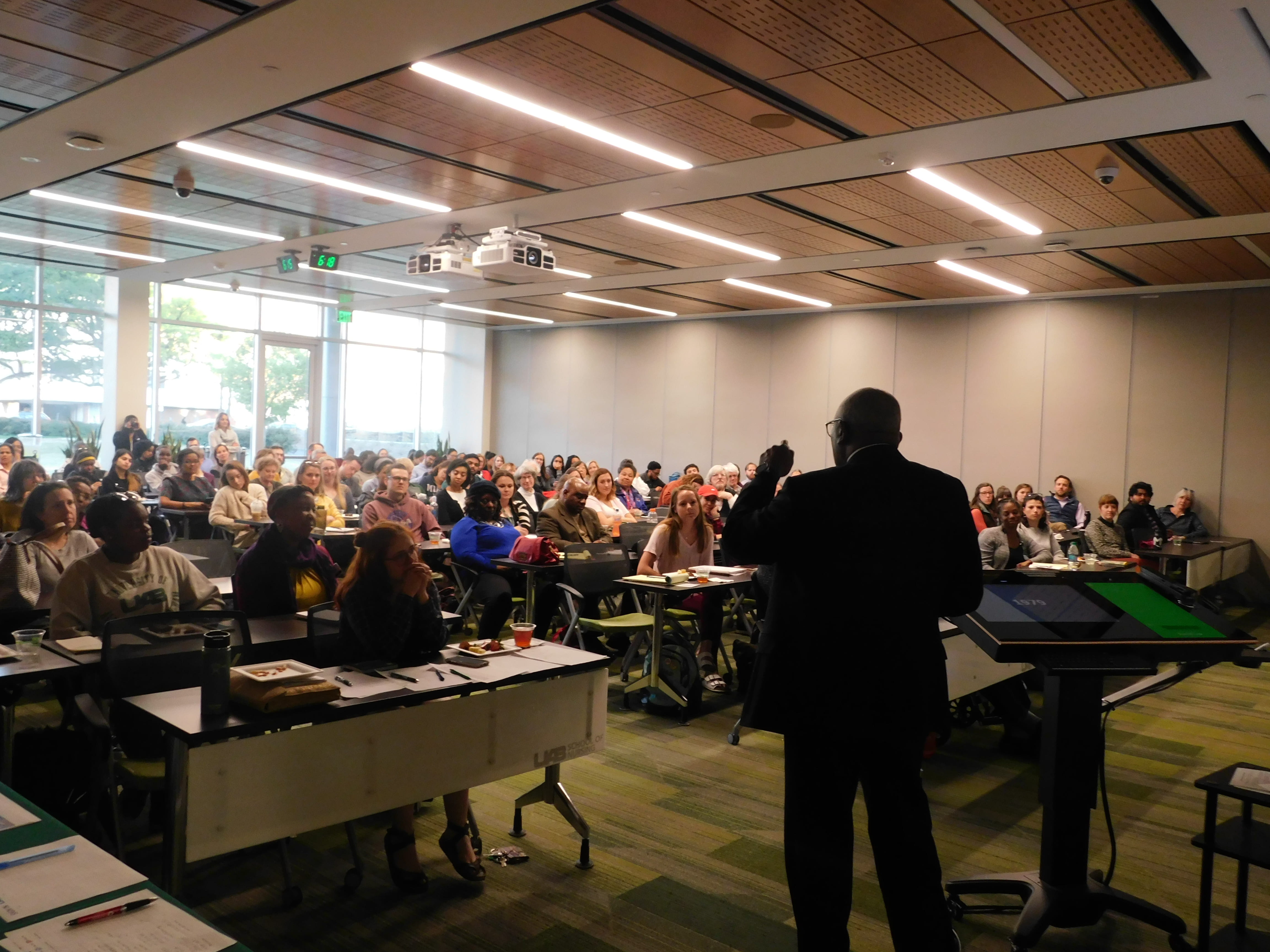
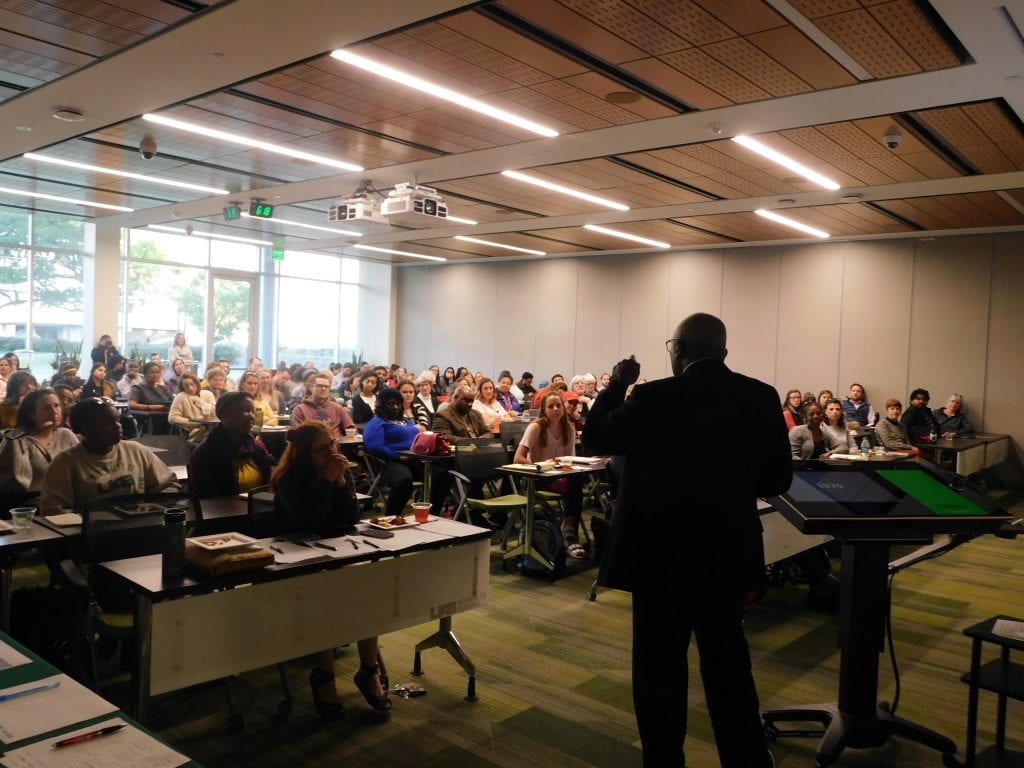
a photo of Robert Bullard speaking to a crowd
Dr. Robert Bullard. Photo by UAB IHR.

Dr. Robert Bullard has been fighting alongside the citizens of various cities for their right to a clean environment. He positions himself as a dot-connector who utilizes the central theme of fairness, justice, and equity. He is a seeker of just equity. His fight began with the demand of his wife, Linda, in 1979 after she filed a lawsuit against the state of Texas and BFI, a national company seeking to dump waste in a Black community. Bean vs Southwestern Waste Management Corp. was the first lawsuit to challenge the notion of environmental justice using civil rights law. Bean found that while Blacks made up 25% of the population of Houston during the years prior to 1978, the communities in which they resided became the ‘new residences’ of 82% of the city’s waste. Environmental justice (EJ) reveals the disparate impact of the embedded disrespect White supremacy has for marginalized communities, specifically poor communities of color in the South. It exposes the interdependent relationship among pollution, corruption, and racism. oil containing PCBs dumping travesty in Warren County, North Carolina in 1982, initiated the launch of EJ on the national level. Young Black activists put their lives on the line in protests. In 1983 a study found that 75% of waste sites were in Black communities in seven (7) of eight (8) Southern states. Bullard advocates for community-based participatory research projects.

Using a variety of maps and graphs, Bullard located the roots of environmental injustice to the division of the country during enslavement. The data shows that racism can make people sick. “Your zip code is the most powerful predictor of health and well-being.” A 1994 Clinton executive order reinforced Title IX of the Civil Rights Act and by 1999, the Institute of Medicine found that persons of color were more impacted by pollution and contract more diseases than affluent White communities. The highest concentration of environmental injustices occurs in Southern Black communities, including North Birmingham and Emelle, Alabama. Emelle houses the largest chemical waste management site in the nation. This site receives waste from the lower 48 states and 12 international countries; however, this tiny town is in the heart of the Black Belt, 95% Black, and in a county that borders the AL/MS state line.

EJ is not simply about the release of pollutants into the atmosphere. It is also about the lack of accessibility in neighborhoods and the decreasing proximal distance between vehicles and pedestrians. Health connects to everything. We must redefine the environment, our understanding of it, and our relationship to it. Bullard argues that the environment, though it should be neutral and equally accessible for all, is not when the entitlement of equal protection is not applicable to some members of society. Health equity brings together all the segments which merge into intersections. EJ advocates and activists must call out the normalization of whitewashing in both the history and the present injustices plaguing marginalized communities. We need more equal partnership—with universities and communities, and among the marginalized. Marginalized communities must have a reclamation of space—free from the influence and presence of Whites—for the unshackling of all the ‘isms’ from their narratives to unify their voices and their messages. Whites must make room for, stand aside, and equally distribute finances and resources when confronted with the reality of EJ like Flint and the southern Black Belt. The erasure of history makes people ignorant but the failure to invite and listen to the voices of those most affected by EJ continues the perpetuation of the injustices.

Bullard concludes that justice has not been served in places like Flint because not only does the issue remain, the families are still poisoned, and the government officials have not received justice. For 40 years, Bullard has steadfastly shown that a commitment to EJ specifically, and justice broadly, is lifelong and intergenerational. It also requires an alliance with Whites longing to learn and build relationships. The process of mutual learning, regardless of race or age, must be met with clear expectations and a desire to focus on that which may seem ‘unsexy and unattractive’ because that is where the real need for attention lies. Community health is not just about the treatment of the sick; it is the exacting of liberty and justice for all.

Getting a Mental Detox in Rwanda

This Sunday 7 April is the International Day of Remembrance of the Victims of the Rwandan Genocide. 

Photo by Carmen Lau.

I decided to study the Rwandan genocide after attending the  Institute for Human Rights conference entitled, “Bystanders and Complicity in Nazi Germany and the Jim Crow South.”  Rwanda, viewed as a trophy of the African “mission field” by many in Western Christianity, shocked many onlookers in the period during and after the genocide as it became obvious that Christians had killed Christians.  Moreover, many estimate that most Rwandan Genocide victims were killed in churches, an assertion that stimulated my interest.  The Rwandan Genocide differs from other genocides because religion did not serve as a demarcation to target victims as “other.” Most people in Rwanda identified as Christian, and the religious affiliation did not coincide with ethnic identity.

Last summer, I tagged along with a group of teachers and professors who were passionate about using education to prevent genocide.   This was a first step in developing my thesis:  Stories from Rwandan Churches Priot to the Genocide: A Collection of Oral Histories. The travel group knew one another from collaborating with the Holocaust Museum, and they held great affection and esteem for  Carl Wilkens, our group leader. Wilkens backstory, as described on his website, is this:

As a humanitarian aid worker, Carl Wilkens moved his young family to Rwanda in the spring of 1990. When the genocide was launched in April 1994, Carl refused to leave, even when urged to do so by close friends, his church and the United States government. Thousands of expatriates evacuated, and the United Nations pulled out most of its troops. Carl was the only American to remain in the country. Venturing out each day into streets crackling with mortars and gunfire, he worked his way through roadblocks of angry, bloodstained soldiers and civilians armed with machetes and assault rifles in order to bring food, water and medicine to groups of orphans trapped around the city. His actions saved the lives of hundreds.” 

With this experience, one might not be surprised that Wilkens has chosen to position himself as a force for peace and as a catalyst to stimulate people to seek to become integrated beings with emphasis on respect, empathy, and inclusion.

I had expected to cultivate empathy and understanding and to gather context and information, but I had not considered the idea that this trip with teachers would provide space for some mental detox. I had heard Rwanda described as a country with gorillas and genocide, but I saw a place where the government exceeded expectations in the context of health care and infrastructure.  Ranking among the 20 poorest countries in the world, Rwanda is a place of paradox. When our group gathered in the small white bus outside the Kigali Airport, I first sensed that this would be different than I had expected. Carl Wilkens presided over our discussion as we rode to the hotel that would be our home for the next 11 days. Wilkens urged us to harness the power of gratitude to rewire neural circuits and reminded us that since negative thoughts stick like Velcro, one must intentionally attend to the task of noting the positive.

Photo by Carmen Lau.

Early on the first day, to fulfill Wilkens’ charge, our designated facilitator, a teacher from Nebraska, urged us to think about “The Good Life,” the motto for her home state. As the group shared visions of a good life, I noticed that already, just twelve hours in Rwanda, we had erased default notions of acquisition or competitive achievement as core building blocks in “The Good Life.” Instead, people cited nature, learning, and human connectivity as the essence of a good life.

Gratitude underpins the curriculum for Mindleaps, a thriving multinational NGO designed to empower children who come from the most impoverished homes. Mindleaps collaborates with the Gisimba Training Center, a repurposed orphanage that was featured in Wilkens’ book, I’m Not Leaving. This was our first stop on the Carl Wilkens Tour. Once a child is accepted to Mindleaps, she has the opportunity to have a noon meal, wear a special uniform, receive school supplies, learn digital literacy (as an enticement to learn English), attend academic enrichment classes, and have her mother participate in a parenting-strengthening program (fathers are often away seeking work). Oh, and the best part is the child learns to dance very well. Dancing gives the children confidence and a sense of personal achievement that will be key to developing skills to thrive.

I visited the home of a seven-year-old student who regularly walks alone to Mindleaps — a three-quarter mile jaunt down a hilly tangle of dirt roads that are jam-packed with huts. Her home has no electricity or plumbing and only a patchy tin roof. Her mom comes to the parental-enrichment class regularly. The strategies used by Mindleaps are being tested by a tracking software program to provide a nuanced evaluation of the children in the areas of memorization, language, grit, discipline, teamwork, self-esteem, and creativity. For me, the visit to the Mindleaps gated compound was a transcendent experience. I saw excellence, bright colors, simple food, and a tidy vegetable garden. A swarm of smiling students wanted to touch and thank each one in our group.

Holistic, abundant living combines heart and head. So far, this time in Rwanda has allowed me to peel off barnacles of language and worldly possessions and notice feelings of gratitude and love. Watching the children and teachers leap in grand plié’s to Leonard Cohen’s “Hallelujah” consolidated my embrace of Rwanda’s Mental Detox. Rwandans have embraced the ethos of gratitude. The security detail at the entrance to the parking lot of Hotel Des Mille Collines paused from the task of pushing mirrors on long handles under incoming Land Rovers (to check for bombs) and greeted our group of pedestrians on foot.  He said, “Thank you for visiting our hotel.” Street merchants, airport personnel, gardeners, cooks, and administrators said variations of “Thank you for visiting our country.”

As the old saying goes, “You won’t remember what they said, but you will remember how they made you feel.” In Rwanda, I feel loved and appreciated.


Symone Sanders: Becoming a Radical Revolutionary

On Wednesday, March 20th, the Institute for Human Rights co-sponsored the UAB Lecture Series alongside Undergraduate Student Government, Graduate Student Government, Student Involvement & Leadership, and Leadership and Service Council to present political strategist and commentator Symone Sanders.

Sanders began by critiquing the cliché of how one would change the world if they had a magic wand. However, in this world, she insisted we’ll never have that opportunity because social change doesn’t operate through a blank slate. As a result, we must work with a system that doesn’t want to change which warrants radical revolutionary leadership in the spirit of community.

This evoked Sanders to propose her tenants for being a radical revolutionary:

  • First, you must be willing to buck the status quo and take a risk.
  • Second, you must be willing to feel uncomfortable and act.
  • Third, you must be willing to stand in the gap for other people.
  • Fourth, you must be willing to take on your adversaries as well as your allies.
  • Finally, you must pick an issue and care about it.

Sanders admitted these tenants were inspired by Dr. Martin Luther King, Jr.’s commitment to social change by claiming that immediately after his assassination, many Americans blamed him for his own demise because they believed he was doing too much. In contrast, Dr. King’s current legacy of racial and economic justice is well-respected. Sanders insisted Dr. King was often very uncomfortable when addressing injustice across the country and implored the audience to be more like him when it comes to strategic community building, namely when it comes to intersectional and intergenerational coalitions. As for challenging your allies, Sanders admitted that she recently had to condemn the sexual assault allegations against her friend and Virginia Lt. Governor Justin Fairfax because truth is truth and much like Dr. King, “…silence is betrayal”. She claimed radical revolutionaries are vigilant about what’s happening to marginalized communities across the country and allow themselves to hope, dream, and have an outline for social change.


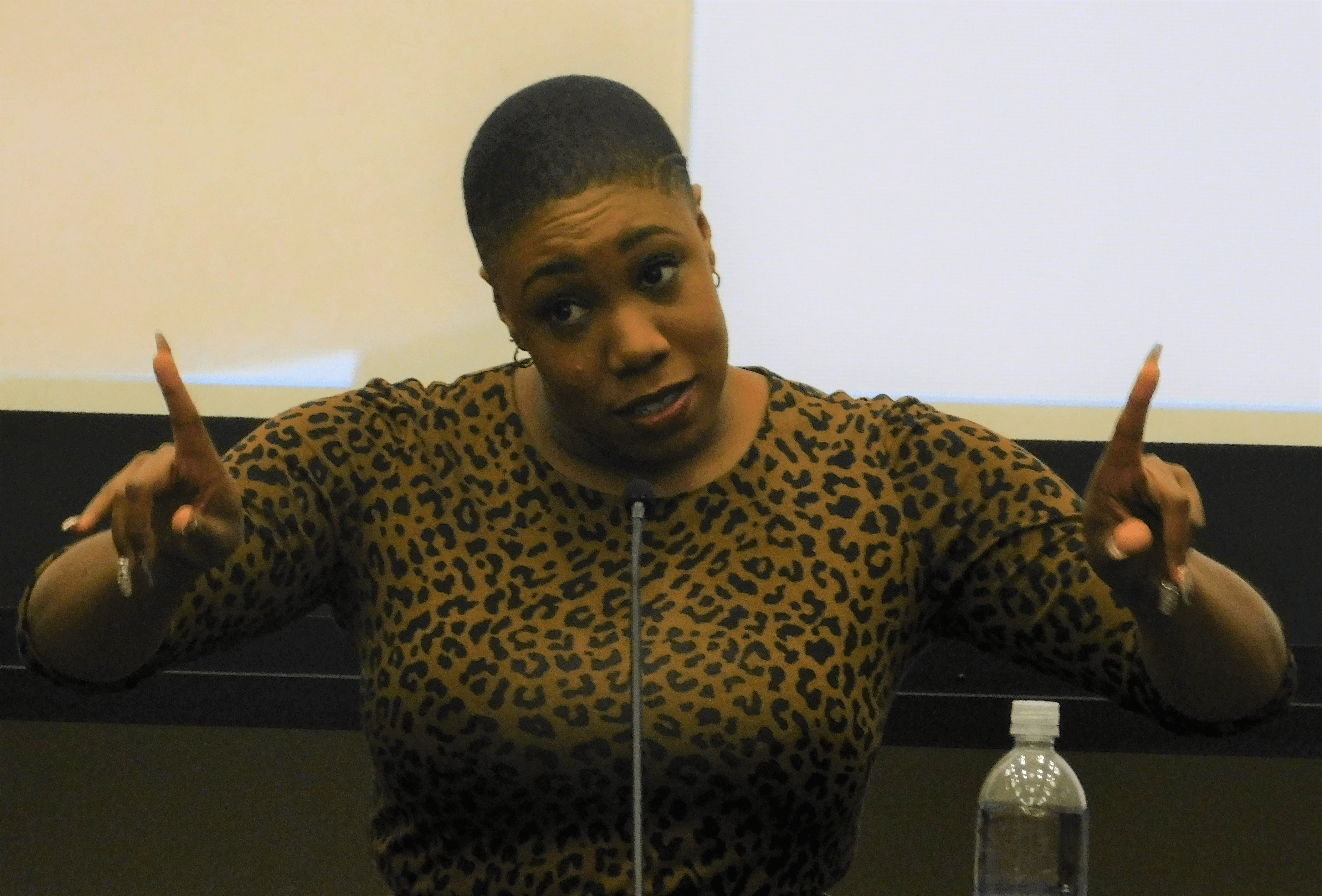
Symone Sanders speaking to the audience. Source: UAB Institute for Human Rights


Amid political and social turmoil nationwide, Sanders’ lecture about becoming a radical revolutionary is timely as well as necessary. By modeling this approach from Dr. King’s legacy, Sanders has drafted a pragmatic, although challenging, formula that has and will continue to confront injustices that have outstayed their welcome in U.S. culture. Sanders largely addressed the challenges of race and sex-based discrimination, not only in the political area but in her personal life, who as a Black woman must constantly confront intersectioning prejudices that attempt, but fail, to undermine her Black womanhood.

Sanders said to the crowd, which was predominantly UAB students, there is no one more powerful in the world than young people in U.S. and that we must be willing to do things that have never been done before. This claim is particularly salient to a group of people that were likely ineligible to vote in the most recent U.S. presidential election. For this reason, these young, aspiring minds are capable of taking this narrative to their families, friends, classmates, and the voting polls which can embolden the revolutionary change our society needs and deserves.

The First Step Act: A Step Towards Criminal Justice Reform

A slightly open jail cell door.
Untitled. Source: Neil Conway, Creative Commons

On December 21 of 2018, Donald Trump signed the First Step Act into law.  This piece of legislation has been marked by some as a massive breakthrough in criminal justice reform.  The bill is intended to “ensure people are prepared to come home from prison job-ready and have major incentives to pursue the life-changing classes that will help them succeed on the outside and includes changes that will potentially lower the cost of upkeep for correctional facilities. 

Improving Experiences of Time in Prison and Their Outcomes 

Many of the aspects of the First Step Act are geared towards decreasing recidivism (people returning to criminal behavior after being released from prison) through opportunities and resources that help prepare people for their lives after incarceration.  For example, the bill creates strong incentives to encourage prisoners to participate in preparative programs that are available to them.  For every 30 days of “successful participation,” individuals can receive 10 days of prerelease custody, where they are transferred to halfway houses or home confinement.  Incentives can also include increased phone and visitation privileges, access to email, increased commissary spending, and other requested incentives. 

The bill also designates $250 million to be used over five years by the Federal Bureau of Prisons (BOP) to expand and develop skill-building classes and vocational training opportunities.  It also allows the BOP to work with outside organizations that can provide such classes.  According to the First Step Act, prisoners who are at a medium or high risk of recidivism are to be prioritized for receiving these opportunities, as well as counseling and treatment.  Before leaving federal prison, all are to receive their ID, allowing people to re-enter society more quickly and avoid “collateral consequences of incarceration.” 

In order to make it less difficult for families to visit, the bill states that people should not be placed in prisons that are more than “500 driving miles” away from their families.  This improves their ability to maintain ties with their relatives, which can improve their quality of life while incarcerated and make the process of reintegration into society easier afterwards. With the help of a strong support system and the tools needed to find work, released prisoners have a better chance of finding their place in their communities and not being reincarcerated later. 

Decreasing the Population Actually in Prison 

There are some aspects of the First Step Act that help to decrease the population of people in prison.  Increases the number of days of good time credit, which is earned through good behavior, from 47 to 54 days per year.  This change also applies to everyone in federal prisons who has already earned good time credit.  It is estimated that this change will save $40 million in the first year.  Additionally, the bill required the BOP to transfer prisoners that are considered low/minimum risk to prerelease custody and expanded compassion release.  Eligibility for the elderly offender program of compassion release now starts at age 60 instead of 65, the minimum portion of one’s sentence that must be served has been decreased from 75% to 66.7%, and the program is now available in all prisons. 

Views of the Purpose of Prison 

One’s understanding of the importance of legislation like the First Step Act can be significantly impacted by their perspective on the purposes of prisons.  Some people believe that prisons should be used to achieve retributive justice, where the main purpose is to punish criminals for their wrong-doings and to have them suffer for their action.  For someone who believes in retributive justice, the changes made by the First Step Act may not seem so important.   

Alternatively, other people believe that the incarceration system should be used to rehabilitate prisoners and prepare them to re-enter society as individuals who can make more positive contributions to their community and avoid taking actions that would lead them back to imprisonment.  When you look at the First Step Act from this point of view, it is easy to see why the bill’s intended impacts are so significant.  It gives people a chance to learn from their mistakes and helps them become more productive members of society. 

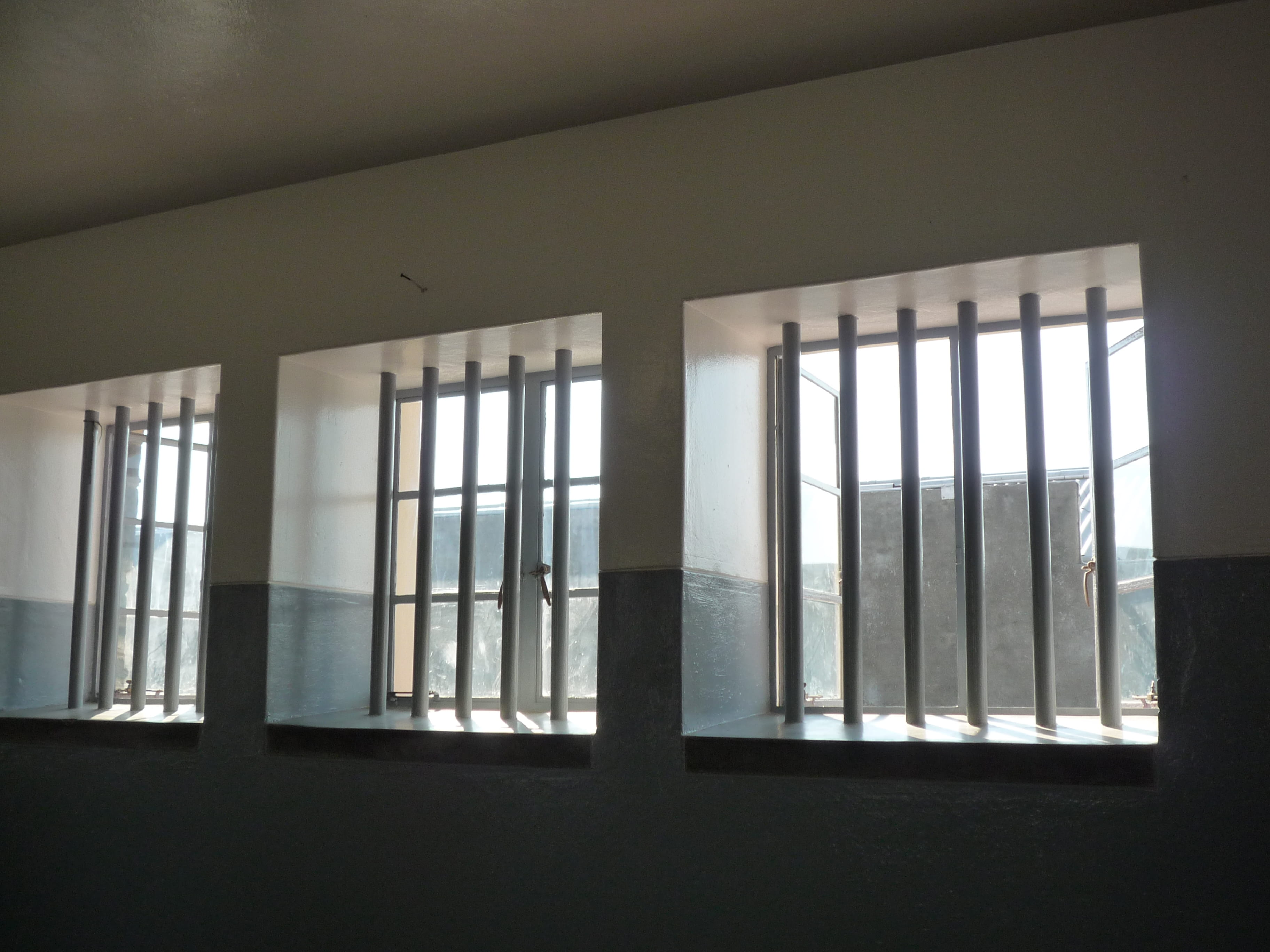
Three prison windows.
p1000578.jpg. Source: David Johnson, Creative Commons

Why It Matters 

As of 2016, there were 2.2 million people incarcerated in the United States.  That year, $57.7 billion were spent in state expenses for the upkeep of correctional facilities.   

According to the American Civil Liberties Union (ACLU), “Chronic illnesses go untreated, emergencies are ignored, and patients with serious mental illness fail to receive necessary care,” which, in some cases, has led to the deaths of incarcerated individuals.  This violates Article 25 of the United Nations’ Universal Declaration of Human Rights (UDHR), which states that everyone has the right to a living standard that is sufficient to support their health and well-being and specifically includes things like medical care and vital social services.  Prison authorities are legally responsible for providing prisoners with their medical needs, based on the Supreme Court’s ruling in the case of Estelle v. Gamble.  The ruling recognizes the potential of ignoring these needs to “amount to cruel and unusual punishment” due to the pain and suffering they can cause.  However, overcrowding in prisons and a lack in resources makes giving prisoners the care they need a challenge. 

The intended outcomes of the First Step Act can improve the access to human rights of people who have been incarcerated.  As it is said in the UN’s Basic Principles for the Treatment of Prisoners, prisoners are entitled to all the rights that are declared in the UDHR and other human rights documents and should have access to resources that can aid their ability to successfully rejoin society.  Decreasing rates of recidivism, as the actions of the First Step Act hopefully will, helps to lower the number of people in prison overall.  This allows for a change in the allocation of funds to take better care of people living in prisons, giving them greater access to their human rights.  People living in prisons are human beings just like everyone else and should not be treated as anything less. 

Midwifery and Misconceptions

Living in a city with some of the most well-ranked hospitals in the nation, we sometimes take our access to healthcare for granted. The wail of an ambulance is a frequent annoyance to UAB students, but it’s a noise that many people are grateful to hear – especially those who live in rural areas with limited access to healthcare.

Midwife Lorina Karway is one of those people. Karway is responsible for helping thousands of Liberian women give birth safely. She often uses the light of her cell phone, held in her mouth, to deliver babies in a facility without electricity (UN Women). It’s not an easy feat to accomplish, but courage, intuition, and years of experience guide Karway to success. Childbirth is a common, natural process that veteran midwives handle skillfully, but complications do happen. When they do happen, it can be incredibly dangerous. The nearest hospital is over sixty miles away, and emergencies without swift action can have fatal outcomes. Midwives have successfully operated for centuries without hospitals, but medical equipment and clean facilities with electricity are immensely helpful in high-risk situations.

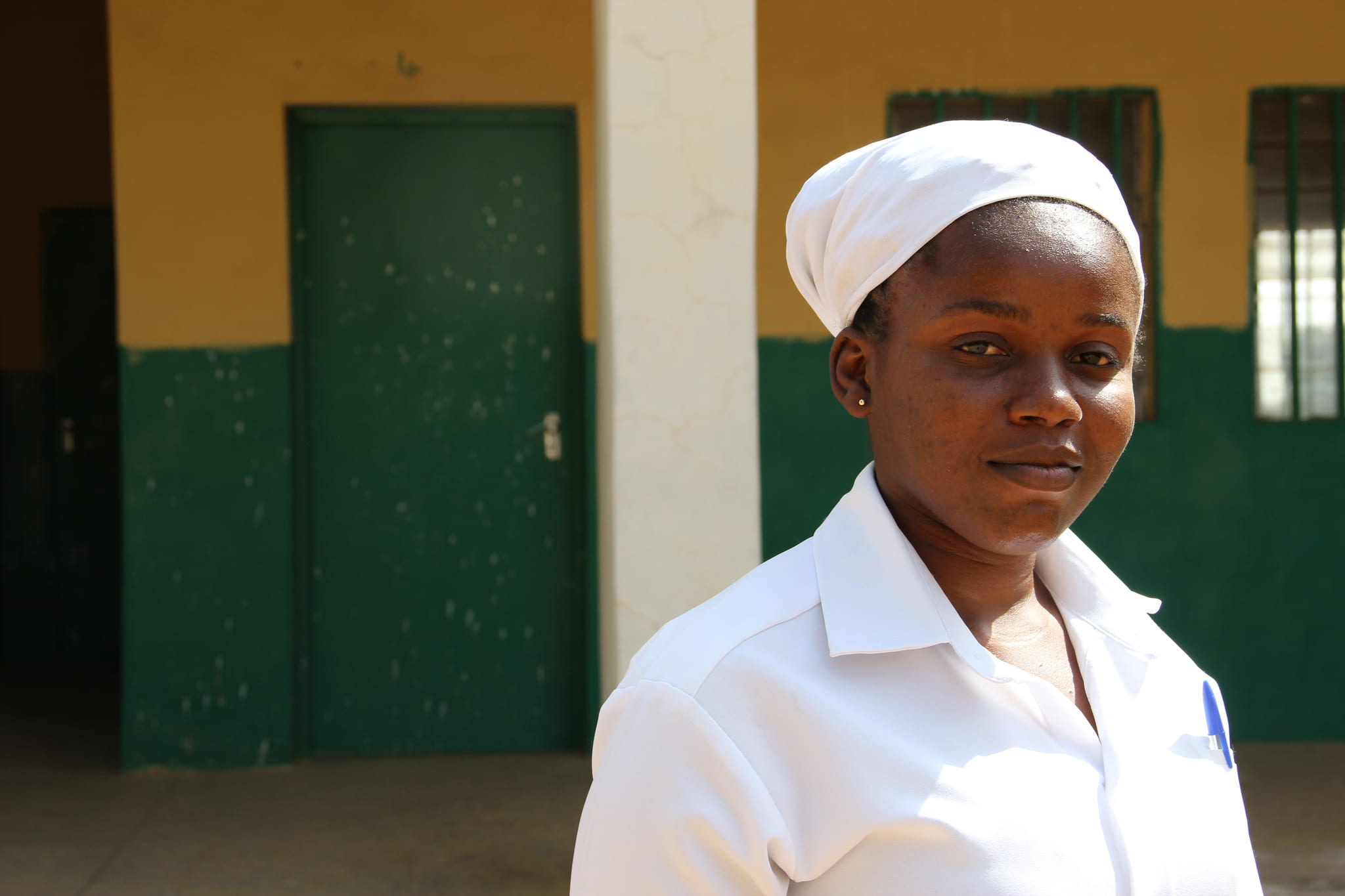
A smiling midwife holds a newborn baby bundled in a blanket.
“Cmdr. Protegenie Reed, a Navy midwife from Miami, Florida holds a newborn baby during Pacific Partnership 2015.” Source: Sgt. Valerie Epple, Creative Commons.

Midwifery still has a reputation for being illegitimate or unsafe relative to hospital deliveries, but midwives aren’t just second-rate doctors for communities without hospital access. “Skilled, knowledgeable and compassionate care for childbearing women, newborn infants and families across the continuum from pre-pregnancy, pregnancy, birth, postpartum and the early weeks of life,” is how the World Health Organization defines the holistic practice. Part of the negative reputation is because midwives tend to practice in areas where adequate services and equipment are lacking, creating the dangerous situations that Karway faces. Communities without access to healthcare still require some sort of healthcare, and midwives across the world bravely fill that gap.

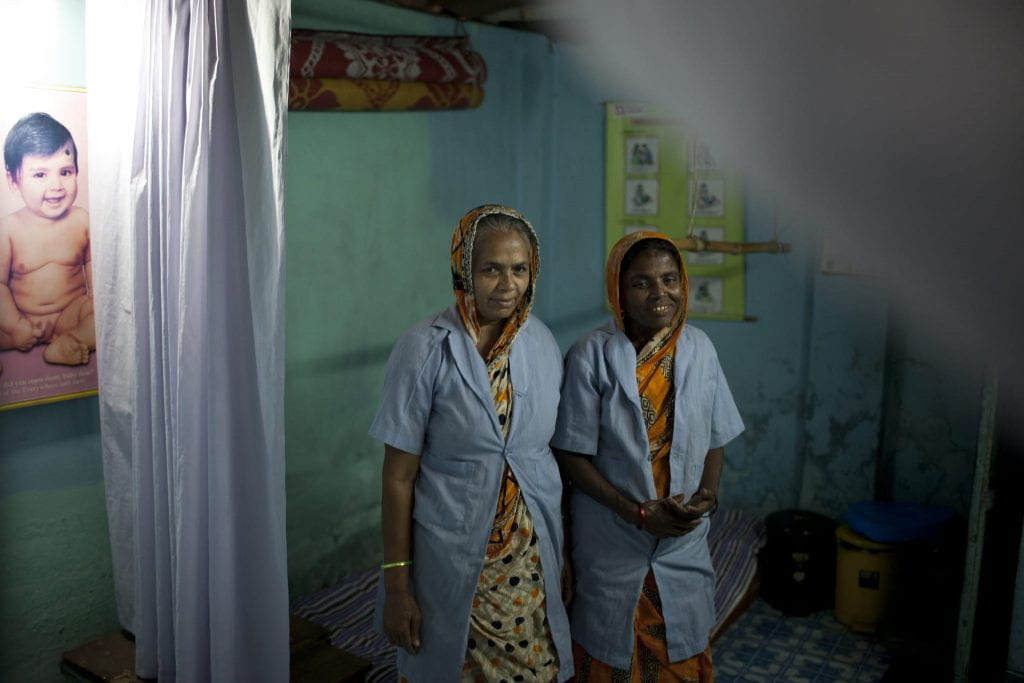
Two midwives stand next to a curtain in a dim room with photos of babies on the walls.
“Midwives Hasina and Aya Begum wait inside the birthing centre in Koral slum, Dhaka, Bangladesh.” Source: Conor Ashleigh for AusAID.

The danger is not created by practicing midwives, but rather from the community’s lack of access to adequate local healthcare services that extend beyond a midwife’s capacities. A solution to this gap in service would enable midwives to deliver better standards of care, and to ensure midwives can collaborate with hospital assistance when required. Additionally, there is evidence that midwife-assisted births result in better care than births guided by obstetricians (Walters et al). The study by Walter investigates variation within hospitalized care, but similar conclusions were found in regards to remote midwifery. Cost analyses of prenatal and postnatal care from seven different remote aboriginal communities found that “midwife group care (MGP) was likely to be cost effective, and women received better care resulting in equivalent birth outcomes compared with the baseline maternity care” (Gao et al).

Policy solutions have not been aimed at uplifting midwives, but rather to create barriers and even criminalize. Midwifery was essentially outlawed in Alabama for the past forty years, along with a dozen other states. Even where legal, barriers were constructed make it difficult for up-and-coming midwives to obtain training, licensing, equipment, facilities, and adequate pay. This is bad for midwives, and detrimental to women in need of accessible maternal healthcare.

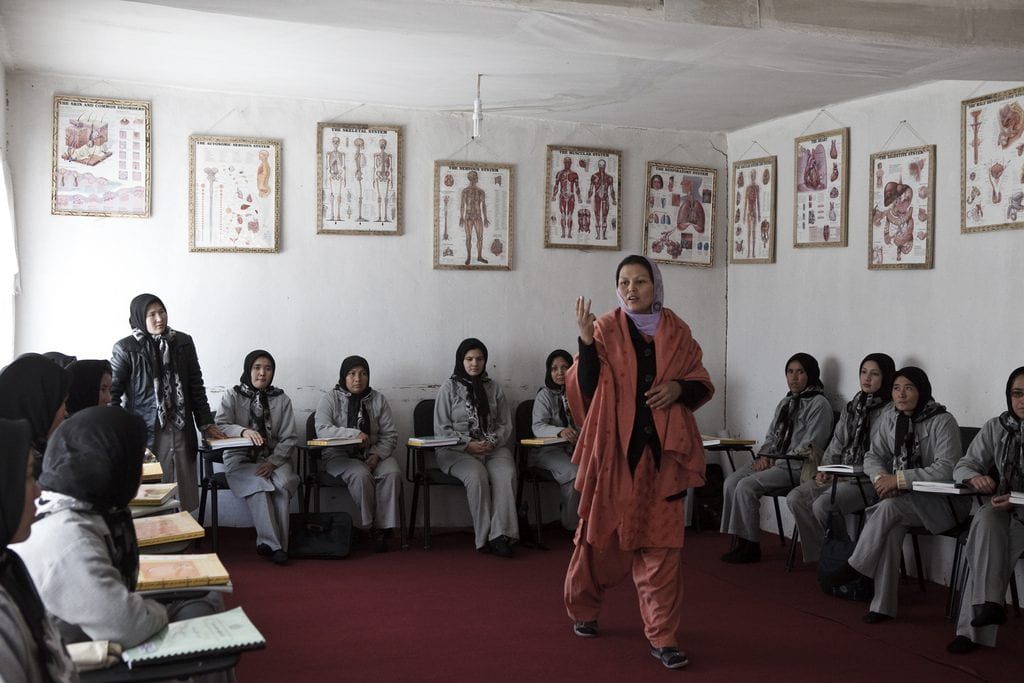
A woman in hijab stands in the middle of a classroom with six pupils in hijab.
“Community Midwifery Education Program.” Source: Aga Khan Foundation/Sandra Calligaro, Creative Commons.

According to the United Nations Population Fund (UNFPA)

  • Over 300,000 women and 2.7 million babies died in childbirth in 2015 alone.
  • Most of these deaths were preventable and caused by a lack of sufficient antenatal, delivery and post-natal care.
  • Almost ⅔ of all maternal and newborn deaths could be prevented by well-trained midwives.
  • Midwifery includes comprehensive reproductive health and community health practices.

Barriers faced by midwives include:

  • Social isolation / poor living conditions; 37% of midwives face harassment at work
  • Lack of professional development opportunities or support through regulation/accreditation
  • “Unequal power relations and gender inequality within the health system and within communities” (WHO).
  • “Private sector markets and medical hierarchy leading to medicalized births, which constrains opportunities for quality midwifery care” (WHO).


“International Day of the Midwife.” Source: Lindsay Mgbor/Department for International Development, Creative Commons.

Human Rights Impact


Here are some reasons why it’s important to embrace midwifery as an alternative or addition to formal medical care:

  1. Overlooking midwifery increases stigma. This makes it harder for women to access midwives – especially rural and/or low-income families cannot afford or cannot travel to medical centers.
  2. Midwifery is a critical role in some indigenous traditions. Native women have the right to practice traditional knowledge and engage in their own culture. Legislation that stigmatizes or creates barriers for midwives will likely harm indigenous practitioners.
  3. Women have the right to choose what kind of healthcare is best for them. Healthcare is never one-size-fits-all, and it’s important to invest in a variety of options for a variety of patient needs.
  4. Midwifery needs to be an accessible and viable career path. Medicalization of birth and barriers to midwife accreditation essentially act as gatekeepers, forcing aspiring practitioners to attend costly medical school or, for those who can’t afford it, to abandon their dreams.


Midwifery is a quality alternative to hospitalized childbirth, but many don’t have the luxury to choose. When distance makes choosing hospitals impossible, midwives fulfill their communities’ needs for reproductive/maternal healthcare. Midwives should be empowered to provide adequate services whether in urban hospitals or rural facilities, with unhindered access to training, education, and opportunity. Per CEDAW, states have the obligation to provide “appropriate services in connection with pregnancy, confinement and the post-natal period.” Let us support midwives as they courageously provide services that no one else will. Let us encourage midwives across the globe to continue their work despite disdain, mistrust, and criminalization. Let us uplift and support midwifery to make the world a better, safer, more accessible place.


—–

Craven, Christa, and Mara Glatzel. “Downplaying Difference: Historical Accounts of African American Midwives and Contemporary Struggles for Midwifery.” Feminist Studies, vol. 36, no. 2, 2010, pp. 330–358. JSTOR, www.jstor.org/stable/27919104.

Parry, D. C. 2008. “We wanted a birth experience, not a medical experience”: Exploring Canadian women’s use of midwifery. Health Care for Women International, 29: 784–806.

Thomas, Samuel S. “EARLY MODERN MIDWIFERY: SPLITTING THE PROFESSION, CONNECTING THE HISTORY.” Journal of Social History, vol. 43, no. 1, 2009, pp. 115–138. JSTOR, www.jstor.org/stable/20685350.

Shaw, Jessica. “ The Medicalization of Birth and Midwifery as Resistance.” 20 Mar 2013.
Health Care for Women International. Volume 34, 2013 – Issue 6. www.tandfonline.com/doi/abs/10.1080/07399332.2012.736569?tab=permissions&scroll=top