
Cupcake and the State of Missing Children in the U.S.

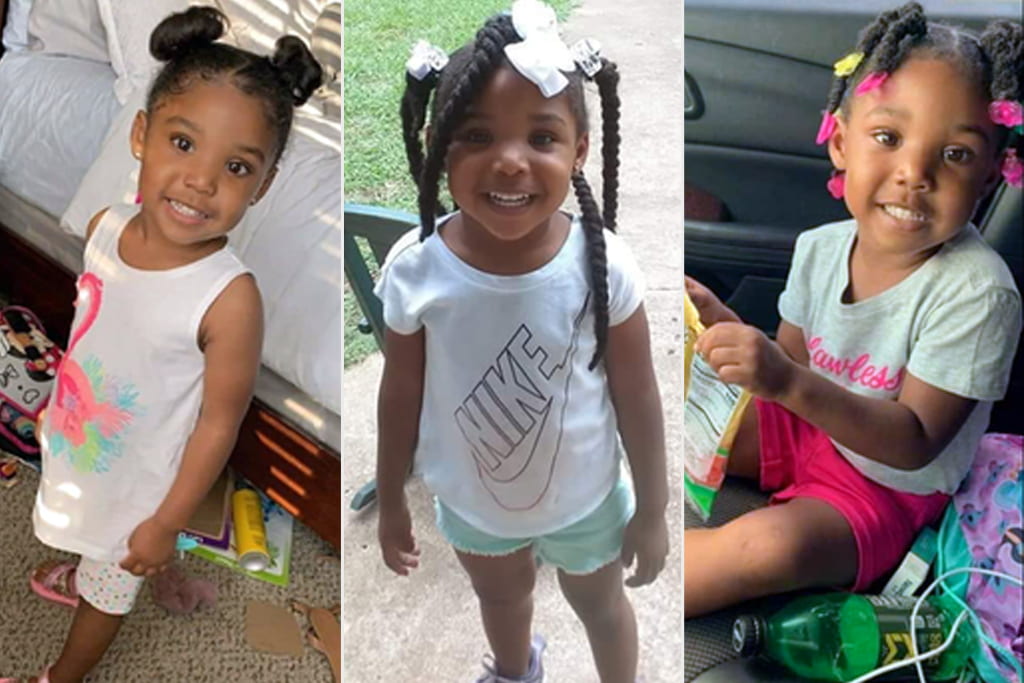
Kamille Cupcake McKinney. Source: AMBER ALERT, Creative Commons.

It breaks my heart to write about the tragedy of the three-year-old little girl Kamille “Cupcake” McKinney, fondly known as Cupcake, who was abducted from a birthday party about two weeks ago here in Birmingham, Alabama. AMBER alerts were issued across Alabama and extended into neighboring states in an effort to locate her. The Birmingham police department had been updating the public on the efforts, but unfortunately a day after Mayor Randall Woodfin pleaded with the public to help find her, the remains of the little angel were found in a dumpster at a landfill in Birmingham. This is indeed a sad moment for not only the family of Cupcake and the city of Birmingham, but also for humanity as a whole. We as a society have failed the little angel, and she is indeed in a better place than this cruel world. My heart goes out to her family as this is an irreparable loss for them that cannot be made up with any amount of sympathy. We hope they are able to find solace and healing with time.

Mayor Woodfin held a vigil for “Cupcake” outside of Birmingham City Hall, where hundreds of people gathered to honor her. They expressed sorrow and solidarity for the innocent soul “whose disappearance gripped the Birmingham area for 10 days and whose death shook the city to its core.” Birmingham police department, City Council, community activists, faith-based leaders and the general public stood with heavy hearts and teary eyes to pay tribute to baby Kamille. This was one of the many vigils held in the city after the devastating news of her death, including the spot where she was last seen in Tom Brown village. Birmingham Police Chief Patrick Smith expressed his grief over the incident and how his department endlessly worked in hopes of bringing the child safely back home. He had some powerful words to say:

“I believe Kamille changed this city. A 3-year-old little girl has changed the landscape of the city of Birmingham. She made us stop and check ourselves. Check ourselves to see if we’re doing everything we can to keep our children safe from harm. Check ourselves to see if we’re truly the village that we promise to be. Check ourselves to see if we’re living up to the expectations of tomorrow and watching over our children today.”

This incident has called for a reflection of ourselves and of our community. It has made us question the safety of our own children because little Cupcake was one of us. We need to evaluate if we really are the village that we strive to be or are we too segmented and disconnected as a community and a society? It makes us question how safe our neighborhoods and cities are? Do we assume that someone will always be there to step in and stop it? Are there any truly safe spaces? The answers are to be found.

To this date, two persons of interest have been charged with kidnapping and murder in relation to Kamille’s disappearance. A similar case surfaced in South Carolina when the body of a 5-year-old girl Nevaeh Adams, who was missing since August, was also found dumped in a landfill within 24 hours of this tragedy.

Missing children is a bigger crisis in the U.S. than most people think, and unfortunately Cupcake was one of many. A child goes missing every 40 seconds here in the United States. Last year alone, more than 400,000 reports of missing children were made to law enforcement in the US, out of which almost 15,000 were kidnapped. The most commonly abducted group was of female children aged 12-17.

It is notable to consider the amount of coverage Cupcake was able to get and the reward amounts offered for her retrieval. Unfortunately, this kind of effort is not always the case for missing children, especially for those of color. A study by Ohio State University found that missing African American children are in fact underrepresented in news media making it difficult to spread the word about them and to retrieve them. This itself is a violation of the Article 7 of the Universal Declaration of Human Rights, which states that all are equal before the law and are entitled without any discrimination to equal protection of the law. The Black and Missing Foundation, a non-profit striving to bring awareness to the missing persons of color, issued a report suggesting that one reason for the under-representation of missing minority people is the widespread belief that such people live in impoverished conditions with crime being a regular part of their lives. This mindset contributes to the factor of racial consideration in the coverage and efforts of finding missing persons.

Cases of people who go missing generally involve multiple abuses of human rights. For example, the Universal Declaration of Human Rights ensures the rights to life, liberty and security of person (Article 3) and that no one shall be subjected to torture or to cruel, inhuman or degrading treatment or punishment (Article 5). In a lot of cases, the right to life is also violated as in that of Cupcake and Nevaeh Adams. Additionally, the families of victims may face violation of human rights as well, such as the right to a family life. In case of the absence of official investigations, the families and survivors of the victims face the violation of their right to due process, to recognition of a person before the law, and even to the prohibition of torture. It is important to consider it as a human rights issue and the various ways in which the fundamental rights of the missing persons and their families are abused.

It is the responsibility of the state to ensure a safe environment for all its citizens and the community members to play their part in keeping it safe. In case of such unfortunate circumstances, the community seems to be limited to the aftermath and post-incident action. The states are under a legal obligation to conduct effective investigations for all missing persons and to guarantee that all abuses be officially investigated irrespective of the fact that whether or not those abuses are considered attributable to actions by the victim. International Humanitarian Law also obligates the search of the missing and complements the universal guarantees provided by human rights.

There are various reasons that a child can go missing. When children are kidnapped by strangers, it is often due to pedophilic motives and for sexual exploitation. Some kidnappings are also motivated by monetary reasons such as human trafficking, sex-trafficking, forced child labor, illegal adoption, or for ransom. These are generally well-organized illegal networks run nationally and internationally and are always on the lookout for potential target-children. A few rare cases also involve serious mental conditions or revengeful motives used for kidnapping, abducting, and hurting children. Parental abductions and runaways also constitute a large number of missing children, but the focus of this article are the abductions by strangers.

Now the question arises: What can we do on our part to prevent such unfortunate circumstances and to keep our children safe from predators in addition to actions taken by the authorities?

According to the American Academy of Pediatrics, most of these incidents happen when children tend to wander off without realizing the danger. Parents and guardians need to take necessary precautions to help keep their children safe by being more vigilant of their surroundings and ensuring a check on children. Some kids can be more curious, mischievous, and vulnerable than others. Parents need to ensure trustable adult supervision at all times, especially in crowded public places. While choosing daycares, schools, or camps for children, make sure that there are ample security measures and policies in place for kids’ safety. Adults also need to be very careful while hiring babysitters and should get necessary background checks and recommendations before letting someone be alone with their child. Additionally, children need to be educated and trained for potential crisis situations and ways to seek help. Train them to be mindful of strangers, encourage them to share any unusual happenings, and teach them about the resources and necessary actions when encountering an unusual situation. For children with special needs, parents and guardians should take extra precautions and make necessary arrangements for the safety of their children, as they might be more vulnerable than others.

Lastly, all of us need to stay alert of our surroundings and take active responsibility for helping authorities in our communities when AMBER alerts are issued for such cases. We can look out for people, vehicles, victims, or criminals as specified in the issued alert. We can help spread the word by sharing the information with others and volunteer to distribute posters of missing children. For specific cases, community members can conduct organized searches to help the police forces look for missing children. We should stay aware of our surroundings, report suspicious activities and people, safely intervene and help in situations to the best of our abilities, and know the community resources for taking appropriate action.

A number of resources are available for parents facing such an unfortunate situation of a missing child. In such an emergency, contact your local FBI field office or call the National Center for Missing and Exploited Children on 1-800-THE-LOST. The AMBER Alert program has also been credited with the safe recovery of 957 children to date and is a great way to get the word out in order to mobilize communities for the lookout. Parents are also encouraged to keep child safety kits which include all the necessary information like IDs, recent photos, physical characteristics, fingerprints, and other information about the child. These should always be kept intact to be used in potential emergency situations to assist the authorities in taking appropriate and immediate action.

We as a society need to re-evaluate ourselves, our values, commitments, priorities, actions, and safety in the light of these staggering realities and horrific instances. Little baby Cupcake will not come back to her family, but a lot of other children can find their ways back home through the joint efforts of authorities and community members. We all have to work together to make our communities safer for our precious children, who are the future of this world.

Cleaved and Clamored: The Crisis in Cameroon

On Tuesday, November 5th, the Institute for Human Rights co-sponsored an event alongside Cameroon Humanitarian Relief Initiative to present Herman Cohen (former United States Assistant Secretary of State for African Affairs) and Dr. Fontem Neba  (Secretary General of Cameroon Anglophone Civil Society Consortium). During their panel discussion, Cohen and Neba discussed the history of Cameroon, ongoing Anglophone discrimination, and potential resolutions to end the conflict.

As one of the most prominent voices advocating for Anglophone rights, Dr. Neba spoke directly about the atrocities taking place in Cameroon because he was recently detained for nine months after being charged with terrorism. Followed by its establishment as a federation in 1961 and an illegal referendum in 1972 that unified the Francophone majority (~80%) in the north and Anglophone minority (~20%) in the south, Cameroon has endured significant conflict. With political power most harbored in the north, Anglophone Cameroonians have experienced pressure to assimilate and prevention to secede, which led to a civil war in 2016 that has been riddled with human rights violations. More specifically, the Cameroonian military has permeated the south with their influence by committing heinous acts such as destroying Anglophone schools, burning crops, and murdering separatists. As a result, these acts have led to famine, homelessness, and institutional instability throughout the south. Additionally, thousands have been jailed for speaking out against the Franchophone government, while approximately a half-million are internally displaced and another 40,000 have sought refuge in Nigeria.

Neba describing Cameroon’s geographic division. Source: UAB Institute for Human Rights

Cohen then spoke about the crisis in Cameroon by drawing parallels with Eritrea which Ethiopia turned  a province before it eventually became an independent country. Although, the international community has been passive about the events unfolding in Cameroon. One exception is none other than the Trump Administration, which signed an executive order last month that effectively removed Cameroon from the African Growth and Opportunity Act. As a result, this action prevents Cameroon from profiting off duty free sales to the U.S. Additionally, south Cameroonians have found an Anglophone ally in Nigeria, making the prior impervious to defeat, while north Cameroonians have been increasingly critical of their government because they are not benefiting from the country’s strong economy. Thus, Cohen argues the U.S. is in the unique position to mediate a resolution. However, the Trump Administration has adopted an isolationist position, which currently places the U.S. distant from potential negotiations. Following, he suggested that the Cameroonian diaspora in U.S. should write letters to their local representatives and urge a cease-fire agreement.

After their presentations, Cohen and Neba took questions from an appalled audience. Addressing a question about the realistic options in our current political environment, Cohen insisted the United Nations Security Council must initiate negotiations and that it must be settled between warring factions; his personal suggestion is that they return to a federation relationship. Additionally, Cohen responded to a question that mentioned the role of former colonial powers, where he mentioned that Great Britain is currently distracted by Brexit, while France, despite reluctance from southern Cameroonians, is taking initiative to mediate the conflict. When asked how geopolitics, namely natural resources, influence this conflict, Neba claimed south Cameroon is rich in cocoa and timber as well as a fevered, educated populace. Although, he argued the region cannot become economically independent because their oil supply, which is on the border, is property of the government. In response, a passionate audience member, and Cameroon native, insisted south Cameroon, much like other small countries, can be independent without an oil industry.

Cohen answering an audience question. Source: UAB Institute for Human Rights

Cohen argued this crisis has potential to become a “Rwanda situation”, but, thankfully, a potential resolution doesn’t require money or soldiers. However, the current trajectory of this crisis primarily lays in the hands of Cameroon (who is persistent on military intimidation), Nigeria (who has enabled separatists in the south), and the U.S. (who has implemented economic sanctions). Thus, these conflicting narratives put human rights advocates in the position to highlight this pressing issue whether it be mentioning it on social media, writing to your local representative, or donating to humanitarian relief.

Examining Period Poverty

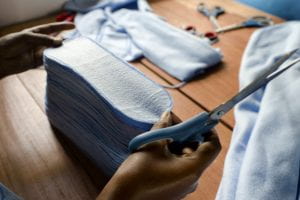
A worker trims and stacks sanitary pads before they are lined and sewn at the Afripads factory.
A worker trims and stacks sanitary pads, Source: Yahoo Images.

Period poverty is the lack of access to sanitary products, menstrual hygiene education, toilets, handwashing facilities, and or waste management. The term also refers to the increased economic vulnerability that women and girls face due to the financial burden posed by menstrual supplies. In least-developed and low-income countries, access to hygienic products such as pads, tampons, or cups is limited. This means that girls will often resort to using proxy materials such as mud, leaves, or animal skins to try to absorb the menstrual flow. As a result, such women are at a higher risk of developing certain urogenital infections, like yeast infections, vaginosis, or urinary tract infections. This becomes an issue because while the majority of women are of reproductive age, the majority of these women and girls are unable to practice proper hygiene practices. Consequently, women and girls around the world, especially in developing countries, face numerous challenges in managing their menstruation. Furthermore, some/many women are forced to approach this normal bodily function with silence due to stigma, as some communities consider menstruation to be taboo.

What causes period poverty?

One cause is that pads and other supplies may be unavailable or unaffordable. This means that women are often forced to choose between purchasing sanitary pads and different basic needs, or they may live in areas where there is no access to hygiene products at all. More importantly, young girls may lack access to toilet facilities with clean water to clean themselves while on their periods. In addition, discriminatory cultural norms make it challenging to maintain good menstrual hygiene as women often have to hide, or the community may not put enough effort into establishing hygiene facilities or practices around them. Also, some women and girls lack the necessary education and information about menstruation and good hygiene practices because topics around menstruation and proper hygiene practices are rarely discussed in families or schools.

What is more, other girls may experience menstruation with little or no knowledge of what is happening. This makes it harder for women to adopt sanitary practices because most remain unaware of recommended hygiene practices. In many communities, menstruating girls and women are still banned from kitchens, crop fields, or places of worship. There is also the issue of forced secrecy in communities where girls are exposed to ‘menstrual etiquette.’ This etiquette encourages the careful management of blood flow and discomfort and the importance of keeping menstruation hidden from boys and men.

A Human Rights Issue.

It is important to consider gender inequality, extreme poverty, and harmful traditions as the source of menstrual hygiene deprivation and stigma. This often leads to exclusion from public life, heightened vulnerability, and creates barriers to opportunities such as employment, sanitation, and health.

Some of the human rights that are undermined by period poverty include,

  • The right to human dignity– When women and girls cannot access safe bathing facilities and safe and effective means of managing their menstrual hygiene, they are not able to manage their menstruation with dignity. Menstruation-related teasing, exclusion, and shame also undermine the right to human dignity.
  • The right to an adequate standard of health and well-being Women and girls may experience negative health consequences when they lack the supplies and facilities to manage their menstrual health. Menstruation stigma can also prevent women and girls from seeking treatment for menstruation-related disorders or pain, adversely affecting their health and well-being.
  • The right to education  Lack of a safe place or ability to manage menstrual hygiene as well as lack of medication to treat menstruation-related pain can all contribute to higher rates of school absenteeism and poor educational outcomes. Some studies have confirmed that when girls are unable to manage menstruation in school properly, their academics and performance suffer.
  • The right to work  Poor access to safe means of managing menstrual hygiene and lack of medication to treat menstruation-related disorders or pain also limit job opportunities for women and girls. They may refrain from taking specific jobs, or they may be forced to forgo working hours and wages. Menstruation-related needs, such as bathroom breaks, may be penalized, leading to unequal working conditions. And women and girls may face workplace discrimination related to menstruation taboos.
  • The right to non-discrimination and gender equality Stigmas and norms related to menstruation can reinforce discriminatory practices. Menstruation-related barriers to school, work, health services, and public activities also perpetuate gender inequalities.

What is being done?

In spite of the issues presented, it is essential to acknowledge that a lot is being done around the world to help eradicate period poverty.

For example, UNFPA (United Nations Population Fund), has various approaches to promoting and improving menstrual health around the world. Some of them include,

  • UNFPA reaches women and girls directly with menstrual supplies and safe sanitation facilities. In humanitarian emergencies, UNFPA distributes dignity kits, which contain disposable and reusable menstrual pads, underwear, soap, and related items. (In 2017, 484,000 dignity kits were distributed in 18 countries.)
  • The UN organization also promotes menstrual health information and skills building. For example, some UNFPA programs teach girls to make reusable sanitary napkins. Others raise awareness about menstrual cups.
  • Furthermore, the organization aims to improve education and information about menstruation as human rights concerns. This is done through its youth programs and comprehensive sexuality education efforts, such as the Y-Peer program.
  • UNFPA also procures reproductive health commodities that can be useful for treating menstruation-related disorders. For instance, hormonal contraceptive methods can be used to treat symptoms of endometriosis and reduce excessive menstrual bleeding.
  • Similarly, UNFPA is helping to gather data and evidence about menstrual health and its connection to global development. For instance, UNFPA supported surveys provide critical insight into girls’ and women’s knowledge about their menstrual cycles, health, and access to sanitation facilities. A recent UNFPA publication offers a critical overview of the menstrual health needs of women and girls in the Eastern and Southern Africa region.

 Further Recommendations

While there exists a lot of support to help end period poverty, there is still a lot that can be done to improve access to sanitary products, menstrual hygiene education, toilets, handwashing facilities, and, or waste management. Human Rights Watch and WASH United recommend that groups which provide services to women, evaluate their programs to determine whether a woman or girl has,

  • Adequate, acceptable, and affordable menstrual management materials;
  • Access to appropriate facilities, sanitation, infrastructure, and supplies to enable women and girls to change and dispose of menstrual materials; and
  • Knowledge of the process of menstruation and options available for menstrual hygiene management.

Practitioners engaged in programming or advocacy related to menstrual management should also,

  • Have an awareness of stigma and harmful practices related to menstruation in the specific cultural context where they are working.
  • Support efforts to change harmful cultural norms and practices that stigmatize menstruation and menstruating women and girls;
  • Address discrimination that affects the ability to deal with menstruation, including for women and girls with disabilities
  • Be aware of and incorporate human rights principles in their programming and advocacy, including the right to participate in decision-making and to get information.

Moreover, women and girls must have access to water and sanitation. This will allow the establishment of private areas to change sanitary cloths or pads, clean water for washing their hands and used fabrics, and facilities for safely disposing of used materials or drying them if reusable.  It is also imperative that both men and women have a greater awareness of menstrual hygiene. This means that training and learning courses should be made available for women and young to teach them the importance of menstrual hygiene and the proper practices. Likewise, educating boys on the challenges and struggles girls face could help reduce stigma and help them become more understanding and supportive husbands and fathers. Less work has been done in this area, but the benefits of educating boys about adolescence for both themselves and female students are increasingly being recognized.

It is essential to acknowledge that there is still limited evidence to understand women’s use of sanitation and menstrual management facilities. Therefore, there is a need for individuals to pay special attention to the needs of women and girls all over the world.

Under Pressure: How Court Debts Inform Racial and Wealth Inequality

On Thursday, November 7th, the Institute for Human Rights co-sponsored an event alongside Students for Human Rights at UAB to present representatives from Alabama Appleseed Center for Law & Justice. During their lecture and discussion with audience members, they addressed how racial inequality and systemic poverty influence court debts as well as what we can do to change the status quo.

Alabama Appleseed, and its 17 other offices across North America, work at the intersection of the legal system and systemic poverty. Helping to confront a system that harms impoverished and minority communities by placing them in an endless cycle of punishment, Alabama Appleseed employs a research and policy reform approach to highlight such inequalities.

They first addressed this issue by covering the racial wealth gap which can be told through the legacy of slavery, convict labor, redlining, school segregation, and hiring discrimination that has economically disadvantaged many communities of color, namely Black Americans. Thus, in present day, the poorest 20% of Whites have an average $15,000 in wealth, while the poorest 20% of Blacks have a mere average $100 in wealth.  As a result, receiving a fine can increase existing household costs, develop exorbitant interest rates, and even land one in jail if unpaid, meaning Black Americans are disproportionately affected by the looming threat of court debts.

In response, Alabama Appleseed sought to give this issue greater context by employing a statewide study, titled Under Pressure, which includes personal experiences with court debts from 980 Alabamians representing 41 counties  (56% of respondents were Black). Some of the main findings were:

  • 83% gave up necessities like rent, food, medical bills, car payments, and child support, in order to pay down their court debt
  • 50% had been jailed for failure to pay court debt
  • 44% had used payday loans to cover court debt
  • 80% borrowed money from a friend or family member to cover their court debt
  • Almost 2/3 received money or food assistance from a faith-based charity or church that they would not have had to request if it were not for their court debt
Alabama Appleseed presenting Under Pressure. Source: UAB Institute for Human Rights

They went on to address some anecdotal accounts such as people paying someone else’s court debt even though having their own and missing court dates that were scheduled while incarcerated. These findings suggest that impoverished and minority communities in Alabama must maneuver around isolated court systems that don’t communicate with one another, which further places them into a cycle of poverty and looming punishment. Furthermore, Alabama has the 5th highest incarceration rate in the world and is currently facing a 33% rate of employment in the prison system. This means that our criminal justice system not only disadvantages poor and Black Alabamians, but they are the ones funding these inequalities through a shadow tax system.

Thus, Alabama Appleseed offered a handful of recommendations for state lawmakers to address this system of injustice:

  • Eliminate court costs and fees, and scale fines to each person’s ability to pay
  • Fully fund courts from Alabama’s state budget
  • Send revenue from all court debt to the state General Fund
  • Create a mechanism for appeal and ensure folks have access to counsel throughout the process
  • Prohibit the suspension of drivers’ licenses except in instances of unsafe driving
  • Eliminate Failure to Appear warrants when the individual is incarcerated
  • Change the law that currently denies voting rights to people who are too poor to pay their court debt
  • Reclassify the possession of small amounts of marijuana as a civil infraction with fines connected to the defendant’s ability to pay

As demonstrated, Alabama’s criminal justice system is a harvest ground for racial and wealth inequality. However, addressing such concerns at the community-level is one way that you can participate in real change. You can do so by communicating with your local representative about overturning the “Three Strikes Law”, pressuring Regions Bank to divest from the private prison industry, and joining Alabama Appleseed to be informed about pending legislation.

Facing the threat of missing rent, losing meals, and even being incarcerated is no way to live, particularly for those who already experience a list of other disadvantages. For this reason, it’s about time we put our lawmakers and local businesses under pressure.

Girls Too: The Me Too Movement for Youth

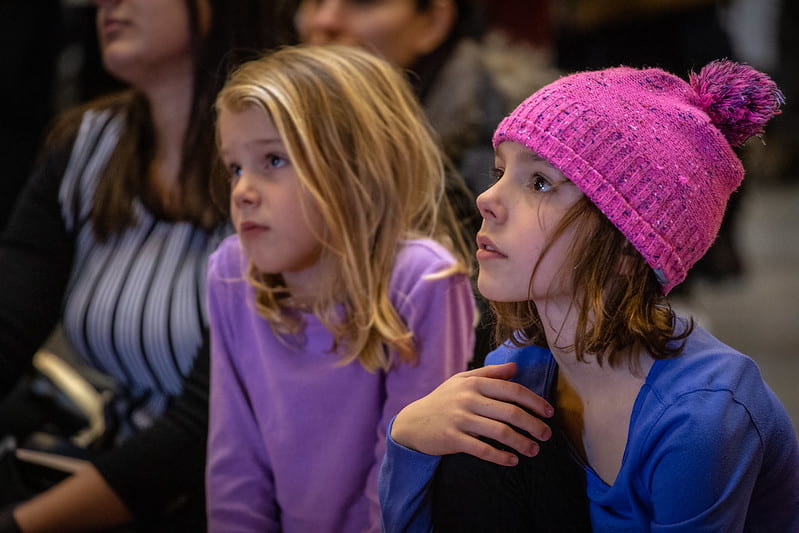
Two girls staring.
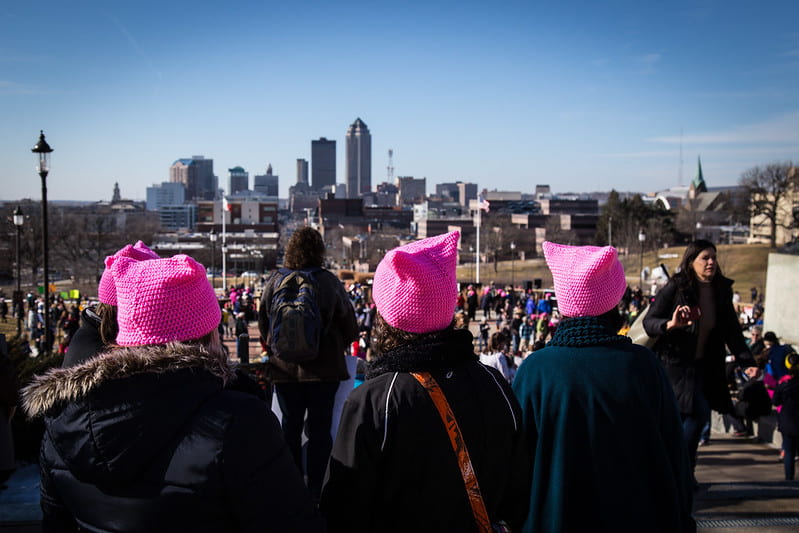
Women’s March 2019. Source: Roedar, Phil. Creative Commons.

The Me Too movement has given power back to hundreds, if not millions, of women and yet girls are being left out of the conversation. A rising movement entitled, “Girls Too,” created under the organization Girls Inc., aims to change that narrative. The Girls Too movement was created after the Me Too movement’s popularization, and it is important to recognize the impact of the Me Too movement when discussing the Girls Too movement. The Me Too movement was started by Tarana Burke and popularized by actress Alyssa Milano’s reaction to the Harvey Weinstein case. Burke cites a conversation she had with a 13 year old girl in 1997 regarding the girl’s experience with sexual harassment as the beginning of the movement. Ten years later, in 2006, Tarana Burke founded the nonprofit organization entitled, “Just Be Inc.,” as well as a movement named “Me Too.” The goal of the Just Be Inc. and Me Too is to help survivors of sexual violence find pathways to healing.

On October 15th, 2017, actress Alyssa Milano published this tweet: “If you’ve been sexually harassed or assaulted write ‘me too’ as a reply to this tweet.” The response was overwhelming. Famous celebrities and household names retweeted and replied as well as thousands of everyday citizens. Milano’s goal was to create a space for candid conversations and representation after the Harvey Weinstein case. She more than achieved that. However, the thousands of responses in under 24 hours to Milano’s tweet overshadowed Tarana Burke’s Me Too movement that had been a decade in the making. In that decade, Burke did not receive the same resounding support from the white community as Milano did in under 24 hours. This instance is an example of a lack of intersectionality within social movements and a struggle that people of color have faced for years. Burke described her reaction to seeing Milano’s tweet as “panicked,” as she felt that her hard work would be erased. However, Milano claimed that she was unaware of Burke’s campaign and very quickly reached out to Burke after the #metoo tweet in hopes of a collaboration. She also publicly credited the Me Too movement to Tarana Burke on live TV. In 2017, Tarana Burke stated that she wanted the Me Too movement to focus on survivors, not on who owns the movement, and is continuing her work to help survivors of sexual violence.

The president and CEO of Girls Inc. is Judy Vredenburgh. The organization was created to provide a safe space for girls to be able to speak out. The organization also has a teaching program dedicated to education in communication, consent, and healthy relationships, to name a few topics. This education is vital as the American school system has a notoriously lacking sex education program, nationwide. Girls Inc. aims to help our society understand that for every woman who has experienced sexual violence, so has a young girl. Therefore, the perspectives of girls must be recognized and represented in the movement against sexual harassment. It is too often that the youth in our community are left out of conversations of importance. Vredenburgh reiterates the importance of youth in movements, citing the Parkland students who spoke out after the Parkland school shooting. However, Girls Inc. understands that in order to prove successful, a movement of young girls needs adult support to utilize the political power and community influence that is not accessible to those under the age of 18. The ultimate goal of the Girls Too organization and movement has been to provide a space for girls that they were unable to find within the Me Too movement.

Women’s March 2018. Source: Roedar, Phil. Creative Commons.

Girls Too was created after an overwhelming number of teenage girls reported feeling as if their place within the discussion of Me Too would be difficult to distinguish. The high-profile and viral cases that popularized the Me Too movement, such as the Harvey Weinstein case, involved predominantly career-age women. Therefore, the conversations that have arisen from such cases, while including very important dialogue, have been dominated by a particular age category of women. The discussions have not been focused on the youth and the damages young children can incur when they are assaulted. The National Sexual Violence Resource Center has reported that 1 in 4 girls are sexually assaulted by the age of 18 and 2 out of every 3 girls are harassed. Girls who have experienced sexual harassment before the age of 18 are considerably more likely to experience a variety of problems immediately after the event as well as into the future, including but not limited to depression, anxiety disorders, eating disorders, school absenteeism, and PTSD. Girls Inc and Girls Too aims to change the conversation and focus the discussion on helping girls who have experienced sexual harassment and the subsequent effects that may occur. The organization also aims to change the societal norm that allows girls to be viewed in a hyper-sexualized manner.

Despite the successes of these movements in giving women and girls platforms to have their voices heard, Burke also details the increasing, monumental backlash the movements have received as the years progress. She states that Me Too, and Girls Too as a consequence of Me Too, is becoming considered as a plot against men, a witch hunt of sorts. Burke sites Brett Kavanaugh’s Supreme Court confirmation hearings as an example of the new view of Me Too. High profile people have embraced and encouraged the negative perceptions. The President of the United States, Donald Trump, said that the Me Too movement represents, in the context of the Kavanaugh hearings, “a very scary time for young men in America.”

For young girls, it has been difficult to find their place in a movement that has been dominated by middle aged women. They have similar experiences with sexual harassment as the women who have been vocal with the Me Too movement, but do not have the political power or societal prestige that comes with being an adult. Girls in middle schools and high schools create lists among their friends of boys who have become notorious for treating women badly, just so they and their friends can avoid them. Word spreads among girls in colleges and universities about which fraternity parties should be avoided, which fraternities can be labeled as the “date rape frats,” because the use of date rape drugs become so prominent at those parties. Girls are given pepper spray, whistles, and alarms as graduation gifts to provide a semblance of security against the inevitable moment of fear that can occur when walking alone. It is important to remember the goals of the Me Too movement and the Girls Too movement as being safe spaces for women and girls to share their stories. The movements are also movements of empowerment, giving power back to women and girls who have had it stolen from them. We must continue to support Me Too and Girls Too by acknowledging and understanding their work and importance in order to further the progress the movements have initiated.

Healthcare Disparities for Rural Communities

Hospital closed sign directing patients to the next nearest hospital
Hospital Closed. Source: Nigel Goodman, Creative Commons

Access to healthcare is one of the biggest predictors of health. When someone has access to healthcare, they are more likely to seek treatment for and catch chronic diseases in early stages. This can greatly improve health outcomes and quality of life. However, when access to healthcare is restricted in any way, health outcomes and quality of life decrease, those who need consistent treatment may go without, and preventable deaths increase. Rural areas disproportionately face decreased access to healthcare, which greatly affects the health and productivity of these already disadvantaged areas.

Lack of Insurance

There are many barriers to healthcare that rural Americans face. First of all, there is a lack of insurance. This is mainly because insurance premiums are more expensive in rural areas than they are in urban areas. Urban areas have larger populations, which encourages more insurance companies to compete with each other, driving the costs of premiums down. Additionally, their larger population means the cost of medical expenses can be spread among more people. This also lowers premium prices. Because these two factors are not present in rural areas, they are left without affordable healthcare.

Additionally, many people in rural areas have incomes that fall in the gap between qualifying for Medicare and being able to afford private insurance. Medicare is available to specific low-income groups. In states that haven’t expanded Medicaid, the most common income limit for Medicaid eligibility is 43 percent of the Federal Poverty Line and childless adults are excluded regardless of income. These qualifications leave over 2 million adults in the United States uninsured.  Insurance is important because it can help cover costs of healthcare which can otherwise become insurmountable. Those without insurance are less likely to seek healthcare, and when they do, it is typically worse quality than those with insurance receive.  Additionally, when an uninsured individual does seek healthcare, the costs are sometimes too high and turn into medical debt. Since much of the rural population is uninsured, these problems plague many of them.

Closing Hospitals and Pharmacies

Those that do have insurance still face a bigger problem: many rural areas don’t have hospitals within a twenty-minute drive. 25 percent of those living in rural areas report that they have to drive at least 30 minutes to get to the nearest hospital. In fact, almost one in four rural Americans say access to adequate healthcare is a major issue for them. Additionally, many hospitals in rural areas are shutting down, leaving communities without the healthcare they are used to. Since 2010, there have been over eighty rural hospital closures, mainly in the southeast. These hospital closings have a devastating effect on the communities they were a part of. Mortality rates for accidents, heart attacks, strokes, and anaphylactic shock risedue to longer ambulance rides. Additionally, residents may be unable to attend routine appointments because of transportation limitations; much of the rural population is elderly, which restricts their ability to drive, and public transportation is less common in rural areas than urban areas. This also means that with the onset of troubling symptoms, residents of rural areas may wait longer to see a doctor because of the inconvenience.

Many rural areas also lack pharmacies, which can hurt those who rely on prescription drugs for good health. Even the rural communities that have hospitals may lack a pharmacist, and many of the pharmacies in rural areas are in danger of closing; many have already. This is due to higher costs of medications at rural pharmacies and lack of pharmacists in rural areas. This can have a devastating effect on residents, as many go periods of time without their prescriptions—like Insulin or medication for depression— until they can get to the nearest pharmacy. Additionally, pharmacists in rural areas are helpful in educating the community on when they can use over-the-counter meds and when patients should see a doctor.

But why are hospitals and pharmacies closing? They have few patients, many uninsured, and they are greatly affected by states’ refusal to expand Medicaid. Medicaid expansion, which 14 states have not ratified, would close the gap between those that qualify for Medicaid and those that can pay for private insurance. As discussed previously, those with insurance are more likely to seek medical care, which would bring more business—and therefore, funding—to hospitals and pharmacies, making them less likely to close. Additionally, they lack the staff required to stay open. 99 percent of students in their last year of medical school report they plan to live in communities with over 10,000 residents. Without a staff, a hospital cannot stay open.

Lack of Specialists

In many rural areas, including those with hospitals, there’s a lack of specialists, like oncologists and OB/GYNs among others. Specialists typically work in large hospitals that have adequate resources, so they tend to reside in cities. This means that those with specialized needs often have to drive to the nearest city to receive care. Traveling can pose a problem to many rural Americans as many of them are older, but this also affects many younger rural inhabitants as they may not have the time off from their jobs to drive hours to receive specialized care. This leaves many without treatment that they need and worsens health outcomes. This is especially concerning considering many rural communities have higher rates of diseases than urban communities do. Specifically, “rural African Americans have higher rates of cancer morbidity and mortality than other rural residents and have higher rates of comorbid conditions” according to Robin Warshaw from the Association of American Medical Colleges. Rural African Americans also have higher rates of disease than urban African Americans. This makes the fact that specialists are not easy to access even more concerning, especially considering they are the largest rural minority. Minorities in general have less access to healthcare, and living in an area that doesn’t have easy access to healthcare in general can exacerbate this issue.

Low Health Literacy

The healthcare system is complex, which means that patients have to work to understand what care they need and when they need it. The ability to do so is called health literacy. Studies have shown that health literacy is important to health outcomes. The higher level of health literacy a person has, the more likely they are to seek out preventative care, such as screening tests and immunizations, that can catch diseases in early stages or prevent them altogether. If a patient doesn’t understand what the doctor tells them, they are less likely to be comfortable enough to seek care. Additionally, higher health literacy rates make it easier to understand how to manage existing conditions. In addition to less access to healthcare, rural Americans have lower health literacy, which compounds their health problems. However, because rural citizens are less likely to have access to health care, it is especially important for them to have high health literacy, which can be attained by using programs that work to educate patients and clinicians on the importance of patients having an active role in their healthcare.

Solutions

Rural healthcare in America is a big problem, but it can improve. In addition to the health literacy programs, there are many solutions to close the gap in healthcare between rural and urban areas. While the common medical school experience trains students for work in populated areas, a consortium of 32 medical schools has created a rural healthcare track with their medical schools. This not only puts more doctors in rural areas, but also trains them for rural areas’ specific health needs. While the program is too new to see a significant increase in rural healthcare professionals, the majority of students who have gone to residency have stayed in rural areas and are studying specialties that are in much needed in rural areas. Additionally, there are many scholarships for those planning on practicing medicine in rural areas, further encouraging medical students to practice in areas in need of doctors.

Gender Studies – Not a “Girl Thing”

by Grace Ndanu (student guest blogger)

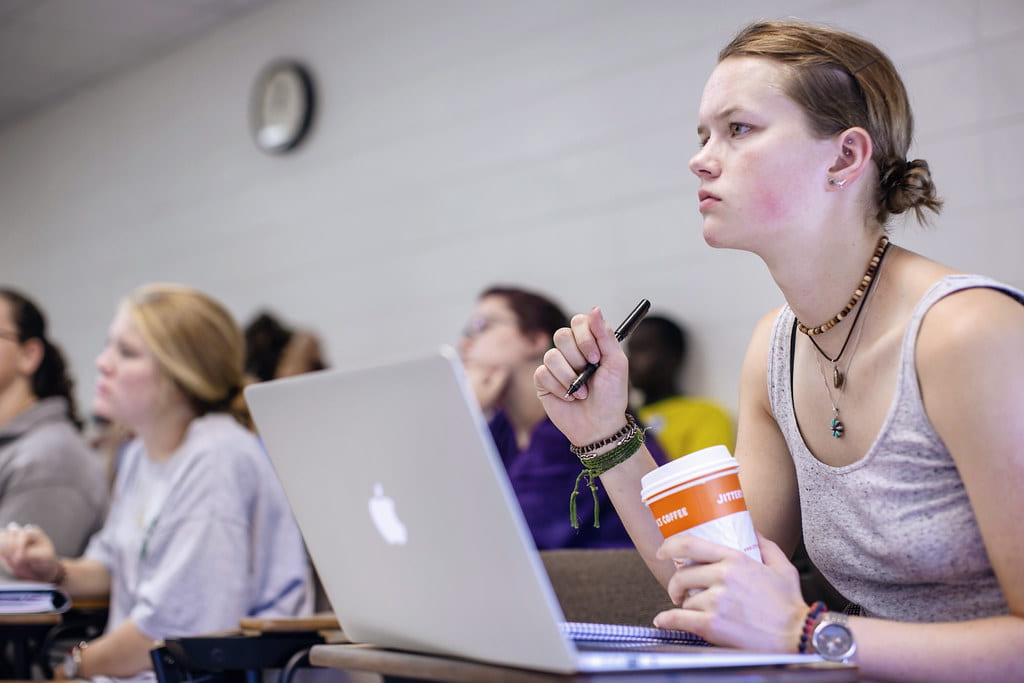
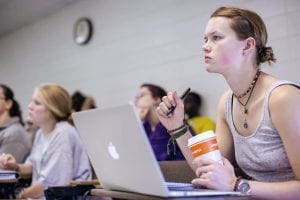
A girl in front of a laptop in a college classroom
“Student in class” by UGA CAES/Extension, Source: Creative Commons

I was admitted in the university to specialise in Gender Studies, others call it social studies. The propaganda now comes in when other people call it women studies. I knew it was a good course, but I never knew what it entailed. The first week on campus I went through orientation where I came to meet people from different courses and most of them didn’t know what inspired them to take the courses they were taking, and it was there that I remembered one of my high school teachers once saying that some people don’t end up becoming what they dreamed of becoming when they were small. An example being me, I wanted to be a doctor and now I am aspiring to be a Gender CEO.

I find it unique, all the programmes that are running inside the university have departments and faculties except the gender programme where the department and the faculty are all in one package that is the Institute. We call it The Institute of Gender And Development Studies. In the programme we have the units that help us be better persons where by it molds us to be of good character and to be of service to the people. Talking of functions that the institute holds, I can say it suits all individuals in the campus where by you will find majority if not all students attending the Gender awareness day, cultural week and relationship forums. This now brings to the question, “Why women’s studies if all are the beneficiaries?”

It turns out that the Institute is weakly or never represented. In terms of staff board meetings, the staff from the institute are the last ones to receive the memo and sometimes never receive it at all. In the graduation booklet other programs come first; for example, engineering, agriculture and education…then lastly Gender studies. When classes began we were 49 in total and all of a sudden we are now 44. Thirty four girls and ten boys. And a lecturer came in and said that five boys have done interfaculty; that is, they changed their course from Gender to where they thought was best for them. But why?

In the middle of the semester I came to meet with one of the boys who left the programme, we had a chat. He said that Gender studies is a girl thing. In his words, “Don’t expect me to study what my wife is supposed to be studying right now. I know you people are taught how to take care of the husband at home, I am the husband here, so which husband am I supposed to take care off?” He also assumed that the programme trains the students how to beat men. He asked me a question which left me in a deep thought and a desire to ask him for more of his time so that we can discuss this issue of beating up men. I wanted to make him understand that we women are not into a fight, we are trying to negotiate so that we can have equal opportunities to resources and benefits. I insisted that we need to have our own money and freedom that we have been denied for so long.

The males being few in my course, I decided to talk to one of them, so that I can know what inspired him to do the course and what is still inspiring him to stay grounded to the course. He continued and started by saying that he was sponsored by the government to do the course, which he knew nothing about. His parents were not comfortable with him taking the course, and so they agreed with the parents that he will do an interfaculty, which he didn’t. “When I attended the first gender class I felt I was supposed to be there because I realised what we are being taught is all about all of us, starting with who we are as individuals and how to interact with each other”. He continued and said that the course has moulded him to be a better person and he is not regretting his decision to stay in the course.

Speaking to a girl who does gender is another good thing that I think I did. We as girls we always talk of our rights, and that’s exactly what she started with. She continued and said how she feels that her being taking gender has made her know that no one can live like an Island and that we need each other for survival that is men and women, boys and girls. And she added a quote from the Bible, “All people are equal in the eyes of God.” This brought a little argument between us because its true that we are equal before his eyes but still we need equity to reach equality. A girl needs sanitary towel for her to have equal time with a boy in class, which I now call equality. And finally we came to an agreement.

I insist that gender or social studies should be recognised in all the learning institutions. Starting with my school with the help of Dean of students and the institute should increase the counselling posts around the school. Increasing of these posts will help students visit there any time without being wait for long so that they can be attended to. Apart from Gender Awareness Day the university should hold functions that will communicate to students that gender studies is not a girl thing at all.

On the other side the government should increase the number of university offering the Gender and Development as a programme. Adding on the same, it should increase the number of students during the enrolment in the university to pursue the course. Increasing the number of university offering the programme and also the students will increase the confidence of students and now there will be a fair debate because we will be many against many unlike right now it’s like fighting one against many and definitely the many will win. And I believe that apart from gender based violence reducing, we will come to a conclusion that Gender or social studies is not a girl thing, seconding the motion, ”Gender is not between the legs but between your ears. “

Why Are Chilean Civilians Protesting?

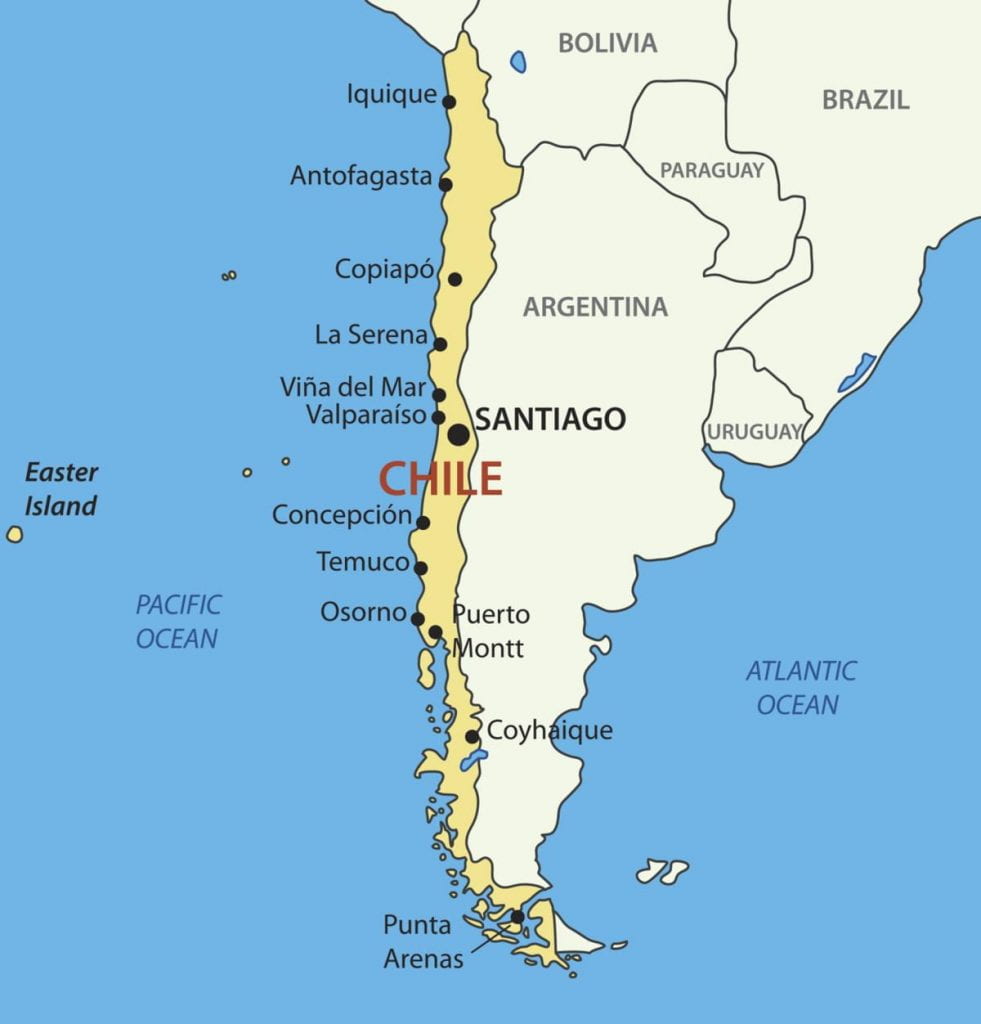
Chile is a Spanish-speaking country located to the west of Argentina in South America. Its ribbon-like shape allows it to be a part of many different climates, from the Atacama Desert to the North to the snowy Alpine climate to the South. According to the BBC Country Profile, Chile’s population amounts to about 17.9 million people, with 6.7 million people living in Santiago, its capital city.

An image of the map of Chile.
Top 10 Hardest Working Countries of the World. Source: Workspirited, Creative Commons

Chile is a free country. The Freedom in the World 2019 Profile rates Chile as Free with a score of 94 out of 100. According to the report, Chile’s Freedom Rating, Political Rights, and Civil Liberties are rated as most free due to its growing civil rights efforts that emerged after its transition to a democracy in 1990. So, why are there high-scale protests currently spanning the country? High costs and economic inequality are largely to blame.

According to the Organization for Economic Co-operation and Development (OECD), Chile’s income inequality is ranked 3rd in the world, only behind Costa Rica and South Africa (for reference, the United States is ranked sixth).

These statistics explain why the youth in Chile are currently protesting rising transport fares. In early October, “the government announced that the metro rush hour prices would rise by 30 pesos ($0.04).” These slight rises to the metro fare were met with backlash from many school children, who responded by jumping over metro turnstiles or even destroying them while chanting the phrase “Evade, and not pay, is another way of fighting.” These protests even spread to supermarkets and petrol stations where fires raged the streets during the night. It was due to these protests that the president, Sabastian Piñera, decided to declare a state of emergency while also issuing curfews in select locations. Last used after the 2010 earthquake, the state of emergency suspends free movement and assembly with the main purpose of maintaining public order. With this employed, “the military is [tasked] to guard the streets, with generals appointed in every region where the state of emergency is valid.” Piñera claimed that Chile was “at war against a powerful enemy, who is willing to use violence without any limits” while characterized these events as a problem concerning rebels rather than the government. Although it may seem that calling a state of emergency may be justified, since these unorganized protests involved setting fire to many metro stations, attacking Chile’s largest private electricity company, and throwing stones at the police, it did not bode well for Chile’s president whose policies have allowed him to appeal to businesses and investors while staying disconnected from the Chilean people.

A stack of gold round coins, stacked like an exponential graph
Gold Round Coins. Source: Pexels, Creative Commons

Economic inequality has been a major problem in many societies around the world with about “80 [of the] richest people on the planet now own[ing] as much as the bottom half of the world’s population” today. This problem has been so profound that even the International Monetary Fund (IMF) has declared income inequality as a central challenge of this century. And, as seen in Chile, outrage over these policies have spurred many to protest the subsequent injustices and push it as a central issue in political discourse.

Inequality, especially in terms of income and wealth, has significant influence on human rights. Without access to money or a stable income, many are restricted in access to healthcare, education, food, and other commodities and services that every person should be able to access. The lack of access to these goods violates the 25th Article of the Universal Declaration of Human Rights which states “Everyone has the right to a standard of living adequate for the health and well-being of himself and of his family, including food, clothing, housing and medical care and necessary social services.” Due to the ubiquity of poverty worldwide, this demonstrates that much of the world still has a long way to go until universal human rights are achieved. Inequality also distances the poor from proper services, such as some form of education, proper shelter, and access to water, which creates conflict between disadvantaged and affluent communities. By denying these universal human rights, countries are willing to perpetuate (extreme) inequality, which restricts access to fundamental needs that ensure equitable and sustainable living conditions.

According to an article posted by the Center for Economic and Social Rights, focus on economic inequality remains silent despite its major ramifications on the lives of people across the world. The article questions why the human rights community is relatively silent on an issue that challenges what human rights stands for in the first place and how the community can advance policies such as fiscal reforms, wage protections and social protection floors. While it is true these reforms and actions may help bridge the gap between the rich and poor, some of the larger scale benefits these programs can fund are financial literacy and incentives for self-governance.

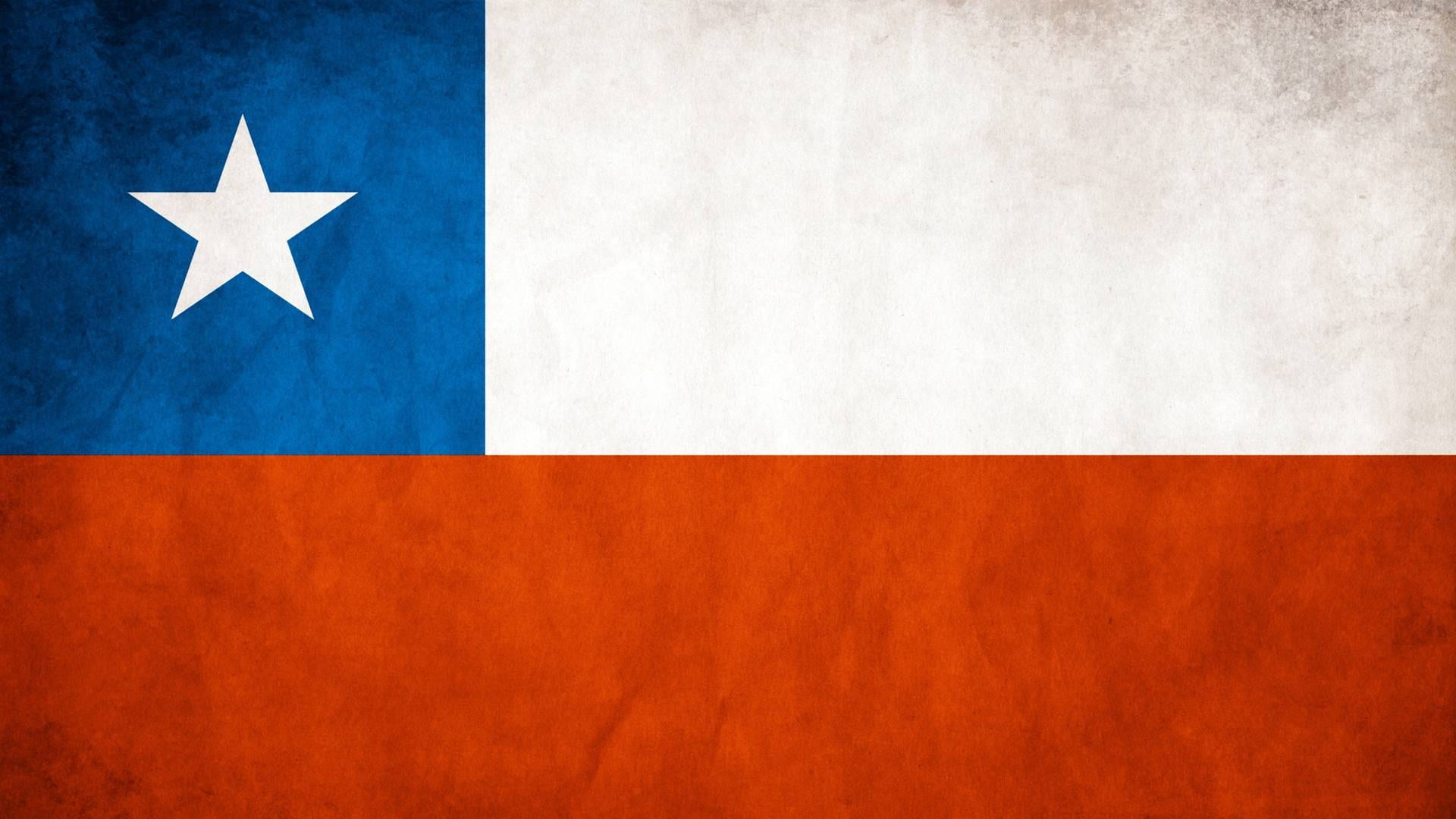
A Chilean Flag
Chile | Democracy Now! Source: Democracy Now, Creative Commons

Looking at Chile specifically, the “richest 1 percent of the population earns 33 percent of the nation’s wealth.” This comes with the fact that 50% of laborers earn less than 400,000 pesos a month (about $550). Although Chile is recognized as a stable, peaceful, and wealthy country, those international impressions stand on very weak pillars, especially when looking at economic inequality across the board. These protests have also been peaceful, with many involving more than 5 percent of Chile’s population. According to Stephanie Diaz, a sports teacher living in a working-class neighborhood in Santiago, in an interview with Vox, “This protest is not about 30 pesos, but 30 years. It’s 30 years since the return to democracy, but we have preserved a constitution made under the dictatorship.” Chile’s 1980 constitution, which preceded a military dictatorship, made goods and materials, even those considered as public goods, privatized. As a result, this raised the value and cost to produce and distribute such resources. Furthermore, privatization has influenced Chile to have the highest university tuitions in the world which has, alone, indebted approximately 4.5 million people in the workforce.

According to Vox, Chile’s president’s approval rating had dipped below 14 percent, a historic number when looking at the amount of people who are livid and fighting peacefully for change. Such disapproval comes as Chile plays host to the Asia-Pacific Economic Cooperation meeting in November, where President Donald Trump and China’s Xi Jinping will be visiting to negotiate a trade deal, and the UN Climate Change Conference occurring in December. A solution proposed by Shivani Ekkanath in an opinion piece of the Borgen Magazine lays along the lines of cracking down on bureaucracy, fixing the misallocation of funds, ending corruption, etc. in order to lift the economic burden of poverty and other kinks in the economic system.

Based on what has occurred in Chile thus far, it appears the rise in metro prices by 30 pesos was simply the tip of the iceberg. Growing economic inequality combined with more business-friendly practices has caused more workers and everyday Chileans to suffer and be unable to work toward a promising future for themselves and their families. And, as seen when with economic inequality, the growing gap between the rich and poor simply brings into light how it is both a cause and a consequence of violations of human rights such as access to care, education, and housing. Current protests like these help us understand that even countries regarded as stable are not always what they seem unless one looks at the lives of everyday people. Thus, we must focus on social and economic stability by employing a human rights perspective through the view of the common Chilean rather than a perspective at a state-wide level. Chile is an excellent example of people fighting for fairness in society peacefully, where progressive fiscal reforms should be utilized and promoted, rather than solely looking to appeal businesses.

From the Ashes to the Stage: Indigenous Culture in the Performing Arts

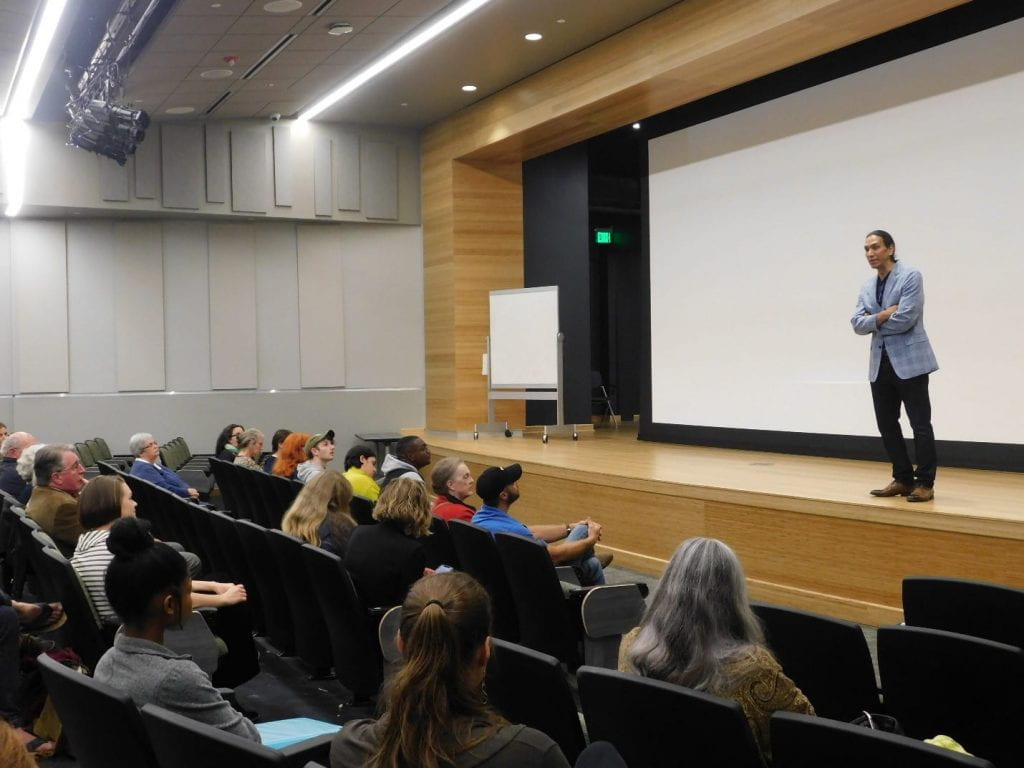
On Tuesday, October 29th, the Institute for Human Rights co-sponsored an event alongside UAB’s College of Arts & Sciences and Department of Theatre to present indigenous actor, choreographer, director, and educator Michael Greyeyes. During his lecture and discussion with audience members, Greyeyes addressed issues such as the realities of being a stage performer, becoming a director, and indigenous representation in the media.

Greyeyes prefaced his lecture by acknowledging the original caretakers of the Birmingham area, namely the Chickasaw and Muscogee tribes. Following, Greyeyes began to mention a meeting he attended about “conflict”. He emphasized that conflict could elicit an array of emotions such as anger, frustration, and fear. However, he claimed that conflict is necessary, much like fire, because it burns away what is unnecessary.

Born and raised in Saskatchewan, a province of West Canada, Greyeyes moved to Toronto as a young man to work for The National Ballet of Canada. During this time, the company was resurging from its own series of ashes by elevating new leadership and young dancers. After his 4-year apprenticeship that took him around the world and back, Greyeyes had residencies as a performer in New York City, Pittsburgh, and Los Angeles. “Ever the migrant”, he exclaimed.

In Los Angeles, consumed by a restless artistic interest, Greyeyes took up acting. However, as a person of indigenous heritage, he often found himself disillusioned by being typecasted into roles such as “Native doctor” or “Indian lawyer”. Greyeyes then chose to continue his “re-education” by pursuing a Master’s in Fine Arts at Kent State University. Following, he was asked to take on a new role in the performing arts as a director. As a result, Greyeyes has found himself in the position to refine what it means to be a director at his non-profit, Signal Theatre, where he spends considerable time on development and training performers. Thus, the end-product becomes an intimate performance that is suited to resonate better with its audience.

Greyeyes closed his lecture by alluding to our political landscape with the Talking Head’s lyric “Same as it ever was” and suggested that, in times such as this, artistic creativity has the opportunity to challenge new conflicts by rising old memories from the ashes and expressing what we hold dear.

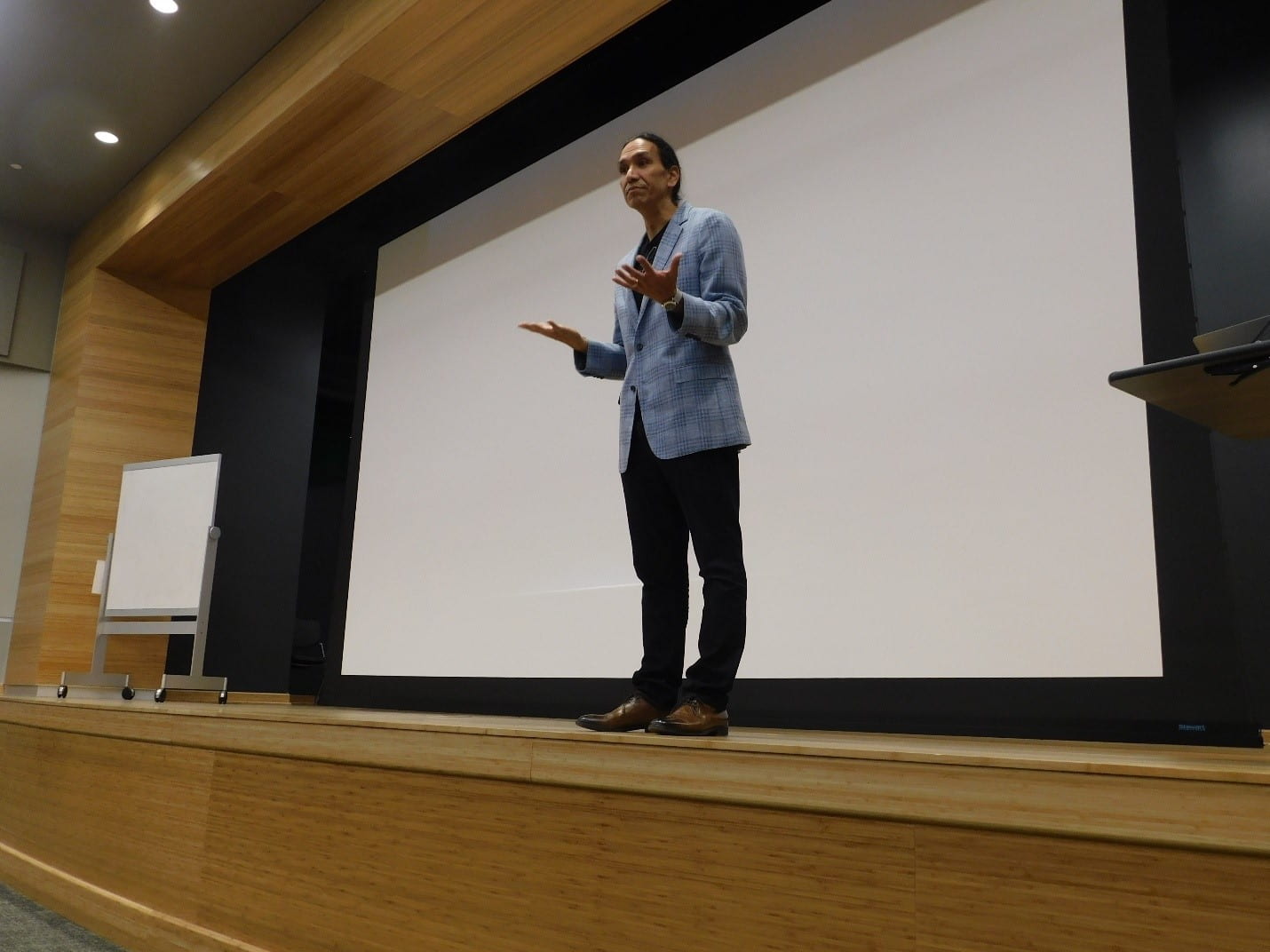
Greyeyes engaging with an audience member. Source: UAB Institute for Human Rights


After his lecture, Greyeyes took questions and comments from the inspired audience. One person mentioned that conflict in their parent’s native land of Egypt raised parallels with what indigenous communities have endured through colonialism. Greyeyes responded by mentioning there are high numbers of indigenous soldiers in the armed forces and that he has even played this role on the big screen. Although, the families of these soldiers are the ones who must pick up the pieces. In response, Greyeyes created A Soldier’s Tale which is a passionate dance performance about veterans with post-traumatic stress disorder (PTSD).

He stressed that when non-indigenous people “write us” into the script, their perceptions come out and it generally doesn’t sound right. Thus, he expressed his most acclaimed role by the indigenous community was his True Detective performance as a solider shattered by the Vietnam War. Although, this character was not written in the storyline as a “Native solider” rather an everyday veteran that was given an indigenous perspective by Greyeyes himself. From the ashes to the stage.

The Nutrition and Health Crisis in Venezuela

Child wears hat that says Venezuela on it and stares off into the distance.
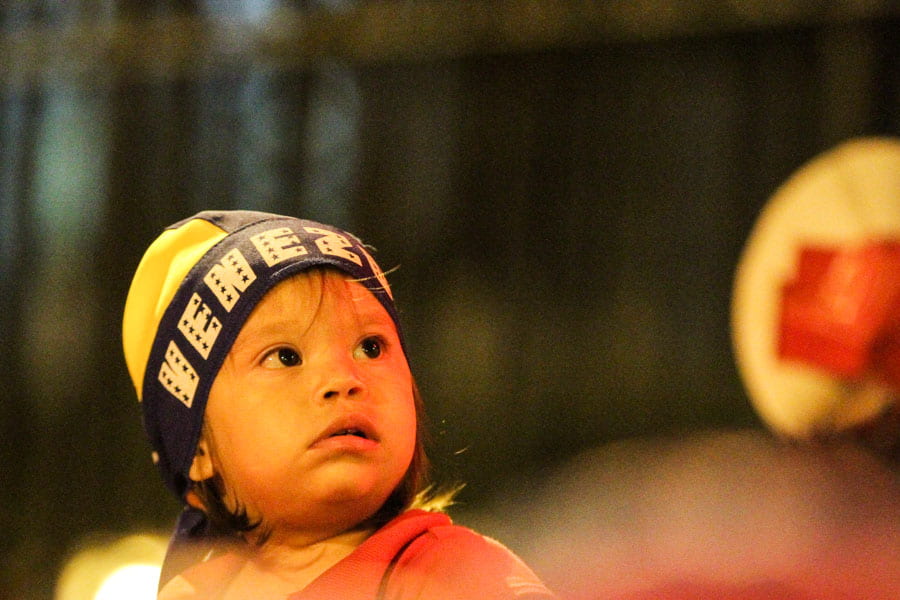
ELEICOES 2013 NA VENEZUELA. Source: Joka Madruga, Creative Commons

The current president of Venezuela, Nicolás Maduro, was elected in 2013 by a very small margin. During his first term, the Venezuelan economy took a turn for the worst. He was reelected for a second term in 2018, but his opponents feel that the election wasn’t valid because many of the other candidates were made ineligible to run or even jailed, so the National Assembly does not recognize his presidency and considers the presidency vacant. According to the Venezuelan Constitution, in cases of a vacant presidency, the leader of the National Assembly (currently Juan Guaidó) takes over as president. Guaidó has very little political power because the military still supports Maduro.

I first heard about the political and economic unrest in Venezuela when I went on an exchange trip to Spain in May of 2016. My host family had moved to Spain eight months earlier because their jobs had been the first affected by the economic downturn. They were lucky that the dad was a Spanish citizen—it was much easier for them to move to Spain than if none of them had been citizens—but many Venezuelans have not been so lucky.

Protests in Venezuela
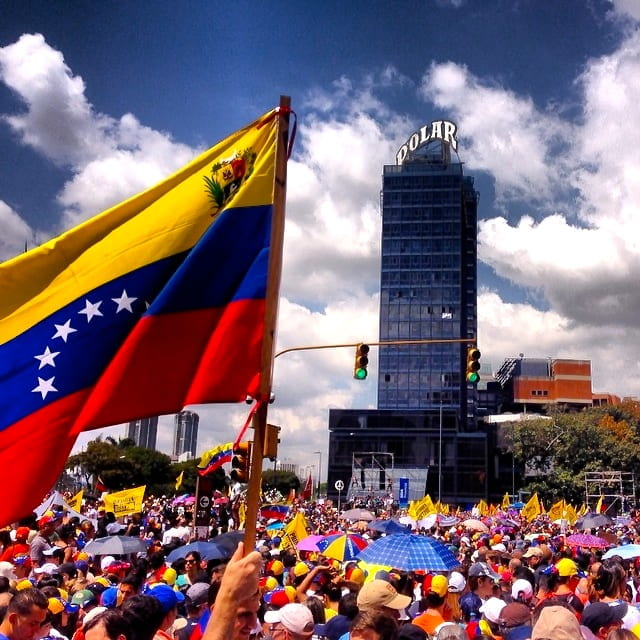
Venezuelan Protests. Source: Trong Khiem Nguyen, Creative Commons

Since 2015, health statistics have been underreported—if they’ve been reported at all. December of 2016 marked the last report from the Venezuelan Ministry of Health. This report describes an alarming increase in previously eliminated and controlled infectious diseases, such as malaria and diphtheria, and in maternal and infant mortality rates. The report has many alarming statistics, but aside from that, it is the last one to have been published. Additionally, the Health Minister who published the report was fired immediately afterward.

With no one within the country reporting on the health needs and statistics of the people, it is nearly impossible for other countries to give external aid. Additionally, even when aid sent, the Venezuelan government refuses help. Even nongovernmental organizations (NGOs) are forced by law to refuse help: the Supreme Court ruled in 2010 that any NGOs receiving financial assistance from other countries would be committing treason. This has a devastating impact on the citizens as they are not receiving the help that they need.

The situations in the hospitals are dismal. According to a survey conducted by the political opposition, many services in hospitals are not consistently available, if at all, due to lack of supplies. Many supplies have gone missing from public hospitals and clinics, and those being shipped in often are embargoed and never make it past the ports. The reason is unknown, but many suspect it has to do with the corruption of the government. This has forced patients to bring their own medical equipment—which can include anything from medicine to surgical equipment—when going to the hospital, so they know they’ll have what they need. Private clinics, which have most of the supplies they need, ask for payment in US dollars, which means only the wealthiest can get that level of care. This leaves the average citizen without proper medical care in a country where the government is actively keeping lifesaving materials out of the hands of doctors.

Because of the low levels of health care, many diseases are reemerging and worsening. Between 2008 and 2015, there were no cases of diphtheria reported and one case of measles reported. However, in the past three years, over one thousand cases of diphtheria and over six thousand cases of measles have been confirmed. These statistics show a lack of vaccinations in children, which is potentially due to limited vaccines available. Malaria rates, which were once controlled through pesticides, medication, and reduction of mosquito breeding areas, have increased by over ten times from 2009 to 2017. Tuberculosis cases more than doubled from 2014 to 2017, which is even more concerning with the cases of untreated HIV on the rise as well. According to the Human Rights Watch, “Venezuela is the only country in the world where large numbers of individuals living with HIV have been forced to discontinue their treatment as a result of the lack of availability of antiretroviral (ARV) medicines.” 90 percent of HIV positive Venezuelans have to live without ARV medicines, and these people are majorly susceptible to and will be severely affected by the many diseases that are on the rise. Because all of these diseases are on the rise and the limitations of hospitals, maternal and infant mortality rates in Venezuela have risen back to their levels from the 1990s. Venezuela is the only Latin American country where this has occurred.

In addition to the health crisis, there is also a nutrition crisis. The last nutrition data published was in 2007, but many Venezuelans report only eating yuca or a tin of sardines for their one meal of the day. According to the UN’s Food and Agriculture Organization (FAO), 11.7 percent of the population is undernourished, meaning they are not getting enough nutrients. This is severely affecting Venezuelan children; as of March 2018, 17 percent of children under 5 in lower income areas of Venezuela have moderate acute malnutrition (MAM) or severe acute malnutrition (SAM)—a 7 percent increase from February 2017 and a level of crisis.  According to WHO, the fatality rates for children under the age of five who have SAM and MAM are between 30-50 percent, so it is important that children not only have access to healthy food, but that hospitals also have access to the necessary treatments, and at this time that is not generally the case in Venezuela. Pregnant women are also affected by MAM and SAM, which can lead to adverse outcomes during pregnancy, childbirth, and the child’s infancy.

Venezuela is not the only country that is experiencing a health and food crisis. However, many countries have these issues due to lack of resources, funding, or aid. While Venezuela is experiencing an economic downturn, they have been offered plenty of aid, which they have repeatedly refused. Additionally, the lack of reporting health and nutrition statistics is concerning for many reasons. First, this most likely means that no one, including the Venezuelan government, knows the extent to which the Venezuelan citizens are suffering. Second, it shows that the Venezuelan government is willing to conceal the level of suffering experienced by its citizens in order to protect their image, instead of asking for assistance; it sends a message that they do not care about the wellbeing of the citizens they are supposed to serve and protect. The UN continues to urge the Venezuelan government to let them send assistance, warning that their situation can become much worse than it already is, but they continue to refuse and push back on any assistance offered and put the lives of their citizens on the line.