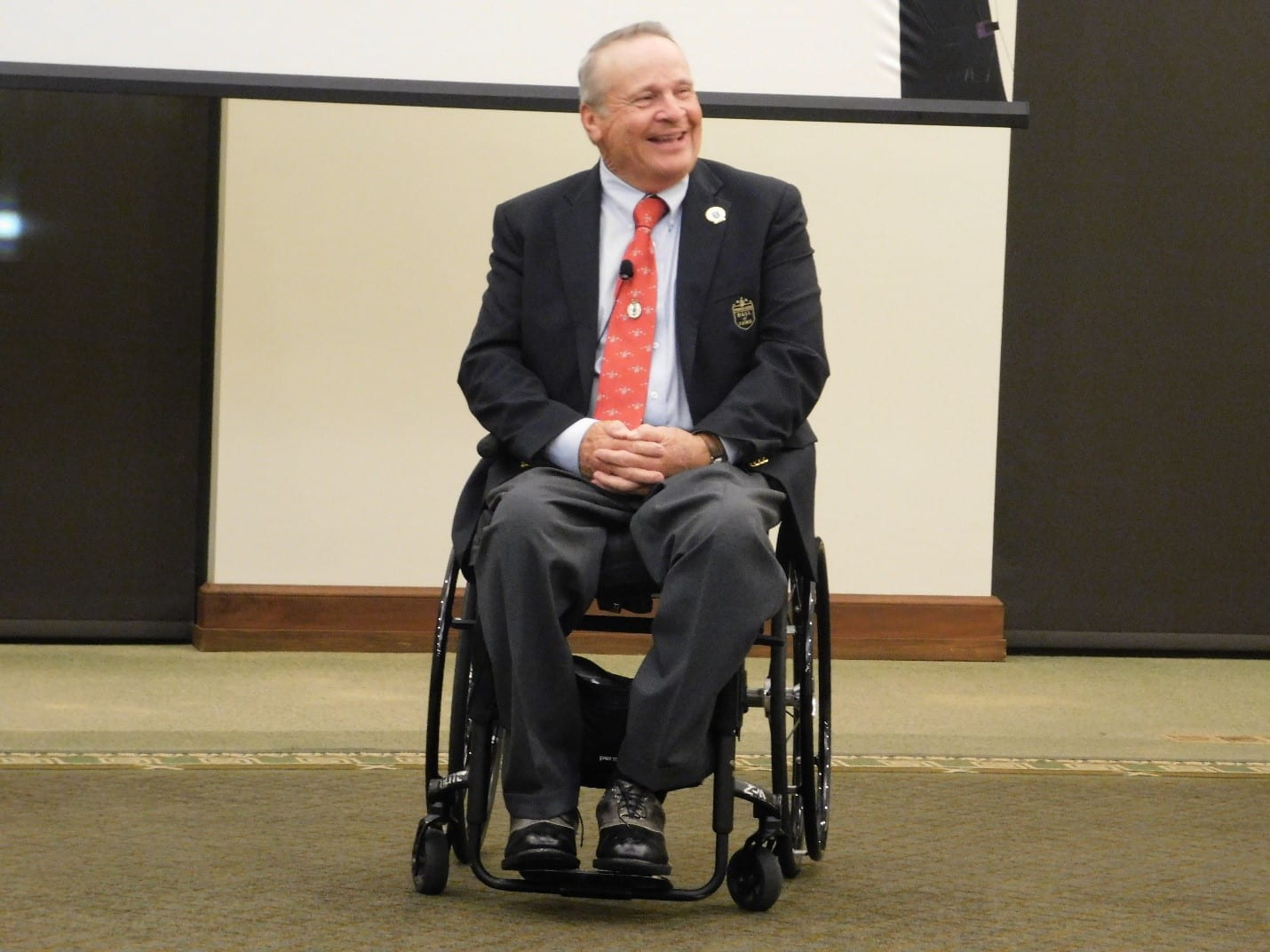
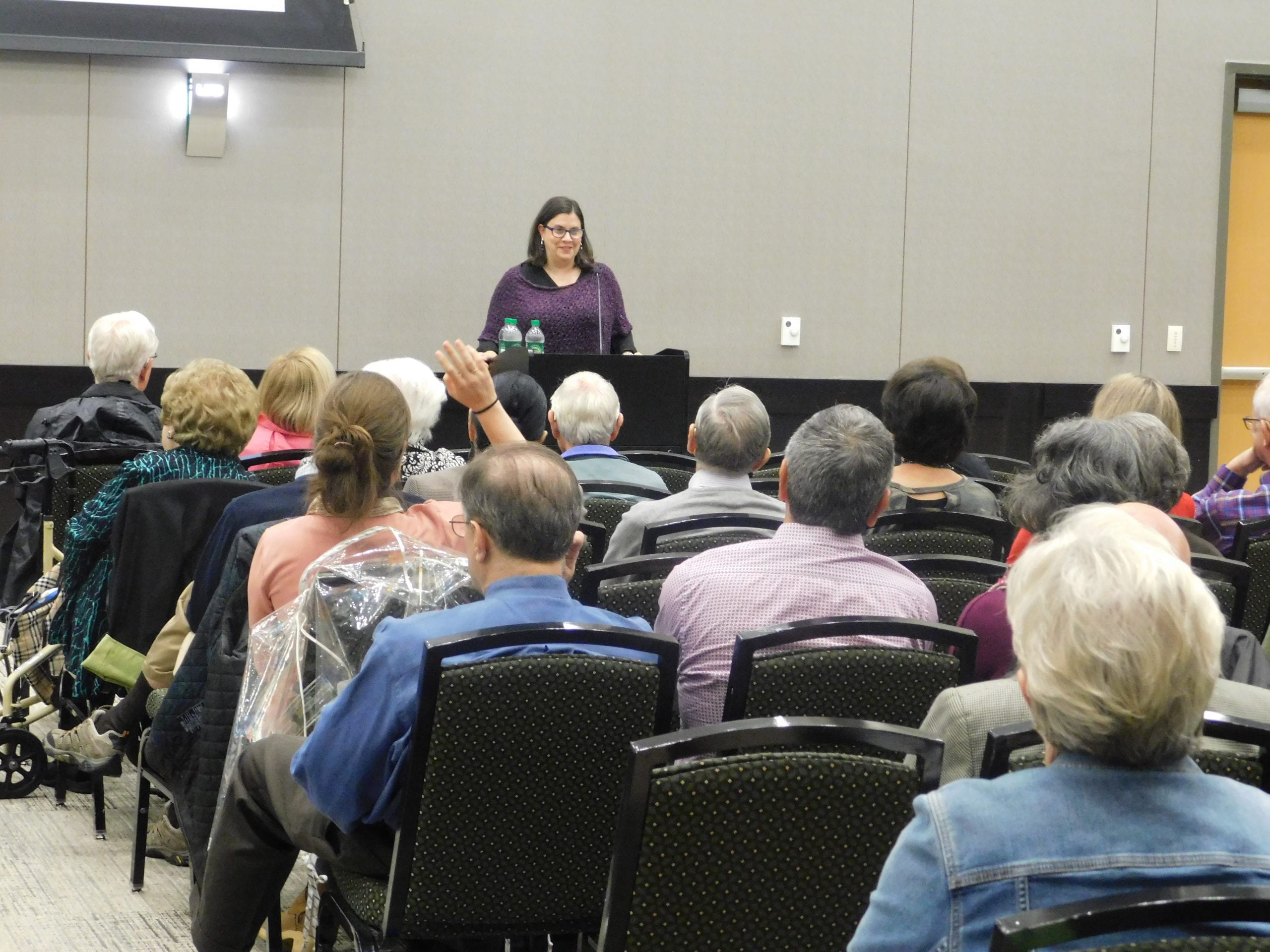
On Wednesday, February 5th, the Institute for Human Rights co-sponsored an event alongside College of Arts and Sciences and Lakeshore Foundation to present World Golf Hall of Fame inductee Dennis Walters. During his lecture, he addressed his passion for golf, experience with disability, and journey of perseverance.
Raised in New Jersey and playing college golf at the University of North Texas, Walters had dreams of being on the PGA Tour. Amid his burgeoning career as a professional golfer, Walters experienced a golf cart accident that left him paralyzed from the waist-down. Following the accident, Walters underwent four months of excruciating rehabilitation, peering at the golf course across the street with a desire to drive a ball across the green. Although his doctor claimed he would no longer play golf, but Walters’ vision suggested otherwise.
Following his rehabilitation, Walters moved back home with his parents in New Jersey while he became accustomed to his new way of life. One day, he finally mustered the courage to swing a golf club. With help from his father, they had a makeshift system that included a pillow, waist strap, rope, and a tree to assist with Walters’ swing. As a result, Walters was hitting golf balls as he did before which kept his golfs dreams alive. The first time Walters played on a course after his accident, he received cheering support from fellow golfers and, soon after, a re-purposed bar stool for his golf cart. Thus, The Dennis Walters Golf Show was born.
However, not everyone was originally thrilled about Walters’ show. After his father wrote a letter to Jack Nicklaus and told him of his son’s ambition, Walters’ career took off. Although Walter’s show is not just any golf exhibition, it’s a performance! His show includes golf shots with a three-headed club, fishing rod, radiator hose, gavel, left-handed club, crooked club, and tall tee as well some bad jokes and a four-legged sidekick. After more than 40 years, Walters has traveled over 3 million miles and done over 3,000 golf shows for fans near and far.
Walters exclaimed, “There’s no expiration date on your dreams” and offered the crowd his five P’s for success:
Preparation (establish a plan)
Perspiration (hard work pays off)
Precision (stay focused)
Passion (live what you do)
Perseverance (stay on the path or else the other four don’t matter)
Walters with members UAB Men’s and Women’s Golf teams. Source: UAB Institute for Human Rights
Walters asked himself, “Why have this dream?”. At times, he felt entirely hopeless about golfing again. However, golf was like therapy to him, both mentally and physically, which he claimed was better than medicine. He then closed by expressing, “The good about golf is the people you know”, which highlights the importance of inclusion and acceptance of people with disabilities on and off the green.
At the end of every year until the beginning of a new year, I have always been listening to the same message which is said by everyone. Everybody talks about how they are going to do great things in the coming year and that they are going to do what they never did during the year that just ended. At the beginning of every year people write resolutions; that is, the list of what they would like to have accomplished at the end of the year. And now allow me to take this on a higher notch. Do people include humanity points in their list? Is there a point that says, “feed some street families, foster a kid for a few weeks, volunteer in an orphanage and also involve in a activism movement”? This gets me so motivated, and I run to my diary to put down my resolutions.
Now I don’t have to tell you the shock that I find every December when I get back to my diary to see whether that which I put down on paper at the beginning of the year has come to pass. It really pains me that each time I go back to revisit my resolutions, I am still on the same page as the year started. As I listen or read news in the newspaper, there are cases that involve people that need to be shown some love. This is what motivates us to write some resolutions at the beginning of every year. But what really matters is…did we get to know someone or make someone smile as we promised ourselves we would?
It always go back to procrastination and we all know it’s a thief of time…getting to actually commit to your resolutions is really hard. The excitement makes us think that we can actually do what we have written down in a jiffy. I have had some little meetings with myself several times, and I came to a conclusion that resolutions are like trying to change my life for the better and at the same time make someone forget their sorrows and at least smile for a while. But change is not easy, and we should actually try to define resolution as change. Taking a step to a better you will require a willing mind, a willing heart, commitment and sacrifices.
Do we really need to share out the resolutions that we come up with at the start of the year with our confidants? No, I don’t think so! I really don’t understand who else should have a look at my diary or have the information that is inside my diary apart from me who I own it. I strongly feel that I am the one to work on what I really want just like any other person who has visions and as a result every one wrote their resolutions and should work towards accomplishing their resolutions.
As the year goes by and February sets in, reality also sets in. I wrote what I wanted that year but is there is no a hint of progress. This really hits me so hard and start thinking maybe I should go back to the list and may be do some changes on what I had written, or I should at least wait a little bit longer to see what happens or maybe I should just terminate the list and just go by the flow with an excuse of, I am busy and I will do it whenever I get some time. Others have an excuse of not forcing things and just wait for that time to come and they precise it to be magical, for me I feel like it is luck of commitment and sometime I may call it selfishness.
As I said earlier, the news is everywhere. There are cases that makes us sad. It hurts me so much when I recall of a certain girl who was recently raped, killed and dumped by a known politician. When the story was aired in all forms of media, everyone was very angry because of the incidence, the politician was caught and taken to court. After a week everyone forgot what had just happened and they were back to their businesses. Up until now I still don’t get how it just went. Because the politician was set free. Where is everybody who thinks that they are advocates against Gender Based Violence? There are only 16 days that are set for activism. Why shouldn’t these days be everyday instead of just writing things that we will never take seriously?
Allow me to challenge those who are in charge of spearheading Human Rights in Kenya. I do appreciate the Human Rights authorities who have their five year strategic plan that is 2018-2022. They have passed their first test. However what are some of their accomplishments for the two years that have gone by? Have they been able to implement that which they had discussed or the plans are just good on paper and nothing is been done about it. For instance the Kenya National commission on Human Rights had promised to put measures that are going to prevent abuses, improve on their investigations and put those who infringe on other people’s rights behind bars. I really don’t know how to put this across and tell you that there are so many people out here who go scot free after they have done heinous acts. Men and women who are fond of raping young boys and girls are still not locked up. When you ask the reason behind this, you will be told that there was no enough evidence to prove the rape case and even when there is enough evidence to lock up them, the judges get bribed and the story is swept under the carpet.
Source: Yahoo Images
Do you even believe in resolutions? Do you even write something at the beginning of every year? If you do does the year end when you are satisfied? If nothing came to pass is it the same list that you are going to use in the following year, or are you going to change your list to something that you think is easy for you to accomplish? Nothing comes easy, there must be a struggle in order to archive what you really fill is important and more of helping others.
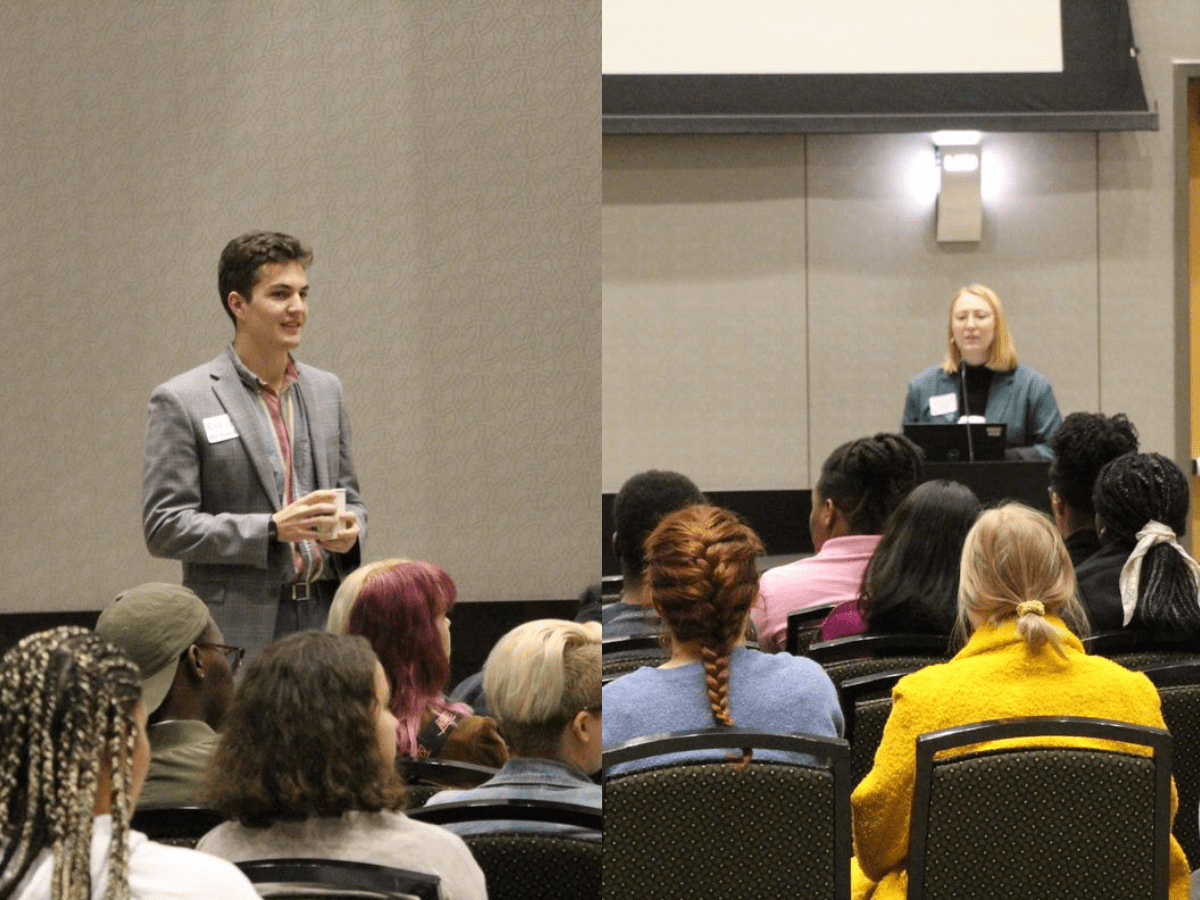
Recently, I had the pleasure of attending the Organized Radical Collegiate Activism (ORCA) Conference organized by the UAB Social Justice Advocacy Council on January 24, 2020. Various important and interesting social justice issues were discussed and presented by talented UAB students throughout the day. The presentation that stood out the most to me was “The State of Incarceration in Alabama” by Eli and Bella Tylicki. The brother-and-sister duo did a great job bringing attention to a very important human rights issue right here in Alabama.
Eli Tylicki and Bella Tylicki Source: ORCA 2020
The presentation started out with some questions for the attendees, such as what they thought were their odds of getting incarcerated at some point in their life? After some interesting responses from the audience, the presenters revealed that White men have a 7% chance of getting incarcerated at least once in their life, Hispanic men 17%, and African American men have the highest (32%) chance. However, women account for only 7% of the U.S. prison population. It was also revealed that the cost to imprison one person for a year in the U.S. is $36,299.25, or $99.45 per day.
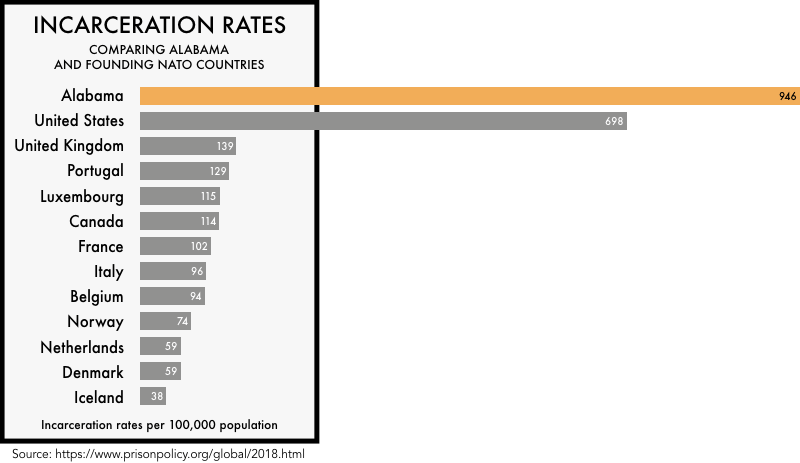
As compared to other developed countries such as Canada, Germany, France, Italy, and the U.K, the United States has the highest number of incarcerated people per 100,000 population, almost three times more than these countries. The United States makes up roughly 5% of the world’s population but holds about 25% of the world’s prisoners. Shockingly, 31 U.S. states also have higher incarceration rates than any country in the world, and Alabama is among the worst in the country. Alabama exceeds national averages in virtually every category measured by states and the federal government, making the state’s prison system one of the most violent in the nation.
Now the question arises, why is the state of incarceration in the U.S. uniquely outrageous, and why is Alabama among the worst in this aspect? Many factors are responsible for such staggering statistics, including our economy built on slavery, poverty, tradition-based culture, fear and insecurity, systemic racism, educational inequity, and punitive cultural attitudes just to name a few. Focusing on Alabama, the presenters showed that Alabama’s prisons were revealed to be the most crowded in the country in 2017, with the prison suicide rate being three times more and the homicide rate ten times more than the national average. On April 2, 2019, the U.S Department of Justice Report concluded that “there is reasonable cause to believe that the conditions in Alabama’s prisons for men violate the Eighth Amendment of the U.S. Constitution. The Department concluded that there is reasonable cause to believe that the men’s prisons fail to protect prisoners from prisoner-on-prisoner violence and prisoner-on-prisoner sexual abuse and fail to provide prisoners with safe conditions.” Note that the Eighth Amendment of the U.S. Constitution prohibits the infliction of excessive, cruel, and unusual punishment.
The presenters then went on to show the various horrific accounts of prisoner violence, sexual abuse, homicide cases, and extreme physical injuries during a single week in 2017 as reported by the investigation. It was extremely shocking to learn about the various instances of such abuse and violence that took place in just a single week in our prisons. Those examples were used to illustrate the gravity of ongoing issues in state prisons and are not mentioned here due to their disturbing and triggering nature. Additionally, overcrowding and understaffing are some very important issues that contribute to the worsening situation of prisons in Alabama. According to the Alabama Department of Corrections (ADOC), the state houses approximately 16,327 prisoners in major correctional facilities which are designed to hold only 9,882. Moreover, prisons like Staton and Kilby hold almost three times the number of prisoners than their capacity. As for understaffing, Alabama’s prisons employ only 1,072 out of the 3,326 needed correctional officers according to ADOC’s staffing report from June 2018. It also reported that three prisons have fewer than 20% of the needed correctional officers. This illustrates the increased threat to the safety of both the staff and the prisoners in those facilities due to the lack of required personnel in case of an emergency.
Source: Yahoo Images, Creative Common
The Department of Justice also reported the excessive number of deaths due to violent and deadly assault, high number of life-threatening injuries, unchecked extortions, illegal drugs, and the routinely inability to adequately protect prisoners even when officials have advance warning. The report also threatened a lawsuit within 49 days if the state does not show that it is correcting what is said to be a systemic failure to protect inmates from violence and sexual abuse.
In response, Alabama’s Governor Kay Ivey has proposed a public-private partnership to lease three “megaprisons” from a private firm as a solution to the understaffing and cost-ineffective conditions in state prisons. Department of Corrections Commissioner Jeff Dunn said that “we are convinced now more than ever before that consolidating our infrastructure down to three regional facilities and decommissioning the majority of our major facilities is the way to go.”
Bella and Eli Tylicki gave an overview of the potential pros and cons of the megaprison proposal. Some advantages may be that the upfront costs will be covered, and it may prove as a quick fix with less red tape (a reduction of bureaucratic obstacles to action). However, privatized prisons may lead to a decreased quality of life, is economically inefficient, and there is no change in cost for taxpayers. The Equal Justice Initiative explains how building new prisons will not solve the state’s prison crisis:
Alabama’s primary problems relate to management, staffing, poor classification, inadequate programming for incarcerated people, inadequate treatment programs, poor training, and officer retention. None of these problems will be solved by building new prisons, nor does a prison construction strategy respond to the imminent risk of harm to staff, incarcerated people, and the public.
Therefore, the presenters proposed an alternative to this solution in the form of decarceration and rehabilitation of prisoners. This aims at fixing overcrowding and understaffing, decreases the inside violence, and costs less for taxpayers. Additionally, there is no change in crime rate outside the prisons and rehabilitation leads toward GDP growth and a more productive society. Studies have shown that incarcerated people who participate in correctional education programs are less likely to recidivate and have a higher chance of finding employment when they are released. Plus, these valuable educational and rehabilitative programs cost the state nothing while having significant positive effects on successful re-entry of prisoners and protecting public safety. Of course, there will need to be more done other than just an emphasis on decarceration, such as fixing the infrastructure, improving healthcare, and incentivizing an increase in Correctional Officers. Low-cost reforms such as effective use of video surveillance cameras, implementation of an internal classification system, skilled management, and other basic management systems such as incident tracking systems, quality control, and corrective action review can result in significant improvements in conditions for both the staff and the prisoners. These low-cost reforms helped the nation’s worst women prison, the Tutwiler Prison for Women, become a model for reform.
The Tylickis ended their presentation with a call for action by urging the audience members to call their state representatives and senators to take responsible action, as they will be voting on this issue in the coming weeks. Additionally, they asked us to volunteer with reentry organizations and educate ourselves and others on the issue. Some initiatives that we can support include The Dannon Project, Alabama Appleseed, and the Equal Justice Initiative. We, as responsible and active citizens of this state, need to play our part in making our society safe, just, and productive for all.
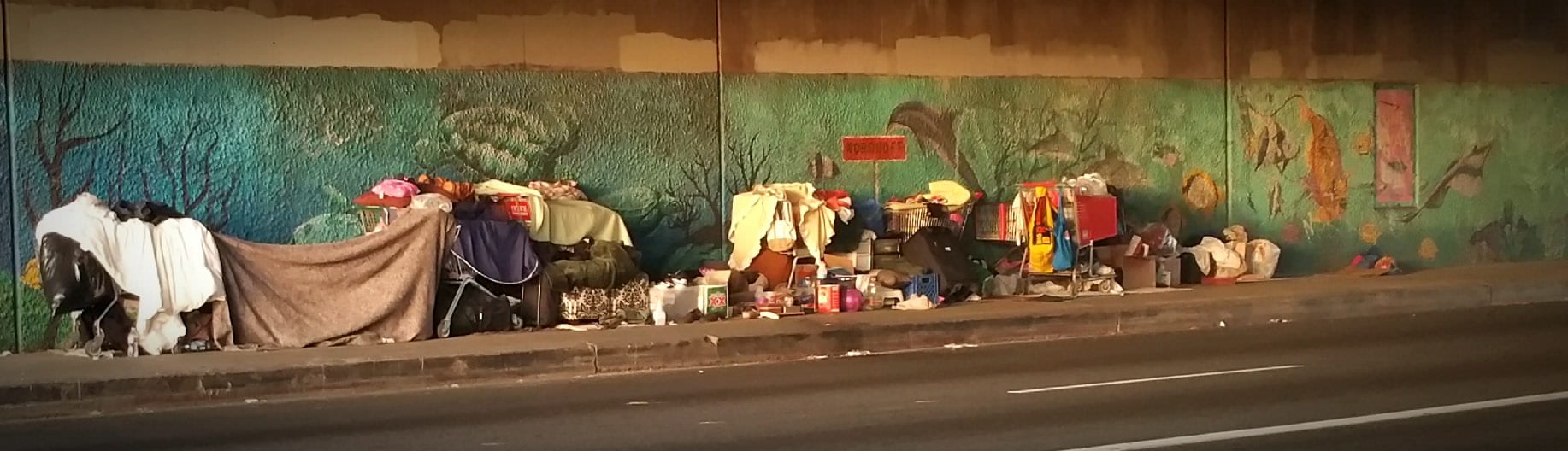
During the winter break, I spent a lot of time in Birmingham, staying with my sister and with friends, far away from my farm and home in Columbiana. Our farm is more like an animal rescue or sanctuary that does not generate much income but enough to accommodate. Besides hundreds of animals being surrendered or abandoned, we have even had strays walk up our driveway. Our goat, Fred, was the first I remember as we were in disbelief that a goat was just walking the streets and checking out the very sparse neighborhood, curiously coming up to us with some twine wrapped around his neck. For Fred and everyone to follow, my parents and family members have never refused taking in, rehabilitating, or rehoming an animal in need, so maybe that’s why it was so much more obvious of how much worse the picture I have seen in Birmingham is, or what this article is about. In Birmingham, it is people living in the streets witnessed by a city full of people. Walking through five points and down 20th, there is so much evidence and example of homelessness. Passerby witness but rarely realize that they are seeing many at their most vulnerable or the harsh, daily routine.
Chris Yarzab. Creative Commons for Flickr.
Responsibility of the State
People experiencing homelessness face violations of many human rights, such as inaccessibility to safe and secure housing, an inadequate standard of living, education, liberty and security of the person, privacy, social security, freedom from discrimination, voting, and more which are interconnected. These human rights are protected by several international human rights treaties. The International Covenant on Civil and Political Rights (ICCPR), the International Covenant on Economic, Social and Cultural Rights (ICESCR), and the Convention on the Rights of the Child (CRC), which bind the state to legal and moral obligations in realizing and protecting the rights of all people. Also, the right to housing recognized by international human rights law doesn’t just mean a right to shelter. It must be adequate and accessible. Battling and overcoming homelessness is not a task of charity as much as an act of justice. Our Public policy and structures should facilitate or lead to a dignified life in the United States. As one of the wealthiest nations in the world, we should figure out how to shelter or house those who are homeless.
No one is asking what happened to all the homeless. No one cares, because it’s easier to get on the subway and not be accosted.- Richard Linklater
More recently, I saw many cops parked in the middle of five points as they held up traffic to address some of the people I have seen more statically living there, which brought up the thought of criminalization of homelessness and left me wondering if those cops offer rides to shelters before the ride to a cell.
A look at more vulnerable populations
The most visible type of homelessness is what we see when we walk through Birmingham: people living on the streets or sleeping in the parks or street tunnels. However, more move between shelters and temporary homing maybe with their friends or relatives and more long-term shelter where their experience may not be included in the conversation of homeless persons.
Within 2018 records reported by Continuums of Care to the U.S. Department of Housing and Urban Development, there were almost 3,500 people homeless on a given night (280 were family households, 339 were Veterans, 158 were unaccompanied young adults (aged 18-24), and 540 were individuals experiencing chronic homelessness). Over 900 of those were concentrated in the Birmingham area. Over the year, there were 14,112 students who faced homelessness in Alabama.
A large portion of the homeless population is affected by mental illness. People with mental illness or other disabilities may face social isolation and may face chronic homelessness. Such individuals may require special types of accommodation or support that may be an obstacle to rehabilitation. Health issues may cause a person’s homelessness as well as they may be intensified by the experience where poverty and lack of access to care contribute to disparities in health. Another thing to think about is when someone handicapped by a disability loses their parents or caretaker, who will take care of them or will they find tools to live? They could become homeless.
Through the lingering effects of systematic denial of equal rights and opportunities, African American are particularly overrepresented in this system facing a higher risk of poverty, housing discrimination, and incarceration than White Americans
Indigenous people face greater social and economic disadvantage such as lower levels of education or higher levels of unemployment which contribute to higher levels of homelessness in their communities
Women may make up a big portion of those forced to leave their homes fleeing domestic violence or sexual assault. Homeless women may become more isolated for fear of violence, rape, or other abuse. Further, a woman may be separated from her children if she is unable to care for them which challenges her parental rights.
Children and young people are disproportionately affected by homelessness. I have known many classmates and friends who have been homeless as they pursue their education at UAB. Also, Covenant House proclaims that every year, more than 2 million kids in America will face a period of homelessness (The link provides more enlightening and harder-to-swallow statistics). Youth like those emancipated from the foster care system may not have another option. In addition to general human rights laws, children are protected under special rights, like those afforded in the Covenant on the Rights of a Child which describes a higher standard of living and right to protection against neglect, cruelty, exploitation, etc.
Untreated depression and mental illness, self-medication and addiction, childhood trauma and chronic PTSD, abuse and any circumstance that may lead one to homelessness may also create a loop to imprison them. For example, where abstinence is a prerequisite or requirement for homelessness assistance programs, one may not receive help unless they quit, but one cannot quit without relief.
Pedro Ribeiro Simões. Creative Commons for Flickr.
A veteran should not have to stand on the asphalt with a cardboard sign begging for a living in a nation they helped secure and people should not be in the position to be turned down asking for food that was about to be thrown out. In fact, everyone has made contributions and continues to contribute to their society. Homelessness includes people who have paid or pay taxes and those who are paid less than a living wage. It includes people of all labels fleeing abusive conditions or facing escalating housing and living costs. It includes parents and it includes their children who have not had a chance. It also includes all students who are trying to pursue an education to hopefully get a job that will afford them housing. Besides all these achievements, many, including those facing chronic homelessness have endured full lives and have witnessed different forms of trauma. Still, they have survived the circumstances of homelessness, maintaining their humanity and resilience and- intentionally or unintentionally- being that example for others.
Also, keep in mind that going from place to place and not knowing what to do or where you will end up could understandably create a lot of pain and anger. Desperation or frustration may be harder to deal with. Being homeless could even make you apprehensive of ownership or pursuing certain routes that could be encouraged. However, everyone should be afforded options and certain securities.
10 Strategies to End Chronic Homelessness posted by the United States Interagency Council on Homelessness:
More immediate examples for anyone to help everyday
If it’s raining or about to, offer the warmth and privacy of an umbrella.
Offer to pay for an uber ride to a nearby shelter as some cannot walk to or have no means of transportation to one.
If you are not comfortable lending cash, you may offer supplies. You could keep these care bags of everyday products, essentials (maybe small shower things you could find in the travel section, gloves, hats, etc), or resources to offer or pass out at crowded shelters.
Invite others to the restaurant you are on your way to and share a meal if they are up for it. The conversation may also allow you to understand, accept, or appreciate their life and vice-versa. Once, a man I invited to eat with me on campus (in an environment where I felt safe enough to) proclaimed his version of Islamophobia (as that was the summation of a popular sentiment in America, especially during those Trump Campaign days) as he explicitly said he didn’t like Muslims when I revealed that of my identity. But it turns out, I was the first Muslim he had personally interacted with and realized he liked before the word “Muslim” exited my mouth. That could happen with anyone of course and homeless (or only hungry in this case) people are not to be “enlightened” and should not be expected to praise our deed, but the conversation and gesture can open this opportunity
As we approach 2020 and the end of this decade, we come across several lists of important happenings, milestones, and statistics in various disciplines across the world. As for human rights, it is important to reflect where we stand on the provision and fight for human rights and highlight the important issues that emerged during this decade.
I had decided to spend this past Thanksgiving by myself at home with my computer. While waiting for my episode to load, I wondered to myself, “Why is the Internet so slow? Doesn’t my Internet plan guarantee high speed and unlimited data?” These few questions directed me to some episodes from Last Week Tonight with John Oliver and Patriot Act with Hasan Minhaj that addressed Net Neutrality (Net Neutrality I YouTube and Net Neutrality II YouTube) and “Why Your Internet Sucks,” respectively. Although I still had to wait about five minutes or so for the video to constantly stop buffering, that dissatisfaction paled in comparison to everything I was about to learn, particularly how companies will slow connection speeds so people would have to pay more for faster access.
History of the Internet – joannazajakala. Source: joannazajakala.wordpress.com. Creative Commons
So, before you continue reading, let’s define some of the basic terms used in this article:
Net Neutrality – The principle that ISPs should provide internet access to all people regardless of source or the type of website being accessed.
ISPs – Internet Service Providers. These are the people you pay to give you access to the internet.
VPNs – Virtual Private Networks. These are private networks that will give you privacy and anonymity when using a public network. They “mask your IP address so that your online actions are virtually untraceable.”
FCC – The Federal Communications Commission. They “regulate interstate and international communications by radio, television, wire, satellite and cable in all 50 states.”
Clipart – No Global Internet. Source: openclipart.org, Creative Commons
History of Net Neutrality
Coined by Tim Wu, a Columbia University law professor, Net Neutrality called for all ISPs to treat all content equally. Wu had the concern that “broadband providers’ tendency to restrict new technologies would hurt innovation in the long term, and called for anti-discrimination rules.” He reasoned this because if providers were able to choose which content will be available for users, then newer companies would never have the chance to break out and grow. Had this happened in the mid-2000s with video streaming, then sites like Netflix, YouTube, Vimeo, etc. would have never gotten the light of day and be prevalent sources of information throughout our daily lives.
In the early 2000s, ISPs started to ban people from using VPNs and letting them set up their own Wi-Fi routers. Subsequently, the “FCC fined Madison River, a service provider, for blocking phone calls over the internet, ordered Comcast to stop slowing down connections, and caught Apple for blocking Skype calls at the request of AT&T.”
In 2015, after much deliberation, the FCC approved Net Neutrality by a 3-2 vote, replacing a ruling in 2014 by the U.S. Court of Appeals for the D.C. Circuit finding that found the FCC did not have enough regulatory power over broadband. After the resulting vote, Gabe Rottman, the ACLU’s legislative counsel, praised how “this [was] a victory for free speech, plain and simple. The Internet, the primary place where Americans exercise their right to free expression, remains open to all voices and points of view.”
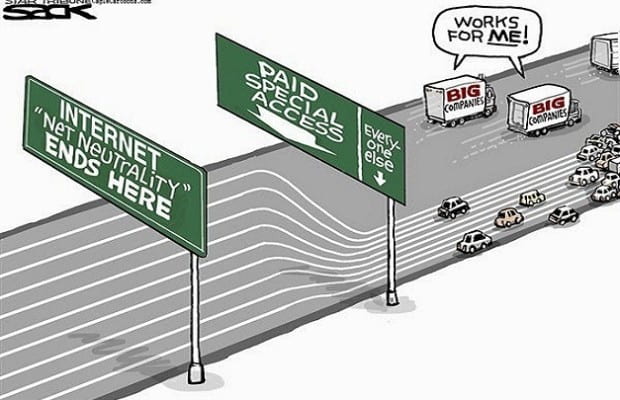
However, when power changes hands, so does previous rulings. With a Republican-controlled FCC, Chairman Ajit Pai effectively repealed Net Neutrality. They removed the Title II designation, which classified the Internet as a Public Utility, preventing the FCC from putting rules in its place if desired. Now, without these rules in place, ISPs can effectively prioritize specific content and block others, with the only caveat being that ISPs must publicly state that they will do so.
The Economic case that net neutrality was always fundamentally good for the internet. Source: medium.com, Creative Commons
The Case for Net Neutrality
On Last Week Tonight, John Oliver opens his segment briefing his audience on the foundation of Net Neutrality while also talking about the impact his first Net Neutrality episode had on the FCC’s ability to regulate the open Internet. He then pans to the then-new and now current chairman of the FCC, Trump appointee Ajit Pai. While he presented himself as fun with his oversized coffee mug, Oliver notes how Pai was a “former lawyer for Verizon” and how he believes that due to Title II, companies can no longer invest further into broadband networks. Oliver then responds to that claim by stating that “Title II is the most solid legal foundation we have right now for a strong enforceable net neutrality protections.” While also roasting Pai with his own larger coffee mug, Oliver calls upon the people watching his episode to go to the FCC website and write comments under the heading “Restoring Internet Freedom.” Created in April of 2017, this docket had a current filing of 23,952,756 comments, with people still commenting more than 2 years after the fact. He then concludes with his call to action below:
John Oliver: “I’m calling upon all of you, the internet’s time-wasters and trouble-makers, to join me once more in just five to ten minutes of none effort, I need you to do this once more under the breach my friends, simply go to this URL and tell the FCC to preserve net neutrality and Title II. Once again commenters, America needs you to rise, or more accurately, remain seated in front of your computer screen to this occasion. So please, fly my pretties, fly once more! Fly away!”
Net Neutrality, Internet Equality, and Human Rights
So how exactly does Net Neutrality and internet equality relate to human rights? Are they even remotely related?
With the repealing of net neutrality, you risk losing your first amendment rights guaranteed by the Constitution, being the right to freedom of expression, while also losing your right to access information. The United Nations Human Rights Council also had passed a resolution for the “promotion, protection, and enjoyment of human rights on the internet” while also condemning a country that disrupts internet access for its civilians. ISPs, such as Comcast, AT&T, Spectrum, and more, would limit websites that cannot pay to prioritize their content, allowing big companies to have more content allowed. This eventually would lead to a restriction in the amount of information accessed and have the internet, as Human Rights Watch phrases it, “reduced to social media giants and shopping websites, and we could lose equal access to all the little random, odd corner that make the internet the magical (and weird) place it is today.”
Imagine that. There might be a time soon where all you could access are big-named websites like Apple or Microsoft for technology, Facebook and Twitter and Tik Tok for social media, and Amazon and Walmart for shopping. If you think about it, Tim Wu was right. Limiting other companies’ chance to make a splash to a larger audience just because they did not have enough money to be put in the fast lane, to have their content prioritized.
While watching Patriot Act with Hasan Minhaj, I noticed how Minhaj begins by admitting to the fact that the internet is addictive, rolling through a series of clips of news commentators claiming that it is the digital heroin of our age. He then calls out how the internet is something that we take for granted, despite there being millions of Americans with no access to it.
Hasan Minhaj: “The Internet is an essential utility. It’s like electricity of water”
The United Nations also declared internet access as a human right back in 2011, by the United Nations Special Rapporteur on the Promotion and Protection of the Right to Freedom of Opinion and Expression. With 2/3 of Syria’s internet being cut at the time, the United Nations also declared that disconnecting people from the internet is also a violation of international law, which just goes to show how important internet access is in the world in this day and age. And as of October of 2019, there were about 4.48 billion active internet users in the world, about 58 percent of the global population.
Overall, with the restriction of internet access in the world, and more specifically in the United States, we must understand the implications restricted internet access has on the amount and type of information available. Although we might take our internet access for granted, we must be aware that allowing these companies to have limited regulations on what content to prioritize, restricting access to other sites would prevent equal access to information, a violation of our human rights. Therefore, while it may be that the future seems bleak, we have a responsibility to petition and encourage our elected officials to expand broadband access and to regulate the companies that provide users with that internet.
How The Death of Net Neutrality Could Be the Death of Blockchain. Source: medium.com, Creative Commons
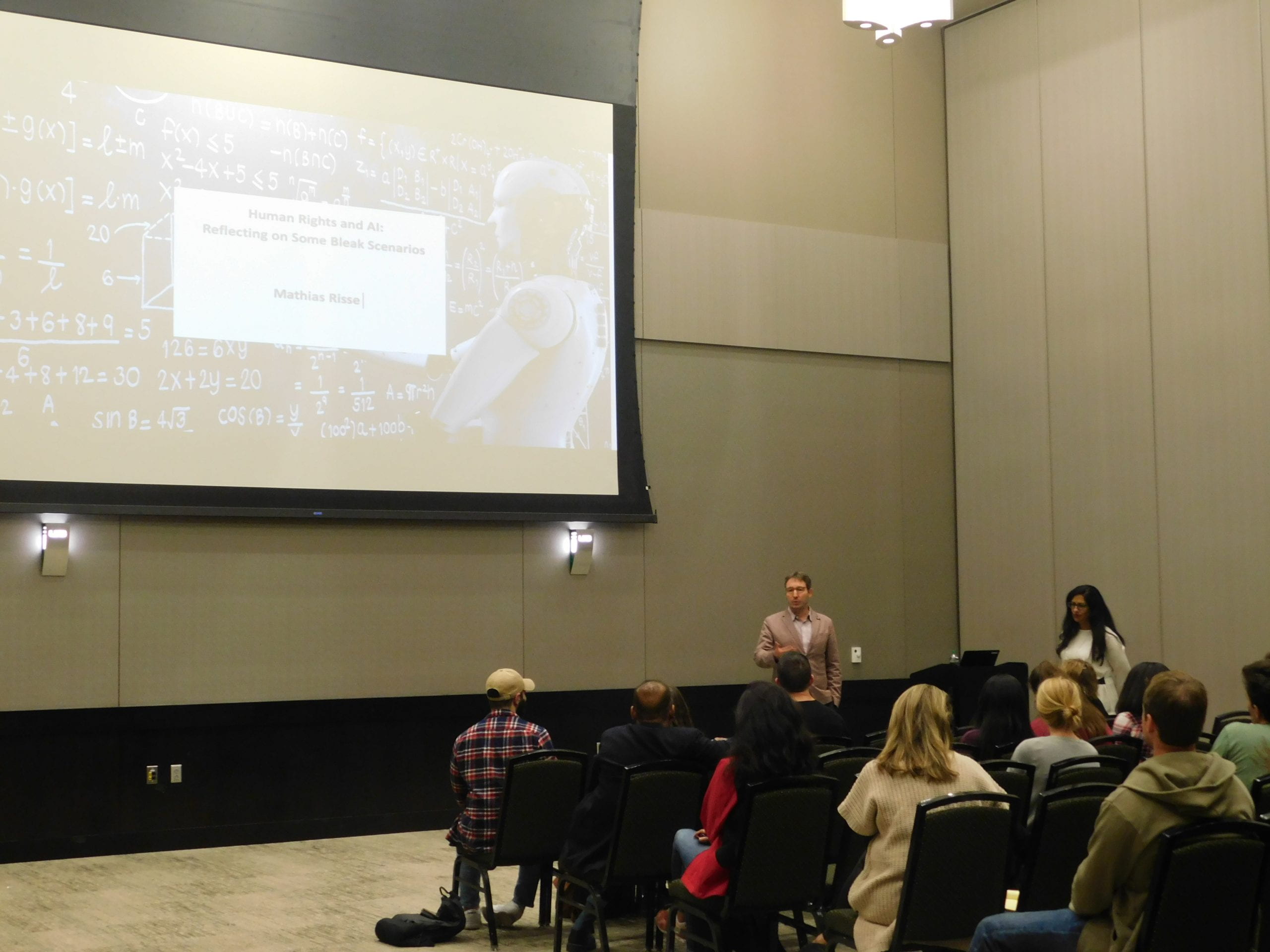
Mathais Risse and Sushma Raman introducing themselves to the audience. Source: UAB Institute for Human Rights
On October 25, 2019, the Institute for Human Rights hosted Mathias Risse, Lucius N. Littauer Professor of Philosophy and Public Administration and director of the Carr Center for Human Rights at Harvard University, and Sushma Raman, the executive director of the Carr Center. During the lecture and discussion, Risse asked the audience to consider the present and future moral and philosophical implications of ever-growing developments in artificial intelligence (AI) technology.
One of the most well-known ethical dilemmas that Risse addressed is the Trolley Problem thought experiment which, seemed to be irrelevant in real life at the time of its conception, has massive implications in today’s world. Imagine that you are standing by as a runaway trolley is headed toward five people who are tied to the tracks. You can either refuse to intervene and allow those five people to die, or you can divert the trolley onto a sidetrack where a single person is tied. Which option is more ethical? As AI technology is developed and products such as self-driving cars become more common, we cannot ignore the ethical concerns that will emerge and their attendant consequences.
Risse also discussed rising concerns about the relationship between social inequalities and AI technology. One concern is that, as technology develops, “unskilled” labor will be outsourced to AI, leaving low-income communities that typically work those jobs behind. Not only does that leave people struggling to find work to support themselves and their families, but it also takes away their voice and political power because it pushes them out of the job market and economic system. There is also a concern that technology will become less accessible to low-income communities as it develops, and that under-privileged groups will be left behind. This has led many to worry that AI will “drive a widening technological wedge into society.”
After the lecture, Risse and Raman answered some of the audience’s questions. One person asked which of the problems regarding AI and human rights is the most concerning. In response, Risse pointed out that it depends on who you ask. From policymakers to tech developers to “unskilled” laborers, each group would have a different perspective on which part of the issue is the most urgent because each party has a unique relationship with technology.
In closing his lecture, Risse noted that he wished he could end on a more cheerful note, but he found it to be nearly impossible due to the long list of concerns that the philosophical community has regarding the future of humanity and artificial intelligence. Throughout his lecture and the Q & A session, Risse emphasized the point that there needs to be a serious increase in the interaction that occurs between the AI community and the human rights community. While technological advancements can be wonderful and even lifesaving, it is vital that we evaluate the potential risks that come with them. Just because something is possible does not mean it should be done, and multiple perspectives are necessary to effectively evaluate any given possibility.
Alexandra Zapruder answering questions from the audience. Source: UAB Institute for Human Rights
On November 7, the Institute for Human Rights hosted Alexandra Zapruder, author and member of the founding staff of the United States Holocaust Memorial Museum in Washington D.C. She discussed her first book, Salvaged Pages: Young Writers’ Diaries of the Holocaust, and answered questions about her work. Throughout her lecture, Zapruder highlighted the variety of insights we can gain from the diaries of teenagers/young adults who experienced the Holocaust.
While Anne Frank is certainly the most well-known authors of such a diary, there is much to be learned from the other young authors whose diaries have been found in the last few decades. Zapruder described these diaries as being both historical and literary fragments, giving us a window into the past and helping us better understand human experiences from different perspectives of the time.
Zapruder described having to grapple with the legacy of Anne Frank’s diary and how it shapes the reception of the other diaries that are found. For example, people often associated Frank’s writing with a hopeful view of humanity. It is often discussed with language that relates to redemption and optimism that is rarely used when discussing the atrocities that occurred during the Holocaust on their own. This does not, however, reflect every young writer’s writing during this time. Zapruder noted that, no matter how great a writer is, it does not make sense to expect their writing to represent all perspectives in a common experience when people are so different. Reading other diaries from the Holocaust requires setting aside the preconceived notions we have from learning about Anne Frank’s diary in the past.
One young writer that Zapruder spoke about during her lecture was Klaus Langer, a child of a fairly well-to-do family in Essen, Germany. She read an entry from his diary that was written on November 11, 1938, the day after Kristallnacht. His diary entries were generally records of what happened in his day-to-day life as he and his family made efforts to leave Nazi Germany, and this entry was no different. Langer described walking down the street through the wreckage after everything that happened, walking on glass splinters. Though that day in history had not been named “Kristallnacht” yet, the significance of the shatter glass is clear in his writing. When reading this entry, Zapruder recognized that, when you are writing in a diary about the day-to-day, you capture nuances you might miss later, things that would be easy to forget in future recollections.
Another writer that Zapruder discussed was Elsa Binder, a 21-year-old girl who lived with her parents in Poland. Zapruder described Binder as someone who could be sarcastic and had an edge. In Binder’s diary, Zapruder found a strong example of an unexpected common theme among the diaries: the passage of time. There were certainly themes that had been expected, such as desperation, hope, hunger, and displacement, but the passage of time was addressed to a surprising degree in nearly all of the diaries. Zapruder found many entries detailing life before the war, the traumatic break from normal life, and waiting liberation as time passed. Birthdays and holidays were noted regularly, even when the world was in chaos.
Perhaps the most striking thing that Zapruder addressed during her lecture was the way that these works resonate with young people. Though the experiences of most American teenagers are far different from those who lived during the Holocaust, many of the things that young people experience today connect to the themes found in the diary, from hope for the future to fear to desperation. Children face many human rights issues, such as school shootings, gun violence, and violence against people of color and the LGBTQ+ community. Like many of the young writers that Zapruder discussed during her lecture, many of the children of today are desperate for a better future. It is vital that adults step up and become better advocates for that future and for the human rights of children and adolescents.
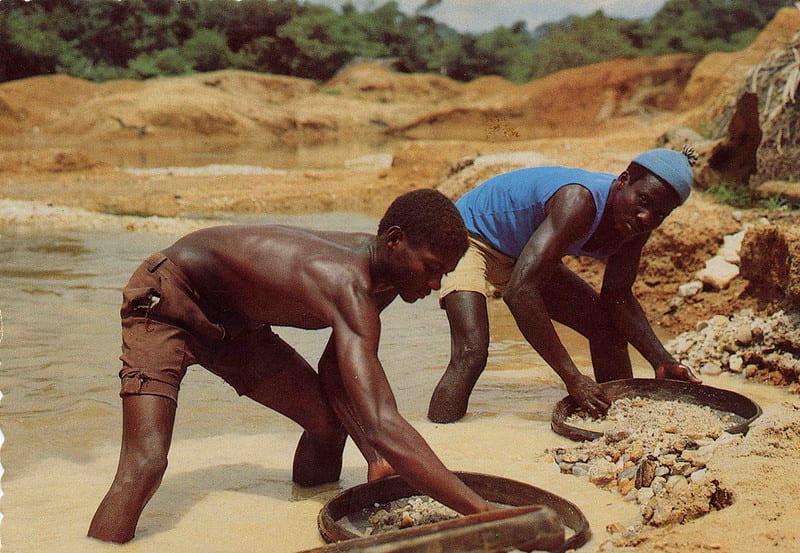
Blood Diamonds. Source: Brian Harrington Spier, Creative Commons.
While I do not soon foresee a diamond in my future, I have been able to witness the happiness a diamond ring brings to the lives of other people. A diamond ring represents love and commitment, and nothing can be purer than that. Imagine my surprise when I learned in my economics class that a significant number of diamonds, called blood or conflict diamonds, can be linked to horrific suffering and bloodshed. A good number of these conflict diamonds can be traced back to one company: De Beers.
De Beers diamond company was founded in the 1800s by Cecil Rhodes in South Africa. Before 2000, the goal of De Beers was to effectively and efficiently buy as much of the world’s supply of diamonds as possible so as to be able to determine the price and guarantee price stability. This tactic earned the company the nickname “the custodian” of the diamond industry. In 2000, De Beers controlled around 65 percent of all diamond production, while in 2001 De Beers marketed two-thirds of all the rough diamonds in the world and produced nearly half of the world’s supply of diamonds from their mine. The company employed strategic marketing tactics to maintain their power and growth worldwide, effectively influencing the perception of diamonds to what it is today. For example, the phrase, “A Diamond is Forever,” was coined in a De Beers ad campaign. De Beers influenced the choice of a diamond as the centerpiece for an engagement ring and even the price of the ring to be two months’ salary. The Washington Postdescribed De Beers as “a global cartel controlling mining, distribution, and pricing.”
For a company that produces a product to signify love, such as an engagement ring, De Beers has left a significant amount of bloodshed and controversy in its wake. The company has been banned from operating or selling inside the United States borders since 1996 over a price-fixing case. In the 1990s, De Beers bought billions of dollars’ worth of diamonds from conflict ridden areas in Africa, which in turn provided the means for rebel groups to obtain weapons and supplies on the black market. In the mid to late 1900s, De Beers benefited from the South African apartheid because the system of black repression ensured cheap labor for the mines, protecting the company from being hurt by the diamond boycotts sweeping the world at that time. The company became scorned as more and more information regarding conflict diamonds and De Beers’ blatant disregard for the harm conflict diamonds can cause became public.
Rings. Source: ilovebutter, Creative Commons.
The definition of conflict diamonds, as written by the United Nations, is as follows: “diamonds that originate from areas controlled by forces or factions opposed to legitimate and internationally recognized governments, and are used to fund military action in opposition to those governments, or in contravention of the decisions of the Security Council.” Armed groups use the revenue from exploiting diamond mines and diamond workers to fund their personal agendas. Despite the diamond business being an $81.4 billion a year industry, the towns that house the diamond mines do not reflect the wealth that lies below. Many parents choose to send their children to work in the diamond mines in order to earn a meager salary, determined on a diamond-by-diamond basis, instead of sending the children to school. The difficulty that evolves from attempting to eliminate conflict diamonds is that the diamonds traded by rebel groups are physically indistinguishable from the diamonds traded by legitimate groups. Because of the long process a diamond goes through before it reaches the jeweler, it is very difficult to determine the original source of the diamond.
In 2000, De Beers put out a statement guaranteeing that their diamonds did not originate from conflict zones in Africa and promised that their purchasing of diamonds did not fuel any conflicts in Angola and Congo. The statement was met with mixed reviews, some welcoming the initiative the company was taking, and some believing that De Beers would be unable to control the smuggling system that crisscrosses across the continent of Africa. Since the initial statement in 2000, De Beers’ statements have been very contradictory, stating at one point that it would be easy to find the origin of the diamonds and yet continually releasing statements saying that it is impossible to distinguish the origin of the diamonds that they buy. Since 2000, some independent diamond dealers have not only claimed to sell diamond bunches that they bought from rebel groups to De Beers, but also that De Beers was aware of the origin of the diamonds. Currently on their website, De Beers boasts that 100% of their diamonds are conflict free. However, the company only cites the Kimberley Process, a process they helped to create, in regards to this certification.
De Beers’ promises have rested on determining the origin of the diamonds. It has already been stated but is worth reiterating that determining the origin of diamonds has been much disputed as diamonds are handled in groups, making the process of discovering the origin of a diamond very difficult. In 2003, a process named the Kimberley Process was established by the main actors in the diamond industry, including De Beers. The Kimberley Process is so named for the town where De Beers diamond company was founded, highlighting the influence the company had in the establishment of the process. It is an international certification process with the goal of distinguishing conflict-free diamonds from those diamonds associated with a conflict. The Process was created from a meeting in 2000 in Kimberley, South Africa, where the biggest diamond producers and buyers in the world met to address the growing threat of a consumer boycott. Consumers were becoming more aware of the influence the sale of diamonds had in funding to civil wars in Angola and Sierra Leone and were threatening to forgo buying diamonds all together. In 2003, 52 governments and international advocacy groups ratified the Process, creating a system of certifications issued by the country of origin that must accompany any shipment of diamonds. If a country was unable to prove that their diamonds were separate from any conflict, said country could be cast out of the international diamond trade. The Process did marginally reduce the number of conflict diamonds in the market, but the process is ridden with loopholes. It is unable to stop the international sale of the majority of diamonds mined in conflict ridden zones and diamond mining even outside of a conflict zone is terrible work with many of the miners being school-aged minors.
World’s Largest Diamond Mine. Source: Soundog, Creative Commons.
Many argue that the Kimberley Process is not only laced with loopholes, but it also does not go far enough. For example, the Process does not disqualify diamonds mined in an area with human rights abuses. Also, the definition of conflict used in the creation of the Process is so narrow that it excludes many situations that would generally be considered a conflict. The definition used is, “gemstones sold to fund a rebel movement attempting to overthrow the state.” An instance where the definition stated in the Kimberley Process failed occurred in 2008. The army of the government of Zimbabwe seized a diamond mine within Zimbabwe’s borders and proceeded to kill and rape hundreds of miners. Because the army represented a legitimate government, this instance is not considered to be against the Kimberley Process. The Kimberley Process did implement a ban on the Central African Republic when it was discovered that the mining of diamonds helped to fund a genocide of thousands since 2013. However, the UN estimates that $24 million worth of diamonds have been smuggled out of the country since the ban.
While a true fair-trade system would ban diamonds mined in a conflict ridden area and allow consumers to purchase diamonds that could improve the life of artisan workers, ultimately there is no way of truly knowing whether the diamond you buy is in somehow linked to a conflict. The Human Rights Watch has come up with a list of strategies that may help diamond companies fulfill their obligation of “identifying, preventing, mitigating, and accounting for their own impact on human rights throughout their supply chain.” Such strategies include: 1. Establishing a policy regarding the supply chain that is included in the contracts with suppliers 2. Creating a ‘chain of custody’ by requiring documentation for each step along the supply chain 3. Assessing thoroughly and respond promptly to human rights risks at all stages of the supply chain 4. Employing independent, third-party examiners 5. Becoming public with the names of suppliers 6. Sourcing responsibly and being wary of large-scale mining operations. The diamond industry has a long way to go but with established organizations calling out companies like De Beers, loopholes in certification processes can be closed and ultimately conflict diamonds may be eliminated.
Abstract at a Red Light. James Loesch. Creative Commons for Flickr.
Different human rights groups support or have called for the decriminalization of sex work. Some of which include Amnesty International, World Health Organization, UNAIDS, International Labour Organization, the Global Alliance Against Trafficking in Women, the Global Network of Sex Work Projects, the Global Commission on HIV and the Law, Human Rights Watch, the Open Society Foundations, and Anti-Slavery International.
Picking on one, the Human Rights Watch supports the full decriminalization of consensual adult sex work in support and defense of human rights relating to personal autonomy and privacy as, “A government should not be telling consenting adults whom they can have sexual relations with and on what terms.” Joining 61 other organizations, they recently advocated for a bill that would decriminalize sex work in Washington, DC. This Community Safety and Health Amendment Act intends to repeal statutes that criminalize adults who voluntarily and consensually engage in sexual exchange, while it upholds and defends the legislature which prohibits sex trafficking. The HRW affirms that adult consensual sexual activity may be covered by the concept of privacy, rejecting the idea that criminalization was a protective measure against HIV and STIs, and conveying that it was more likely to drive a vulnerable population underground.
However, the demands of these organizations and supporters of sex workers have surfaced controversy around sexuality, health, economics, and morality. Often the idea of sex work may be tied to or conflated with sex trafficking, child sex abuse, and rape. Open Society Foundation simply defines sex workers as “adults who receive money or goods in exchange for consensual sexual services or erotic performances, either regularly or occasionally.” Sex work encompasses a wide range of professions and activities which include the trade of some form of sexual activity, performance, or service for a client to a number of fans for some kind of payment (including prostitution, pornography, stripping, and other forms of commercial sex). It is clearly separated from those services that utilize “the threat or use of force, abduction, deception, or other forms of coercion for the purpose of exploitation”. Decriminalizing sex work would call for the “removal of criminal and administrative penalties that apply specifically to sex work, creating an enabling environment for sex workers’ health and safety.” Amnesty International expands on these definitions in this report.
Many members of society view sex work as immoral or degrading to women, arguing that sex work is inherently exploitative of women, even if these workers find it profitable or empowering- even simply as the power to creatively express one’s sexuality. When we think of sex workers, we tend to assume they were forced into it or assume a desperate narrative with no other options. Then, maybe, we judge their appearance while tying it to their worth or a fantasized idea of sex workers opposed to the ordinariness we associate with other professions and community members. A simple argument says that, like any profession, there are extremely different motivations to pursue these professions and, in the end, it’s a job or choice of work with its own pros and cons for each lifestyle (affording many lifestyles). Also, anyone and any personality can be a sex worker.
People enter and remain in this work for a multitude of reasons creating each individual experience of sex work; however, many face the same response and abuse in the workplace or trade. Owning to the stigma associated with the profession, not many can come out and say they are a sex worker. They must fight to be recognized beyond the stigma or continue to repress or hide their daily lives from their community or society. Sex workers report extreme violence and harassment from clients, managers, police and society and even more cannot report these violences, facing incrimination or even incarceration. Ironically, laws on sex work undermine governments’ own efforts to reduce high rates of violence against women and reduce rates of HIV infection in sex worker populations.
Repressive policing not only further marginalizes sex workers as a whole, but it also reinforces what it promises to remove as it exposes sex workers to different abuses and exploitation by police or law enforcement officials who may arrest, harass, physically or verbally abuse, extort bribes and sexual services, or deny protection to sex workers avoiding the eyes of the law. Some sex work may be illegal because it is viewed as immoral and degrading, but people governed by these laws do not share the same moral beliefs. As police fail to act on sex workers’ reports of crimes, or blame and arrest sex workers themselves, offenders may operate with impunity while sex workers are discouraged from reporting to the police in the future. Then there is the financial toll of criminalization as repeating fines or arrests push some further into poverty. People may be forced to keep selling sex as potential employers will not hire those with a criminal record. Also, if the need for money found some sex workers in the streets, how will fines deter the work?
The work entails forming relationships with a wide range of clients at different levels of intimacy. Unfortunately, sex work offers comfort to predators, or those who mean harm, who also understand and exploit the workers paralleling relationship with police. Working in isolation, workers’ lives are threatened as they avoid the police and are denied these protections in their workplace and, off the hook, predators continue to harm more even those outside of the sex trade. Facing arrest or prosecution themselves, any client may protect themselves from blocked numbers leaving workers in the dark with no evidence of whom they are dealing with, surrendering that safety. Some laws advocate helping sex workers by removing the option of work as it criminalizes only those who buy sex. Now, to incentivize clients and income, workers may be forced to drop prices, offer more risky services, or reach out to potentially abusive third-party management.
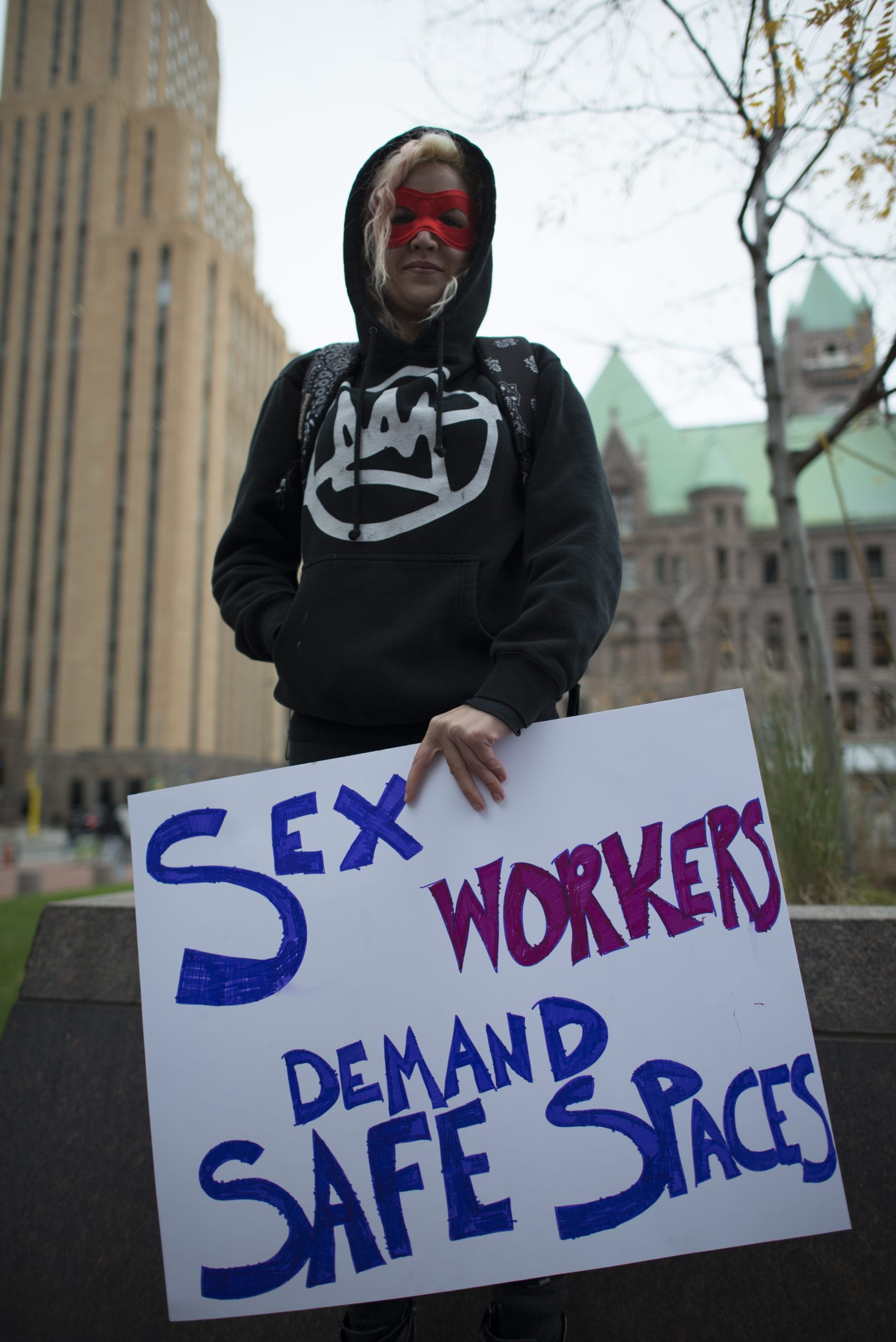
Sex Workers Demand Safe Spaces. Fibonacci Blue. Creative Commons for Flckr.
Decriminalizing and regulating the work of sex workers would allow them the right to choose their clients and negotiating power or power to cease the service when they feel uncomfortable or unsafe. Criminalization, or the threat of it, complicates and weakens workers’ power to negotiate terms with their clients or collaborate with others for safety. So, for example, it may increase the chance for workers to engage in sex with clients without a condom (which may be used as evidence of the crime). Although variable in different contexts, in low and middle-income countries on average, sex workers are 13 times more at risk of HIV, compared to women of reproductive age (age 15 to 49), so their ability to negotiate condom use is important.
In order to be protected from exploitation by third party managers and dangerous clients, to be informed on sexual transmitted infection and other health concerns or vulnerabilities, to be able to unionize and self-manage, and to be able to reach out to law enforcement, sex work should be regulated by the same occupational safety and health regulations that benefit workers in other labor industries. Dedicated efforts must consider the elevated or unique risks, vulnerabilities, and intersectional stigmas surrounding different sex workers, including men, transgender, and other gender identities and portions to improve health outcomes and human rights. Wider political actions are needed to address inequalities, stigma, and exclusion or marginalization that sex workers face even past the criminal justice system to health, housing, employment, education, domestic abuses, etc.
We are faced with opposing or contradictory narratives of the sex work experience, but we have chosen some to represent the entire concept especially those tailored to our own feelings of sex and commerce without concern or consideration of those even more immediately affected. The conversation of sex work needs to open up to understand and share the message to all that the labor itself is the commodity, not the laborer and it requires workers more considerate rights and regulations. If sex work is legally accepted with due rights and respect, it can become something that benefits- even especially vulnerable or marginalized- women and humanity.
UAB is an Equal Employment/Equal Educational Opportunity Institution dedicated to providing equal opportunities and equal access to all individuals regardless of race, color, religion, ethnic or national origin, sex (including pregnancy), genetic information, age, disability, religion, and veteran’s status. As required by Title IX, UAB prohibits sex discrimination in any education program or activity that it operates. Individuals may report concerns or questions to UAB’s Assistant Vice President and Senior Title IX Coordinator. The Title IX notice of nondiscrimination is located at uab.edu/titleix.