The Viral Intersection of Sex Trafficking and #SaveTheChildren

by Sumaira Quraishi

The first images that come to mind when you hear the words “human trafficking” usually include ones from popular media where the victims, typically young and wealthy individuals, are miraculously saved soon after they go missing by well-connected family members in action-packed scenes. Often, the savior is glamorized, and the victim is portrayed as an Icarus-like figure who flew too close to the sun and fell to their demise by being prideful and overexcited. This representation of human trafficking victims is wholly inaccurate in that anyone of any race, gender, ethnicity, or socioeconomic background can end up being trafficked against their will and a quick rescue is challenging to come by.
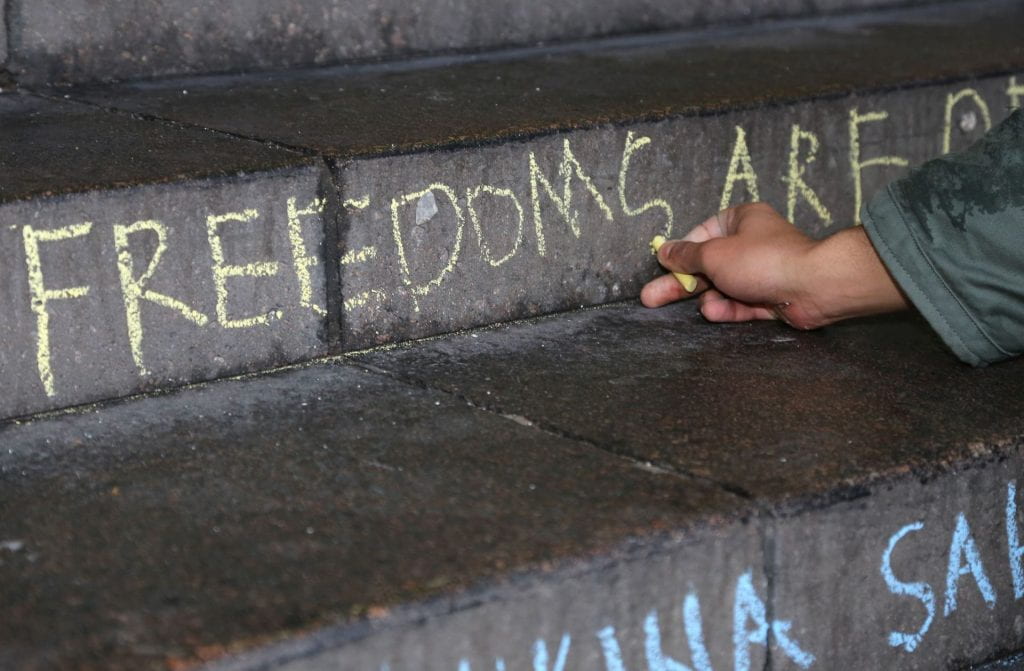
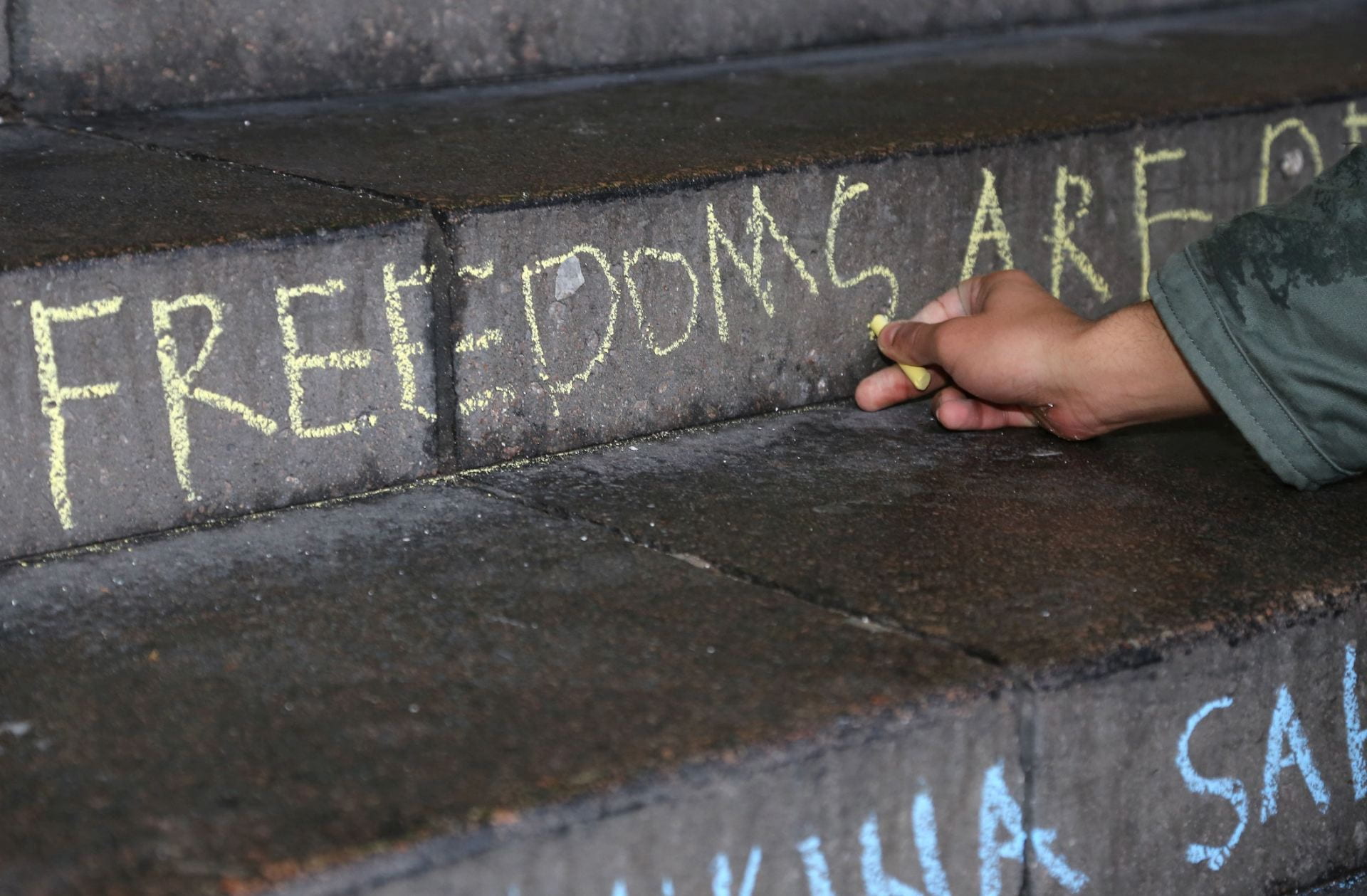
Image shows a person writing the word freedoms using chalk on a concrete staircase.
Chalking the Universal Declaration of Human Rights 2015. Source: University of Essex, Creative Commons.

What is Human Trafficking and Why Should You Care

According to the United States Department of Homeland security, “human trafficking involves the use of force, fraud, or coercion to obtain some type of labor or commercial sex act.” The act of being trafficked is complex, with many illicit systems in place to ensure trafficked people remain shackled, silent, and subservient. Although there are many misconceptions about the process of trafficking a human being such as the thought that people are kidnapped against their will and always take opportunities to escape when presented with one, these beliefs are not based in fact. Victims are sometimes coerced by human traffickers or slave traders through violent actions, manipulative tactics, false pretenses, and fake relationships. These situations leave individuals feeling trapped with their captors and they may not feel like anyone can help them. Unlike the romanticized portrayals of rescues from drug dens and slave auctions found in movies, the struggles of people who have had their liberty forcibly taken away are not so easy to resolve by arresting one key individual who runs an entire illegal enterprise, thereby leaving a collapsing system from the top-down. 

The violation of a person’s right to liberty and the trauma they face while in forced labor or sex trafficking environments are not the only dangers of human trafficking. The United States Department of State outlines multiple ways human trafficking harms not just those who are trafficked, but the nation as a whole in the following ways: human trafficking is a national security risk, it interferes with global markets, and it funnels currency into the hands of criminals. The perception of human trafficking being something that is not the general population’s problem until and unless it comes knocking on your doorstep leaves you vulnerable to manipulation, just like the millions who were manipulated into believing a QAnon trafficking conspiracy theory in July of 2020.
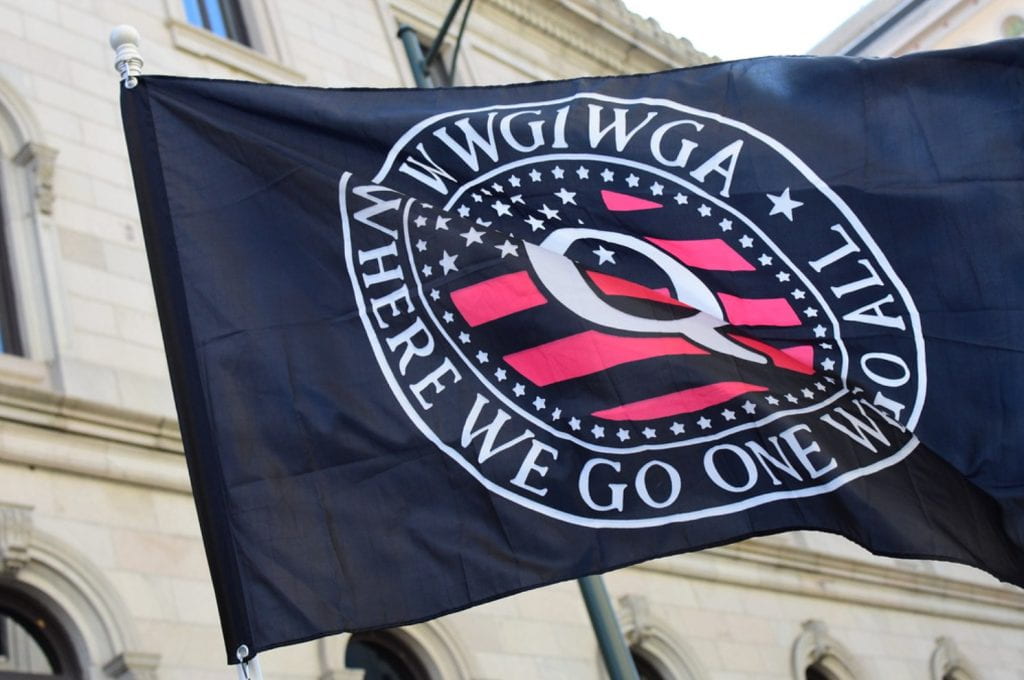
Image shows the flag of conspiracy theorist group QAnon flying in the wind in front of a building.
QAnon at Virginia 2nd Amendment Rally (2020 Jan). Source: Anthony Crider, Creative Commons.

Misinformation and Misunderstandings

A distorted view of human trafficking and the lack of knowledge about how people are controlled by human traffickers led to social media outcry from people around the world when #SaveTheChildren began trending in early July of 2022. Internet users on all platforms from Facebook to Reddit to Instagram and Twitter began rallying against Wayfair for allegedly allowing human traffickers to sell kidnapped children disguised as cabinet and pillow listings on the Wayfair website. To start, the entire affair was part of a conspiracy theory perpetuated by the QAnon conspiracy group that was made viral via an internet user who tweeted a screenshot of expensive storage cabinets with non-generic female names like “Alyvia Storage Cabinet” under the pseudonym Amazing Polly in June of 2020. Polly’s tweet was then circulated by QAnon, of which she is a member, and soon gained traction outside of the far-right political group, trending on social media platforms the following month after the initial tweet was posted.

On the surface, rapid dissemination of information about a supposed human trafficking front is a good thing, however, in this case, the trafficking front allegation turned out to be false on all counts, but by the time the investigation was over, misinformation had been flooding the timelines of millions of people for days. People rallied against Wayfair and demanded justice for the children whose names appeared on listings, leading to an upset of many lives overnight since some of the “missing” children had been at home recovering for months, or years, leaving them living in fear as they watched their personal information circulating online. In this case, well-intentioned public outcry overtaxed Polaris, the nonprofit in charge of the National Human Trafficking Hotline that connects victims of human trafficking to support resources in America, and made it difficult for the organization to help real victims in need. 

Trending stories that go through the social media cycle and lose coverage once they are deemed unmarketable make it hard to trust what you see online, especially if delivered by what you believe are reliable sources and individuals. Knowing what to believe and when to be skeptical is essential to protect yourself from having the wool pulled over your eyes, making you lose sight of any hidden agendas that may be pushed through viral stories. In actuality, the children in the Wayfair listings had their names chosen by an algorithm to differentiate industrial products, and a glitch led to surges in the prices of some pillows. 

Spotting A Fake Story

While it is disheartening to not have the truth of the Wayfair matter broadcasted as far and wide as misinformation about the case was, leaving many people still believing in a lie, there are almost 25 million victims of human trafficking in the world at any given moment who have been ripped away from any possibility of normal life and may never escape their new, harrowing situation. Traffickers profit from this exploitation of individuals, whether it be sex trafficking, forced labor, or the sale of people to others. Human trafficking may seem like an issue so far out of sight to the everyday person living comfortably in a wealthy country, but the reality is human trafficking could be happening to anyone anywhere in the world. Human traffickers don’t solely target subpopulations shunned by traditional politics, and everyone should remain aware of this danger. The lives of the children whose pictures were circulated around the world during the Wayfair scandal had their lives overturned by well-meaning people who didn’t look closely enough at facts and ended up buying into fiction, taking away dozens of people’s sense of safety and leaving them vulnerable to harm.
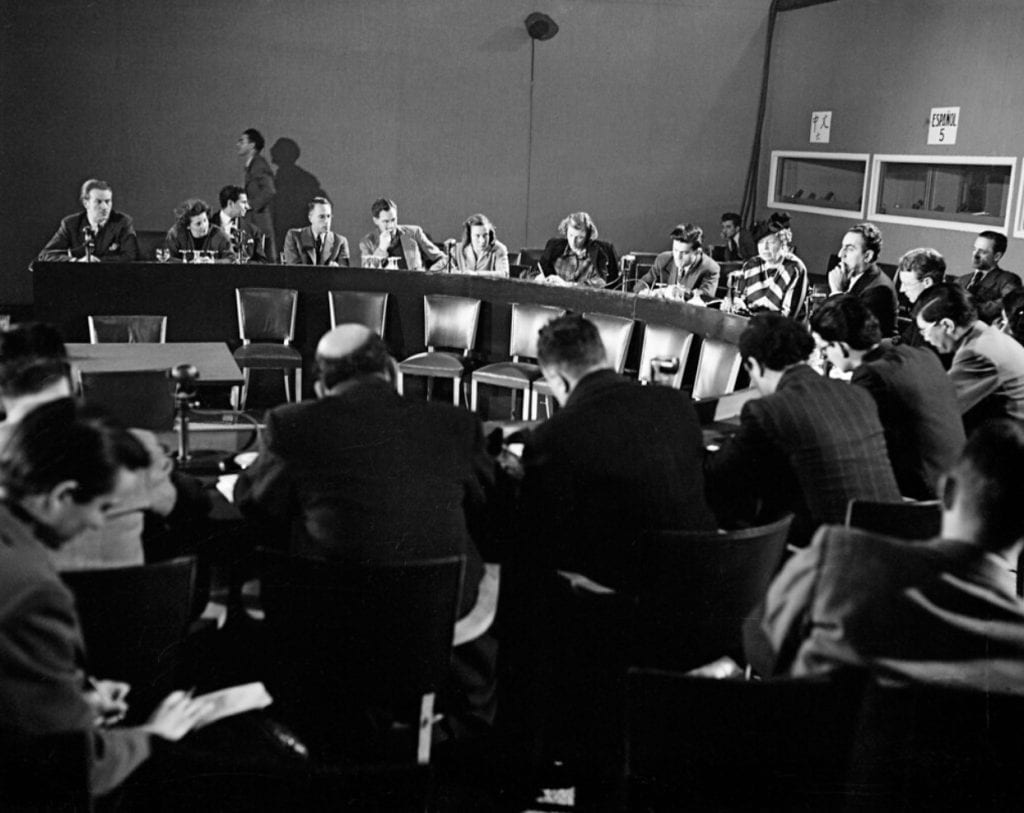
Image shows a black-and-white photograph of a press conference with people sitting around a circular table.
Press Conference on Declaration of Human Rights. Source: United Nations Photo, Creative Commons.

It can seem hopeless to think about how you could help a victim of human trafficking who might seem out of reach, but what we can learn from the Wayfair event is to keep in mind that you should always look for facts and not take frenzy-inducing headlines at face value. Remaining questioning until presented with concrete evidence will help limit the spread of misinformation and save resources from being wasted on fake breaking news stories.

If you want more information on how human rights are defined and protected, the Universal Declaration of Human Rights was created at a United Nations assembly in 1948 to outline globally recognized rights and is a great starting point on the topic.
Mental Health in Graduate and Professional Schools

Recently, I sat and had conversations with fellow peers in graduate programs and professional schools ranging from subjects such as Master of Art Education to Medical School and Graduate studies in Nonprofit Management. We talked about mental health resources and access within their schools and professors. Our conversations ranged tremendously, with some saying they are provided with resources and time off if stressed, to some feeling like they are not seen or cared for within their programs but are cared for by their professors. With the immense pressure of graduate and professional schools, students tend to go through many life changes that have had effects on their mental health. Graduate programs and professional schools contain an intense climate and harbor a strong need to succeed. With the stress, long hours studying, and a lost balance of life, many students do not feel that they are provided with the proper mental health resources. Mental health is typically overlooked or not given as much importance when considering human rights. The right to mental health is just as important as any other human right and has increased importance at the Human Rights Council. The balance between studies, life, work, and outside obligations, takes a toll on any individual. Ensuring that every person has access to free or affordable mental health services has been a goal for human rights advocates and organizations. The UNHCR notes that the right to health includes mental health.

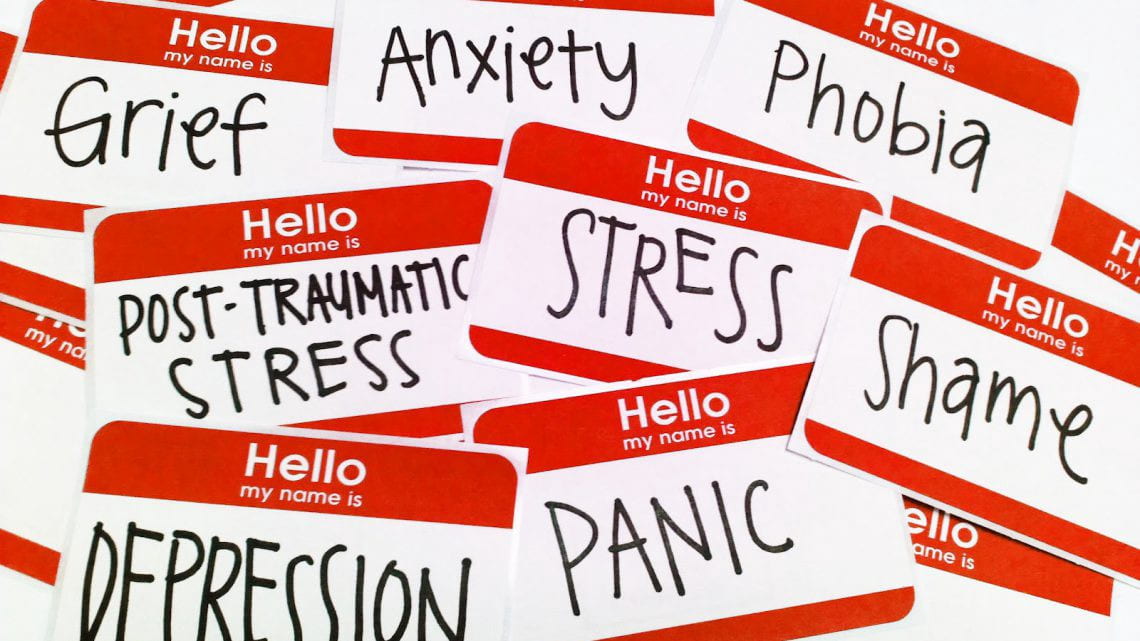
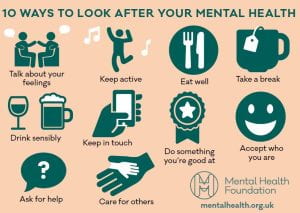
Yahoo Images, Looking after Mental Health

Mental Health in Graduate School

A study done by Harvard found that students within graduate schools are three times more likely to experience mental health struggles than an average individual. The study conducted a survey of over 500 students in graduate programs and found that in every 10 students, one had suicidal thoughts over a two-week period. With the constant stress and studying, graduate students begin to develop depression and anxiety. The environment of graduate schools differs immensely when compared to the undergraduate level. Rather than having to attend class and prepare for exams, they spend their entire time—often 2-6 years—dedicated to a research project. Typically, 60 hours per week is spent preparing and studying research.

Many factors and challenges aid in stress for graduate students: poor mentorship, lack of access to counseling services, lack of training, and leave-of-absence policies. The list can go on and on about the challenges faced by graduate students. In addition, the biggest factor I found is the academic mindset. There is an embedded mindset within professional studies that a failure is never an option. Every student tries to be the best, the smartest, and the most achieved. This leads to many bad outcomes; a 2019 survey of Ph.D. students found that 76% of students work more than 40 hours a week on their research and projects and cannot attain a work-life balance. They have no room to take a breath or a break. As noted by a student, they said, “if you slack, you are out.”


Yahoo Images, Students studying

 Mental Health in Professional Schools

Studying to become a doctor, lawyer, dentist, etc., carries immense stress. Students within professional schools dedicate their entire lives to a program in the hope of getting their dream careers. But the process of getting into professional school and finally being accepted to study all have factors that can deter one’s mental health. Within law school, it has been found that depression rates have increased from 10% to 40% among students. 96% of law students and 70% of medical students face significant stress. Factors that have been found ranging from loneliness, rejection, alcohol and substance abuse, academic performance, anxiety, depression, peer pressure, and the list can go on and on. There is constant stress and worry about entering the professional field. If one gets a good score on their exam, that determines the path of their career. While in professional school, the worry of not being the smartest, being able to handle the stress, or burn out. Although the studies and information are stressful, and the process of becoming a doctor or lawyer does contain high stakes, there still needs to be a fixation on acknowledging mental health. Many students are extremely gifted but get slowed down and begin facing challenges due to mental health neglect.

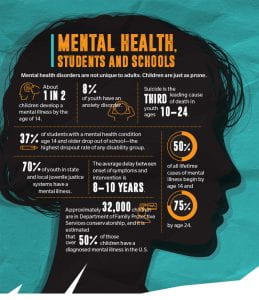
Yahoo Images, Mental health; students and schools

Where to Go from Here

It is very important for every institution and university to have the proper mental health resources; it is just as important to make sure these resources are constantly being worked on and evolved over time. The stigma and thought that students must be overworked and can’t take breaks must be removed. Within higher studies, a work-life balance must be implemented to ensure every student is learning and working at their highest potential. Over time, there have been drastic improvements in mental health awareness worldwide, but that is just a starting point. Mental health resources and accessibility must be a requirement within all universities and institutions. Below are resources for students and professionals to maintain and implement positive mental health practices.

Yahoo Images, Mental Health

For students at UAB:

UAB has a Student Counseling Service that provides mental health services, prevention, and outreach. The services include counseling and emergency support. Resources can be found here.

Guide to mental health practices in graduate/professional schools: https://www.apadivisions.org/division-6/publications/newsletters/neuroscientist/2019/07/grad-school-healthy

Managing Mental Health: https://www.nature.com/articles/d41586-021-01751-z

Books on mental health practices: https://www.healthline.com/health/mental-health/mental-health-books

The Implications of an Abusive Command Economy on the Rural People of North Korea

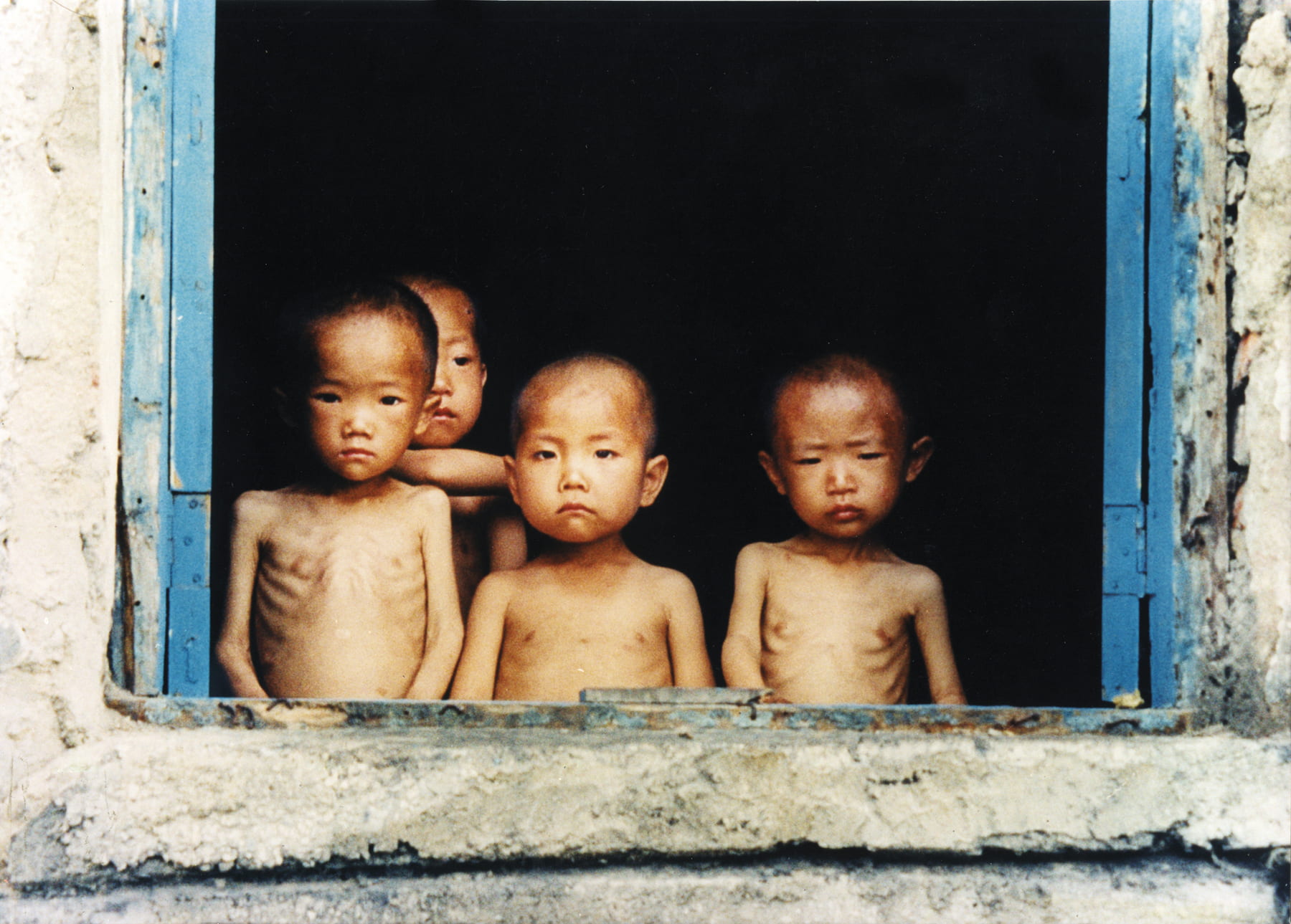
Four young Korean children stare sorrowfully through an open window with blue doors. Their ribs are visible and their arms are skinny.
Malnutrition in childhood leads to long-term physical and cognitive health effects. By limiting resources to impoverished communities, the DPRK holds control over the bodies and minds of these people. Source: Yahoo! Images

Note from the author: This post is the first of my four-part series on the North Korean Regime. To find the other parts, scroll down and click “View all posts by A. Price.” If the other parts are not available yet, check back in during the upcoming weeks when they will be posted.

Content Warnings: mass financial abuse, famine, malnutrition, dehumanization, classism, starvation


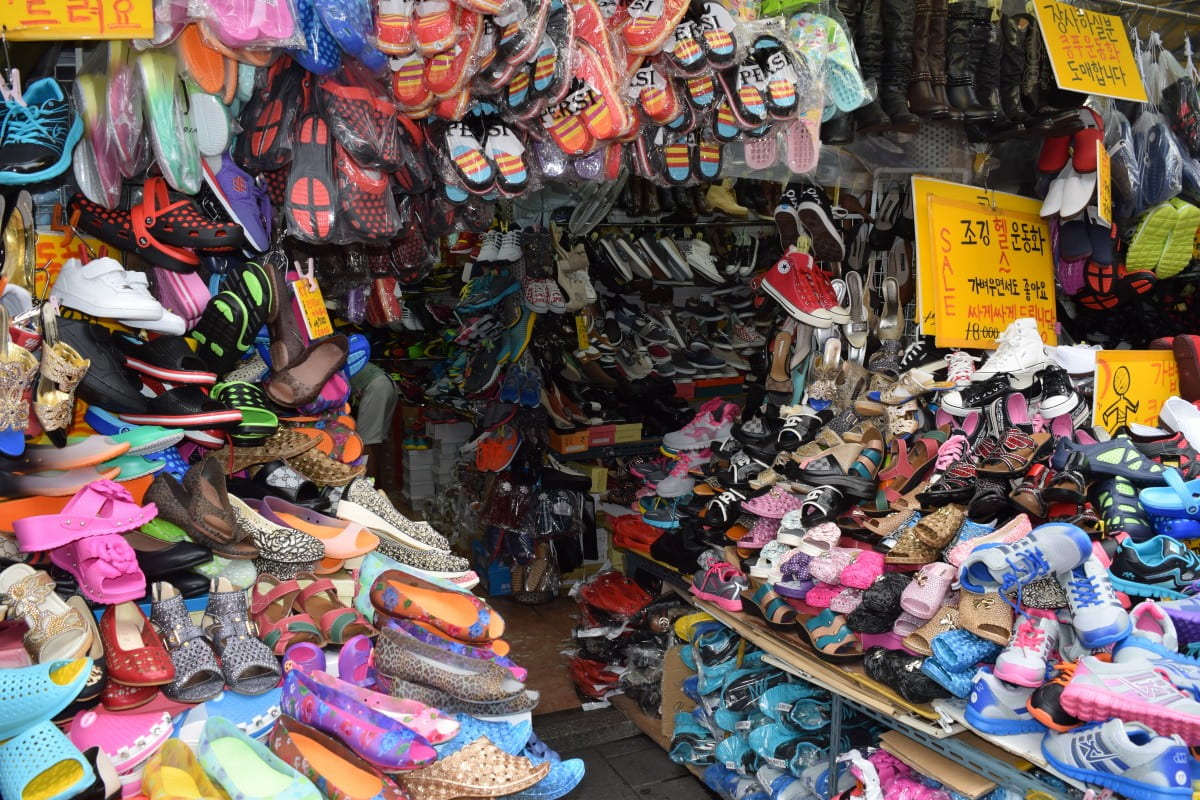
Imagine grocery shopping for your family, and instead of finding a variety of food choices, you find a store filled with a surplus of children’s socks, different colored hats, and beach toys even though you live nowhere near the coast. The only food you can find in the store is a few loaves of moldy bread, a small produce section filled with rotting vegetables, and a frozen section with freezer-burned packaged meat. The best you can do is buy a bag full of rotting vegetables and plant them in the ground behind your house, careful not to be caught doing so by the police. The soil you remember being rich with vitamins has turned to gray dust, and everything you plant dies before sprouting. Your family will live off the rotting leftovers from last week’s grocery trip until you can scrounge together enough scraps to make it through. You know that your neighbor has a secret garden that does moderately well, so you sneak over to offer her what’s left of your money in exchange for a few vegetables. If the police catch you exchanging goods, you and your neighbor will be charged for participating in a free market, thrown in a prison camp without a fair trial, and held for an unregulated amount of time. 

The only media you’ve ever seen tells stories of a utopia; the Kim family is sent from heaven to make the Democratic People’s Republic of Korea (DPRK), also known as North Korea, the most wonderful place to live. They tell you that people in other countries, like South Korea and the United States, live under terrible governments who do not care for them the way the Kim family cares for you. In the end, you have no reason not to believe them. You have never seen the conditions of other countries and any criticism of your regime has been consistently disputed throughout your entire life. The stark reality of your consistent mistreatment exists in a dichotomy with the ideals that you have been brainwashed to believe to be true. 

Approximately 20 million rural North Koreans live in this reality…

Songbun

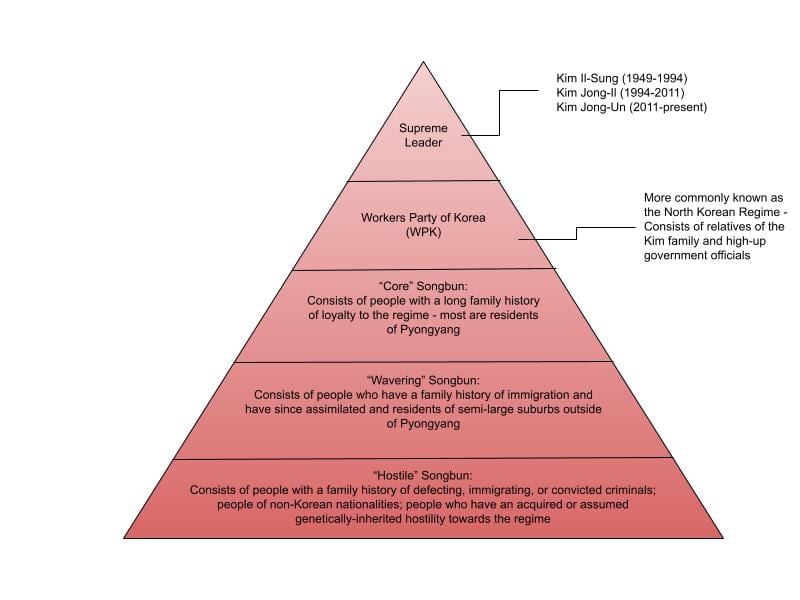
The class system of North Korea is called Songbun. At birth, each North Korean citizen is labeled as core, wavering, or hostile based on their place of birth, status, and the national origin of their ancestors. For example, a person whose ancestors immigrated from South to North Korea will be given a low Songbun and be assumed to have genetically inherited hostility towards the government. One’s Songbun can never be changed, as it determines every aspect of one’s life including how resources will be allocated to your community and how much mobility you will have throughout the state.

A pyramid chart with five horizontal sections. It is a gradient from white at the top to red at the bottom. The top section is labeled, “Supreme Leader: Kim Il-Sung (1949-1994) / Kim Jong-Il (1994-2011) / Kim Jong-Un (2011-present)” The next section is labeled, “Workers Party of Korea (WPK): More commonly known as the North Korean Regime - Consists of relatives of the Kim family and high-up government officials” The third section is labeled, “‘Core’ Songbun: Consists of people with a long family history of loyalty to the regime - most are residents of Pyongyang” The fourth section is labeled, ““Wavering” Songbun: Consists of people who have a family history of immigration and have since assimilated and residents of semi-large suburbs outside of Pyongyang” The bottom section is labeled, ““Hostile” Songbun: Consists of people with a family history of defecting, immigrating, or convicted criminals; people of non-Korean nationalities; people who have an acquired or assumed genetically-inherited hostility towards the regime”
The Hierarchy of the DPRK. Source: Diagram made by author.

The Command Economy

The Workers Party of Korea (WPK), more commonly known as the North Korean Regime, holds tight control over the command economy and uses it to abuse all people of low Songbun, specifically those who live outside the capital, Pyongyang. Instead of ordering the production of valuable goods like food and home maintenance products for their communities, they overproduce menial things, like children’s socks and beach toys. Many do not have the mobility to go to a neighboring town for resources, and as I will expand on later, many believe that they deserve to starve if they are not entirely self-sufficient.

This economic system has the dual effect of limiting opportunities to participate in the job market. People are not allowed to sell products unless they are commanded to do so by the WPK. Because the WPK is not tasked to create job opportunities for rural people, these people have no opportunity to make money, which only exacerbates the problem of reduced resources.

Lots of brightly colored shoes are piled onto shelves and hanging from the walls and ceilings in a Korean store. There are yellow signs with red and black text in Korean
The overproduction of menial things at the expense of food and necessities. Source: Yahoo! Images

The March of Suffering

The culture that encourages the idea of “suffering for the greater good” is called juche. Juche is the Korean term for the culture of self-sufficiency. It is an idea that is pushed hard into the minds of all North Koreans. Asking for help, depending on friends or family, or participating in a small-scale economy of goods with your neighbors makes you an inherently weak person because you are expected to work harder instead of “begging”. This idea is so ingrained in the minds of North Koreans that they will accept immense abuse from higher-ups at the expense of asking for help or demanding rights.

Starting in 1990, a great famine swept the nation under the rule of Kim Il-Sung. He coined the term “The March of Suffering” to refer to the famine. Using this name, he convinced those who took the hardest hit, the rural people of low Songbun, that they were doing the most honorable thing for their country by suffering in this famine. They were dying for it. Kim Il-Sung glorified their suffering by convincing them that not only did they deserve it (juche), but that their suffering was contributing to the greater good of the country. He had such control over the minds of these people that they loyally followed him straight to their graves. 

Handled correctly, this famine could have lasted no longer than a year, and would not have become nearly as severe as it has. Instead, estimates from Crossing Borders suggest that between 240,000 and 3.5 million people have died in the DPRK from malnutrition since 1990.* The famine has outlived not only Kim Il-Sung but also his predecessor Kim Jong-Il. 

*The reason for such a wide range of statistics is that collecting accurate data in North Korea is virtually impossible. I expand on the use of outside media control in the second part of this series titled, “How the North Korean Regime Uses Cult-Like Tactics to Maintain Power.”

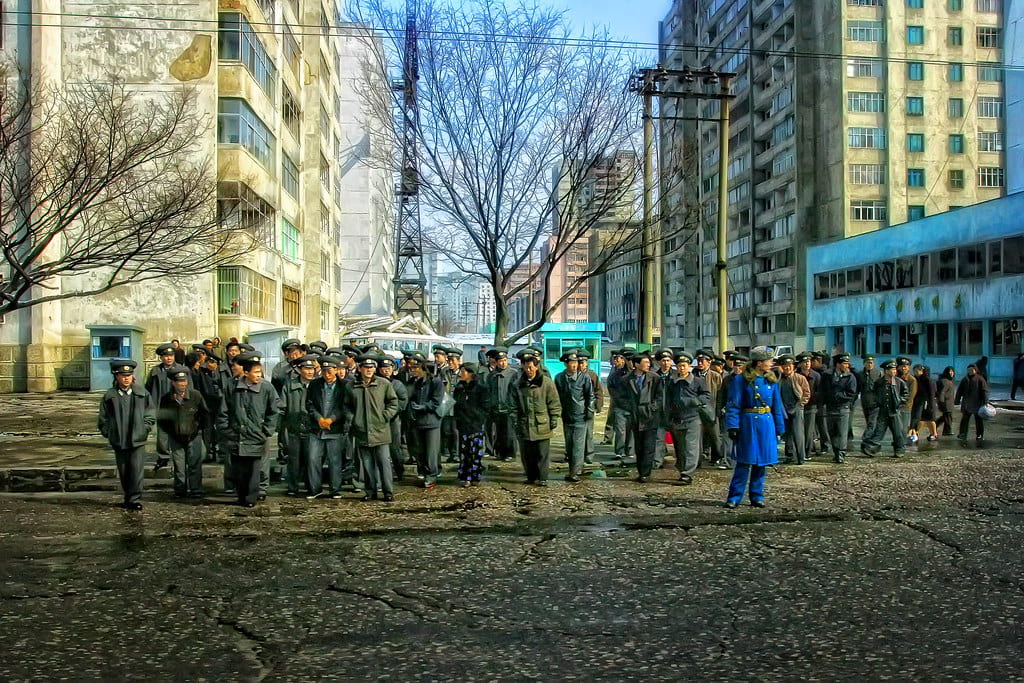
The camera is facing down a building-lined street. The buildings are neutral colors and appear old. There are two trees with no leaves. There is a group of people all wearing the same dark green/blue clothing. One person is dressed in bright blue and standing in the middle of the street.
Even in Pyongyang, vibrant colors are rare. The buildings are drab and dull, the trees are dead, and people dress monochromatically and uniformly. The person in bright blue serves as a traffic director. Source: Flickr

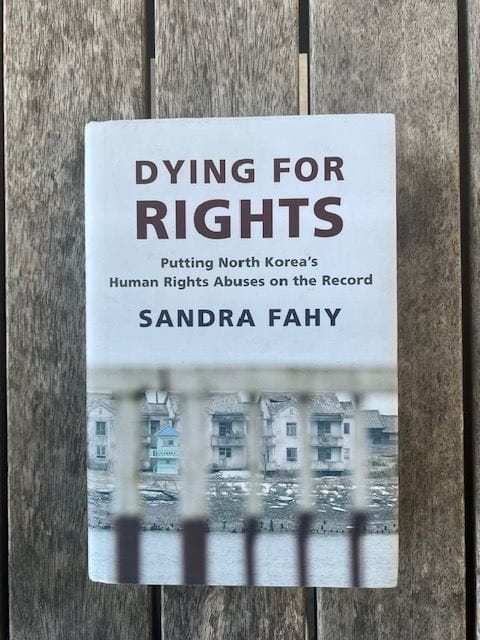
Suppose the topic of North Korea is interesting to you and you want to work towards clearing up the fog surrounding the nation. In that case, I highly recommend Dying for Rights: Putting North Korea’s Human Rights Abuses on the Record by Sandra Fahy. This book is very informative and one of the only easily accessible, comprehensive accounts of North Korean human rights. It is where I learned most of what I know about the DPRK. It set the baseline on which I built my entire comprehensive understanding of the social systems at play. 

The cover of Sandra Fahy’s book. The picture on the cover is taken through a fence in North Korea. The camera’s focus is on the background, making the fence of the foreground very blurry. The view of the fence consists of a top white metal bar and five vertical bars that are red and white. In the background, which is in focus, we look over a small body of water to see a few densely packed and desolate-looking houses. The grass and trees out front are dead. There is snow on the ground. The sand is rocky and gray. There is one bright blue structure that looks like a child’s playhouse starkly contrasting its desolate surroundings. Above the fence, text reads, “Dying for Rights: Putting North Korea’s Human Rights Abuses on the Record; Sandra Fahy.”
The cover of the aforementioned book. Source: Fahy, Sandra. Dying for Rights: Putting North Korea’s Human Rights Abuses on the Record. Columbia University Press, 2019. Picture taken by A. Price.

As I will expand upon in the rest of this series, it is imperative that people outside of the DPRK “clear the fog” and find ways to look into the state. One of the biggest motivators for activism is awareness. As people on the outside, some of the most valuable things we can do are spread awareness, garner activism, and bring that activism with us into our participation in the government, whether that be running for office or simply voting for people who share our concerns.

If you are not registered to vote, you can do so here: Register to vote in the upcoming midterm election today.

UN Human Rights Council Votes Against Debate Over China’s Xinjiang Policies After Releasing Report Detailing Human Rights Violation of Uyghur Muslims

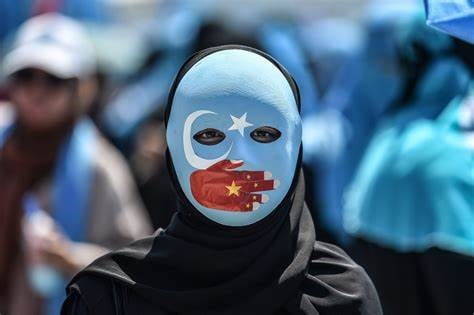
China’s hardline policies in the Xinjiang region have caused a rift within the United Nations Human Rights Council (UNHRC) over the detention of more than one million Muslim Uyghurs in reeducation camps. These camps are aimed at dismantling indigenous cultures and religions for those detained. A human rights commission within the United Nations -responsible for promoting the protection of human rights throughout the world and addressing violations of human rights voted on June 10th of 2022 over a Western-backed proposal. This proposal was an opportunity to hold a debate, essentially without any monitoring of the rights situation, and it was the least intrusive measures the council could take. Member states such as the United States, the United Kingdom, and Germany proposed holding the debate. However, 19 members of the council voted against the motion, 17 members of the council voted in support, and 11 members abstained from voting. Agnes Callamard, secretary-general of Amnesty International states, “Today’s vote protects the perpetrators of human rights violations rather than the victims – a dismaying result that puts the UN’s main human rights body in the farcical position of ignoring the findings of the UN’s own human rights office.”


Women wearing mask in solidarity with Uyghur Muslims
Source Yahoo Images

Council Facing Backlash

Days of diplomatic arm-twisting ensued in the UNHRC, and many national capitals in the weeks leading up to the vote as leading Western countries tried to get momentum behind a report from the former UN chief. The report, released on August 31st by the office of UN Human Rights, detailed serious human rights violations in Xinjiang that may amount to crimes against humanity. It documented a catalog of human rights violations including torture, sexual and gender-based violence, and mistreatment. According to the OHCHR report, the “extent of arbitrary and discriminatory detention of members of Uyghur and other predominantly Muslim groups … may constitute … crimes against humanity.” Despite their findings, the council still voted against addressing the conditions of the Uyghur Muslims in Xinjiang.

Members of UNHRC gathered for debate
Source Yahoo Images

Background

Under China’s “Strike Hard Campaign against Violent Terrorism, Chinese authorities have violated the rights of a million Uyghurs and other Turkic Muslims by arbitrary detention, harassment, and cultural persecution since 2017. Forced sterilization and forced separation of children are some of the harshest elements of the government’s oppression. Extremist, repressive laws are put in place to target these communities for nothing more than the personal choice of practicing Islam. The disproportionate and discriminatory application towards ethnic and religious minorities is concerning. Omer Kanat of the Uyghur Human Rights Project states, “The Chinese government’s singular goal has been to silence even a discussion of the issue — we cannot allow this to happen.”

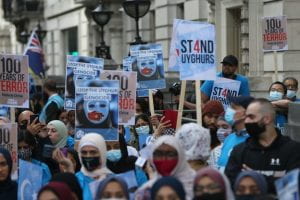
Protesters carrying signs at a demonstartion
Source Yahoo Images

China’s Response

Beijing, strategically employing its political and economic clout, sent a report from ambassadors in predominantly Muslim regions such as Africa, Middle East, Pakistan, and Saudi Arabia positively evaluating the human rights developments to the president of the. As China continues to influence the UNHRC, people will doubt if the council can remain impartial in its proceedings. By reaching this decision, the council has planted seeds of bias and crushed the Uyghurs’ hopes that the council will stand up to China to fight for justice. Many Muslim-majority states in support of the pro-Beijing statement have effectively turned their backs on the country’s oppression of the Uyghur Muslim population in Xinjiang. Before the vote, Chinese ambassador Chen Xu accused Western countries of seeking to turn a “blind eye” to their own issues on human rights and point a finger at others. No country has a perfect history of human rights; therefore, all countries are subject to scrutiny despite how much power they may wield.

China’s Economic Lure

The more pertinent question to be asked is, how vast is China’s economic pull that other countries factor into their decision-making? The United Nations Human Rights Council (UNHRC) consists of 47 countries and is regarded as the UN’s top human rights body. Annually, council members rotate among each other. However, a prominent country like China, with a permanent seat on the council, has never been the subject of a country-specific resolution from the council since it was established in 2006. It is a vicious cycle for other countries, including the largely Muslim-populated countries that voted against the debate, as their human rights record has been attacked frequently abroad; defending China becomes a way of defending themselves. Many Muslim-populated countries sided with Beijing due to their oppression by western imperialism. For example, various military interventions by the United States in these countries under the premise to widen their influence and democratic values has resulted in a distrust of the West. Nevertheless, this decision conveys a dreadful message: China is untouchable. This should not be the case. It is up to the citizens of these UN countries to hold these countries accountable for their actions. Human Rights violations continue to run rampant in the Xinjiang region, and despite the mounting evidence and international attention, China has failed to acknowledge or address these violations. Therefore, the duty falls to us to ensure the Uyghur Muslims are heard and their issues are addressed on a global stage. To help, contact these organizations:

Amnesty International

Human Rights Watch

International Commission of Jurists

International Service for Human Rights

Uyghur Human Rights Project

World Uyghur Congress

On the Railroad Workers’ Situation

amtrak
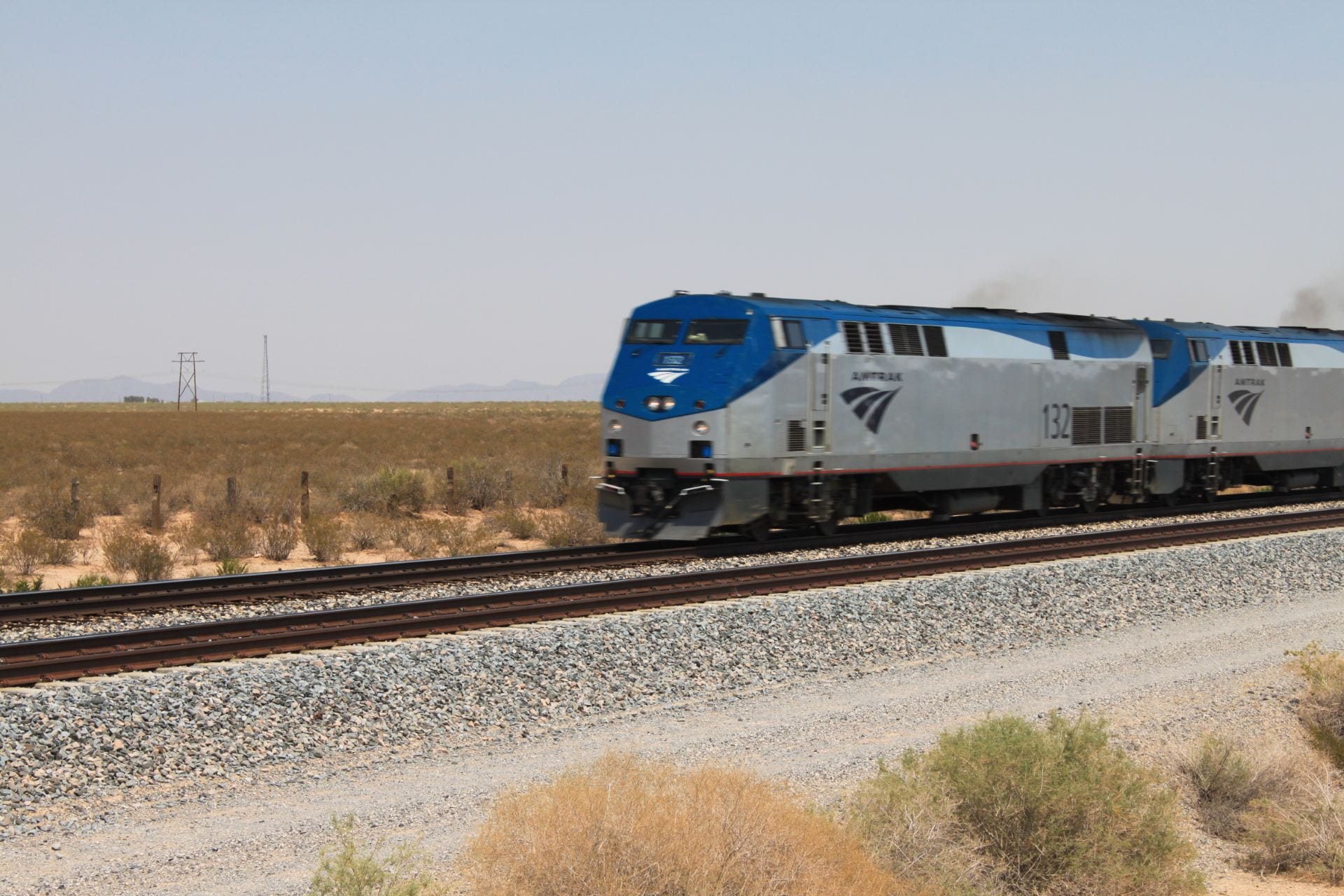
An Amtrak train (source: yahoo images)

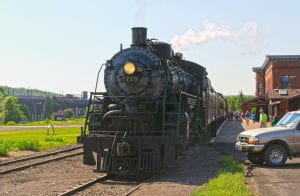
Perhaps, in the media or within your own life, you have heard snippets about “railroad workers rights” and “railroad unions.” However, even though you might have heard of these topics, you still may not know what they refer to. You might have even asked yourself, “Why would railroad workers form unions? What is going on?” To understand the answers to these questions, consider the severity of the situation. For example, did you know that railroad workers across the United States are facing disciplinary action for taking days off to go to the doctor?

I hope this post implores you to spread information about the maltreatment that the railroad workers are experiencing. This blog will share the most current information relating to railroad workers rights movement.

But First

italy
A night-time view of Italy (source: yahoo images)

Before we unpack all that has been going on with railroad workers, we will firstly examine a place that is frequently of American interest: Italy. Whether it be Italy’s beautiful geography, remarkable monuments, or the sublime cuisine, most Americans have similar presumptions about the nation: it is simply exquisite and fosters a rich culture. 

Unfortunately, however, this blog will not discuss Italy’s glorious disposition. Instead, we will be discussing another remarkable, modern-day characteristic of Italy (which, in my opinion, trumps some of the others): the rights of employees instituted by the federal government.

In Italy, every employee is entitled to at least four weeks of paid vacation. The federal government makes it illegal for any employer to prohibit their employees to not take at least four weeks of time off.

Contrastingly, this notion, as it relates to the United States (where there is no federal law regulating how many days off a private employer is required to give their employee) is borderline martian. Employees being federally entitled to paid time off in the United States is similar to oxygen in space—nonexistent. 

However, even though Italian employers are required to offer at least four weeks of paid vacation to their employees, the majority of employers offer five weeks. In the United States, the average length of paid time off given to employees is 10-14 days—less than two weeks. 

Without a doubt, when comparing which nation better allows its employees to have a healthy work-life balance, Italy prevails over the United States. (I did not even have to mention how Italians also receive 104 hours per year which they can use for personal affairs: taking a child to the doctor, running errands, etc.). 

However, let us now consider the argument that follows from the aforementioned points: indeed, Italy may have better federal legislation for employees; but, surely, as a result of that, their economy and government is not as prosperous as the United States.

This argument, although perhaps not for the reasons one might assume, is valid—the United States indeed does have a bigger and better economy than Italy. In regards to GDP, the US economy ranks first in the world, while Italy’s is 8th. However, one must also consider the USA’s size and history. Italy’s economy crumbled after the World War; the US’ economy exponentiated. Therefore, considering that Italy had to recover from a World War, the fact that it currently ranks 8th in the world—and it has legislation ensuring the prosperity of employees—is rather remarkable.

As you read the rest of this article, keep these statistics and distinctions in mind. 

Back to the States

american flag
The White House (source: yahoo images)

Up until this point, we have discussed international affairs. However, the main point this blog seeks to discuss and analyze relates to railroad workers in the USA—a domestic topic. Italy’s overpowering legislation on employee’s rights shall be used as a tool of comparison for what is currently occurring in the United States.
With all this in mind, the ultimate question remains: what is going on with railroad workers in the United States?

The Fundamentals

steam train
A steam engine (source: yahoo images)

For the past couple of months, multiple unions have been created by railroad workers to bring forth change in the workplace. These unions have threatened to go on strike multiple times. 

The central issue that unions are attempting to fix relates to worker rights. More specifically, the rights of employees wishing to take days off.

For the railroad workers, the ability to have sick days has been a source of conflict. Currently, railroad workers throughout the United States are not able to take days off for any reason. Whether it be taking off days because of sudden illness or having to go to a funeral, railroad workers are unable to take off days without facing repercussions (which include suspension and potential dismissal). 

According to Vice, railroad workers are “working or on call 90% of the time.” When workers are on call, it’s rather common for them to be called into work at random times and end up being away for multiple days. When workers are not on call, they are often already at work. 

This has caused outrage within the railroad workers community. These workers, who are vital to America’s economy, are not being offered basic worker protections.

In fact, a spouse of a railroad worker once stated that “[they] go to work sick, they miss funerals of loved ones, they miss final goodbyes to parents on hospice, they miss holidays, birthdays, all of it.” 

Moreover, some railroad companies, in an effort to have a “system” overseeing the amount of days off an employee receives, created a point system. In this system, employees gain points for showing up as scheduled and lose points when they do not show up as scheduled. Ostensibly, this makes sense: workers should both be praised for their hard work and penalized if they simply disregard their schedule. However, unfortunately, this system is far from that. 

In this system, every employee starts with 30 points. If an employee wants to take a day off, they lose 15 points. Whether it be Christmas, New Years Day, or Thanksgiving, any day off by an employee leads to a deduction of 15 points.

Therefore, if an employee wishes to take a day off on Christmas and Thanksgiving, they would lose all of their points. This in turn would get them suspended and put under investigation. If they are found to be compliant workers, they are put back to work and given 15 points. If they end up losing those 15 points, they are fired. (I should also note that, in this particular point system, the only way an employee can gain points is by being on call for 14 days in a row. 

Therefore, the points system forced upon the railroad workers does not penalize them for disregarding their schedules, it penalizes them for not making “work-life” simply “work.”

The Strike

railroad worker
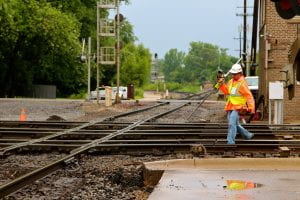
A railroad worker (source: yahoo images)

As one would expect, this blatant disregard of equitable worker considerations has forced railroad workers to rally together and create various unions. These unions, as was previously mentioned, have been threatening to go on strike until changes are brought forth. 

Currently, negotiations are still ongoing. Thankfully, however, the threat of striking seems to be working in favor of the railroad unions. One of the tentative agreements reached between the union and workers, according to Slate, is that “[railroad workers would have] voluntary assigned days off, granting one additional paid day off, allowing workers to attend medical appointments without penalty, and creating exemptions from attendance policies for hospitalizations and surgeries.” 

Seeing that these workers are now being allowed to go to the doctor’s office without facing the threat of penalization, this is a definite step in the right direction. 

The Future

the future
(source: yahoo images)

What the future entails, we know not. However, what we currently do know is that this issue would break just about every other federal law regarding workers’ rights in Italy. While here, in the United States, railroad workers are battling to merely receive days to go to the doctor’s office because of sudden illness, Italians enjoy the privilege of federally mandated vacation days. 

Perhaps, as it relates to this manner, the United States could learn from Italy. A federal mandate over workers’ rights in the United States would benefit the entire nation. This mandate would make it federally illegal for employers to overwork their employees and penalize them if they simply wish to go to a funeral. In order to bring this change into effect, everyone needs to be aware of this issue. To most, the rights—or lack thereof—of railroad workers is rather shocking. If this issue were brought to the forefront of the media, more would become aware of it, and more would be willing to advocate and bring change. This is not a local issue, this is a national one and we, as a nation, need to be aware of it. 

With acknowledgement of the maltreatment of employees across the nation, as well as advocacy for reforms on federal legislation about employee rights, the United States could become more like Italy and ensure all employees get fair treatment. With acknowledgement and advocacy for change, ensuring that every worker gets basic necessities might not be too far away. 


International Day for The Eradication of Poverty

Source: BetterAid via Google Images

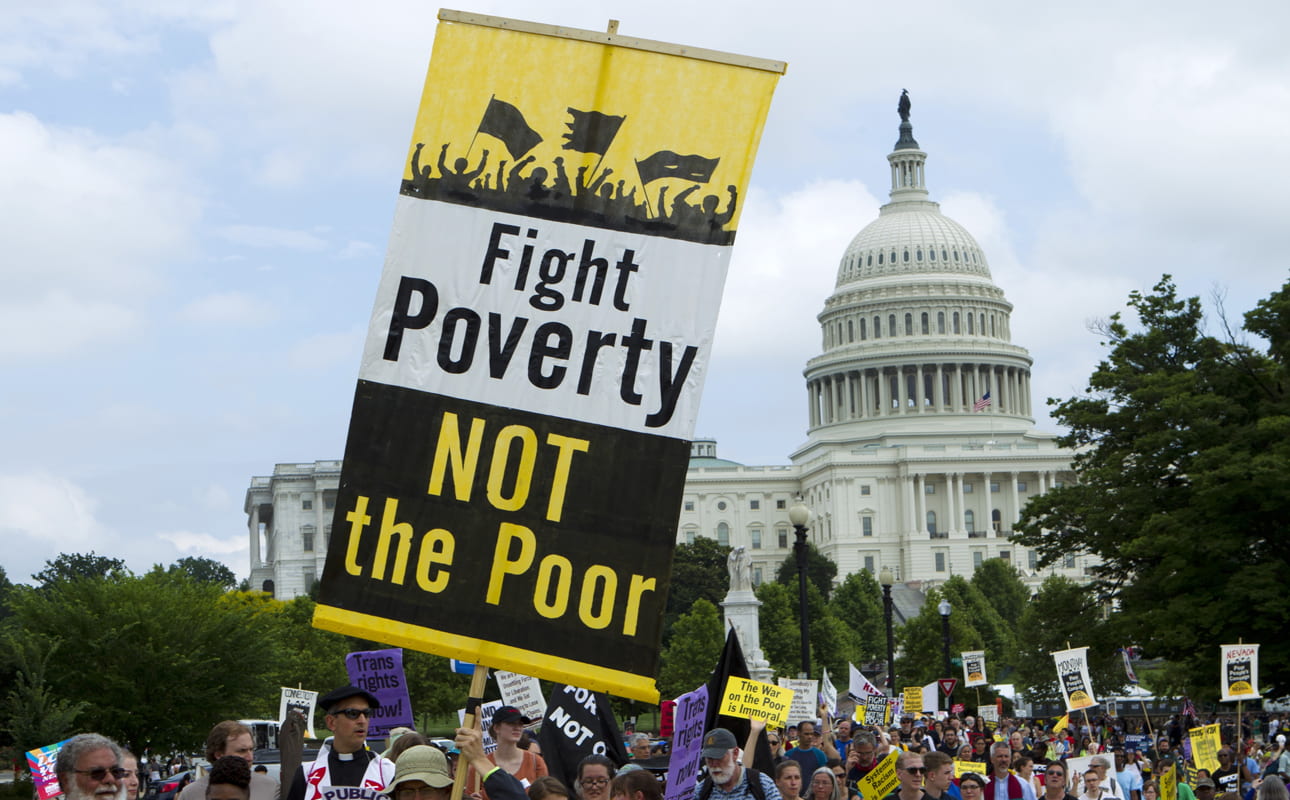
Monday, October 17th is the International Day for the Eradication of Poverty; in 2022 we have a lot to acknowledge and a lot of work to be done. The theme for this day of commemoration is dignity, focused on how every human has the right to live with pride for themselves and respect from others. The first line of the Preamble for the Universal Declaration of Human Rights (UDHR) emphasizes the importance of how the “…recognition of the inherent dignity and of the equal and inalienable rights of all members of the human family is the foundation of freedom, justice and peace in the world,” and that is precisely the ideology behind the founding of this human rights holiday. But why, exactly, is poverty an international human rights issue?

History

Global poverty is defined as “lacking enough resources to provide the necessities of life—food, clean water, shelter and clothing. But in today’s world, that can be extended to include access to health care, education and even transportation.” 

This international day of recognition was adopted by the United Nations in December of 1992 to recognize the structures that cause poverty, to listen to and amplify the needs and desires of impoverished persons, and to place a specific focus on how the international community and global leaders can work to solve this persistent social problem. October 17th was chosen to observe this topic because on this day in 1987 a crowd of over a hundred thousand protesters gathered in the Trocadero Plaza of Paris, France to honor the victims of extreme hunger and poverty. In commemoration, a stone was placed in the Plaza, now renamed the Plaza for Human Rights and Liberties, engraved with the following message from Father Joseph Wresinski, “Wherever men and women are condemned to live in extreme poverty, human rights are violated. To come together to ensure that these rights be respected is our solemn duty”.

The right to live free of poverty is not listed in the UDHR, but our current understanding of poverty constituting a violation of human rights has been developing since before the UDHR was proclaimed by the United Nations General Assembly in 1948. This is because living in extreme poverty is almost always accompanied with a loss of essential human rights that were explicitly enumerated in the UDHR, like the right to health, safe food and water and the right to adequate housing as illustrated in Articles 25 of the UDHR and the Human Right to Water and Sanitation. Even in developed and wealthy nations, citizens living in poverty experience obstacles in their ability to access the right to education, work, and political participation named in Articles 21, 23, and 16 of the UDHR. 

While persons living in poverty are often denied many, if not all of those fundamental human rights listed above, this holiday gets its theme from Article One of the UDHR, from which this holiday gets its theme: All human beings are born free and equal in dignity and rights. They are endowed with reason and conscience and should act towards one another in a spirit of brotherhood.” Those in poverty often lose this right as limited access to the essential requirements of a quality life places them in a position where they rely on the aid of others, who often treat the impoverished as less than equals. They are patronized and degraded in their daily lives, and the social response to an impoverished person exercising their agency to decline charity is typically one of rebuke.

Source: Sparkasse Köln Bonn via Flickr

The Current State of Poverty

Global poverty rates have increased since the beginning of the Pandemic in 2020, and World Bank estimates that we have been set back 3-4 years on our path to ending extreme poverty as of October 2021. In addition to climbing unemployment and poverty rates is the leap in inflation, which has climbed globally as supply chains stretch thin. The Pew Research Center has found that the global middle class shrank while the global poor increased as the pandemic progressed, disrupting the progress of developed nations around the world, particularly in Asia and the Middle East.

These economic impacts affect more than immediate financial conditions of those involved. One side-effect has been a loss in education; as the United States and other wealthy countries moved online in response to the pandemic, other nations (particularly in the Global South) had to close schools entirely. Human Rights Watch has noted that, for millions of school-aged children, the pandemic effectively ended their formal education as alternative school options were few and the need for work and additional income rose. The International economic recovery will be challenging, and may take years to accomplish, but it is paramount that we keep the most vulnerable, both their dignity and agency, in mind as we navigate our collective path forward.

International Human Rights holidays are often overlooked due to their focus on what are often perceived to be niche categories outside of major religious or cultural practices. However, observing human rights holidays is a practice that allows for shared positivity and encouragement as we mark progress and victories in the field. They also provide days of unity to focus on pervasive issues that still need attention and work. On this holiday, join me in taking the time to think about how poverty affects your community, how your community has responded, and how it can alter that response to alter the quality of life for its impoverished population.


Pakistan’s Floods : A Humanitarian and Climate Crisis

Source: Abdul Majeed Goraya / IRIN | www.irinnews.org

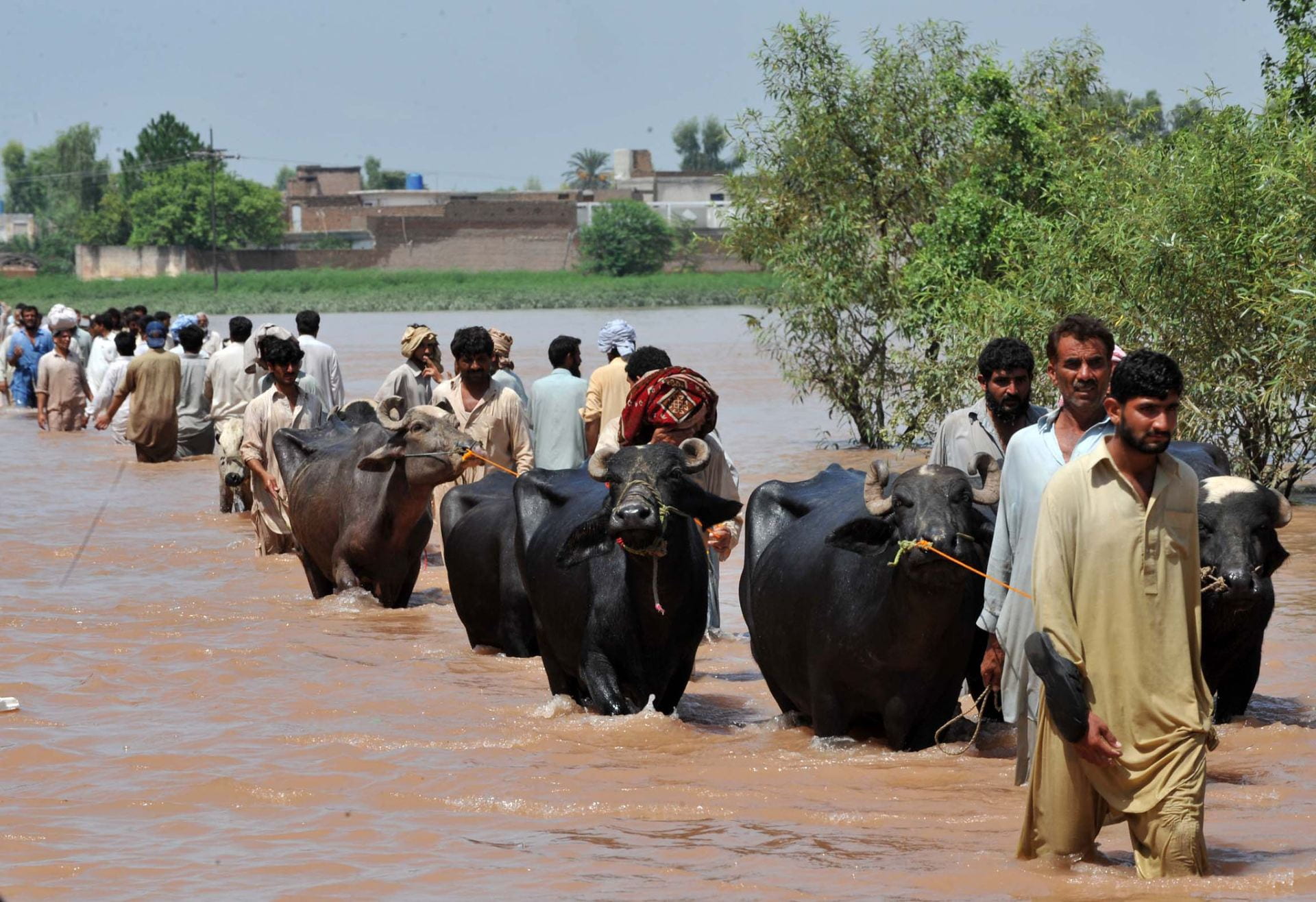
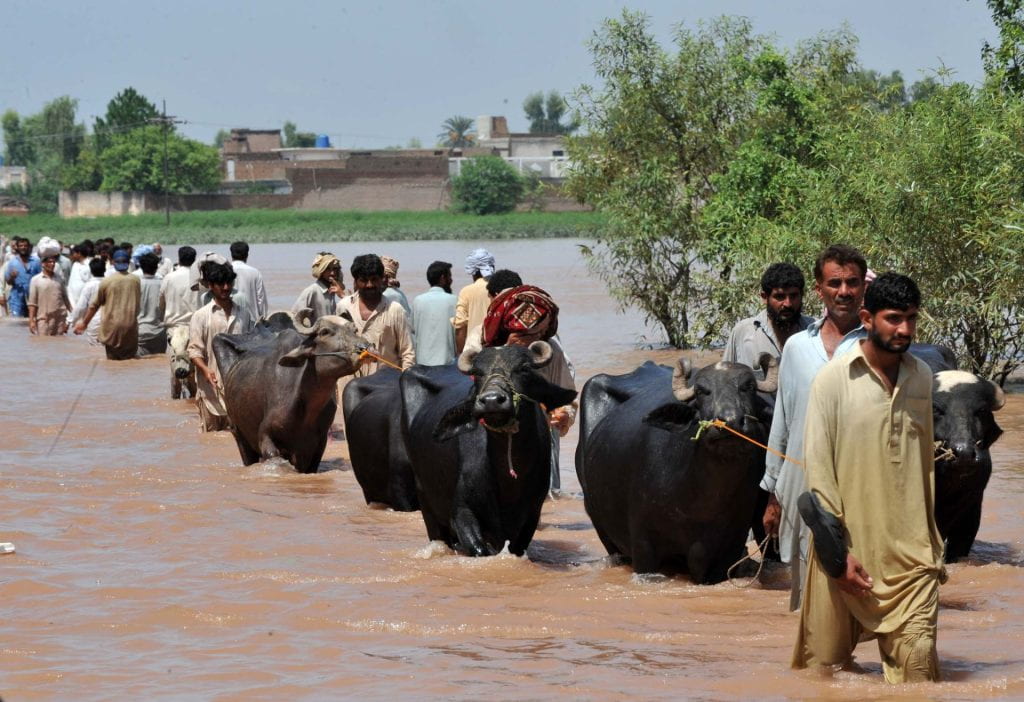
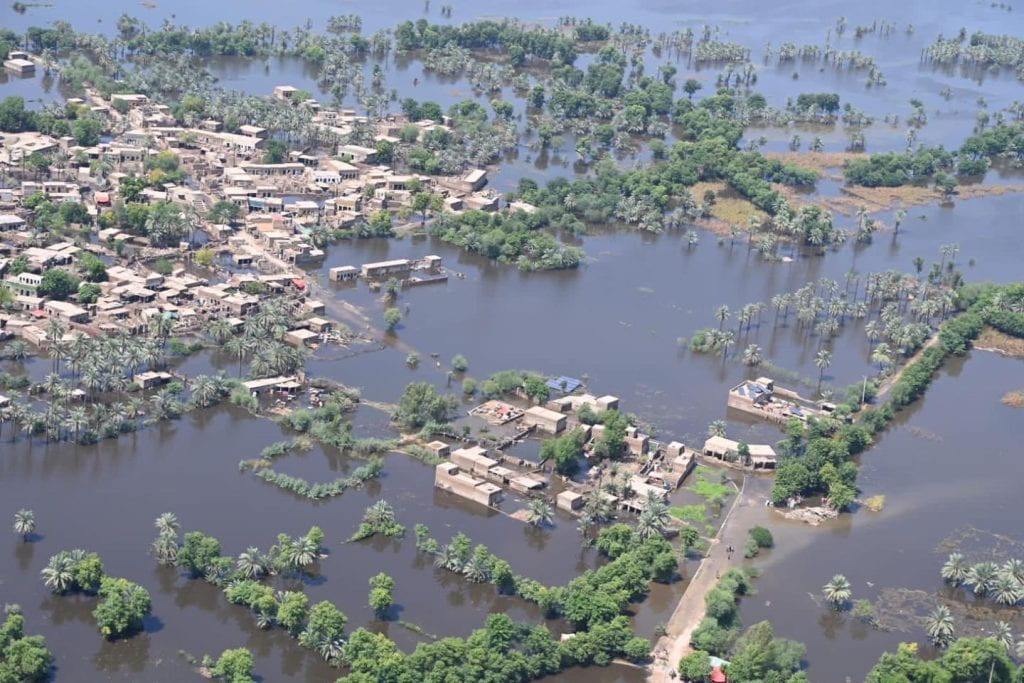
One third of Pakistan is underwater following disaster-level floods that have ravaged the country since mid June of 2022. The flooding is a humanitarian crisis of epic proportions, bringing climate change and environmental justice into the focus of conversations about why the floods are so devastating. The record-breaking monsoon rains have affected 33 million citizens, leaving millions displaced and threatening the economy by washing away the fall harvest and essential farmland. Pakistan’s most vulnerable are struggling to access the scarce aid that is available, including the 19 million children affected by the floods. It is an unprecedented, once in a century crisis event exacerbated by climate change, poor infrastructure, and the damages of the recent economic crisis prior to the flooding.

Source: Oxfam International via Flickr

Direct Impact of the Floods: Hunger, Disease and Displacement.

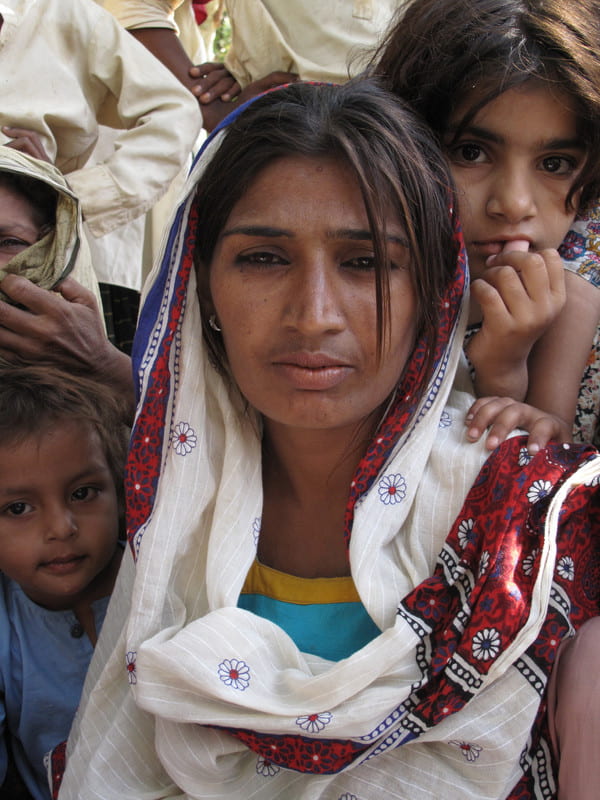
The monsoon rains have killed over a thousand people, roughly 400 of which are children. However, hunger, thirst, disease, and shortages of essential supplies threaten the lives of even more; millions of Pakistani people have been displaced over the course of the floods since June. The United Nations Refugee Agency has estimated that 6.4 million people are in need of immediate support. 

Any discussion of rebuilding has been shelved in submerged regions as the flood waters may not recede for months, leaving the thousands of kilometers of roads, tens of thousands of schools, hundreds of thousands of homes, thousands of essential healthcare facilities destroyed by floodwater, and prior residents stranded or displaced. In addition to the initial death toll from the floods, the Pakistani people are facing immediate dangers of water borne disease, lack of access to food, water and shelter, and risks of violence; especially for women, children, and minority groups.

The country’s health system has faced substantial blows, both from loss of structures and supplies caused by the flood and the overwhelming need of those affected. Dehydration, dysentery, cholera, malaria, and dengue fever are ravaging make-shift camps as the flood waters become stagnant and clean water and sanitary supplies become harder to come by. Sindh Province, the second-most populated province in Pakistan, and one of the hardest-hit by the floods, has seen over 300 deaths from water borne-diseases since July.  Early disease surveillance by the WHO has revealed that tens of thousands of cases of flood water-caused diseases are already present amongst those within reach of relief efforts. Countless villages remain stranded as roads and highways are underwater, so the true number of deaths, displaced persons, diseased, and persons otherwise impacted by these crises are expected to climb as more recovery efforts continue to search the flooded regions. 

Without international aid and intervention, an epidemic of disease caused by the floods will cause a second wave of deaths in Pakistan, of which the elderly, children, and pregnant women will be the largest groups facing losses. International aid, medical and humanitarian organizations have joined the Pakistani government and are regularly dropping medical supplies, malaria nets, food and provisional shelters, but the need continues to grow as more people find their way to temporary camps and the rate of disease climbs. 

Source: Oxfam International Via Flickr

Human Rights & The Most Vulnerable

A nation’s most vulnerable populations are often the ones who suffer the worst effects for the longest time after a natural disaster like these floods. For Pakistan, those vulnerable groups are women, children, the Khwaja Sira (transgender) community, those living in extreme poverty, religious minorities, and other marginalized groups. Typically, socially disadvantaged groups are living in regions with lesser infrastructure, facing the initial worst impacts of natural disasters, but marginalized status often leads to upwards battles to access humanitarian aid after the disaster as well. There are estimated to be 650,000 pregnant women displaced in Pakistan right now, in urgent need of maternal health care and safe, sterile facilities to give birth in, with many taking perilous journeys in hopes of reaching a hospital or safe places to give birth.

CARE, an international human rights and social justice organization, spoke on this concern. Pakistan Country Director for CARE, Adil Sheraz said, “With entire villages washed away, families broken up and many people sleeping under the sky, the usual social structures that keep people safe have fallen away, and this can be very dangerous for women and girls.” 

Following the 2010 floods in Pakistan, denial of aid and violence against minorities became a prevalent issue and large protests against law enforcement arose due to their failure to protect vulnerable groups. Preventative measures against recurrence of these issues have been few and far between since 2010, and international human rights communities are on high alert for rising reports of discrimination in relief distribution and crimes against minorities. Reports of sexual violence have already increased following the floods.

In addition to some of the most vulnerable Pakistanis are roughly 800,000 Afghani refugees who have been hosted by Pakistan in Sindh and Balochistan; two provinces faced with the worst of the flooding and submersion. Pakistan has a deep history of offering asylum and refuge for those fleeing across the border from conflict in Afghanistan, and is home to 1.4 million Afghani refugees currently in 2022. Following the August 2021 withdrawal of US troops from Afghanistan, the Islamic Emirate government (also known as the Taliban), Pakistan became an even more essential haven for the influx of refugees fleeing a violent authoritarian regime. In the wake of this natural disaster, the loss of $30 billion dollars worth of infrastructure, homes and supplies, and facing an economic crisis, Afghani people with hopes of finding refuge in Pakistan must now find new routes to safety. 

Source: Ali Hyder Junejo

Environmental Justice & Climate Change

Though Pakistan faces annual flooding of the Indus river from heavy rains in monsoon season, record breaking rains preceded by an extended heatwave contributed to an unrivaled degree of flooding this summer. Heatwaves brought temperatures around 50° Celsius (122° Fahrenheit) to India and Pakistan between March and May of this year. Monsoon rains followed the spring heatwaves, and in the regions of Sindh and Balochistan rainfall reached 500% above average. The 2022 floods will leave a significant economic, infrastructural, and humanitarian impact on the country of roughly 220 million people. The reason for the dramatic influx in severity is complex, but simple at its core: climate change.

Pakistan is facing an unfair share of the consequences of climate change; while it was responsible for only .3% of global CO2 emissions in 2020, it is likely that this year’s heatwaves and floods will be on the less severe end of what is to come. The United Nations has deemed Pakistan a “climate change hotspot”, stating that people in South Asia are 15 times more likely to die from climate impacts. As the global temperature rises and geohazards become more extreme, disaster-prone regions like Pakistan will face more and more devastation. The best prognosis for the region comes with prevention efforts like strengthening anti-disaster infrastructures. As the global north is responsible for 92% of excess emissions contributing to global warming and climate change, Pakistan, the United Nations, and other international agencies are calling for countries like the United States to make increased contributions to relief funds and infrastructure development overseas.

United Nations Secretary-General Antonio Guterres, while visiting Pakistan in September 2022, said, “…the fact is that we are already living in a world where climate change is acting in such a devastating way. So, there must be massive support to what usually is called adaptation, which means to build resilient infrastructure and to support resilient communities and to create conditions for those that are in the hotspots of climate change. Pakistan is one of the hotspots of climate change. For those countries to be able to prepare for the next disaster and to be able to resist the next disaster, this needs a huge investment and this investment needs to be provided.”

Relief & Aid

Pakistan has faced an overwhelming series of calamities since the start of this year, and the impacts from these disasters are greatly exacerbated by food shortages and an economic crisis prior to the start of the disasters in March. There are millions of people in need of aid, and every bit of support helps. If you are unable to financially contribute, please consider sharing this or other articles about this crisis to increase international attention on those who need our help.

For donations of money, time, or other resources, we have compiled some reputable aid agencies below:

  • Pakistan’s Red Crescent Society is providing clean drinking water, medical treatments, temporary housing, and other essential aid across flood-hit regions. Donate or get involved with their flood response efforts here.
  • The United Nations Refugee Agency has provided millions of dollars in aid to Pakistan, and you can contribute here to support their continued relief efforts.
  • The International Medical Corps are on the ground in Pakistan, providing medical care and responses to both the floods and gender-based violence across the country. Find out more & how you can donate here.
  • Muslim Aid has reached over 29,000 people in three affected districts of Pakistan, providing hygiene kits, shelter, and essentials to those in need. Contribute to their fund here.

Cameroon, a Nation Divided

Over 6,000 individuals killed, 765,000 individuals displaced, 2,200,000 individuals in need of humanitarian support, and 600,000 children stripped of their education.

Where, you might ask, is this currently occurring?

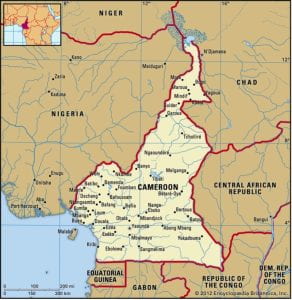
Bordering the Atlantic coast in west Central Africa, the country of Cameroon is entering into its sixth year of armed conflict. Deemed the “second most neglected crisis in the world” by The Norwegian Refugee Council, only 29 percent of the country’s Humanitarian Response Plan has been funded and/or implemented.

A map showing Cameroon and surrounding countries
Source: Yahoo Images

Historic Overview

This conflict divides the country of 27 million inhabitants into two distinct groups: the Anglophones and the Francophones. The Anglophones, the English-speaking minority of the West regions, have experienced marginalization across multiple levels by the Francophones, the French-speaking majority of the Central and Eastern regions.

Once comprised of many ethnically distinct kingdoms, or Fondoms, the region now known as Cameroon became established in 1884 under German colonial rule. At the end of World War I, Germany receded control of West Cameroon to Britain, and Central and East Cameroon to France under the League of Nations. European governance remained in place until 1960, when France granted independence to the country of Cameroon. The following year, the British-controlled North-west and South-west regions voted between the option of joining Nigeria or the newly established Cameroon. The North-west region voted to become a part of Nigeria, while the South-west region (now referred to as Southern Cameroons) voted to become a part of Cameroon.

The Root of the Crisis in Southern Cameroons

While the country is formally unified under one government, tensions have simmered for decades, specifically following the 1982 election of Cameroon’s current president, Paul Biya. Under Biya’s governance, the country has faced a decline in economic prosperity and unequal representation of the Anglophone minority. Undertones of opposition erupted into protests in late 2016.

Teachers, lawyers, and judges within Southern Cameroons initiated a series of protests to call for an equal representation of Anglophones and the use of the English language in legal settings, government, economic development, community services, and education, as stated in the constitution of Cameroon. A movement to establish an independent Anglophone nation, Ambazonia, strengthens alongside the protests. The desire for independent Anglophone and Francophone nations relates to the establishment of Cameroon in the 1960s. The British-controlled regions were given the option of joining with the governance of one of their neighboring countries, not the opportunity for independence.

Humanitarian Crisis

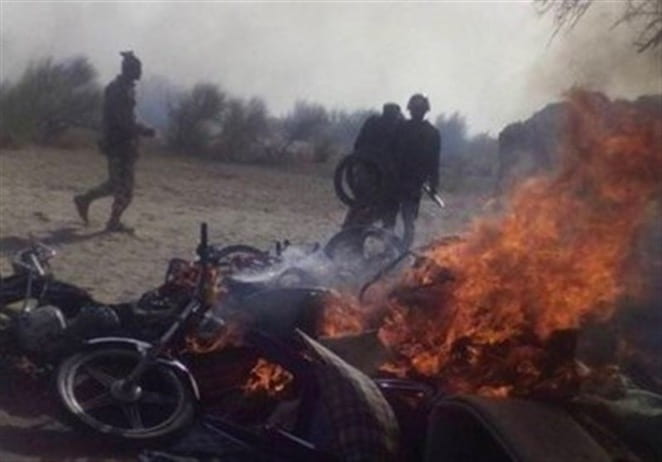
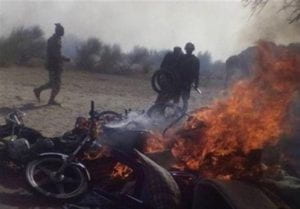
Image of soldiers standing next to a fire
Source: Yahoo Images

As tension heightened between the Anglophones and the Francophones throughout 2016 and into 2017, violence ensued. Both groups engaged, and continue to engage, in armed conflict. Armed governmental forces in support of the Francophones and armed separatist forces in support of the Anglophones have created a humanitarian crisis within the country. In addition to the continued acts of direct violence, acts of structural violence run rampant, particularly in Southern Cameroons. Schooling and health care access disrupted, resources blocked, property and land seized, lack of clean water and food, rolling electric and internet outages, individuals imprisoned on political grounds, allegations of election fraud… and the list goes on.

Humanitarian organizations struggle to provide the basic necessities for those affected by this conflict. The number of internally displaced persons (IDPs) and refugees (primarily in neighboring Nigeria) continues to increase, with women and children at particularly high risk. The International Crisis Group currently classifies the conflict in Cameroon as an “unchanged situation”. Additionally, The Institute for Economics and Peace ranks Cameroon 11th globally on the 2022 terrorism index. First-hand accounts continue to be shared that validate these statistics. A cemetery worker in Southern Cameroons reflects in an interview with the BBC, “It is a blessing to be buried at all, let alone by family and friends.”

This is the first in a series of blog posts that will look further into the conflict in Cameroon. Each month a humanitarian need and/or organization working in response to the humanitarian crisis will be featured on the UAB Institute for Human Rights’ blog.


The Economic Status of Transgender People in India

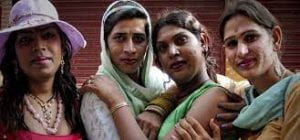
Hijra communities in India form their own chosen families. Source: Yahoo! images

Imagine discovering that your internal identity does not align with the way that your body looks or the way that you are perceived by society. Because you recognize this internal dichotomy, the society you know and love treats you as an outcast. You are regarded as less than human. Your family abuses you for pursuing a physical body and social presentation that aligns with your internal identity. Society at large is structured in a way that makes it relatively impossible to get a formal job or make money in a safe way. Transgender people in India experience this every day.

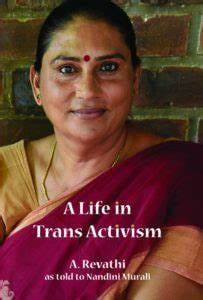
A. Revathi is an activist for the rights of transgender people and other gender and sexual minorities in India. In her book, A Life in Trans Activism, she details many struggles she faced while navigating the economic system of India. Most transgender people in India work in the informal spheres of sex work and street begging, but a lucky few find low-salary jobs at LGBTQ+ Non-Governmental Organizations (NGOs) or service places.

A picture of an Indian woman named Revathi wearing a maroon saree with gold jewelry. She has a gold stud in her nostril piercing and a red bindi between her eyebrows. White text reads, “A Life in Trans Activism, A. Revathi as told to Nandini Murali”
The cover of the aforementioned book. Source: Rēvati, and Nandini Murali. A Life in Trans Activism. Zubaan, 2016.

Because of the prejudices and stereotypes held by many employers within India, transgender people are often discriminated against in the formal sphere. If a man comes in for an interview, and his documentation still has an F sex marker, the employer will know that he is transgender and all prejudices and stereotypes that they hold will then apply to the man searching for a job. The process of changing one’s sex marker on official documents is a complicated and grueling process for transgender people, which makes it almost impossible to go stealth* in one’s workplace. It was this lack of economic mobility that lead Revathi, and many others like her to the streets for sex work.

*Stealth (adj.) – describing a transgender person who presents themself as a cisgender member of the gender they identify as, often to avoid discrimination. For example, a male-to-female (MTF) transwoman presents as a cisgender woman and keeps her trans identity a secret to avoid violence.

In India, self-employed sex work is legal, but many police officers will find other reasons to accuse sex workers of crimes like loitering or stealing, whether the accusations are true or not. The general public tends to accuse them of stealing in order to demonize them or try to get them off the streets, which often leads to violent confrontations with community members and the police. During sex work, Revathi, like many transgender women, was often put into dangerous situations with the public as a result of the deeply rooted stigma surrounding transgender people. She experienced sexual assault, public abuse, and was sometimes not paid for her services. Most transgender sex workers must be very careful to keep their identities as transgender silent because many face violence if they are outed.** On the other hand, when outed, some people receive dehumanization in the form of fetishization which results in more violence and less pay.

**To out someone (v.) – to reveal someone’s sexuality or gender identity without their permission or control, often leading to dangerous situations for them.

Economic Consequences

The few that find jobs, often at LGBTQ+ organizations, are often paid less and treated with disrespect by their colleagues and employers. While reading A Life in Trans Activism, a pattern stuck out to me. I would like to call this something like “The Vicious Cycle of Workplace Inequality.”

  1. The formal work of a certain group of people is undervalued and/or ridiculed by society.
  2. The marginalized group then internalizes this as a reflection of their character and feels as though they have “something to prove” while working in the formal sphere.
  3. They then work harder and accept lower pay than their colleagues.
  4. Co-workers and employers take advantage of their willingness to work hard for lower salaries and disrespect their work-life boundaries.
  5. The disrespect becomes a foundational aspect of their workspace, and transgender people feel and live subserviently to society. The cycle repeats.

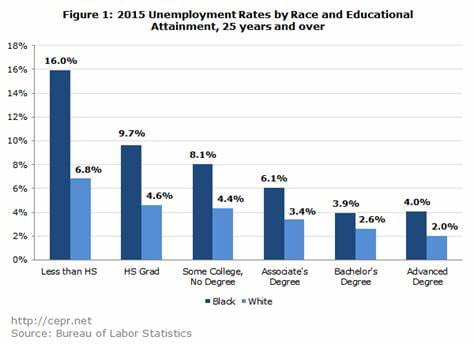
The Vicious Cycle of Workplace Inequality can apply to any group of people whose work is undervalued. We see this in the American workforce with Black employees. There is a widely-held stereotype in America that Black people are “lazy workers” because of their lack of sufficient economic mobility. Employers internalize this and hold Black workers to a higher standard in which they must “prove themselves” as hard workers. It is often the case that Black employees work twice as hard as their White counterparts and are still undervalued by their employers and colleagues. They internalize this as a reflection of themselves and work harder and harder for less and less. This phenomenon is not only manifested in the salary gap between races, but also in the levels of worker burnout and unemployment rates.

A bar chart showing “Unemployment Rates by Race and Age, 2016”. On the y axis is 0-30% representing unemployment rates, and on the x axis is age groups from 16 to 70+. For each age range, there are two different bars representing Black and White workers. The highest unemployment rate is 16-19 year olds with Black youth at around 27% and White youth around 14%. Both statistics slowly fall before plateauing at around the 40-44 age range, with Black workers at around 6.5% and White workers at around 3.5%. These statistics stay pretty consistent for the rest of the chart, if not a slight dip around the age ranges 50-60.
Statistics show much higher unemployment rates for Black individuals in every age range. Source: Federal Bureau of Labor Statistics

A. Revathi experienced the Vicious Cycle herself while working as an openly transgender woman at an LGBTQ+ NGO in India called Sangama. Even while she was head director of multiple subsections of the NGO, she experienced disrespect from the staff she was directing. Here, Revathi reflects on her experience:

“[Sangama staff] were well behaved with [past directors] and respected boundaries. However, with me, they were very different. They would storm into my cabin and argue endlessly with me, often in very rude or offensive language. They demanded prompt promotions, increases in salaries, and crowded my working hours with endless demands and trivial things, which they could have handled themselves.” (Rēvati, 110) 

Revathi charitably credits this to her open-door policy and her show of belief that hierarchies in workplaces were solely for accounting purposes, and should not reflect upon the social interactions of the staff. I suspect that the main reason that she has these policies and beliefs is that her work has been consistently undervalued and she has internalized that she will never be seen as “above” anyone else in her workplace. By setting and enforcing certain boundaries with her staff, she would have to acknowledge that she is above them in the workplace. This would break the social contract that says that she is always on the base of the metaphorical pyramid because of her transgender identity.

Government Progress (or lack thereof)

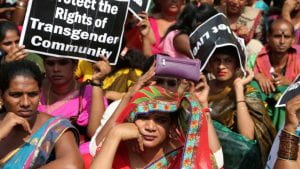
A large group of mostly women in colorful saris, jewelry, and makeup gather together with black signs with white text. One reads, "Protect the Rights of Transgender Community".
Transgender Indian protesters gather to fight for the implementation of policies that protect their rights. Source: Yahoo! images

The Indian Supreme Court ruled in 2014 to create a third gender category called “hijra” which would be inclusive of gender nonconforming and transgender individuals. People in this category were legally categorized as an “other backward class” or OBC. Job reservations were made for people of OBCs in an attempt to improve the economic status of transgender people. Read more about this ruling here. 

In addition to this ruling, in 2019 the “Transgender Persons (Protection of Rights) Bill” was passed, which served as an anti-discrimination bill meant to improve the status of transgender people in education and the workforce. It was faced with backlash from the trans community because it required a person to submit proof of gender reassignment surgery to the government before being able to change their gender marker legally. This type of policy is called trans-medicalism*** and is exclusive and harshly binary. Read more about this bill here.

***Trans-medicalism (n.) – the idea that one must medically transition, in other words: go through gender reassignment surgery, in order to be a valid member of the transgender community. 

Although these actions were well-intended, neither the 2014 ruling nor the 2019 bill has been well enforced. They have been inefficient in changing the economic and educational statuses of transgender people. Employers still have room to discriminate against workers. Sex workers are still treated horrifically and inhumanely in the streets. Transgender employees are still disrespected in their workplaces and have low opportunities for economic mobility. One of the problems with these actions is that they are both “top-down” approaches, which start with government implementation and slowly trickle down into cultural changes and real-life improvements for transgender people. Many recommend a “bottom-up” approach, which begins with radical cultural shifts and builds its way up to government implementation. While both are valuable, the “bottom-up” approach is more efficient in creating quicker social change for people genuinely affected by the social issues at hand. 

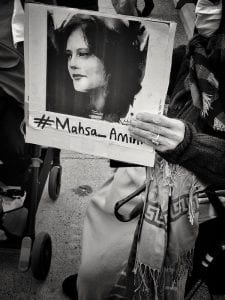
Iranian Women Burn Hijabs in Response to Killing of Mahsa Amini

Imagine living in a world where a woman showing her hair is considered “immoral” but killing a woman for showing her hair is not. Unfortunately for Mahsa Amini, that is the world we live in. On September 14th 2022, the 22-year-old was visiting the Iranian capital of Tehran with her family when she was arrested by Iran’s police. The reason for her arrest was wearing an “improper” hijab that did not adhere to the strict Islamic dress code laws. While in custody, she was beaten within an inch of her life and was comatose before being pronounced dead the following day. Iranian officials claim she died of a heart attack while in custody.

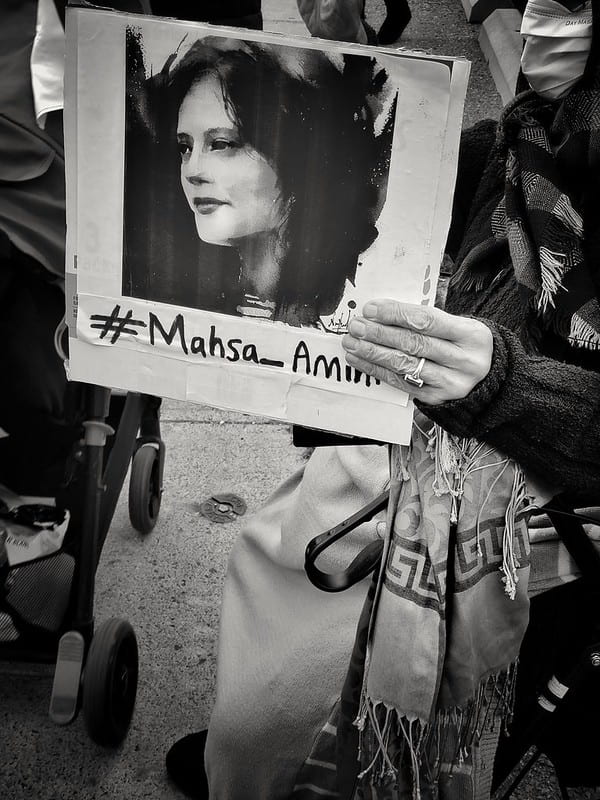
A protestor holds up a photo of Masha Amini
Source: Flickr


Public outcry

The Iranian government is implying that a dress code carries more significance than a young woman’s life. However, many Iranians disagree. In fact, women across the country have started publicly removing and burning their hijabs in protest. Burning head scarves is a powerful display that highlights the demand to end mandatory hijab laws. It is a direct objection to the controlling state’s policing of women’s bodies. Many people have taken to the streets to protest this blatant violation of human rights. Article 3 of the UN Declaration of Human Rights states, “Everyone has the right to life, liberty and security of person.” Iranian women’s liberty is in grave danger. Under Iran’s authoritarian regime, personal freedoms and the right to choose are in grave jeopardy. During the protests on September 21, Iran’s armed forces shot and killed more than 8 individuals. In the last 5 days, 15 protestors have died as a result of direct fire from government forces, with an additional 733 people injured and dozens imprisoned.


Morality Police History

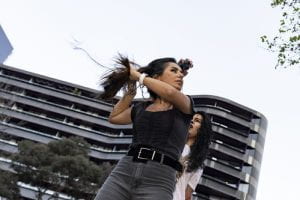
Iranian authorities have a long history of violent and inhumane enforcement of dress codes, specifically, compulsory veiling. This can be traced back to the Islamic dress code, a strict dress code that requires women to conceal their hair and neck with a head scarf and to cover their body. This law has been in effect in Iran since 1979, after Iran’s Islamic Revolution. The “Gasht-e-Ershad,” which translates as “guidance patrols”, patrol the streets of Iran enforcing these laws. They arrest individuals they deem in violation of this law, including women who do not adhere to the strict concealment of their body. In 2017, dozens of women removed their hijabs in defiance of the dress code. They waved their white hijabs standing on utility boxes. Since then, the morality police have taken severe measures to prevent women from disobeying the dress code. The arrests often involve verbal abuse and physical violence, targeting women and girls as young as 9 years old. Violent videos have emerged on social media depicting the “morality” agents forcefully detaining women, dragging them by their hair, administering beating with batons, and even spraying them with pepper spray.

A woman cuts her hair
Source: Flickr

Protests Are Not Anti-Islamic

The presence of the morality police is a violation of freedom and dignity of the women in Iran. Western practitioners of Islam may misconceive these acts of protest as an attack on Islam. However, these individuals have the freedom to choose their religion; they are not forced to adhere to religiously influenced governmental action. It is important to make the distinction between burning symbols of the state and disrespecting religion. To many Iranian women, the mandatory hijab enforcement is not a religious symbol, but rather a symbol of their oppression. These protests are the result of religious trauma and not Islamophobia. This movement is not Anti-Islamic, but pro-liberty. Citizens across the nation are fighting against the unjust criminalization of women due to the strict, mandatory dress code. They are fighting against an authoritarian regime that weaponizes Islam as a tool of oppression.

What Can You Do

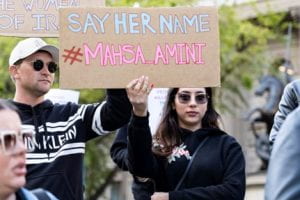
Protestors hold a sign that says "Say Her Name #MASHAAMINI"
Source: Flickr

The courage and solidarity these women are showing is quite moving. This may serve as a catalyst for the liberation of women around the world. As of now, Instagram is blocked in Iran. However, these activists’ valiant efforts will not be stifled. Now the baton passes to us. We must amplify their voices and raise awareness about the atrocities endured by these women by sharing hashtags and saying her name: Mahsa Amini. Follow these informative accounts and repost their posts:
@middleeastmatters
@masih.alineejad
@farnanak_amidi
@golfarahani
@negah_amirii
@duzenetekkal
Use this link to help people in Iran bypass the internet blockade Middle East Matters (mideastmatters.carrd.co). Donate to United for Iran and help fund the app Gershad that alerts woman the whereabouts of the morality police and protects women across Iran from unjust arrest. Everyone is entitled the most basic human right of choice. Women all around the world should be at liberty to wear what they want without fear of jeopardizing their lives.