A Non-Exhaustive Book List of Foundational Black Authors

**The content of the mentioned works below deals with racial, sexual, and gendered themes that may be difficult for some readers. Consider carefully before reading.**

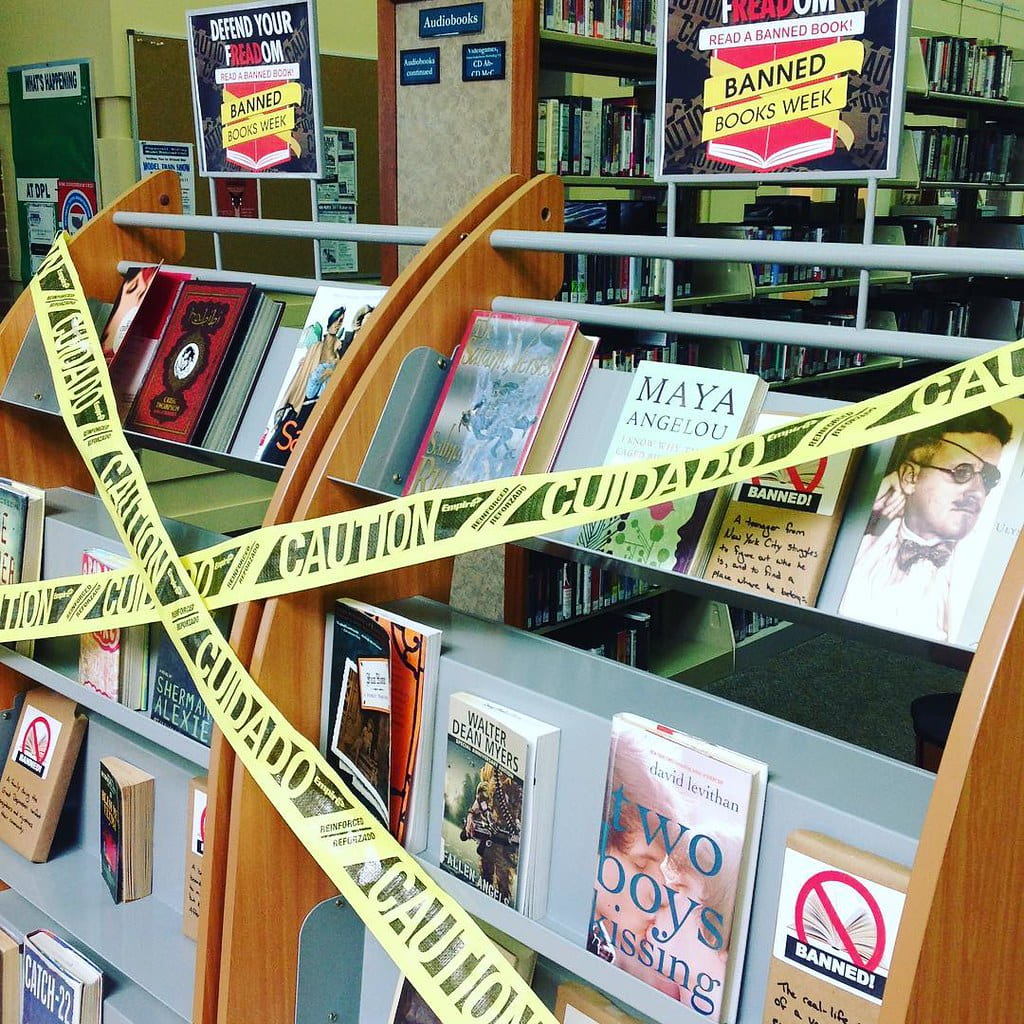
Contested conversations and debates around literature, even books bans, are nothing new. Unfortunately, we find ourselves during a time when pushes for literary censuring are on the rise, with fervent calls to remove books with references to enslavement, sex, gender, or Queer people. In light of this, I wanted to present a list of only a few Black authors, some of which are women, Queer, or both, so that we can remember and learn from them, and never let anyone take their lessons from us.

W.E.B. DuBois

Cover of the book The Souls of Black Folk. Preeminent author W.E.B. DuBois.
Figure 1: Source: Simon & Schuster; The cover of one of W.E.B. DuBois’ books, The Souls of Black Folk.Figure 2: Source: Yahoo Images; An image of the preeminent author, W.E.B. DuBois. Preeminent author W.E.B. DuBois.

A founding member of the NAACP, W.E.B. Dubois is one of the foremost Black scholars of his era. He was the first Black American to earn a Ph.D. from Harvard University and went on to challenge notions by abolitionist Frederick Douglas and contemporary intellectual Booker T. Washington in his numerous writings and actions. Instead of promoting the ideology that Black people should integrate into White society or compromise rights to make small gains, DuBois loudly proclaimed Black pride.

In his seminal work, The Souls of Black Folk (1903), Dubois coined the now-famous term “double consciousness.” He discussed the irreconcilable double existence Black people lived through in America as both American and Black. Since then, the term has become a theoretical framework for understanding the dynamics of unequal realities and structures.

He attended the founding convention for the United Nations in 1944 and was a leader in the Pan-Africanism movement, organizing a series of Pan-African Congress meetings throughout the world.

He passed away at the age of 95 on Aug. 27, 1963, after moving to Ghana and acquiring citizenship there.

James Baldwin
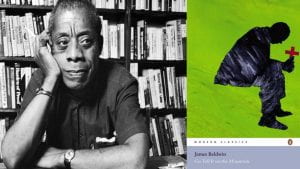
Renowned author James Baldwin in a study. Cover of the novel, Go Tell it on the Mountain.
Figure 3: Source: Yahoo Images; An image of the author of several award-winning novels, James Baldwin. Figure 4: Source: Yahoo Images; The cover of James Baldwin’s first novel, Go Tell it on the Mountain.

Writing between 1953 and 2011, a mix of standalone novels, short stories, plays, poetry, and non-fiction books, James Baldwin is considered a quintessential American writer. As the grandson of an enslaved person, Baldwin’s work reconciled with the experience of being a Black man in White America. Born in 1924 in Harlem, New York, he was the oldest of nine kids and spent most of his time in libraries.

He spent three years in his stepfather’s profession as a preacher before moving to Greenwich Village and pursuing writing. Even though most of his work was embroiled in experiences of anger and disillusionment, Baldwin always advocated love and brotherhood.

After passing from stomach cancer at the age of 63 in 1987, Baldwin became known as one of the most vocal and prominent voices for equality. He is considered an essential, and enriching, part of the American literary canon.

Alice Walker
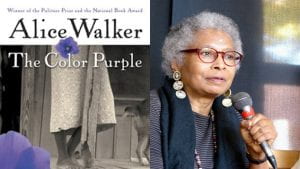
Cover of the novel The Color Purple. Acclaimed author Alice Walker holding a microphone.
Figure 5: Source: Yahoo Images; The cover of one of Alice Walker’s novels, The Color Purple. Figure 6: Source: Flickr, Photo credit to Virginia DeBolt; An image of acclaimed author, Alice Walker.

Alice Walker was born in 1944 in Eaton, Georgia. Her parents were sharecroppers and after a childhood incident that left her blind in one eye, Walker’s mother considered her more suited for writing than chores. This talent landed her a scholarship to Spelman College, whereafter she transferred to Sarah Lawrence College and earned a BA in Literature.

After graduating, she moved to Mississippi to join the Civil Rights Movement and married Melvyn Rosenman Leventhal; becoming the first interracial marriage in the state.

Walker is hailed for her rediscovery of author Zora Neale Hurston and her foundational role for Black women authors.

She published her first book of poetry in 1968, Once, and her first novel in 1970, The Third Life of Grange Copeland. Her most acclaimed work came in 1982, The Color Purple, wherein she explores gender, sexuality, and race. She continues to publish to this day and is widely regarded for her insightful portrayal of Black American life and culture.

Toni Morrison
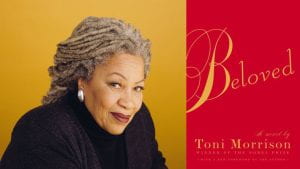
Renowned author Toni Morrison. Cover of the novel, Beloved.
Figure 7: Source: Yahoo Images; An image of the author of several award-winning novels, Toni Morrison. Figure 8: Source: Yahoo Images; The cover of Toni Morrison’s first novel, Beloved.

Toni Morrison was born on February 18, 1931, in Lorain, Ohio. Though living in a semi-integrated area, Morrison experienced the cruel reality of racism. At two years old, their landlord set their apartment on fire with them inside when her family could not afford rent.

She turned her attention to reading and eventually attend the historically black institution, Howard College. There she was exposed to colorism and witnessed firsthand how racial hierarchies extended to skin pigmentation within the Black community.

Working within academia throughout the North and South, Morrison eventually settled in an editing career. Though she worked for publishing companies, she did not publish her first novel, The Bluest Eye (1970), until she was 39 years old. However, after (and like) this first work, each of her subsequent novels earned critical acclaim and several awards. In 1987, she released her most-known work, Beloved, which is based on the true story of an enslaved woman. The novel was on the Bestseller list for 25 weeks and won numerous awards, including the Pulitzer Prize for Fiction.

In 1993, Toni Morrison became the first Black woman to win the Nobel Prize in Literature and has also been awarded the National Book Foundation’s Medal of Distinguished Contribution to American Letters, National Book Critics Circle Award, and she was named a Living Legend by the Library of Congress.

As an internationally renowned author, Morrison has left a litany of insightful works from novels to plays and children’s stories. She passed away in 2019.

Ralph Ellison
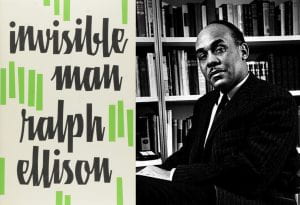
Cover of the novel Invisible Man. Acclaimed author Ralph Ellison in a study.
Figure 9: Source: Yahoo Images; The cover of Ralph Ellison’s first novel, Invisible Man. Figure 10: Source: Yahoo Images; An image of the esteemed author, Ralph Ellison.

Ralph Ellison was born on March 1, 1914, in Oklahoma City, Oklahoma. He was the grandson of enslaved people. He only ever published one book during his lifetime, Invisible Man (1952), yet this book gained him national acclaim. After his death on April 16, 1994, his second novel, Juneteenth, was published in 1999.

Originally, Ellison had had dreams of becoming a professional musician and had enrolled at the Tuskegee Institute to do just that. However, after traveling to New York City during his senior year to earn funds for his final year, he met Richard Wright (author of the polemic novel Native Son). This, coupled with the onset of the Great Depression, prompted Ellison to embark on his writing career.

He wrote for the New York Federal Writer’s Program, an offshoot of the Works Progress Administration. After the outbreak of WWII, Ellison joined the U.S. Merchant Marine as a cook and began planning for what would become his infamous novel, Invisible Man.

When it debuted, it was on the Bestseller’s List for 16 weeks and won the National Book Award. Forty years later, the Nobel Peace Prize winner, Saul Bellow, stated, “This book holds its own among the best novels of the century.”

Zora Neale Hurston

Pioneering author Zora Neale Hurston. Cover of the novel, Their Eyes Were Watching God.
Figure 11: Source: Yahoo Images, Available from the United States Library of Congress; An image of the author of several award-winning novels, Zora Neale Hurston. Figure 12: Source: Yahoo Images; The cover of Zora Neale Hurston’s acclaimed novel, Their Eyes Were Watching God.

Zora Neale Hurston was born on January 7, 1891, in Notasulga, Alabama, U.S. She is a world-renowned author and one of the first students of the father of anthropology (Franz Boas).

She was the daughter of enslaved parents. At a young age, her family relocated to Eatonville, Florida where her father became the town’s first mayor, in what was the first all-Black incorporated town in the state.

Hurston earned her Associate’s from Howard College before she won a scholarship to Barnard College and graduated with a Bachelor’s in Anthropology. As a student in New York City, she met fellow writers like Langston Hughes and Countee Cullen and joined what is remembered as the Harlem Renaissance 一 a black cultural movement of arts, music, and literature.

She began publishing short stories as early as 1920, though was largely ignored by white mainstream literary circles (though she gained a large Black readership). In 1935, she published her debut novel, Mules and Men, and between 1934 and 1939 wrote three more works. Her most acclaimed novel is Their Eyes Were Watching God (1937) which incorporated her research and literary talents to focus on the life of Janie Crawford, a Black woman whose journey of self-discovery and identity takes her to many places.

She is a pioneering figure of modern anthropology and traveled to Haiti and Jamaica to study African diasporas. Moreover, she chronicled many Black folktales and dialects which she subsequently incorporated into her own writings. While this drew criticism from some contemporary figures, her work celebrated Black language and culture unabashedly.

Zora Neale Hurston passed away on January 28, 1960, in Fort Pierce, Florida. Zora Neale Hurston was long an unsung literary figure but after her rediscovery by author Alice Walker, her works have once returned to print.

Regarded as one of the founders of Black writing, particularly for Black women authors, Alice Walker has said:

“Her work had a sense of Black people as complete, complex, undiminished human beings and that was crucial to me as a writer.”

bell hooks
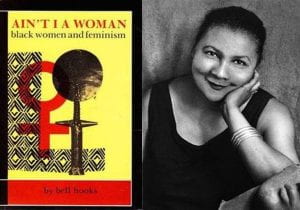
Cover of the novel Ain’t I A Woman? Black Women and Feminism. Acclaimed author bell books.
Figure 13: Source: Yahoo Images; The cover of bell hook’s first novel, Ain’t I A Woman? Black Women and Feminism. Figure 14: Source: Flickr, Photo credit to Kevin Andre Elliot; An image of the acclaimed author, bell hooks.

bell hooks, a pseudonym of Gloria Jean Watkins, was born September 25, 1952, in Hopkinsville, Kentucky.

She grew up in a segregated community in the American South which eventually informed her writing. She published her first work, Ain’t I A Woman? Black Women and Feminism (1981), while still an undergraduate at Standford University.

Her pseudonym was fashioned after her great-grandmother’s name in order to honor female legacies and she chose all lowercase letters because she wanted people to focus on the content of her books over her.

hooks was a progressive thinker and scholar whose work engaged with the intricate relationships of race, class, and gender as situated in systems of structural oppression and violence. She educated people on intersectionality well before it became a common word now (essentially pioneering the ideology itself).

She passed away on December 15, 2021, in Berea, Kentucky. You can find a selection of her works here.

Angela Davis
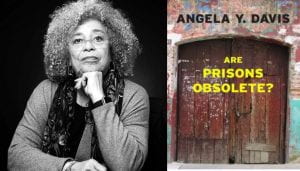
Acclaimed author Angela Davis. Cover of the book, Are Prisons Obsolete?
Figure 15: Source: Yahoo Images; An image of the author of several provocative books, Angela Davis. Figure 16: Source: Yahoo Images; The cover of one of Angela Davis’ acclaimed books, Are Prisons Obsolete?

Angela Davis was born January 26, 1944, in Birmingham, Alabama in a neighborhood known as “Dynamite Hill” for the numerous bombings committed by the domestic terrorist group, Ku Klux Klan. She is a philosopher, activist, and former Black Panther and political prisoner who was wrongly accused of participating in the killing of a prison guard after becoming involved in the Soledad Brothers campaign. After that, Davis went into hiding and was placed on the FBI’s Ten Most Wanted Fugitive List, making her the third woman to ever be placed on the list.

An international movement to “Free Angela” led to songs from artists like Yoko Ono, John Lennon, and the Rolling Stones. On June 4th, 1972, she was found not guilty of all charges.

Angela Davis continues her legacy to this day, giving speeches and continuing to write new works that discuss intersectionality, racial disparities and structural violence, and abolition, among a few topics. Her latest book was published in 2022 with her partner, Gina Dent, alongside Erica R. Meiners and Beth E. Richie titled: Abolition. Feminism. Now.

Find more of her works here.

Maya Angelou

Cover of the novel I Know Why the Caged Bird Sings. Celebrated author and poet Maya Angelou.
Figure 17: Source: Yahoo Images; The cover of one of Maya Angelou’s works, I Know Why the Caged Bird Sings. Figure 18: Source: Yahoo Images; An image of the celebrated author and poet, Maya Angelou.

Maya Angelou was born on April 4, 1928, in St. Louis, Missouri. She writes across several mediums as a memoirist, poet, author, playwright, and essayist. Her work explores themes such as economic conditions, race, and sexual oppression. She is also renowned for her unique and visionary autobiographical writing styles.

Angelou did not live with her parents full-time during her childhood as a result of divorce and other factors. When she returned from her grandmother’s care to live with her mother at the age of seven, she was raped by her mother’s boyfriend. He was jailed, and upon his release, was killed. Believing that she had somehow had a part in the death of this man, Angelou became mute for the following 6 years of her life.

Angelou displayed her literary talents from a young age but did not become a professional writer until much later in life, around when she joined the Harlem Writer’s Guild in 1959. She was also a prominent activist in the Civil Rights Movement and served as the North Coordinator for the Southern Christian Leadership Conference.

In 1969, she wrote one of her most famous works, I Know Why the Caged Bird Sings, which was an autobiography of her early life, exploring her experiences with sexual abuse. Many schools sought to ban this book as a result of these depictions, but numerous sexual abuse survivors have credited her work as telling their stories.

While she has earned numerous awards, including three Grammy Awards, for her writing she was awarded the National Medal of Arts (2000) and the Presidential Medal of Freedom (2010).

Maya Angelou passed away on May 28, 2014, in Winston-Salem, North Carolina after a long and fruitful career. You can find a list of her complete works here.

James Cone

Acclaimed author and theologian, James Cone. Cover of the book, A Black Theology of Liberation.
Figure 19: Source: Wikimedia Images; Dr. James Cone at the 174th Convocation of Union Theological Seminary in the City of New York. Figure 20: Source: Alex Yates; The cover of one of James Cone’s pioneering books, A Black Theology of Liberation.

James Cone is a highly influential figure who founded Black liberation theology, alongside, being an outspoken proponent of justice for the oppressed in society. He is known as one of the most widely regarded theologians in America, teaching at the Union Theological Seminary for 50 years and influencing generations of scholars. One such student is currently a senator for the state of Georgia, Rev. Raphael Warnock, who was elected in 2020 as the state’s first Black senator.

Born August 5, 1938, in Arkansas, he grew up during intense racial segregation during the 40s and 50s. Living under the threat of lynching revealed to Cone the immense spiritual and moral depth of Black people, especially as Cone’s own parents taught love over hate when confronted by racial injustice and threats. As a result of his personal experiences and figures such as Malcolm X and Martin Luther King Jr., Cone developed Black liberation theology to challenge the white hegemony of Christian teachings and understanding.

Black liberation theology is informed by six sources which can be summarized as the black experience (slavery, segregation, and lynchings), black culture and revelation, and tradition and scriptural interpretation. He is best known for his political and influential books, Black Theology and Black Power (1969), A Black Theology of Liberation (1970), and God of the Oppressed (1975).

He passed on April 28, 2018, at the age of 79. His latest memoir was written just prior to his passing and is titled: Said I Wasn’t Gonna Tell Nobody.

Octavia Butler

Acclaimed author Octavia Butler.
Figure 21: Source: Yahoo Images; An image of the acclaimed author, Octavia Butler

Octavia Butler was born in 1947 in Pasadena, California. She is an author of mostly science fiction novels in future settings, often incorporating unique powers. Her numerous works are known for their synthesis of science fiction, mysticism, mythology, and Black American spiritualism.

Not only was Butler the first Black woman to receive wide acclaim in this genre of fiction, but she was also the first science fiction writer to win the MacArthur “Genius” Award. She has also won several other awards including the Hugo, Nebula, and Locust awards.

In 1975, she published her first novel Patternmaster, which was quickly followed by Mind of My Mind and Survivor: This series is about humanity’s evolution into three separate genetic groups.

Her best-known work, Kindred, was published in 1975 and continues to be taught in high schools, universities, and community reading programs to this day. (There was even a recent television adaption on Hulu.)

Much like other Black women authors on this list, Butler’s work extends beyond race and explores the dynamics of sex and gender, challenging traditional gender roles in works like Bloodchild and Wild Seed. Octavia Butler passed away on February 24, 2006, in Seattle, Washington, but not before securing her legacy in her numerous works.

Conclusion

To learn more about book bans, read the article by Nikhita Mudium: “Book Bans in the United States: History Says it All.”

If you liked this book list, check out the list of contemporary Black authors here.
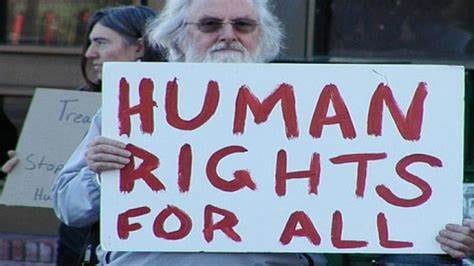
Human Rights Abuses Against Elderly During Armed Conflict

Source Yahoo Images

Armed conflict often results in a wide range of human rights violations, including right to life, liberty, and security. Conflict can have a devastating impact on human rights, leaving individuals and communities vulnerable to a range of abuses and violations. Often times, during military conflicts, the elderly are overlooked when it comes to human rights abuses. Despite being among the most vulnerable members of society, the impacts of armed conflict on older people are often underreported, highlighting the need for greater attention and support for this marginalized group. Human Rights Watch released a report addressing the significant human rights violations older people endure during wartime. The report calls for the United Nations (UN) to end the abuses, provide protection, and facilitate humanitarian assistance for the elderly. The report documents a pattern of violations against the elderly in African and Middle Eastern countries experiencing war 

Pattern of Abuses

Older people are more likely to experience a range of physical, emotional, and economic challenges during times of conflict. Government and non-state armed forces have unlawfully attacked and killed older civilians, subjecting them to summary executions, arbitrary arrest and detention, torture and other ill-treatment, rape, abduction and kidnapping, and the destruction of their homes and other property. Older people are more likely to be injured or killed during armed conflict due to their reduced mobility, impaired senses, and other health issues. In the Central African Republic, for example, the armed forces executed Dieudonne, a blind 60-year-old man in July 2017. Many older people rely on family members and caregivers for support, but armed conflict can disrupt these networks, leaving them isolated and vulnerable. In Ethiopia, after Tigrayan forces recaptured most of the Tigray region in 2021, authorities arbitrarily arrested and detained older Tigrayans in Addis Abeba. Amhara forces in control of the Western Tigray zone detained elderly people in overcrowded detention facilities, subjecting them to beatings and other forms of ill-treatment. The stress and trauma of living in a conflict-affected environment can have significant impacts on older people’s mental health and well-being, and may exacerbate pre-existing mental health conditions. In South Sudan during government operations against rebel forces in February 2019, a soldier made a 50 year-old woman carry looted property, beat her with a gun, and raped her repeatedly. Sexual assault can have profound and long-lasting effects on an individual’s mental health and well-being. 

Source By Yahoo Images

Unable to Receive Aid 

Another facet of the abuse is that displaced older people cannot access humanitarian aid. People experiencing must flee in order to access basic services such as food, shelter, and medical care. During hostilities, many older people have chosen not to flee their homes because they think they will not be harmed, or they want to protect the land they have had in their families for years. Also, limited mobility and disability lead to fewer elderly choosing to flee. In 2017, Myanmar security forces pushed older people who could not flee back into burning houses. Displaced older people have also faced difficulties in registering for and receiving humanitarian aid. In South Sudan in 2017, displaced older people who sought refuge were more likely to face difficulties in receiving aid than those who fled to Protection of Civilians sites within UN bases. Amnesty International has documented the failure of humanitarian actors to meet humanitarian standards and be inclusive of older people in their responses to conflict-driven displacements 

Source by Yahoo Images

Significance 

We should be concerned with the gross negligence of elderly’s human rights because every person deserves respect and dignity. Elderly individuals have a wealth of life experience and knowledge to share, and they deserve to be valued and respected for their contributions to society. Due to their age, older people are one of the most vulnerable groups, so it is up to us to do all we can to ensure their safety and protection. Protecting the human rights of elderly individuals is a matter of social justice. As members of society, they have the same rights and entitlements as anyone else, and it is our collective responsibility to ensure that these rights are upheld. 

The City in the Forest Soon to be Cop City

I grew up in the Atlanta metropolitan area. Not inside the perimeter as one might say, I spent my childhood in the forests for hours at a time. My brother and I never grew bored of the endless possibilities and freedom we felt among the oaks: they are some of my most treasured memories. So, whenever we drove into Atlanta proper, I would watch the trees blur by as we encroached further to the city’s heart, well past the notorious highway 285 that encircles it. I always had a tree in sight no matter the distance we ventured into the city, and it always reminded me that home could extend and coincide with a vibrant metropolis rising ever closer in my sight. This always soothed me and put me at peace. 

Not all is peaceful in the forest, however. 

When protesting is rebranded as domestic terrorism

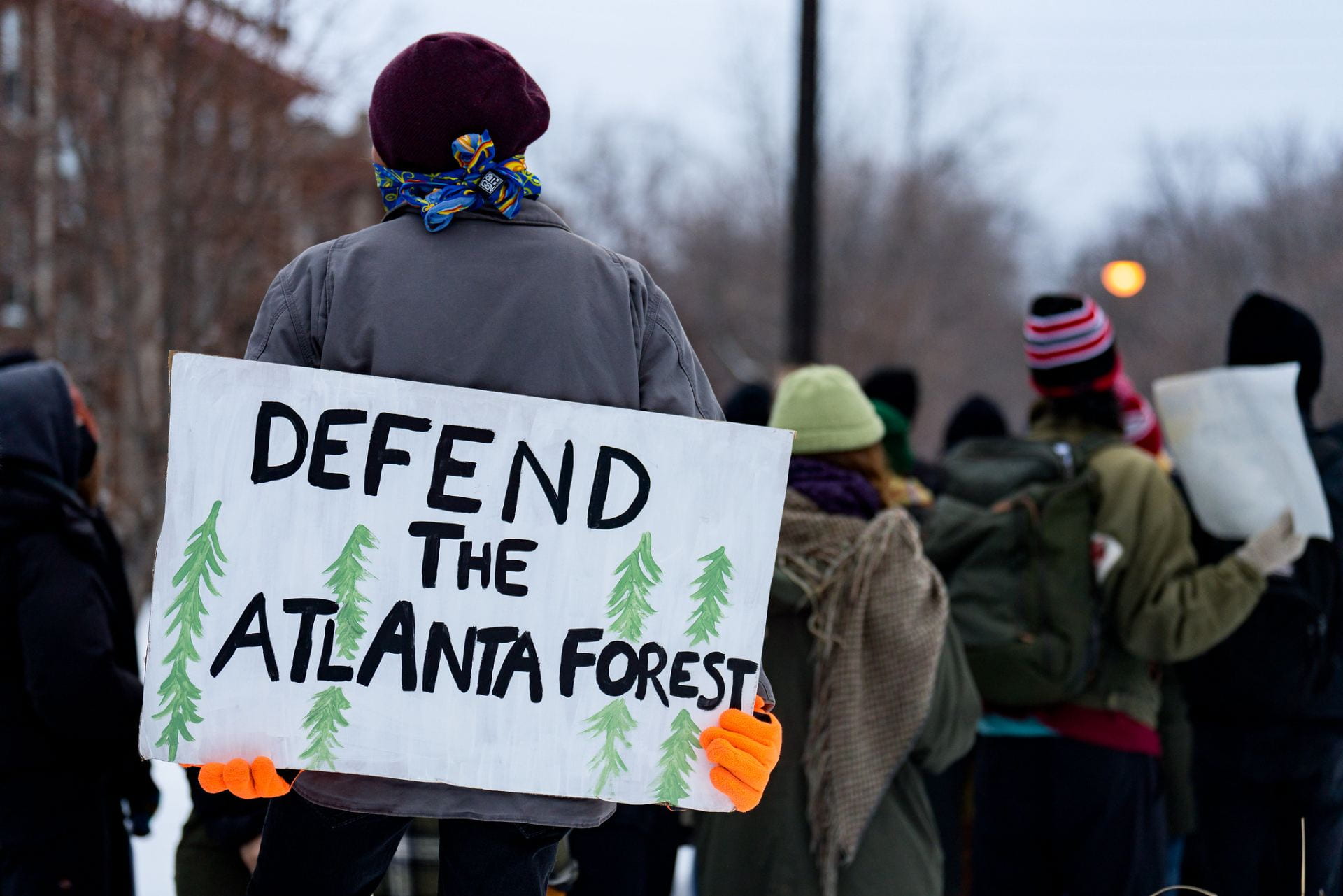
Since the quiet release of plans to demolish South River Forest (also known as the Old Atlanta Prison Farm) in 2021, protesters have been camping in the forest for months. Local organizations have banded together in order to advocate for the forest and resist police attempts to forcibly remove protesters. These organizations include Defend the Atlanta Forest, Community Movement Builders, a Black-led nonprofit serving working-class and poor Black people, and the newly formed Stop Cop City group. 

These organizations have intersecting goals that culminate in mutual aid to stop the construction of the Atlanta Public Safety Training Center known as “Cop City.” Leaders from the Community Movement Builders described the project as a “war base” wherein “police will learn military-like maneuvers to kill Black people and control our bodies and movements.” 

One reason for the clear disdain for the project, aside from the historical implications discussed further below, is that the proposed site resides in unincorporated Dekalb county. Thus, those living in the neighborhood had no representatives on the council that approved the project in the first place. After public outrage at the lack of transparency and community engagement, the Atlanta council begrudgingly allowed public comments before the vote in September 2021. The council received 17 hours of recording on the proposal with 70% (or 12 hours) expressing opposition. The plan still passed 10-4. 

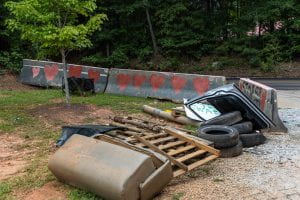
Short cement barricades with hearts painted along their length.
Figure 1: Source: Flickr, Photo credit to John Ramspott; Barricades constructed by Cop City protesters from debris and illegally dumped material.

Protesters have created makeshift barricades from mounds of illegally dumped material such as automobiles and tires in the forest. There is no water or electricity in the encampments so the protesters live very frugally to defend their beliefs. Access to water has continued to be an issue as police try to cut off supplies in an attempt to disperse the protesters and conduct regular raids and wreaking camps. 

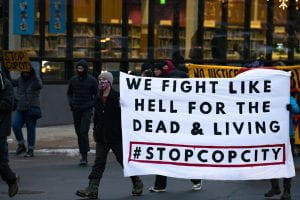
Confrontations with the police have only become more frequent: and with more serious consequences. At first, some activists found themselves with trespassing charges, but protests escalated on January 18th when demonstrator Manuel “Tortuguita” Teran, a 26-year-old queer environmental activist, was lethally shot by Georgia state police.

 Protesters walk down the street holding signs that say “Stop Cop City” and a large forefront banner “We Fight Like Hell For The Dead & Living.”
Figure 2: Source: Flickr, Chad Davis; Protesters in Minneapolis after the killing of Manuel “Tortuguita” Teran.

The Georgia Bureau of Investigation released a statement that Tortuguita, they/them, did not “comply with verbal commands” and allegedly shot a Georgia State Patrol trooper who is in stable condition. As a result of these alleged sequence of events, Tortuguita was shot over a dozen times by multiple different firearms and there is no body cam footage of the tragedy. 

Now, the state is planning to convict 18 activists of domestic terrorism charges which holds a possible sentence of up to 35 years. 

Local authorities have continued to falsely claim that organizations involved in resisting police development plans are “domestic violent extremists.” During the bail hearing for those arrested on Jan. 18th, bail was denied to four activists while two were given the unprecedented amount of $355,000, along with conditions for ankle monitors and curfews. 

What once would have been considered a sit-in protest has now been twisted into “domestic terrorism.”

So what is Cop City? 

Cop City is the name that has been given to the project to construct the nation’s largest police training facility

Considered a private-public venture between the city of Atlanta and the Atlanta Police Foundation (APF), the 85 acres slotted to be turned into a police compound would cost $90 million to construct. Renderings of the project include indoor and outdoor shooting ranges, an auditorium, classrooms, a space dedicated to explosion tests, and a mock miniature city to practice high-speed chases and burn-building training. 

The Public Safety Training Academy Advisory Council was formed under the previous mayor,  Keisha Lance Bottoms, on Jan. 4, 2021. According to investigative work conducted by the Mainline, a woman-led independent magazine based in Atlanta, the council was comprised entirely by “government, police, and fire officials, including Chief Operating Officer Jon Keen and APF CEO and President Dave Wilkinson.”

After meeting on Jan. 22, Feb. 12, March 4, and March 26 in 2021, the plan that would become Ordinance No. 21-O-0367  (Cop City) was introduced on June 7th the same year. It was passed shortly thereafter on September 8th, 2021. 

Two-thirds of the costs ($60 million) to construct Cop City are coming from corporate donors such as Chick-Fil-A and Delta. Otherwise, despite the desperate and apparent need for affordable housing, food, and other life-affirming infrastructures, the remaining third of the costs ($30 million) is to be paid by taxpayers

The land is currently under lease to the Atlanta Police Foundation for only $10 a year (see page 10) and construction started this February. 

Hidden racist history of the forest continued with the development of Cop City 

Before South River Forest became known as such, located in the bustling perimeter of Atlanta’s sprawling metropolitan, the land belonged to the Muscogee Creek nation. In the early 19th century, these people were forcibly removed from their land by ever-encroaching settlers on the East coast and South Florida. 

In 1821, Georgia held its fourth land lottery, dividing the Muscogee Creek home into 202.5 acres. Between an 11-year period (1827-38), 23,000 Muscogee were driven from their lands by white, enslaving men.

Soon after, the land became a part of a complex of plantations that exploited the labor of enslaved people. The proposed South River Forest zone contained at least 9 plantations. The names of these plantation owners will not be given here, however, to learn some of the known names of enslaved peoples residing in this area, please read this article

Eventually, this land was sold to the city of Atlanta which was then used as a city-run forced agricultural labor prison that ran uninterrupted from 1920 to nearly 1990, being officially shuttered in 1995. 

Originally, the land became the first “honor farm” in the state, allowing trustworthy prisoners and those with minor infractions to work off their time. This was only a mask for a new form of slavery, cruelty, and so much worse as the Prison Farm ran, without clear archived records, for decades. The last official record comes from a 1971 health inspection record. 

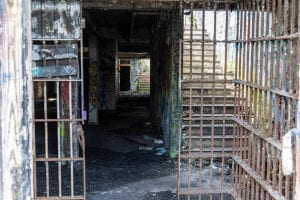
A set of bars within a decaying building structure covered in graffiti, formerly the now abandoned Atlanta Prison Farm.
Figure 3: Source: Flickr, Photo credit to John Ramspott; Within one of the abandoned prison farm structures.

There are no official reports on the number of people who died under the inhumane working conditions, but there is a widespread belief that some inmates who died were buried in unmarked graves though none have been found yet. A little of what we know is troubling at best and stomach-churning at worse. In 1941, a prison superintendent reported housing 9 Black prisoners in a 12 ft space, alongside numerous reports of sexual violence from guards, and inmate deaths, often under suspect circumstances. 

In one example, prisoners were allowed to handle Sulfotep, which was only contained in unlabeled squeeze bottles and is an extremely toxic chemical pesticide only supposed to be dispensed by licensed company personnel. We know this because of the death of Leroy Horton, who was serving only a 20-day sentence, and who had been sprayed with the substance by another inmate at his own request after contracting lice at the prison. He served only four days of his sentence and died three weeks later due to these gross malpractices in safety protocols and sanitary living conditions. 

Now, the land is once more under contract by state policing structures.

Benefits and necessity of urban forests

Atlanta has been called the “City in the Forest” for its vast canopy coverage and abundance of trees within the city. That is because Atlanta leads the nation and major metropolitan cities in canopy coverage at 47.9 percent. 

The canopy is not distributed evenly across the city, rather it decreases as one approaches downtown and increases as one approaches the outskirts, making the presence of South River Forest within the perimeter that much more extraordinary. Researchers also found that the lowest canopy coverage was along transportation corridors, but was over 90 percent along stream corridors and in nature preserves

More and more cities are tracking the number of trees they foster because of the multitude of benefits they offer. This ranges from combatting urban heat island effects, reducing heating and cooling costs overall, providing blue/green space which improves mental health, acting as stormwater management to control flooding, and sequestering carbon thus improving air quality, combatting carbon emissions and climate change.

Results from a Montgomery, Alabama analysis found that urban forests removed 3.2 million lbs of pollutants from the air annually which is valued at $7.9 million. Moreover, the urban forest sequestered 11,263 tons of carbon each year and stored a total of 1.45 million tons of carbon. 

In Atlanta, climate scientists have warned that destroying woods will make the city more susceptible to flooding and dangerously hot temperatures. Other concerns over the South River Forest area are worsened air quality due to construction, fires, and weapons training. In this mainly Black part of metro Atlanta, people have been historically neglected. According to the US Census, 75 percent of the neighborhoods near the forest are Black and suffer from high poverty rates and health challenges like diabetes and asthma

The Sierra Club Georgia Chapter issued a statement on behalf of Black and Latinx community members, who have long been victims of environmental injustice and pollution within the city, stating their vehement opposition to the destruction of the South River Forest. 

Intersections of social ecology and human rights

In recent years, there has been a burgeoning movement to connect ecological and social issues together: known as the theory of social ecology. Murray Bookchin, a pioneer in the environmental movement and social theorist, has stated that ecological problems stem from social issues which in turn are exacerbated by ecological destruction. This vicious cycle has become the driving force behind new movements to address climate change and foster more awareness of the interdependence of people and their environment. Without this widespread recognition, social-ecological theorists have argued that hierarchical societies that rely on violent institutions like prisons and police are more likely to treat their environment and people as entities to be dominated, conquered, and/or controlled. 

In the case of the South River Forest/Cop City contention, this theoretical framework can be easily illustrated, alongside numerous normative international human rights standards. 

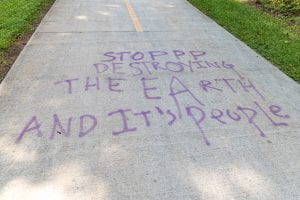
A spray-painted message on South River walking trails that reads “Stop Destroying the Earth and Its People.”
Figure 4: Source: Flickr, Photo credit to John Ramspott; Spray-painted messages from protesters on walking trails within South River Forest.

Firstly, the plans to develop Cop City were done so surreptitiously; there were no public announcements on the proposal before voting, nor were community members and organizations/specialists asked to participate in the development of the plans. Secondly, the council that approved the plans was not elected by anyone from the community in which the Cop City construction will take place. These are prime disregards for political and public representation: foundational blocks for democratic governance, rule of law, and social inclusion. From the Office of the High Commissioner for Human Rights (OHCHR): 

“Participation rights are inseparably linked to other human rights such as the rights to peaceful assembly and association, freedom of opinion and expression and the rights to education and to information.”

Next, the economic and social human rights of the South River Forest community are also being threatened. Economically, once again without any representative input, ⅓ of the cost ($30 million) is to be paid by taxpayers. Socially, each human has the right “to social protection, to an adequate standard of living and to the highest attainable standards of physical and mental well-being.” These rights are being threatened by the gross environmental degradation of a low-income community that already suffers from health conditions such as asthma. Moreover, it has long been scientifically proven that blue-green space increases one’s mental health 一 an explicitly aforementioned social right. 

Lastly, we come to environmental rights. The task of succinctly explaining them can be a lot, I encourage readers to look on our site in the “Environmental Rights” category for even more insight. However, in this case, where the environment is the key concern of protest, one should return again to social-ecological theory. In human rights, the right to health found in the International Covenant on Economic, Social, and Cultural Rights, cannot be fully achieved in an environment that contributes to worse air quality, mental health, and dangerously high temperatures. The right to security, found in Article 3 of the UDHR, cannot be achieved in an environment where the community is under threat of more flooding, subject to burns, bombs, and shooting daily, and lives in fear of violence. And this can go on and on. 

Ultimately, this issue is complex and multifaceted: and it deserves public and civilian representation and more time than 7 months of deliberation to destroy a forest hundreds of years old.

Offer your support and learn more below: 

A Brief Judicial History of Religious Freedom

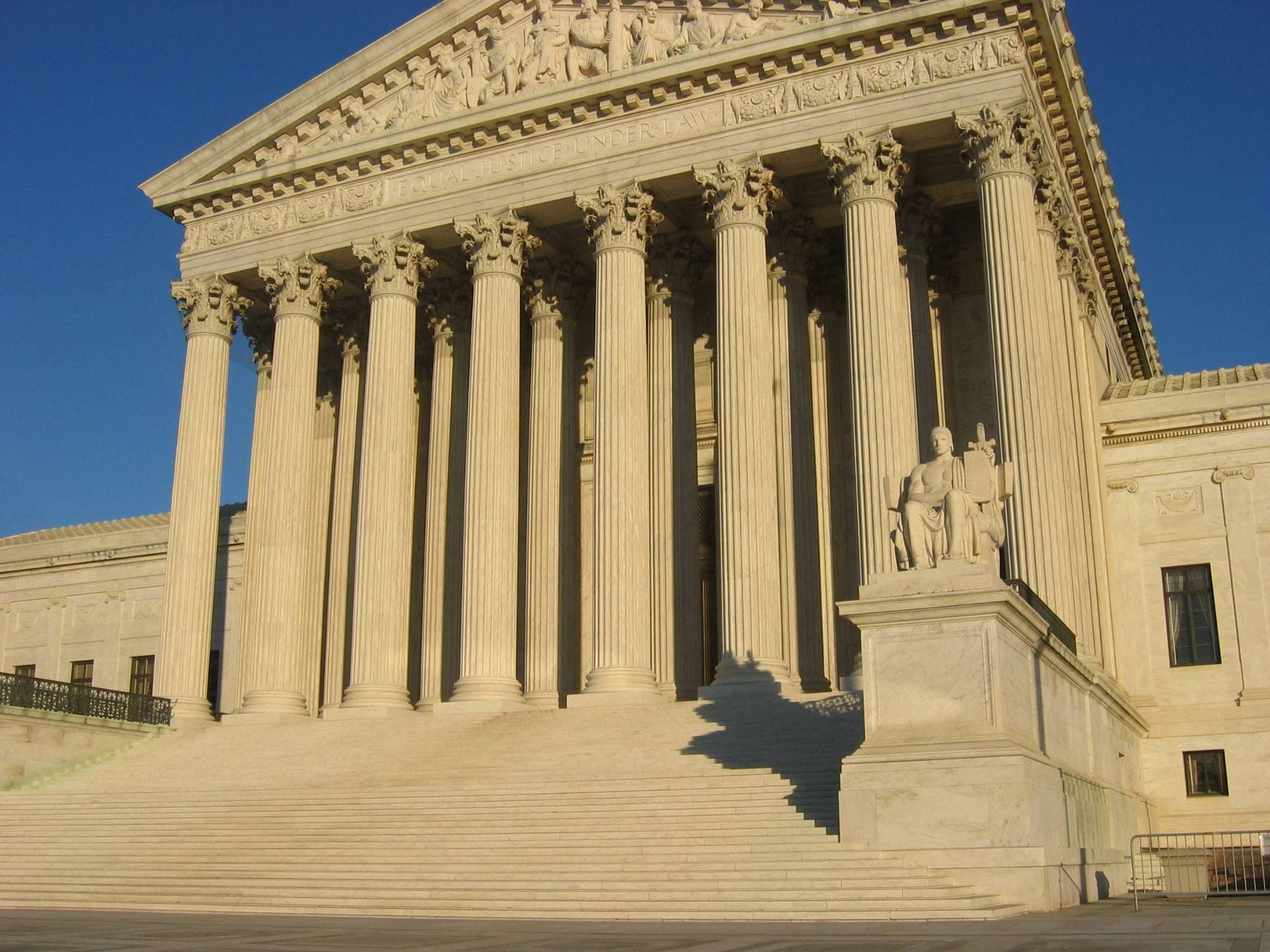
US Supreme court building
(source: yahoo images)

The first line of the first amendment in the Constitution of the United States, also known as the Establishment clause, asserts that “Congress shall make no law respecting an establishment of religion, or prohibiting the free exercise thereof…” This clause, although seemingly simple in nature, has been the root of many judicial battles throughout the United States’ history. Religion, as a human right, has always been a topic of political debate.  

One might inquire as to why this is the case: what makes the freedom of religion such a sensitive topic? In this blog, I seek to answer this question by outlining fundamental cases which have shaped how our legislators interpret our right to religion. Moreover, this blog shall conclude with how our fundamental right to religion is being interpreted today, as well as what is potentially in store for religious interpretation in the future. 

Lemon v. Kurtzman (1971) | Introduction of the Lemon Test

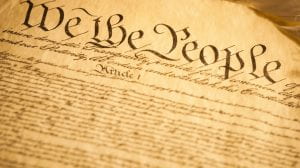
US constitution
(source: yahoo images)

Our journey begins in 1971, with the landmark Supreme Court Case of Lemon v. Kurtzman which involved the states of Pennsylvania and Rhode Island. The issue materialized when both of the aforementioned states decided to introduce legislation that would use taxpayer money to fund church-affiliated schools. In doing so, the government funds would pay for teacher salaries, textbook costs, and many other educational materials. Funding church-affiliated schools could be construed as a violation of  the Establishment Clause. The Supreme Court followed this logic, and with an 8-1 ruling, they decided to strike down the legislation passed by Rhode Island and Pennsylvania, no longer allowing state funds to go to church-affiliated schools.

What is particularly remarkable about this case is that it formally introduced the so-called Lemon Test, a judicial test constructed to see if legislation defies the Establishment Clause. The Lemon Test has three ways to test and see if a piece of legislation defies the clause:

  • The piece of legislation must have a secular purpose;
  • The piece of legislation must not advance or prohibit the practice of religion;
  • The piece of legislation must not force the government into “excessive entanglement” with religious affairs.

If a piece of legislation passes the Lemon Test, then it does not defy the Establishment Clause and can proceed to further scrutiny. That is, the legislation will be evaluated to see if aligns with the other amendments. With these three prongs noted, one can see how easily Lemon v. Kurtzman would have failed the Lemon Test. 

Wallace v. Jaffree (1985) | Application of the Lemon Test

Wallace v. Jaffree, a case that took place in the state of Alabama, is another landmark Supreme Court case involving a dispute in legislation around religion. In 1981, Alabama decided to introduce legislation that mandated a 1-minute moment of silence at the start of class in all public schools. Although, ostensibly, the legislators claimed that this moment of silence could be used either for reflection or prayers, the legislation’s intent was to create an opportunity for students to pray before school started.  

This decision naturally upset many non-religious parents, and multiple lawsuits soon followed, climbing their way up all the way to the Supreme Court. Throughout this process, the Alabama legislators argued that this bill does not defy the Establishment Clause, as the moment of silence can be used in any way that pleases the student— not necessarily just for prayer. However, the fault in this is that the introduction of the bill was done to allow students to pray, not to give them a moment of silence; thus, this bill failed the Lemon Test’s first prong as it did not have a secular purpose. In a vote of 6-3, the Supreme Court held that the bill defies the Establishment Clause. 

Oregon v. Smith (1990) | Introduction of RFRA

street signs saying church and state
(source: yahoo images)

This case, unlike the aforementioned ones, has a bit more nuance to it and led to a wide range of implications. This case is the primary reason Congress enacted the Religious Freedom Restoration Act in 1993, which is one of the most bipartisan pieces of legislation, having passed the House unanimously and the Senate 97-3. 

In Oregon v. Smith, two people, who both worked at a drug rehabilitation center, were fired due to having consumed peyote, a hallucinogenic drug. The issue at hand, however, is that their consumption of peyote was done during a sacred religious practice. This case did not make it to the Supreme Court because the drug rehabilitation center fired them (as the center very much can fire whoever they please — they are a private entity); it made it to the Supreme Court because after they were fired, these two individuals sought unemployment benefits and were denied due to being fired for consuming drugs, which is considered “workplace misconduct.” 

However, unlike the previous cases, the Supreme Court did not rule in favor of the appellants. The Court, by a 6-3 vote, ruled that since the denial of unemployment benefits due to workplace misconduct is a rule of general application (meaning it does not specifically target any people or religious practice), it is constitutional. 

However, as one might conclude, many did not like this outcome. Therefore, as aforementioned, Congress enacted the Religious Freedom Restoration Act (RFRA) to clarify some of the issues raised by Oregon v. Smith. The first clause of RFRA states its purpose, saying that it aims to prohibit “any agency, department, or official of the United States or any State (the government) from substantially burdening a person’s exercise of religion even if the burden results from a rule of general applicability.”

This first clause seeks to prohibit exactly what was the outcome in Oregon v. Smith, but it also comes with some limitations. That is, Congress is free to burden one’s exercise of religion if (1) doing so will further a compelling government interest; and, (2) doing so is the least restrictive means of furthering that compelling government interest. The introduction of this incredibly bipartisan bill, as we will shortly explore, has some interesting implications. 

Burwell v. Hobby Lobby (2014) | Application of RFRA

In the case of Burwell v. Hobby Lobby, we see the RFRA being put to use which leads to an interesting implication from the outcome of this case. Burwell v. Hobby Lobby sprouted from one of the requirements of the Affordable Care Act (ACA), namely, that all nonexempt employers are legally required to offer their employees health coverage and benefits, including contraceptives, some of which stop an egg from fertilizing. Before progressing with the case, we ought to make note that some employers, primarily religious institutions such as churches, are exempt from the ACA.

Hobby Lobby, a crafts company, is a tightly-owned company, meaning that there are only a few number of people who own the company. All of these owners, moreover, do not want to comply with the ACA since they believe life begins at conception and to thereby provide their employees with free contraceptives would go against their religious beliefs. However, if a company does not comply with the ACA, it would have to pay a fee per employee. For Hobby Lobby, the total cost would amount to about $475 million per year. 

Hobby Lobby was conflicted about whether they should go against their religious beliefs and supply their employees with contraceptives or instead pay $475 million a year and adhere to their religious stance. Due to this ethical dilemma, Hobby Lobby decided to sue the Department of Human Health Services (those who implemented the ADA), and the case made its way up to the Supreme Court. Hobby Lobby cited RFRA, stating that the ACA mandate does not comply with RFRA’s second clause. They argued that forcing Hobby Lobby to offer its employees contraceptives is not the least restrictive means of furthering a compelling government decision. Rather, Hobby Lobby stated that they, like religious institutions, should be exempt from the ACA, as that is the least restrictive means of furthering a compelling government interest (health care for employees). The employees of companies who are exempt from the ACA have their health care paid for by taxes. 

The Supreme Court agreed with Hobby Lobby. By a vote of 5-4, the Supreme Court ruled that Hobby Lobby is correct—the least restrictive means indeed is making Hobby Lobby an exempt company, thereby allowing governmental taxes to pay for the health care of their employees.

What is remarkable about this case is its implication that the Supreme Court stated that the best course of action to resolve a religious dispute over health care is to simply allow the government to fund health care. One might argue, then, that the Supreme Court is hinting toward universal health care, as they view that as the least restrictive means. 

Kennedy v. Bremerton School District (2022) | Abandonment of the Lemon Test

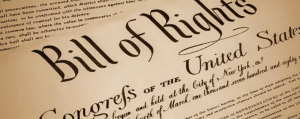
bill of rights
(source: yahoo images)

The last case we shall discuss is one that has been all over the media recently: Kennedy v. Bremerton School District. In this case, a high school football coach decided to kneel and pray before and after games. The school district feared that his actions would violate the Establishment Clause, so they asked him to stop. When he did not, they fired him.

Claiming his first amendment right to the freedom of religion was violated, he sued the school. The lawsuit eventually made its way up to the Supreme Court, and, by a 6-3 vote, the Court ruled in the coach’s favor, stating that he was not complicit in praying since he did it during post-game periods when people were free to do as they pleased.

However, something remarkable also happened in this case: the Supreme Court decided to stop using the Lemon Test, which has been in practice since 1971. Instead of the Lemon Test, the Court stated that they will decide disputes over the Establishment Clause by “accor[ding] with [what] histor[ically] and faithfully reflec[ts] the understanding of the Founding Fathers.”

What this means, we do not yet know, as this is yet another new change by the Supreme Court. Throughout history, the Lemon Test has proved itself to be a great way of settling legislative disputes, so one could only wonder why the Supreme Court decided against it.

Summary

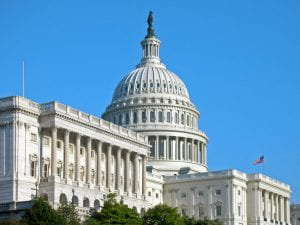
US Capitol Building
(source: yahoo images)

As I showed with this blog post, cases revolving around religious freedom are by no means simple, but the courts, thankfully, have historically always ruled in favor of the Establishment Clause, never seeking to subdue religious freedom.

However, after the abandonment of the Lemon Test in Kennedy v. Bremerton School District, it is clear that the Supreme Court is planning on interpreting the Establishment Clause differently than they have had since 1971. What this means for upcoming cases, we have yet to find out. However, what we do know is that religious freedom, despite how tricky it might be at times, should remain a human right. 

The Implications of Selective Activism on Human Rights

With the start of quarantine in 2020 and the rise of the social media app TikTok, many activist movements come to light and shed knowledge on the horrific injustices. One of the most prevalent examples is the Black Lives Matter (BLM) movement in 2020 and the period following it; it has become crucial for individuals to speak out against injustices. In a sense, it is part of “cancel culture” not to speak out, or if you speak out on the incorrect issues. As important as that is, it has been observed that many liberals and progressives only stand against injustices for specific issues. In a way, it involves choosing who is more worthy of having their rights protected. This may seem like an extreme notion or definition of selective activism, but it is essential.

The idea of selective activism was first introduced to me while reading “Except for Palestine: The Limits of Progressive Politics” by Marc Lamont Hill and Mitchell Plitnick. Even though this book specifically regarded the issues of Palestine and Israel, it dealt with an extremely important point and message; when we label ourselves as activists, we must be activists in all important issues. This is not to say that selective activism is always done intentionally; sometimes, it is by mere mistake or lack of knowledge on various issues. Everyone is guilty of this. Sadly, there are so many human rights injustices in our world that it is impossible to dedicate all your time to fighting for them. But what one can do in these situations is to be cautious of all issues at their prevalent times.

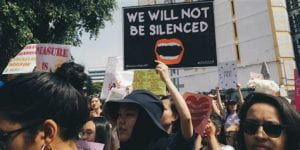
Picture of a poster at a protest stating "we will not be silenced"
Source: Yahoo Images

What is Selective Activism?

Selective activism is closely linked to the idea of selective hearing, only hearing what you want to hear. Its advocating for specific things only. The best way I have found to explain selective activism is through this quote in the book: “progressives and liberals who oppose regressive policies on immigration, racial justice, gender equality, LGBTQ rights, and other issues must extend these core principles to the oppression of others.” Some questions arise when speaking of selective activism; how do we choose? What makes one cause more worthy than another? The answer is simple. There are always causes that we feel especially connected to and that we constantly advocate for, but what is essential is that if one labels themselves as an activist, progressive, or humanitarian, then this needs to apply to all issues. If one is going to protest the killing of innocent individuals in America, then the same support must be shown to women in Iran. If one is going to advocate for Ukrainian refugees, then activism must be shown to MENA refugees and those whose countries are still under occupation. Ravyen Monroe, a writer for Affinity Magazine, explained it perfectly: “You can’t be an activist but stop advocating for certain groups when you get mad. You don’t get to pick and choose who is worthy of respect and who gets degraded by terms that have oppressed them for centuries…That’s not how activism works.”

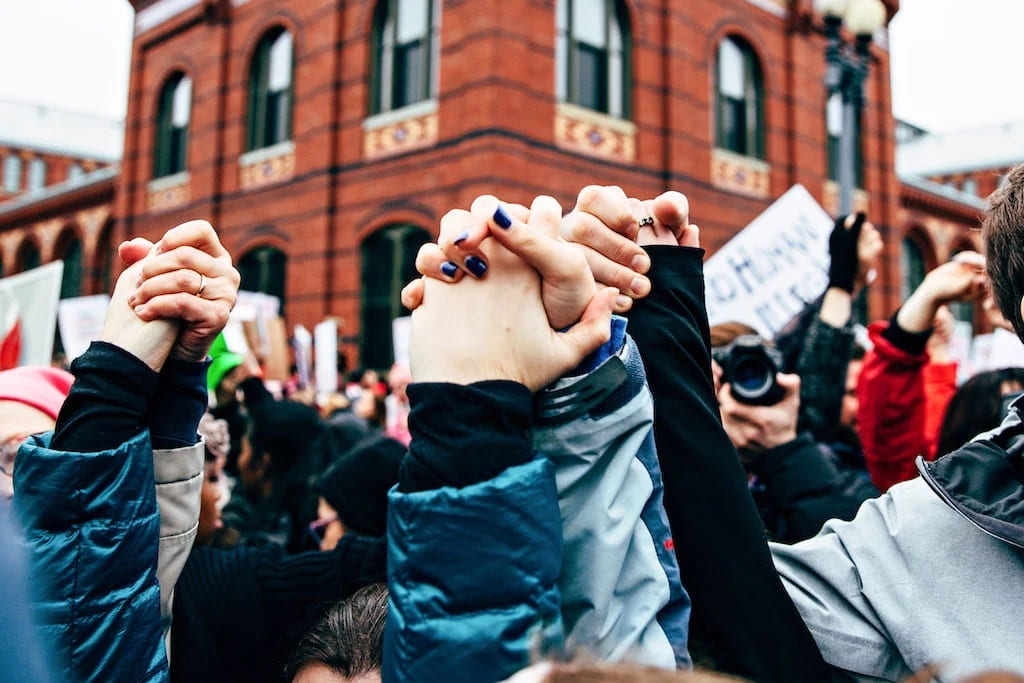
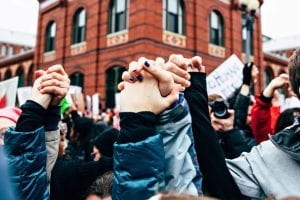
Showcasing activism; hand united
Source: Yahoo Images

Instances of Selective Activism

The most recent example of selective activism can be the world’s response to the Ukrainian refugee crisis compared to refugees from the MENA region (see blog on this topic here). Although what Ukrainians are going through is indescribable and is seen as an urgent humanitarian crisis, the problem is selective activism. The attention given to Ukrainian refugees was commendable. They were given the necessary aid and protection as needed. However, the same support was not extended to refugees from the MENA region. An Armenian writer explained this as a betrayal and stated, “it hurts to feel that certain people are prioritized in the eyes of the media, and thus, the world.” This type of selective activism is not limited to political activism and can also be seen in environmental activism. For instance, climate change activists. Many took the stance against using plastic and began investing in metal straws once it became a trend but continued to utilize plastic throughout their lives.

Impact of Selective Activism

Selective Activism has negative implications and effects on the world, like the forgotten issue of the Yemen crisis, Islamophobia in European countries, refugees, etc. The list is long and never-ending. Despite the many important human rights crises in the world, some face extreme critical conditions that tend to be forgotten. Many become activists when issues are trending, yet will forget about them once they are off the mainstream media. As illustrated, it is not possible for one to advocate for every cause or injustice. But, if one labels themselves an activist and sees many prevalent issues but ignores it, then that is participating in selective activism. An inclusive solution would be to continue the fight for human rights for all and to stay educated. If there are specific humanitarian causes important to one, make sure you are advocating for all the individuals affected. Below are books, movies, and resources that expand upon the notion of selective activism.

photo art of ways to advocate.
Source: Yahoo Images

Books:

“Except for Palestine: Limit on Progressive Politics” By Marc Lamont Hill & Mitchell Plitnick (This book opened my eyes to the idea of selective activism and its existence)

Movies:

Many movies educate one on the many humanitarian causes. My favorites are:

  • The Hate You Give
  • Farha
  • Swimmers


The Natural-Humanitarian Disaster of the Turkey-Syria Earthquake

Syria and Turkey have been impacted by one of the deadliest earthquakes that have been seen in the Middle East-North Africa (MENA) region. The death toll has surpassed 20,000 and continues to rise considerably, not accounting for the thousands injured. Some of the areas this earthquake has hit are some of the most vulnerable areas in the world. The conditions in both countries are indescribable; with homes destroyed, hospitals at capacity, and limited supplies, the need for help has become critical. It was noted that due to the destruction of the hospitals, and the lack of staff and supplies, patients have had to receive medical attention on the hospital floors. At this point, any type of aid is scarce in both countries. It is vital that everyone supports in any possible way. At the end of this post, you will find numerous links on how to help, whether through donation, reading, reposting, etc. Anything you can do to help is urged. Pass these resources along to your friends, family, colleagues, etc. The most minor contribution makes the most significant difference.

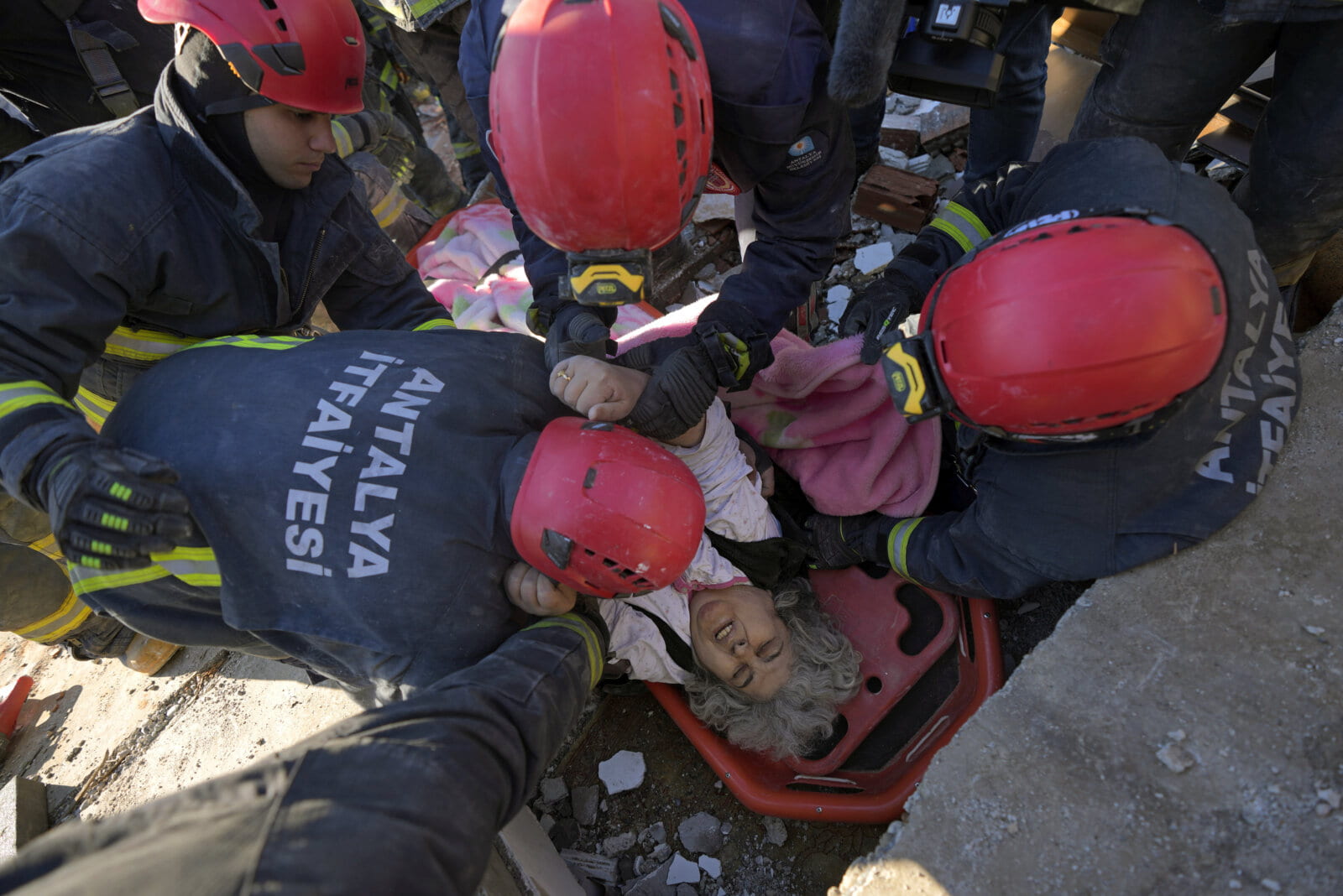
Rescue workers search for survivors under the rubble following an earthquake in Diyarbakir, Turkey, Feb. 6, 2023. A powerful 7.8 magnitude earthquake rocked areas of Turkey and Syria early that morning, toppling hundreds of buildings and killing more than 2,000 people. (OSV News photo/Sertac Kayar, Reuters)
Source: Yahoo Images

What is Happening?

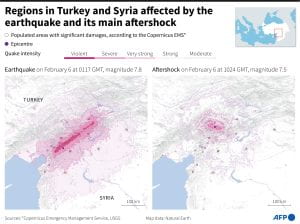
An earthquake with a magnitude of 7.8 struck early Monday morning at 4:17 AM in the Turkish city of Gaziantep, 150 miles away from the Syrian border. This earthquake led to more than 300 aftershocks that rumbled, with one following the initial earthquake just 9 hours later at 1:25 PM and carrying a magnitude of 7.5. Earthquakes are measured using a magnitude scale ranging from 2.5 or less to 8.0 or greater. The Turkey-Syria earthquake reached a magnitude of 7.8 following a shock of 7.5. Meaning this was a significant earthquake that yields severe and destructive damage. This has been one of the worst earthquakes to hit the region since the early 1900s. Along with the destruction of this horrific disaster, the regions are currently facing a winter storm. The temperatures in both Turkey and Syria have dropped tremendously to below 21 degrees Fahrenheit. Rescuers have noted that the weather conditions are so bad that those trapped under the rubble have been found frozen to death.

Map showing the border regions in Turkey and Syria, locating the areas most affected by the 7.8 magnitude earthquake and its aftershock on February 6 - AFP / AFP
Source: Yahoo Images

Who is Sending Aid?

Two days have passed since the initial disaster, and the death toll continues to rise. Turkey currently has tens of thousands of rescue teams and aid personnel helping to search for survivors. More than 24 countries have sent aid, help, or rescue teams to Turkey to rescue as many people as possible. With the window closing for the survival of the many lives still stuck under the rubble, the rescue teams are still not losing hope and asking for aid and help. With all the help being given to Turkey, there is an absence found in Syria. Many political and logistical issues hinder aid from being given to Syrians. Since the Syrian Civil War, many countries, such as the EU and USA, have posed sanctions on Syria, and many border points are blocked. At this time, many are urging the sanctions to be removed as it hinders aid to Syria. In times of crisis, we can look to our governments for help, but that is not the case for the Syrian people, which is why it is so critical and necessary to support any in any way you can. Syria is still undergoing and recovering from a Civil War that has been happening for the last 10 years. Many Syrians have been displaced and have become refugees, most residing in Turkey, making the country the world’s biggest refugee host country, with over 3 million Syrian refugees living there. El-Mostafa Benlamlih, UN Resident and Humanitarian coordination for Syria stated: “Sadly, needs are rising rapidly in Syria, and not everyone who requires assistance is visible. Over 75% of all sub-districts in the country are classified as being under severe, extreme, or catastrophic conditions…We must act quickly to ensure more communities do not slide into an inescapable loop of deprivation and negative coping mechanisms.” The areas of Syria affected are some of the worst. Millions of individuals were already displaced in the northwest portion of the country house. With aid in Syria already being scarce, there are many worries and urgencies surrounding the need for humanitarian care.

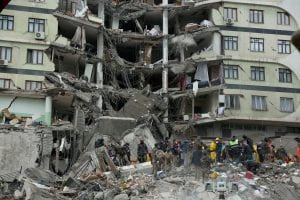
Aid Personnel and Search and Rescue looking through rubble.
Source: Yahoo Images

Recommendations:

It is urgent that you can do anything you can to help. Whether that is donating $1, reposting a donation link, or just speaking about it. The current condition these people are living in is unimaginable, so it is vital to help in any possible way. A Syrian journalist has spoken about his experience and current grief. Mohammad Haj Bakri lost multiple family members due to this national disaster. His brother and his three children, his sister and her son, all died under the rubble of collapsed buildings. Although there is international support and awareness for those affected by the earthquakes, I urge you to support them still as much as possible. The aid given to these survivors will be for the current time and post-quake. Below are links to donation sites, articles on how to help, and additional links with information on the conditions.

“How to Help Victims of the Earthquake” New York Times Article by Ben Shpigel:

  • This article showcases which donation links to use; check out Charity Navigator and GuideStar to ensure that the non-profits you donate to are reliable.

“’It was like Judgment Day’: Syrians in Turkey Recount Earthquake Horror” The New Arab Article by Adnan Abdul Razzaq.

  • This article exemplifies the urgency of supporting the people of this horrific disaster. This piece explains the stories of those who went through the earthquake, had family members present or had their loved ones die.

The White Helmets:

  • A humanitarian aid organization that operates in the rebel-controlled areas of Syria, also known as Syria’s Civil Defense. They are the leading group for helping victims and displaced persons throughout the Syrian Civil war. You can find the link to donate here.
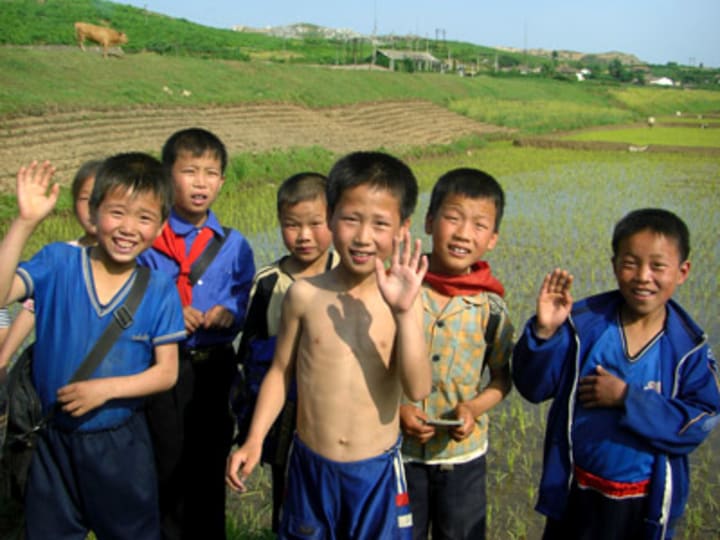
There are countless humanitarian groups accepting donations for those affected by the earthquake. For more resources, check out the links below:

Red Cross/Red Crescent Teams

Doctors Without Borders

USA Today

CNN

A Succinct Discussion on Global Poverty


small houses
(source: yahoo images)

Everyone has heard of global poverty and its horrendous consequences; however, for some people, that is where their knowledge ends. In this blog, I am going to undertake the task of succinctly compiling facts and statistics about this incredibly broad topic. My hope is that, after reading this blog, you are more inclined to speak out on global poverty and educate others on the topic. 

A Rudimentary Understanding

a desert overview
(source: yahoo images)

Global poverty is an umbrella term for poverty that exists throughout the entire world. That was the easy part: defining global poverty. However, defining poverty is a tad bit more tricky. We can surely say that poverty is a status: the status given to those whose annual income falls under a bar; however, poverty is more than just low annual income. 

The United Nations, in particular, has defined poverty as, “a denial of choices and opportunities, a violation of human dignity. It means a lack of basic capacity to participate effectively in society. It means not having enough to feed and clothe a family, not having a school or clinic to go to, not having the land on which to grow one’s food or a job to earn one’s living, not having access to credit. It means insecurity, powerlessness, and exclusion of individuals, households, and communities. It means susceptibility to violence, and it often implies living in marginal or fragile environments, without access to clean water or sanitation.”

In addition, when discussing poverty, there is a distinction between relative deprivation and absolute deprivation. Relative deprivation is a function of inequality and can be defined as “the lack of resources (e.g. money, rights, social equality) necessary to maintain the quality of life considered typical within a given socioeconomic group.”

Absolute deprivation, on the other hand, is when one’s income falls below a level where they are unable to maintain food and shelter. Studies have shown that relative deprivation, or the inability to live up to the basic standards of living set forth within a particular community of reference, can be just as harmful to health outcomes as absolute deprivation. For example, research suggests that diabetes – a disease associated with modernization – is not a function of poverty, as the poorest countries show the lowest incidence among the global population. It is in nations that exhibit increasing political-economic and social inequality, including the United States, that diabetes has emerged as a leading cause of death and a serious public health threat.

Therefore, it should go without saying that our goal should be to diminish all forms of deprivation globally.

Statistics and Facts

a desert view of a tree
(source: yahoo images)

Personally, what I find most disturbing about global poverty is its breadth. Grounding this point is the fact that, according to the World Bank and WorldVision, “About 9.2% of the world, or 689 million people, live in extreme poverty on less than $1.90 a day.”

Practically one in ten people within the world are living in poverty.

To better understand the magnitude of this issue, imagine the following scenario: you live in this fantasy world where, in an effort to promote international toleration and cooperation, 30 children from all around the world get arbitrarily placed together into a classroom. Out of those 30 children, three of them would be living on less than $2 a day. If you are reading this blog, then you naturally have access to some sort of electric device. Those three children, in a year, will not have accumulated enough money to purchase your device. 

A logical question that might follow from the preceding scenario is that it is wrong of me to solely include children in made-up scenarios because adults, after all, also live in poverty.  While that is undeniably true, they by no means make up the majority. Over two-thirds of those living in poverty are children. Of those children, women represent the majority. 

Let us quickly look at local poverty—specifically, poverty within the United States. In the United States, as of 2019, around 10.5% of people live in poverty. The poverty line in the United States is around $13,000, and thus, each person living in poverty makes around $35 a day. Let us make note that these statistics are from 2019, meaning they are pre-pandemic. In 2020, the percentage of people living in poverty went up by one point to 11.4%. Ostensibly, that raise seems miniscule; however, it accounts for 3 million new  Americans who entered poverty, also now making less than $35 a day. 

All poverty is bad: that is undisputed. However, one who lives in America might confuse American poverty with global poverty as it might be what they encounter daily.  This presents a problem because this cannot be done as they are by no means the same. Those in poverty in America statistically make ten times more a day than those living in poverty abroad. That is a big difference; we can not equate the two.

Education

a view of UNESCO
(source: yahoo images)

Education is a human right; that is undeniable. Every human who walks this Earth has the right to get an education and develop individually. However, living in poverty makes education incredibly difficult. 

One study has found that, of those who live in poverty and are over the age of 15, 70% have only a basic education with no formal schooling. That means that if you are born into poverty and have no way of elevating out of this status, then, statistically, you are unlikely to get an education. This is an immense issue due to the fact that, according to UNESCO, education is the key to climbing out of poverty. In fact, UNESCO stated that, “if all students in low-income countries had just basic reading skills (nothing else), an estimated 171 million people could escape extreme poverty. If all adults completed secondary education, we could cut the global poverty rate by more than half.”

The dilemma is that the path out of poverty is through education; however, living in poverty makes education harder to achieve. 

However, in the past years, steps have been made in the correct direction, and education rates have indeed increased. A rise in education is beneficial to not just those living in poverty, but the nations they live in as well. In fact, a study published by Stanford University and Munich’s Ludwig Maximilian University shows that, between 1975 and 2000, 75% of the increase in a nation’s gross domestic product (GDP) can be attributed to the increase of math and science skills amongst the population. 

Therefore, education not only improves the lives of those in poverty, but also the well-being and economy of the nation and its people. It is for those reasons, amongst many more, that education is, and should forever remain, a human right.

Impacts

a picture of trees
(source: yahoo images)

In addition to the lack of education, those living in poverty face a multitude of other negatives. For one, a study found that adults living in poverty are at a “higher risk of adverse health effects from obesity, smoking, substance use, and chronic stress. [IN ADDITION], older adults with lower incomes experience higher rates of disability and mortality.”

In addition, this same study found that those living in the top 1% generally have a life expectancy 10 years greater than those living in poverty. Moreover, one study found that, for children and adolescents, poverty can also cause differences in structural and functional brain development, which impacts “cognitive processes that are critical for learning, communication, and academic achievement, including social emotional processing, memory, language, and executive functioning.”

Therefore, with the aforementioned facts in mind, it is easily concluded that poverty is an immense issue, and political leaders should be doing more to help relieve the issue. 

So, naturally, one might ask: why is nothing being done? One response to this question comes from the World Systems Theory. This theory is complex, so I will try my best to briefly discuss it. The theory states that all nations are divided into three systems: the core, the periphery, and the semi-periphery. Essentially, the theory states that the core nations, which are the most politically and economically powerful, use the periphery and semi-periphery nations, which are filled with developing nations, for cheap labor and resources. The core rewards the periphery for their resources and labor, but not enough that the nations develop at such a pace that they become equal to the core nations. This in turn causes a dilemma in which the periphery depend more on the core than vice versa. Some might argue that this in turn perpetuates global poverty as the core nations are doing the least to help developing nations. In other words, the rich get richer and the poor get poorer, thus exacerbating both absolute and relative forms of deprivation and sustaining the cycle of poverty.

Moving Forward

a view of the road
(source: yahoo images)

As mentioned previously, global poverty has indeed been decreasing. According to WorldVision, “Since 1990, more than 1.2 billion people have risen out of extreme poverty. Now, 9.2% of the world survives on less than $1.90 a day, compared to nearly 36% in 1990.” 

We are still heading down this path of poverty reduction, and it is vital that we continue to do so. Perhaps, one day, we will live in a world free of poverty—a world in which every single person is educated, well-nourished, and does not have to fear starvation. It is my hope that after you finish reading this blog, you will share any knowledge and statistics you may have learned with others. The first step in resolving  an issue–and continuing to resolve it—is acknowledgement. If more people are aware of how detrimental poverty is, more people will in turn be inclined to help fix it. We need more support and commitment to a world in which poverty is mere history. 

Parallels of Democratic Turmoil: Looking at Riots in the U.S. and Brazil

People filled the plaza in the place where all three powers of governance meet in Brasília, Brazil. A sea of green and gold as hundreds of citizens displayed their nation’s colors before entering the seats of power, destroying property, and overpowering the police. People climbed to the roof of the Congress building and unfurled a flag that read “intervention.”

Raging riots in the wake of a new presidency

On January 8th, 2023, citizens stormed Brazil’s Congress, Supreme Court, and presidential offices in objection to the newly incumbent President Luiz Inácio Lula da Silva. Their rage and fear came after the loss of former president Jair Bolsonaro and a false belief that the October 2022 election had been rigged. 

Bolsonaro had steadily fostered suspicion against the integrity of Brazil’s voting system for years, even making such false claims on his 2022 campaign trail. After being ousted, his refusal to concede, alongside his previous claims of fraud, left his supporters reeling. Many demanded for months that the military step in and deny letting da Silva take office on Jan. 1st. 

While the military did not listen to the demands, they did not completely rule out the possibility of vote rigging either. In spite of the fact that the Defense Ministry found no evidence of fraud during the election, one comment stated that “It is not possible to guarantee that the programs that were executed in the electronic voting machines are free from malicious insertions that alter their intended function.” No evidence has been found to support this conjecture either. 

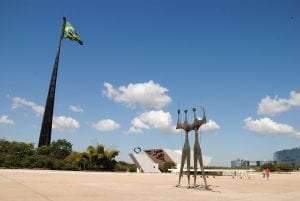
A large plaza with a statue of two elongated figures, the Brazilian flag flying, and buildings in the distance.
Figure 1: Source: Flickr, Leandro Neumann Ciuffo; Three Powers Square with Os Candangos statue and National Congress building in the background, Brasília, Brazil.

In the wake of growing suspicions and conspiracies, Bolsonaro supporters, known as “Bolsonaristas,” stormed the Three Powers Plaza (named after the three branches of governance located there) in a massive demonstration that soon turned violent. 

The facts and events of the U.S. and Brazil riots

The similarities between January 6th, 2021 in the United States and January 8th, 2023 in Brazil are stark. Aside from the dates themselves, both these events signal serious declines in trust in democratic institutions. 

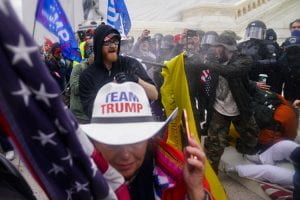
In both instances, supporters overpowered police before entering capitol buildings, breaking windows, stealing items, and documenting their own crimes in the offices of elected legislators. 

People holding flags in support of Trump while pushing against federal police in SWAT gear.
Figure 2: Source: Yahoo Images; Rioters in Washington, D.C., Jan. 6th, 2021.

When capitol riots in the U.S. occurred, it was during the ceremonial certification of the election results and interrupted this important step before President Biden’s inauguration. On the other hand, in Brazil, President da Silva had already taken office nearly a week before. When demonstrators arrived, congress was not in session, nor was anyone within the buildings that Sunday.  
A crowd of people fighting with people in SWAT gear amid smoke on the street.
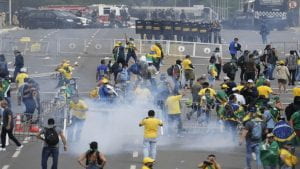
Figure 3: Source: Flickr, The Pursuit Room; Bolsonaristas riot at the Brazilian capitol against federal police.
This distinction, while slight, is significant to note because, during the time of the riots in Brazil, the actual transition of power had already occurred. In the case of the U.S., the symbolism surrounding the counting of ballots represented a key component of the democratic transition. 
Moreover, in the U.S., citizens only targeted the Congress building, while Bolsonaristas also attacked the presidential palace and Supreme Court. This aligns further with claims that Bolsonaro had made during his term about the Supreme Court conspiring against him. 

Of most importance, and concern, is how federal police responded initially in Brazil. In the case of the U.S., many sources reported that security forces had been unprepared for such escalations, but in Brazil, channels to “invade Congress” had formed on the apps WhatsApp and Telegram. These channels had gathered tens of thousands of followers. Bolsonaristas had formed groups across the country with the intention of renting buses to the capitol for “violent anti-government action.” 

In spite of the clear evidence pointing towards citizen insurrection, the Federal district police and military police took no action. During the riots, many security forces were seen smiling, taking photos, and interacting with Bolsonaritas. 

Transnational connections in far-right groups

Just as former president Donald Trump had attempted to undermine the legitimacy of the 2020 election result, so too had Bolsonaro engaged in making the same false claims over vote-rigging. Incidentally, Bolsonaro had come to be known as the “Trump of the Tropics” during his time in office. But false claims over vote rigging don’t end with these two heads, former aids, current politicians, and social media play a crucial role in fostering anti-democratic extremism. 

Two years after the riots in the U.S., concerns over the legitimacy of Brazil’s election have been a contentious topic among far-right groups in the United States. These groups do not know anything about Brazilian politics, however, social media has connected the two continents to reinforce illegitimate beliefs about the accuracy of democratic processes. 

An image of a smartphone on a wooden table displaying different social media apps.
Figure 4: Source: Yahoo Images, Sankt-Petersburg Russia November 11, 2017; Social media apps on a phone.

During the 2020 U.S. election, conspiracies over the voting machines manufactured by Dominion Voting Systems and Smartmatic had been extremely popular in supporting false claims of vote rigging. Now, these conspiracies have re-emerged but in the context of Brazil, circulating online and in far-right media, despite the fact that neither company’s products were used in Brazil. These lies have found their way onto Twitter, Facebook, Reddit, Truth Social, and Gettr (alternative platforms popular on the right). 

During the Brazilian riots, Bolsonaristas held a banner that stated “We want the source code” in both Portuguese, the nation’s most spoken language followed by Spanish, and English. This is a direct reference to the conspiracies spread first in the U.S. further emphasized by the languages of choice. 

Moreover, dating back to October, Steven Bannon, former Trump aid, has been drawing parallels between the Brazilian election and the U.S. on his podcast. Sites like The Gateway Pundit have published blogs the morning after the first round of elections in Brazil about “MASSIVE fraud” and Matthew Tyrmand, a conservative activist, has repeatedly pushed the idea that Smartmatic machines were used in Brazil to tens of thousand on Twitter and Gettr. 

Incidentally, Bannon, who has also been pushing for supporters to run in local elections and become election workers and poll watchers, has developed close ties with Bolsonaro’s family.

According to Madeline Peltz the Director of Rapid Response at Media Matters, a left-leaning non-profit and media watchdog, “There’s a sympathetic audience for it in Brazil, and there’s certainly a sympathetic audience for it in the States. The building of a coalition between those two groups is really a win-win for Steve Bannon and the right-wing movement broadly.”

In Germany over a dozen were arrested in 2021 for planning to overthrow the government, while in Australia, the U.S.-centric conspiracies over machine-based voting fraud (even targeting Dominion again) had to be publicly debunked by the Electoral Commission. 

In the end, far-right groups are taking inspiration in each other. Not from a shared set of goals or identities, but from their refusal to accept a candidate’s loss stemming from deep-seated anti-democratic stances. With social media to bridge distances and languages, it has become ever harder for governments to stop false election claims and silence the dangerous rhetoric of election deniers. 

Political environments and human rights

The United Nations maintains democracy as one of its core values alongside promoting international cooperation and human rights. 

Democracy does not always equal or improve human rights. However, the values outlined in normative human rights frames overlap significantly with democratic governance. Democracy provides environments that are more likely to support human rights, as is the case with Articles 8 (right to national tribunals), 9 (arbitrary arrest), 10 (right to a fair trial), and 12 (arbitrary interference) in the Universal Declaration of Human Rights (UDHR) just to name a handful. 

In countries with weak rule of law, government institutions, and corruption, there is a 30 to 45% increase in the risk of civil war and a higher risk of extreme criminal violence. Any country can suffer from one or more of these factors which then threatens the personal security of people and their human rights. 

According to Freedom House, a non-profit that conducts research on democracy, human rights, and political freedom, the last 16 years have been marked by a democratic decline globally. For example, President Nayib Bukele in El Salvador has undermined democratic institutions designed to check executive power. In Peru, riots for the past five weeks have demanded the government disband the legislature and president in favor of new elections, and in the most extreme case, that the military step in to rule. As the youngest democracy in Latin America (restored in 2001), Peru has long suffered poor living conditions which have made the population steadily view the government as corrupt, ineffective, and unfair. In fact, a 2021 poll from Vanderbilt University found that only 21% of the population was satisfied with democratic rule

Brazil is a young democracy, previously under a military dictatorship between 1968 and 1985. Considering Bolsonaro’s praise of military rule in office, and the attack on all three democratic institutions, the riots on Jan. 8th signal a larger issue 一 a rejection of the democratic results overall. 

In the case of Brazil specifically, Bolsonaro’s term was marked by rises in violence, especially against Queer people, diminished environmental protections, and displacement of indigenous peoples

Conclusion

While citizens always have the right to self-determination, this does not give anyone the right to inflict harm on someone’s personal security or engage in violent acts. In a democracy, tides are always able to change, switching between ideologies and agendas based on the popular vote of the nation. In the case of Chile, violent demonstrations did prompt a constitutional rewrite, however, once this democratic process began the violence ceased and turned towards peaceful demonstrations. 

As President da Silva begins his new term, he will be faced with many challenges to unite Brazil. However, he has already taken major steps in the wake of the riots, arresting hundreds in a single day, beginning an investigation, and removing individuals from security positions. 

For us, we must remain committed to the values of human rights, recognizing the inherent dignity of everyone and continually striving for equity and equality. To do this, we must have faith in the governments that ensure us these rights, and in the cases that do not, we must organize peacefully, research and reach out, and live our lives by our belief in human rights. 

To learn more and get involved, visit these sites and blogs below: 

Steps That Outside Governments Can Take Toward Ending the Human Rights Violations of North Korea

Kim Jong-Un, the Supreme Leader of North Korea shakes hands with Xi Jinping, the President of China.
Xi Jinping puts diplomatic relations with North Korea above the safety and well-being of refugees. Source: Yahoo!

Note from the author: This post is the fourth of my four-part series on the North Korean Regime. I recommend reading the other parts before this one for understanding, but doing so is optional. To find the other parts, scroll down and click on “View all posts by A. Price.” 

The Democratic People’s Republic of Korea (DPRK) consistently acts like a toddler in its negotiations and diplomatic relations with other countries. They consistently refuse food and humanitarian aid that their citizens desperately need for petty political reasons. The World Food Program (WFP) was denied access to North Korea in 2005 because its monitoring process was too intrusive for North Korea’s standards. Because of this type of behavior, it is apparent that the DPRK wishes to mishandle food aid and allow their rural citizens to starve and die before accepting the WFP’s guidelines. 

Food and Humanitarian Aid

The Worker’s Party of Korea (WPK; the regime) insists on inserting itself into food aid distribution and consistently passes policies that would manipulate citizens into subservience to the regime. One such policy would make the receipt of food aid contingent on reporting to one’s government-sanctioned job. This effectively stifles any chance at economic mobility for poor and rural people. Such a policy is against the conditions of the World Food Program, but instead of complying with the WFP to receive the aid, they let their citizens starve. The WFP has a humanitarian interest in feeding these people, so they are left at a crossroads: supply food aid according to North Korea’s standards or allow North Korea to starve its rural citizens. 

Seven children stand in a field waving at the camera. Behind them, there are rolling hills with crop lines and a cow.
Rural children take the hardest hit when the DPRK rejects food and humanitarian aid. Source: Yahoo!

Because of the WPK’s toddler-like nature, it is imperative that food and humanitarian aid are not contingent on the government’s cooperation. Historically, the US has made food aid contingent on the dismantling of specified nuclear programs. This leaves the WPK with the choice: give up our nuclear program or let our citizens starve. For them, this is a no-brainer. The WPK cares much more about politics and big blow-up things than the starvation and suffering of its citizens. This is why it is increasingly important that food and humanitarian aid are not contingent on the cooperation of the government. 

China

Because of the demilitarized zone separating North and South Korea, China is the only country directly bordering North Korea. This means that China has the highest amount of undocumented North Korean refugees. China is compliant with the North Korean regime’s disgusting agenda. Instead of complying with the United Nations (UN) guidelines for refugees, China heavily polices bordering towns and consistently returns refugees to the abusive DPRK. Because of this, refugees must travel all the way through China to another country before being able to fly to a safe place such as South Korea where they can seek asylum. 

A colorful festival takes place with dancers and streamers. On a pedestal, four people stand holding the flags of North Korea and China.
China supports the North Korean regime. Source: Yahoo!

Because of the threat of being deported back to North Korea and subsequently thrown into a prison camp, many refugees, specifically those assigned ‘female’ at birth (AFAB), fall victim to human trafficking. Because of the One-Child policy and selective abortions, China now has a disproportionate level of people in male bodies as opposed to those in female bodies. This incongruence means that many men cannot find or afford brides and many North Korean AFAB people are sold as brides to poor Chinese men. The people in these situations rarely feel safe in their new homes and often fall victim to abuse, blackmail, and rape.

The UN must step into China to enforce its guidelines for refugees. China must become a safe place for North Korean refugees to seek asylum. Until then, these people will continuously fall victim to deportation and human trafficking.

International Participation

The DPRK is a participant of the UN. The UN has treaties and guidelines surrounding the topic of human rights, but they are not enforced. The DPRK has signed seven different human rights treaties including the Convention on the Rights of People with Disabilities (CRPD) and the Convention on the Elimination of All Forms of Discrimination Against Women (CEDAW). As you have seen throughout this series, these treaties are not enforced by the United Nations or any other organization interested in human rights. 

As a participant of the UN, the US should apply pressure for the enforcement of the UN’s treaties and policies. North Korea consistently fails in its Responsibility to Protect (R2P) its citizens, calling for international actors to step in and protect these citizens. The WPK has proven that it does not care about these people and will not let go of its power without a fight. North Korea’s citizens will continue to be treated terribly as the collective group of outside countries chooses not to intervene, constituting one of the most significant and worst human rights situations in recent history.

How You Can Help

Four refugees wearing backpacks walk through a field to safety.
Refugees rescued by Liberty in North Korea follow a 3,000-mile secret escape route that includes walking paths, buses, and trains. Source: Yahoo!

North Korea is one of my special interests. I could write about this topic for the rest of my life. I encourage you to look into this issue (resources linked below) and spark your own interest in the North Korean human rights situation. I encourage you to consider, if you can, donating to an organization that I really believe in. They are called Liberty in North Korea. They are working on the ground to help North Koreans escape the regime through a 3,000-mile secret escape route. Their website includes many resources and even a blog written by people personally affected by the North Korean regime. 

Below I have linked some resources for you to explore at your leisure.

Liberty in North Korea

Crossing Borders  

UN General Assembly on the Situation of Human Rights in the DPRK 

Policy Recommendations – The Committee for Human Rights in North Korea

Brookings article on the Biden administration and the DPRK  

World Report 2021: North Korea | Human Rights Watch 

World Report 2022: North Korea | Human Rights Watch 

CRS Report – Foreign Assistance to North Korea 


Climate Crisis Shifts Gender Roles

by Grace Ndanu

In Kenya, every person is assigned their duties right from birth. When a girl is born her room is painted pink, her toys will be dolls, a house and house essentials. On the other hand, the boy’s room is painted blue and his toys are cars, a spider man and a fire fighter. You will know a girl even when she is a day old because she will be dressed in an oversized dress and a pink or red one for that matter. When she grows up she is taught how to wash clothes, the house and utensils. She is also taught to cook fetch firewood and water, and believe me, no matter how young the girl is she will never complain. The boys sit on the dining area waiting for food. They are taught to stay and wait. For nomadic communities they start going to take care of the cattle as early as age of five. For the other communities they are allowed to play all through the day until they are sent to the shop to get something.

Mother, baby, and small girl dressed in pink
Source: Yahoo Images

In the world of Labor, women have triple roles while men have only one role. The communal and reproductive roles are common among women, and for those who are lucky there are productive roles. I am saying the lucky ones because there are those who are educated and others are blessed with good husbands who allow them to go work and keep their money. In a pastoralist setup the women wake up, go milk the cattle feed them, and also may go herding. When a time comes for the cattle to be sold, it is their husbands who do that and decide what the money will be used for. In a farm setup women are involved in every activity, starting from planting to harvesting but they are never involved in selling the produce or decide what the money will be used for.

I stay in the world of the Masai people who mainly are pastoralists. I have observed that the drought has disordered their traditional system of life, forcing many women into business for the first time. I was walking to a shopping centre where I found a woman doing what a few years ago would have been unthinkable from a woman of her tribe. Shopping for a sheep and a cock. The lady examined her options carefully, pausing at a skinny sheep and a light weight black cock. Feeling the sheep on her arms it was not worth 6000 Kenyan shillings. Also the black cock wasn’t worth 1000 Kenyan shillings. The owner who was also a woman shook his head, I assumed the bargaining power of the customer was enough, I saw the lady left, I assumed that she will be back when the market favours her. I went home with a lot in my mind…

The Masai culture is really rooted, which makes it hard for a woman to be seen doing business, because they spend their time taking care of the children, fetching water and firewood and take care of the homestead. And now we have just witnessed two women doing business, in my thought it was a good thing. Gender roles are so strict that men often prohibit their partners from handling money or even saying their husband’s names in public. Now, for the first time in history, it is slowly becoming okay for Masai women to work for money. I have also heard that in the most interior parts of the Masai communities there is a market day, and people who are mostly there are women, they are both sellers and customers. And this is not because men have changed their perspective on gender roles. Instead climate change has made it so because there is no other means for them to survive. Due to the increasing drought, men leave home for months searching for pasture with their herds leaving their wives not only to manage the households but also to earn enough money to live while they are away.

Dust storm in Kenya; men shield their eyes
Source: Yahoo Images

The already brutal dry season has intensified in recent years, killing more vegetation, animals and people than before. By my estimate, harsh draughts have reduced the Masai’s livestock by up to 80 percent. The little resources have triggered fights with neighbouring communities, and armed raiders usually steal what remains. With the new way of life now the Masai women have started up jobs once reserved for men such as trading for livestock. The trend of women engaging in paid labour is not limited to Masai women, even in parts of west Africa are taking on once forbidden roles because so many men have migrated in search of work and no one knows when they will be back. At some point they leave, get some work and forget their families and instead of going back home they remarry leaving the other family. Balla Sidibe, the country director for CARE in Mali said that several men of the Kayes region in Mali have left and therefore women have taken over farming duties. This is the responsibility they never would assume before. Traditionally, “there was the belief that only men can do the hard work,” Sidibe added. “But in reality, the women are the ones doing that and producing for their families.” In Northern Ghana according to CARE study, women are also doing greater workloads, which leads to discrimination by men. At the same time they reported that the women have greater confidence in decision making matters and men for the first time see women as capable of participating in productive work and contributing to the family.

I believe the shift of women managing their own finances is leading to other changes too. A gender professor at the university of East Angalia said that the Borana women whose gender roles are alike that of the Masai, some women are questioning the value of marriage since they found out they can live perfectly fine without their husbands because they cannot support their families as they once did.

Women sell goods in Kenya market
Source: Yahoo Images

Development organizations and non-profits organizations across Africa see these shifts as a golden opportunity to empower women economically and socially. Because they will have an opportunity to run their families and businesses without any assistance. Empowerment for women is a double edged sword because they will be financially stable and at the same time it will give women get out of abusive relationships because they will understand that they can do well on their own. Through this women will own properties, they will make sound decision regarding the properties, they will live a good lifestyle and they will be able to take their children to good schools. I hope that as women take more responsibilities, they will also take role in leadership, such as mediating the resource related matters troubling pastoralist communities due to drought.