“I Didn’t Know It Had a Name”: Understanding Labor Trafficking — and How to Spot It

AdobeStock_136448884 - Maid changing pillows during housekeepingBy Robert Kneschke
AdobeStock_136448884 – Maid changing pillows during housekeeping By Robert Kneschke

When Rosa* arrived to clean guest rooms at a popular beach hotel, the recruiter’s promises still echoed: “$12 an hour, free housing, and a chance to learn English.” Her temporary work visa had cost thousands in “fees,” which the recruiter said she could repay from her first months of wages. But the free housing was a crowded motel room with six other women. The “fees” kept growing. Her passport was locked in a supervisor’s desk “for safety.” Twelve-hour shifts stretched into sixteen. If she complained, the supervisor reminded her that she “owed” the company and could be sent home in debt, or reported to immigration. Rosa wasn’t chained. She could walk to and from work. Yet every part of her life, documents, debt, threats, and isolation, was controlled.

Rosa didn’t know it had a name. It does: labor trafficking.

What is labor trafficking?

Under U.S. law, labor trafficking (also called forced labor) occurs when someone obtains another person’s labor or services through force, fraud, or coercion. This includes threats of serious harm, schemes, abuse of legal process (for example, threatening deportation), or withholding documents and wages to compel work. 

Globally, the International Labour Organization (ILO) estimates 27.6 million people are in forced labor on any given day. A 2021 report estimated that 50 million people are in “modern slavery,” which also includes forced marriage.  In 2024, the ILO reported that illegal profits from forced labor in the private economy reached $236 billion annually, a 37% increase over a decade; this is evidence that coercion is lucrative for traffickers and intermediaries. 

AdobeStock_36854977. Black Businessman holding black bag full money. By RODWORKS
AdobeStock_36854977. Businessman holding a bag full of money. By RODWORKS

How does it happen? The “means” traffickers use

The ILO identifies 11 indicators that commonly appear in forced labor situations. You rarely need all 11 to determine risk; one or more strong indicators can be enough to signal danger. These are abuse of vulnerability, deception, restriction of movement, isolation, physical or sexual violence, intimidation and threats, retention of identity documents, withholding wages, debt bondage, abusive working and living conditions, and excessive overtime. 

Rosa’s story shows several in practice:

  • Debt bondage via unlawful recruitment fees and deductions.
  • Withholding documents (passport confiscation).
  • Threats and abuse of legal process (“We’ll call immigration”).
  • Excessive overtime and abusive conditions.

These tactics can entrap anyone, citizens and migrants, men and women, adults and youth.

AdobeStock_321877815-1. Man putting smartphone, passport and money into safe. By New Africa

Where labor trafficking shows up (it’s closer than you think)

Contrary to the myth that labor trafficking only happens “somewhere else,” it also occurs in wealthy countries, including the United States, across both hidden and highly visible industries. 

  1. Agriculture, forestry, and food processing: Seasonal, remote worksites and complex contracting chains create risk. Temporary visa programs (such as H-2A for agriculture and H-2B for non-agricultural seasonal work) can be both lifelines and levers for coercion when employers or labor brokers retaliate or threaten to withhold visa renewals. The Hotline data and policy research from Polaris Project detail cases involving wage theft, unsafe housing, and retaliation.
  2. Hospitality, cleaning, and landscaping: Hotels, resorts, commercial cleaning, and landscaping often rely on subcontractors and staffing agencies, which can obscure who is responsible for wages, safety, and housing. The National Human Trafficking Hotline has identified hundreds of potential victims linked to hospitality supply chains.
  3. Construction and manufacturing: Long hours, dangerous sites, and layers of subcontracting elevate the risk of coercion, document retention, and threats. The ILO’s indicators surface repeatedly in these sectors.
  4. Domestic work and caregiving: Workers in private homes can be isolated from the public and regulators, leaving them vulnerable to withheld wages, restricted movement, and threats. The ILO’s global estimates include millions of cases of domestic work under forced labor.
  5. Seafood and global supply chains: Beyond U.S. borders, supply chains can mask the use of forced labor in fishing, seafood processing, apparel, electronics, and more. The U.S. Department of Labor’s List of Goods Produced by Child Labor or Forced Labor is a sobering catalog, as it lists 204 goods from 82 countries (as of Sept. 5, 2024). Policymakers and purchasers use it to identify high-risk imports and improve due diligence.
AdobeStock_573441418. Exhausted little girl sitting on floor concrete wall background. child labor and exploitation
AdobeStock_573441418.  Exhausted little girl sitting on floor – labor exploitation. By AungMyo

State action and import bans

In recent years, the U.S. has restricted imports tied to forced labor under the Uyghur Forced Labor Prevention Act (UFLPA) and other authorities, adding companies to enforcement lists and blocking imports in sectors such as footwear, aluminum, and seafood. These steps matter because cutting off profits reduces incentives to exploit. 

Common threads: What to watch for

While every case is unique, patterns repeat:

  1. Recruitment fees and debt: Workers are charged unlawful or inflated fees by recruiters. Debts balloon through deductions for housing, equipment, or transport, paid back through labor; the worker can’t freely leave.
  2. Document confiscation: Passports, IDs, or visas are held “for safekeeping,” removing mobility and increasing fear.
  3. Threats and abuse of legal process: Supervisors threaten deportation, blacklisting, or calling the police if workers complain.
  4. Isolation: Workers are transported to remote sites, housed on-site, or told not to speak to neighbors, customers, or inspectors.
  5. Wage theft and excessive overtime: Unpaid overtime, below-minimum wages, or pay withheld until a season ends.
  6. Subcontracting opacity: When multiple entities sit between the worker and the brand, accountability gets murky, and traffickers exploit the gaps.

Who is at risk?

Anyone facing economic hardship, discrimination, or a lack of legal protections can be targeted. Migrant workers, especially those whose visas tie them to a single employer, can be especially vulnerable to coercion. Data from the National Human Trafficking Hotline’s analysis shows thousands of victims holding temporary visas at the time of their abuse. 

But vulnerability isn’t limited to migrants. Youth aging out of care, people in debt or homelessness, and disaster-displaced families are at an elevated risk of labor exploitation. Traffickers prey on need, not nationality.

AdobeStock_265465062. Teenage girl with other homeless people receiving food.By New Africa
AdobeStock_265465062. Teenage girl with other homeless people receiving food. By New Africa

How is labor trafficking different from “regular” workplace abuse?

Workplace violations (like unpaid overtime) are serious and enforceable through agencies like the U.S. Department of Labor, but they are not all trafficking. Trafficking involves a compelling mechanism (force, fraud, or coercion) that deprives a worker of a meaningful choice to leave. If you see indicators like debt bondage, document confiscation, or threats of serious harm or deportation, you may be looking at forced labor, which is a crime. 

What progress looks like

Governments, companies, and civil society have tools to reduce risk:

But the profit motive remains powerful, given the staggering $236B in illegal profits stemming from forced labor, so vigilance and reporting are critical. 

AdobeStock_475597494.jpeg. "Ban goods made with forced labor " By AndriiKoval
AdobeStock_475597494.jpeg. “Ban goods made with forced labor ” By AndriiKoval

How you can help (even if you’re not sure it’s trafficking)

You don’t have to decide whether a situation is “definitely” trafficking. If you notice multiple indicators, such as debts used to control, threats, confiscated documents, isolation, abusive conditions, withheld wages, or excessive overtime, say something. Trained specialists can sort out whether it’s a labor law violation, trafficking, or both, and connect people to help.

In the United States

  • National Human Trafficking Hotline – 1-888-373-7888 (24/7), text “BEFREE” (233733), or online report/chat: humantraffickinghotline.org. (The hotline is supported by Health and Human Services and is transitioning operators; the number and channels remain active.)
  • DHS Blue Campaign / ICE HSI Tip Line – To reach federal law enforcement directly about suspected trafficking or smuggling: 1-866-347-2423 or submit an online tip.
  • U.S. Department of Labor, Wage & Hour Division (WHD) – For wage theft, child labor, or overtime violations that may overlap with trafficking: 1-866-4-US-WAGE (1-866-487-9243) or file a complaint online.
  • OSHA – For unsafe or abusive working conditions posing imminent danger: 1-800-321-OSHA (6742).
  • 911 – If someone is in immediate danger.

If you’re an employer or community leader, post these numbers in break rooms, faith centers, and shelters—and ensure reporting won’t trigger retaliation.

Bringing it back to Rosa

One winter night, a guest slipped Rosa a folded flyer with a number and the words: “You have rights.” She called during her only free hour. The advocate didn’t ask her to be certain; they asked about indicators, debt, documents, threats, wages, and hours, and created a safety plan. Law enforcement and labor investigators coordinated with a local nonprofit. Rosa got her passport back, moved into safe housing, recovered wages, and started English classes. She still cleans rooms, but now she does it on her own terms, and she keeps extra copies of that number in her apron pocket.

AdobeStock_239599722.jpeg. Young chambermaid with clean towels in bedroomBy New Africa
AdobeStock_239599722.jpeg. Young chambermaid with clean towels in bedroom By New Africa

If you or someone you know might be experiencing labor trafficking:

You don’t need to be sure. Calling could be the beginning of someone’s freedom.

Unchained hands raised to the sky
AdobeStock_54553304. Formerly tied hands raised to the sky. By Marina

*The name and story used are a representation of labor trafficking victims.
Why Language Matters to Women

by Pam Zuber 

United Nations Flag. Source: sanjitbakshi, Creative Commons.

Language matters. So do the rights of people. But in 2019, it looks like representatives of the U.S. government promoted the use of language that may affect, if not imperil, the rights of women. Every year, the Commission on the Status of Women (CSW) issues statements called agreed conclusions based on priority themes and recommendations. The CSW is part of the Economic and Social Council (ECOSOC), which itself is one of the platforms of the United Nations (UN). For the sixty-third session from March 11-22, 2019, the CSW’s agreed conclusions were “social protection systems, access to public services and sustainable infrastructure for gender equality and the empowerment of women and girls.”

During the CSW’s 2019 session, representatives of the United States requested changing the language of the commission’s agreed conclusions. They wanted to remove language that referred to “universal access to sexual and reproductive health and rights.” Writing in the Washington Post, Ariana Eunjung Cha and Lena H. Sun said that the American representatives felt that this language would promote abortion and juvenile sexual activity. According to Cha and Sun, the representatives also wanted to eliminate the term “gender-responsivein the agreed conclusions and replace it with the term “family-centered.” But this language denies our ever-evolving concept of family. Families come in all shapes and sizes. Family isn’t just the nuclear family model of a man, a woman, and children. Actually, it never was, because don’t we all know people who were raised by single parents, grandparents, aunts and uncles, siblings, or two parents of the same gender? People who lived with foster families and in group homes? People who lived with multiple generations under one roof? Denying multiple concepts of family and gender creates an inaccurate depiction of families. This depiction hurts the many, many people not included in this narrow definition.

When representatives seek to eliminate the word gender, the denial also obviously denies gender and sexual orientation. It implies that gender is binary, that the only two genders are male and female. It doesn’t acknowledge trans people, people who don’t identify with a certain gender, or people with different sexual orientations or no sexual orientation. Not acknowledging people’s existence marginalizes them, which may make it easier for people to ignore or even abuse them.

Finally, the U.S. representatives pushed to add another section to the agreed conclusions. This section stated, “women’s contribution to the home, including through unpaid care and domestic work, which is not adequately recognized, generates human and social capital.” The U.S. representatives did not get their way, but the rest of the commission did. In a document discussing the agreed conclusions, the commission stated that it wanted to “[e]nsure universal access to sexual and reproductive health and reproductive rights.” It urged entities to 

respond to the needs of women and girls and recognize and value unpaid care and domestic work, enable the mobility of women and girls, strengthen women’s participation in public and political life, as well as their economic opportunities, in particular their full and productive employment and decent work and equal pay for equal work or work of equal value, and strengthen their resilience to shocks.

Although the efforts by the United States representatives were ultimately not successful, they still sent a chilling message that could have repercussions for women in the United States and abroad. After all, while “universal access to sexual and reproductive health and reproductive rights” can mean abortion, it can also mean so much more. It can mean distributing contraception and information on how to use it. It can mean providing tests and examinations that could diagnose pregnancy or health conditions and provide early and effective treatment.

Such criticism about providing access to reproductive rights sounds similar to criticism leveled at the Planned Parenthood organization. Critics charge that Planned Parenthood performs abortions, which it does, but abortions represent only 3.4 percent of the services it provided in the 2017-18 fiscal year. People are quick to condemn the organization for providing abortions while ignoring that more than 96 percent of its work is not related to abortions but instead relates to contraception, examinations, testing, and other matters relating to health care, especially preventative health care. Reproductive health and women’s rights are at risk with each slight or purposeful alteration to words used in the creation and passage of legislation, the implementation of the laws, and the subsequent treatment of persons who identify as women. Denying such rights treats women as second-class citizens not worthy of vital forms of health care. It perpetuates the belief that women are not able – and should not be able – to make decisions about their bodies and their lives. It denies cis women opportunities. It denies the very existence of trans women and people who have nonbinary identifications. Not being able to make personal decisions may impact women’s physical and mental health. This impact could produce far-reaching consequences.

Women who lack reproductive rights cannot plan their families. They may have more children or children sooner than they intended. This may be physically and mentally draining. It may lead to poor health, lost educational opportunities, financial and career stagnation, and even conditions such as addiction that may need to be treated by addiction treatment professional facilities because women are trying to make sense of their lives or escape the realities of their lives. Women may feel trapped. They may be unable to attain a decent quality of life and achieve upward mobility, all because they lack something as basic as birth control.

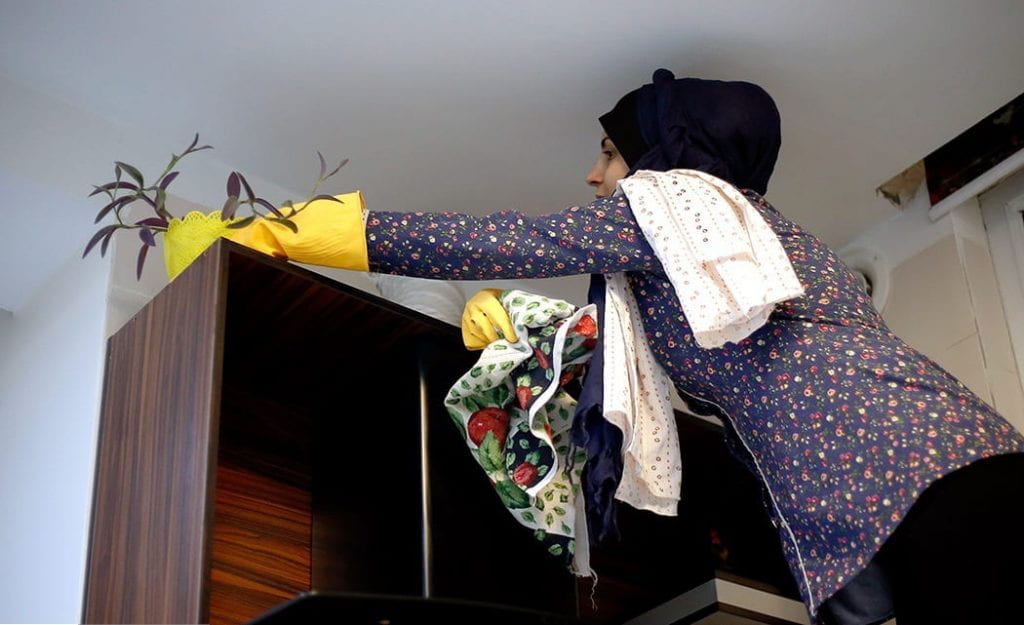
A woman cleaning
Source: By Fars News Agency, CC BY 4.0, https://commons.wikimedia.org/w/index.php?curid=67475239, Creative Commons.

Why Emphasize Domestic Work?

By emphasizing domestic work, the U.S. delegation to the United Nations’ commission is sending a strong message. Again, the U.S. representatives wanted to include language that addressed its belief that “women’s contribution to the home, including through unpaid care and domestic work, which is not adequately recognized, generates human and social capital.” On one hand, the U.S. delegation to the Commission on the Status of Women recognizes that women still perform the bulk of domestic duties in most cultures throughout the world. It acknowledges that most cultures often do not recognize females’ domestic work financially, politically, socially, or emotionally. On the other hand, why is the United States so keen to emphasize domestic work?

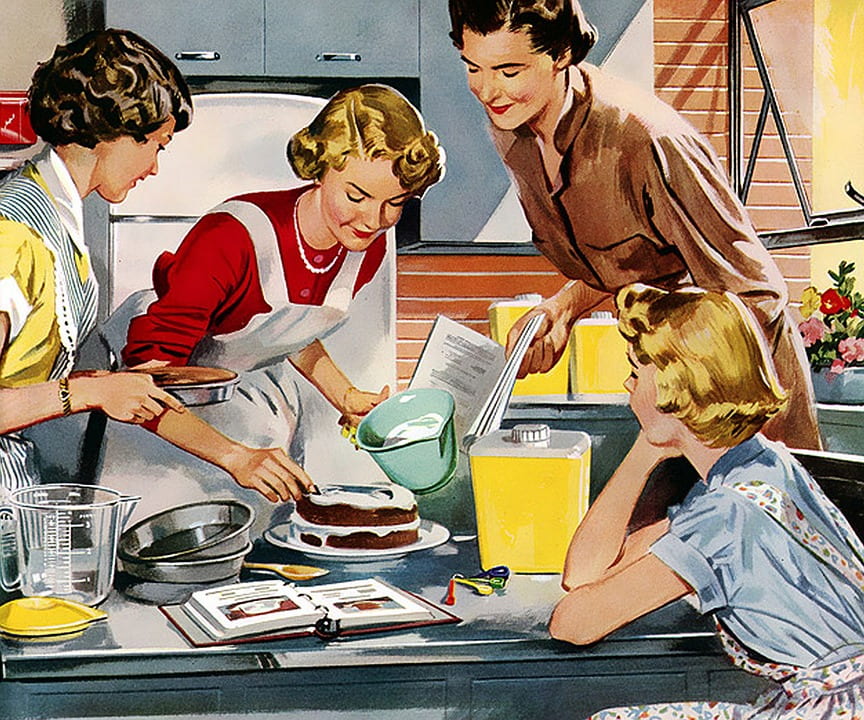
Women perform domestic work. But they also perform countless other kinds of work. Around 74.6 women were in the U.S. workforce in 2017, reported the U.S. Department of Labor. These totals amounted to about 47 percent of the United States workforce. Since women already account for about half of the nation’s workers, it’s impossible to ignore their numbers. It’s shortsighted and dangerous to overlook this impact and to deny or downplay women’s contributions. Speaking of contributions, does the U.S. delegates’ proposed language portray their beliefs about what woman should be doing? In this view, women should handle domestic work and men should work outside of the home. Again, this is a very traditional view that was never the case for 100 percent of U.S. families. While stay-at-home wives and mothers may have been more prevalent in the past, many women have always worked outside of the home due to necessity or desire.

Source: ArtsyBee, Creative Commons.

What Do Choices Mean for Women?

As an alternative, what about supporting language that acknowledges the many roles that today’s women actually perform? Yes, women perform domestic work and raise families. But they also work outside of the home and pursue educations. They also do many of these things at the same time. Some choose not to marry, live with partners, or have children, or they are partners with other women, or they have multiple partners or participate in other arrangements. They may identify as cis, trans, or nonbinary, or have other identities. They may not live in traditional nuclear families, but their families and their choices are not any less valid – or any more valid. They’re just living their lives. They’re happy, successful people who contribute to society. Ignoring their ideas of family and gender, and ignoring the contributions they make through their work and other efforts, ignores them as a whole. And they shouldn’t be ignored, because non-nuclear families are now more common than nuclear ones. The Pew Research Center reported that only forty-six percent of U.S. children eighteen years old or younger lived with two parents in their first marriage in 2014.

Instead of ignoring women, maybe the U.S. delegation and other representatives should consider promoting inclusive language that acknowledges choice. If women have options, they can better control their destinies. In most societies throughout history, men have had more agency in steering the course of their lives and communities. But how are women supposed to have agency if authorities do not allow them to control any aspect of their lives, including their own bodies? Providing opportunities for women to work, to pursue educations, to choose whether to have families or not, to run for office, all give women control and power. This can create additional control and power, as women will have the knowledge, skills, connections, agency, and confidence to live the lives they want to live and help others do the same. Women will be independent, not dependent. They will not have to rely on husbands, fathers, or brothers but will have the resources to thrive on their own.

Allowing women full access to reproductive care and other types of health care and encouraging them to pursue a wide range of career opportunities enables women to live the fullest lives possible. Using language to deny these opportunities harms women and future generations. When U.S. representatives use certain language and deny other types of language, they threaten freedom, self-determination, and other American ideals. They forget that what’s right for women is what’s right for the United States as a whole.


Pamela Zuber is a writer and an editor who has written about human rights, health and wellness, gender, and business.