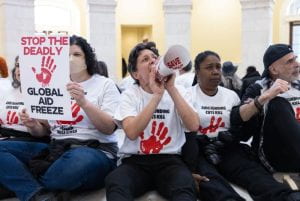
Alterations to the State Department’s Human Rights Reports Threatens Global Accountability

In a move that has alarmed human rights advocates and foreign policy experts alike, the U.S. State Department is undergoing a dramatic reorganization—one that includes stripping key content from its annual human rights reports. As NPR reported on April 18, 2025, internal memos instructed staff to remove references to over 20 categories of human rights violations, including prison conditions, restrictions on freedom of assembly, political corruption, and violence against marginalized groups.

These reports have long served as a global standard, used by scholars, advocates, journalists, and international institutions to assess rights conditions worldwide. Their sudden dilution is not just bureaucratic streamlining; it’s a quiet dismantling of accountability.

A shocked reporter holding a camera.
Image 1: A shocked reporter holding a camera. Source: Yahoo Images.

What’s Changing—and Why It Matters

Since 1977, the U.S. Department of State has released detailed annual country reports on human rights practices. Though sometimes criticized for political inconsistency, these reports have been broadly recognized as crucial documentation of abuses across the globe—from extrajudicial killings in authoritarian states to censorship, labor exploitation, and systemic discrimination.

But under the new directive, entire categories of analysis are being erased. Sources within the department confirmed that topics such as discrimination based on sexual orientation and gender identity, abuse of asylum seekers, and politically motivated arrests will no longer be discussed. These are not fringe issues—they reflect core violations of the Universal Declaration of Human Rights (UDHR), including:

  • Article 5: Protection from cruel, inhuman or degrading treatment
  • Article 9: Freedom from arbitrary arrest
  • Article 19: Freedom of expression
  • Article 21: Equal access to public service and fair governance
  • Article 2: Freedom from discrimination on any basis

When the U.S. selectively omits these rights from its assessments of other nations, it undermines the very foundation of universal human rights—that they are indivisible, interdependent, and apply to all people, everywhere.

The Chilling Effect of Omission

The most dangerous censorship is often the quietest. When a government stops discussing certain abuses, the signal to others, particularly authoritarian regimes, is clear: these violations no longer matter enough to be named.

An image of a Human Rights protest
Image 2: An image of a Human Rights protest. Source: Yahoo images.

In countries where local journalists, dissidents, or NGOs depend on international validation to draw attention to abuses, U.S. human rights reports can serve as a shield. Without public acknowledgment from a prominent diplomatic actor, local violations are easier to obscure, deny, or normalize. Human Rights Watch, for example, has long cited State Department reports as part of its advocacy efforts, particularly in places where press freedom is under threat.

This shift will also hinder asylum claims, many of which rely on credible evidence of persecution or unsafe conditions. When categories like “political persecution” or “anti-LGBTQ+ violence” are scrubbed from official reports, it becomes harder for individuals to prove their eligibility for protection under international refugee law.

Even beyond humanitarian concerns, this policy shift has strategic costs. The U.S. has historically positioned itself, however imperfectly, as a moral voice in international affairs. This voice is now compromised. Diplomats and foreign service officers will be asked to promote democratic values abroad without the backing of their own agency’s complete assessment of those values.

Former ambassador Tom Malinowski noted that this move “betrays the people in repressive countries who depend on the U.S. to tell the truth about what they’re facing”. It also gives foreign governments an easy out: why heed U.S. criticism when that criticism is suddenly partial and politically selective?

A Broader Retrenchment of Rights Infrastructure

These changes aren’t occurring in isolation. They’re part of a broader rollback. As Reuters and AP have reported, the State Department’s ongoing reorganization includes eliminating 132 offices and slashing 15% of domestic staff, with many of the cuts affecting divisions focused on human rights, democracy, and civil security.

The office of the Undersecretary for Civilian Security, Democracy, and Human Rights has been dissolved, with responsibilities now folded under a new, less focused Coordinator of Foreign and Humanitarian Affairs. Programs on global women’s rights, diversity and inclusion, and atrocity prevention have been defunded or absorbed into more general roles.

People protesting for their democratic freedom
Image 3: People protesting for their democratic freedom. Source: Yahoo Images.

Taken together, this appears to be a conscious effort to deemphasize rights-based diplomacy at a time when such diplomacy is critical for millions of people around the world. From a human rights perspective, this shift represents a failure of positive obligation. Governments that claim leadership in human rights are not merely expected to avoid violations—they are also responsible for upholding, promoting, and defending these rights domestically and internationally.

The United States’ retreat from honest human rights reporting signals that some lives and liberties are no longer worth documenting, let alone defending. This undermines Article 1 of the UDHR itself: that all people are “endowed with reason and conscience and should act towards one another in a spirit of brotherhood.”

Instead, the new approach views human rights as selective and strategic tools, rather than universal moral commitments. That’s not just an administrative shift. It’s an ideological one.

Woman with tape over her mouth
Image 4: Woman silenced with tape over her mouth. Source: Yahoo Images.

Conclusion: What Happens When the Witnesses Go Silent?

Human rights reporting isn’t just about keeping records. It’s about bearing witness, recognizing suffering, and giving people living under oppression the affirmation that they are seen. When a government as influential as the United States chooses to omit entire categories of injustice from its global reports, it effectively tells victims: “Your pain doesn’t count.”

In the long arc of justice, documentation is everything. We cannot fight abuses we refuse to name. And we cannot claim to protect rights if we edit them for convenience. If we want to live in a world where power is held accountable, the act of recording the truth must remain sacred. Otherwise, silence becomes complicity—and complicity, policy.

Hungary Leaves the International Criminal Court

Earlier this month, Hungarian Prime Minister Viktor Orban declared that the country would withdraw from the International Criminal Court (ICC), becoming the first European Union member state to pull out of the decades-old global institution. This decision came during Benjamin Netanyahu’s visit to Hungary, where Orban refused to comply with his ICC-mandated responsibility to arrest the Israeli Prime Minister, thus rejecting the legitimacy of the court’s arrest warrants. Though an individual incident, this event is indicative of a global shift away from international institutions, raising concerns regarding the future and authority of the ICC and global organizations as a whole. As numerous countries, the United States included, fight against democratic backsliding, international law is crucial in ensuring democratic standards are upheld, making this withdrawal worth monitoring. 

Blue sign reads "International Criminal Court" in both English and French.
Image 1: International Criminal Court Sign. Source: Yahoo Images

What is the ICC?

The ICC is a permanent international court designed to prosecute political officials and military members following their initiation or continuation of international law violations, specifically targeting perpetrators of genocide, crimes against humanity, war crimes, and crimes of aggression. Unlike the International Court of Justice, the United Nations’ branch that pursues cases between nations, the ICC functions independently from any pre-existing international organization and focuses solely on individual responsibility and perpetration of crimes. 

The idea of establishing a court of global accountability originated after World War I; however, the largest push came after World War II and the global outrage surrounding the Holocaust. While an international court had yet to be established, ad hoc tribunals were created, prosecuting Nazi military and political officials. In between then and the court’s creation, other ad hoc tribunals have been organized, such as the International Criminal Tribunal for the Former Yugoslavia and the International Criminal Tribunal for Rwanda. These events popularized the establishment of a permanent, global court. In 1998, the UN General Assembly met in Rome, finalizing a treaty that would then become the Rome Statute, the foundational document of the ICC. 120 countries voted to establish the court, and by 2002, the statute was adopted, gaining the necessary 60 ratifications needed for it to enter into law, thus granting the ICC international legitimacy and authority. 

Under the Rome Statute, the ICC is given universal jurisdiction, meaning that perpetrators of international law violations can be tried even if the events occurred in another country. This also grants the court the ability to investigate allegations, with claims being brought to the ICC or based on the suspicions of the institution. If the court finds that an individual has likely played a direct role in the initiation or continuation of a crime outlined by the ICC, an arrest warrant will be issued. As part of ratifying the Rome Statute, member states assume the responsibility to comply with these rulings and are expected to detain those who receive arrest warrants if they enter the nation’s territory. After detention, trials are conducted, and a final ruling is eventually made. Since the court lacks an overarching enforcement mechanism, this organization relies heavily on state compliance to maintain legitimacy. Without this, the ICC loses its prosecutorial power and therefore its purpose. 

Large meeting at International Criminal Court. Seats in a semicircle around a large screen and panelists
Image 2: ICC Assembly of States. Source: Yahoo Images

Why is Hungary’s Withdrawal Important?

Though Hungary’s absence won’t single-handedly undermine the ICC’s functional capacity, it does signify the country’s shift away from global institutions and further descent into authoritarianism. Since Orban took office in 2010, the country has become an “illiberal state,” a term Orban uses with pride. This reality is demonstrated in his views on international institutions. When discussing his reasons for withdrawing, Orban expressed that “Hungary has always been half-hearted” on its commitment to what he stated was the “political court” of the ICC. Furthermore, under his regime, Hungary has isolated itself from the democratic values of the European Union, with Orban having captured public institutions and the formerly independent media. He has undermined judicial independence, creating a government oversight committee that tracks the domestic courts and placing partisan judges in politically important positions. Orban has also been consistent in his support of Vladimir Putin, criticizing EU-imposed sanctions on Russia and openly condemning support for Ukraine. These actions have ultimately isolated the country from the Union and its foundational values, thus undermining the EU’s efforts to foster a unified Europe. 

Hungary’s rejection of the ICC is also representative of the current global climate, as there has been an international decrease in support for global institutions. Since the issuance of Netanyahu’s arrest warrant, several countries, such as Belgium, Germany, and France, have remained unclear as to whether they would comply with ICC orders, disregarding their responsibility as set out under the Rome Statute. Similarly, Europe has seen a rise in Euroscepticism, or a distrust in the authority of the European Union. This perspective has pervaded several powerful political parties throughout Europe, such as the Alternative for Germany Party in Germany, the Freedom Party in Austria, the Law and Justice Party in Poland, and the Georgian Dream Party in Georgia. These parties have openly criticized the authority granted to the EU and the need for sovereign countries to align their policies with an overarching institution. Meanwhile, numerous countries are reverting to conservative, traditional cultural and political norms, further increasing hesitancy toward a liberal international order that advocates for equality and progressive policies. 

This shift is not unique to Europe, as the United States has also been open in its rejection of the ICC and other international institutions. Recently, the Trump administration has placed sanctions on ICC officials, signifying distrust in the court. Furthermore, the US has withdrawn from the Paris Climate Agreement, the World Health Organization, and certain branches of the United Nations. With one of the world’s hegemonic powers withdrawing and delegitimizing international institutions, it is understandable why this perspective has been normalized on a global scale. 

Hungarian PM Orban talks at a European Union podium, with EU flags behind him
Image 2: Orban talks at the EU. Source: Yahoo Images

The Case for International Law and the ICC

While many argue that international law and institutions violate a country’s sovereignty, the reality is that this relinquishment can be viewed as necessary to ensure long-term stability. Historically, nations have been seen as fully autonomous, lacking international institutions to follow; however, this autonomy allows countries to encroach on the rights of others, whether domestically or internationally, thus creating instability that jeopardizes the rights and safety of individuals. By surrendering some control over an independent nation to an international body, sovereignty can be enhanced. For example, by allowing international policy to dictate environmental policy, sovereignty could be strengthened by enabling countries to live without fear of climate-related destruction. In the case of the ICC, by granting a global court the authority to enforce international law, egregious behavior can face punishment, hopefully deterring these actions and thus providing greater long-term stability. In other words, relinquishing some domestic power to an international agency can enhance aspects of sovereignty as countries can live without fear of external encroachment on their rights. So, while international law might not yet be perfect, there is an argument to be made that it is worth attempting to fix rather than rejecting it altogether. 

Conclusion

Hungary’s withdrawal from the ICC is representative of a broader shift away from the modern-age liberal order. Though its absence won’t directly interfere with the court’s ability to try violators of international law, it does bring into question the future of the ICC and other international institutions, as numerous countries, both within the EU and beyond, see a decline in their support of democratic values and global organizations. However, not all hope is lost; if current member states can uphold their commitments to the Rome Statute, the ICC can remain a powerful authority and deterrent against committing egregious crimes. In doing so, trust in the ICC can be consolidated, ensuring it and other global organizations play a role in the future of international politics. Because of this potential, international law remains a cause worth advocating for, as it can help ensure long-term stability during a time of global uncertainty.

Water Scarcity and Initiative for Sustainability in Peru

An alarming concern continues to grow in Latin American countries regarding drinking water. Due to water being an internationally recognized human right, international human rights law makes states work towards achieving universal access to water and sanitation. The implementation of these rights involves ensuring availability, accessibility, affordability, quality, safety, and acceptability.  

When water demand exceeds the supply due to scarcity caused by local ecological conditions and economic scarcity resulting from inadequate water infrastructure, we are dealing with water stress. It is a global problem, as billions of people worldwide lack access to adequate water, which affects public health, economic development, and international trade and can lead to conflict and mass migration. Moreover, as a consequence of the increased droughts, there is food insecurity, which leads to malnutrition, death in children, and an increase in infectious diseases.

The Causes of Water Stress 

In Latin America, despite efforts to increase water access, 77 million people still lack access to safe water, according to the World Water Council and the National Water Commission (Comisión Nacional del Agua, in Spanish). There is a lack of treatment of sanitation waste, which leads to untreated sewage in rivers, lakes, and underground aquifers. What’s more, natural phenomena such as hurricanes and El Niño have had significant repercussions on the water sources and infrastructure of the affected countries.  

In 1998, Hurricane Mitch killed 9,000 people in Central America, temporarily displacing 75% of the Honduran population. El Niño and La Niña have caused large-scale droughts and more severe storms. Furthermore, in 2020, Hurricanes Eta and Iota caused internal displacement in Guatemala. In 2023, Mexico experienced its driest year on record, while Uruguay declared a water emergency, according to the UN Development Programme. At the same time, Chile, Bogotá, and Mexico City were reported to be at risk of water depletion. Due to the progression of these phenomena, scientists believe that climate change will continue to intensify weather patterns. 

Aftermath of Eta and Iota in Honduras.
Image 1: The aftermath of Eta and Iota in Honduras. Source: Yahoo Images.

Within the region, Peru has one of the lowest percentages of access to safe drinking water. Since the Amazon spans across three countries, droughts in the Amazon and other events have affected Peru. According to the UNICEF (United Nations Children’s Fund) press release above on inequalities in access to safe drinking water in Peruvian households, the northeastern region of Loreto, Peru, is the most affected by ongoing drought, mostly impacting remote communities. There has been biodiversity loss in 22 of the country’s 26 regions due to wildfires and increasing air pollution.

Current and Future Initiatives 

Because remote communities are the most affected, environmental studies and more sustainable efforts would benefit 63,000 small farmers in rural poverty who live in vulnerable ecosystems. Therefore, different projects have been developed to optimize irrigation systems and promote better water management. 

Rio Seco pond in Peru. Source: Yahoo Images.
Image 2: Rio Seco Pond in Peru. Source: Yahoo Images.

One of the projects is PRO ICA (Project Pisco-Villacurí-Lanchas). The National Authority of Water requested the UN Program for Environment and UNOPS (United Nations Office for Project Services) to implement the project in El Valle de Rio Pisco (Rio Pisco Valley) and the ravine of Rio Seco (Dry River). These are located on the south coast of Peru, one of the country’s most important agricultural zones, which faces several problems with water contamination, scarcity, and supply.

To secure clean water, the Nature Conservancy (TNC) established three water funds for Lima, Piura, and Cusco. This came partnered with two pieces of legislation that established a unique, self-sustaining mechanism to fund water source protection. Its goal is to maintain the most efficient and effective natural infrastructure projects and nurture relationships with the communities that affect the conservation areas. These initiatives have been assigned to help strengthen existing initiatives such as farmers’ committees, modern irrigation proposals, productive reconversion, and habitat restoration. Over 1,600 participants, including government officials and irrigation workers, are involved in workshops to improve knowledge on subjects such as numerical modeling, groundwater hydrology, and the use of specialized equipment. As agencies of the United Nations (UN), UNEP (UN Environment Programme) and UNOPS are committed to achieving the objectives of sustainable development. 

Cuenca del rio pisco
Image 3: The basin of Rio Pisco in Peru. Source: Yahoo Images.

Since mountain glaciers are melting due to climate change and the rainy season is becoming shorter, new initiatives focus on reviving pre-Incan technology. According to a BBC report, civilizations in the Los Andes Mountains had to deal with seasonal rain; therefore, they developed hydrological innovations, a strategy invented by the Huari (WAR-I), Amunas are water canals that take water from mountain streams and move it to infiltration basins. This approach allows the water to go back to the rivers that supply Lima. Therefore, having more amunas would allow for a higher supply during the dry season. Thanks to these findings, Sedapal, the water and sewage service, plans to invest $3 million in building two more water canals.  

One obstacle Peru faces regarding water management is the gray areas of enforcement jurisdiction. Despite its laws to protect wetlands, actors such as the NGO Forest Trends work to define those areas by meeting with authorities and developing a manual so the locals know who the points of contact are and what to do (e.g., taking photos and GPS coordinates, harvesting plants, ensuring water flow, etc.). There is uncertainty about the recovery time for the soil, but there’s hope that the Peruvian people can help nature repair itself by using natural techniques.  

Although many scientists agree that using nature-based solutions to address climate change is beneficial, critics view it as a diversion from other key conversations, such as transitioning to clean energy or reducing large-scale emissions of fossil fuels. Ultimately, initiatives that revive ancient practices are a step toward a future where we can eventually find alternatives for our energy sources and produce less pollution. A key contribution to making these initiatives happen is continuous international coordination. Many freshwater sources cross international borders, requiring cooperation among nations. As a result, collaboration, funding, and the revival of native practices could make a difference in addressing water scarcity. 

Peace Constitutions: Costa Rica and Japan

What do you know about peace and peace-building processes? If you have previously studied the concept of peace, you may have encountered peace constitutions and their role in promoting both positive and negative peace.

In peace studies, peace is not limited to the absence of violence (negative peace); it also includes the social and economic institutions and structures that sustain societies (positive peace). In other words, as Martin Luther King put it in his response to an accusation that he was disturbing the peace during the Montgomery Bus Boycott, “True peace is not merely the absence of tension: it is the presence of justice.” Learn more about peace from the fifth edition of David P. Barash and Charles P. Webel’s Peace and Conflict Studies, which elaborates on the aspects of positive peace, historical and current conflicts, nationalism, and terrorism.

Constitution on paper
Image 1: A written constitution. Source: Yahoo Images.

Constitution-building is the process of creating or amending that involves negotiating, drafting, and implementing fundamental principles and frameworks for a nation to work, according to PeaceRep. Peace agreements can be a constitution or have the constitution included within them. Charlotte Fiedler from the German Institute of Development and Sustainability analyzes the effects of writing a new constitution after conflict. This political scientist argues that constitution-making is part of the peace-building process, and empirical evidence indicates that it allows countries to start anew with a new governance framework, rethink previous regimes, and, therefore, improve their societal peace outlook. According to Fiedler, post-conflict constitutions are linked to trust-building, meaning that longer constitution-making processes are more successful in sustaining peace than shorter, forced processes. Both Japan’s and Costa Rica’s peace constitutions were drafted after conflicts, and both countries have seen respective benefits.

Japan’s Postwar Constitution

The 1947 constitution introduced more power to Japanese society by placing the military under civilian control, granting new rights to women, and reformulating the responsibilities of the imperial family. After WWII, Japanese cities were devastated, and post-conflict planning started. The U.S. diplomat Hugh Borton, who was part of these plans, claimed that Japan needed a new one: “to truly steer away from the imperial institution.” The Japanese wanted to amend their 1889 Meiji Constitution, but the Allies didn’t think this was enough. Therefore, General MacArthur created three principles to serve as an outline for a new constitution: no longer being able to wage war, a parliamentary system, and more power to the people.

After a lot of back and forth between the Supreme Commander of the Allied Powers staff (SCAP), the Japanese cabinet, and the first post-war general election, a new constitution was drafted. The SCAP included in Article 9 that Japan would renounce the use of force as a tool for addressing international issues. Some agreed with this article, showing Japan’s commitment to peace, but others weren’t keen on the idea. Ultimately, it was amended to read that Japan would not keep armed forces strong enough for any acts of aggression

Article 9 of the Japanese Constitution includes a no-war clause, in which the government renounces war as a means of sovereignty and refuses to settle disputes using military force. It also includes wording such as “We, the Japanese people, desire peace for all time… we have determined to preserve our security and existence, trusting in the justice and faith of the peace-loving peoples of the world.” Because of the language in it, the constitution played a major role in shaping Japan’s national identity of pacifism.

Lessons from Japan

Japan Self-Defense Forces
Image 2: Japan Self-Defense Forces in the forest. Source: Yahoo Images.

As established in “Peace in Theory and Practice” under Article 9 of Japan’s Constitution, a review by Lawrence W. Beer, an expert on the politics of Japan and other Asian countries, reveals a few lessons that these peace constitutions teach the world. First, a renunciation of war is acceptable, desirable, and realistic. Second, the military does not have to be the center of international and national planning; instead, the economy, democracy, human rights, and the environment should be the center of national security concerns. Third, major peaceful changes in culture and system are possible even in the most nationalist, military-driven nations. Despite these efforts and lessons, some government officials have worked to reinstate a stronger military force and larger access to arms. Hence, time will tell how Japan will uphold its pacifist identity.

Costa Rican Constitution

Costa Rica committed to peace and democracy after years of internal conflict and unrest. Early on, after gaining independence from Spain, Costa Rica focused on its internal development, avoiding prolonged conflicts and opting for defense rather than aggression. After a period of peace when the military focused on maintaining internal order, Federico Tinoco seized power through a coup and established an authoritarian rule heavily dependent on military power. Tinoco was not well received, and this dictatorship affected public opinion on the military and its role in society. The event that pushed Costa Rica to make its final decision to abolish its military was the 1948 Civil War, which left thousands dead and had people urging for a peaceful country. The aftermath of the civil war led to the decision that same year.

Painting celebrating the peace constitution of Costa Rica
Image 3: Painting celebrating Costa Rica’s peace constitution. Source: Yahoo Images

The codification of the 1949 constitution declared Costa Rica a neutral nation, prohibiting the use of force by its army. Article 12 states, “The Army as a permanent institution is abolished,” and instructs the funds to be allocated to public welfare programs instead. What was before the job of the military became the job of the civilian police force, whose main objective is community policing and human rights?

Finally, the Costa Rican Constitution, in Article 50, guarantees the right to live in a healthy and environmentally balanced environment, making both the state and the public responsible for conserving their natural resources. Following this article, the country has passed legislation to address fishing and mining, as well as utilizing renewable sources for a large portion of its energy.

Lessons from Costa Rica

Without the burden of military expenditure, Costa Rica was able to focus more on its social services, providing better resources for its nation. This investment in education and healthcare resulted in one of the highest literacy rates in Latin America and a healthcare system with universal coverage for its citizens. What’s more, fund reallocation allowed for the development of tourism, technology, and environmental conservation. Although a lot of money and arms are still poured into the police, the shift to a more peaceful and sustainable society is evident. Ultimately, Costa Rica’s stance on peace has had an impact on the nation’s structure and its reputation in the international arena.

These two countries are not the only ones with limitations on their military forces. Iceland, Mauritius, Panama, and Vanuatu have also decided to abandon the use of the military and instead rely on alliances, diplomatic relations, and geographical isolation for national defense. For other countries and territories, such as Micronesia, defense is the responsibility of others. For example, Monaco’s defense is the responsibility of France, while the Faroe Islands are under the responsibility of Denmark.

Leaning away from raising armies for aggression may improve international harmony. How it would affect internal conflict is an aspect to consider. Moreover, the logistics of maintaining a defense army, such as limitations on size and allies, are also important factors in this conversation. A peace constitution that abolishes the military may not be a popular reform in bigger countries such as the U.S., Russia, and China. Less threat of attacks may allow for further distancing from military expenditure. Ultimately, a peace constitution not only addresses negative peace but also leads to positive peace as resources are reallocated to fit the new goals and structure of each nation.

Russia/Ukraine War Update Until March 3, 2025: U.S. Relations, Deals, and Human Rights Violations

Ukrainian soldiers on a tank, holding the Ukrainian flag.
Image 1: Ukrainian soldiers on a tank, holding the Ukrainian flag. Source: Yahoo Images.

On Tuesday, February 18th, Russia and the U.S. began a discussion regarding an end to the Russia/Ukraine war. Along with talk about ending the war, the two countries spoke about making improvements to their economic and diplomatic ties. Marco Rubio, the U.S. Secretary of State; Michael Waltz, U.S. President Trump’s national security advisor; Sergey Lavrov, Russia’s Secretary of State; and Yuri Ushakov, President Putin’s foreign affairs advisor, were present at the meeting.

If you’re asking yourself, “Wait, isn’t there a country missing from the meeting?” You would be correct. Ukraine was not present, nor were they invited to the meeting in which the future of their state was being discussed. Ukrainian President Zelenskyy stated that Ukraine would disregard any conclusion the meeting came to, as Ukraine had not been a part of it.

Ukraine received a great deal of American support throughout the Biden Administration’s term in office. Ukraine Oversight reports and tracks funding and aid that has come from the U.S. during the time period of February 2022 until December 2024. The total amount has been $182.8 billion. Of that total $83.4 billion has been used, $57 billion is obligated but not yet distributed, $39.6 billion has been appropriated but is not obligated to be paid, and $2.7 billion has expired. Ukraine has also received aid from the U.S. and other G7 nations, which are France, Japan, Canada, Italy, and the United Kingdom, in the form of a loan program that would provide $20 billion to be paid from frozen Russian assets. The website further breaks down where the money has come from. The U.S. Department of State also offers explanations and breakdowns of what the money was spent on and the aid that was sent to Ukraine.

Ukrainian President Zelenskyy has repeatedly thanked the U.S. for the aid Ukraine has received since the invasion in 2022. In 2022, President Zelenskyy gifted the U.S. Congress with a Ukrainian war flag. He has also thanked the American people on multiple occasions, as well as stated that their money is an investment in the security and future of Ukraine and its people.

U.S. President Trump recently stated that Ukraine had three years to put a stop to this war and that they (presumably meaning Ukraine) should have never started it to begin with. As was stated in my last blog in relation to the Russia/Ukraine war, Russia started the war by invading Ukraine in 2022. Russia also previously illegally annexed Crimea from Ukraine in 2014. To this day Russia still occupies Crimea. While Rubio had exclaimed his excitement for the end of the war and the concept of bringing Russia and the U.S. closer together, Ukrainian forces continued to be overwhelmed by the illegal invasion of Russian troops.

If you are interested in the human rights violations that occurred in 2024 regarding the Russian Ukrainian war, check out my blog post, Russia-Ukraine War Update and Interview With Ukrainian UAB Student. For this blog I will focus on recent developments about U.S. and Ukrainian relations, Ukrainian and European relations, and human rights violations committed by Russia.

Tensions Between Ukraine and U.S. Grow

Two soldiers hold the American flag and the Ukrainian flag.
Image 2: Two soldiers hold the American flag and the Ukrainian flag. Source: Yahoo Images.

Ukraine is a land rich in critical minerals such as ilmenite, which is used in the production of titanium. The vast potential of Ukraine’s critical mineral industry has been untapped due to war and state policies. Recently, the Trump Administration proposed that U.S. companies should have access to these mining pits for ilmenite in exchange for U.S. aid in the war.

The first deal that the U.S. proposed would have Ukraine pay $500 billion worth in minerals while receiving no guarantee of security. They would receive weapons and Ukraine would have to pay a debt for generations. This agreement was rejected by President Zelenskyy on February 15th because it did not protect either Ukraine nor the country’s interests. In an AP article, they talk of Ukrainians’ feelings of unease at the prospects of U.S. businesses on their land. Many people felt that too much would be given away in exchange for weapons.

The second agreement that was drawn up stated that Ukraine would give 50% of its entire revenue on natural resources into a fund. This fund would then be used to invest in projects in Ukraine. As of now, the projects that would be funded are not defined in the agreement and will be further defined in later discussions. This agreement still does not guarantee the security of Ukraine.

The success of this agreement would have been determined in part by the success of private investment in Ukraine’s mineral resources. The ongoing war and reconstruction of Ukrainian infrastructure could hinder investment into the mining of these minerals. With no outlines for Ukraine security, mining companies are hesitant about investing in the country. Mining is an extremely expensive industry, and with the threat of Russian attacks, it is extremely unlikely that a corporation would risk investing in Ukraine.

This new agreement was going to be discussed in person between President Zelenskyy, who traveled to the U.S. on February 28th, 2025, and President Trump. However, during the meeting, not much was able to be said as President Trump, who was seated next to Vice President J.D. Vance, yelled at Ukraine’s President. The mineral agreement was not signed, as was originally intended, during that meeting.

Ukraine has been struggling against Russian forces for three years. Comments made by U.S. defense secretary, Pete Hegseth that Ukraine must give up hope of regaining its territory or getting NATO membership, have poured salt on wounds that have not been given time to heal in the last three years. Ukrainians have been worried over the position they will be left in after a peace agreement between Russia and Ukraine is decided.

For years, the overall Western consensus has been that no agreement will come at the cost of Ukrainians still living in places now occupied by Russia. That viewpoint may now be changing in the United States, and Ukraine and other nations located close to Russia fear that a break in the war will allow Russia’s military to regroup and potentially invade Ukraine again as well as other parts of Europe.

European Nations Uniting

Stairway with Ukrainian flag painted on the walls.
Image 3: Stairway with Ukrainian flag painted on the walls. Source: Yahoo Images.

On Sunday, March 2, 2025, the leaders of Ukraine, Spain, Germany, Italy, Netherlands, Poland, Canada, Finland, Sweden, France, the Czech Republic, Romania, and Britain, as well as the Turkish Foreign Minister, attended a meeting about Ukraine at London’s Lancaster House. This was done in a show of support for Ukraine. During the meeting, the leaders agreed that it was in everyone’s interest that defense efforts be expanded so that peace could finally be accomplished for Ukraine.

It is worth noting that British Prime Minister Keir Starmer still said that the support of the U.S. was critical for this plan to work. In other words, while Europe must be at the forefront of Ukraine’s defense, the U.S. must back the rest of Europe for the defense to work.

While Europe is attempting to support and back Ukraine, on March 3, 2025, U.S. President Trump officially paused all military aid to Ukraine in hope of pressuring President Zelenskyy into negotiating peace talks with Russia. These peace talks, if rushed, will most likely give Russia the upper hand and negate any hope Ukraine has had for regaining the Ukrainian land that is currently occupied by Russia.

Russia’s Continued Human Rights Violations

Ukrainian flag standing over a destroyed building.
Image 4: Ukrainian flag standing over a destroyed building. Source: Yahoo Images.

Amnesty International stated that any peace talks that do not include justice and repercussions for the international laws violations and human rights violations that have occurred against Ukraine will only serve to prolong Ukrainian suffering. Throughout the three years that Russia has been invading Ukraine, Russia has continued to target civilian infrastructure.

Residential buildings, schools, cultural heritage sites, and hospitals are some of the civilian infrastructure that has been destroyed by Russian forces. In my previous blog about the war, I wrote that the summer of 2024 was the deadliest time for children in Ukraine. Children are the most vulnerable members of society. Russia’s disregard for the lives of Ukrainian civilians, specifically children, is a violation of human rights. Since the invasion of Ukraine, thousands of schools have either been destroyed or have fallen under the control of Russia.

During Russia’s occupation of Crimea, people have been convicted of discrediting Russian armed forces, which violates the right to freedom of expression. Article 19 of the Universal Declaration of Human Rights (UDHR) states that all people have the freedom of opinion and expression. When those freedoms are interfered with, it is a violation of human rights. Crimean Tatars who are imprisoned have also been denied medical care. Additionally, 6,000 prisoners of war (POW) continue to be detained by Russian forces. POW and civilians alike have been subject to torture. In the year of 2024, Russia charged at least 120 Ukrainian POWs with terrorism. Since then, they have all been executed.

It is estimated that, as of July 2024, 14,000 Ukrainian citizens had been wrongfully and unlawfully detained by Russia. There are reports of war crimes and crimes against humanity being inflicted on Ukrainian civilians. These offenses include torture, sexual violence, extrajudicial killings, and denials of fair trials. In Article 5 of the Universal Declaration of Human Rights (UDHR), it is stated that torture or inhuman punishment is a violation of human rights.

Many Ukrainian civilians have been subject to arbitrary arrest, and over 50,000 Ukrainians have been reported missing. Arbitrary arrest is the unlawful arrest and detainment of a person by a government without due process. Article 9 of the Universal Declaration of Human Rights (UDHR) states that arbitrary arrest, exiles, and detentions are human rights violations.

In places occupied by Russia, 1.6 million Ukrainian children must attend schools, learn the curriculum, and abide by the rules of invaders, where Ukrainian children are deprived of learning their language, cultural heritage, and history. If students are to continue their Ukrainian education, they must do so online. This is in violation of Article 26 of the UDHR, which pertains to the right to education and the parents choice of their child’s education and Article 27 of the UDHR, which states that people have the right to participate in the cultural life of the community.

Conclusion:

As is stated in my last blog about the Russia and Ukraine war, there are a couple of things you can do to help defend human rights in this situation. The U.N. Refugee Agency and the Ukrainian Red Cross Society continue to send humanitarian aid to Ukraine. If you are able and willing, these sites take donations.

You can also help protect human rights by staying informed and reading reliable sources. Disinformation on Ukraine and Russia has run rampant, and when people turn a blind eye to the truth, it is easy for human rights violations to go on unchecked. Updates on the Ukraine and Russia war are occurring daily. Make sure to continue checking for updates and to keep yourself informed.

Navigating the Impact of NIH Cancer Research Funding Cuts 

In early 2025, the U.S. biomedical research community faced significant changes due to substantial reductions in funding from the National Institutes of Health (NIH), particularly affecting cancer research. These developments have sparked widespread discussion among scientists, healthcare professionals, policymakers, and the public. This blog will aim to provide a balanced examination of the recent NIH funding cuts, their implications for cancer research, and the broader context surrounding these decisions. 

NIH biomedical research center
Image 1: NIH Biomedical Research Center in Baltimore. Source: Yahoo! Images

Understanding the NIH Funding Reductions 

The NIH, a cornerstone of U.S. medical research, has traditionally supported a vast array of studies, including those focused on cancer. In 2025, the administration implemented significant budgetary changes, notably reducing indirect cost reimbursements for research institutions from an average of 60% to a capped rate of 15%. Indirect costs cover essential expenses such as facility maintenance, utilities, and administrative support, which are crucial for the everyday operations of research labs. 

These adjustments were part of a broader initiative led by the Department of Government Efficiency (DOGE), headed by Elon Musk, aiming to streamline federal spending. The administration projected that these cuts would save approximately $4 billion annually. While fiscal responsibility is important, the abrupt nature of these changes has raised questions about the potential risks to the nation’s biomedical infrastructure. 

Implications for Cancer Research 

Cancer research is an area where sustained investment has historically led to life-saving innovations. Advances in immunotherapy, targeted drug therapies, and precision medicine have dramatically improved survival rates for several types of cancer. However, these breakthroughs result from years of incremental research, often supported by NIH grants. 

The reductions in NIH support have led to concerns about the future of ongoing studies, the initiation of new projects, and the overall momentum in the fight against cancer. Institutions like the American Association for Cancer Research (AACR) have expressed apprehension that these funding cuts could delay the development of new therapies and hinder access to clinical trials, especially in underserved communities. Moreover, the potential slowdown in research progress raises concerns about the long-term impact on patient outcomes and the country’s ability to maintain its leadership in biomedical innovation. 

Additionally, early-phase research, which often carries the highest risk but also the most potential for groundbreaking discoveries, is especially vulnerable to funding cuts. Many of these projects rely on public funding because they cannot have private investment yet. Without sufficient support, promising leads may never get the chance to be explored. 

Economic and Workforce Considerations 

Beyond the scientific implications, the funding reductions have economic ramifications. Research institutions across the country rely on NIH grants not only for scientific purposes but also as a large source of employment. The cuts have led to hiring freezes, layoffs, and a general sense of uncertainty within the research community. 

Early-career scientists, in particular, face challenges in securing positions and funding, potentially leading to a decline in talent ranging from academics to industry or even other sectors. This shift could have long-term effects on the innovation pipeline and the diversity of research perspectives. The potential loss of highly trained researchers might also compromise the quality of mentorship available to future generations of scientists. 

Legal and Political Responses 

The funding changes have prompted legal actions and political debates. A coalition of 22 states filed a lawsuit against the federal government, arguing that the abrupt changes to NIH funding policies could jeopardize critical research and violate administrative procedures. 

In Congress, reactions have been mixed. Some lawmakers have voiced strong opposition to the cuts, emphasizing the importance of sustained investment in medical research. Others have supported the administration’s efforts to reduce federal spending, highlighting the need for fiscal responsibility. The political discourse that’s happening reflects a broader national conversation about the balance between economic efficiency and public investment in science. 

People researching in a lab
Image 2: Researchers working in a science lab. Source: Yahoo! Images

International Context and Competitiveness 

Another dimension of the funding debate involves the global landscape of cancer research. The United States has long been a leader in biomedical innovation, attracting top talent from around the world. However, as other countries increase their investments in science and technology, funding instability in the U.S. could lead to a shift in the global research balance. 

Nations like China, Germany, and South Korea have been expanding their research funding, particularly in emerging areas like gene editing and personalized medicine. Reduced NIH funding could make the U.S. less competitive in these fields, potentially leading to fewer international collaborations and a decline in scientific influence. 

Historical Precedents and Lessons 

This is not the first time NIH funding has faced uncertainty. Historical data shows that flat or declining NIH budgets have correlated with decreased research productivity and fewer grant applications being funded. During the budget sequestration of 2013, many research projects were delayed or canceled, and similar consequences are anticipated in the wake of the 2025 cuts. 

However, the scientific community has also shown resilience. Philanthropic organizations, private foundations, and public-private partnerships have started stepping in to fill funding gaps. For example, the Cancer Moonshot initiative, launched in 2016, allowed both government and private resources to accelerate research. Examples like this may become increasingly important in the future. 

Patient Perspectives and Public Engagement 

From the perspective of patients and advocacy groups, the funding cuts represent not just a policy shift but a personal concern. Many patients rely on cutting-edge treatments developed through NIH-supported research. Delays in trials or the discontinuation of research programs could directly impact access to new therapies. 

Public engagement has become a critical component of the response to the cuts. Grassroots campaigns, petitions, and awareness events have emerged to advocate for restored funding. Organizations like the American Cancer Society and Stand Up To Cancer have mobilized supporters to contact legislators and raise public awareness about the stakes involved. 

Looking Ahead: Balancing Efficiency and Innovation 

The recent NIH funding cuts show the complex interplay between government policy and scientific advancement. While efforts to streamline government spending are a legitimate aspect of public administration, it’s essential to consider the possible long-term consequences of these actions on critical areas like cancer research. 

As the nation navigates these changes, continuing conversations among stakeholders, including researchers, policymakers, patients, and the public, is necessary to ensure that the U.S. continues encouraging innovation while maintaining fiscal prudence. Collaborative funding models, greater transparency in policy decisions, and increased support for early-career researchers should ideally all play a role in adapting to the new funding landscape. 

Ultimately, the goal should be to ensure that scientific progress continues and that the U.S. remains a major player in cancer research and healthcare innovation. 

Human Rights Concerns at Tesla’s Texas Gigafactory 

 Overview 

The Austin, Texas-based Tesla Gigafactory is regarded as a pillar of innovation, pushing the boundaries in sustainable production and economic expansion. However, serious human rights issues have emerged behind the news of economic revival and technical advancement. These problems, which range from claims of discrimination and labor exploitation to infractions of workplace safety, expose a concerning aspect of Tesla’s operations. As a leader in renewable energy and technology, Tesla needs to maintain ethical business standards in its establishments, particularly as public scrutiny increases.  

red tesla vehicle fob supercharger
Image 1: Red Tesla vehicle fob supercharger. Source: Yahoo! Images


Workplace Safety Concerns 

Workplace safety is one of the Gigafactory’s most urgent human rights issues. After discovering that four employees at the Austin site had been exposed to dangerous chemicals without the appropriate training or safety precautions, the Occupational Safety and Health Administration (OSHA) penalized Tesla close to $7,000 in November 2024. Hexavalent chromium, an extremely hazardous material that can cause cancer, damage to the kidneys, and serious respiratory problems, was being handled by the workers. OSHA claims that workers in the Cybertruck body area were exposed to significant health hazards because they lacked the necessary training to handle hazardous materials.  

Apart from this offense, Tesla is also being investigated for the August 2024 worker death that was recorded at the facility. Even though the incident’s specifics are unknown until OSHA’s investigation is finished, it raises more concerns about the factory’s safety procedures and supervision. This is not an isolated problem for Tesla; the firm has been repeatedly criticized for its record on workplace safety in several locations, which suggests a systemicissue.  

Employee reports present a worrisome image. Workers have complained that safety instruction is either hurried or superficial, with little focus on long-term precautions. Some believe that speed and output are given precedence over worker safety due to Tesla’s focus on increasing production for vehicles such as the Cybertruck. This conflict between safety and efficiency draws attention to a crucial area where Tesla’s company operations deviate from ethical standards.  

Wage Theft and Exploitation 

Widespread criticism has also been directed at labor violations that occurred during the Texas Gigafactorydevelopment. A Texas-based nonprofit group called the Workers Defense Project complained to the U.S. Department of Labor in November 2022 on behalf of construction workers employedat the facility. According to the allegations, employees were sometimes not paid at all and were not paid for overtime. Contractors are also accused of giving employees phony safety training certifications, which essentially left them unprepared for the dangers they encountered on the job site. 

These labor violations reflect a larger problem with supply chain management at Tesla. Tesla indirectly supports exploitative activities by using subcontractors who compromise workers’ protections. Under the possibility of losing their jobs, construction workers, many of whom are immigrants, said they felt pressured into dangerous working conditions. In addition to breaking labor regulations, such actions also go against fundamental human rights values, which place an emphasis on treating employees fairly and with dignity.  

The problem is made worse by the contractors’ lack of responsibility. Employees who tried to report dangerous working conditions or wage fraud frequently faced retaliation or disregard. This cycle of exploitation shows how urgently Tesla must strengthen its oversight of its contractors to guarantee compliance with ethical standards and labor laws.  

Environmental Hazards and Worker Safety 

Although the Austin Gigafactory’s environmental practiceshave come under fire, Tesla’s dedication to sustainability is a fundamental component of its brand identity. There were rumors in November 2024 that a broken furnace door had exposed the facility’s employees to temperatures as high as 100 degrees Fahrenheit. According to reports, this problem lasted for months as Model Y manufacturing ramped up, seriously affecting worker comfort and safety. 

Additionally, Tesla was accused by a whistleblower of manipulating furnace operations to pass emissions tests. This manipulation prompted wider environmental concerns in addition to putting workers at risk of exposure to dangerous pollutants. Tesla’s public pledge to sustainability and environmental responsibility is compromised when it uses unethical means to satisfy regulatory requirements.  

These environmental risks exacerbate an already difficult and, at times, dangerous work environment for employees. Reports of excessive temperatures, chemical fume exposure, and insufficient ventilation reveal a pattern of carelessness that endangers workers. In addition to harming employees, these circumstances damage Tesla’s standing as a leader in environmentally friendly technology.  

Tesla car production factory
 Image 2: Tesla car production factory. Source: Yahoo! Images 

Allegations of (Potential) Racial Discrimination 

Claims of racial discrimination have also sparked criticism of Tesla’s workplace culture. Although its facility in Fremont, California, has received a lot of attention, its challenges are representative of largerissues that could affect its operations in Texas. The U.S. Equal Employment Opportunity Commission (EEOC) sued Tesla in September 2023, claiming that Black workers at the Fremont facility experienced widespread racial harassment. The lawsuit described instances of graffiti, racial epithets, and a toxic workplace where complaints were frequently disregarded. Workers who reported such instances were subject to retribution, which included negative employment changes and terminations.  

Even though these claims are specific to Tesla’s California plant, they raise important concerns about the company’s work environment and whether the Texas Gigafactory is engaging in similar activities. According to reports from former workers, Tesla’s leadership has had difficulty addressing concerns of equity and inclusivity within the company. Such claims reveal a stark discrepancy between a company’s internal procedures and public image, which is concerning for a forward-thinking business.  

Broader Implications for Human Rights 

The human rights violations at Tesla’s Gigafactory in Texas are not isolated events; rather, they are a part of a wider trend of unethical behavior by the business. Communities like Austin have benefited economically from Tesla’s quick growth and innovation-focused approach, but worker safety, ethical labor standards, and environmental responsibility shouldn’t be sacrificed for these advantages.  

Furthermore, the significance of Tesla’s actionsis increased by itsinfluence. Being one of the most well-known businesses in the world, Tesla sets the standard for how big businesses can balance innovation and morality. Tesla runs the danger of damaging its reputation and alienating both staff and customers if it doesn’t sufficiently address thesehuman rights issues.  

Steps Toward Ethical Practices 

Tesla must take swift action to change the way it operates and address theseconcerns. First and foremost, the business needs to make a stronger commitment to workplace safety by putting in place comprehensive training programs and making sure that all workers, whether they are contracted or directly employed, have enough protection. Regular audits are part of this to find and fix safety hazards before they cancause harm.  

Labor practices also need to see substantial reform. Tesla needs to hold contractors accountable for wage theft and other violations by implementing stricter oversight mechanisms. Ensuring that workers are paid fairly and on time is not just a legal obligation, but a moral imperative.  

Environmental responsibility must be prioritized as well. Tesla’s innovative reputation relies on its commitment to sustainability, and this should extend to its factory operations. Adhering to environmental regulations and maintaining transparency in emissions testing are important steps toward rebuilding trust.  

Finally, fostering an inclusive workplace culture is essential for addressing allegations of discrimination. Tesla would benefit from establishing clear channels for employees to report harassment and discrimination without fear of retaliation. Regular training on diversity and inclusion can also help create a more equitable environment for all workers.  

Conclusion 

These major concerns at Tesla’s Texas Gigafactory are a sobering reminder of the ethical challenges accompanying rapid industrial growth. From workplace safety violations to wage theft and allegations of discrimination, these issues stress the gaps in Tesla’s operations that demand immediate attention. Given its influence, Tesla has a unique opportunity to set an example for ethical corporate practices.  

By addressing these concerns head-on, Tesla can ensure that its growth benefits its bottom line and the workers and communities contributing to its success. Ultimately, the true measure of Tesla’s impact will be its technological achievements and its commitment to upholding the fundamental rights and dignity of its workforce.  


Rise of Right-Wing Populism in Germany’s Elections

On February 23, 2025, Germany held its federal snap elections, where it sought to reestablish stability in the parliament following the collapse of the previous government coalition. The results triggered global concern as Alternative for Germany (AfD), the country’s far-right party, finished second place, securing roughly 20% of the total vote and 152 parliamentary seats. Though the AfD will likely lack sizable influence within the parliament, unable to form a coalition and secure a majority, its rise in popularity prompts concern due to the party’s extremist ideology and questionable ties with the infamous Nazi Party. This electoral success also warrants discussion due to the impact wealth inequality played in achieving this second-place finish. Furthermore, AfD’s astonishing success aligns with a shift towards conservatism and democratic backsliding throughout Europe and the world. 

The AfD political campaign logo. A blue box surrounds white letters spelling "AfD". Around the bottom right corner is a red arrow.
Image 1: The AfD logo. Source: Yahoo Images

Understanding the Election Results

In a parliamentary system, a party’s presence in government tends to be directly tied to its popularity in an election, with seat allotment being proportional to the percentage of votes received. As Germany’s parliament has 630 seats, holding 316 is necessary to have a majority. However, due to the number of parties, it’s unlikely that one party will achieve over 50% of the vote, resulting in the formation of coalitions to meet this threshold. This method of governing allows more parties to have a voice in the government, therefore being more representative of its constituents; however, it can also lead to gridlock if coalitions cannot be created. 

Parliamentary systems reflect the political sentiment of a given time, making the shocking rise in the AfD much more apparent and concerning. The recent election saw the platform nearly double its support from the 2021 election, receiving 152 seats in parliament, totaling 20% of the vote, and granting them a second-place finish. Regardless of its sudden peak in popularity, its vast list of controversies will likely prohibit the party from holding consistent power within parliament, unable to form a coalition, though efforts have been made in the past by moderate parties to work together on stricter immigration policies.  

The incumbent party, the Union Parties (CDU/CSU), garnered 28.6% of the vote, which is represented by its share of 208 seats. Though it still finished first, its former coalition partner, the Social Democratic Party (SPD), saw a dip in support, achieving only 16% of the votes, or 120 seats. Interestingly, this election saw an astonishingly high voter turnout of 82.5%, the highest it has been since the reunification of East and West Germany in 1990, highlighting the universal feeling of importance surrounding this election. Similarly, while one in five Germans voted for the AfD, almost 70% of voters view the party as a threat to democracy, implying a huge divide between the group’s supporters and its opposition. Between the high turnout and the division in AfD support, it is clear that many German citizens viewed this to be a critical election. 

AfD poster. On the top is the German parliament building. Underneath reads "Our country, our rules" in German over a blue background.
Image 2: An AfD political campaign poster reading “Our Country, Our Rules.” Source: Yahoo Images

AfD Ideology and Actions

The AfD is home to traditionally conservative and undemocratic policies, having questionable ties to Germany’s infamous Nazi Party. Regarding policy, the AfD is largely centered around nationalistic ideals and nativist ideology. Leading up to the 2025 election, AfD party member Alice Weidel declared that, if voted as chancellor, she would support a remigration program, a large-scale, forceful return of immigrants to their native countries. This message was furthered through their use of Nazi-reminiscent advertisements, which exclusively depicted native German people and encouraged heterosexual German couples to have children in the hopes of returning to a true native populace. These advertisements have also been criticized for their advocacy of traditional gender roles and family values and for reinstating the idea of German purity

However, concerns around the AfD go far beyond policy, as the party has held questionable views regarding the country’s Nazi past. A big objective led by the AfD and its supporters has been to demolish the firewall, a term referring to the open condemnation and banning of Nazi-affiliated slogans, symbols, and gestures. Ending this societal norm would further the party’s aim to place less societal focus on the Holocaust and, in turn, remove structures that punish those who use harmful language. This would benefit AfD leaders: In 2017, an AfD party official was fined for using the Nazi-era phrase “Everything for Germany” during a speech. Later on, this same official called the Berlin Holocaust Memorial a “monument of shame,” arguing that the country needs to completely change how it remembers its past. Similarly, Weidel has referred to Holocaust remembrance as a “cult of shame,” a phrase often used by Holocaust deniers and anti-semites to diminish memorialization efforts

What is further concerning is that international supporters have supported the party’s mission to distance Germany from its past. In the run-up to the 2025 elections, Elon Musk spoke at an AfD rally where he encouraged the country to end its period of guilt. He told the audience to “be proud of German culture” and not to “lose that in some sort of multiculturalism that dilutes everything.” United States Vice President JD Vance shared a similar sentiment at the Munich Security Council, stating that “there is no room for firewalls” with free speech. Not only have these efforts resulted in a return to Nazi-era rhetoric and rejection of the past, but it has also led to the sharing of misinformation. In an interview with Elon Musk, Weidel touted that Hitler “wasn’t a conservative” and that “he was a communist, socialist guy,” despite his recorded hatred of communism and its supporters. As the party and its supporters –both foreign and domestic– continue to push back against firewall practices, Germany could see a return to the use of Nazi-era rhetoric and blooming ignorance regarding its history, a future that could put the current state of democracy in the country at risk. 

The common thread between these policies and ideology is that they all aim to reinstate national pride in German culture at the expense of inclusivity and diversity, which have been fought for since the aftermath of World War II. This allows for the normalization of nativism, along with placing nationalism and conservatism back into the mainstream. 

German protestors march carrying a sign that reads "Bjorn Hocke (an AfD politician) Is A Nazi".
Image 3: Protestors declare “Bjorn Hocke (an AfD politician) Is A Nazi.” Source: Yahoo Images

Impacts of Wealth Inequality

A myriad of factors could have contributed to the AfD’s sudden rise, one of which was national wealth inequality, specifically the divide between former East and West Germany. During the reunification of these territories in 1990, East Germany, a former communist society, struggled to adapt to the economy of the West due to its use of outdated technology and reliance on heavy industry. Because of this, many East Germans lacked the necessary training to work in a more modern society, entering this period of unification by losing their jobs and struggling to find new opportunities. The impacts of this are still being felt over 30 years later, as former West Germans on average hold double the amount of wealth as their East German counterparts. This divide is no longer just economic; it is now political. Recent election maps show that AfD was the popular choice in the vast majority of former East German states. This region has also recently helped the party clench its first state-level position in 2024, showing the rapid growth in the AfD over the recent years. 

This development is not unique to Germany, as it has been shown that increased wealth inequality positively influences the popularity of right-wing populist ideology. As Equality Trust explains, extreme wealth inequality can lead to an erosion of trust in democratic institutions and politicians, likely influenced by feelings of deprivation and isolation. As inequality rises, these emotions become more commonly felt as populations feel excluded from society, drawing people towards populist parties on both sides of the political spectrum. This would explain why, in the case of Germany, the Left Party also saw an increase in popularity throughout the East. Furthermore, it has been found that a one-unit increase in income inequality almost directly translates to increased support for populist parties. Similarly, a small increase in wealth inequality can have a moderate impact on institutional trust, meaning that even small raises in national wealth disparity can have larger impacts on citizen approval in democratic institutions. This can influence what candidates are chosen and explain why it seems many people are turning towards anti-establishment, nationalistic politicians. While this tendency towards right-wing populism normally occurs when coupled with prior feelings of nationalism and political paranoia, increasing gaps between the wealthy and poorer segments of society can push people to support more extremist right-wing factions. This realization could help explain how the AfD has quickly risen to the mainstream and why such large voting differences occurred between former East and West Germany. 

Conclusion 

Between the party’s Nazi-reminiscent rhetoric, external pressure to detach from its past atrocities and the modern-day manifestations of long-standing wealth inequality, this rise in the AfD is worth following. Though it is unlikely that the party will hold consistent parliamentary authority, it does risk expanding influence in the future and eroding democratic stability in Germany. This event also follows the global trend towards conservatism and specifically the impact this has had on democratic backsliding within Europe.

The Need of the WHO

On January 20th, 2025, President Donald Trump signed an Executive Order that withdrew the United States from the World Health Organization (WHO). This, however, was not President Trump’s first time withdrawing from the organization; in July 2020, he signed a similar executive order. However, due to the one-year notice for withdrawal, it never took place, as President Bident revered the order. The withdrawal took place primarily due to the mishandling of the COVID-19 pandemic and the “inability to demonstrate independence from the political influence of WHO member states.”


What is the WHO?


The WHO was established in 1948 as a specialized agency of the United Nations, consisting of 194 countries. The main role of the non-governmental organization is to set global health standards; serving as a multilateral organization motivates collaboration between all partner countries to coordinate international health response. This coordination also translates into supporting other partner countries during health crises.

One of the WHO’s roles is gathering and evaluating data from all over the world to understand the current status of health. This data spans regions and represents the holistic health of the world. Through these analyses, acute crises can be addressed in a streamlined way, and larger trends in health can be used as benchmarks to denote progress, ensuring sustained efforts.

Beyond the technical role of the WHO, it helps with on-the-ground support in countries across the world. By working to mobilize vaccines and drugs, individuals from underrepresented or marginalized communities can gain access to life-saving care. Beyond the mobilization of resources, the WHO helps coordinate humanitarian response and volunteers to ensure resources are being used appropriately. The holistic nature of the WHO and the support they provide ensures that countries worldwide are best equipped to support the health and well-being of their citizens.


Photo 1: Photo of WHO Poster in 1988Source: Flickr
Photo 1: Photo of WHO Poster in 1988
Source: Flickr

What has the WHO accomplished?


The WHO has tussled with many different diseases worldwide. For example, the WHO has helped eradicate smallpox worldwide. From leveraging the vaccine developed by Edward Jenner in 1796 to intensifying the vaccine mobilization plan in 1967, smallpox was eradicated by 1980, with the last known natural case in Somalia in 1977. This hallmark success for global health represents the first and only infectious disease ever to be eradicated.

The WHO has contributed to many other successes in the past as well, one being helping reduce polio cases worldwide by 99% since 1988. As of 2022, the number of endemic countries decreased by 123, representing the power of the WHO in reducing the global disease burden. 

The visible and less visible responsibilities of the WHO were most recently put on the front stage during the COVID-19 crisis. At the pandemic’s peak, the WHO collected data from across the world to analyze its outcomes and progress made through community health initiatives and vaccine rollouts. Beyond this, the WHO consistently released situational reports, reporting on the research they have collected thus far. Though the incidence of COVID-19 has decreased significantly and is no longer a public health emergency of international concern, the WHO still works to contain the illness and reduce adverse outcomes.


What is the impact of the US withdrawing from the WHO?


The US is one of the largest contributors to the WHO. Supporting around 12%-15% of the budget in the fiscal year 2022-2023, the US has contributed to the investment of millions of jobs, work opportunities, and streamlining functions. Without the US, all of these opportunities will stop in the upcoming fiscal year.

This support is not new to the US. Since World War II, the US has held this top funder spot, serving as a leader in global diplomacy. In an ever-globalized world, this role in the WHO affects our allies and our nation domestically. With this, the international community will suffer and have poorer health; without the investment in life-saving interventions and preventative systems, health is on the line for everyone.

Beyond the tangible impact of the withdrawal, if a decrease in health resilience is observed, there will be an increase in mistrust and a reduction in international cooperation. The withdrawal in both 2020 and 2025 resulted in increased mistrust by partnerships and organizations like Gavi, the Vaccine Alliance, and COVAX, as well as our geopolitical allies. By increasing the vulnerability in our relationships, there is an increased risk of adverse outcomes that will compromise the health of millions worldwide. This distrust may result in the withdrawal of other vital multilateral agreements; demonstrating a lack of cooperation may result in other countries questioning their commitment to the WHO and the overall responsibility to global health.

Beyond the political and financial nuances of the US withdrawing from the WHO, the most tangible impact is the compromise of future pandemic preparedness and the creation of vulnerabilities in the global health landscape. The WHO’s holistic role relies on support to share data and track emerging health threats. Without US support, these threats cannot be effectively analyzed and will result in weakened systems.


Photo 2: Dr Tedros Adhanom Ghebreyesus responding to questions from journalists, during the post-election press conference.Source: WHO
Photo 2: Dr Tedros Adhanom Ghebreyesus responding to questions from journalists during the post-election press conference.
Source: WHO

What can we learn from the 2025 withdrawal from the WHO?


As it is still early in the year, there is no promise about the legislation’s longevity. However, it reminds us all about the need for bipartisan commitment to global health and development. Not only is this a safeguard to protect our own nation, but it also helps us in terms of international engagement. US foreign policy should prioritize funding for health initiatives regardless of political leadership, working to legislate commitments to our global partners.

With lack of accountability being cited as the primary reason for withdrawal, it is integral for all entities to seek avenues to increase financial transparency and independence without compromising the organization’s day-to-day operations. Collective problem-solving is reinforced by working to advocate for improvements rather than abandoning the WHO.

The temporary absence of the US in the WHO has created a void that has weakened global health cooperation in a matter of weeks. Though the official withdrawal will take around a year to feel the impact, the impact is already being noted in the attitudes and perspectives on the global stage. There is a need to uphold health as a universal human right; developing policies prioritizing equitable healthcare access reinforces the idea that we cannot combat global health alone now without the US; there is a lot of vulnerability in the unknown space.

Impacts of Terminating USAID (United States Agency for International Developement)

Since early February, the United States Agency for International Development (USAID) has been essentially disbanded, experiencing mass layoffs and the forced closure of its headquarters in Washington, D.C.. This follows President Donald Trump’s executive order, which halted all foreign assistance payments for 90 days, along with his administration’s narrative that the agency is plagued with fraud and programs that undermine national interests. Although this idea has continued to spread, the reality is that USAID is an important agency, both domestically and internationally. As United States foreign assistance funding constitutes a significant percentage of worldwide foreign aid, shutting down these programs jeopardizes the health and safety of various countries and communities but also poses issues for American citizens who work alongside these assistance efforts. 

Logo for USAID; two shaking hands in the center of the logo, the outside reads "United States Agency International Development"
Image 1: USAID’s official logo. Source: Yahoo Images.

What is USAID?

USAID, the United States Agency for International Development, is a governmental agency that aims to assist countries undergoing humanitarian crises, support marginalized groups, and monitor democratic consolidation in recently formed democracies. These goals are achieved through agency-created programs and funding non-governmental organizations (NGOs) worldwide. Created in 1961, USAID was designed to fulfill the country’s moral obligation to use its wealth to assist other, less affluent nations while also countering the perceived influence of the Soviet Union during the height of the Cold War. While it may work alongside these organizations, the agency functions independently from the Department of Defense and the Department of State. Having this separation grants USAID the flexibility to work more closely with civil society groups and local communities as opposed to communicating through upper-level government officials. Similarly, projects run by and funded through USAID are generally focused on achieving a long-term goal. This focus on connecting at the local level and supporting sustained health, growth, and democracy fosters long-lasting relations with partner countries– and this type of relationship varies significantly from more transactional, political relations seen in other diplomatic channels. 

Impacts of USAID

With a budget of $71.9 billion in 2023 or 1.2 percent of that year’s federal budget, USAID is the largest donor of foreign assistance, contributing to over 40% of all foreign aid. This money is used to fund international organizations such as the World Food Program, the United Nations Children Fund, and countless other partners with similar missions, along with sponsoring numerous projects in over 120 countries. These projects include the President’s Emergency Plan for AIDS Relief (PEPFAR), a program designed to control the circulation of HIV/AIDS throughout heavily impacted countries. It is credited with “saving over 25 million lives, preventing millions of HIV infections, and supporting several countries to achieve HIV epidemic control,” working closely with more than 50 countries– many of those in South Africa. PEPFAR is managed, led, and largely funded by USAID, with the agency contributing to 20% of the program’s total budget. Overall, PEPFAR is viewed as a successful program, with a general increase in health outcomes in funded countries. USAID also seeks to eradicate the spread of other infectious diseases, such as tuberculosis (TB), where the agency is estimated to have saved the lives of more than 58 million patients

USAID also directs funding to smaller, more localized NGOs. In several Eastern European countries, for instance, money is sent to support independent media outlets and democratic organizations that consolidate democracy in post-communist states. These NGOs ensure that private media companies can compete against historically inaccurate state media sources. The agency also partnered with women’s rights groups to fight for better treatment in societies where women often face discrimination. 

A USAID worker helps two young boys.
Image 2: A USAID worker assists two young boys at a camp for internally displaced people. Source: Yahoo Images

Ramifications of USAID Termination 

Global Impacts 

The termination of USAID and the halt on foreign assistance have already begun to have negative global outcomes. In regards to medical care, the lack of funding for the PEPFAR program has triggered a suspension of medicine distribution and the closure of clinics throughout Africa, with the United Nations Program on HIV and AIDS estimating that almost 3,000 preventable HIV infections have since occurred. Similarly, the lack of adequate funding has left many clinics defunct, with officials in the Democratic Republic of Congo unable to afford air conditioning to keep necessary medicines cold. Furthermore, Syria has seen the firing of over 150 medical officials along with the cessation of 10 crucial clinics in one of the country’s most dire regions. Similar risks are faced with numerous diseases, such as tuberculosis. Without adequate funding, clinics and NGOs can no longer afford to test for or treat TB patients, nor can they maintain the staff necessary to carry out these actions. Since TB is an airborne illness, its spread is not confined to one particular area, meaning it can quickly become a much larger issue, thus making its impact even greater. 

This halt in assistance will also likely contribute to greater global inequality, where organizations that promote education, women’s and LGBTQ+ rights, and refugee assistance will likely face large funding gaps and be unable to achieve their goals. 

People rally together to defend USAID. They hold signs and wear tshirts which read "Stop the Deadly Global Aid Freeze"
Image 3: People protest against the freezing of foreign aid. Source: Yahoo Images

Geopolitical Impacts

Though many argue that USAID projects are often antithetical to the country’s national interests, the reality is that the agency allows the United States to create long-lasting, positive relations with partnering countries while preventing the extension of influence from its adversaries. Ceasing funds abruptly means that affected communities and US relations are both at risk. By turning away from foreign aid, other countries will step in to fill these funding gaps. However, by doing so, these countries can exert soft power, challenging the US hegemony. Efforts are already being made by China, which has begun to fund projects in former USAID recipient regions. Funding issues aside, this rapid change to foreign aid distribution may also reduce global trust in the US as countries question the nation’s ability to follow through on projects. This distrust could further weaken America’s diplomatic relations with both former USAID recipient countries and with new countries in the future. In short, by cutting funding, diplomatic relations are strained, and a space for competing hegemonic powers is opened. 

Domestic Impact 

While cutting USAID primarily impacts countries abroad, this termination of funding also carries domestic ramifications. As the agency is the leading provider of global humanitarian food aid, cutting USAID has also meant ending government contracts with farmers. In 2020, the federal government bought $2 billion worth of food aid from American farmers, and while this number is a small portion of the entire agriculture market, it does provide stability for those contract employees and fills a demand gap for specific grains. Even food aid received prior to the funding freeze has yet to be delivered and it is not being sent to its planned destination. 

The abrupt termination of USAID also raises questions regarding democracy and legality in the United States, as the actions taken by the current administration undermine Congress’s authority over agency creation and budgetary power. Agency creation and elimination requires Congressional approval; however, nothing has been brought to the legislative branch that requests to dissolve USAID. Similarly, these decisions are guided by the Department of Government Efficiency, a temporary contract organization. The dismantling of the agency has triggered a flurry of lawsuits, with one of them expecting a final hearing on February 21st. Since terminating USAID in this fashion is illegal, the result of the lawsuit and subsequent actions demand close attention. 

Conclusion

Cutting USAID leaves the US and the world worse off. As the nation contributes a significant portion of aid funding, countries will struggle to fill the gap, leaving poorer nations to struggle. This termination also creates issues for the US. In a time when nations continue to compete for power, the US’s seclusion from foreign aid could allow other countries to expand their influence. Similarly, diplomatic relations could be weakened as aid relations are severed with little warning. American citizens also reap the consequences, seeing large layoffs and the cancelation of government-farmer contracts. This global situation is in desperate need of monitoring as it is still unclear to what extent aid-receiving countries will struggle.