Digital Citizenship: The Good, The Bad, & The Role of the Internet

Picture of hand in a web of technological devices
Communication Internet, by Pixabay, Creative Commons

In the early history of democracies, political voting was inherently simple: it was the communication of approval or disapproval of policies, platforms, and so on. Dissention was normal, but the partisan politics we are familiar with today were almost nonexistent. Issues that one politician had with another’s proposal were addressed in a direct, timely manner. In terms of the general public, everyone was essentially getting the same information via the same means – the printed press. This meant everyone was getting the same information at the same time; there may have been differences in interpretations, but everyone was reading the same headline as their neighbor. Today, we have thousands of media vying for our attention on many topics, especially politics. Whether from CNN, MSNBC, NPR, or Fox News, we are bombarded with information on Facebook, Twitter, Instagram, and other social media.

So, how did we abruptly shift from getting news from the same medium to getting news from every angle? The answer is simple: The Internet. The Internet completely transformed how we receive and access all media of information, including political information; politicians can directly speak to voters who then participate in the political arena without leaving their home. Technological advancements in communication play an important role in influencing electoral behavior, easing the accessibility of political information. The Internet makes it easier to find out a candidate’s platform, what they want to work for, and their history. By using the internet in this way, people are engaging in what is now known as “digital citizenship.” A “digital citizen” is one who engages in democratic affairs in conventional ways by using an unconventional medium such as their laptop or smartphone.

The media’s role in elections and politics has grown exponentially since the 1960s. Prior to television, presidential candidates relied on the radio, think of President Franklin D. Roosevelt’s fireside chats, and other interpersonal means to communicate with voters: caucuses, party conventions, town halls, and so on. As technology progressed and television became widely accessible, reliance on interpersonal connections diminished and reliance upon the media grew. Power transitioned from party leaders and bosses to the candidates – as they were able to take control of their campaign, so long as their actions were worthy enough to make headlines. This transfer of power once benefitted only the candidates; however, now the power resides with the media: for they decide what suits their audiences, and who America sees.

This transfer of power greatly impacts our political processes. When politicians are their own bosses, they are able to disregard societal “norms” and use populist rhetoric to enhance their performance in the political realm. Kellener asserts President Trump is the “master of media spectacle”; using populism to make headlines and instill fear into voters more susceptible to fear- and anger-based messaging, he was able to “use the disturbing underside of American politics to mobilize his supporters”.
Picture of various social media icons
Online Internet Icon, Pixaby, Creative Commons

The Good

ISTE.org layers the ‘digital’ components onto the definition of a conventional good citizen:

A good citizen… A good digital citizen…
Advocates for equal human rights for all Advocates for equal digital rights for all
Treats others with respect Seeks to understand all perspectives

Does not steal or damage others’ property

Respects digital privacy, intellectual property, and other rights of people online
Communicates clearly, respectfully, and with empathy Communicates and acts with empathy for others’ humanity via digital channels
Speaks honestly and does not repeat unsubstantiated rumors Applies critical thinking to all online sources, including fake news or advertisements
Works to make the world a better place Leverages technology to advocate for and advance social causes
Protects self and others from harm Is mindful of physical, emotional, and mental health while using digital tools
Teams up with others on community projects Leverages digital tools to collaborate with others
Projects a positive self-image Understands the permanence of the digital world and proactively manages digital identity

All of the characteristics of a “good digital citizen” may be applied to participating in democracy via the Internet. If everyone had access to the internet, more people would be able to register to vote as well as discussing and engaging in the political arena. If we seek to understand more perspectives, we could combat the political “bubbles” that we either choose to live in or are placed into by Facebook filtering your newsfeed depending on your online habits. If we used technology to advocate for social causes such as voter disenfranchisement, we could get more people engaged with our democracy.

Being a “good” digital citizen transcends holding personal values – it includes the pursuit of equality for all. We are lucky enough to live in a country where digital citizenship is accessible for most, but we are doing no justice by those who cannot access it by not utilizing this new form of citizenship.


The Bad

The era of digital citizenship is a result of the rapid spread in access to the Internet. If you have access to the Internet in America, you have the opportunity to register to vote (given that you meet the proper requirements set by your state), to research political platforms and to engage with others to discuss politics. Political participation (not exclusive to voting) has increased – people are engaging more in more discussions on every form of media; however, these discussions may not always be beneficial or productive. Kurst says, due to our emotionally charged atmosphere in the US, it is very easy (and very typical) for conversations surrounding politics escalate to attacks on opposing values. It is easy to rely strictly on what you are told from your favorite news source or directly from a politician and regurgitate the rhetoric, but it is vital to our unity as a society to fact check your information, and respectfully listen to the “other side.”

In today’s political climate, virtually everything is politicized – including our social media. We live in our “red bubbles” or “blue bubbles” and disassociate from anyone who may be on the other side. Thompson argues this is normal; we seek homogeneity in our marriages, workplaces, neighborhoods, and peer groups. However, when it comes to politics and the Internet, we are allowed to pretend like those without similar interests do not exist. When we ostracize a group of people and those people feel as though they are not being represented, we see members of the Republican party proclaiming they are the “silent majority,” which was a galvanizing force behind their voter turnout in 2016. By devaluing another side’s beliefs, we are dehumanizing those who hold them. This causes anger, frustration, and retaliation – all of which that may take place in the digital or physical realms. We cannot abandon our fellow Americans simply because we disagree; we have to realize the differences we have are much less than the commonalities we share.

The polarization of the two parties in America today discredits many media outlets. 47% of conservatives said they get their news exclusively from Fox News; while liberals get theirs from a more diverse set of news. Conservatives and liberals alike see anything that does not reflect their values as “biased”, in fact, members of society gravitate to information that reaffirms their beliefs and intentionally avoid information that contradicts said beliefs, according to Drs. Rouhana and Bar-Tal. This creates a biased interpretation of the news – information that is consistent with already-held beliefs are interpreted as fact and support for whichever side of the argument the reader/viewer ascribes to. As a result, Americans question the validity of news sources that contradict that of their personal beliefs. The crossroads of political polarization and declining trust in our media outlets is where fake news exists. Truth has become a relative term and is often manipulated by an ideology, not fact.

How can we fix the political polarization tearing at the social fabric of American society? Establishing trust “across the aisle” seems like a hopeless cause in today’s America. When asked how to “pop” the political bubbles we live in, Gerson claims, “[the] cause is not hopeless, because the power of words to shape the human spirit is undeniable. These can be words that belittle, diminish and deceive. Or they can ring down the ages about human dignity. They can also allow us, for a moment, to enter the experiences of others and widen, just a bit, the aperture of our understanding. On the success of this calling much else depends.”  The solution to diminishing this polarization is to listen – listen and realize the other person you are disagreeing with possess the same humanity you do, and this humanity should be respected.

@ symbol with American symbols
News Internet, by Max Pixel, Creative Commons

Digital Citizenship and Human Rights

Marginalized populations have always struggled to get their voices heard. Without active engagement in democracy, minorities struggle to achieve full citizenship. The Internet and digital citizenship have worked together to diminish this obstacle faced by minorities. Social movements such as Black Lives Matter, #MeToo, and even the Arab Spring began and spread with the assistance of the Internet. Digital citizenship is linked to creating online communities to which people who struggle “fitting in” with their physical environment can find a home.

Using the Internet, citizens are easily mobilized on issues that concern them, whether domestic or international. They are able to pressure politicians to take actions against human rights violations and assist organizations doing field work where an injustice is present. For example, we are able to donate financially to the organizations making an effort to abolish the attacks on the LGBTQ+ community currently taking place in Chechnya, Russia. By being aware of it and all the other injustices taking place, we are able to assist in the resistance and make a difference in a way we could not have 10 years ago thanks to the Internet.

There are those who choose to not engage in politics in any shape or form, and there are those who use the Internet exclusively for political reasons. Wherever you fall within that spectrum, it is easy to agree that the polarization we have in America today is an issue that needs proper attention. It starts at the individual level: listening to what others who are different have to say, diversifying your news sources, and being open to disagreement. We must break out of our “bubbles” and not allow the influence of the Internet to shape our values for us.
Election Day 2018: A Win for Human Rights

by Pam Zuber

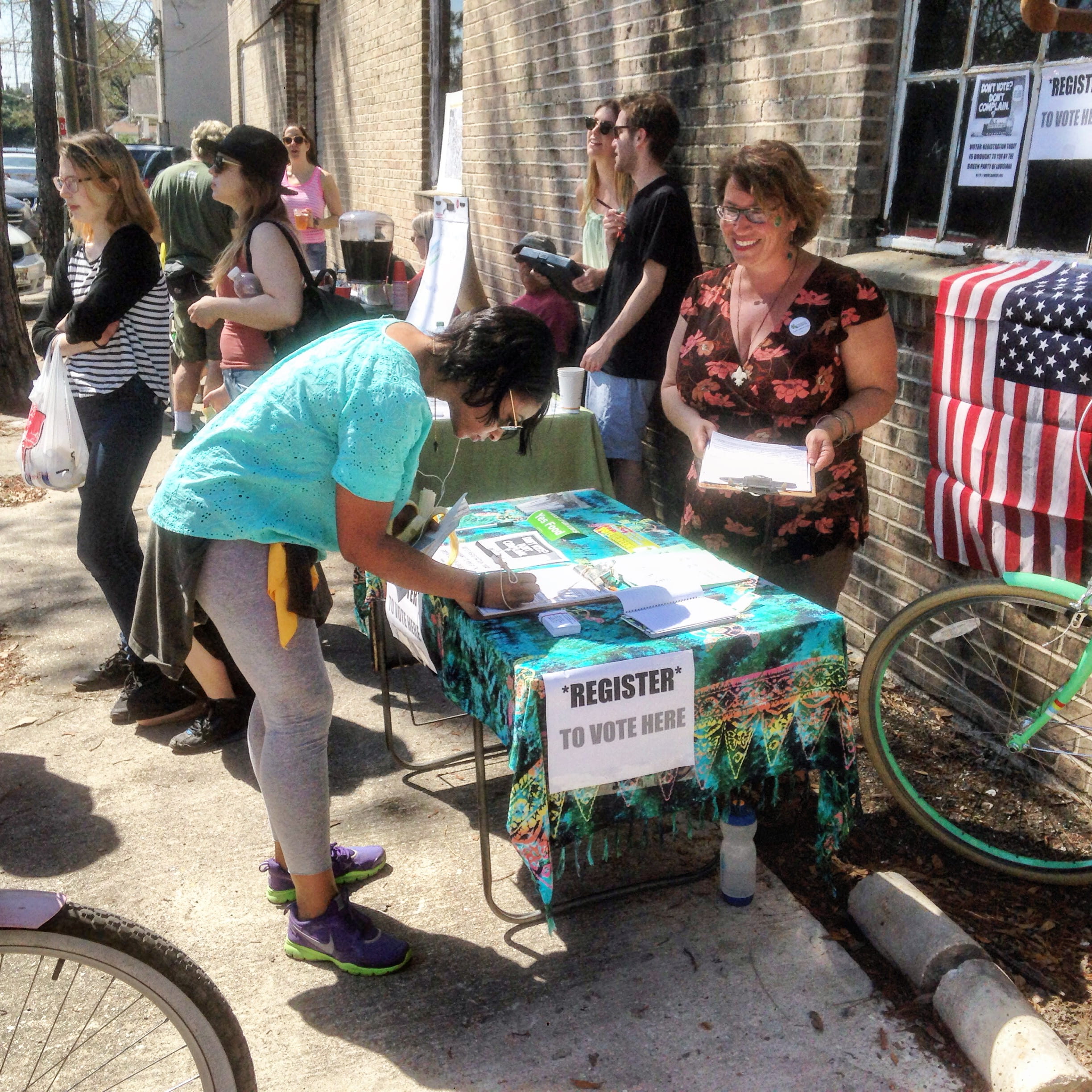
a voter registration table
Voter Registration. Source: Wikicommons.

“That’s how we can end this dangerous cycle — by making sure that every single person we know makes their voice heard, in this election and in every election. Because when we all vote, we all do better.” –Michelle Obama, Shondaland, 2018

On November 6, 2018, we did do better in many areas. That’s because it was the day of the midterm election, a day that featured elections in several U.S. states. Voters in many of these states voted for proposals and candidates that promoted human rights and represented advancement. A few of the highlights:

Florida

Voters in the Sunshine State approved Proposal 4, a measure that will restore voting privileges to people who have completed serving their sentences for felonies that don’t include murders or felonious sexual assault. This measure is expected to restore the voting rights of more than one million Floridians. A significant number of these Florida residents are minorities. According to Vox, “In 2016, more than 418,000 black people out of a black voting-age population of more than 2.3 million, or 17.9 percent of potential black voters in Florida, had finished sentences but couldn’t vote due to a felony record.” Florida’s Proposal 4 thus will enfranchise people and create a voting pool that more accurately reflects the population of the state. Such voters might elect candidates and approve measures that resemble their lives and their desires, which could make the state more of representational democracy.

Colorado 

Did you know that slavery is a punishment that is still legal in federal prisons? Slavery as a punishment is also legal in the constitutions of many U.S. states. But, this won’t be the case in Colorado. On November 6, 2018, voters in that state approved Amendment A, a proposal that would include language that bans slavery in its state constitution, two years after a similar proposal failed in the state. While banning all slavery for all reasons on both the state and the federal levels would obviously be a more humane and empowering decision, banning language that forbids slavery is a good first step. A small step, to be sure, but still a step in the right direction.

New York

Midterm elections in other states featured candidates who are sympathetic to human rights. New York voters elected Alexandria Ocasio-Cortez to the U.S. House of Representatives. Ocasio-Cortez is a woman of Puerto Rican descent and a self-described socialist whose platform endorsed criminal justice and immigration reform, expanded Medicare health coverage, gun control, LGBTIA+ and women’s rights, the promotion of peace, and support for senior citizens and Puerto Rico. Ocasio-Cortez stunned her home state and the nation when she defeated longtime Congressional representative Joe Crowley in the New York Democratic primary in June 2018. The representative’s political views thus place her in the company of fellow progressives such as independent senator Bernie Sanders of Vermont. This means it also places her in opposition to U.S. president Donald Trump. The 2018 midterm election gave Ocasio-Cortez and her fellow Democrats a majority in the U.S. House of Representatives. The U.S. Senate, meanwhile, retained a Republican majority, and the presidential administration is also Republican. Will these different political perspectives lead to bipartisanship? Conflict? How will they affect the politics and governance of the country?

Arizona

Arizona’s race for U.S. Senate may have been as interesting as its ultimate results. That’s because the race featured two women running for a Senate seat. Even though the results of the 2018 election means that a record number of women will serve as U.S. senators, this still means that twenty-four women will be U.S. senators. That makes the U.S. Senate 24% women. The population of the entire United States is 50.8% female, according to the U.S. Census Bureau. Women, then, are still underrepresented in the U.S. Senate compared to their overall totals in the general population. Since Arizona’s race featured two female candidates, it represented a more inclusive sort of political race, one that a female was bound to win, no matter what. And the race? It pitted Republican Martha McSally and Democrat Krysten Sinema. McSally also served as the first woman to fly in combat for the U.S. Air Force. Sinema won, receiving approximately 50% of the vote to McNally’s approximately 47.6%.

Georgia

Another new Congressperson, Lucia “Lucy” McBath of Georgia, has supported LGBTIA+ and women’s rights, immigrants, and the Affordable Care Act. Another focus of her work, gun safety, is sadly personal. That’s because, in 2012, a man shot and killed McBath’s unarmed seventeen-year-old son, Jordan Davis, arguing that the teen was playing music too loudly. The first trial for the crime ended in a mistrial in February 2014 after juror disagreements. After a second trial later that year, Davis’s murderer, Michael Dunn, was convicted and received a sentence of life imprisonment with no chance of parole. Her son’s death and further tragedies such as a 2018 mass shooting at a Parkland, Florida high school led McBath to become what she calls a reluctant activist and prompted her to run for office. McBath supports a host of gun safety measures, such as raising the age requirement to purchase firearms and banning weapon access for people convicted of domestic abuse.

Michigan

Women swept the top executive seats in the state of Michigan. Voters elected Gretchen Whitmer as governor, Dana Nessel as the attorney general, and Jocelyn Benson as the secretary of state. Openly gay Nessel also gained fame as the attorney in the case that legalized gay marriage and adoption in Michigan and helped pave the way for marriage equality in the nation. Whitmer, Nessel, and Benson joined Debbie Stabenow, who held her position as one of Michigan’s U.S. senators. They also join newly elected Rashida Tlaib, a Michigan attorney and civil rights advocate who was one of the first two Muslim women elected to the U.S. House of Representatives (newly elected Ilhan Omar of Minnesota was the other). Michigan voters also approved proposals that could impact state politics in the future. Proposal 2 was a measure that will establish a board of political party members and independent voters that will create legislative maps. This measure hopes to fight gerrymandering, the practice of creating maps to produce voter patterns that are favorable to specific political parties. Another voter-approved measure, Proposal 3, aims to make voting easier and fairer by making absentee ballots more available, automatically registering voters at state government offices, and enacting other measures.

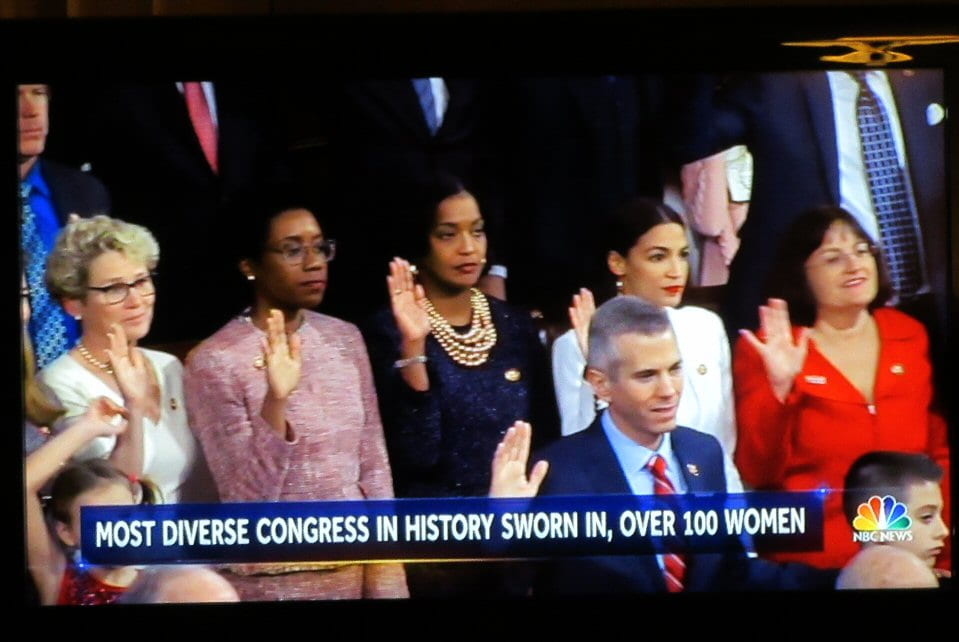
a screenshot of 116th House of Representatives
More women in Congress. Source: FolsomNatural, Creative Commons

Voters chose more diversity

Many other states elected women. In fact, so many women won their races that there will be a record number of women in the U.S. House of Representatives and the U.S. Senate. Two of these women are New Mexico’s Deb Haaland and Kansas’s Sharice Davids, who became the first female Native American members of the House of Representatives. Haaland, in fact, is a thirty-fifth generation New Mexican. 

This surge of female power isn’t just confined to the legislative and executive branches. Nineteen black women campaigned to become judges in Harris County, Texas in 2018. All nineteen will serve as judges. Their campaigns have been dubbed Black Girl Magic and are emblematic of the growing power of African American women in political affairs. Observers hope that the Harris County judges will bring their diverse experiences to represent and work with the people of their area.

Speaking of diverse life experiences, U.S. Representative Ilhan Omar of Minnesota is a woman, a Muslim, and a refugee from Somalia. She wears hijabs, headscarves that some Muslim women wear, which has prompted members of the U.S. Congress to reconsider the legislative body’s ban on head coverings. Her experience as an immigrant could be crucial in shaping or fighting legislation relating to immigration and asylum in the coming years.

More members of the LGBTIA+ community are also running for and holding office. U.S. congressperson Sharice Davids and Michigan attorney general Dana Nessel are lesbians, and Colorado’s Jared Polis became the first openly gay man elected governor of a U.S. state. Previously, he was the first openly gay man elected to the U.S. Congress. And, although Christine Hallquist did not become Vermont’s governor, she did make history as “the first openly transgender gubernatorial candidate in the nation’s history,” according to Politico.

This is not to say that the results of the 2018 midterm election entirely supported inclusion and human rights. Alabama and West Virginia both approved measures that restrict abortions. Mississippi voters elected a senator, Cindy Hyde-Smith, who said she’d attend a public hanging in her enthusiasm for a supporter. Since Hyde-Smith’s competitor was an African American man, the senator-elect’s comments recalled the horror and ugliness of racially motivated lynchings in Mississippi and elsewhere in the nation.

But, even despite these developments, the election elected candidates from many different backgrounds with many different experiences and perspectives. It supported measures that aim to make life more inclusive for more U.S. residents. It approved candidates and measures that represent voters, acknowledge them, and give them agency. Michelle Obama was right. People who vote are broadcasting their voices. They’re working to help make life better for themselves, their fellow citizens, and future generations.


About the author: Pamela Zuber is a writer and editor who has written about a wide variety of topics, including physical and mental health, addiction, human rights, and gender.

The Generations of Human Rights

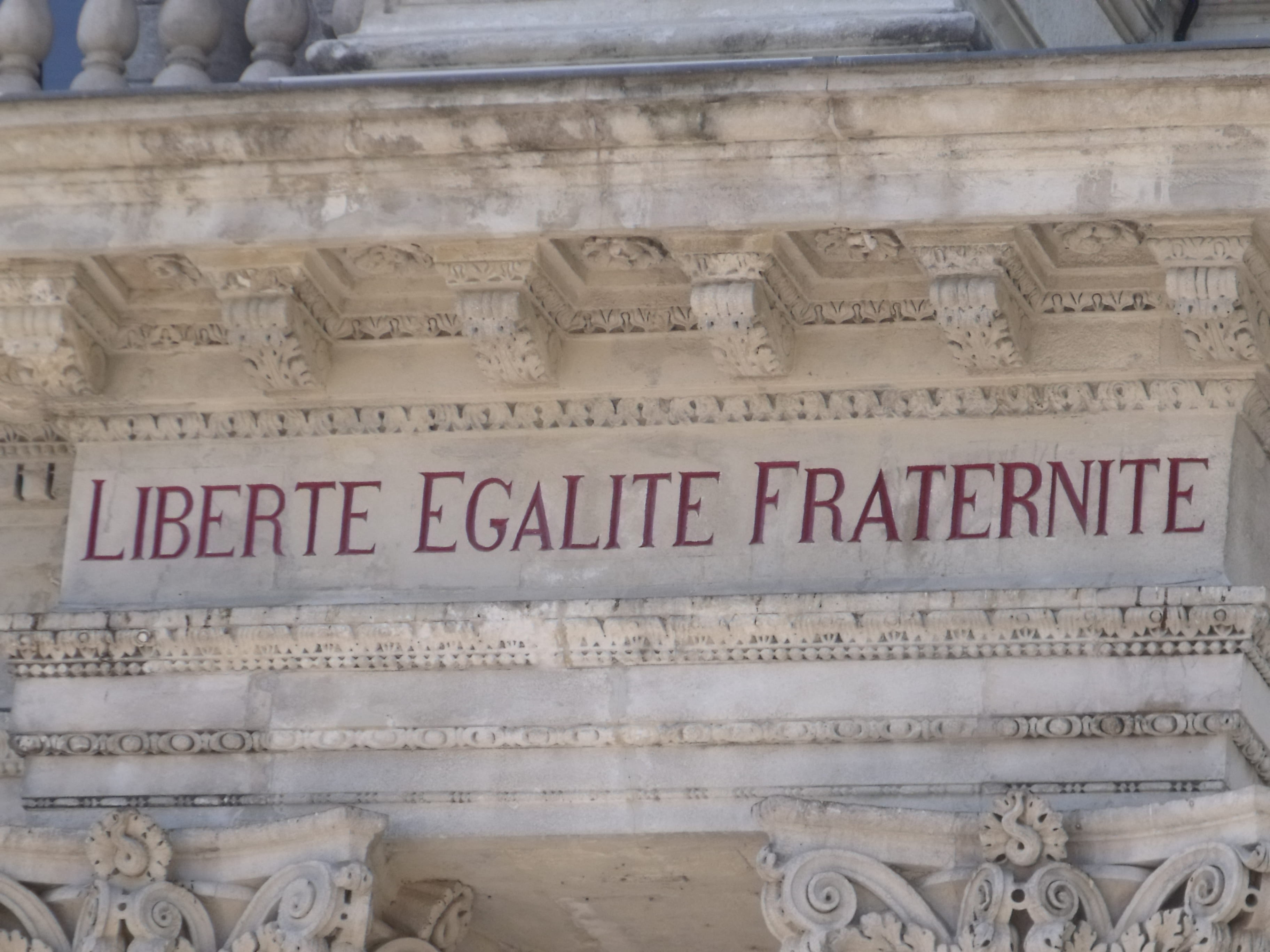
The words "liberte egalite fraternite" written above the entrance to the Hôtel de Ville in Avignon, France.
Avignon – Place de l’Horloge – Hotel de Ville – Liberte Egalite Fraternite. Source: Elliot Brown, Creative Commons

When human rights are being discussed, they are often divided up into three categories called generations.  A reflection of the three generations of human rights can be seen in the popular phrase of the French Revolution: liberté, egalité, fraternité.  These generations of human rights were first formally established by Karel Vasak, a Czech jurist, in 1979.  This division of the types of human rights helps improve conversations about rights, especially those involving legislation and the role that governments play in human rights.

The First Generation: Liberté

The first generation of human rights encompasses an individual’s civil and political rights.  First generation rights can be divided into two sub-categories.  The first sub-category relates to norms of “physical and civil security.”  This includes not committing acts of torture, slavery, or treating people inhumanely.  The second sub-category relates to norms of “civil-political liberties or empowerments.”  This includes rights such as freedom of religion and the right to political participation.

First generation rights are based around the rights of the individual person and are often the focus of conversations about human rights in western countries.  They became a priority for western nations during the Cold War.  Some documents that focus on first generation rights are the United States Bill of Rights and Articles 3 through 21 of the Universal Declaration of Human Rights (UDHR).

The Second Generation: Égalité

The second generation of human rights encompasses socio-economic rights.  Second generation rights can also be divided into two sub-categories.  The first sub-category relates to norms of the fulfillment of basic needs, such as nutrition and healthcare.  The second sub-category relates to norms of the fulfillment of “economic needs.”  This includes fair wages and sufficient standards of living.

Second generation rights are based on establishing equal conditions.  They were often resisted by western nations during the Cold War, as they were perceived as “socialist notions.”  The International Covenant on Economic, Social, and Cultural Rights and Articles 22 through 27 of the UDHR focus on these rights. 

Prior to the fall of the Berlin Wall, first and second generation rights were considered to be divided by the responsibility they place on governments.  First generation human rights were looked at as being a “negative obligation,” which means that they place a responsibility on governments to ensure that the fulfillment of those rights is not being impeded.  Second generation human rights were viewed as being a “positive obligation,” which means that they place a responsibility on governments to actively ensure that those rights are in fact fulfilled.  After the Berlin Wall fell, perspectives shifted to see governments as having the responsibility to “respect, protect, promote and fulfill” these rights. 

The Third Generation: Fraternité

The third generation of human rights encompasses broad class rights.  Third generation rights can be divided into sub-categories as well.  The first sub-category relates to “the self-determination of peoples” and includes different aspects of community development and political status.  The second sub-category is related to the rights of ethnic and religious minorities.

Third generation rights are often found in agreements that are classified as “soft law,” which means they are not legally binding.  Some examples of these agreements include the UDHR and the 1992 Rio Declaration on Environment and Development.  This generation of rights is challenged more often than the first and second generations, but it is being increasingly acknowledged on an international level. These rights started gaining acknowledgement as a result of “growing globalization and a heightened awareness of overlapping global concerns” such as extreme poverty.

Overall, recognizing the differences between each generation of rights can help us to better understand how broad the field of human rights is and how varied the issues involved truly are.  Each kind of right is best fulfilled through the use of different forms of legislation, and recognizing the different generations of rights can improve our ability to identify the what type of legislation is best suited for dealing with a particular issue.

What is a human rights-based approach?

A human rights-based approach to activism entails empowering people by giving them the knowledge to know and claim their rights. This also involves focusing on holding institutions and individuals responsible for respecting, protecting, and fulfilling rights accountable through constant pressure and oversight. It is important to give people a greater say in the creation of laws that affect their rights. This can be achieved by educating the public on how they can make their voice heard as well as educating politicians on how to listen to public opinion and respect human rights. The policymaking and organizations involved with human rights need to ensure that strict standards and principles of human rights are taken into account.

There are many different ways to advocate for human rights. Some organizations choose to offer direct assistance to individuals which have had their rights violated. This can involve food, shelter, legal support, healthcare, and other types of aid. Another way in which to help the fight for human rights is to support key cases through the court systems. The hope is that if even one individual who has had their rights infringed upon wins their case then that will set a legal precedent. Such a precedent would protect future human rights violations of this type from ever happening again. Another legal strategy is to lobby for changes to existing local, national, or international law. This gives voice to the cause and widespread awareness of existing human rights issues. Media coverage and public support can oftentimes pressure politicians into coming up with a solution by passing new or amending current legislation. Lobbying groups can even provide specialists who are most knowledgeable in human rights issues and how to best solve the problem. These specialists can guide and advise lawmakers into developing policies and drafting legislation that will provide the best protection and support to at-risk people and groups.

One of the most important ways to promote lasting and effective changes to secure the future human rights of all people is to educate the public. People need to be made aware of the various types of human rights abuses and what exactly the human rights issues are. A more educated populace will be more respectful and open to supporting the necessary changes to protect at-risk groups.  This public support is key to campaigning for necessary legislation and electing politicians who are empathetic to human rights concerns. In addition, educating the public will change the existing culture and help influence future generations to be understanding and active in advocating for a better future of human rights.

An imperative part of combating human rights issues is for each person to know what their rights are and how to protect them. The United States Department of Justice is responsible for handling all claims of civil rights abuses. The Civil Rights Division enforces criminal, disability, educational, employment, housing, immigration, voting, and special litigation offenses. The process for filing a claim is not that difficult with information and personnel available online at https://www.justice.gov/crt/how-file-complaint. All necessary procedures to file a complaint are detailed clearly and with additional personal assistance available upon request. You can also contact the United Nations and file a complaint under the International Covenant on Civil and Political Rights as the United States is a member nation. It is important for human rights concerns to be acknowledged with formal complaints so that legal actions can be taken to stop current and future human rights violations from occurring. Everyone can do his or her part to protect their human rights and the human rights of all people by being active in advocating for change and by reporting each and every human rights violation.


Human Rights Day 2018

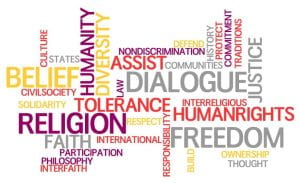
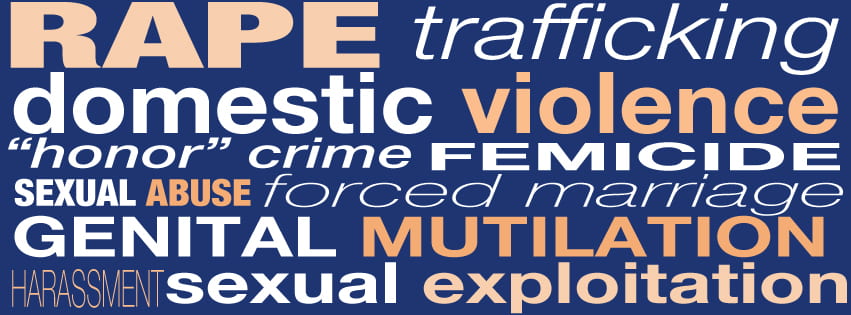
Word Cloud. Source: Universal Rights, Creative Commons

How It All Began

Human Rights Day is celebrated worldwide on December 10, originating on the day the United Nations formally approved the Universal Declaration of Human Rights in 1948.  This year is their 70th anniversary of the Universal Declaration of Human Rights, which declares everyone has basic rights, regardless of their nationality, social origin, opinion, etc. It is the most translated document in the world and it appears in over 500 languages. The concept was put into action in 1950 when the United Nations General Assembly invited the States and organizations to approve of declaring December 10 as Human Rights Day. The goal of Human Rights Day is to create a “common standard of achievement for all peoples and all nations: in order to “strive by progressive measures, national and international, to secure their universal and effective recognition and observance”. Furthermore, the aim is to show people that human rights are relevant to us all, often consisting of conferences, meetings, and events surrounding human rights issues.

How the World Celebrates

Countries and organizations around the world celebrate Human Rights Day differently; however, the end goal is the same – to stand for our rights. The theme has varied from year to year. In 2003, the focus was on “Know Your Human Rights, while the theme in 2010 was on “Speak up, Stop Discrimination”, and, in 2017, the focus was on “standing up for equality, justice, and human dignity”. Not only does the theme differ from year to year, but also what each country focuses on. For example, Senegal concentrated on a blind theatre group, while Pakistan held a human rights film festival. Furthermore, Madagascar created a human rights debate contest and Azerbaijan held a writing and art competition on human rights. Additionally, the impact of social media over the recent years is phenomenal. Last year #HumanRightsDay was the most trending topic in Spain, while it was #3 in the United States. As a result, Facebook created a profile frame for Human Rights Day, while Twitter created a special emoji. In fact, some organizations such as the United Nationals, Amnesty International, and the World Health Organization used Twitter as a platform to create conversations on topics such as immigration, reproductive rights, access to clean water, universal healthcare, and equality among communities of color.

How you can celebrate in Birmingham, AL

Around the world many organizations have events; however, there are ways to get involved with the local community. An example of getting involved among college campuses would be where individuals could work with their respective student government to pass a resolution to observe Human Rights Day. Another possibility would be to work with the Birmingham community and create an event to raise awareness a variety of human rights issues such as environmental justice, domestic violence, and gender equality. There could be performances, lectures, and a discussion to highlight the importance of these pressing issues, among others. Before the event starts, there could be the option of having a tabling event, where people can learn more about different organizations across the Birmingham community associated with different aspects of human rights. Furthermore, people could start a social media campaign through Instagram, Facebook, and Snapchat. Another opportunity would be to have numerous free expression walls, all over Birmingham, where people can write down thing such as what human rights means to them, what human rights issues they were impacted by, or what human rights issue they want to spread awareness on. Ultimately, Human Rights Day is about taking the time to focus on different human rights topics and what it means to stand up for not just our own rights, but for others as well.

Human Rights Day. Source: Flickr, Creative Commons

“All human beings are born free and equal in dignity and rights. They are endowed with reason and conscience and should act towards one another in a spirit of brotherhood.” – Universal Declaration of Human Rights Article 1


Free and Uneasy

by Mary Johnson-Butterworth

When I visited the Equal Justice Initiative Legacy Museum, I sat down at a booth where I was separated by plexiglass from a video of a prisoner who picked up a phone as I picked up my receiver.  This prisoner told me of his 12 years in solitary confinement and his struggles to survive, and then he shared his beautiful poem with me.  Given my recent passion for poetry, I felt that I had just had a karmic experience, and it affected me deeply.  I dedicate this poem to Mr. Ian Manuel, a brilliant writer, who is now free and currently resides in Florida.

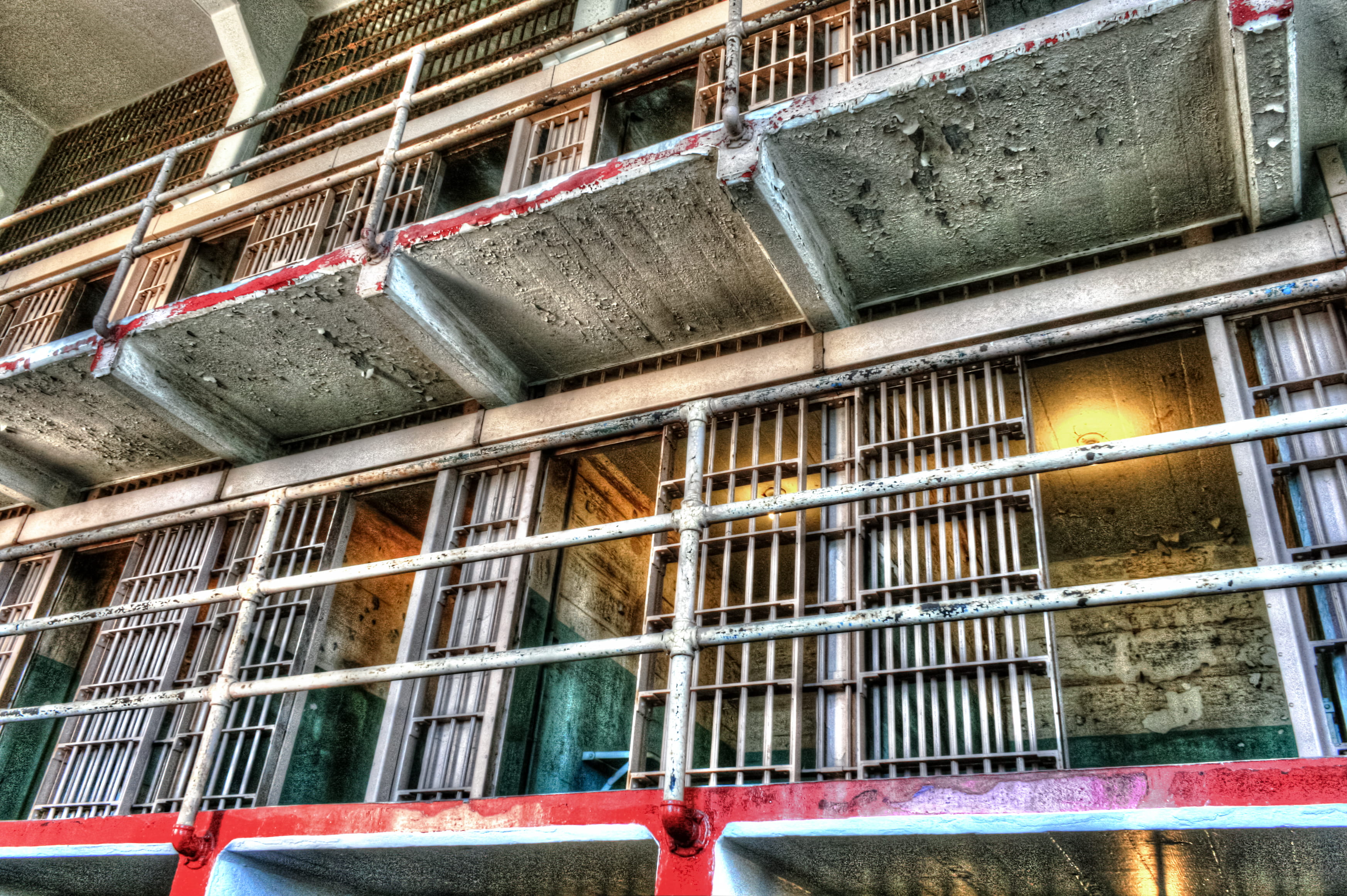
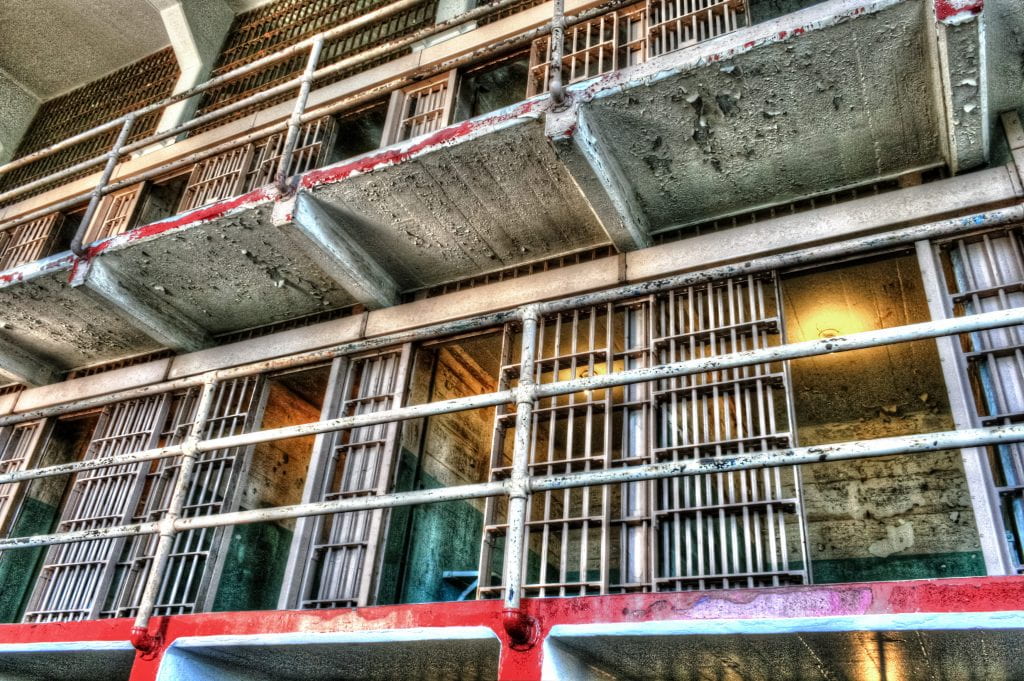
the inside of Alcatraz
Outside this empty shell. Source: Derek Finch, Creative Commons

I am humbled to meet you

In a place defining legacy as atrocity.

Here in a cubicle with the glass between us,

I learn your stare before I sit;

Your stagnant gaze stings like lashes.

Lashes–but what do I know of lashes?


In terror, I reach for the receiver

While you do the same.

You introduce yourself to all who call

With a show of strength in sepia

As you share yourself on video.

Terror—but what do I know of terror?


You tell me of your bleak and solitary plight,

Of the fight with your tortured soul,

Of your twelve years in a cell alone

With no human breathing near you.

I have suffered my own confinements.

Solitary—but what do I know of solitary?


You speak of an exploration within–

Within your hourless term,

A timelost search for your voice

Within the breadth of your mind,

A mind that ever evades capture.

Capture—but what do I know of capture?


You proclaim the poem of your truth,

Well-versed in human pain,

Words meting out the inner you.

I listen with my newfound poet’s ear

To the meaning of your life.

Pain—but what do I know of pain?


Shocked by our common shred,

I return the receiver to the still shot

Of your shackled silence.

What reverberates for me now

Is of words you set aloft and free.

Poetry—for we two know of poetry.

Guardians: The Bridge between the Medical and Social Models of Disability

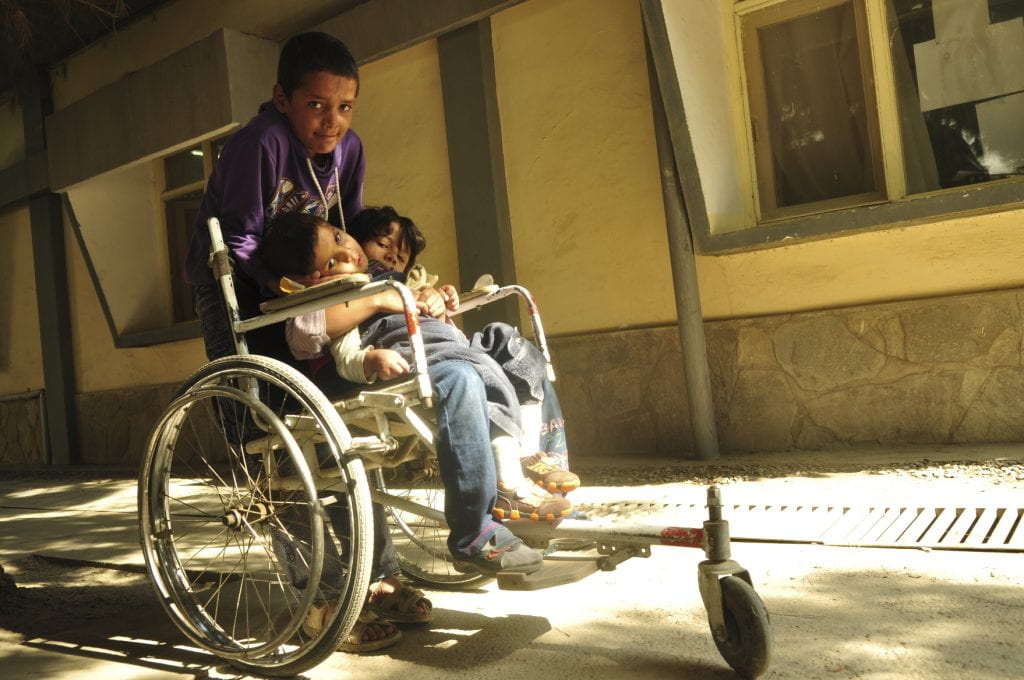
Getting fitted out for a better future Omar (in the middle surrounded by his brother Rasekh, 10 and sister Majan, 8) was born with weak legs and hands since birth. They came to the Red Cross orthopedic clinic in Kabul with their father to get Omar fitted up for a wheelchair. Rasekh is in grade 4 and love Dari classes – he would like to be an engineer. Omar will have to be pushed around for the rest of his life, but his siblings are happy to support him to have a normal life – he hopes to start school soon. Aid from the UK is supporting the International Committee of the Red Cross (ICRC) to run a network of seven orthopaedic centres across Afghanistan to assist those affected by mobility disabilities, including hundreds of mine victims. The UK is to help provide 3,800 new artificial limbs and 10,000 crutches for Afghan children and adults disabled during 30 years of conflict and extreme poverty. UK Dept of Intl Development
Omar (in the middle surrounded by his brother Rasekh, 10 and sister Majan, 8) was born with weak legs and hands since birth. They came to the Red Cross orthopedic clinic in Kabul with their father to get Omar fitted up for a wheelchair. Rasekh is in grade 4 and loves Dari classes, he would like to be an engineer. Omar will have to be pushed around for the rest of his life, but his siblings are happy to support him to have a normal life, he hopes to start school soon. Aid from the UK is supporting the International Committee of the Red Cross (ICRC) to run a network of seven orthopaedic centres across Afghanistan to assist those affected by mobility disabilities, including hundreds of mine victims. The UK is to help provide 3,800 new artificial limbs and 10,000 crutches for Afghan children and adults disabled during 30 years of conflict and extreme poverty. Source: UK Department of International Development, Creative Commons

I am currently binge-watching Law & Order: SVU. In one episode, “Competence,” the rape survivor has Downs Syndrome (DS). Her mother, who is also her legal guardian, feels DS limits her ability to function “normally” in the world. The main concern of the mother is her daughter’s ability to care for the baby she is carrying as a result of the repeated rapes. The mother’s protection of her daughter extended only as far as she could be with her. Throughout the show, the revelation is that the store owner, where the daughter worked part-time as a stocker, exploited her disadvantage for his advantage. To limit the risk of the baby having DS and added to her belief in her daughter’s inability to care for the baby, the mother arranged an abortion of her daughter’s behalf. The courts stepped in and conducted a competency trial. Placed on the stand, the pregnant rape survivor acknowledged that once she did set fire to the kitchen but that she could now make soup because her boyfriend showed her. She also explained that even though she did not know how to care for a baby yet, she could learn if someone taught her.

As persons with disabilities (PWDs) move from the medical model into the social model in pursuit of independence, often overlooked are the role and needs of the caregiver. Society must begin to acknowledge and identify the paradigm shift occurring across the board. The purpose of this blog is to reflect on the role of parents and caretakers (also referred to as guardians) who attempt to bridge the gap between the medical and social models of disability while encouraging self-determination and protecting their loved ones in a created world that does not have them in mind.

The societal solution to PWDs was eugenics, institutionalization, or isolation–out of sight and out of mind for centuries. The employment of this solution allowed and continues to allow some guardians to abuse the system and take advantage of those in their care, and the pursuit of swift legal action is necessary. However, as societies move towards inclusivity, we must give encouragement and praise to those who through their actions look for avenues and solutions that empower. More specifically, we must continue to champion the guardians. With the implementation of the CRPD, standards of ADA, more universal design efforts, and competency hearings, PWDs are becoming productive members within their communities. So, what does this mean for their guardians who have sacrificed to protect their family member from the cruelty of an able-bodied world and the able-bodied world not used to making allowances for Others, particularly PWDs?

Who is a guardian? Persons with intellectual disabilities often have a legal guardian. The legal guardian acts in the “best interest” of their ward or the person in their charge. Much of the present debate regarding guardianship is the abuse of power in the denial of civil and human rights. In a 2007 study, Dorothy Squatrito Millar found that study participants did not recognize the disconnection between self-determination and guardianship or realize that there are several available alternatives to guardianship. Despite the arrival at the age of majority (18), students with intellectual disabilities did not receive the opportunity to self-advocate; rather, in many instances, they are given directions on what to do, or their guardian did the task for them. The inability to self-advocate as an adult is a denial of personhood, a violation of dignity. “We are adults. They need to accept that” and “they need to put themselves in our shoes sometimes” were some of the responses of the students.

What is notable about the SVU competency hearing is the assumption that all adults know how to care for a baby or balance a checkbook. The implication is that a person with an intellectual disability needs to have a guardian to avoid making any mistakes. As one non-disabled parent in Millar’s study put it, “We all make mistakes, and we all need help sometime—but that doesn’t mean we need guardians.” Most guardians resist the transition to adulthood and self-determination out of fear of exploitation, lack of information, and concern for their disabled child’s well-being. Millar concludes that while there is a significant need for more research on the transition to adulthood, the inclusion of children with intellectual disabilities into decision making throughout their lives does assist in the collaboration between other institutions in providing care that aligns with goals, imparts knowledge, addresses concerns, and maintains dignity and personhood.


Give Me Your Tired, Your Poor: The U.S. Refugee Crisis

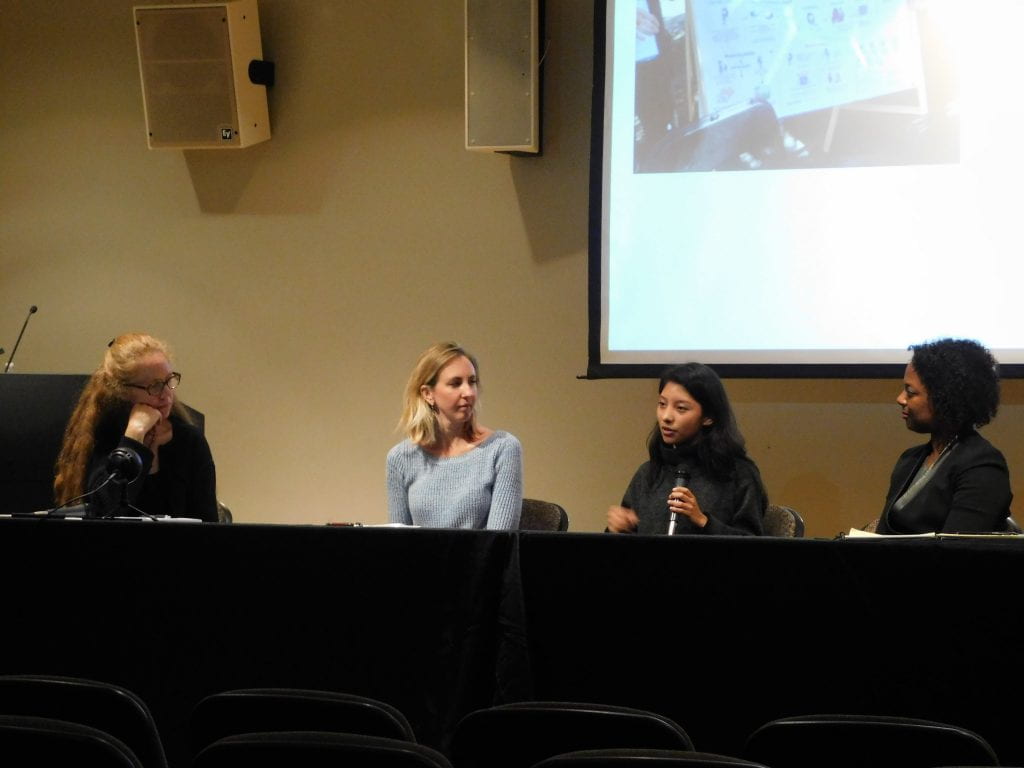
On Monday, November 12, the Institute for Human Rights co-sponsored an event with local education, faith-based, and law organizations at Birmingham-Southern College (BSC), titled Addressing the Global Refugee Crisis – Part 2: Focus on the United States. The panel discussion, moderated by Anne Ledvina ( Associate Director at BSC – Ellie and Herb Sklenar Center for International Programs), included Yanira Arias (Campaign Manager at Alianza Americas), April Jackson-McLennan (Attorney at The Law Office of John Charles Bell, L.L.C.), Sarai Portillo (Executive Director at Alabama Coalition for Immigrant Justice), Roshell Rosales (Member at Adelante Alabama Worker Center), and Jessica Vosburgh (Executive Director at Adelante Alabama Worker Center), addressing the Central American migrant caravan, definitions of immigration law, and Alabama’s role in the current refugee crisis.

From left to right: Anne Ledvina, Jessica Vosburgh, Roshell Rosales, and April Jackson-MacLennan pictured on the discussion panel. Source: UAB Institute for Human Rights

Arias and Portillo first addressed the audience by speaking about the recent events in Mexico City where many Central American caravan refugees were staying in a stadium serving as a makeshift camp. Here, many tenants camped on the field or slept on the bleachers, received medical attention and waited in line for basic resources, such as water, that had limited availability. Not only does Portillo assist migrants in her birthplace of Mexico but heads the Alabama Coalition for Immigrant Justice (ACIJ), a grassroots network of six non-profit organizations and various individuals dedicated to protecting and advancing immigrant rights by developing leadership, aligning with other justice causes, encouraging civil participation, and advocating for just policies. Arias’ organization, Alianza Americas, which is a national network serving Latino communities, is currently facilitating donations for Central American caravan refugees through the Refuge for Families Campaign.

Vosburgh then initiated discussion around the narrow qualifications for refugee status and mentioned the disproportionate effects of being an LGBTQ refugee such as allocation to immigration facilities based on birth-assigned gender and sexual exploitation. Additionally, Vosburgh insisted the United States plays a unique role in creating refugees, namely through the war on drugs and neoliberal economic policies which perpetuate destabilization in the Global South. Vosburgh heads Adelante Alabama Worker Center, a Hoover-based organization dedicated to uniting low-wage and immigrant workers as well as their families for defending and promoting human, namely labor, rights in vulnerable communities. Adelante offers a myriad of programs, including the Accompaniment Program, which matches volunteers with community members to assist with transportation to court hearings as well as probation appointments, as well as English classes and legal representation. Additionally, Roshell Rosales, an Adelante member and Montevallo University sophomore, spoke about her experiences as a Dreamer, including scrutiny from law enforcement and the opportunity to earn a scholarship through The Hispanic Interest Coalition of Alabama (¡HICA!).

Jackson-McLennan elaborated on the services provided by The Law Office of John Charles Bell, L.L.C., particularly their focus on affirmative asylum (obtaining asylum) and defensive asylum (defense against removal from U.S.) cases. Their services are salient to the region because not only is Alabama void of an immigration clinic, which often provide affordable legal services, but the political climate of the state often serves as a disadvantage to immigrants, speaking to the importance of their work. Also, due to predatory law practices in the Birmingham area, attorneys at John Charles Bell provide their immigration legal services on a low bono basis, meaning their assistance is accessible and affordable to potential clients.

Although these organizations do fascinating work to advance the rights of immigrants in the, every additional ally to the cause could be life-changing, whether it be through employment, housing, legal, or transportation assistance. Furthermore, our current political climate carries vestiges of anti-immigration efforts from the 20th Century when individuals and families, namely from the Jewish community, left their homes to escape conflict and faced persecution. As a result, more than 1,000 Central American refugees are at the U.S.-Mexico border in Tijuana, facing law enforcement with tear gas, pleading for a chance at a better life. Such a crisis speaks to our moral compass, not only as a country but global community, whose Universal Declaration of Human Rights, via the United Nations, demonstrates that everyone has the freedom of movement within each state (Article 13) and a right to a standard of living adequate for their health and well-being (Article 25).

If you’re interested in participating in the advancement of immigrant rights, both locally and globally, please mark your calendar for March 4, 2019 for the third installment of this series which will be held at Samford University and focus on a community action plan. Please stay tuned for more details.

Ending Violence Against Women

by Pam Zuber

November 25 is UN International Day to End Violence against Women. Source: Creative Commons

“But the details about that night that bring me here today are ones I will never forget. They have been seared into my memory and have haunted me episodically as an adult.” – Christine Blasey Ford, 2018

Christine Blasey Ford spoke these words during her opening statement during a September 2018 hearing before the United States Senate Judiciary Committee. The purpose of the hearing was to determine if nominee Brett Kavanaugh was fit to serve on the United States Supreme Court. Blasey Ford said that when she and Kavanaugh were both teenagers, an extremely drunk Kavanaugh sexually assaulted her by groping her and trying to remove her clothes. When she tried to scream, he covered her mouth, and Blasey Ford said she was afraid that this action would suffocate her.

This testimony illustrates how many women have experienced physical and sexual violence. This testimony joins the many heartrending stories we’ve heard as part of the #MeToo and Time’s Up campaigns. The repercussions of this violence can linger long after the violence has ended. They can affect women for the rest of their lives and affect their loved ones and acquaintances. Violence thus creates a ripple effect that touches all parts of society, not just the women directly harmed by the acts of violence.

To address this violence, the United Nations (UN) sponsors the International Day for the Elimination of Violence against Women every year. In 2018, this day occurs on November 25, 2018. This day is part of the United Nations Secretary-General’s UNiTE Campaign’s 16 Days of Activism to End Violence Against Women.

What is violence against women?

Sadly, there are many types of violence against women. Violence can be physical, sexual, verbal, emotional, or a combination of these. It can be the threat of violence, such as threatening violence against women if they do or don’t do certain things. Violence can be against ciswomen (people who were born biologically female and identify as female). It can be against trans people or nonbinary individuals and sometimes occur because of their trans or nonbinary statuses. Women, nonbinary people, and trans individuals of color also might also encounter violence. This article refers to all women, nonbinary people, and trans individuals unless otherwise specified.

Violence can occur in public or it can occur in homes, schools, or workplaces. It can occur among strangers or among family members, coworkers, classmates, or teachers and students. Some people and groups use violence against women as a weapon of war, raping women and girls because they think the violence will serve as a sign of dominance and power. In this perspective, any pregnancies that result are an added bonus because the pregnancies perpetuate the dominant/violent lineage instead of the groups they’ve vanquished.

Some people commit violence against women simply because they feel that they can. They feel that they can get away with such behavior without suffering any negative repercussions. In this view, their feelings and physical needs are more important than the feelings of the women in their lives, even though, as we’ve seen, such actions can create lifelong consequences for the women and the people who know them. Such feelings of entitlement might partially explain the Kavanaugh/Blasey Ford incident. After all, when examining cultural problems, it helps to examine the cultures that created them.

How does culture contribute to violence?

Violence against women – or any violence – does not exist in a vacuum. Cultural forces often help to create and perpetuate violence against women. Even today, we hear the excuse “boys will be boys” in discussions of sexually aggressive behavior by men and boys. People still question whether women are inviting sexual aggression by their choice of clothes, their behavior, their decision to go places alone, and their drinking habits. While such attitudes exist in the United States, they are sometimes even more pronounced in other countries. Honor killings are a sadly common occurrences in some parts of the world. There were about 1,100 such murders in Pakistan alone in 2015.

In honor killings, people kill their female relatives because they believe that the females’ actions have shamed their families. In this view, shameful actions include dancing, working outside of the home, appearing on social media, dating, not marrying the families’ choices of suitors, or even being raped (even though rape is obviously not a person’s fault). People also worry that women will falsely accuse their sons of rape, even though their daughters are far more likely to experience sexual violence. And this is only for reported incidents of violence. The U.S. Bureau of Justice Statistics estimates that people report 35 percent of sexual assaults to the police. This means that people do not report almost two-thirds of all sexual assaults.

Why? One only has to observe what happened to Christine Blasey Ford. Because she recounted her experiences, she

  • Received death threats.
  • Moved with her family from their home because she feared for their safety.
  • Faced intense scrutiny from politicians, the media, and the U.S. public.

“I have had to relive my trauma in front of the entire world, and have seen my life picked apart by people in television, in the media, and in this body who have never met me or spoken with me,” Christine Blasey Ford admitted. Meanwhile, the man she accused, Brett Kavanaugh, still became a justice of the U.S. Supreme Court.

Is it any wonder why women and trans and nonbinary people are often reluctant to report violence against them? Even if they speak out, do people really listen? Are people really willing to take actions to deal with such violence or prevent such violence in the first place?

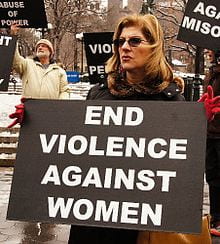
a protest for violence against women
End Violence against Women. Source: Creative Commons

How does violence affect women and society at large?

If people don’t listen to women’s stories of violence, take action to remedy them, or try to prevent violence, there are repercussions. Violence harms women, the people around them, and society at large. Ending the culture of violence against is the responsibility of societies and the governments that represent them. On a political level, such efforts protect and encourage half of the population, a population that votes and can support governments that support them (or withhold their support for unsupportive politicians and governments).

More importantly, such efforts are imperative on a human rights level. Ending a culture of violence against women ensures that all of a society’s citizens are respected and can fully experience society. It allows people to advance instead of holding people down. Violence causes immediate physical and emotional harm. It also can also create long-lasting consequences. For example, women who have been raped might

  • Contract a sexually transmitted disease such as HIV/AIDS.
  • Face unwanted pregnancies.
  • Struggle with post-traumatic stress disorder (PTSD) or other mental health conditions.
  • Develop a drug addiction or a dependence on alcohol because they are using substances to try to forget the attack.
  • Encounter problems at school or work because the attack led to absences or made it difficult to concentrate.
  • Experience shame and stigmatization from people who believe that they were responsible for the rape.
  • Find it difficult to begin new relationships or manage existing ones.
  • Deal with fear, anger, and other emotions.

These consequences are complex and require extensive professional help. Help is also necessary to address other aspects of violence. That’s because violent attacks hurt more than just women. They hurt their families because the families see how much the women in their lives are struggling. The women may also be unable to engage with others because of such attacks.

Violent attacks prevent women from contributing to their homes and workplaces. But, more importantly, they stifle women and violate their human rights. They could make women fearful of doing things that they might feel trigger such attacks, although violence is not their fault, but the fault of perpetrators. They might be afraid to do anything because of such attacks. This fear could paralyze them, prevent them from living full lives, and deprive society of their contributions.

25 November is United Nations Day to End Violence Against Women – the SL SAY NO campaign has been set up to support the campaign in Second Life. Source: Bea Serendipity, Creative Commons.

How can people prevent such violence?

It’s imperative, then, to prevent violence against women. Governments, people, and organizations are working to do just that. UN Women, part of the United Nations, has discussed the commitments and efforts of several countries around the world who have pledged to end violence against women. Such efforts include general commitments to investigate violence and work with groups to end and prevent it. UN Women also discussed specific actions, such as the country of Senegal’s creation of a hotline to help women and the country of Australia’s creation of a public campaign promoting respectful relationships and a project to promote workplace safety for women.

The annual United Nations-backed International Day for the Elimination of Violence against Women and the 16 Days of Activism to End Violence Against Women are examples of such efforts. The Center for Women’s Global Leadership’s Global Leadership Institute originated the 16 Days of Activism in 1991.

From the start, the organization and its work were inclusive. According to a website for the 16 Days of Activism campaign, the first participants in 1991 came from different countries in all of the world’s regions and were drawn from a variety of fields – lawyers, policymakers, teachers, health care workers, researchers, journalists, and activists. These women were local civil society leaders with at least two years of experience in women’s organizing who were also interested in building the global women’s human rights movement.

While this antiviolence campaign has always been global, it is interesting that it began at a time of great debate about violence against women in the United States. That’s because 1991 was also the year that law professor Anita Hill testified that Clarence Thomas had sexually harassed her. Clarence Thomas, like Brett Kavanaugh, was a nominee for the U.S. Supreme Court. Thomas, like Kavanaugh, became a justice of the court despite the accusations against him.

Is it any wonder why organizations continue to sponsor efforts to end violence and harassment against women? For example, the International Day for the Elimination of Violence against Women, November 25, 2018, inaugurates these 16 Days of Activism to End Violence Against Women. International Human Rights Day, December 10, 2018, ends these 16 Days of Activism.

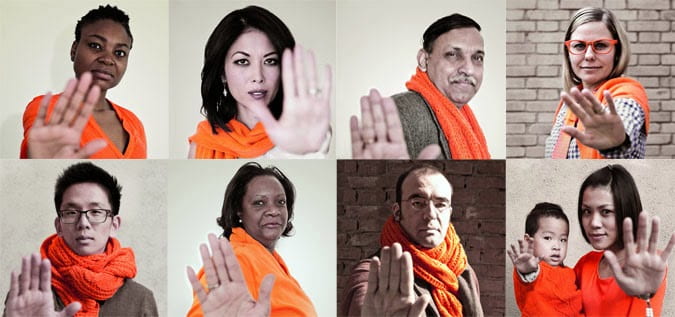
The timing of these days illustrates how the United Nations and other organizations consider violence not just a women’s problem, but a human rights issue. It sends the message that violence against women is a blight on humanity that concerns us all, not just the people immediately affected. Orange Is the World: #HearMeToo is the theme for 2018’s 16 Days of Activism campaign. This campaign builds on the momentum of movements such as #MeToo and Time’s Up. The UN Women and the Secretary-General’s UNiTE Campaign says that the color orange is intended to “symbolize a brighter future without violence. For us, the ‘orange’ comes from the fire ignited by the many women’s groups dedicated to combating violence against women around the world.”

To combat this violence, #HearMeToo has championed inclusiveness. It has encouraged people to share their stories of violence and created spaces for people to share them. It has shared their stories through digital and print media. It has sponsored listening events that included voices from all sectors, aiming to “create opportunities for dialogue between activists and policy makers, private sector organizations and the public.”

Other organizations are speaking out about violence. The NoVo Foundation founded the Move to End program to end violence against women and girls. The Move to End program’s On the Move blog contains several stories about efforts to end violence and encourages people to contribute as guest bloggers. Several other sites also feature blogs that encourage contributors, such as Ms. magazineThese blogs provide information. They provide a forum for people to share this information so they can speak and others can listen. Listening may sound simple, but it’s a vital step. Violence uses power to silence victims. Letting voices be heard helps dispel fear, secrecy, and uncertainty.

Pam Zuber is a writer and editor who has written about a wide variety of topics, including politics, addiction, and gender.

Africa – Not a Country but a Continent

One of the most famous blunders made by former U.S. President George W. Bush was, “Africa is a nation that suffers from terrible disease.” President Bush, like many others, misconstrued the fact that Africa is not a country, but a continent.

Africa consists of 54 different countries with a vast array of cultures, languages, religions, politics, agriculture, and cuisine. Many people assume that in Africa, people speak “African” or do not understand other languages; however, this is quite incorrect. In Africa, there are over 2,000 languages such as Arabic, English, French, Portuguese, and Swahili. Surprisingly the most spoken language is Arabic, with over 170 million speakers. Furthermore, English is the official language in 24 of the nations. “About 25 percent of the languages spoken in African countries aren’t recognized anywhere else in the world, which is a testament to its diversity and fullness.

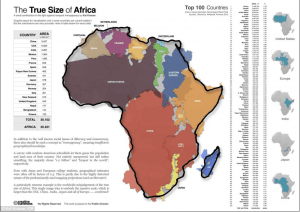
There are approximately 200 independent countries in the world and a quarter of them are in Africa. In fact, Africa has a population of over one billion people and is the second largest continent in the world. To demonstrate the immensity of Africa, the USA, China, India, Europe, and Japan could all fit inside its geographic border.

Size of Africa. Source: Karl Krause, Creative Commons

People often view the countries in Africa as poor. While 218 million individuals live in extreme poverty, 1 in 3 Africans are considered middle class. Additionally, not all people in Africa live in “huts”. About 43% of individuals in Africa live in urban areas. In fact, there are more than 50 cities with a population of over a million people. Also, approximately 70% of Africa’s population is under the age of 30. So, when you combine this young demographic with diversified urban centers, you generate the possibility of innovation throughout the continent. Furthermore, their economy is expanding – out of the 10 fastest growing economies, 6 are in Africa. It is not possible to apply one concept to the entirety of Africa. Yes, some countries are poor, especially in sub-Saharan Africa; however, there are countries such as Nigeria, South Africa, and Egypt that are fairly wealthy. Nigeria exports the majority of the world’s oil, has a GDP of over $594 billion, and is projected to be one of the world’s largest economies in just a couple of years. While South Africa is a well-known tourist location, it also has the 18th largest stock exchange in the world. Egypt is one of the wealthiest countries in Africa.

In terms of landscape, Africa is quite diversified. While the Saharan desert covers one-third of the continent, there are also rainforests, mountains, and lakes. Africa’s largest vegetation zones do not comprise of deserts or rainforests, but, in fact, savannas which are tropical grasslands. There is a myriad of ecosystems in Africa. For example, the Sahara desert is the world’s largest hot desert and has over 300 species of wildlife such as the cheetah, ostrich, and hyrax. On the flip side, the Congo and the Nile are the world’s deepest and longest rivers, respectively. Africa is also home to numerous wetlands, specifically in the Botswana which includes saline lakes, freshwater forests, and massive floodplains. There are also tropical forests in Central and West Africa such as the Congo rainforest.


River Clouds Landscape Sky South Africa Scenic

Western media tends to only portray the negative aspects of Africa – violence, revolution, and wars. However, there is so much more to Africa than the negatives because it is not all danger and violence. For example, Zambia is quite peaceful and has had six presidents since becoming independent in 1964. Furthermore, it has never had a civil war. In Liberia, the former President was named by Time as “one of the top 10 female leaders in the world”. Additionally, she earned a Nobel Peace Prize for her work in women’s rights. Western countries tend to show Africans as powerless and reliant on Western aid to survive. In fact, many ads in the West embody this stereotype by depicting Africans as sad, lonely, and dirty children that need money. However, this is nothing further from the truth. It is thought that Western countries are the ones who help out Africans and are responsible for their well-being. But the truth is that African people who live outside of Africa send more money to their families than all of the aid combined from the Western countries. That is not to say that Western countries should not offer assistance when it is needed, but they must change their minds about what it means to live in Africa. Africa is not helpless, there are many projects created by African people. A Somalian woman, Hawa Abdi, implemented a health clinic, which has now developed into a “school, refugee camp, and hospital for over 90,000 women and children made homeless in the war”. Another example would be the Akon Lighting Africa project, which provides electricity the usage of solar energy to those in Africa.

There are also many assumptions about Africa being a place that is technologically backward. They see it as a place without phones, social media, internet, etc. However, Africa is quite the contrary by becoming “the world’s second most connected region by mobile subscriptions with over 754 million connections”. Interestingly enough, people in Kenya are 4 times more likely to have a cell phone than have access to a toilet. Moreover, at least 80% of African people have access to a mobile device. There are also many innovative advances for renewable energy such as hydroelectric power and solar panels. A lot of African countries are ahead of Western countries when it comes to sustainable energy. Kenya alone gets 50% of their energy from hydroelectricity, while in the UK and US, only 11% of their energy comes from renewable sources. In terms of creativity, Africa has numerous resourceful inventions such as traffic-regulating robots, a biomedical smart jacket that can diagnose pneumonia, and a device that fuses live neurons into a silicon chip.

There is no way to identify Africa as simply one thing. Africa is diverse in areas such as people, language, economy, landscape, technology, and innovations.

George Kimble captivated these sentiments best when he said, “The darkest thing about Africa has always been our ignorance of it.