Digital ECA Bill: Brazil’s Bold New Online Protections for Minors

The internet is one of the fastest-growing things ever, with communities connecting billions of people worldwide every day. It’s used for business, communication, leisure, and everything in between. However, there are also potential dark sides to the web. Minors in particular can be exploited on the internet to be pressured into self-harm, be targeted by manipulative advertising, or even have their images exploited by AI. In response to these concerns, Brazil has passed a new landmark law defining new rules and regulations for companies handling the information of and providing services to underage people.

Online Dangers to Minors

People can connect with each other across the globe using the internet. That contact can be immediate and difficult to monitor, and it can also result in potentially dangerous data leaks. In the past, there have been issues with information and images that minors post being harmfully misused. For example, photos posted by Brazilian children were gathered into databases and fed to generative AI, which was then used to create harmful images of other children. Even if the information posted and shared by children is not inherently harmful or risky, it can still be misused with potentially harmful consequences.

Brazil, in particular, faces greater online risks due to its citizens’ strong online presence– Brazil ranked second in the world in average screen time for its citizens. When analyzing the digital habits of children in Brazil in 2025, the Brazilian Internet Steering Community found that a reported 92% of minors aged 9-17 were using the internet. Furthermore, 85% of children surveyed reported having an account on popular social media sites, highlighting an increased vulnerability for many of them with these connections to the online world.

A child in Brazil
A young native Brazilian girl Source: Pedro França/MinC (upload on Flickr by Ministério da Cultura), CC BY 2.0 <https://creativecommons.org/licenses/by/2.0>, via Wikimedia Commons

Any information put online, as well as user behaviors, can also be tracked and exploited. While this is a common tactic for companies to create profiles of people to target ads and services at them, there were examples highlighted in Brazil of surveillance and tracking through platforms used for online schooling. In 2022 and 2023, Human Rights Watch released its findings that multiple different sites used for online schooling, some of them official government sites, had surveilled their students. Not only were they tracking their behaviors during the use of the site and school hours, but they also gathered information across the web and during all hours of the day.

These are only a few highlighted instances of violations of children’s right to privacy. Some of the surveillance tactics were so intense that they were called “the digital equivalent of logging video surveillance each time a child scratches their nose or grasps their pencil in class.” Tracking information on the internet is not uncommon for many sites and organizations, but, from a human rights standpoint, it is inappropriate to be using intense surveillance tactics like these against children. Once the public became aware of these surveillance tactics used by websites used by children for online schooling, some of these websites were taken down from the internet or had to restructure their data collection practices.

Inside the New Bill

To combat these violations and provide more protection for its underage populations, Brazil has just recently passed a new law. On September 17 of this year, the Digital ECA bill was officially signed by Brazilian President Luiz Inácio Lula da Silva and will come into effect next year. Within this new legislation, there are numerous significant enhancements and additions to children’s privacy and protection.

Official Portrait of Brazilian President Luiz Inácio Lula da Silva
Official Portrait of Brazilian President Luiz Inácio Lula da Silva Source: Palácio do Planalto from Brasilia, Brasil, CC BY 2.0 <https://creativecommons.org/licenses/by/2.0>, via Wikimedia Commons

According to the breakdown of the new policy by the International Association of Privacy Professionals, the Digital ECA bill will:

  • Apply for all service providers on the internet where their platform is likely to be accessed by, and is easily accessible for, anyone under 18.
  • Federally prohibit surveillance and profiling techniques in attempts to target and market to minors.
  • Require service providers to provide protections that prevent children from accessing inappropriate material, with extreme material, such as pornography and alcohol, specifically requiring more than just self-declaration as proof of age.
  • Mandate parental supervision tools on platforms that allow for protected privacy settings and proper handling of associated data.

The Digital ECA bill is broad in its scope of protections, as well as the tech services it will impact. It addresses numerous concerns across various industries and practices with these points. There can be difficulties with enforcing new laws such as this, but, as discussed in the next section, Brazil has implemented new authoritative institutions to help tackle this issue.

New Governing Bodies

To enforce the new policies outlined in the Digital ECA bill and provide further guidance and regulations, the creation of a specialized authority was necessary. The Brazilian National Data Protection Agency (ANPD) was established by Brazilian President Luiz as the regulatory body tasked with enforcing compliance with the new bill.

The ANPD issues official advice for companies on how to comply with the Digital ECA bill, makes legal regulations enforceable with fines, can temporarily revoke companies’ ability to continue their activities, and can enact permanent suspension on companies that fail to uphold this new law. By utilizing these powers, the ANPD can ensure that companies are properly penalized for using unlawful tactics against minors online.

Picture of the headquarters of the ANPD in Brazil
A picture of the headquarters for the ANPD in Brazil Source: Senado Federal, CC BY 2.0 <https://creativecommons.org/licenses/by/2.0>, via Wikimedia Commons

While these federal powers are new for the ANPD, they show that real power has been vested in this initiative for online protections. Time will tell how effective these strategies are, especially as the new bill comes into practice next year, but they show that government attention is being brought to these issues.

Conclusion

Brazil has made bold new strides in order to address online dangers for its underage population. By providing clear legal regulations and laws, as well as by establishing a governing body with the authority to enforce these rules, Brazil has significantly expanded its protections for children. Not only does this increase the privacy and safety of Brazil’s population, but it also serves as a strong example to the rest of the world on how to create a human rights-oriented change. Brazil is one example in a growing trend of countries strengthening protections for their citizens’ online content, privacy, and human rights.
Why Are Chilean Civilians Protesting?

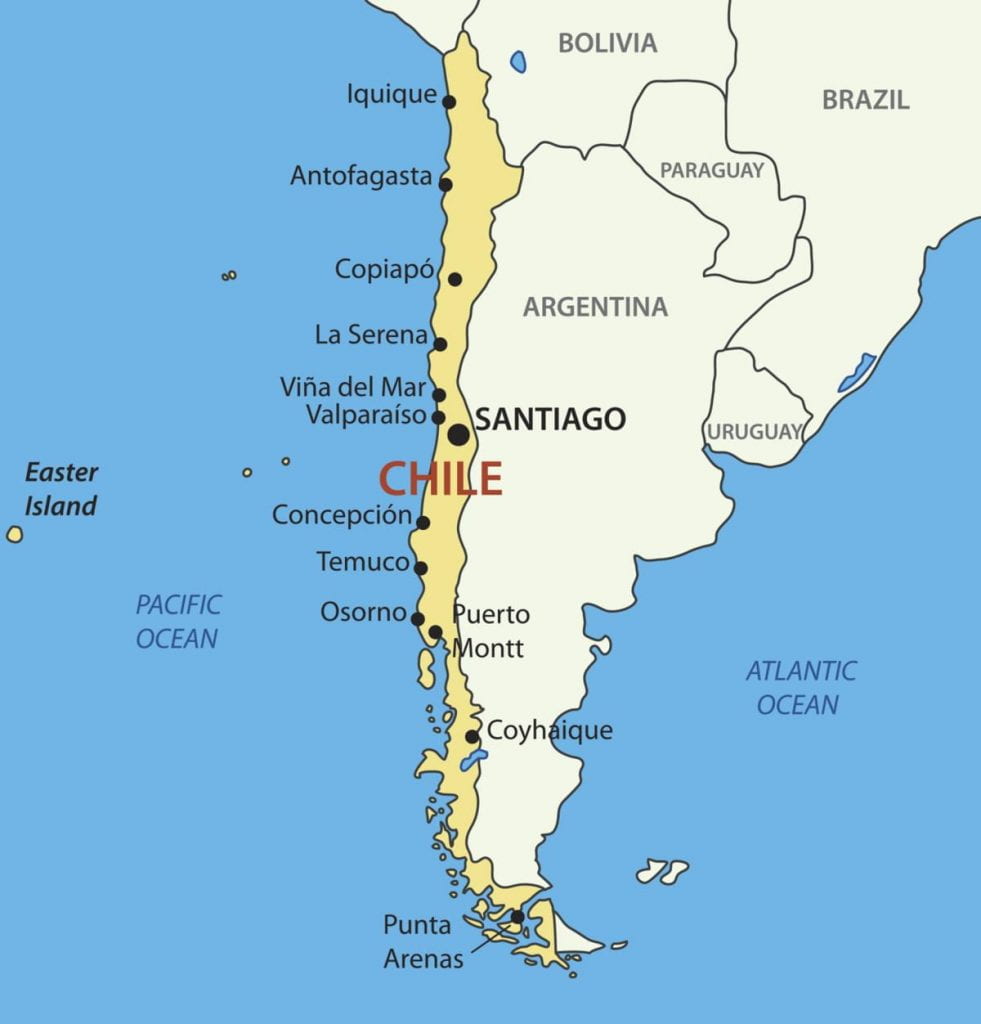
Chile is a Spanish-speaking country located to the west of Argentina in South America. Its ribbon-like shape allows it to be a part of many different climates, from the Atacama Desert to the North to the snowy Alpine climate to the South. According to the BBC Country Profile, Chile’s population amounts to about 17.9 million people, with 6.7 million people living in Santiago, its capital city.

An image of the map of Chile.
Top 10 Hardest Working Countries of the World. Source: Workspirited, Creative Commons

Chile is a free country. The Freedom in the World 2019 Profile rates Chile as Free with a score of 94 out of 100. According to the report, Chile’s Freedom Rating, Political Rights, and Civil Liberties are rated as most free due to its growing civil rights efforts that emerged after its transition to a democracy in 1990. So, why are there high-scale protests currently spanning the country? High costs and economic inequality are largely to blame.

According to the Organization for Economic Co-operation and Development (OECD), Chile’s income inequality is ranked 3rd in the world, only behind Costa Rica and South Africa (for reference, the United States is ranked sixth).

These statistics explain why the youth in Chile are currently protesting rising transport fares. In early October, “the government announced that the metro rush hour prices would rise by 30 pesos ($0.04).” These slight rises to the metro fare were met with backlash from many school children, who responded by jumping over metro turnstiles or even destroying them while chanting the phrase “Evade, and not pay, is another way of fighting.” These protests even spread to supermarkets and petrol stations where fires raged the streets during the night. It was due to these protests that the president, Sabastian Piñera, decided to declare a state of emergency while also issuing curfews in select locations. Last used after the 2010 earthquake, the state of emergency suspends free movement and assembly with the main purpose of maintaining public order. With this employed, “the military is [tasked] to guard the streets, with generals appointed in every region where the state of emergency is valid.” Piñera claimed that Chile was “at war against a powerful enemy, who is willing to use violence without any limits” while characterized these events as a problem concerning rebels rather than the government. Although it may seem that calling a state of emergency may be justified, since these unorganized protests involved setting fire to many metro stations, attacking Chile’s largest private electricity company, and throwing stones at the police, it did not bode well for Chile’s president whose policies have allowed him to appeal to businesses and investors while staying disconnected from the Chilean people.

A stack of gold round coins, stacked like an exponential graph
Gold Round Coins. Source: Pexels, Creative Commons

Economic inequality has been a major problem in many societies around the world with about “80 [of the] richest people on the planet now own[ing] as much as the bottom half of the world’s population” today. This problem has been so profound that even the International Monetary Fund (IMF) has declared income inequality as a central challenge of this century. And, as seen in Chile, outrage over these policies have spurred many to protest the subsequent injustices and push it as a central issue in political discourse.

Inequality, especially in terms of income and wealth, has significant influence on human rights. Without access to money or a stable income, many are restricted in access to healthcare, education, food, and other commodities and services that every person should be able to access. The lack of access to these goods violates the 25th Article of the Universal Declaration of Human Rights which states “Everyone has the right to a standard of living adequate for the health and well-being of himself and of his family, including food, clothing, housing and medical care and necessary social services.” Due to the ubiquity of poverty worldwide, this demonstrates that much of the world still has a long way to go until universal human rights are achieved. Inequality also distances the poor from proper services, such as some form of education, proper shelter, and access to water, which creates conflict between disadvantaged and affluent communities. By denying these universal human rights, countries are willing to perpetuate (extreme) inequality, which restricts access to fundamental needs that ensure equitable and sustainable living conditions.

According to an article posted by the Center for Economic and Social Rights, focus on economic inequality remains silent despite its major ramifications on the lives of people across the world. The article questions why the human rights community is relatively silent on an issue that challenges what human rights stands for in the first place and how the community can advance policies such as fiscal reforms, wage protections and social protection floors. While it is true these reforms and actions may help bridge the gap between the rich and poor, some of the larger scale benefits these programs can fund are financial literacy and incentives for self-governance.

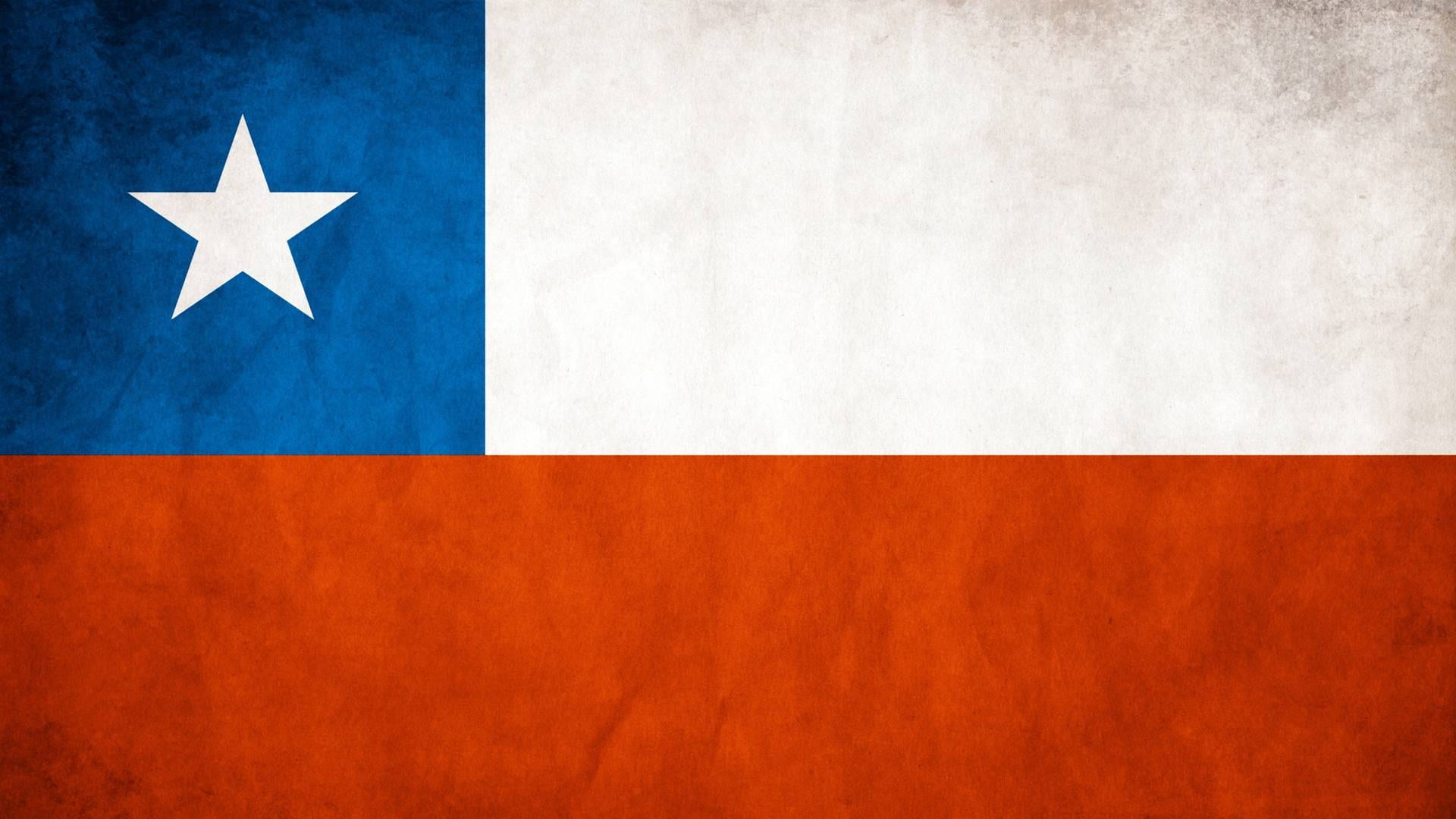
A Chilean Flag
Chile | Democracy Now! Source: Democracy Now, Creative Commons

Looking at Chile specifically, the “richest 1 percent of the population earns 33 percent of the nation’s wealth.” This comes with the fact that 50% of laborers earn less than 400,000 pesos a month (about $550). Although Chile is recognized as a stable, peaceful, and wealthy country, those international impressions stand on very weak pillars, especially when looking at economic inequality across the board. These protests have also been peaceful, with many involving more than 5 percent of Chile’s population. According to Stephanie Diaz, a sports teacher living in a working-class neighborhood in Santiago, in an interview with Vox, “This protest is not about 30 pesos, but 30 years. It’s 30 years since the return to democracy, but we have preserved a constitution made under the dictatorship.” Chile’s 1980 constitution, which preceded a military dictatorship, made goods and materials, even those considered as public goods, privatized. As a result, this raised the value and cost to produce and distribute such resources. Furthermore, privatization has influenced Chile to have the highest university tuitions in the world which has, alone, indebted approximately 4.5 million people in the workforce.

According to Vox, Chile’s president’s approval rating had dipped below 14 percent, a historic number when looking at the amount of people who are livid and fighting peacefully for change. Such disapproval comes as Chile plays host to the Asia-Pacific Economic Cooperation meeting in November, where President Donald Trump and China’s Xi Jinping will be visiting to negotiate a trade deal, and the UN Climate Change Conference occurring in December. A solution proposed by Shivani Ekkanath in an opinion piece of the Borgen Magazine lays along the lines of cracking down on bureaucracy, fixing the misallocation of funds, ending corruption, etc. in order to lift the economic burden of poverty and other kinks in the economic system.

Based on what has occurred in Chile thus far, it appears the rise in metro prices by 30 pesos was simply the tip of the iceberg. Growing economic inequality combined with more business-friendly practices has caused more workers and everyday Chileans to suffer and be unable to work toward a promising future for themselves and their families. And, as seen when with economic inequality, the growing gap between the rich and poor simply brings into light how it is both a cause and a consequence of violations of human rights such as access to care, education, and housing. Current protests like these help us understand that even countries regarded as stable are not always what they seem unless one looks at the lives of everyday people. Thus, we must focus on social and economic stability by employing a human rights perspective through the view of the common Chilean rather than a perspective at a state-wide level. Chile is an excellent example of people fighting for fairness in society peacefully, where progressive fiscal reforms should be utilized and promoted, rather than solely looking to appeal businesses.