Bo-Kaap, a History of Resistance and Identity

Sitting at Aisha’s Kitchen on a Friday afternoon in Bo-Kaap, Cape Town, South Africa, I had the pleasure to talk to a local community organizer. Being Cape Malay himself, he shared his experiences growing in the community and the challenges they had faced. With the call to prayer in the background, he shared about the lack of engagement from the community and personal struggles people were going through. However, he was cut short by a handful of young girls from the community joining us. They asked him how he was and he asked about their families while introducing me – “Say Salaam to your aunty.” With a short introduction, we chatted with the girls, no older than 11, about their days, favorite chocolates, and their love for Bo-Kaap.

While staying in Bantry Bay, it was a journey to get all the way to Bo-Kaap. Though they are both within the same city radius of Cape Town, Bo-Kaap represents a small neighborhood. My initial understanding was that it was a simple tourist destination, but through each mural, each step, and each conversation, I recognized that the community is a living archive of struggle and resilience. The vibrancy of Bo-Kaap today represents the lengthy history of marginalized communities fighting for rights and dignity, especially in the face of colonialism, slavery, apartheid, and gentrification.

Photo 1: Inside a local mosque in Bo-Kaap.Credit: Wajiha Mekki
Photo 1: Inside a local mosque in Bo-Kaap.
Credit: Wajiha Mekki

Origins of Bo-Kaap

Bo-Kaap was founded in the 1760s, when Jan de Waal bought a set of land to be leased out to his slaves. These individuals were from a variety of locations: Malaysia, Indonesia, India, and elsewhere. Enslaved individuals slowly populated the area. This was brought to fruition by the Dutch’s involvement in the Atlantic slave trade. Originally, Bo-Kaap was divided into four areas: the Malay Quarter, Stadzicht, Schotsche Kloof and Schoone Kloof. During this time, residential development was limited. However, once Cape Town came under the occupation of the British in 1795, the residential development accelerated, creating modest housing. This growth corresponded with the desires of the British, who wanted to develop Cape Town to increase their profit margins.

Over time, Bo-Kaap became a place of refuge for others beyond Cape Malay individuals; Filipinos, Africans, Italians, and others moved to Bo-Kaap voluntarily and found a home there due to proximity to their work spaces. 

Understanding Bo-Kaap means understanding Cape Town and its history. Cape Town under Apartheid was met with many challenges. In 1948, South Africa divided the city into ethnically separate areas; the dynamic nature of Cape Town was quickly disrupted. Banishing communities from the coastline to new settlements was just one of the steps taken to enforce such policies. Another step was the Group Areas Act of 1950, which officially banned neighborhoods from being multiracial and segregated races from each other. This Act categorized Cape Town as a “whites-only” area of the country, which impacted diverse neighborhoods in the city, but the attempt to truly claim the city for whites alone was quickly fought off by the Bo-Kaap community, a small but mighty neighborhood. These anti-segregation efforts included local mosques, who protected the right of Malay South Africans to live in Bo-Kaap. As a result of this fight, the area was then declared as Cape Malay only, allowing hundreds of families to continue living in Bo-Kaap. Many people who were living in adjacent neighborhoods that were stripped of their multiracial character, such as District Six, were also moved to Bo-Kaap.

With the tragic history of Apartheid, it is critical to note its infringement of fundamental rights to movement, housing, family integrity, and equality. The history of Bo-Kaap and its survival demonstrates the role of collective action in protecting communities and their rights.

Bo-Kaap as a Center of Cultural and Religious Freedom 

In addition to the political history of Bo-Kaap, there is a rich cultural one, too. The beauty of Bo-Kaap is that it provided many Cape Malays the security to practice their religion because of the area’s unique location being far enough from Dutch settlements whilst still being close to the city center. Despite trials and tribulations, enslaved individuals maintained their faith and a sense of community.

One way that individuals in Bo-Kaap developed an opportunity to continue their community is through Afrikaans. This language, which is a mix of Portuguese, Malay, and Dutch that started in the general Cape Colony, was born of necessity. Especially considering that many enslaved individuals were from a variety of locations, it was critical for them to be able to communicate with one another, and Afrikaans gave them an opportunity to do so. The creolization of Dutch evolved as a hybrid language that allowed all groups of the Dutch colony to connect with one another. While religion played a large role in the early written text of Afrikaans being written in Arabic, the spoken language became a lingua franca for the multi-ethnic community of Bo-Kaap and South Africa more generally.

The integration of Islam as the backbone of the Bo-Kaap community was seen through Auwal Mosque, which was created in 1794. Slowly, more Muslims moved into Bo-Kaap, and this movement was accelerated with emancipation of all slaves in 1834. With the abolition of slavery, a new chapter was bright for the community. Auwal Mosque was not the only mosque anymore, as there was now more than one mosque on every street, and madrassas were developed to better teach Islam and integrate the philosophies of the religion in the community. 

Photo 2: A corner market named Tawakal which translates to trust in Arabic.Credit: Wajiha Mekki
Photo 2: A corner market named Tawakal which translates to trust in Arabic.
Credit: Wajiha Mekki

Current Challenges

The bright colors of Bo-Kaap represent hope, but that hope is being dimmed by current challenges. As a result of Cape Town’s economic development and expansion, property in Bo-Kaap is sought after. Businesses, AirBnBs, and other businesses are popping up. But this growth has been at the expense of the community, which is facing a dissolution of its character and unity. It has also negatively impacted community members by resulting in the eviction of long-term tenants due to landlords raising the rents and changing ownership to pursue commercial properties over residential ones, effectively leaving communities to have lived there for years without stability.

In the face of these difficulties, there have been many efforts to preserve the community and heritage of Bo-Kaap. One way has been the establishment of Bo-Kaap as a Heritage Protection Overlay Zone, which is a special planning layer for Bo-Kaap to protect its historic nature. This is effective on paper, but residents have mentioned the presence of loopholes that make it difficult for this measure alone to truly protect the community in Bo-Kaap. Protests are also critical in how the community expresses its concern, as protests allow residents to share their sentiments about how they are overwhelmed by extreme tourism.

The situation described here depicts the tension between development and cultural rights, especially as the right to housing security and the right to cultural heritage are emerging as dimensions of human rights. 

Photo 3: Photo of lined houses on Dorp street in Bo-Kaap.Credit: Wajiha Mekki
Photo 3: Photo of lined houses on Dorp street in Bo-Kaap.
Credit: Wajiha Mekki

Why Bo-Kaap Matters Today

From slavery to Apartheid to gentrification, Bo-Kaap represents a community that safeguards human rights. The idea of identity and heritage being at the core of human rights in Bo-Kaap represents the global struggle of equity, equality, and inclusion. In the modern context of communities striving for space, history, and belonging, it is critical to understand marginalized communities and understand their contributions to society. In addition, protecting these places strengthens human rights and democratic values across the nation.

As I reflect on my time in Bo-Kaap and on being in the community to learn, I am grateful to have observed a sliver of the beauty of the community and am confident that intentional engagement with communities, where visitors seek to learn rather than consume, will support the long term development of communities across the world. Bo-Kaap and its resilience through Apartheid and gentrification demonstrate the value of community when approaching challenges. The Bo-Kaap community has suffered many violations of the right to housing, expression, and more; as we work to support communities, it is critical to listen to their stories and approach solutions holistically.
 

International Attempts at Transitional Justice

Note from the author: This blog was written to accompany the social justice cafe on Wednesday, November 30th at 4:00 pm on zoom. To join, sign up here. Alongside this event, this post focuses on an international scale while the recent post by Maya Crocker focuses on transitional justice in the United States. 

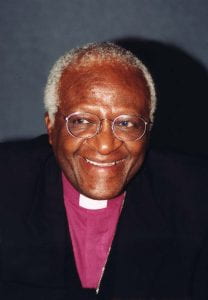
Forgiving and being reconciled to our enemies or our loved ones are not about pretending that things are other than they are. It is not about patting one another on the back and turning a blind eye to the wrong. True reconciliation exposes the awfulness, the abuse, the hurt, the truth. It could even sometimes make things worse. It is a risky undertaking but in the end, it is worthwhile, because, in the end, only an honest confrontation with reality can bring real healing. Superficial reconciliation can bring only superficial healing.

Archbishop Desmond Tutu

A headshot of a Black man smiling wearing purple clerical attire and collar.
Figure 1: Source: Flickr, John Mathew Smith; Archbishop Desmond Tutu in Washington, D.C., 1999.

What is transitional justice?

Transitional justice (TJ) refers to a set of judicial and non-judicial processes addressing previous injustices of authoritarian regimes (or multiple perpetrator groups) and establishing rule of law. Transitional justice has several aims and synthesizes aspects of punitive and restorative justice. 

According to the United Nations Office of the High Commissioner on Human Rights (OHCHR), these aims include: 

  • Providing recognition to victims 
  • Building trust between citizens and state institutions
  • Reinforcing the rule of law 
  • Committing to human rights and building solidarity with victims
  • Reconciliation between victims, perpetrators, and bystanders
  • Preventing new violations

But only characterizing transitional justice through its aims would not highlight the transformative effect this approach attempts in states where massive or systematic violations have occurred. While providing redress to victims and undertaking prosecutorial avenues as practical solutions, this approach also takes a strategic initiative to change the political systems, conflicts, and conditions that contributed to violations occurring in the first place. 

This field first emerged in the 1980s and early 90s in response to the drastic political changes in Latin America and East Europe. Human rights advocates and citizens alike questioned how and what kind of redress should occur in the wake of widespread and systematic violence. Fears over disrupting political changes by pursuing indictments of former leaders were salient: how could justice exist without compromising democratization? 

Thus, “transitions to democracy” and “justice” intersected and involved multiple processes to be sensitive to these concerns during a critical period in the country.

These processes are: 

  • Criminal Prosecutions: judicial investigations
  • Truth Commissions: ad hoc commissions of inquiry established in, and authorized by, states for the primary purposes of investigating and reporting on key periods of recent past abuse. 
  • Amnesty: a pardon granted to perpetrators, usually granted to those who comply with truth commissions and offer testimonies
  • Purges, lustrations, and security reforms: (1) removal of known collaborators of oppression from office and state institutions, (2) process of vetting personnel in state institutions, (3) transformation in state institutions involved in repression, like the military, police, judiciary
  • Reparations: state-sponsored initiatives that aim at repairing, on a massive scale, the consequences of past abuse experienced by certain classes of victims, including material and symbolic benefits
  • Gender Justice: focusing on the intersections of human rights abuse and gender during a period of repression, fact-finding initiatives to establish the nature of gendered abuses
  • Memorialization: museums, memorials, and other means of preserving the public memory of victims and raising moral consciousness about past abuse

Ultimately, TJ is a context-specific process that crucially (and historically) is led by the nation where the violations happened.

Specific attempts at transitional justice: the good and bad

Bolivia

Days after the restoration to democracy in 1982, the government created the National Commission of Inquiry into Disappearances. No reports or prosecutions were produced. In 1986, prosecutions began against the former military leader, General García Meza, and some of his officers. The trial was not complete until 1993, by which point Meza had gone into hiding to avoid a 30-year sentence for torture and murder. Notably, this court case rejected pardons for those convicted of crimes against humanity. 

Uruguay

After a 12-year military rule in 1985, the new government avoided truth commissions. Instead, President Sanguinetti issued a pardon (1986) to all soldiers and officers of the previous regime, with no distinction as to those who followed orders and those who gave them. He claimed this was the ‘safest path’ but ‘not a moral decision,’ highlighting that TJ attempts are not pursued in every situation. This is often a result of corruption and officials often rely on a dialogue of ‘national reconciliation by granting large amnesties but failing to pursue any other TJ processes, essentially dismissing victims’ realities.  Victims were denied any form of reparation and violators remain in high office in the police and military. An official Commission for Peace was established in 2000 under President Jorge Batlle with the official report released in April 2003 confirming that the military dictatorship was involved in some of the disappearances. 

Chile

This history of Chile’s dictatorship and eventual prosecutorial redress can be read about in my next blog. Part of the reason for the near-decade gap between the restoration of democracy (1990) and Pinochet’s arrest (1998) was due to Pinochet’s change of the constitution during military rule. Not only did he pardon himself and his torturers in 1978, but he enshrined legal protections from purges and lustration attempts. Nonetheless, Chile has engaged in memorialization and reparations in the cases of successful prosecution of former DINA police. 

El Salvador: 

A Commission on the Truth of El Salvador was established in 1991, led by three international jurists and staffed and financed by the United Nations. While only fully investigating 33 disappearances out of the reported 22,000, the commission did identify 40 individuals connected to the armed forces and involved in crimes against humanity. Additionally, the Commission was able to confirm the El Mozote massacre, where nearly 1,000 villagers were killed by US-trained and equipped Salvadoran army members. The Commission also called on the Supreme Court to retire, which they declined. René Ponce was named general and ordered the execution of 6 Jesuit priests (one the then head of the Human Rights Institute). Due to Ponce’s involvement in the peace negotiations and settlement with FMLN, his prosecution was never attempted. The report from the truth commission was rejected and the then-president offered a blanket amnesty for all political crimes which the Supreme Court upheld (1995). After 20 years, no other transitional justice attempts have been implemented. 

Haiti:

Haiti suffered massive human rights violations under the Duvalier reign between 1957 to 1986. Over 40,000 Haitians were killed and it wasn’t until 1990 that democracy was established with the election of President Jean-Bertrand Aristide. Soon after, he was ousted by General Raoul Cedras, showing just how volatile transitions toward democracy can be. Under Cedras, hundreds were killed by the paramilitary group Front for the Advancement and Progress of Haiti (FRAPH), funded in part by the CIA. Democracy was restored in 1994 and power returned to Aristide but at the cost of blanket amnesty for all rapes, murders, and political killings. He went on to establish a National Commission for Truth and Justice which in February 1996 urged for the prosecution of individuals who committed crimes against humanity by an international tribunal. There has been no tribunal and no prosecutions, and to this day impunity is chronic

Argentina: 

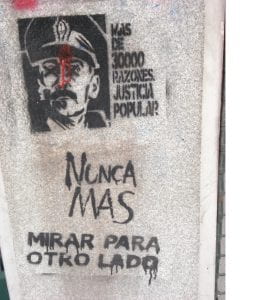
Spray painted image of a general with crossed-out eyes on a wall. The words “More than 30,000 reasons for popular justice. Never again look the other way" are painted beside the images.
Figure 2: Source: Yahoo Images, Colin Snider; Graffiti of General Jorge Videla with the phrases “More than 30,000 reasons for popular justice. Never again look the other way.”

Argentina took the most extensive approach of the states discussed so far. In 1983 after the defeat of the military in the Falklands Wars, President Raoul Alfonsín annulled the amnesty the military had given themselves. He also set up the Commission on the Disappeared which produced the report Nunca Más (Never Again) which was a national bestseller – fulfilling some forms of memorialization. The evidence the commission gathered was used to prosecute 5 of the most senior members of the military junta, but when indictments began on less senior officers the military revolted in 1987. Trials ceased to end the conflict but Alfonsín refused to give any pardons. His successor Carlos Menem was the one to pardon ex-president Videla and others on grounds of “national reconciliation.” In spite of Menem’s undermining, human rights groups and families of the disappeared renewed the vigor for criminal accountability in 2003, and as of 2010, more than 800 face criminal charges and 200 have been sentenced. 

South Africa:

When one thinks of “truth and reconciliation” or “truth commissions,” the most likely example to come to mind is South Africa. After the end of apartheid (a crime against humanity) in 1994, the new democratic government formed the unique tripartite Truth and Reconciliation Commission (TRC). It had three responsibilities: (1) record the apartheid era for memory, (2) make recommendations for reparations, and (3) grant amnesty to individuals based on application and only in limited circumstances. 

This was a revolutionary step for transitional justice and helped citizens come to terms with the violent and discriminatory apartheid. In spite of the success of this TRC, no prosecutions have ever been mounted and organizations like Human Rights Watch and Amnesty International fear the TRC suggestions are not being fully implemented. 

Nonetheless, it is important to note that the commission was chaired by none other than Archbishop Desmond Tutu whose ceaseless human rights efforts have helped define the role of TRCs as both forward and backward-looking. In his words, “True reconciliation is never cheap, for it is based on forgiveness which is costly. Forgiveness in turn depends on repentance, which has to be based on an acknowledgment of what was done wrong, and therefore on disclosure of the truth. You cannot forgive what you do not know.” 

United States: 

For an in-depth examination of the transitional justice movement in the United States, please read Maya Crocker’s blog here

Conclusion

Without addressing the seeds which sprouted violence, the threat of their reoccurrence cannot be escaped. This means acknowledgment, and hardest of all, forgiveness. While a generation suffered, hatred should not be allowed to pass down and threaten long-lasting peace.

This is not easy, but if you believe in human rights, affirming the realities of victims and perpetrators and all those in between is crucial. As Desmond Tutu says, We must not only speak about forgiveness and reconciliation, we must act on these principles.” 

This post draws a lot of information from the book Crimes Against Humanity: The Struggle for Global Justice by Geoffrey Robertson, originally published in 1999 with multiple editions given the continuous development of human rights. I will be utilizing information from a 1999 edition, and thus, certain information on the results of transitional justice attempts will have developed more in the last two decades. If you are interested in obtaining a copy for yourself, the latest edition was updated in 2013 and includes additional sections on Iraq, Guantanamo, the Obama administration’s use of drone warfare, the Charles Taylor conviction, and the trials of Mladic, Karadzic, and Khalid Sheik Mohammed. 

A book cover, there is no background, only a bold white title against black. 
Figure 3: Source: Target; Cover of the aforementioned book.

Geoffery Robertson is an internationally acclaimed lawyer and human rights advocate who has served as a UN war crimes judge and founded Doughty Street Chambers in London, a leading human rights law practice. In his book, he deconstructs international human rights law, beginning with the foundational philosophy of rights dialogue (natural rights, social contract, Enlightenment) and moving through the defining events of 20th-century human rights law formation. His book is written in a non-legalese, prose-like style and is a strong starting point for learning a breadth of information about the very complex processes behind prosecutions (and more often why they don’t happen). 

If this interests you, read Robertson’s book or check out more blogs from IHR below:

  • What is the International Criminal Court and Why Should I Care?
  • The Age of Human Rights?
  • Relativism’s Implications on Universal Human Rights
  • A Bright Future – Recent Human Rights Victories 
  • Justice(s) for Crimes Against Humanity: The Uyghur Muslims in China
  • Covenants Without the Sword: International Humanitarian Law (IHL) and Sexual Violence