Catcalling Isn’t Just a Safety Issue

  What is Catcalling?

When I was 13 years old, I was helping tear shingles off the roof. It was the middle of the day, so cars were driving up and down the road. One car had the top down and a group of guys were in it. My back was towards them, but I heard whistles and yelps. When I turned around they were already speeding away.

Everyone might have a slightly different definition of catcalling; it can be based on things someone has heard, seen, or experienced. The official definition of catcalling is “a loud, sexually suggestive, threatening or harassing call or remark directed at someone publicly.” This behavior can include sexual comments and remarks, whistles, following someone in public, and even indecent exposure. While anyone can experience it, women have historically been, and continue to be, the main targets.

 In a study done by Colleen O’Leary of Illinois State University, women were interviewed about their experiences with catcalling. Most of them defined catcalling as “a man yelling sexual or derogatory comments towards a woman.” The majority of participants said that it is a verbal and audible gesture, while others said that they would consider things like staring and other suggestive behaviors as catcalling as well. It is important to remember that individual experiences shape your definition, and just because it is different from someone else’s, does not make it wrong.

Impact of Catcalling

For the women experiencing it, catcalling is almost never positive. While most men, when asked, said that it was their way of “complimenting” a woman, the women experiencing these comments did not agree that catcalling felt like a compliment. Catcalling is a form of sexual harassment, the consequences of which are not small or harmless. Girls as young as 11 years old, and even younger, will receive unprompted commentary on their appearances. Exposure to objectification at such a young age can cause feelings of shame, body image issues, anxiety, and vulnerability.

A girl sitting at a school desk staring out to the side, it looks like she is distracted and not paying attention
Caption: Girl distracted in school. By: Seventyfour Source: Adobe Stock Asset ID#: 906974163

By the age of seventeen, 85% of girls claim that they have been sexually harassed. When 5,000 women were asked about their experience, 85% of them said that they choose alternate routes (often longer ones) to get to their destinations to avoid experiencing unwanted attention. Another study of 4,900 women found that more than a third had been late to school or work because of street harassment.

These studies show that catcalling is not innocent. Those who experience sexual harassment can have feelings of absent mindedness and a lack of focus. Research shows that girls who experienced objectification by men perform worse academically, especially in mathematics. Unlike a compliment, which makes someone feel good, this makes girls doubt themselves and diminishes them to “objects”.

Safety Issues

Article 3 of the Universal Declaration of Human Rights (UDHR) states that all people have the right to life, liberty and security, which includes feeling secure and safe in public spaces. For most women, catcalling can quickly lead to feeling unsafe in an area where they expect to experience catcalling. In a study done by Colleen O’Leary of Illinois State, it is reported that women felt fear when they had to walk alone at night, use public transit, or walk in desolate public spaces like parking garages.

A woman standing at a fenced dimly lit bridge in the dark looking outward before she walks forward.
Caption: Woman walking at night By: Haru Works Source: Adobe Stock Asset ID#: 576642516

Some women have stated that they have cancelled plans and social outings, not because they did not want to go, but in fear of being harassed. The need to avoid catcalling and potential street harassment outweighed the experience they would get when hanging out with their friends. A smaller percentage of women reported that they packed up their things and decided to move towns. Imagine packing up your life and leaving your family, friends, and work behind because you don’t feel safe in the streets of the town you live in.

In a podcast hosted by Ayesha Rascoe, she interviewed a person who came up with an exhibit idea where males would get to experience getting catcalled by other men. Women from the Sacramento region, where this exhibit took place, were asked to send in their stories of being catcalled. Their submissions were then recorded in studios with men reading the submissions out loud. The idea of the exhibit was a dark hallway with a mirror in the middle. This was meant to provide an auditory experience. When men got to the mirror, they would put on headphones that would play a montage of the recorded submissions of catcalls, all while staring at themselves in the mirror.

This exhibit was visited by people all over the world, and both men and women came to experience it. Women who went in came out and stated that they felt validated and seen. Men came out of the exhibit crying and pleading for forgiveness. A lot of them claimed that they had never realized the impact catcalling carried. For most of them this was the first time that they experienced anything like this. And while this was a controlled environment, and there was no imminent danger, it made real situations that much scarier. Walking out of the exhibit, you are unscathed, bothered, but unharmed. The same is not true for real scenarios where women have experienced it.

Economic Issues

As mentioned previously, a research study showed that girls who have experienced objectification tend to perform worse in school, specifically in subjects like math. However, this is not exclusive to a school setting. Women experiencing objectification from the opposite sex, often experience enhanced feelings of self-objectification. Studies have shown that this has consequences of hindering focus and the ability to concentrate. In turn, it leads to inadequate performance in mathematical fields or during times when logical reasoning is required.

A woman looking angry at a man.
Caption: A woman looking angry at a man. By: Drobot Dean Source: Adobe Stock Asset ID#: 94475250

In one study, college girls were left alone in a dressing room for 10 minutes and asked to complete a math test. The only difference is that some girls were wearing swimsuits, while the others wore sweaters. The women who were dressed in swimwear performed poorer on the test compared to those in sweaters. The same study was completed on college males, and there was negligible difference in their test scores regardless of what they were wearing.

This is important because in both studies it is apparent that, when girls experience feelings of sexualization or think that they are in danger of being perceived in sexual contexts, they tend to underperform on daily tasks. This puts them at a disadvantage in both the classroom and in the workplace, which might help explain why the male and female gap in STEM fields remains high.

Conclusion

While there are no legal repercussions that are meant to protect women, or anyone, from catcalling in the US, it is beginning to be recognized as a legitimate form of sexual harassment. In 2022, Britain included catcalling and street sexual harassment as crimes that would hold a two-year jail punishment. By doing this they are aiming to create a safer environment for their citizens.

Additionally, by creating immersive exhibits like the ones in Sacramento, along with protective laws, there is hope that catcalling and street harassment will be a thing of the past. As societies move towards a safer tomorrow, it is important to remember those who have been impacted by this. The more this gets spoken about and the more experiences are shared, the bigger an impact will be created.

Finally, it is important to step in when someone needs help. When witnessing an instance of street harassment or catcalling, statistically, bystanders will not engage because they assume someone else will help. With this mentality, those being affected by catcalling and street harassment are left without help. If you come across this, do not be the one who thinks someone else will step in. If it is safe for you to do so, then calling the police, intervening, or even creating a distraction can make all the difference for someone.

Rights and Regulations: A Case Study on Guidelines for AI Use in Education

Based on my previous two articles, a reader of this blog might assume that I’m an advocate for the complete eradication of Artificial Intelligence, given the many criticisms I’ve made of the AI industry. While you shouldn’t expect these critiques to stop on my end, I also accept the fact that AI has effectively taken over the technological world and will not easily be vanquished. Therefore, a more realistic approach to keeping AI within acceptable bounds is regulating its use. This regulation is especially imperative when it comes to our nation’s youth. Their human right to quality education centered on tolerance and respect should not be infringed upon by generative AI use.

That is why programs addressing AI literacy and guidelines on its use in schools are so essential. The Alaska Department of Education’s Strategic Framework on AI use in the classroom, released in October 2025, outlines strategies on safe, responsible, and ethical AI integration in K-12 schools. Alaska is merely the latest state to adopt guidelines for AI use in public schools; a total of 27 states and Puerto Rico have established such policies. Today, I’ll be concentrating on Alaska’s framework as a case study to explore the value in creating state and local guidelines on the education on and use of AI in the classroom.

FEDERAL REGULATIONS

In April of this year, an executive order was signed promoting AI competency in students and establishing a Task Force on Artificial Intelligence Education. In response, the U.S. Department of Education has released potential priorities for grants funding the integration of AI into education: “evidence-based literacy, expanding education choice, and returning education to the states”. While these statements are an encouraging acknowledgement of the need to turn our attention to the use of Artificial Intelligence in academia, they fail to provide tangible guidelines or policies that effectively promote the proper use of AI in schools. These statements also fall short of acknowledging the need for regulation and limitations on AI’s role in academia; in fact, “America’s AI Action Plan” highlights the administration’s aversion towards regulation by providing that states should not have access to federal funding on AI-related matters should they implement “burdensome AI regulations.”

STATE-LEVEL POLICIES

The federal government’s failure to acknowledge AI’s limitations when it comes to privacy, ethics, and functionality in education creates a vacuum devoid of guidelines or regulations on AI’s educational use. A lack of parameters has raised concerns about academic misconduct, plagiarism, privacy breaches, algorithmic bias, and the dogmatic acceptance of generated information that may be inaccurate or unreliable. Complete bans fail to address AI’s potential when used responsibly and create environments where students find new and creative ways to access generative AI despite the ban.

Thankfully, states are beginning to recognize the need to fill the void to maintain the quality and safety of children’s education. Alaska’s Department of Education answered this call by providing its K-12 AI Framework document, which provides “recommendations and considerations for districts” to guide their school districts’ Artificial Intelligence policies and guide educators on how to treat AI use in their classes.

A metal placard on a building reads "Department of Education"
Adobe Stock, D Howe Photograph #244617523

These guidelines serve to “augment human capabilities,” educating students on how to maintain critical thinking and creativity while employing generative AI in their studies. This purpose is supported by the following guiding principles for AI Integration outlined in the framework; these principles serve as building blocks for fostering a positive relationship between students and generative AI, educating about its limitations while highlighting how it can be used properly. To take a human-rights based approach to highlighting the value of these principles, I’ll be providing specific human rights that each guideline works to preserve.

ARTICLE 27

Article 27 of the Universal Declaration of Human Rights (UDHR) establishes the right to enjoy scientific advancements as well as the protection of ownership over one’s scientific, literary, or artistic creations. Alaska’s AI Guideline provides for a human-centered approach to AI integration, emphasizing that districts should move beyond banning generative AI while adopting initiatives to ensure AI enriches human capabilities rather than replaces them. This ensures that students have access to the scientific advancement of generative Artificial Intelligence without diminishing the quality of their education. The “Fair Access” aspect of Alaska’s framework outlines additional provisions for ensuring students have equal access to AI-based technological advancements. It calls for allocating funding dedicated to accessible Internet and AI access, as well as implementing an AI literacy program within school districts.

A boy looks at a computer monitor, generating an AI image.
Adobe Stock, Framestock
#1684797252

Additionally, the “Transparency” and “Ethical Use” principles provide that AI generated content should be properly attributed and disclosed. Citations are a requirement under these guidelines, and any work completed entirely by generative AI is considered plagiarism. This maintains the right to ownership over one’s creations by ensuring that generative AI and the data it pulls from are properly attributed.

ARTICLE 26

Article 26 of the UDHR codifies the right to education that promotes tolerance for other groups and respect for fundamental freedoms and rights. Alaska’s AI framework calls for recognition of generative AI’s potential algorithmic biases against certain ethnic, racial, or religious groups. It states that students should be educated about the prejudices, misinformation, and hallucinations a generative AI model may produce, emphasizing that its outputs must be critically examined. By overtly acknowledging the manifestation of societal prejudices in these algorithms, Alaska’s guidelines preserve the human right to uphold dignity and respect for others within education. This requires the inclusion of diverse local stakeholders such as students, parents, and community leaders in discussions and policymaking regarding AI regulations in the classroom, which the guideline provides suggestions for.

ARTICLE 12 and ARTICLE 3

The final human rights Alaska’s framework works to uphold are outlined in Article 3 and Article 12 of the UDHR, which state the right to security of person and privacy, respectively. The AI Framework establishes that student data protection and digital well-being are essential to maintain and educate on. It highlights a responsibility on the districts to support cybersecurity efforts and compliance with federal privacy laws such as the Family Educational Rights and Privacy Act and the Children’s Internet Protection Act. Schools also have an obligation to review the terms of service and privacy policies of any AI tools used in classrooms to ensure students’ data is not abused. Educators also should teach their students how to protect their personally identifiable information and the consequences of entering sensitive information into generative AI tools.

A page in a book reads "FERPA, Family Educational Rights and Privacy Act"
Adobe Stock, Vitalii Vodolazskyi
#179067778

WHAT’S NEXT

Alaska’s framework is only an example of a wider trend of states adopting guidelines on Artificial Intelligence’s role in education. These regulations ensure that students, educators, and stakeholders acknowledge the limitations and potential of AI while implementing it in a way that serves human ingenuity rather than replacing it. These guidelines go only so far when implemented locally, though. We must civically engage with local school boards, individual school administrations, educators, and communities to ensure these helpful guidelines are properly abided by. Frameworks like Alaska’s provide sample policies for school boards to enact and provide examples of school handbook language that can be employed to preserve human rights in the face of AI expansion; all it takes is local support and implementation to push these policies into action. Community training and panels could be utilized to start conversations between families, students, community members and AI policymakers and experts.

As individuals, it is our place to engage in these community efforts. And if you’re a student reading this, take Alaska’s frameworks on guiding AI use in education into consideration the next time you’re thinking about using ChatGPT on an assignment. From plagiarism to biases to security, there’s good reason to tread carefully and emphasize a responsible approach to AI use that doesn’t encourage over-reliance but rather serves as a helping hand.

Honoring Our Responsibilities to People and Other Animals

by Pamela Zuber (student guest blogger)

Dog's teeth through a knothole in a fence
Image: Pixabay

On August 19, 2019, nine-year-old Emma Hernandez died in Detroit, Michigan. She died from injuries she sustained after three dogs mauled her.

Hernandez’s death comes after her family and others issued multiple complaints and filed police reports about the dogs roaming free in the neighborhood and their owner’s inability to contain them. Neighbors tried to stop the mauling by attacking the pit bulls, but the girl suffered a fractured cervical spine and several other injuries. Writing in the Detroit News, Sarah Rahal noted that “[t]he attack was so horrific that counseling services were offered to emergency responders.”

While the death of any nine-year-old is a tragedy, Emma Hernandez’s death is especially tragic because it was so violent and so avoidable. We should not allow dangerous and potentially domestic animals to travel freely. Taking the effort to contain such animals with secure fencing and other restraints protects people’s rights to safety and security.

Not possessing such animals in the first place also prevents such tragedies. Training animals to be vicious or adopting particularly vicious animals can create disasters like Hernandez’s death. People may argue that vicious animals are security measures to prevent crime, but actually, they’re like the guns that people buy for personal security. Violent animals and guns may produce more violence than prevent it. “Access to a gun triples the risk of suicide death,” according to Giffords Law Center to Prevent Gun Violence.

What about the rights of pet owners?

(For the purposes of this article, we refer to pet owners as people who adopt animals.) Authorities have charged Pierre Cleveland, the dogs’ owner, with second-degree murder, involuntary manslaughter, and owning dangerous animals that led to Hernandez’s death. People previously filed police about roaming dogs from his house. Detroit Animal Care and Control, part of the city’s health department, visited his house in March, 2018 after receiving reports that two dogs from the house were loose. It is unclear whether the department found the animals dangerous or if they were the same dogs involved in the fatal 2019 mauling.

Clearly, improprieties involving dogs occurred in southwest Detroit in 2018 and 2019. Detroit’s home state of Michigan has clear definitions and determinations about dangerous animals, conditions that determine dangerous animal ownership, guidelines for euthanizing dangerous animals, and penalties for people who possess dangerous animals that cause harm.

Owning a dangerous pet is similar to owning a dangerous weapon. Both may inflict a great deal of harm on innocent people. Guns are inanimate objects. While dangerous animals do have brains, they do not have the reasoning abilities that people have. Dogs cannot build enclosures or make laws to corral themselves physically. It is therefore incumbent on people to control creatures and weapons. According to the American Society for the Prevention of Cruelty to Animals (ASPCA):

In order for dogs to live harmoniously with people and with other companion animals, it is critical to hold guardians responsible for the proper supervision of their dogs and for any actions on their part that either create or encourage aggressive behavior.

Responsibly owning pets is a societal obligation. We have responsibilities to others and expect that others will behave in similar ways. While we are allowed to own pets (within limits), we have to do so responsibly to live with others safely and harmoniously.

What about the rights of others?

Emma Hernandez lived next door to vicious dogs. She probably faced their barking, snarling, and aggression frequently, if not daily, during her young life. They may have been the last things she ever saw. Can you imagine living and dying with such fear?

Living with anxiety, with the constant threat of danger, may be harmful to one’s mental health. It may drive some people to drink too much or use drugs to try to escape their fear and anxiety. It could cause other symptoms of anxiety, such as insomnia, stomach problems, uneasiness, and other unpleasant side effects. We don’t know what Emma Hernandez experienced and we can’t ask her.

Safety is a fundamental right. We have entire systems to provide different kinds of safety. We have police departments and legal systems to prevent crime or prosecute it if it occurs. We have health departments that work to prevent or minimizes illnesses or injuries. These entities failed Emma Hernandez and her family.

“Everyone has the right to live, to be free, and to feel safe” is Article 3 of the Universal Declaration of Human Rights of the United Nations. Did Emma feel free and safe? Or, did human negligence lead to an egregious attack on her human rights?

How do we prevent such tragedies?

Mean-looking dog
Image: Pixabay

What happened in August 2019 in Detroit was preventable. If workers from animal control visited the house to investigate the pit bulls involved in the attack, they should have taken steps to reign in the animals and actually practice the animal control that is part of the department’s name.

When authorities are called to homes with potentially violent animals, they should remove the animals until their owners make their homes safer by building or reinforcing fences, gates, or doors or taking other safety precautions. If owners cannot afford such modifications, maybe authorities could pay for the changes and garnish pet owners’ paychecks or other sources of income.

If people do not have the income to secure their animals or repay authorities for providing such safety measures, maybe they shouldn’t own animals at all. Pet ownership is a privilege, not a right.

We could compare adopting a pet to owning a car. Owning a car requires paying for fuel, maintenance, insurance, and other charges. People are required to invest money and be diligent to make sure that their cars run properly and don’t pose hazards to others. To receive driver’s licenses, they must learn how to operate them safely.

Similarly, maybe people need training about how to handle animals. After this training, they could receive licenses to adopt pets. If their pets cause harm, people could have their licenses revoked and face further penalties, such as not being able to adopt additional pets.

Maybe law enforcement agencies and other bodies should institute a two-strike rule as well. If authorities return animals to a home and the animals provoke additional formal complaints, the authorities should remove the animals from the owners. If this provision was in place, authorities could have removed the dogs who caused the 2019 fatal mauling.

Every day, we do things to try to protect our safety and the safety of others. We drive our cars at speed limits, we cannot cross the street at any time at any place, we can only smoke tobacco in designated areas. We are allowed to do things that are potentially dangerous, but within limits.

Owning a pet comes with similar parameters. We can own animals, but not dangerous ones. If we do something that jeopardizes our safety or the safety of others, we should face repercussions. While there are ongoing repercussions to the 2019 mauling, they are unfortunately too late to help Emma Hernandez. Maybe these measures and other proposals will help people in the future before similar tragedies strike.

About the author: Pamela Zuber is a writer and an editor who writes about human rights, health and wellness, gender, and business.

Continuity and Change on the Korean Peninsula

**As Kim Jong-un and Donald Trump prepare for the North Korean Summit in Singapore on Tuesday, this repost from last Spring sheds light on the complexity and seriousness of this summit. 

by GRIFFIN LEONARD

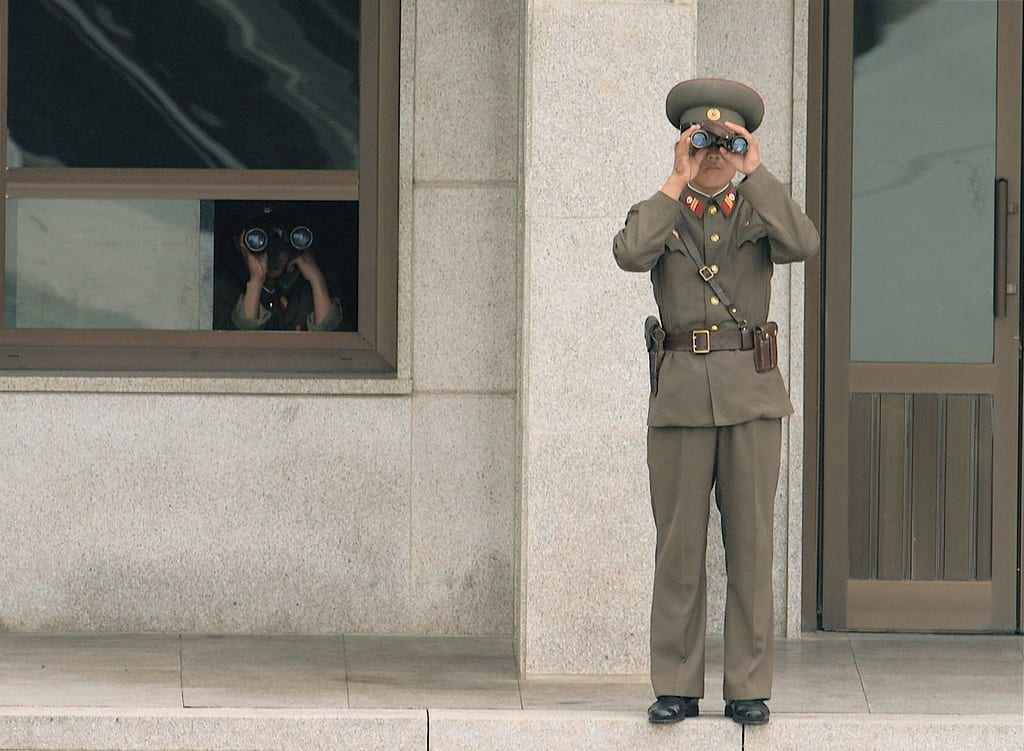
a picture of two North Korean soldiers looking through binoculars towards the South
North Korean Guard looking South. Source: Expert Infantry, Creative Commons.

A lot has been said recently about the seemingly worsening relationship between the US and Democratic People’s Republic of North Korea (DPRK). Unsurprisingly, much of the commentary revolves around the Trump Administration at a time where the new President seems confronted by numerous international “situations.” The dropping of a MOAB in Afghanistan and missile strikes against Syria, when taken together with heightened tensions between the US and the DPRK, paint a broader picture of the direction the Trump Presidency is taking. While this may be helpful to Americans as they try to understand their President’s decisions, putting Trump as the centerpiece of analysis has the dangerous potential to obscure other important factors, namely the continuity and change that has marked the US-DPRK relationship. Only by including both in our analysis can we begin to understand the events unfolding on the Korean Peninsula.

Change

Like any relationship, that of the US and DPRK does not exist in a vacuum. Their bilateral relations are well known. Diplomatic efforts have failed to yield real progress towards a resolution of the tensions on the Korean Peninsula, much less move towards a sustainable arrangement between the parties involved there. Border incidents that have claimed the lives of South Koreans, North Koreans and Americans have been ongoing for as long as the current border has existed. These incidents have, of course, been the cause of heightened tensions at different times between the US and DPRK.

The relationship is also subject to changes in the international environment. Authoritarian practices in South Korea following the end of the Korean War forced the US to consider what exactly the South Korean people had inherited from the devastating conflict. The terrorist attacks of September 11th 2001 raised concerns of nuclear terrorism and therefore nuclear proliferation more generally. The growing power of China in military and economic terms continues to raise the significance of the steps they are or are not willing to take in trying to tackle the issues at hand on the Korean Peninsula. These and other global trends influence the measure of significance which the US attaches to the Korean Peninsula at any given time; and the way by which they choose to engage with the DPRK.

There is no doubt that the election of Donald Trump could be, or cause, another significant change in the US–DPRK relationship. Of central importance is Trump’s demonstrated impulsive and inconsistent behaviour, especially when it comes to how he communicates with others. He differs from other Presidents because not only are the policies towards adversaries and allies in question, but as an international community, we find ourselves wondering how he will behave on a more basic level. Will he put aside basic and long-standing diplomatic decorum, aggravating other world leaders with hostile rhetoric akin to what he employed during his campaign for the Presidency?

The same countries and their leaders that Trump dealt out insults to as 2016 ticked by are the same countries and leaders that he must deal with in 2017.

Of more concern is whether Trump will be able to communicate a clear message to adversaries at all. It remains to be seen whether Trump can frame the many public announcements he has to make in a way that appeals to his domestic support base (something all politicians do) but also conveys the US’ position on important matters to other world leaders, adversary and ally. Doing this requires consistency and coherency across the many mediums through which the President now communicates: social media, informal television interviews and formal White House events and statements. The outlook is not good so far.

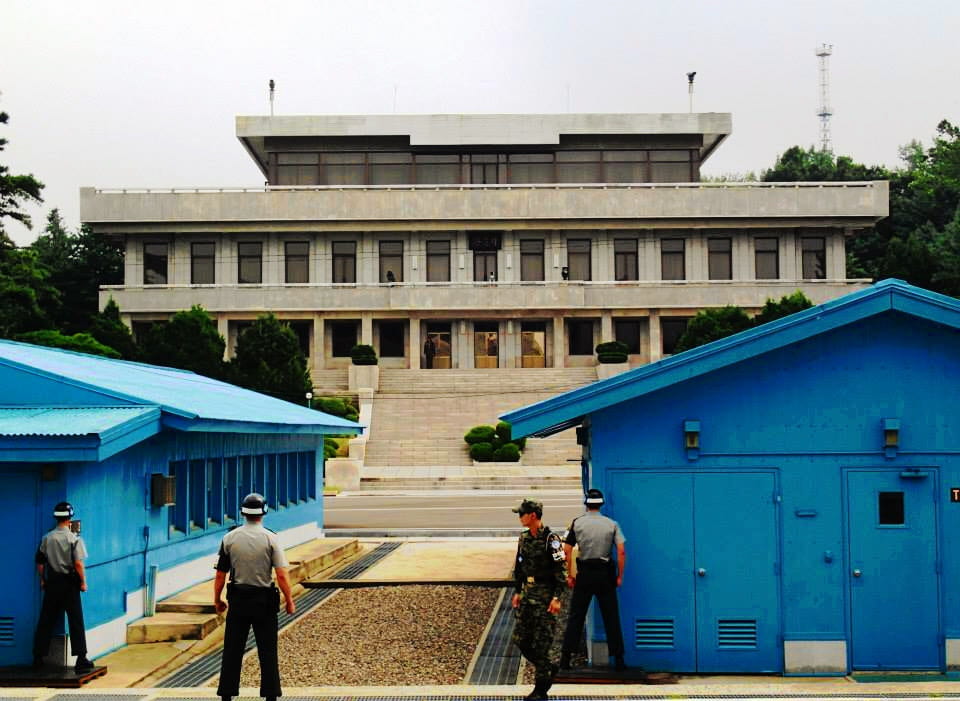
a picture of the DMZ between north and south Korea
Joint Security Area, North Korea-South Korea border. Source: SarahTz, Creative Commons.

It has been widely reported that the Trump Administration’s statements regarding the DPRK have been hostile and inflammatory. This is undoubtedly true. An important aspect to note is that through deliberate decision-making or gaffe, much of the communication by the Trump Administration has created confusion among the parties invested in the Korean Peninsula.

I will explain this point using two examples. First, the vague statement released by Secretary of State, Rex Tillerson, following a recent missile test by the DPRK and Trump’s refusal to answer questions on the matter on American television. Trump has long promoted the idea that not to reveal his next move is, in and of itself, a smart move. The issue is that when states do not want to fight over an issue, they seek information about how far they can push their luck, making as large a gain as possible (whether this be in terms of prestige or something more material) while avoiding direct conflict. In other words, they attempt to discern when to yield. To do this, a state must have some idea of what their adversary is willing and/or capable of doing to resolve a dispute in their own favour.

For all the absurdities of the North Korean regime, it is highly unlikely that they want to ever see a direct confrontation with the US. Vagueness on the part of the Trump Administration keeps the DPRK in the dark as to where the line is and increases the chance that they will trip right over it. The DPRK wants to make gains in the form of developing its missile capability. Trump needs to find a way of communicating to their leadership when, where and how the US is willing to act; therefore, talks with DPRK are far from being complete.

The second example is the mistake made by Trump and other officials when an “armada” heading towards Australia was said to be heading in the direction of North Korea. Inaccurate information compounds all the issues related to ambiguity mentioned above. What is more, this error unsettled South Korea with politicians and media outlets questioning Trump’s will and ability to deal with the DPRK. This response should, perhaps, not be unexpected. Given their common border, the DPRK could inflict massive damage on South Korea through conventional weapons alone. Similarly, Japan feels threatens due to their proximity and the 50,000 US troops stationed there. Experts vary in their predictions of by which date the DPRK could develop a missile capable of reaching the US.

Taking these two examples together, while it is clear the rhetoric emanating from the White House is inflammatory, it is less clear whether it is effectively conveying information to the parties involved regarding America’s stance and intentions.

It is important to say that this is not simply a matter of finding Trump to be a distasteful person. His public performance in dealing with this issue is of real significance. While academics debate whether rhetoric utilised by politicians has any influence over the course of events in foreign affairs, policy makers themselves seem to place great importance on the public pronouncements made by state officials. In reading the autobiographies of former US Presidents, one quickly realises that they believe their words are important in directing the course of events; therefore, we should not be surprised that politicians place a lot of value in their own words! The South Korean response to Trump’s mistake in stating that the US was sending an armada towards the Korean Peninsula is an indicator of the importance that other world leaders place in the statements of their colleagues. Trump’s statements can heighten tensions with adversaries and offend allies whom he claims he would persuade to take more of the financial burden of dealing with said adversaries.

Regarding the DPRK, few governments, if any, are so committed to the “performance” of governance. Large portions of the DPRK’s state structure are committed to promoting the party line to both the domestic population of North Korea and the international community. Strict media and Internet control by the state demonstrates the significance attached to the control of public information.

DPRK officials do this precisely because they know that other state leaders and intelligence agencies monitor speeches by regime officials, television broadcasts, and internet traffic, to read between the lines and get a better picture of what happens in their secretive society. Similarly, they would remain committed to trying to glean information from the televised interviews, public speeches and, yes, even tweets of Donald Trump’s Administration. To think otherwise is naïve.

a picture of the 3rd Tunnel which joins North and South Korea
The 3rd Tunnel – joining North and South Korea. Source: Dushan Hanuska, Creative Commons

Continuity

It is easy to allow our focus to drift too quickly to new developments in this unfolding situation. Some elements of the continued tension between the US and DPRK, while not as exciting or topical as Trump’s Presidency, are equally as important in explaining the current state of affairs. One such element is the presence of nuclear weapons. Three parties involved in the dispute, the DPRK, US and China, are nuclear capable to one degree or another.

In an indictment of nuclear deterrence theory, the very manoeuvres–diplomatic, military and otherwise–that both the US and DPRK make due to the significance they attribute to a dispute in which nuclear weapons are involved, may be the very thing that, deliberately or otherwise, spark the use of military force on the Peninsula. Even if it were true that, as proponents of nuclear deterrence advocate, weapons of mass destruction make the cost of entering and engaging in conflict so high that no reasonable state leader would consider doing so, the constant need to balance armaments leads to an arms race that only serves to heighten the tensions one wishes to avoid, increasing the risk of unplanned escalation. It should not be lost on us that this current round of tensions was triggered, in large part, by exactly this: the DPRK undertaking missile tests. Moreover, as explained below, not only could state leaders consider using nuclear weapons despite knowing the consequences, they have!

It is simply a convenient out to equate the problems generated by nuclear weapons with the current occupant of the White House. Throughout his presidential campaign, the question of whether (Trump) was the “type of person” that we would want having control of the US nuclear arsenal was often raised. While this question is reasonable at face value, it suggests that the threat of nuclear weapons does not have so much to do with the weapons themselves as the person empowered to use them or the state that possesses them.

As to the last point, having to ask this question of US electoral candidates belies the idea that certain types of states can be trusted to possess nuclear weapons. One could argue that democratically elected leaders must consider domestic support for a decision to use nuclear weapons, whereas dictators do not. However, of all the situations in which we can imagine decision-makers considering the use of nuclear weapons, cases in which contemplation could be given to domestic support for the idea make up only a small portion. It is likely that such a situation would be characterised by small time-horizons and partial information. If nothing else, it is perfectly consistent with democratic systems that a person we would not want in charge of nuclear weapons can be elected.

Here we are back to the notion of whom. If there are types of people we cannot trust to be in charge of nuclear weapons then perhaps there are types of people that we can trust too?

In the well-known documentary, The Fog of War, in which Robert McNamara imparts lessons from his life, he describes the parties involved (and the world) as having “lucked out” in avoiding nuclear confrontation during the Cold War and the Cuban Missile Crisis. Regardless of what one thinks of John F. Kennedy, perhaps it is not too strong to say that he was a more experienced political operator than Donald Trump. Yet, even JFK and the leaders of the Soviet Union and Cuba–all rational people, per McNamara, came exceptionally close to making decisions that could end their societies, as they knew them. McNamara concludes the combination of human fallibility and nuclear weapons will destroy nations. This is not due to the character of one particular person but the inescapably imperfect process of human decision-making.

The failure to understand both the current events and long-term processes at work in this situation has consequences beyond a lacking analysis. Trump and the members of his administration need to be included in any understanding of US-DPRK relations. On one hand, the Trump Administration undoubtedly plays a role in determining the course of events regarding the Korean Peninsula, so attempts to downplay the administration’s significance is to remove their accountability for the dispute’s trajectory. On the other hand, to ignore ongoing issues, such as the presence of nuclear weapons in this dispute, suggests a fatalistic perspective where the resolution of all international affairs rests on the shoulders of one person – the US President. There are a multitude of drivers of this conflict and thus a multitude of levers that can be pulled in trying to steer the course of events towards a peaceful resolution. Groups of concerned people tackling the issue of continued nuclear stockpiling are only one example. While we rightly continue to understand our political leaders’ decisions, holding them to account for the consequences thereof, it is important to remember that they are not the sole causes or agents of social change.


Griffin Leonard is a third year PhD candidate at the National Centre for Peace and Conflict Studies, University of Otago. His research analyses the role of US Presidential rhetoric in determining militarised interstate dispute outcomes involving the US since 1950. His expertise is in American foreign policy and diplomatic history.