Clean Energy, Poor Practices: Africa’s Minerals Power Renewables

At the second African Climate Summit, leaders discussed the role of Africa’s critical minerals in climate change and sustainable development. The African Union’s joint statement at the global COP30 climate summit highlighted the continent’s potential to be a climate leader, with its “abundant natural resources, […] young and dynamic workforce, and vast renewable energy potential.” This article examines Africa’s mineral industry, which could be key to the fight against the climate crisis. 

Africa’s Minerals and Renewable Energy 

The world is moving away from fossil fuels and towards clean energy, as renewables become the world’s dominant energy source. This is necessary to limit emissions and strive toward climate goals such as the Paris Agreement’s commitment to keeping the global temperature increase under 1.5°C above pre-industrial levels, but non-fossil fuel renewable energy alternatives also require the extraction of Earth’s natural resources.  

As countries across the world push forward with the latest energy transition—the shift from traditional energy sources like coal and oil to renewable energy like wind and solar—Africa’s mineral deposits are increasingly critical to supplying the world’s energy. They store much of the world’s “transition minerals,” natural resources used in renewable technologies like lithium-ion batteries and solar panels. At the Africa Climate Summit 2025, the UN Economic Commissioner for Africa warned that there was the potential to “repeat the exploitative patterns of the past,” as the demand for the minerals used in renewable technologies increases. 

The transition mineral industry is fraught with human rights abuses, notably labor rights violations and environmental injustices. Violations of the 23rd article of the Universal Declaration of Human Rights, which protects workers’ rights to favorable working conditions and living wages, are commonplace. The Democratic Republic of the Congo has been at the center of conversations regarding Africa’s mining industry, where conflict, illegal mining operations, and smuggling endanger the people who provide the minerals for the world’s technology. 

Exploitation in the Democratic Republic of the Congo (DRC) 

The Business and Human Rights Resource Centre tracked 178 cases of abuse from 2010-2024 in the transition mineral industry; mines in the DRC accounted for over half of these abuses. In a 2023 report, Amnesty International found that “multinational mining companies are forcibly evicting communities from their homes and farmlands in the name of energy transition mining” in the DRC. The exploitation present in the DRC is exacerbated by violent conflictcorporate irresponsibility, and the prevalence of illegal, dangerous operations. 

Miners carry supplies in an African mine
Miners carry supplies in a mine. Rubaya, DRC. By: Erberto Zani. Source: Adobe Stock. Asset ID#: 1047185175

Conflict Minerals in the DRC 

Key to the conflict between the DRC government and the Rwanda-backed M23 rebel group has been control of valuable mines, like Rubaya’s coltan mine. Coltan is an ore that contains tantalum, which is used in the electric car batteries that are key to reducing fossil fuel reliance in transportation. In Rubaya, armed militants patrol impoverished workers, including children, who earn a meager wage to mine and transport coltan. A UN report revealed that a Rwandan exporter purchased coltan that was smuggled by militant groups in the DRC, funding the M23’s deadly offensive in the Eastern DRC. When minerals are used to finance and compound human rights abuses, they are called “conflict minerals.”  

Conflict Minerals in the Corporate Supply Chain 

Tesla, which uses tantalum in their products, outlines a “responsible materials policy” and explicitly states that it has made efforts to “eliminate from [their] value chain any benefits [their] sourcing of these materials may give to armed groups in the Democratic Republic of the Congo and its adjoining countries.” However, a Global Witness report details how smuggled minerals, like coltan from Rubaya, are sourced from unvalidated mines and “laundered,” ending up in the global supply chain. The report names Tesla as one of the companies potentially profiting from this system. The use of conflict minerals in consumer products is just one facet of the human rights implications of transition minerals. Another important aspect to consider is how these natural resources are obtained. 

Electric cars charging at charging station outdoors at sunset.
Electric cars charging at charging station. By: logoboom. Source: Adobe Stock. Asset ID#: 484699085

Unregulated Mining: Ramifications of Informal Operations 

Illegal and informal mining operations also put people at risk. Artisanal and small-scale mining sites can expose miners to toxic chemicals like arsenic and cyanide, and the overcrowded conditions produce a high risk of infectious disease, among other dangers. Transition minerals like cobalt are among the resources obtained through artisanal and small-scale mining in the DRC. Harvard researcher Siddarth Kara, in a conversation with NPR, outlines the hazardous conditions, child labor, and corruption embedded in cobalt mining in the DRC. He calls the conditions “modern-day slavery.” 

An Overview of Artisanal and Small-Scale Mining 

The transition mineral industry is driving the use of illegal artisanal and small-scale mining operations in Africa. 10 million sub-Saharan Africans are artisanal and small-scale miners. Artisanal and small-scale mining is a diverse practice, mostly carried out by subsistence miners or small-scale industry, and some believe that artisanal and small-scale mining has the potential to provide critical minerals and drive economic development in Africa. However, it is a complex and controversial practice with consequences for labor and environmental rights. 

Artisanal and small-scale mining can be driven by poverty and scarce employment opportunities. Other actors, like Chinese nationals, also participate in the practice, benefiting from what is often an illegal and unregulated system. 

Unregulated artisanal and small-scale mining can threaten environmental health, which has downstream effects on human health. Artisanal and small-scale mining has been linked to water pollution, mercury contamination, and reduced water flow to nearby agriculture. Artisanal mining was responsible for high levels of mercury in crops, water, and the miners themselves in Ghana. Others criticize the practice for driving up the cost of living by displacing local activities like food production, thereby trapping workers in a cycle of poverty. 

Artisanal miner in Mauritania using mercury, a highly toxic chemical, to agglomerate gold
Artisanal miner in Mauritania using mercury, a highly toxic chemical, to agglomerate gold. By: Christophe. Source: Adobe Stock. Asset ID#: 524805503

An Economically Sustainable and Human-Oriented Artisanal and Small-Scale Mining Sector 

Despite challenges, the artisanal and small-scale mining sector has the potential to drive economic growth and provide a livelihood for millions of Africans. One proposed step toward a more equitable and community-focused artisanal and small-scale mining sector is formalizing the mining process in a way that does not simply issue more licenses but also considers environmental and social responsibility. A “livelihood-oriented formalization” can mean miners have a secure income rather than working for shelter, food, or a small share of profits; implementing worker safety principles can reduce accidents and limit the spread of communicable disease. Formalizing artisanal and small-scale mining should include a comprehensive reconsideration of the current processes, with the well-being of miners at the forefront. 

Corporate and Government Responsibility 

Transition mining involves small-scale operations, but large multinational corporations also play a significant role in determining how minerals are obtained. The role of corporate social responsibility in mitigating human rights abuses is controversial. Companies like Tesla, as mentioned before, have come under fire for being complicit in the sale of conflict minerals, and mining companies expel people from their homes. In recent years, multinational corporations have begun to consider themselves as part of the solution to human rights issues in Africa. Corporations that adopt rigorous due diligence standards can offset some of the failures of fragile governments, such as the DRC, in enforcing industry-wide rules. 

Hope for an Equitable Transition Mineral Industry 

Africa’s critical transition minerals will be vital to replacing fossil fuels that pollute the atmosphere and accelerate climate change. With an equitable structure, the mining industry has the potential to bring jobs and capital to Africa; however, the current prevailing model of unregulated and dangerous mines, conflict-sourced minerals, entrenched poverty, and chronic environmental damage is not sustainable or fair to the people who supply some of the world’s most valuable and necessary resources. In recent years, some legal progress has been made; Congolese miners have won cases against cobalt mining companies for wrongful termination, injury compensation, and union representation. Continuing these efforts could bring about a world powered by renewable energy that doesn’t sacrifice miners’ human rights. 
The Plight of China’s Migrant Workers

by Dianna Bai

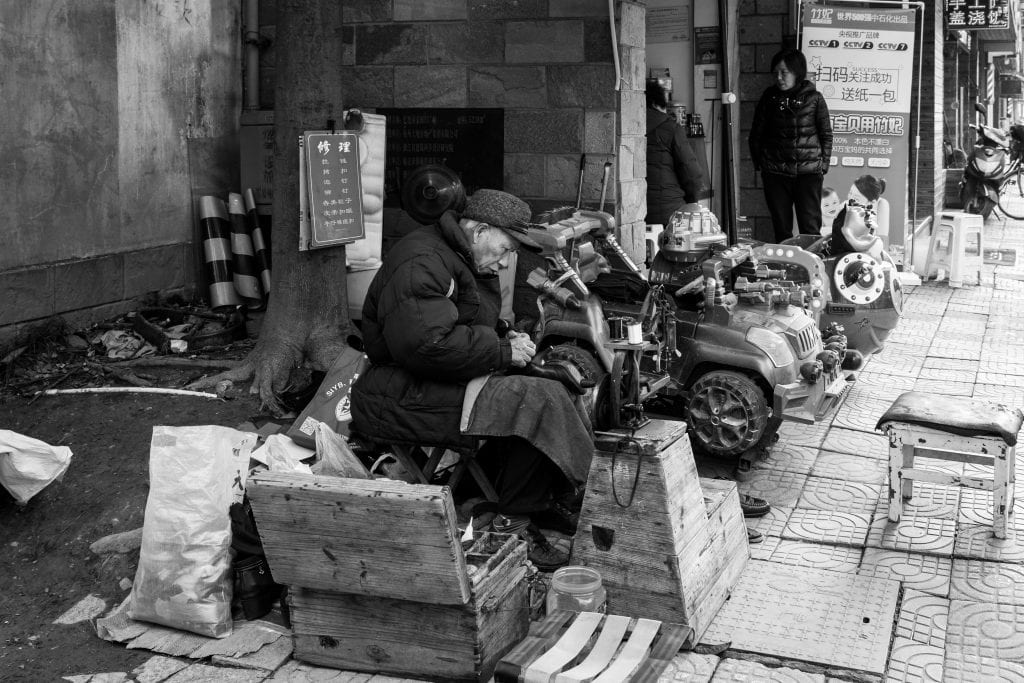
a photo of a Chinese shoemaker
The shoemaker’s children always go barefoot. Having an issue with one of your shoes? No problem, the old cobbler on the sidewalk corner can help you. There are less and less street workers like that now in China, but is some places of cities, we can easily found plenty of them. They are mainly old people, who I guess has always been doing this, in this place, from winter to summer, even when it is raining. The price is still attractive for clients who prefer deal in the street rather than in shops… but for how long. This is China. Source: Gauthier DELECROIX, Creative Commons

China’s newfound economic prowess since the reform and opening has been shouldered by its massive population of migrant laborers. A significant surplus of unskilled workers and a lax regulatory environment has given Chinese factories, like those in many developing countries, a competitive edge over their counterparts in the Global North. In this troubling “race to the bottom,” a great number of Chinese factories overwork and underpay their rank-and-file employees, at times subjecting them to sordid and dangerous conditions. Although brands such as Nike, Walmart and Apple have been pressured by the international media and human rights organizations to take responsibility for labor rights within their supply chains, it is difficult to separate the profits of these corporations from their habitual exploitation of the weak human rights standards and ineffective enforcement of regulations in countries like China.

For most of China’s 131 million migrant workers, leaving the village and traveling to the city to find gainful employment is the greatest opportunity as well as the most harrowing journey of their lives. The freedom and ability to leave their rural hometown are points of pride for migrant workers, yet the enormous surplus of labor in the urban areas has led to fierce competition in the market, forcing them to accept low wages, no benefits, poor working conditions, strict work regimes, and little job security. In the documentary China Blue, we see employees of the blue jean factory worked for pennies an hour, less than the minimum wage, and are often forced to work overtime – even overnight – to meet shipping deadlines. Some are so exhausted by continuous hours of labor that they fall asleep at their workstations, risking reprimand by their supervisors. Factory workers often do not get paid on time and new workers lose their first month’s paycheck as a “deposit,” a sum of money they never receive if they choose to quit. Furthermore, migrant workers have no access to healthcare or education in the city as a result of the discriminatory hukou system that binds them legally to their rural hometowns. China has a comprehensive set of labor laws including minimum wage, but local and provincial officials rarely enforce them in order to attract foreign businesses and boost their regions’ economic growth. As a result, migrant workers are exploited on dual levels, by the factories that employ them and the state that fails to protect them.

Most migrant workers do not understand their legal rights; they have no organized way to defend them. Workers have some inkling of their rights when it is most obvious. However, they lack knowledge of the comprehensive but unenforced regulations protecting them. In China Blue, the workers at the blue jean factory held a haphazard strike after their pay had been delayed for three months. There have also been some success stories of migrant workers taking legal actions against their employers. Lawyers like Zhou Litai have made triumphant careers from helping injured workers litigate with their employers for rightful compensation. Yet a string of individual cases won by workers has not changed the basic conditions of factories. Because of an authoritarian government that fears the rise of civil society, the Chinese government has not allowed independent labor unions to form in China. In developed countries, these types of organizations undergirded the labor rights movement during the industrialization process. They educated workers, negotiated with factory owners on their behalf, and organized strikes when necessary. If Chinese workers are not empowered to speak up for themselves, then who has the luxury to speak for them?

One might argue that Western consumers have the luxury to speak up for these exploited workers by demanding corporations to “clean up” their supply chains. The anti-sweatshop movement has gained great momentum in the past two decades. Due to negative media attention and pressure from NGOs, many multinational corporations that source overseas have devoted significant resources and efforts to audit the factories in their supply chains, even establishing social compliance divisions solely dedicated to this goal. Brands such as Nike at first defended the conditions in its Indonesian factories, contending that their corporation has created thousands of jobs for people who lack better opportunities. Philip Knight, the founder of Nike, pointed out: “People argued that we were taking advantage of the poor Japanese workers 20 years ago. Now Japan makes no Nikes and imports $100 million of them.” Nevertheless, Nike soon followed cues from other corporations and drafted a code of conduct for its factories.

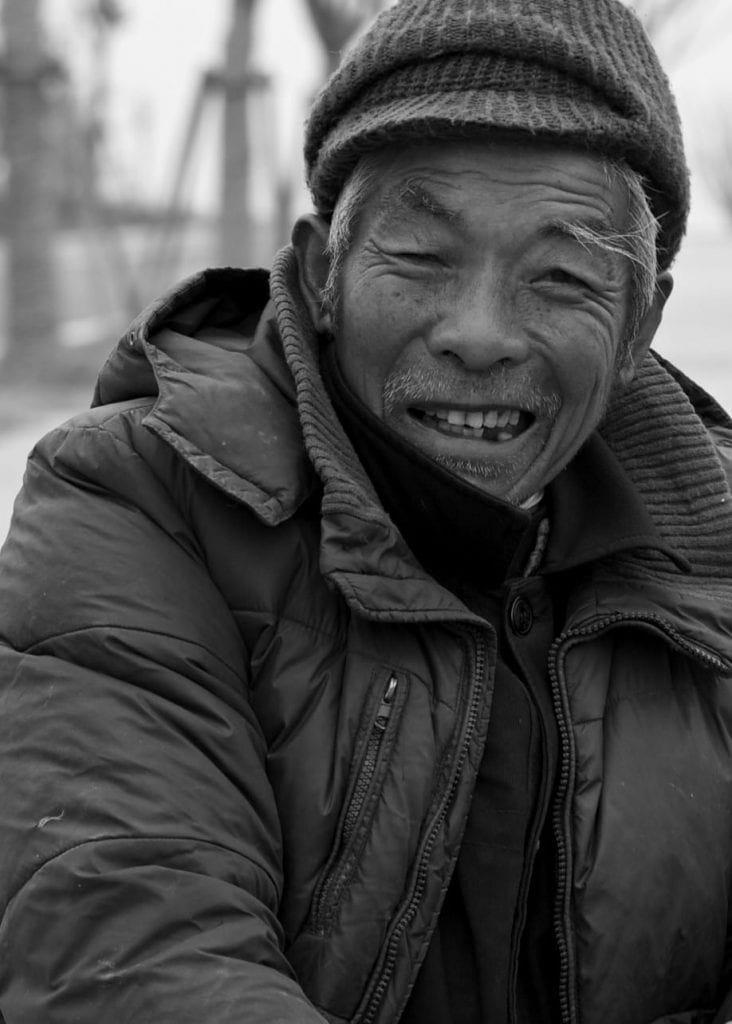
a portrait of a Chinese farmer
Happy Farmer. Farmer after working in the morning – getting ready to deliver vegetables to town for lunch. Jiashan, China Source: DaiLuo, Creative Commons.

The global movement for labor rights has brought international attention to the plight of workers in developing countries and put the issue on the table for multinational corporations. However, there is a serious inherent problem in letting corporations police themselves: a misalignment of incentives. The primary aims of private corporations are to make profits, satisfy customers, and reward shareholders. They accomplish these goals by constantly trying to improve cost efficiency, which is what attracts them to developing world factories. Apple, for example, produces its products in China because of the huge economies of scales that can be achieved there as opposed to the United States. The speed and flexibility of the Chinese manufacturing sector has drawn in companies like Apple, but it comes at the price of poorer labor conditions. Cost efficiency puts the corporations’ incentives in misalignment with social compliance divisions. Because social compliance divisions do not usually cooperate with buying departments, multinational corporations are essentially asking factories to improve the conditions for their workers while still demanding the same low prices. This disjunction has led to massive falsification of records by factory owners, undermining the integrity of the audit process. The audit profession itself is also plagued with human capital problems and instances of bribery. Corporations, in turn, have little incentive to investigate fraud so long as they can present a picture of compliance to concerned consumers. They can essentially pay lip service to the human rights movement by going along with the records presented to them. In the case of mass falsification, concerned consumers cannot even be certain that a brand which claims to buy from only factories with good labor conditions is, in fact, doing so.

Instead of simply paying attention to better audits of factories from corporations, consumers who are concerned about the labor conditions in China should also demand “responsible prices” at the manufacturing level. Currently, the prices that brands pay to factory owners in China are so low that they face the dilemma of improving labor conditions and losing business or falsifying records to comply with labor standards. Timberland, for example, will pay only $20 per shoe that it buys from a manufacturer, while selling it to the retailer for $50, which then sells it to consumers for $100. In the $80 of revenue gained after the product has been purchased from the manufacturer, there must be some room to offer the manufacturer a better price without passing on the cost to consumers. Consumer groups should scrutinize the profit structure of brands and retailers and buy goods that pay manufacturers better, so that manufacturers can pass on the generosity to their workers. This requires the buying department and the social compliance division to work together to establish an agreeable price for products that takes into account favorable labor conditions. This doesn’t necessarily have to come with a loss of profits for the brands and retailers. Favorable corporations will gain the loyalty and goodwill of a growing number of consumers who are concerned about emerging market labor conditions.

However, a consumer can only do so much on the demand side. Much of the work to be done on labor rights must come from the workers themselves. NGOs working in this field must continue educating workers on labor rights, encouraging them to organize, and advocating for the establishment of true, independent labor unions. China’s official labor union, the All-China Federation of Trade Unions (ACFTU), functions more as a peacekeeping organ between workers and management rather than a labor union truly representing the interests of workers. Although the ACFTU has considerable political clout at the national level and lobbies for labor protection laws, its chapters at various factories rarely make demands on behalf of workers. ACFTU union leaders are generally chosen by the factory management and remain beholden to the management. Chinese workers need unions with democratically elected leaders who will truly represent their interests rather than serving as a “bridge” between workers and the management. Without autonomous labor unions representing them, workers cannot bargain collectively for better wages, benefits, and working conditions. Their rights enshrined by Chinese law will go unheeded.

From one perspective, multinational corporations that choose to manufacture their products in China are giving thousands of Chinese workers opportunities they would never have had in the countryside. Although migrant workers often face laborious conditions in factories, they are earning far more than their rural counterparts and gaining more consumption power. As China becomes wealthier as a result of the economic growth driven by the export-oriented manufacturing sector, workers will naturally begin to demand more rights and better living standards. This process has taken place during the industrialization process in many former developing countries. In the meantime, however, multinational corporations are keen to exploit – for as long as they can – an inherently broken legal system and a profoundly undemocratic culture that has relegated millions of Chinese migrant workers to second-class citizenry. When China introduced in law in 2006 to give labor unions more concrete power, multinational corporations were the first to protest by implying they would move their factories elsewhere. Rather than relying on a social compliance scheme that often tolerates the falsification of records during audits, consumers should also urge corporations to offer responsible prices for manufacturers so that they can give workers better treatment without losing business. Most importantly, the Chinese and international human rights movement must continue their efforts to educate workers on labor rights and promote a political environment that will allow the formation of independent labor unions.


Dianna Bai is a Birmingham-based writer who currently writes for AL.com. Her writing has been featured on Forbes, TechCrunch, and Medium. You can find her portfolio here.