Due Process: Is It Standard Operating Procedure?

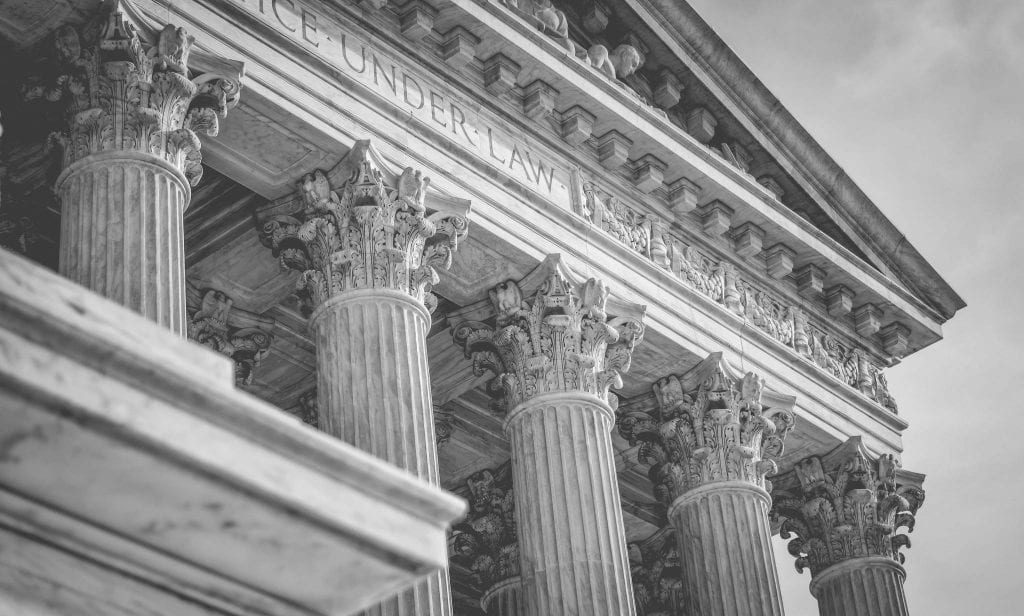
United States Supreme Court  The southern-facing main facade of the United States Supreme Court, overlooking Capitol Hill.
United States Supreme Court. The southern-facing main facade of the United States Supreme Court, overlooking Capitol Hill. Source: Matt Popvich, Creative Commons

I read “The Presumption of Guilt: The new liberal standard turns American due process upside down” the other day. I found this piece presumptuous at worst, and revelatory at best. The WSJ editorial board outlines three core tenets potentially derailing due process in the Kavanaugh appointment, most notably the presumption of his guilt. These core tenets, in the board’s estimation, will defend against a mockery of “the new liberal standard of legal and political due process.” What strikes me most about this piece is the presentation of their core beliefs about the justice system in America: “The core tenet of Anglo-American law is that the burden of proof always rests with the person making the accusation.” What the board revealed is the ever-present reality that populations of color in this country know and experience daily, and this fact is symbolized in the very name of the board’s ideal legal system itself: Anglo-Saxon. The law is not as colorblind or unbiased as the justice system would have us believe. The law is not for the protection of all; it is for the protection of Anglo-Americans. It is a law to the exclusion of everyone else. This blog, using the outlined WSJ tenets as section headers, speaks to the presumption of guilt applied daily to marginalized populations without due process.

Tenet #1: The core tenet of Anglo-American law is that the burden of proof always rests on the person making the accusation. Non-whites do not get the benefit of the doubt, even when video evidence, witness statements, or 911 recordings indicate otherwise. For marginalized persons, few opportunities transpire to make an accusation or offer a defense. Consider any number of non-threatening Sikhs, Muslims, Native Americans, or Blacks who find themselves on the receiving end of the “fear” of a White person for their safety. The accusatory nature of white America against persons of color, especially Blacks, living their lives has become so galvanized that #whileblack is a social media phenomenon.

#WhileBlack spotlights White Americans willingly interfering and causing disruption in the lives of Black people. Whether a politician canvassing a neighborhood or realtor checking on a property or a White grandmother riding home with her Black grandson, White Americans usage of the police as quenchers of irrational fear may result in the death of another unarmed and unassuming citizen. A few months ago, a group of Black women packed their car following their vacation when White residents phoned the police, accusing the women of robbing the AirBnB house where they stayed. Even after pleading their case, the officers did not believe the Black women. A White student at Yale phoned the police on two different Black students on two different occasions because she believed they did not belong on the campus. Colorado campus police detained two Native American students visiting a university when a White parent complained that the boys seemed threatening because they did not say much during the tour. In addition to highlighting the direct and structural violence that non-Whites face over the course of the day, #whileBlack showcases that the mastery of accusation and othering heavily favors the dominant party.

Tenet #2: An accusation isn’t any more or less credible because of the gender, race, religion or ethnicity of who makes it. This tenet suggests that any accusation is worthy of address. Recent history, including accusations against Roy Moore and this current case, tell us that many Americans presume the innocence of white males in the entertainment industry and political arena over white women. Thus, revealing a gender bias. Just ask Bill O’Reilly, Les Moonves, and Louis C.K. Presently the exceptions to this rule are men of color like Aziz Ansari and Bill Cosby.

Accusations of sexual misconduct by women of color are often dismissed or discredited. In 1991, Anita Hill came forward with allegations against Supreme Court nominee Clarence Thomas. When Lupita Nyong’o said Harvey Weinstein sexually harassed her, Weinstein denied the possibility of it, despite more than 40 other women making similar and more explicit claims. This tenet, however, is inaccurate if you are Carolyn Bryant or Donald Trump. Carolyn Bryant lied to a judge and jury in 1955. With that lie, she sentenced Emmett Till, a 14-year-old Black boy from Chicago, to a lynching by Bryant’s husband and other family members. Donald Trump, in 2008, initiated and perpetuated the birther narrative about President Obama. Despite the release of Obama’s birth certificate in 2011, many doubt Obama and believe Trump.
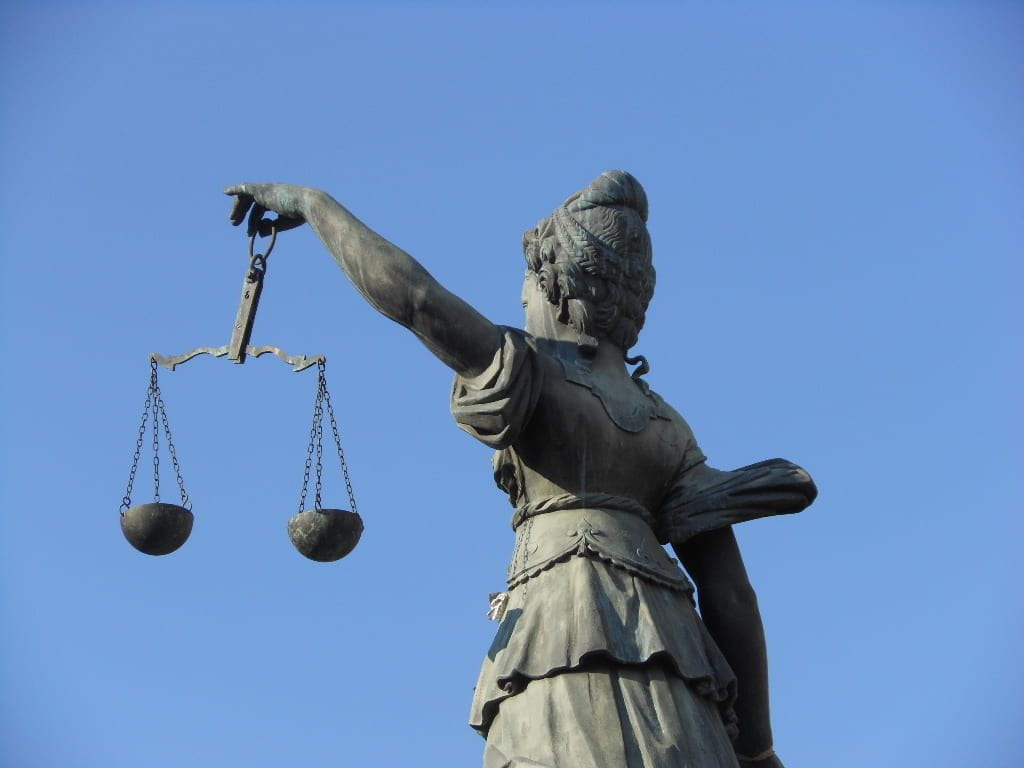
statue of justice
Scales of Justice-Frankfurt. Source: Michael Coghlan, Creative Commons

Tenet #3: The right to cross-examine an accuser. This tenet is the crux of due process as exercised under the auspices of a third party, whether a mediator, a judge, or an adjudicator. “The denial of cross-examination is a major reason that campus panels adjudicating sexual-assault claims have become kangaroo courts.” The right to confront an accuser is a component of justice; however, in many cases of sexual assault and violence, there is an invoking of “boys will be boys” and/ or “that’s just what we did in high school and college” to bypass cross-examination and the potential for prosecution altogether. This flippant attitude is primary to the problem. A double standard has always existed when describing the sexual behaviors of men and women.

In conclusion, what is interesting is for all the chatter of due process in this piece, the WSJ editorial board fail to recognize that due process is exactly what the women who have stepped forward desire. Due process allows the accusers the opportunity to tell their sides of the story and Kavanaugh to tell his side. It allows for cross-examination and a committee of his peers to decide if he should find himself rewarded with a lifetime appointment to the Supreme Court. Due process should bring about a more just society and system.

If the failure to administer due process signals “the new liberal standard”, how does it apply to conservative-led initiatives? Republicans control the executive, the legislative, and the judiciary – in effect, the Republican party is the chief executor of due process in all branches of government. Are Americans to infer that government officials have not implemented the due process as standard operating procedure? If there is a failure of due process, the burden of responsibility falls at the feet of the Republicans.

Due process seems like an overarching ideal outworked in the request to receive all the documents concerning his judgeship so proper vetting could take place in preparation for the confirmation hearing. It seems like a logical next step when considering the “committee confidential” emails that should not have been confidential; if there is nothing to hide, given the presumption of innocence and blind trust this society is to have for its leaders. Why is a due process so important in this case and for this person but not for others?

Where are the demands for due process for the children stolen from their parents and held hostage by the government as migrant families seek refuge in a country that once held so much promise? Where are the demands for due process when unarmed men, women, and children are murdered in their schools or on playgrounds, or streets or in their homes? Where are the demands for due process for the thousands of survivors of abuse in the Catholic Church? Where are the cries for due process when individuals commit suicide because they experience bullying because of something they cannot change or choose?

Articles 6-12 of the Universal Declaration of Human Rights outline the basic tenets of due process. If Kavanaugh has nothing to hide and believes, as an officer of the court, that the system is just, then he should have no issue facing his accusers, calling a cross-examination, and letting the justice system work. Unless he knows the demands for due process are inequitable because justice is not just.

What is the meaning of “due process” as a component of the justice system, if a potential justice stymies the rights of accusers during his pursuit of a position in the highest court of the land as an executor of the justice system?

What is Gender-Based Violence?

Growing up, I was resentful of the social freedoms my male friends naturally enjoyed. Unlike the parents of my male friends, my parents were very strict about things like curfews, not being outside at night alone, and avoiding certain neighborhoods. My dad would always say, “We trust you, but we don’t trust the people around you”. Although I was still resentful, I know my father enforced those stringent rules because he was trying his best to protect me from gender based violence (GBV). GBV is defined as violence towards an individual that is motivated based on his or her gender identity, biological gender, “or perceived adherence to socially defined norms of masculinity and femininity”. The term ‘violence’ encompasses physical, sexual, and psychological abuse along with coercion, threats and compromised liberty. Examples of GBV include sexual violence like rape, domestic violence, and human trafficking. Both men and women are affected by GBV; however it is recognized women and girls are at most risk for exposure due to the imbalanced power relations between men and women “which have led to domination over and discrimination against women by men … and that violence against women is one of the crucial social mechanisms by which women are forced into a subordinate position compared with men.”

Violence against women and girls is a prevalent human rights violation resulting in disproportionate negative consequences on females’ physical, mental and sexual and reproductive wellbeing including but limited to including, but not limited to: “i) fatal outcomes; ii) acute and chronic physical injuries and disabilities, iii) serious mental health problems and behavioral deviations increasing the risk of subsequent victimization and iv)  gynecological disorders, unwanted pregnancies, obstetric complications and HIV/AIDS .”

International Womens Day Strike. Source: Molly Adams. Creative Commons

Some troubling statistics on GBV:

  • In 2014, a UNICEF study projected that ~120 million girls (almost 1 in 10) under the age of 20 have been forced to perform sexual intercourse or other sexual acts during some point of their lives.
  • Almost half of the women killed in 2012 were murdered by a family member or intimate partner.
  • Globally, the WHO estimates 35% of women worldwide have experienced either physical and/or sexual intimate partner or non-partner violence or sexual violence. Other national studies have estimated up to 70% of women experience GBV.
  • “Women and girls together account for 71 per cent, with girls representing nearly three out of every four child trafficking victims. Nearly three out of every four trafficked women and girls are trafficked for the purpose of sexual exploitation.”

Although a pressing issue, it wasn’t until 1992 when the Convention on the Elimination of All Forms of Discrimination against Women (CEDAW) formally adopted General Recommendation No. 19: Violence against Women (GR 19), which legally categorized violence against women a distinct form of discrimination. Likewise, it wasn’t until 1993 the United Nations General Assembly adopted the Declaration on the Elimination of Violence against Women (DEVAW), forming the first ever internationally-recognized definition of GBV. Both documents explicitly outline how GBV violates basic human rights mentioned throughout the UDHR such as the right to life, dignity, and health.

Health Effects of Exposure to GBV

Sexual and Reproductive Health
GBV is a major public health concern contributing to mass amounts of mortality and morbidity. Specifically, the relationship between GBV and HIV and other STIs has been recognized as an important pathway for the contraction and spread of such diseases. WHO states that, in some regions, women facing sexual partner violence are 1.5x more likely to contract HIV, and 1.6x more likely to contract syphilis. Here’s how:

First, increased vulnerability to HIV and STI’s stems from sexual violence such as rape. “Violence reduces victims’ abilities to influence the timing and circumstances of sex, resulting in more unwanted sex and less condom use, including situations where women are coerced or pressured not to use condoms.” For example, of the estimated minimum 250,000 women brutally raped during the Rwanda Genocide, 70% of those survivors tragically acquired HIV.

Second, another important pathway from GBV to HIV is men who are physically violent are also more likely to be HIV positive. Studies find violent men are more likely to engage in risky sexual behavior such as having multiple sex partners and utilizing transactional sex, increasing their chances of contracting and spreading HIV and other STIs.

Along with the spread of disease, women and girls experience unwanted pregnancies due to GBV. The WHO states that women with previous exposure to GBV are more likely to account having had a self-induced abortion. Globally, “80 million unintended pregnancies each year, at least half are terminated through induced abortion and nearly half of those take place in unsafe conditions.” A study analyzing the relationship between GBV and sexual and reproductive health among low-income youth in three Brazilian cities, supports WHO’s statement that women in abusive relationships are more likely to experience unwanted pregnancies. The study found adolescent females who became pregnant as teenagers were more likely to have been victims of controlling behavior or physical abuse compared to teenage girls whom have never gotten pregnant. Among the girls who got pregnant as a teenager during the study, “20% reported having suffered physical violence from a partner and 10% reported having been subjected to sexual violence from a partner, compared to 5% and 3% respectively of those who did not get pregnant as teenagers.”

Mental Health:

Along with physical harm, studies highlight women and children face serious mental health problems after enduring traumatic experiences with GBV. “Exposures to traumatic events can lead to stress, fear and isolation, which, in turn, may lead to depression and suicidal behavior.” According to the WHO, women abused by a non-partner are 2.3 times more likely to have alcohol use disorders and 2.6 times more likely to have depression or anxiety. A cross-sectional study based on the Australian National Mental Health and Well-being Survey in 2007 found that of the 4,451 female respondents, 1,218 (27.45%) of the women have experienced one of the four types of GBV analyzed in the study (IPV, stalking, sexual assault, and rape). Of the 139 women who experienced at least three types of GBV, the rates for mental disorders were 77.3% for anxiety disorders, 47.1% for substance abuse disorders, 34.7% for attempted suicide, and 56.2% for PTSD.

Right On. Source: Liz Spikel. Creative Commons

Potential Solutions to Address Gender-Based Violence

In light in of April being sexual assault awareness month, itself a form of GBV, it is essential to break through the culture of silence. Our health care system can be more active is addressing the prevention of GBV, and also the aftermath of GBV. First, providing survivors with mental health services such as counseling is critical for these women and girls to address their psychological trauma and progress with their lives. Mental health services are vital in providing survivors a voice to express themselves. Second, our health care system could potentially be a major stakeholder in identifying and stopping GBV.

“GBV is very common, but most health care providers fail to diagnose and register GBV, not only due to socio-cultural and traditional barriers, lack of time, resources and inadequate physical facilities; but even more so due to lack of awareness, knowledge and poor clinical practices with limited direct communication and failure to do a full physical examination, not to mention register and monitor the effectiveness and quality of care.”

Moving forward, there needs to be a systematic change within in the health sector. The World Bank, amongst other NGO’s, have provided approaches on how to address this issue. Some strategies to consider include, but of course not limited to:

1) Requiring GBV screenings during doctor visits to ensure early intervention
2) Train and educate health care personal about GBV to improve provider’s knowledge, medical services and attitudes towards GBV.
3) Providing survivors access to adequate infrastructure within hospitals which includes private counseling and examination rooms.

Women are approximately 50% of our global population, yet gender-based violence is one of the most prevalent and widespread human rights violations. Gender equity is an inalienable right protected in numerous human rights documents, however change will never be achievable until we break this vicious cycle of violence through education and strict policy changes. Ultimately, women have proven they are just as equally capable as men, and gender-based violence and discrimination over an uncontrollable biological factor is simply unjust.
