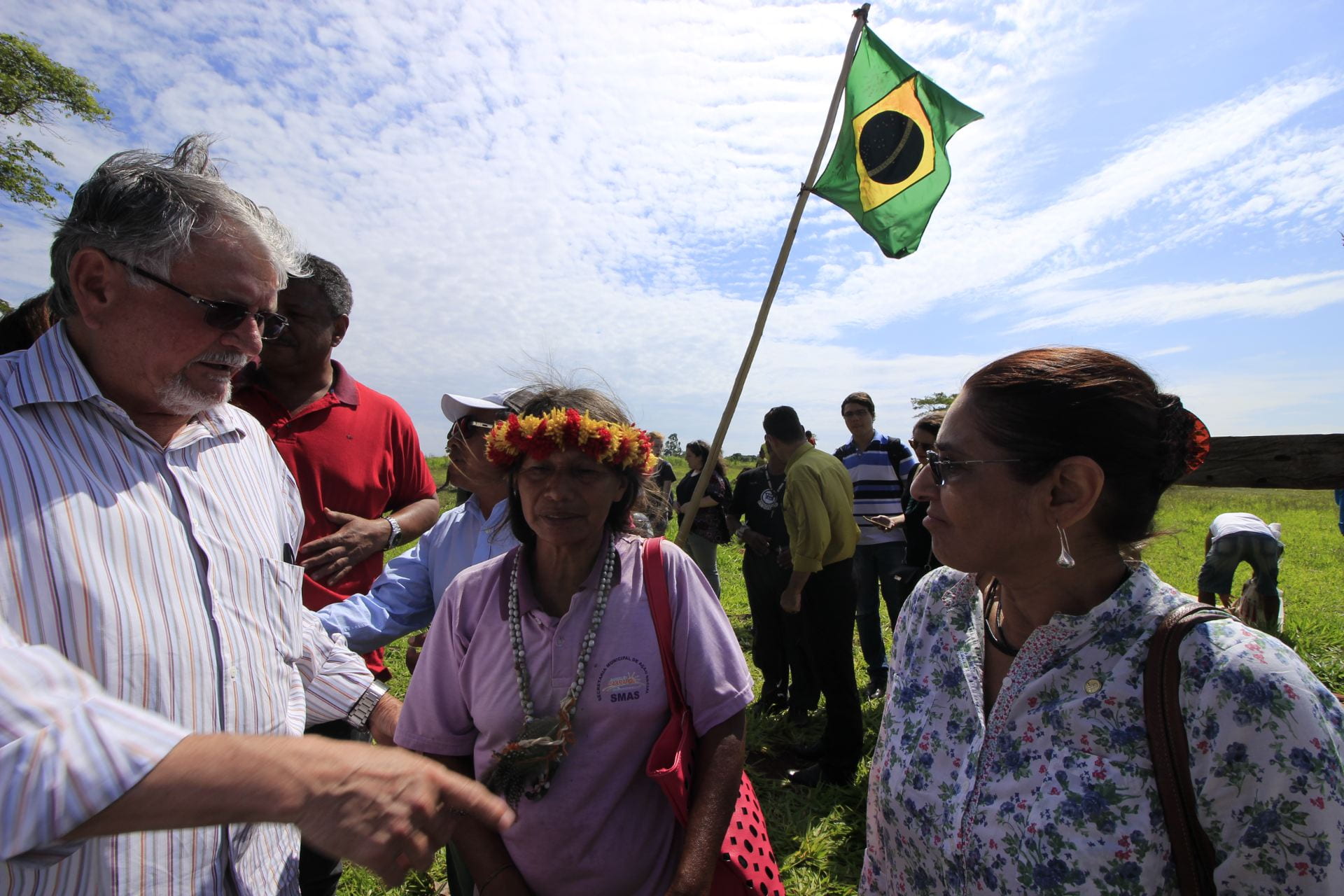
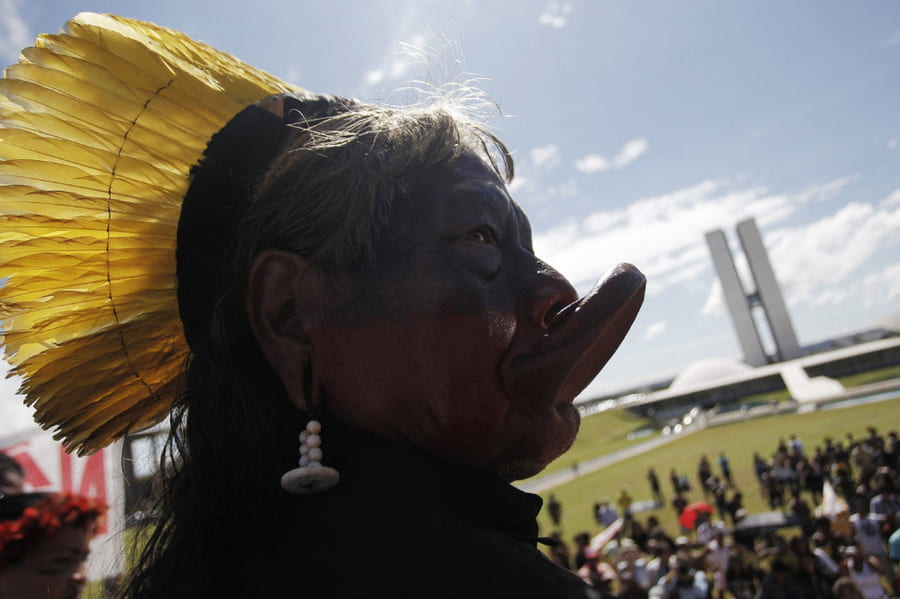
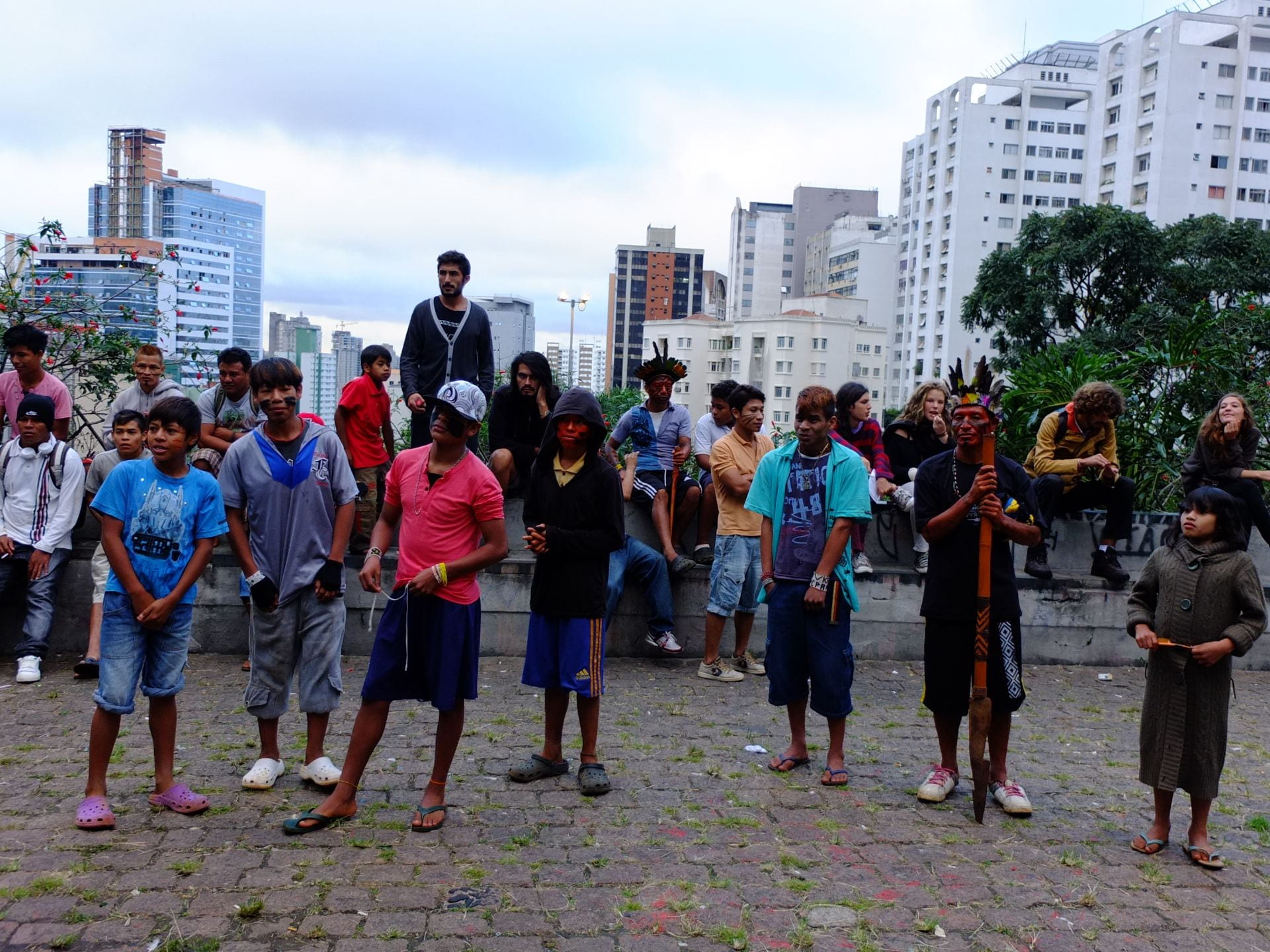
The United Nations Climate Change Conference, or COP, brings together nearly every country annually for a “multilateral decision-making forum on climate change.” Leaders in business, science, governance, and civil society organizations attend to “strengthen global, collective and inclusive climate action.” In the first organized protests at a major climate summit since 2021, thousands of Indigenous activists marched the streets of Belém, Brazil, the site of COP30 in 2025, to demand action on a range of issues. COP30 Executive Director Ana Toni stressed that the protestors had legitimate concerns and that Brazil’s democratic government allows for “different forms of protest.” Protestors travelled from across South America to call for Indigenous representation in the formulation of global climate policy and to spotlight local Indigenous land sovereignty issues.

Demand for Demarcation
Signs at the marches read “demarcation now,” demanding that states, particularly Brazil, transfer legal ownership of land to Indigenous peoples. Brazil’s Minister for Indigenous Peoples, Sonia Guajajara, echoed the protesters’ sentiment, claiming that one goal of COP30 is to ensure that “countries recognise the demarcation of Indigenous lands as climate policy.” Demarcation is more than an issue of sovereignty or law; it is also a strategy for environmental conservation. Indigenous communities tend to their local forests and bodies of water using unique cultural knowledge. Some research suggests that Indigenous caretaking can enhance wildlife biodiversity, decrease deforestation, and mitigate disease. The UN’s Declaration on the Rights of Indigenous Peoples (UNDRIP) recognizes that Indigenous cultural practices “[contribute] to sustainable and equitable development and proper management of the environment.”
Amid the encroachment of mining companies and the recent authorization of oil drilling near the mouth of the Amazon River, one Indigenous leader stated, “We want our lands free from agribusiness, oil exploration, illegal miners and illegal loggers.” He also said, “We can’t eat money,” critiquing the focus on climate finance at previous COP summits while environmental degradation continues.
Advocates have called for the Brazilian government to abandon the marco temporal legal theory, which holds that only lands allotted to Indigenous peoples during the 1988 adoption of the Brazilian constitution are eligible for demarcation.
In a breakthrough, the Brazilian government announced at COP30 that it would, for the first time since 2018, demarcate ten Indigenous lands. The UNDRIP states that redress, including land repatriation, should be provided to Indigenous peoples whose property was taken without their consent. All 193 UN member states have adopted the UNDRIP, but it is a non-binding declaration, meaning states must decide whether to incorporate its ideals in their national laws. Brazil’s demarcation efforts exemplify the commitments outlined in the UNDRIP.
Violence in Guarani-Kaiowá
The murder of Guarani and Kaiowá Indigenous peoples during the final week of COP30 by private security forces demonstrates the importance of demarcation and protection of Indigenous lands and their peoples. Attacks on the Guarani and Kaiowá communities over land disputes in the state of Mato Grosso Do Sul, Brazil, have an ongoing history. In 2024, the head of UN Human Rights in South America called for land demarcation and a full investigation into these attacks. In the Guarani-Kaiowá struggle to regain sovereignty over their land, which has largely been lost to agribusiness, activists and spokespersons have been targeted by security forces allegedly hired by estate owners.
Global Witness has tracked murders and disappearances of environmental defenders since 2012, and Indigenous leaders, particularly in Central and South American countries, are overrepresented among the victims of these attacks. According to the report, extractive, land, and agribusiness industries have been linked to these attacks. These attacks underscore the importance of demarcation for Indigenous peoples in South America.

Brazil’s Environmental Policy
Before the conference, the Brazilian government positioned itself as a climate leader, but some have criticized the current administration’s inconsistent attitude toward environmental conservation. President Luiz Inácio Lula da Silva has overseen a significant reduction in deforestation, which was ramped up under former President Bolsonaro’s leadership, but some environmental groups have denounced the recent authorization of oil drilling near the Amazon River. The president argues that oil will remain a necessity for years to come and that Brazilians should profit from it. Others point to the Amazon rainforest’s crucial role in storing carbon and reducing global atmospheric greenhouse gases. Some evidence suggests that the Amazon could become a savannah in the coming years as deforestation and drought intensify.
Like Brazil’s broader environmental policy, recent actions have included successes for Indigenous rights, as well as failures to protect marginalized groups. The country recently undertook the Ywy Ipuranguete, or “Beautiful Land“, initiative, which aims to strengthen Indigenous-led land management efforts across fifteen Indigenous lands, accounting for six million hectares of land. The Brazilian Biodiversity Fund states, “the project focuses on strengthening sustainable territorial management.” When Indigenous communities are given access to collective property rights over land, there is a marked decrease in deforestation in these areas. Experts at a 2019 UN conference highlighted the importance of Indigenous participation in conservation efforts.
The Federal Prosecutor’s Office in Brazil is suing the mining company Vale and the Brazilian government for “heavy metal contamination in the bodies of Xikrin Indigenous people.” The company’s nickel mining contaminated the Catete River and Indigenous lands, the lawsuit alleges. A study conducted by the Federal University of Para found nickel levels as high as 2,326% above the safe limit in one woman.

COP30 Outcome
Brazil’s tepid attitude towards climate policy reflects the results of COP30. While $5.5 billion was raised for the Tropical Forests Forever Fund, with 20% going to Indigenous communities, the Conference fell short of an explicit commitment to move away from fossil fuels—despite a warning from scientist Carlos Nobre before the final talks that continuing fossil fuel use beyond 2040 will lead to catastrophic temperature increases, collapsing the Amazon rainforest ecosystem. UN leadership emphasized the significance of a multilateral agreement in an era of geopolitical strife, despite the agreement’s limitations. The COP30 president, André Corrêa do Lago, conceded that “some […] had greater ambitions for some of the issues at hand,” acknowledging the gap between the Indigenous protestors’ demands for a radical change in climate policy and the material commitments made at the Conference.
In a potent moment of recognition for Indigenous grievances, do Lago held an Indigenous baby before leading a group of protestors to an hours-long discussion. Indigenous participation in COP30 yielded wins for Indigenous communities, even if the global commitments did not go as far as some hoped. 15 governments agreed to support the Intergovernmental Land Tenure Commitment, which will “collectively recognise and strengthen 160 million hectares of Indigenous Peoples and local community lands” across tropical forest regions. While progress in the fight for environmental protection and Indigenous rights is staggered, Indigenous protestors made their presence felt at COP30, showing the world that Indigenous participation in environmental conservation matters.