Addressing the Global Water Crisis

My water bottle travels with me everywhere. It seems like something I cannot live without. When I was filling it up from the tap before heading to class, I couldn’t help but wonder what it is like to lack access to clean drinking water. That is the reality for many people around the world, especially as weather patterns change and industry use of water increases. Globally, water systems are failing, and people pay the price.  

A women pours water from a puddle into buckets.
Image 1: Woman collecting water from a puddle, India. Source: Adobe Stock.

The UN’s Perspective on Water: 

The UN General Assembly recognizes the right of individuals to “enough water for personal and domestic uses,” or 50 to 100 liters per day. The UN stresses water’s importance for health and well-being, stating that “water should be treated as a social and cultural good, and not primarily as an economic good.” 

Water’s Impact on People 

Despite the importance of water to daily life, a quarter of the world’s population lives in countries with inadequate water supply, and water shortages threaten to displace hundreds of millions by 2030. When water isn’t easily accessible, people have to walk miles to transport it. When this task falls to children, their physical health and education are threatened.   

It is paramount that access to water is expanded globally. What threatens our water supply? How can it be improved? The following are a few examples of water issues and how they have been handled worldwide. 

Sustainable Practices in Agriculture 

As climate change and industrial practices threaten the delicate balance of the hydrological cycle, which represents the flow of water across the planet, careful management of water is more important than ever. Conservationist groups have made proposals to both governments and private industry for implementing more sustainable water practices.  

One major area of potential improvement is agriculture, which accounts for around 70% of the world’s water usage.  Efficient and sustainable practices, such as drip irrigation and storing water, are recommended by environmental groups to reduce water usage. Some farmers are hesitant to update their methods due to the high up-front costs of installing these systems. In Mexico, drought is forcing farmers to reassess their traditional flood irrigation. Managing water use is difficult due to the economic demand for this precious resource. 

A vegetable field is flooded, illustrating a wasteful use of water.
Image 2: Flood irrigation of a vegetable plantation wasting water. Source: Adobe Stock.

Difficulty in Addressing Crises 

Iran is currently battling a water crisis due to the combined effects of decreased rainfall and chronic mismanagement. In Tehran, the nation’s capital, water pressure is so low that it cannot reach many of its residents. When confronted with a changing climate, Iran has funneled resources into water-intensive industries and drained groundwater for agriculture, rather than prioritizing access for individuals. 

Despite the way that water-intensive industries contribute to scarcity, addressing water shortages in Iran is not as simple as shutting down these water-intensive industries. Water conservation plans must account for sectors like steelmaking and agriculture, because they are major contributors to Iran’s economy. Some solutions, like groundwater recharge, which allows more rainwater to soak into the ground and replenish aquifers, don’t require sacrifices to industry. Climate-focused innovation can provide relief for water-strained areas, while other development projects put communities at risk. 

Costs of Development for Communities 

The development and expansion of infrastructure are important to sustaining the modern world. However, development comes at a cost to environmental stability. These issues affect ordinary people’s access to clean drinking water.  

In Lesotho, a small landlocked country, residents have submitted complaints to the African Development Bank, claiming that a water project, which will transport water from Lesotho to Johannesburg, South Africa, has damaged their homes and polluted their water. In trying to provide water for one population, incautious development has put another community at risk.   

Other development projects seemingly unrelated to water still place a strain on resources and pollute surrounding areas. Artificial intelligence data centers have become a flash point  for environmental and water issues. Meta’s data center in Newton County, GA. has limited nearby residents’ access to water. The construction of the data center, which uses 500,000 gallons of water daily, caused sediment build-up in pipes. It has cost homeowners thousands of dollars in repairs. 

AI data centers require water to cool their processor chips, and they also use electricity generated by steam-powered plants. Large data centers can use up to 5 million gallons of water per day. Some concerned citizens are seeking to block the construction of these plants because of the rising environmental costs associated with them. Environmental advocacy is one path toward equitable water access, as data center projects worth billions of dollars have been blocked or delayed by local communities in the US. Even so, other efforts are stalled by corporate lobbying. 

Corporate Influence on Environmental Legislation 

To implement water policy, governments must make choices about the practices for water extraction and the uses of water that they will allow. In the United States, private equity-owned companies like BlueTriton, whose products include Poland Springs, are rewriting environmental legislation. An amendment proposed by BlueTriton lobbyists in the Maine legislature struck an entire bill that would have placed limits on its contracts with the state.   

The bottled water industry uses significantly less water than agriculture and other sectors, but BlueTriton’s involvement in Maine’s legislation is just one of many cases involving corporations influencing environmental policy. In 2025, over $60 million has been spent on lobbying the Environmental Protection Agency (EPA) to roll back regulations on PFAS industries. This is money well spent for lobbyists, since the EPA has moved to vacate portions of its PFAS limits rules in drinking water. Governments are key players in water management, so their attention to vulnerabilities is paramount to managing water crises. 

What Happens When Governments Neglect Vulnerable Communities? 

In the Maldives, which faces unique challenges including rising sea levels and unpredictable weather patterns, a Human Rights Watch (HRW) investigation found that the government has struggled to communicate effectively with rural communities, thereby putting them at risk.  The investigation also found that the government left crucial water infrastructure, including desalination plants, in disrepair. An earlier HRW report concluded that the Maldives Environmental Protection Agency failed to enforce environmental regulations, which threatened access to freshwater.

The Maldives government has partnered with NGOs like the Green Climate Fund in recent years to improve its water systems, but some residents pointed out that the projects were “carried out hastily and remained only partially completed, years behind schedule.” This demonstrates the difficulty of restoring water infrastructure that has fallen behind. Along with recent efforts by the Maldives Government, the international community has stepped up to help alleviate the water shortage through grant funding of projects like building desalination plants. 

alt=
Image 3: Desalination plant. Source: Adobe Stock

International Cooperation 

These challenges transcend borders. Therefore, the international community, institutions like the United Nations Development Programme, NGOs like the Green Climate Fund, and individuals worldwide are working transnationally to ensure access to safe and secure water for all.  The UNDP has invested over $8 billion in sustainable water development, and it recently partnered with the Children’s Investment Fund Foundation (CIFF) to bring clean water to 150,000 Ethiopians.  

What Can We All Do? 

Sustainable development and equitable access to water are possible. To reach the UN’s sixth Sustainable Development Goal of safe and affordable drinking water for all, individuals, governments, and corporations must take action. Potential solutions include environmentally conscious infrastructure development, limiting waste, and investing in innovative green technologies. Individuals can join their local Waterkeeper Alliance chapter, support water conservation legislation locally and nationally, limit their personal water use, and donate to water organizations. 

Water Scarcity and Initiative for Sustainability in Peru

An alarming concern continues to grow in Latin American countries regarding drinking water. Due to water being an internationally recognized human right, international human rights law makes states work towards achieving universal access to water and sanitation. The implementation of these rights involves ensuring availability, accessibility, affordability, quality, safety, and acceptability.  

When water demand exceeds the supply due to scarcity caused by local ecological conditions and economic scarcity resulting from inadequate water infrastructure, we are dealing with water stress. It is a global problem, as billions of people worldwide lack access to adequate water, which affects public health, economic development, and international trade and can lead to conflict and mass migration. Moreover, as a consequence of the increased droughts, there is food insecurity, which leads to malnutrition, death in children, and an increase in infectious diseases.

The Causes of Water Stress 

In Latin America, despite efforts to increase water access, 77 million people still lack access to safe water, according to the World Water Council and the National Water Commission (Comisión Nacional del Agua, in Spanish). There is a lack of treatment of sanitation waste, which leads to untreated sewage in rivers, lakes, and underground aquifers. What’s more, natural phenomena such as hurricanes and El Niño have had significant repercussions on the water sources and infrastructure of the affected countries.  

In 1998, Hurricane Mitch killed 9,000 people in Central America, temporarily displacing 75% of the Honduran population. El Niño and La Niña have caused large-scale droughts and more severe storms. Furthermore, in 2020, Hurricanes Eta and Iota caused internal displacement in Guatemala. In 2023, Mexico experienced its driest year on record, while Uruguay declared a water emergency, according to the UN Development Programme. At the same time, Chile, Bogotá, and Mexico City were reported to be at risk of water depletion. Due to the progression of these phenomena, scientists believe that climate change will continue to intensify weather patterns. 

Aftermath of Eta and Iota in Honduras.
Image 1: The aftermath of Eta and Iota in Honduras. Source: Yahoo Images.

Within the region, Peru has one of the lowest percentages of access to safe drinking water. Since the Amazon spans across three countries, droughts in the Amazon and other events have affected Peru. According to the UNICEF (United Nations Children’s Fund) press release above on inequalities in access to safe drinking water in Peruvian households, the northeastern region of Loreto, Peru, is the most affected by ongoing drought, mostly impacting remote communities. There has been biodiversity loss in 22 of the country’s 26 regions due to wildfires and increasing air pollution.

Current and Future Initiatives 

Because remote communities are the most affected, environmental studies and more sustainable efforts would benefit 63,000 small farmers in rural poverty who live in vulnerable ecosystems. Therefore, different projects have been developed to optimize irrigation systems and promote better water management. 

Rio Seco pond in Peru. Source: Yahoo Images.
Image 2: Rio Seco Pond in Peru. Source: Yahoo Images.

One of the projects is PRO ICA (Project Pisco-Villacurí-Lanchas). The National Authority of Water requested the UN Program for Environment and UNOPS (United Nations Office for Project Services) to implement the project in El Valle de Rio Pisco (Rio Pisco Valley) and the ravine of Rio Seco (Dry River). These are located on the south coast of Peru, one of the country’s most important agricultural zones, which faces several problems with water contamination, scarcity, and supply.

To secure clean water, the Nature Conservancy (TNC) established three water funds for Lima, Piura, and Cusco. This came partnered with two pieces of legislation that established a unique, self-sustaining mechanism to fund water source protection. Its goal is to maintain the most efficient and effective natural infrastructure projects and nurture relationships with the communities that affect the conservation areas. These initiatives have been assigned to help strengthen existing initiatives such as farmers’ committees, modern irrigation proposals, productive reconversion, and habitat restoration. Over 1,600 participants, including government officials and irrigation workers, are involved in workshops to improve knowledge on subjects such as numerical modeling, groundwater hydrology, and the use of specialized equipment. As agencies of the United Nations (UN), UNEP (UN Environment Programme) and UNOPS are committed to achieving the objectives of sustainable development. 

Cuenca del rio pisco
Image 3: The basin of Rio Pisco in Peru. Source: Yahoo Images.

Since mountain glaciers are melting due to climate change and the rainy season is becoming shorter, new initiatives focus on reviving pre-Incan technology. According to a BBC report, civilizations in the Los Andes Mountains had to deal with seasonal rain; therefore, they developed hydrological innovations, a strategy invented by the Huari (WAR-I), Amunas are water canals that take water from mountain streams and move it to infiltration basins. This approach allows the water to go back to the rivers that supply Lima. Therefore, having more amunas would allow for a higher supply during the dry season. Thanks to these findings, Sedapal, the water and sewage service, plans to invest $3 million in building two more water canals.  

One obstacle Peru faces regarding water management is the gray areas of enforcement jurisdiction. Despite its laws to protect wetlands, actors such as the NGO Forest Trends work to define those areas by meeting with authorities and developing a manual so the locals know who the points of contact are and what to do (e.g., taking photos and GPS coordinates, harvesting plants, ensuring water flow, etc.). There is uncertainty about the recovery time for the soil, but there’s hope that the Peruvian people can help nature repair itself by using natural techniques.  

Although many scientists agree that using nature-based solutions to address climate change is beneficial, critics view it as a diversion from other key conversations, such as transitioning to clean energy or reducing large-scale emissions of fossil fuels. Ultimately, initiatives that revive ancient practices are a step toward a future where we can eventually find alternatives for our energy sources and produce less pollution. A key contribution to making these initiatives happen is continuous international coordination. Many freshwater sources cross international borders, requiring cooperation among nations. As a result, collaboration, funding, and the revival of native practices could make a difference in addressing water scarcity. 

Interconnection Among Dance and Human Rights

Two things, seemingly unrelated, have the ability to impact and reshape people’s lives.

Toni Shapiro-Phim worked at a refugee camp in Indonesia and Thailand, where a lot of people came from Vietnam and Cambodia. In Vietnam, many went through a horrific journey to arrive in Indonesia, while in Cambodia they were fleeing genocide. Something that connects these two countries is the ability to enlist in the arts as a way of survival and endurance. Many were drawing, painting, creating poetry, and dancing. You may ask yourself, what do the arts have to do with social justice? In regards to Cambodians, dance has to do with the “spirits of the land”; it is a way to connect to the “earth of Cambodia”. Dance is able to coexist during hardships and violence. They chose to find something beautiful amidst the chaos. Dance is a way to connect individuals with their community, create conversations, provide resources, and, most of all, create a sanctuary.

“When people are ground down by the inhumanity, danger and chaos around them, they choose to participate in a certain form of expressive culture because it is, at that moment, something they can’t live without.”


Three Female Dancers. Source: Pixabay, Creative Commons

In Chile, there was a dictator by the name of Pinochet who managed to make people who were “enemies of the state” disappear. Women would go into the streets and dance the cueca sola, the country’s national dance as determined by Pinochet. The dance is traditionally known as a couple’s dance. However, the women altered the meaning of this dance by dancing alone. On their clothes, they had pictures of their loved ones that had disappeared. This bold statement led way to the end of the Pinochet regime. Dance has the ability to make a change and speak in a way where words are not needed.

In some countries, dancing is believed to be too influential and as a result, has been banned. Some of these countries include Japan, Sweden, and Germany. Many people are surprised to hear that Sweden has a dancing ban. You are not allowed to spontaneously dance. Bars and pubs have to get a license in order for people to dance. Japan had a similar ban which forbade dancing unless the venue had a license up until midnight. However, the ban was recently repealed. Dancing on Good Friday is forbidden in 13 of the 16 states in Germany. The dancing ban is called “Tanzverbot”. Although, in the three states where it is not illegal, there is still a ban until 9 pm on Good Friday. People found dancing will be fined. Specifically, in Baden-Württemberg, dancing is banned from Maundy Thursday to Easter Monday at 3 am. Dancing is also banned from Christmas Eve to Boxing Day at 3 am.

As Macaulay, a chief critic of the New York Times, said, “think globally, dance locally.”

BBOY. Source: Flickr, Creative Commons

FLEXN Evolution is an improvised dance performance that addresses racial equality and social justice. Their production, called “bone breaking”, focuses on being broken physically or emotionally and rebuilding yourself. Not only do these dancers use dance to express their pain, but they also use dialogue and photography. Before every performance, they have an event with a panel consisting of Common Justice (an organization that works with racial equality and crime survivors),  scholars, and community leaders to hold conversations on the issue they are trying to advocate. In addition to the performance, there is a photo series of portraits of all the dancers. The purpose of these photos is to show people what it feels like to be in America – the good and the bad.

A topic that often comes up in the news is climate change. Here are three choreographers and their inspiring story on how they integrated dance with climate change.

Davalois Fearon choreographed a piece on water scarcity. Something that set her apart from other choreographers was how she used dance as a way to interact with the audience. Two dancers hand out cups randomly to some audience members, while a third dancer pours water in some of the cups. Fearon’s goal is to give the audience members an idea of what it feels like to be “denied a resource, overlooked and ignored.” The message doesn’t stop with the performance but continues on with a discussion. The discussion is meant to create a safe environment where people can talk about the issue and try to understand it.

The next artist, Jill Sigman, created a piece on disposability called the Hut Project. Her project focuses on creating hut that is made out of scavenged materials. She wants to go against societal norms of prizing things that are new and shiny and tossing out things that are old. By creating huts from materials deemed as old and useless, she shows people that there is beauty in things that we deem as disposable. She tells you to not be so quick to throw out things simply because they are old and goes on to reveal how things we discard have a story and are complex. Additionally, she hosts a conversation after the performance to talk more about the issue.

The third choreographer, Rulan Tangen, also uses dance as a platform to raise awareness about disposability. She creates discourse on how climate change is a symptom of injustice and people not respecting all forms of life. Currently, she is creating a piece on renewable energy from different perspectives such as cultural and practical. She even goes on to discuss the sustainability for the design of her dance production.


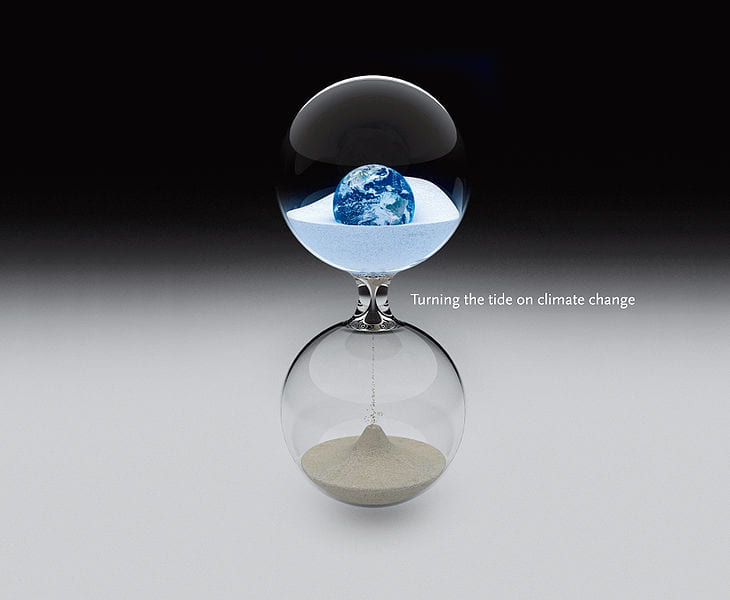
Climate Change. Source: Wikimedia Commons, Creative Commons

In Los Angeles, street dance activism is on the rise. In 2014, Ezell Ford, a black man with mental illness was shot by the police. Activist, Shamell Bell, camped out by the police department for days to request that the officers involved in the shooting be fired. She invited her friend Dashawn Blanks, a noted street dancer, to instruct social dances that were generated in black communities. Protestors, while there for an important cause, were also able to be cheerful while dancing because they were dancing for a cause but also for themselves. Another example is in 2012 when Trayvon Martin’s killer was found not guilty where people headed to Leimert Park to express themselves through dance. Eventually, the L.A. chapter of Black Lives Matter was produced and, in the following years, there have been numerous fatal shootings so Bell would orchestrate dance as a way to show a different way to protest. She also went on to form a group, called the Balance Collective, of both dancers and artists who fight “racism, police brutality, sexism, and homophobia”. “I teach because it’s not about me. I wish I could fade into the background,” Bell says. “This work is about us using art as a platform to save ourselves so we can save others.”

Dance is where people can use movement to portray inequities. Different social justice issues ranging from the environment to racial inequality can be addressed through dance. Never underestimate how powerful dance can be.