UN Conference on Rohingya: Spotlight on a Forgotten People

The Rohingya, a stateless Muslim ethnic minority, have been the victims of a decades-long ethnic cleansing campaign. Their native country, Myanmar, does not recognize them as citizens; because of this, they are denied basic rights. In 2017, over 742,000 Rohingya were forcibly displaced to refugee camps in neighboring Cox’s Bazar, Bangladesh, following mass killings and attacks on their villages. More have been displaced after a 2021 military coup and subsequent civil war. 

The image depicts two women looking towards a shack in a Bangladesh refugee camp.
Image 1: Women in a refugee camp. Source: Adobe Stock.

UN’s High-Level Conference on Rohingya Muslims and Other Minorities in Myanmar 

On September 30, 2025, the UN held a conference on the Rohingya population, which hosted speakers including Rohingya leader Lucky Karim, the Bangladesh interim leader Muhammad Yunus, and Wai Wai Nu, the executive director of the Women’s Peace Network-Myanmar. Speakers urged the international community to take immediate action for the protection of the Rohingya people. The impacts of aid cuts, the necessity of sanctions on Myanmar, and the importance of immediate repatriation of Rohingya to their homeland were discussed. 

Background: A Long History, 2017 mass expulsion, and Ongoing Civil War 

Ethnic tensions between the Rohingya minority and the Buddhist majority ethnic groups existed long before the 2017 mass exodus of Rohingya to Bangladesh. In 1982, Myanmar’s government denied the Rohingyas’ status as an ethnic group, making them stateless. In 2017, following Rohingya militant attacks on police outposts, Myanmar’s troops and local mobs attacked and burned Rohingya villages, killing 6,700 Rohingya and perpetrating sexual violence on women and girls.  

Following these atrocities, cases were filed in the International Criminal Court (ICC) and the International Court of Justice (ICJ) on behalf of the Rohingya, which are still pending. Most Rohingya fled to Bangladesh as refugees, where over a million remain in refugee camps. 

In 2021, civil war broke out following a military coup in Myanmar. After years of an unsteady power-sharing agreement between the military and democratically elected leaders, the military declared the 2020 election, won by the National League for Democracy (NLD), illegitimate. Myriad forces opposed the military junta, forming pro-democracy coalitions and ethnic rebel militant groups, like the Arakan Army. 

The Arakan Army currently controls most of the Rakhine State and the Myanmar-Bangladesh border. Rohingya are caught in the middle of the civil war. Rohingya have reported massive restrictions on freedoms under the Arakan Army control, and other human rights abuses like extrajudicial killings and forced labor.  

The image depicts a run-down refugee camp in Bangladesh
Image 2: Rohingya refugee camp in Cox’s Bazaar, Bangladesh. Source: Adobe Stock.

Displacement in Bangladesh 

Over one million Rohingya now live in dire conditions in refugee camps in Bangladesh. They rely almost entirely on international humanitarian aid and are largely unable to find work. Bangladesh’s interim leader, Yunus, told the UN during the Conference that Bangladesh is “forced to bear huge financial, social and environmental costs” due to the refugee crisis. Following aid cuts, particularly those made by the Trump administration to USAID, non-emergency medical care and food resources provided by the World Food Program were drastically reduced, exacerbating an already grim situation. At the Conference, the US pledged $60 million to support Rohingya refugees while urging other governments and organizations to step up.  

Repatriation 

While the Bangladeshi government and the Rohingya themselves hope for repatriation back to Myanmar, the conditions are still too hostile for immediate return. Both the military junta and Arakan Army are accused of grave human rights abuses against Rohingya, and if the Rohingya returned, their situation might be even more dangerous than in the poorly funded Bangladeshi camps. A Human Rights Watch investigation revealed that the Arakan Army has committed widespread arson on Rohingya villages and stoked ethnic tensions by unlawfully recruiting Rohingya men and boys.  

Rohingya representatives at the UN Conference stated their need for international protection to make progress toward the Rohingyas’ return to Myanmar. Rofik Husson, Founder of the Arakan Youth Peace Network, reiterated the wish of Rohingyas to live in their “ancestral homeland with safety and security.” He added that the issue of Rohingya repatriation and safety is a “test for this Assembly and a test for humanity itself.” 

While the chances of repatriation to Myanmar remain slim, other actions must be taken to improve the situation of Rohingya refugees. Funding shortfalls, limited mobility, and a lack of formal education have cost the Rohingya their freedom and livelihoods.  

Conference Shortfalls, Outside Solutions 

UN Representative Statements: UN delegates from across the world offered different perspectives on the Rohingya situation, as outlined by the United Nations’ press release regarding the Conference. Myanmar’s delegate to the UN urged the international community to reject the military junta’s planned December election as illegitimate, stating that the military is the root of Myanmar’s crisis. The representative of Poland condemned the employment of advanced military technologies on civilians, while Türkiye’s representative urged Myanmar to comply with the International Court of Justice. China’s delegate warned against politicizing human rights and called for dialogue between Bangladesh and Myanmar. 

Few concrete commitments were made at the Conference for improving the Rohingyas’ situation, other than international aid offered by the US and UK, which still does not bridge the funding gap required to create decent and stable conditions within the Cox’s Bazar camps. The Robert F. Kennedy Human Rights organization suggested some solutions to the international community following the conference. These include: 

  • Reduce mobility restrictions to allow for development and reduce aid dependency within Cox’s Bazar camps 
  • Regional states recognize Rohingya as refugees and ensure refugees do not return to Myanmar under detrimental conditions (also called non-refoulement) 
  • Refer the Myanmar situation to the ICC while U.N. member states prosecute individual perpetrators under the principle of universal jurisdiction 
  • Impose an embargo on military supplies to Myanmar and reject the military junta as illegitimate 

Rohingya Perspectives on Their History and Future 

Perhaps the most powerful and illuminating moments from the Conference came from the Rohingya representatives themselves, however. The first Rohingya to attend New York University, Maung Sawyeddollah, emphasized the international community’s role in empowering the Rohingya community, particularly through higher education. He urged universities to give lifelines to Rohingya students, who lack access to formal education in refugee camps. “It’s not a big burden for a university to offer one or two scholarships to Rohingya students in an academic year,” Sawyeddollah stated. 

Lucky Karim recounted fleeing Myanmar in 2017 to Cox’s Bazar, Bangladesh, and then her return to the camp years later. She stressed that the genocide of the Rohingya is not an isolated event. It did not begin or end with the 2017 mass expulsion to Bangladesh, stating, “Rohingya have been refugees to Bangladesh numerous times, even before 2017, and we keep going back and forth to Myanmar, and it’s never been sustainable.”  

Karim spoke of the conditions she returned to earlier this year in Cox’s Bazar, where aid cuts shut down healthcare facilities, and new arrivals were forced to share already overcrowded shelters. Her hope is for a stable and permanent repatriation of Rohingya refugees to the Rakhine state.  

Despite the powerful statements from Rohingya leaders, some noted that no Rohingya who currently reside in the Cox’s Bazar camps were present at the Conference. Some officials cited logistical obstacles, but the Rohingya lamented that the voices of those within the camps were not heard. 

The image depicts a child playing on the fence of the Bangladesh refugee camp.
Image 3: Child climbs fence at refugee camp. Source: Adobe Stock.

Unanswered Questions and the International Community’s Role 

There is much to be done for Rohingya refugees and those still living in Myanmar. Converging crises prevent effective solutions, and the wider conflict within the region overshadows the Rohingyas’ plight. The UN Conference put an international spotlight on the situation of forgotten people; however, few tangible commitments were made at the Conference. To relieve the suffering of the Rohingya, substantial action should be taken to prevent widespread atrocities by the Myanmar military, and the international community should materially invest in Rohingya development, education, and opportunities.
Impact of Covid-19 in Conflict Zones

by Shane Burns

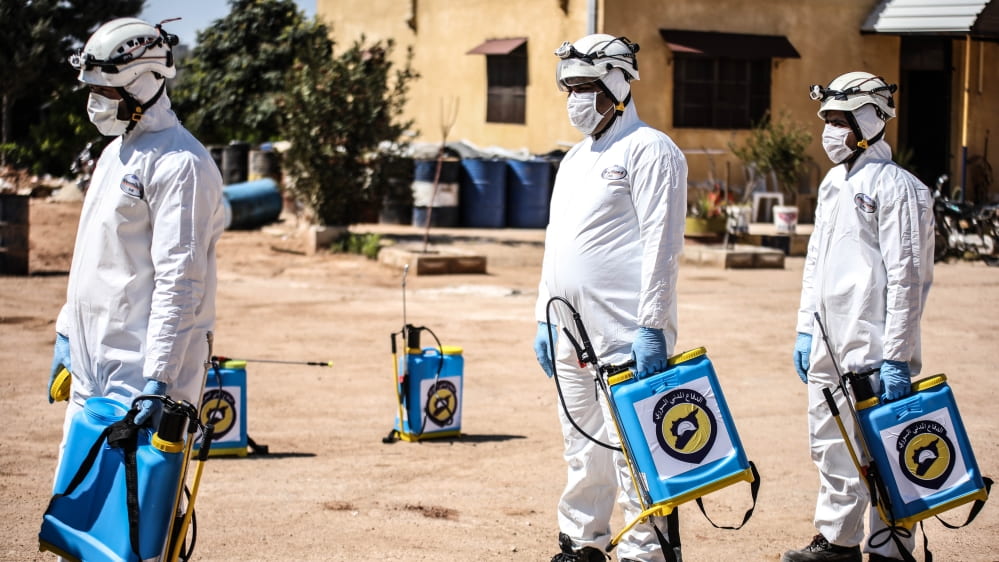
A photo of 3 medical professionals in masks and white suits carrying testing machines in war-torn Syria
Medical professionals in war-torn Syria fear the worst after first case reported. Source: Yahoo Images

“Wash your hands.” “Avoid close contact with others.” “Stay home.” These are the CDC’s recommendations for protecting yourself against the coronavirus and the disease that it causes, COVID-19. For those of us fortunate enough to have clean water and soap and space and a home, that is helpful advice and easy enough to follow, even if it is somewhat of a disruption to our normal lives. Unfortunately, these recommendations are completely irrelevant to the millions of people across the globe who live in conflict zones and refugee camps where fresh water is scarce, sanitary facilities are lacking, and the healthcare infrastructure has been decimated by war and continuous violence. In places where day to day survival is already a key concern, the novel coronavirus poses a new kind of threat, one that the struggling healthcare systems in these countries is not prepared to take on. 

While the U.S. government and media have focused on individual vulnerabilities, such as age and underlying respiratory conditions, very little has been done to address social and structural vulnerabilities, including limited access to basic services, health care, safe water, sanitation, and hygiene, in some of the most dangerous places in the world. Overcrowded refugee camps are a virus’ dream – they provide conditions in which the virus can spread rapidly and easily. Individuals living in these places are already prone to respiratory problems due to air pollution and living in close quarters. Unsanitary conditions and lack of housing, food, and clean water exacerbate the risk of contracting an infectious disease, and the lack of access to basic health care makes fighting any kind of infection difficult. The coronavirus is highly contagious and has a very high global mortality rate, even in places where social distancing and healthcare are accessible, and this rate will likely be significantly higher in conflict zones where large numbers of displaced people live. Preventing the virus from entering these spaces is the only hope, but as Dr. Esperanza Martinez, head of health for the International Committee of the Red Cross, has said, “this is uncharted territory,” and it is unclear how effective containment strategies will be in reality (or if they are even possible in certain places).

According to the Center for Strategic and International Studies, 126 million people around the world are in need of humanitarian assistance, including 70 million who have been forcibly displaced from their homes, mostly due to violence. COVID-19 is adding a new layer of uncertainty and fear to the already precarious and vulnerable status of these individuals and families. The UN High Commissioner for Refugees (UNHCR) and the International Organization for Migration have suspended refugee resettlement programs, and many governments worldwide have stopped the intake of refugees who are fleeing violence and food insecurity. Cases of COVID-19 have been confirmed in war-torn areas in the Middle East, including Afghanistan, the Gaza Strip, and Ninevah, a displaced persons camp in Iraq, as well as in several African countries, including war-torn Libya, Cameroon, and the Congo. This post considers how this global pandemic will likely impact people living in three particularly dangerous and vulnerable countries in the Middle East and West Africa: Syria, Yemen, and Burkina Faso. 

Syria

Nine years into the seemingly endless civil war in Syria, more than 380,000 people have died, dozens of towns and cities razed to the ground and half of the country’s entire population displaced. Targeted attacks have left Syria’s once thriving public health care system in shambles. Hospitals and clinics have been destroyed or damaged to the point of not functioning. Medicine and medical supplies are limited, healthcare workers are few, and travel to the still-operational clinics and hospitals is out of the question for many of the sick and suffering. Of particular concern is the refugee camp in Idlib, a town in the northwestern province near Turkey, where many displaced individuals now live. The conditions of the camp are dire – there is limited access to soap and water and overcrowding makes social distancing impossible – so self-protecting is a major challenge.

Syria reported its first case of coronavirus a few days ago, from a woman who had recently traveled to Iran, a country that is backing the Syrian government in the civil war and where Shia pilgrims frequently travel. There are now five confirmed cases (the actual number is suspected to be much higher), and there is growing fear that the virus is spreading unimpeded throughout the northwest, where there is limited capacity to test and monitor the situation, but experts have warned that “if the disease starts, it will spread massively.” Jan Egeland, director general of the Norwegian Refugee Council, has warned that COVID-19 could “decimate refugee communities.” Containment is the only hope, but the shortage of supplies, including test kits, makes this unlikely. 

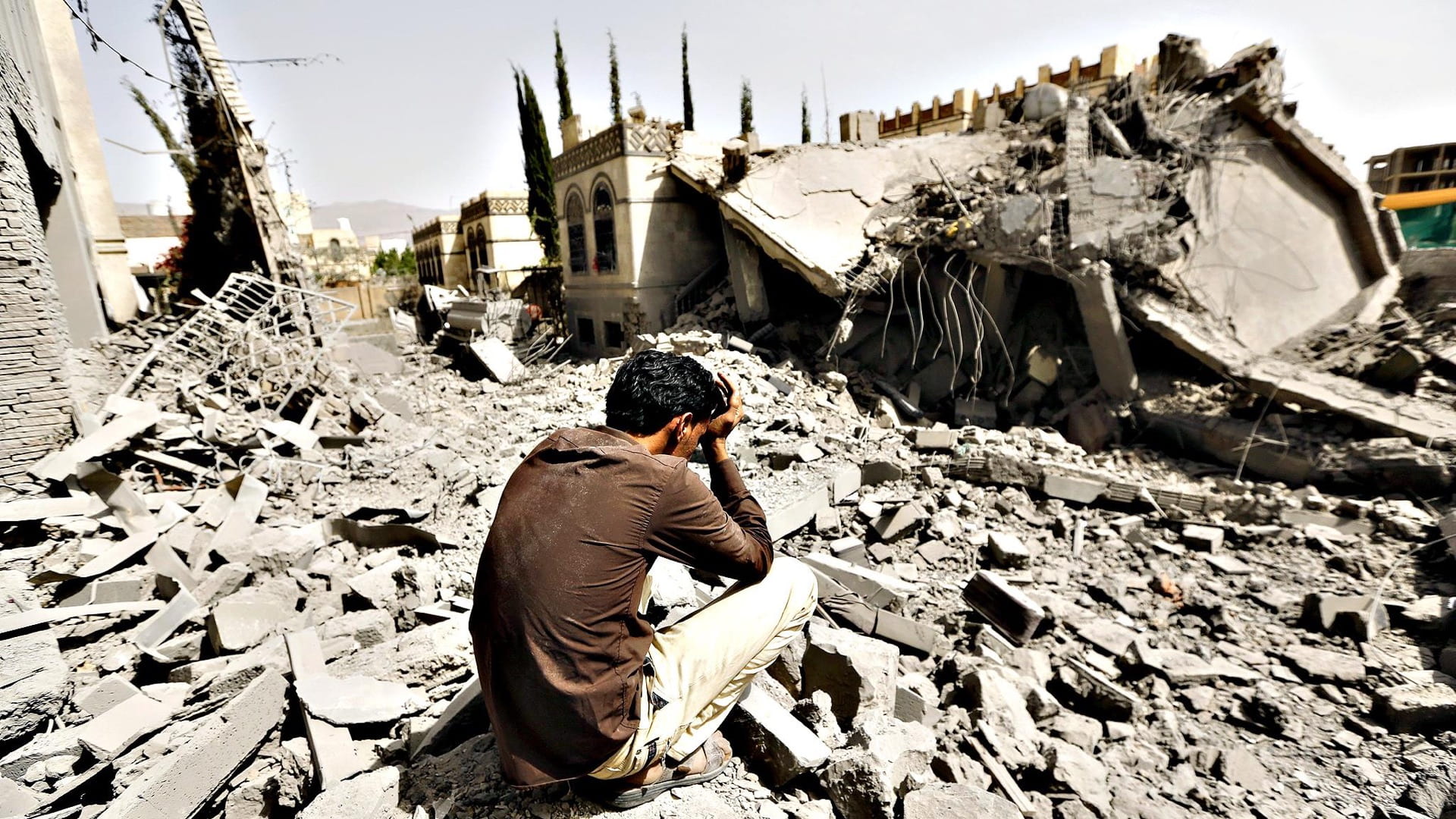
A young Yemeni man sits atop the rubble with his face in his palm grieving the destruction of his home
Source: Yahoo Images

Yemen

The United Nations has labeled the situation in Yemen the world’s worst humanitarian crisis. No cases of COVID-19 have been confirmed yet in Yemen, but the country is bracing for a devastating catastrophe if and when the virus arrives. Since the U.S.-backed war in Yemen began five years ago, Saudi and Emirati coalitions have leveled 120 attacks on medical facilities throughout the country. These attacks, including airstrikes, ground-launched mortar and rockets, and attempts to occupy hospitals and clinics, have led to widespread disruptions in access and service to some of the world’s most vulnerable people, including displaced women, children, and persons with disability. With a mere 51% of the country’s health centers operational, there is a severe shortage of medicine and medical equipment. Even if people in this area can get to a hospital, many hospitals don’t have electricity, rendering a ventilator — a potentially life-saving device for people suffering the most severe symptoms of COVID-19 — out of the question. The decimated healthcare infrastructure is unable to control preventable disease (there was a cholera outbreak a few years ago) and is completely ill-equipped to handle a pandemic. Both the Houthi rebel group (aligned with Iran) and the government recognize the threat the virus poses and are implementing precautionary measures, such as closing schools and halting flights into the area. However, both sides are amping up their rhetoric and are posed to blame the other if and when cases of COVID-19 are confirmed. The United States, for its part, has cut off emergency aid to Yemen, citing the Houthi’s interference in the distribution of supplies and services to starving Yemenis (likely a Saudi-directed approach), but humanitarian officials have warned that this decision will create major funding gaps in efforts to provide hand soap and medicine to clinics and to staff health centers with trained healthcare workers. Yemen’s basic healthcare programs are heavily reliant on foreign aid – about 8 out of 10 Yeminis rely on some form of aid. Eliminating this source of funding could mean suffering and death for millions of displaced persons in Yemen. 

Burkina Faso

On March 18, Burkina Faso, the impoverished West African country of 20 million people, registered its first confirmed case of COVID-19. A week and a half later, that number leapt to146 cases, with hundreds more suspected, making it the hardest hit West African country so far. This tiny, conflict-scarred country is no stranger to hardships, including poverty, drought, rampant hunger, and militia-led coups. In 2019, clashes between government forces and militia groups linked to ISIL and al-Qaeda led to more than 2,000 deaths in Burkina Faso and forced more than 700,000 people to flee their homes. This escalation of violence has led to the closure of 135 health centers in the country, and an additional 140 have reduced their services, leaving 1.5 million Burkinabe in dire need of humanitarian health assistance. With a healthcare system that has been ravaged by war, a mere three facilities in the country are able to carry out the tests, and only a few hundred test kits have been provided. As part of the government’s response, Malian refugees once displaced into Burkina Faso are being forced back into Mali, where ongoing violence inhibits humanitarian and medical access to affected populations. COVID-19 will exacerbate an already dire situation — it is feared that an outbreak would see fatality rates of ten times higher than the global average. “These populations are already very vulnerable to diseases that are otherwise easy to treat,” says Alexandra Lamarche, senior advocate for West and Central Africa at Refugees International, “but that’s not the case when they have no access to water or proper sanitation or health care.” She adds, “We could watch entire populations vanish.”

Bumper sticker that says "All people are created equal members of One Human Family"
Source: Yahoo Images

Against a common enemy?

Rarely does a disaster – natural or otherwise – affect the entire world. The coronavirus is a different story, unlike anything we have witnessed in the modern age. It is exposing the fragility of even the most advanced economic, technological, social and medical systems, and it poses a grave threat to humans the world over. The virus doesn’t discriminate on the basis of status or religion or skin color or any of the other things that divide us or give us cause to fight each other. It travels across borders and between enemies, and the more people it infects, the greater the risk for everyone. Just like the virus, the distribution of basic human rights must not be qualified on the basis of anything other than humanity. Turning a blind eye to the suffering and inadequate conditions of the world’s most vulnerable populations only facilitates the spread of the virus. In a practical sense, limiting the spread of the virus in refugee camps and conflict zones in Yemen and Syria and West Africa is just as important as it is in wealthy countries if the goal is to eliminate the virus and end this global pandemic. That requires distributing resources and investing in large-scale infrastructure improvements in places where people are not able to follow the protocols for containment under the current conditions. As we scramble to make enough surgical-grade masks for healthcare workers in the United States to wear, we need to be concerned with sending as many as possible to medical facilities in places around the world that are under-served and over-taxed, including displaced persons camps. We cannot hope to protect ourselves if we refuse to protect our fellow humans, no matter the distance or cultural difference between us. U.N. Secretary-General Antonio Guterres has called this “the true fight of our lives,” insisting that we put aside our differences, which now seem small and inconsequential, and turn our aggression toward a common enemy. “That is what our human family needs, now more than ever.”
