Gendered Vulnerability in Afghanistan’s Earthquake Crisis


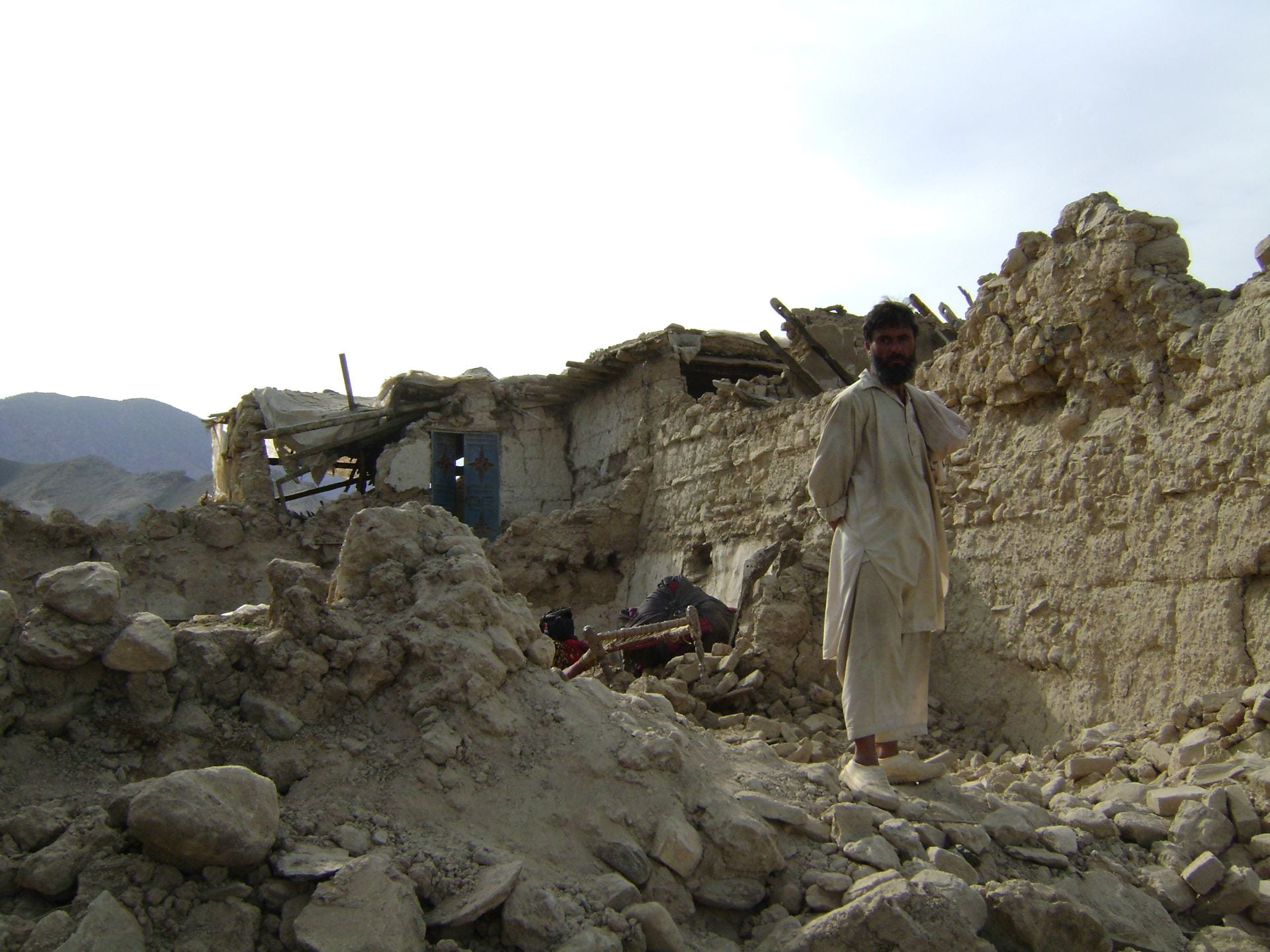
Earthquakes destruction in Afghanistan.
Image 1: Afghanistan earthquake’s destruction. Source: Yahoo Images.

Recently, two large-scale earthquakes hit Afghanistan, furthering the dire humanitarian crisis. Earthquakes with magnitudes of 6.0 to 6.2 are likely to cause significant damage in largely populated areas. The first, which was a magnitude of 6.0, occurred on August 31. This resulted in around 2,000 deaths, caused thousands to sustain injuries, and damaged health facilities and homes. Unfortunately, four days later, the second earthquake hit, this one being a 6.2 magnitude earthquake. 

In the aftereffects of natural disasters, the people most affected are women and children. In Afghanistan, where women’s rights are being heavily restricted, their ability to access humanitarian aid is limited. Previously, in October 2023, two 6.3 magnitude earthquakes hit Afghanistan. This event and its effects on the women and children was written about in a blog by Delisha. If you would like to read about that, check out her blog, Deadly Earthquake in Afghanistan Magnifies Gender Apartheid Under Taliban Control. For an overview of women’s rights violations in Afghanistan, read my previous blog, A Woman’s World in Afghanistan: An Update on Women’s Rights Violations in Afghanistan. 

For this blog, we will be looking at the most recent earthquake, its effects on women and children, and the humanitarian aid response. Throughout this blog, keep in mind a couple of articles from the Universal Declaration of Human Rights (UDHR). Article 18 relates to women’s freedom of movement and Article 25, right to food, clothing, housing, and medical care. Throughout the Taliban’s recent reign, these rights have continuously been violated. Frequent earthquakes have furthered the humanitarian crisis and highlighted women’s rights issues. 

The Devastating Effects of Earthquakes in Afghanistan 

Traditional Afghan Homes
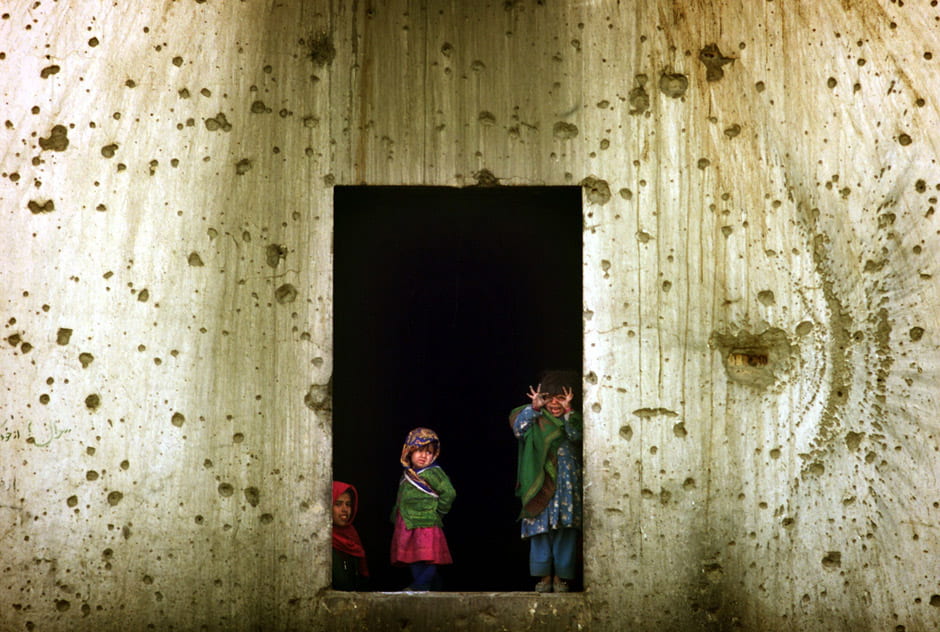
Image 2: Traditional Afghan Homes. Source: Yahoo Images.

On average, earthquakes kill around 560 people every year in Afghanistan, making it a common natural disaster. The country sits between the Eurasian tectonic plate and the Indian plate, hence why earthquakes are so frequent. The common house in rural Afghanistan is made out of mudbrick, wood, and stone. With frequent earthquakes each year, this causes significant damage and destruction to many homes. 

The Kunar region has been especially affected by the recent earthquakes. Located in the northeastern area of Afghanistan, bordering Pakistan, this remote area had many of their homes destroyed. In response to the destruction, the International Committee of the Red Cross (ICRC) has provided medical aid to areas like Kunar. Although they are providing support and medical aid, many people still struggle with food security due to the loss of livestock (goats and cows) during the earthquakes. 

Along with the ICRC, the International Rescue Committee (IRC) has been offering food, shelter, and medical aid. After the initial earthquakes, around 85% of those interviewed by IRC had no shelter to sleep in. All of their homes had been destroyed. On average, $80 million in damage occurs every year in Afghanistan due to earthquakes. Because of the recent cutback on humanitarian aid from foreign entities and the rising restrictions on women and girls, the crisis continues to grow.

Women’s Struggles Amidst the Aftermath of Earthquakes

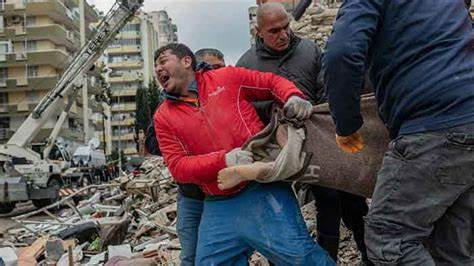
Humanitarian aid distribution in Afghanistan.
Image 3: Humanitarian aid distribution in Afghanistan. Source: Yahoo Images.

The Kunar region has experienced high levels of destruction. As the weather gets colder, the need for more aid becomes increasingly imperative. Around 50% of Afghanistan’s population relies on food aid, but the restriction of movement within Afghanistan makes it difficult for people to gain access to humanitarian aid, including food and medical supplies. These restrictions have made it almost impossible for women and girls to receive this aid, a problem compounded by the fact that 422 health facilities have either closed or have been suspended.

The majority of people injured or killed during the earthquakes were women and girls. Women and girls are not allowed to be in public without a male escort. However, with homes destroyed and sometimes the men and/or sons being killed in the earthquakes, women are left with little means to survive. This makes it difficult to find services or to receive medical aid. 

UN Women is currently appealing for $2.5 million to increase the number of women-led response teams helping in Afghanistan, boost access to services, and create a 6-to-12 month emergency response. This would allow for more critical materials, such as blankets, clothing, and cooking utensils, to be distributed amongst families that remain in temporary shelters. It would also create spaces that women and girls can meet and receive aid. 

The Taliban’s Gender-based Persecution

Afghan women standing in line with Burkas on.
Image 4: Afghan women standing in a line. Source: Yahoo Images.

Since the Taliban took over control of Afghanistan in 2021, the rights of women and girls have been stripped away. Journalists have been detained, and anyone who would oppose the regime has been silenced. 

Donor governments, such as the United States of America, have made significant cuts to aid. Neighboring countries, like Iran and Pakistan, have returned millions of refugees, causing the number of displaced people in Afghanistan to grow. 

As stated in a recent post of mine, women and girls are not allowed to be educated past the sixth grade. Women are also not allowed to attend university, have jobs, leave the house without a male relative, or visit public spaces. 

De facto security has prevented Afghan women workers from entering into the UN Compound in Kabul, Afghanistan. Recently, security had been placed in front of multiple UN entrances to monitor people entering. The Taliban has also restricted women national staff from traveling into the country. Interfering with UN missions is a violation of international law

As such, the International Criminal Court (ICC) issued a warrant on July 8, 2025 for the arrests of Haibatullah Akhundeadal (the Taliban’s leader) and Abdul Hakim Haqqani (the Taliban’s chief justice). The charge of the crime is gender-based persecution, which is a crime against humanity. Crimes against humanity are large-scale crimes against civilians. This includes torture, sexual violence, apartheid, and in this case, gender-based persecution

This issue of gender-based persecution in Afghanistan has long limited women from receiving aid when disaster hits. It is important that Afghan women’s rights issues continue to get international attention. This way their struggles and fights do not go unnoticed. 

What You Can Do

Entire villages have been destroyed, thousands of people have died, and even more have been injured and displaced. Women and girls’ access to humanitarian aid is limited and hinges on whether or not they have a male relative to escort them or if there are female humanitarian aid workers. Organizations like the International Refugee Committee (IRC), UN Women, and the International Committee of the Red Cross (ICRC) have been working to provide aid to the areas most affected by the earthquakes. If you want to help and are able, you can look into donating to any of these organizations. 

Deadly Earthquake in Afghanistan Magnifies Gender Apartheid Under Taliban Control

by Delisha Valacheril
Image 1. Afghan Man standing in the rumble caused by an earthquake. Source: Flickr

The ongoing humanitarian crises as a result of the Taliban, an Islamic fundamentalist group, regaining control of Afghanistan have been exacerbated since the devasting earthquake hit the country, with women and children bearing the brunt of the struggle. The Herat province has been shaken by two 6.3-magnitude earthquakes in just five days, with at least 1,482 people killed, another 2,100 have been injured, and an estimated 114,000 people need humanitarian assistance. The detrimental aftermath has been felt by everyone in the country, especially women and children, since they encompass 90% of those killed. With homes demolished and livelihoods lost, obtaining humanitarian aid is of the utmost importance. However, women across the country are struggling to gain assistance due to the numerous human rights violations against them in Afghanistan. Women and children are the most affected when natural disasters strike, but they are often the least considered in the response and recovery process. With the death toll mainly comprised of this vulnerable population coupled with the existing humanitarian crises, the situation in Afghanistan is grave for the young women and children survivors.

Image 2 Afghani Women fully covered in accordance with Taliban rule. Source Flickr.

Humanitarian Crisis

It is not just women who are suffering under Taliban rule; everyone is. The UNDP reports that the Taliban’s rule has also erased the Afghans’ standards of life. Since the takeover, the economy has collapsed by up to 30%, and there have been an estimated 700,000 job losses. Over 90% of people have experienced food insecurity in one way or another. The situation in Afghanistan remains precarious and uncertain, and the earthquake has only exacerbated this.

To provide context for the Taliban’s gender apartheid in Afghanistan, a proper foundation must be laid. In 2021, after the US withdrew troops from Afghanistan, the extremist group rose to power and established itself as the sole authority. Since resuming their regime, they have implemented restrictive, discriminatory practices against women. Women have been banned from attending and tutoring at universities, women cannot work, and most girls cannot attend secondary school. These Taliban-imposed constraints have left women and girls increasingly confined to their homes, which is why they suffered the most from the natural disaster. Even when women are allowed to go outside, they must comply with the strictly enforced dress code that requires them to be fully covered, and on top of that, they must be accompanied by a male chaperone.

Image 3 Children in a refuge shelter in Afghanistan. Source Flickr.

What’s Currently Going On

Considering the plight women have to endure under this restrictive government, it has been extremely difficult for aid to reach these vulnerable communities. An obstacle women must overcome to get relief is they must have a male relative’s tazkera, a national identity card. Since there is an absence of women working at the distribution center, many women cannot obtain humanitarian aid if they don’t have male relatives who can access it on their behalf. They also need to adorn the Islamic hijab so they can dress appropriately to access services and relief. This natural disaster has decimated homes, destroyed families, and left many to grieve their loss alone. How can the government discriminate and impose restrictions on who can receive aid in a time of crisis? After losing their husbands, fathers, and sons to this calamity, what are women supposed to do? Is there life meaningless without a male associated with it? Are they not worthy of aid from Afghanistan’s government?

Sonita Bahram, who is part of a team providing medical assistance to survivors, recounts the hardships women have had to withstand during these trying times. “I saw dozens of women and girls each day, and I can tell you that 99.9% of them were suffering from some sort of psychological trauma,” she said. Bahram narrates how women who have lost their homes, some of them their entire families, now have to work together to exist. Survivors seek refuge in the sea of tents that now stand in the rubble of Afghanistan’s towns and cities. Women are tying tattered blankets and even their headscarves to construct some semblance of privacy. On top of the mental stress and trauma that these women have had to endure from their daily home lives, these devasting earthquakes add significantly to their worries.

Significance

Conflict, food insecurity, drought, displacement, and poverty were already prevalent among the women and children of Afghanistan, but since the deadly earthquake, the government has continued to marginalize this group. The obstacles Afghani women have to overcome to receive aid are egregious; the treatment of women survivors has been abysmal, and they make up the majority of the fatalities. The humanitarian crisis involving women’s rights has been festering for a long time in the country, but this catastrophe has only inflated the concerns and hardships of the minority group. The severity of this issue has reached a global extent, with international relief centers and governments limiting humanitarian help to Afghanistan since the Taliban took power because of the government’s flagrant breaches of human rights, especially those committed against women and girls. This is harmful to the women and children of Afghanistan because they are the ones in dire need. It is important to support and donate to NGOs that are providing aid. UNICEF has launched a $20 million appeal to support 96,000 children affected by the earthquake. Life USA is pledging funds to provide emergency relief to the survivors. 2023 Afghanistan Earthquake Relief is also a great organization committed to doing beneficial work. By supporting these organizations, we can help the women and children of Afghanistan even if their government chooses not to.


An Update on The Natural-Humanitarian Disaster of the Turkey-Syria Earthquake

This post is an update on the previous blog titled: The Natural-Humanitarian Disaster of the Turkey-Syria Earthquake. While this topic is no longer in our regular newsfeed, the consequences of disaster are very much ongoing. People n Turkey and Syria are still recovering from the devastating aftermath of the first earthquake that occurred on February 6th people and  have yet to find a sense of calm. Trying to find a sense of normalcy, children have begun attending school, and parents have attempted to return to their usual lives. But there is still so much destruction, making it hard to do so. According to the latest records, the earthquakes have killed over 50,000 individuals and injured over 100,000. 214,000 homes have collapsed, leaving thousands in need of aid and shelter. There are still victims that have yet to be found or identified under the rubble of what was once their home. UNICEF has reported that earthquakes have impacted almost 5 million children. Even though the initial earthquakes have finished, the need for humanitarian assistance has worsened.

An Update

These earthquakes are incredibly destructive considering the conditions of the areas, mainly referring to Syria. Syria has already been going through one of the most significant humanitarian crises in the world. The earthquake has only worsened its conditions, and access to aid is even more limited. Access to aid has been a very important topic considering the governmental sanctions imposed by many of the big nations (USA, Europe, etc.), and part of the country is controlled by its own government. Other areas are under the control of NGOs. On February 12, Martin Griffiths, Under-Secretary-General for Humanitarian Affairs and Emergency Relief Coordinator at the UN, stated: “We have so far failed the people in north-west Syria. They rightly feel abandoned. Looking for international help that hasn’t arrived.” Over 4.1 million individuals in Syria depend on aid and assistance from NGOs, primarily women and children. Getting aid to Syria has been and is more difficult than getting aid in Turkey. It is especially apparent when comparing the aid given to both countries on an international level because, on the one hand, Turkey receives both international aid and support from its government. Yet, on the other hand, Syria, which is not controlled by one body of government, can receive partial international aid.

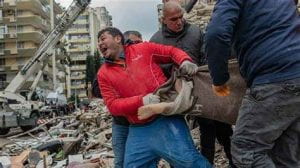
Members of rescue services search for survivors in the debris of a collapsed building in Izmir, Turkey, Saturday, Oct. 31, 2020. Rescue teams on Saturday ploughed through concrete blocs and debris of eight collapsed buildings in Turkey's third largest city in search of survivors of a powerful earthquake that struck Turkey's Aegean coast and north of the Greek island of Samos, killing dozens Hundreds of others were injured. (AP Photo/Darko Bandic)
Source: Yahoo Images


Problems in Syria

On February 14th, eight days after the initial earthquakes, border crossing points were finally opened for UN aid to be delivered to Syria. By February 22nd, 282 aid trucks were sent by 6 UN agencies. On February 19, Medical Charity Médecins Sans Frontiers (MSF), was able to send 14 aid trucks to Syria in an effort to assist with the rescue operations. As essential as these efforts of sending aid and providing help have been, many problems remain, mainly the governmental sanctions and the closed borders surrounding the affected areas. In addition, Syria is still undergoing a Civil war, making it even more challenging to receive the help they need. Since the initial earthquake, it took days for aid and rescue crews to arrive, which has critically impacted injured civilians and individuals stuck under the rubble of buildings. The Syrian regime has bombed the affected areas of Syria (Northwest area) over 84 times. Such attacks have caused damage to the border crossings, so many NGOs have requested for more crossing points to be available, especially considering the scarcity of resources in Syria and the inability of UN aid to reach the areas affected.

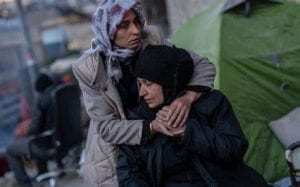
Two women grieving in the aftermaths of the quake.
Source: Yahoo Images

Efforts to help:

As seen, there is a lot of sadness surrounding the earthquakes and their aftermath. Along with the destruction, there have also been many organizations, individuals, and countries who have come to help, providing a sense of hope and relief. A group of online internet activists has created a website called TakeShelter, which enables displaced individuals to connect with hosts worldwide. This initiative was created and developed just 48 hours after the earthquakes occurred. One of the founders, Avi Schiffmann, stated that this website has reverted “power back into the hands of those displaced by the earthquake, allowing them to find shelter.” This website was launched through an organization called InternetActivism. This has opened many doors for activism and providing humanitarian care for generations to come. With almost everything being online, this website has paved the way for providing humanitarian support through a digital platform and helped over 100 families to find shelter in the homes of others.

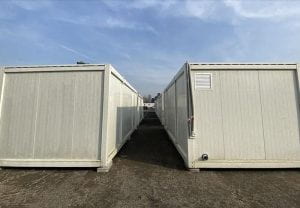
Moreover, many countries have taken a stronger initiative by investigating earthquake destruction prevention methods. Iraq has begun to install 16 earthquake warning stations throughout the country. Iraq experienced some aftershocks from the initial earthquakes. Since then, they have worked to put different stations to monitor the earthquakes and future ones on the borders connected to Syria and Turkey. In addition, Saudi Arabia has built around 3,000 temporary homes to be sent to the victims in Turkey and Syria. Public, influential figures such as Cristiano Ronaldo have sent aid to those affected. There have been many reasonable efforts that have been made and shown.

Saudi-Arabia-to-build-3000-temporary-buildings-for-earthquake-victims-in-Turkey-Syria-700x486
Source: Yahoo Images

What can you do?

In times like these, after the shock has been visible through news cycles, articles, and social media posts, people tend to think that this disaster is fixed, but that is not the case. The weeks after an initial humanitarian disaster can be much worse than the first day of it. As time passes, more family members are identified as dead or remain missing. Incomes for families have entirely disappeared, and now humanitarian aid support is required to survive. Those who have lost their homes are now living in community shelters or on the streets, and the conditions of those affected will continue to worsen unless we do something about such a situation. Hundreds and thousands of homes, schools and businesses must be rebuilt. The importance of donations, providing awareness and finding ways to help continues. Even though the earthquakes have stopped, millions continue to be displaced. Below are resources to donate and learn more about the cause.

Rescuers
Source: Yahoo Images

“How to Help Victims of the Earthquake” New York Times Article by Ben Shpigel: This article showcases which donation links to use; check out Charity Navigator and GuideStar to ensure that the non-profits you donate to are reliable.

There are countless humanitarian groups accepting donations for those affected by the earthquake. For more resources, check out the links below:

Red Cross/Red Crescent Teams

Doctors Without Borders

USA Today

CNN