Cruel and unusual punishment is a human rights issue we don’t hear enough about. It is illegal according to our US Constitution and the Eighth Amendment and a grave human rights violation according to international treaties and documents. For example, Article 5 of the Universal Declaration of Human Rights reads “No one shall be subjected to torture or to cruel, inhuman or degrading treatment or punishment.” The Convention on the Protection of against Torture and Other Cruel, Inhuman Treatment or Punishment describes what actions constitute to be labeled as torture, the government and law enforcement’s responsibility to prohibit the use of torture or inhuman treatment through training and a concern for law and order, and the rights a person has if they were to be tortured by the state.
Imagine that you are being detained and questioned because it is believed that you may be involved in illegal drug activity. Your questioning consists of electro-shock, beatings, rape, and other forms of sexual assault. Would you consider that cruel and unusual punishment? Most would think so. Sadly, it is not unusual in many countries around the world. Mexico is only one case study.
Amnesty International reports that the government of Mexico is currently committing torturous acts on women who have been accused of participating in illegal drug activity or organized crime. There are at least one hundred women who have come forward and spoken about their experienced abuse by law enforcement at every level: local, state, and federal- including the Army and Navy. Each of these women have reported experiencing some kind of torture whether that be psychological abuse, sexual abuse, or both (usually both). It was reported that seventy-two women were “sexually abused during or hours after their arrest.” Thirty-three of those women stated that they were raped.
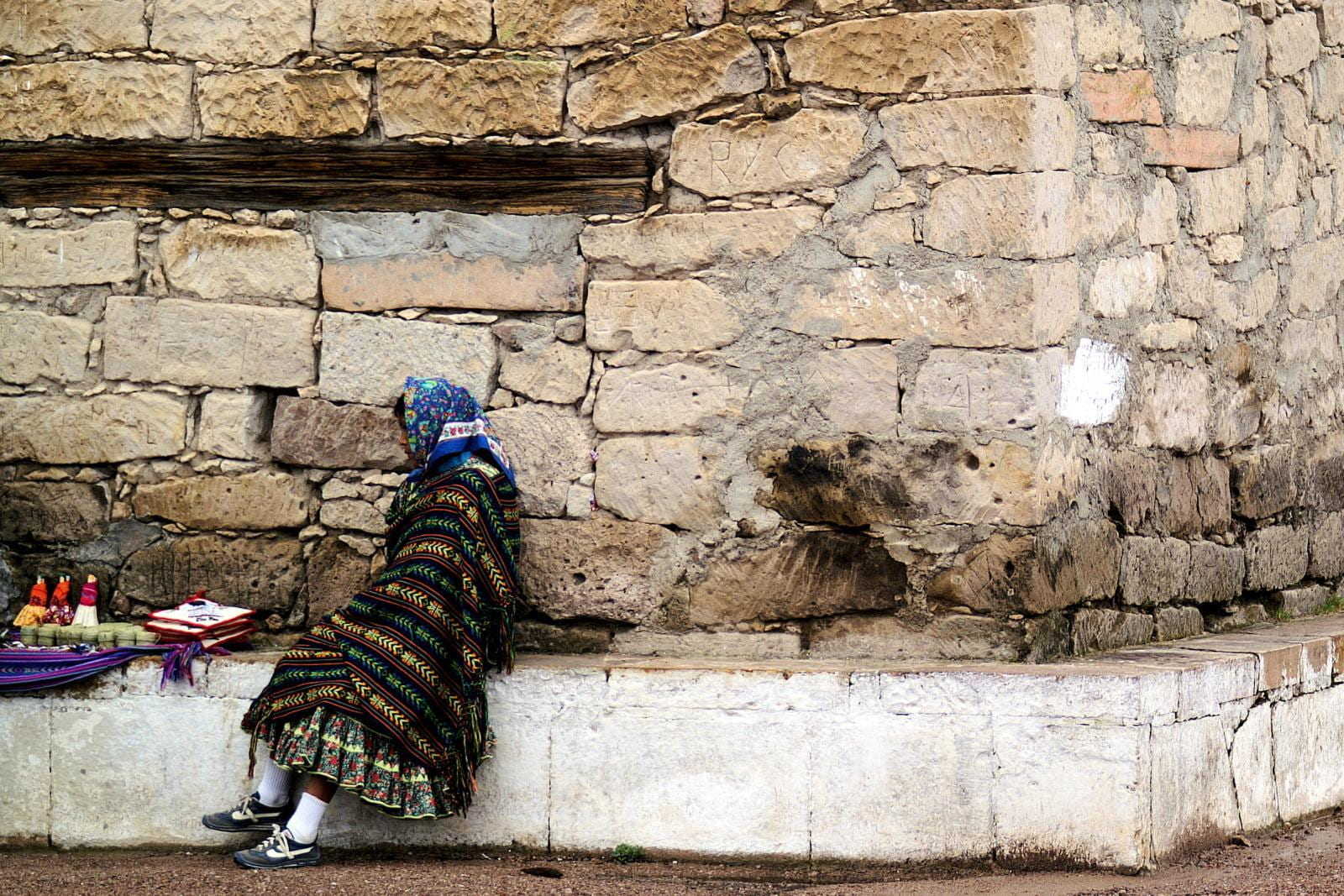
In 2013, Mónica was 26 when she was “gang raped by six municipal police officers, received electro-shock to her genitals, was suffocated with a plastic bag, was dragged across the floor by her hair, and had her head plunged into a bucket of water in the city of Torreón, where she also witnessed the torturous death of her husband.” She watched as her husband was being tortured by “beatings with metal studded whips and the skin on his legs being peeled off with a knife…” When the couple and Mónica’s brother were being transported to the Attorney General’s office, she watched her husband take his last breath of life. She was later flown to Mexico City and taken to the Deputy Attorney General on Organized Crime. Mónica told Amnesty International that she was forced to “sign a confession stating that she was a part of a drug cartel,” notwithstanding the fact that it is a non-admissible confession in court if torture was involved according to Mexican law.
Torture and harsh interrogation tactics are common practice in Mexico’s investigations of drug-related organized crime.
Why did she receive such despicable treatment? I think the police of Mexico are trying to send the message that they are actively pursuing the drug trafficking problem the country faces. They are using women like Mónica who are of lower socioeconomic status because they are perceived as the “weakest link in the trafficking chain and are seen as ‘easy targets’ to arrest.” These women also are more susceptible to not being able to pay for even a halfway decent defense attorney. This means that not only are they vulnerable to arrest, but also vulnerable to police brutality. This isn’t the first time Mexico has been “caught in the act” of committing illegal arrests and mistreating those who are arrested. In fact, Amnesty International reported that since 1991 there have been thousands of complaints associated with the ill-treatment and torture of those who have been arrested, yet only fifteen of these cases resulted in federal criminal convictions, including the case of General Manuel de Jesus Moreno Aviña.
Back in 2008, the Mexican Army took on an immense responsibility to put a stop to organized crime and drug cartel activity. General Aviña was accused of torturing and murdering José Heriberto Rojas Lemus. Lemus “was tortured within the Ojinaga military garrison where he was strapped to a post and soaked with water before he was given electric shocks for hours.” The court sentence read that it’s possible Lemus died from multiple cardiac arrests due to the shocks, yet the military doctor was ordered to write on the death certificate that Lemus overdosed. Another case involves a video that has surfaced of a woman being tortured by a female federal officer and two army soldiers through suffocation. The Department of Defense has stated that “these events occurred on February 4, 2015 in Ajuchitan, a small mountain town in southern Guerrero state.” The Mexican army has announced that the two soldiers involved are currently in a military prison awaiting trial, but there has been no word on whether the federal officer will face charges or not. What is different about these cases is that since they involved military personnel, the military justice system took control. As Raul Benitez, a security specialist and political science professor, explains it, “the military justice system tends to be very strict in such cases, because (the soldiers in the video) are casting the institution in a bad light.” Civilian prosecutors aren’t so swift in taking these cases on.

So, if cases of torture like these were investigated, why are a significant majority of them not? The torture case that occurred in Ajuchitan in 2015 is considered “special” because it was easy to investigate due to the fact that all the evidence needed is in a video rather than just simply accusations of torture coming from prisoners. Torture and harsh interrogations are prevalent in Mexico’s investigations. Mexico has signed and ratified the Convention against Torture and Other Cruel, Inhuman or Degrading Treatment or Punishment, as well as the International Covenant on Civil and Political Rights and supported other human rights documents dealing with torture and arbitrary arrest and is thus in violation of these international human rights treaties. The reports are out from Amnesty International, as well as other human rights organizations, but reports are the only way thus far that Mexico can be held accountable globally. So my question is: what do we do now?
Mexico is breaking its obligations under international law by illegally detaining and torturing people.
Mexico wants to give the appearance that they are in compliance with international law as they pursue and prosecute organized crime/ drug cartel activity that has plagued the country for years. However, when reports and videos surface that show exactly who they are harassing, arresting, detaining, and torturing Mexico was hard pressed to justify its actions. In my opinion, they don’t want to go after the real gangs and drug lords because money talks. Corruption is widespread – in fact, drug cartels paid around $100 million A MONTH to police officers nationwide to turn their heads they other way. Part of the problem is the very low pay of police officers (just over 20 percent earns less than 1,000 pesos ($79) a month, while 60.9 percent earns no more than 4,000 pesos ($317) monthly. To fulfill its obligations towards the U.S. and expectations by the international community, Mexican authorities often target women and men of lower economic status who don’t have the funds to pay bribes to law enforcement officials or the network to be kept out of jail. This begins the cycle of violence described above, which will be very hard to break as long as corruption within Mexico’s federal, state, and local governments continues. Fundamental reform of Mexico’s militarized police force, law enforcement, and the judicial system as well changes on socio-economic policy are needed to end unrest and diminish the power of organized crime and drug cartels.