Recently Published Study on Emotional Well-Being in Individuals with Intellectual and Developmental Disabilities – Blog Post by Jadyn Moreno

Introduction:

    We are excited to announce the publication of a recent paper titled, “Defining and measuring emotional well-being in intellectual and developmental disabilities: A scoping review,” which was led by Dr. Alecia Mercier and published in the Research in Developmental Disabilities journal in October 2025. Collaborators included Dr. Jessica Koslouski, Dr. Sandra Chafouleas, and Dr. Sophie Hall from the University of Connecticut. Dr. Caroline G. Richter served as the mentor for the project.

The team of researchers aimed to create a report and collect information on emotional well-being tools used for individuals with intellectual and developmental disabilities. The report included 33 papers with 20 different tools used for reporting emotional well-being.

Why is Emotional Well-Being Important?

    While people often think about health as eating healthy and exercising, emotional well-being has been found to be equally important. Emotional well-being is how good a person feels day to day and about life overall. It includes components such as feeling positive emotions, life satisfaction, having sense of meaning or purpose, and ability to pursue goals. Positive emotional well-being is associated with better physical and mental health. The authors of this paper wanted to understand if this was how emotional well-being is being defined for individuals with intellectual and developmental disabilities, and how it is measured. This information can be used in future research to benefit this population.

Key Findings:

The researchers report that based on a previous study, there are many ways to measure emotional well-being in the general population without intellectual and developmental disabilities, with over 135 different tools being widely used. In contrast, the number of tools used to measure emotional well-being in those who have intellectual and developmental disabilities was smaller, with only 20 measures specifically made or adapted for them. The authors found that there are not enough tools available for measuring emotional well-being in children with disabilities, or individuals with severe or profound intellectual disability. Most measures were used with adults and older adults with mild to moderate intellectual disability. Many measures focused on quality of life, and external experiences rather than treating emotional well-being as a distinct, stand-alone construct. Focusing on quality of life takes away from examining internal emotions and experiences in this population. There needs to be a more consistent and better way to measure emotional well-being in children and adolescents with intellectual and developmental disabilities. The lack of tools could create mistakes or bias in research surrounding individuals with intellectual and developmental disabilities.

How Emotional Well-Being Is Measured in People with Intellectual and Developmental Disabilities and Gaps noticed in the research.

The authors looked at many different studies to see the difference in emotional well-being measures used with individuals with intellectual and developmental disabilities:

  • Limited Adaptation: Available tools used to measure emotional well-being were made for typically developing individuals and not those with intellectual and developmental disabilities.
  • Underrepresentation: Manytools focused on adults with mild to moderate intellectual disability. Less tools were available for children and adolescents and for those with severe intellectual disability.
  • Measures may be difficult to understand: Tools often use complex wording or long questions, which can be difficult to understand for individuals with intellectual and developmental disabilities.
  • Limited availability: Tools available often included only a small number of items that were related to emotional well-being. Instead, many tools included items related to quality of life, physical well-being, and interpersonal relations
  • Informant-report bias: In some of the measures, other people, like caregivers or teachers, answer questions for someone with an intellectual or developmental disability. However, it may not fully reflect the person’s actual emotional experiences, making the data collected less accurate.

Conclusion: Why is this important? What directions can we make in the future of research to support measurement of emotional well-being research in those who have intellectual and developmental disabilities?

    Emotional well-being is an important part of human health. Designing better ways to measure emotional well-being in people with intellectual and developmental disabilities is important because it helps researchers understand how people with intellectual and developmental disabilities feel and what we can do to support them. Future research needs to create new tools of emotional well-being that are easy to use regardless of intellectual ability or communication skills. More accurate emotional well-being tools can be used to create better interventions, programs, and tools to assist those with intellectual and developmental disabilities in their daily life.

To read the full published article see below: https://doi.org/10.1016/j.ridd.2025.105115

Recently Published Study on Anxiety and Reading Comprehension in Children – Blog post by Lily Jackson

We are excited to share findings from one of our recent publications, “The Role of Anxiety on Reading Comprehension in the Context of Socioemotional and Cognitive Risk and Promotive Factors,” in the journal Mind, Brain, and Education, led by Brianna Paquette (University of Alabama at Birmingham) and Rachelle Johnson (Florida State University), under the mentorship of Dr. Caroline G. Richter.

Why Does Anxiety Affect Reading?

While anxiety is often viewed as a mental health concern, it can also affect academic performance, especially reading. This study examined how general anxiety and test anxiety influence reading comprehension over time, and whether traits like focus and emotional control can help alleviate these effects.

KEY FINDINGS

General anxiety is linked to test anxiety: Children who scored higher on general anxiety measures also tended to report more test anxiety. However, test anxiety did not significantly affect reading scores in this study. This is possibly due to the reading test being administered at home in a low-pressure setting.

Effortful control and attention are related to reading outcomes: Children who demonstrated strong effortful control, which means they could regulate their emotions and stay on task, had higher reading comprehension scores. Similarly, children with strong attention skills scored higher on reading assessments.

A curved relation between anxiety and reading: The study found that a small amount of anxiety may help children stay alert and perform better, but too much or too little anxiety can negatively impact reading comprehension. This “hill-shaped” relation suggests that moderate anxiety might be beneficial, while extremes are harmful to reading abilities.

What can be done?

This study highlights the importance of supporting children’s emotional and cognitive development to improve reading outcomes. Potential strategies include:

  • Teaching emotional regulation: Helping children manage anxiety through mindfulness or coping strategies.
  • Improving focus: Using classroom techniques that reduce distractions and build sustained attention.
  • Monitoring emotional states: Recognizing when positive emotions may interfere with task performance and adjusting accordingly.

Final Thoughts

This research adds to our understanding of how anxiety and self-regulation shape academic success. While test anxiety did not directly impact reading scores, general anxiety and traits like attention and effortful control played a significant role. These findings can help educators and parents better support children’s reading development by addressing emotional and cognitive needs.

To read the published article, see https://doi.org/10.1111/mbe.70011

Emotional Well-Being and Intellectual Disabilities – Blog Post by Abigail Leonard

(shutterstock)

We are pleased to share the publication of a recent paper, “Measures of emotional well-being for individuals with intellectual disabilities: A scoping review of reviews”, published in March 2025 in the Research in Developmental Disabilities journal. This study was conducted in collaboration with researchers, Sophie Hall, Jessica Koslouski, and Sandra Chafouleas at the University of Connecticut and Dr. Caroline G. Richter.

This study looked at how emotional well-being has been measured for people with intellectual disabilities. Emotional well-being is how people experience and think about their lives. It includes both daily emotions and personal reflections on those experiences. A person’s culture, life circumstances, and available resources all influence their emotional well-being over time. Researchers wanted to find out what kinds of tools already exist to measure emotional well-being and whether those tools actually fit the needs of people with intellectual disabilities.

Emotional well-being is an important part of a person’s quality of life, and it can affect friendships, behavior, and health. But for people with intellectual disabilities, it’s not always clear how to measure emotional well-being in ways that truly reflect their experiences.

Key Findings

The researchers identified 10 previous review studies that talked about ways to measure emotional well-being in people with intellectual disabilities. From those, they found 14 different measurement tools.

Here’s what they discovered:

  • Most tools (70%) focused on quality of life, not emotional well-being alone.
  • More than half (57%) of the tools were made specifically for people with intellectual disabilities. Others were adapted or borrowed from the general population.
  • Most tools were made for adults. Only one was made for teenagers, and none were made for children.
  • About 43% were self-reports, where people answered questions about their own feelings. About 29% used proxy reports, where a caregiver or family member answered instead.
  • Across all 14 tools, there were over 400 total questions, but less than 10% of them directly measured emotional well-being.
  • When emotional well-being was measured, it usually focused on life satisfaction (like “Are you happy with your life?”) or momentary happiness (like “Do you laugh every day?”). Very few questions asked about goal setting or finding meaning, which are also important parts of emotional well-being.

The Role of Self- and Proxy-Reports

Different tools used in these studies gathered information in different ways. Some asked people to report on their own feelings, which is called a self-report. Others relied on caregivers or family members to answer on their behalf, which is called a proxy-report.

Self-reports are important because they let people describe their own feelings and experiences directly. When people are able to share how they feel in their own words, researchers can get the clearest picture of their emotional well-being.

Sometimes, though, self-reports aren’t possible, especially for people with severe or profound intellectual disabilities who may have trouble speaking or understanding complex questions. In those cases, researchers often use proxy-reports. However, these can sometimes be unreliable because caregivers may not always know exactly how the person feels.

Because of this, experts suggest using self-reports whenever possible. When they can’t be used, researchers can look for alternative ways to measure emotions, like watching for facial expressions or smiles, or even using special technology like the LifeShirt, which tracks changes in the body that might show when someone is feeling happy or upset.

What Are Some Improvements That Can Be Made?

Even though there are some tools to measure emotional well-being, most of them are not a perfect fit for everyone with intellectual disabilities.

Researchers found several gaps that need attention:

  • There were too few tools for kids and teens. Most were made for adults, even though younger people with intellectual disabilities also deserve support for their emotional health.
  • There was not enough focus on people with severe or profound intellectual disability. Many tools work well only for mild or moderate cases of intellectual disability.
  • There were only a few tools that focused only on emotional well-being. Most are part of bigger “quality of life” surveys that only include a few emotion-related questions.
  • Measures should clearly say who they’re for. Some didn’t list what age group or level of disability they were meant to assess.

Future research should work on designing tools that are:

  • Simple and flexible for all ability levels
  • Available for children, teens, and adults
  • Clear about when to use self- or proxy-reports
  • Focused on emotional well-being itself and not just general quality of life

Final Thoughts

This study showed that while there are many ways to measure quality of life, emotional well-being for people with intellectual disabilities still isn’t being measured deeply enough.

To truly understand how people with intellectual disabilities feel and what supports their happiness, researchers and measure developers need to create better, age-appropriate, and inclusive tools. Emotional well-being isn’t just one part of life, it’s what helps people grow, connect, and thrive.

Read more details about this publication here: https://today.uconn.edu/2025/03/new-study-finds-gap-in-tools-assessing-emotional-well-being-in-individuals-with-intellectual-disabilities/

To read the published article, see https://doi.org/10.1016/j.ridd.2025.104940

Early Signs: How to detect learning disabilities in children

Dr. Richter gives an interview where she talks about early signs of learning disabilities. More details can be found here: Early Signs: How to detect learning disabilities in children – News | UAB

Reading to children at any age is a great way to support their vocabulary and listening comprehension skills.

Some signs of learning disabilities in preschool include:

  • Late talking compared to other children
  • Trouble producing the sounds of certain words, animals or numbers
  • Slow vocabulary growth or difficulty finding the right word
  • Trouble rhyming words or remembering songs
  • Difficulty learning numbers, the alphabet and the days of the week
  • Frequent fidgeting, restlessness and easily bored tendencies
  • Getting lost in the middle of instructions or being easily distracted

How Stereotypes and Stigmas Impact Individuals with Learning Differences!

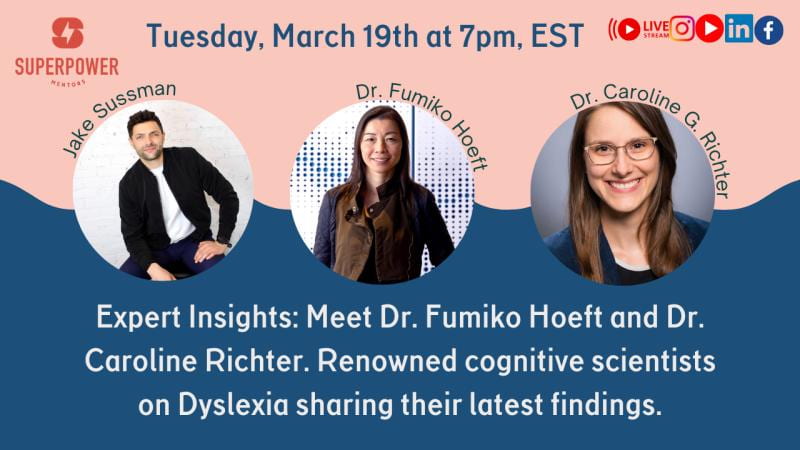
Dr. Richter was featured at the Superpower Mentors interview. The interview covered one of our latest co-authored research study surrounding the topic of Stereotype Threat. A study that looks into how stereotypes and stigmas impact individuals with learning differences and their ability to learn.

The interview can be found here: (28) How Stereotypes and Stigmas Impact Individuals with Learning Differences! | LinkedIn

Behavioral phenotype of children with Williams syndrome

Dr. Caroline G. Richter gave a talk about Williams syndrome at the Leadership Education in Neurodevelopmental and Related Disabilities (LEND) Core Lecture Series hosted by the Center for Excellence in Developmental Disabilities at UAB.

The lecture can be watched here: Core Lecture 2023-24 – Zoom

Learning objectives: 

1)  Describe the behavioral phenotype of children with Williams syndrome

 2)  Explain the pattern of strengths and weaknesses in the cognitive profile of children with Williams syndrome

 3)  Be able to recognize differences between Williams syndrome and autism spectrum disorders

 4)  List the differences between Williams syndrome and 7q11.23 Duplication (Dup7)