Spatial multiomics is a cutting-edge approach that integrates spatial transcriptomics with other multiomic platforms—such as proteomics, epigenomics, and metabolomics—while preserving the native tissue architecture.
By capturing gene expression, protein levels, and other molecular layers in their precise spatial context, it provides a detailed map of how cells and microenvironments interact. This rich, location-specific data enables systems biology analyses, offering a holistic view of cellular networks and tissue organization in health and disease.
Spatial Transcriptomics
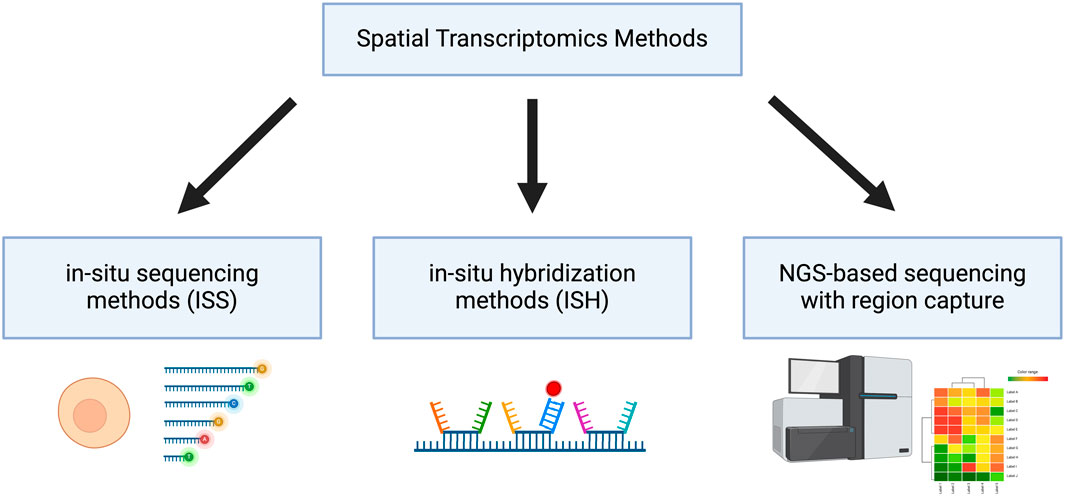
Spatial transcriptomics is a set of advanced techniques that map gene expression within an intact tissue sample, preserving the original cellular context and providing positional information for RNA molecules. Unlike single-cell RNA sequencing, which discards spatial relationships, spatial transcriptomics generates a comprehensive and spatially resolved expression map, enabling the study of cellular neighborhoods, tumor heterogeneity, and intricate biological processes. These methods can be broadly categorized into imaging-based and sequencing-based approaches, with imaging techniques like in situ sequencing (ISS) and in situ hybridization (ISH) offering high resolution, and sequencing-based methods such as in situ capture (ISC) providing broader transcriptome-wide analysis.
Multiomic Platforms
Multiomic platforms are integrated systems that enable the simultaneous measurement and analysis of multiple “omics” data types, such as genomics, transcriptomics, and proteomics. By combining these different biological layers, researchers can gain a more comprehensive understanding of complex biological systems and diseases. These platforms integrate both hardware and software, covering everything from sample processing to data analysis.

Systems Biology

Systems biology is an interdisciplinary field that studies the complex, interactive relationships between the components of biological systems. Rather than examining individual parts in isolation, it takes a holistic approach to understand how the networks of genes, proteins, cells, and organs function together to produce the behaviors and properties of living organisms.
It moves beyond the traditional reductionist approach in biology by integrating data from high-throughput technologies (“omics”), computational modeling, and engineering principles to create predictive models of biological systems.
