Team Members

David Pollock, Ph.D.
Principal Investigator
Dr. Pollock’s wide range of research interests focuses on high blood pressure and kidney disease. His work has been funded by the National Institutes of Health for over 25 years and has also received funding support from the American Heart Association. Dr. Pollock’s lab has uncovered how high salt diets impact risk for cardiovascular disease. His lab has also discovered a novel treatment for kidney failure in sickle cell disease.
Dr. Pollock currently serves as the Principal Investigator on a Program Project Grant on integrated control of sodium excretion along with several other NIH and AHA funded projects. Dr. Pollock has held many service leadership positions including the former President of the American Physiological Society and Editor-in-Chief of Comprehensive Physiology. In 2013, Dr. Pollock received the Lewis K. Dahl Award from the American Heart Association, and in 2016, was awarded the Ernst Starling Lectureship from the American Physiological Society.
Megan K. Rhoads, Ph.D.
Instructor
Dr. Rhoads received her PhD in physiology from the University of Kentucky in 2018. Her thesis work helped fuel her interest in the relationships between blood pressure regulation and the circadian system. Upon joining Dr. Pollock’s lab, Dr. Rhoads began to investigate how loss of Bmal1, a core circadian gene, affects time of day dependent changes in blood pressure in rats. Her work explores the relationships between organ systems and how they respond to environmental stimuli, like light and food availability. This work includes defining novel pathways in which the central clock in the suprachiasmatic nucleus helps control blood pressure and how this may be impacted by high salt diet.


Mary Latimer, Ph.D.
Postdoctoral fellow
Dr. Latimer received her PhD in physiology from the University of Alabama Birmingham in 2018. Her thesis focused on dietary interventions for optimal health and growth and her first postdoc built on this work by focusing in on the circadian intake of nutrients. Upon joining Dr. Pollock’s lab, Dr. Latimer hopes to determine how loss of a core clock component, Bmal1, impacts metabolism in the rat kidney.
Tamara Al-Daghastani
Graduate Student
Ms. Al-Daghastani is a student in the UAB Physiology, Pharmacology, and Pathobiology Theme. She received her BS in pharmacy from the Jordan University of Science and Technology with honors and went on to earn a MS in Pharmacology from the University of Jordan Medical School. She 13 publications from her graduate and undergraduate experience that largely focus on health care topics covering a wide range of topics including several on the impact of the COVID-19 pandemic. Currently, she is working with both basic and clinical studies examining the impact of time-of-day salt intake on blood pressure using a range of analytical methods.


Tha Luong, M.S..
PhD Graduate Student
Ms. Luong just finished her second year of the PhD program in the Immunology Theme. She is being co-mentored on her thesis project by Drs. David and Jennifer Pollock. Her project is focusing on the specific role of endothelial derived ET-1 in activating immune cells that contribute to vascular dysfunction and renal injury in a mouse model of diet-induced obesity.
Kameron Howard
Gap Year Intern
Kameron is working on his bachelor’s degree in Medical Sociology at UAB. His work allows him a broader insight into the field of biomedical research.is a senior at UAB majoring in Medical Sociology. He has a wide range of laboratory skills, but largely provides support by maintaining animal breeding, genotyping, and phenotyping. He also provides technical skills in a variety of methods especially related to renal excretory analysis.
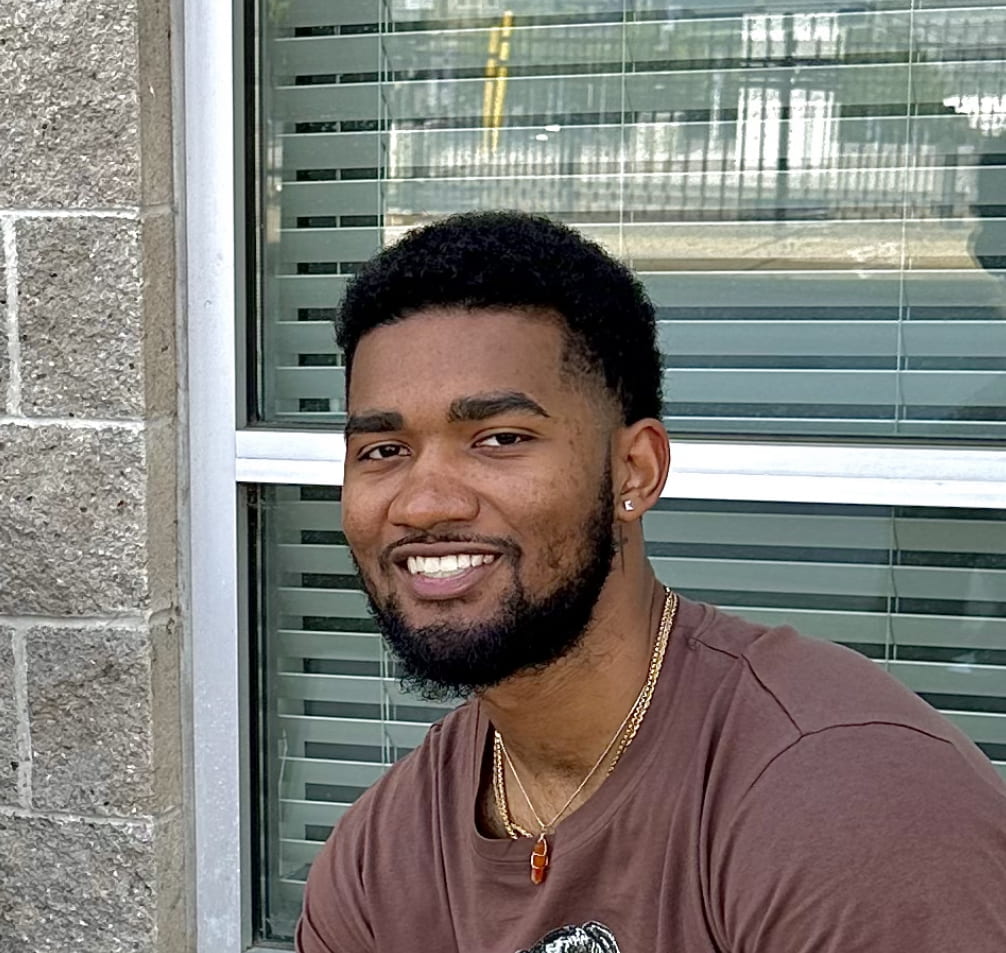

Hiruni Aponso, H.B.S.
First year PhD student
Ms. Aponso received her BS from Oregon State University in 2020. Her undergraduate thesis studied the influence of circadian dysregulation on changes in tumor suppressor activity in murine mammary tissue. Her work piqued her interest in the circadian clock and its influences on a wide range of biological functions. Currently, she is rotating in Dr. Pollock’s lab studying the effects of adolescent stress on the risk of chronic kidney disease (CKD). She explores how stress induced by disruptions of the circadian clock during the early life stages may increase biomarkers associated with the development of CKD and reduce stress resilience in later stages of life.
Binli Tao, M.D.
Lab Manager
Dr. Tao received his MD degree from Harbin Medical University in 1984. He received postdoctoral training here at UAB in Microbiology prior to taking research associate positions in the Departments of Genetics and Cell, Developmental and Integrative Biology prior to joining Dr. Pollock’s lab in 2014 as lab manager. He has considerable expertise in molecular biology, physiology, immunology and genetics. In addition to general laboratory maintenance, his responsibilities also include animal husbandry and genotyping of several animal colonies as well as a wide range of analytical methods.

